

Don't Be Afraid of the Failed Photo
Friday 13 September 2024, 20:02 by Nando Harmsen | 2,642 views | 12 commentsThis article was translated from Dutch with the help of AI. Read the original.
You undoubtedly have failed photos regularly. Don't be ashamed of them. Everyone has photos that didn't work out, even professionals. So don't be afraid of the failed photo. Embrace it. Learn from it.
They are still around. Photographers who quickly delete failed photos straight from the memory card. It is part of the process known as chimping: immediately checking the result and deleting unwanted photos. Don't do it.
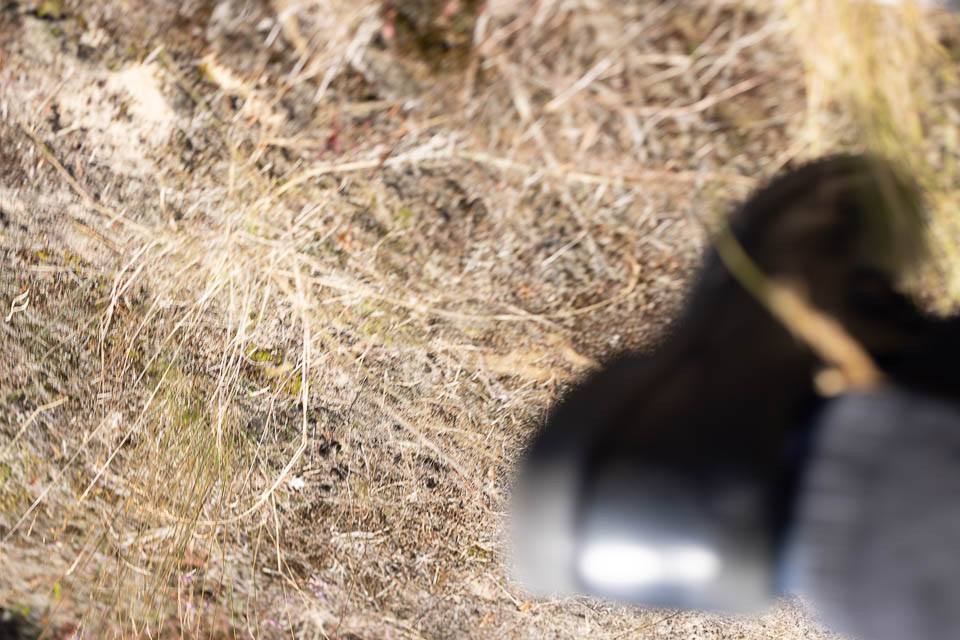
Apart from losing contact with your subject by focusing straight away on your camera's small LCD screen, there is no reason whatsoever to delete the failed photo immediately. In fact, it is a missed opportunity.
You might almost think that the photographer who immediately deletes failed photos is ashamed of that failure. A photo taken by accident offers absolutely no opportunity to learn. But a photo that fails because of an incorrect action, setting or choice can definitely teach you something.

Did the photo fail? Then look at why that happened. It may be a setting that you have set incorrectly, or forgotten about. It may also be another cause that results in an unwanted outcome. In that case, a brief moment of chimping is very valuable, as it gives you the chance to fix the mistake.
However, don't spend time clicking the delete button while you are still taking photos. Just leave the photo on the card. There is plenty of time to do this at home. Besides, who can make a proper assessment on a three-inch screen? You need a large screen for that.

Is the photo a failure, or simply not attractive? Then look at why that is. By finding out the reason, you will know what to pay attention to next time, or where to focus more during the shoot.
Is your photo badly exposed? Then pay more attention to the exposure next time.
Is your subject out of focus? Find out why.
Does the shutter speed need to be faster, or did you fail to hold the camera still?
Who knows, perhaps you often take a photo by accident. That is something to watch out for too.
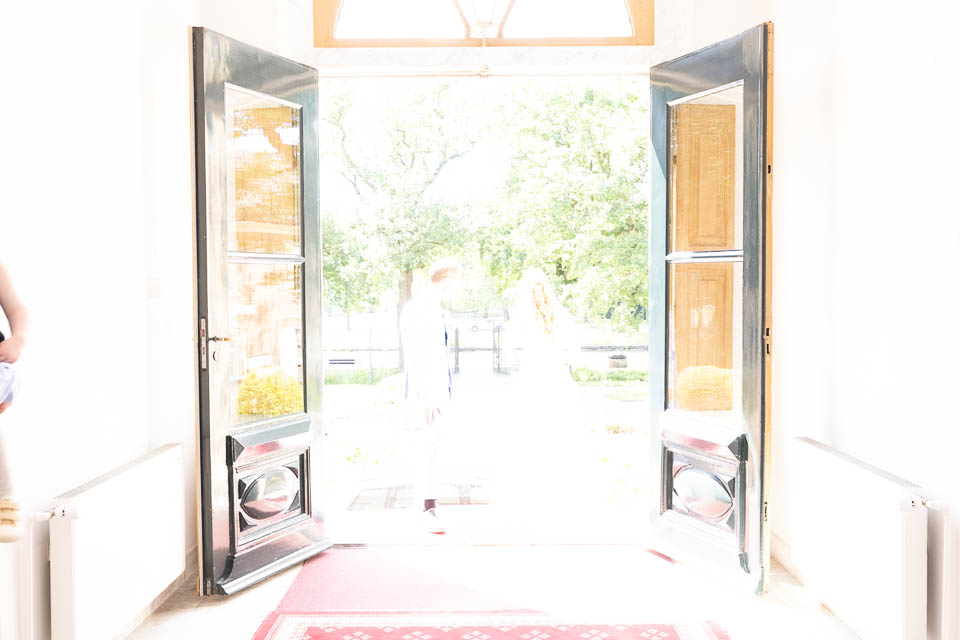
Looking at your photos 'in the field' is good, because you can correct things immediately if something is wrong. That is a good form of chimping, and it takes a second. But above all, don't go back through your photos, zoom in, check the focus, select and delete.
By studying your failures, you grow as a photographer. You become better at it. So embrace the failed photo, because it shows you where you can still improve.
Do you delete photos straight away? If so, why? Do you have a good reason for it? Let us know in a comment below this post.
About the author
Nando Harmsen has been photographing for more than 40 years. He specialises in wedding photography and landscape photography. Nando also gives talks, workshops, masterclasses and photo trips, and regularly reviews new and interesting equipment.
You might also like
-
 Do you look at your failed photos? Or delete them straight away?
by Nando Harmsen
-
 Landscape photography tip: Don't be afraid to delete
by Nando Harmsen
-
 Stupid mistakes you can make as a photographer
by Nando Harmsen
-
 Delete separate photos for HDR and panoramas, or not?
by Nando Harmsen
-
 Review: Sony A9 mark III
by Nando Harmsen
-
 Black and white is not a solution for a failed colour photo
by Nando Harmsen
12 comments
-

 A.Gooier wrote on Saturday 14 September 2024 at 15:49
| reply
A.Gooier wrote on Saturday 14 September 2024 at 15:49
| reply
Failed photos ..... I come from the days of analog photography, that was 1 big failed photos festival. You really didn't know what the end result would look like, and then you also had to wait several days for the end result. With digital photography, the end result can actually already be seen on the camera's little screen before you take the photo. Much less can go wrong than in the days of analog photography.
Translated from Dutch. -
 Nando
wrote on Saturday 14 September 2024 at 16:27
| reply
Nando
wrote on Saturday 14 September 2024 at 16:27
| reply
In the analog era, you thought before taking a photo. Was it sharp, exposure good, composition good, and so on.
Translated from Dutch.
With the digital era, for many it is a photography fest in the hope that there is something worthwhile among them. I sometimes read that hundreds of photos are taken in an hour. Then I wonder how much thought is still given before a photo is taken.
The advantage is, you can look back immediately and correct things. But there can still go very, very much wrong. -
A.Gooier wrote on Saturday 14 September 2024 at 20:20
| reply
In the analog era, many bad photos were also taken, and were taken by people with a compact camera. Not everyone had an SLR camera then.
Translated from Dutch.
Now in the digital era, many more photos are taken, because photography is within everyone's reach. The cameras and mobile phones are computer-controlled and AI lends a hand. -
 Donald Willemsen wrote on Saturday 14 September 2024 at 23:50 | reply
Nando I completely agree with you.
Translated from Dutch.
I myself almost never look back at the screen. I take several photos of the same subject, use different settings, change my viewpoint now and then and use different compositions. At home after uploading the photos to the PC I do look at them and only then throw away the ones that really aren't usable.
Today (14-09-2024), for example, I spent the whole day out at the Zeeland Bridge, the Brouwersdam and the storm surge barrier in the Eastern Scheldt. I only!!! took 44 photos. There are a few good ones among them, but also bad ones. I do keep the bad ones until I have analyzed why they are bad. -
A.Gooier wrote on Sunday 15 September 2024 at 17:04
| reply
But on the little screen you get an impression of the photo. And based
Translated from Dutch.
on that you can adjust the composition, etcetera. That is the advantage of digital photography. -
 Mac wrote on Monday 16 September 2024 at 08:13 | reply
Last weekend I took photos at a dance event.
Translated from Dutch.
I think I shot about 1000 photos.
After a rough check at home of photos that were clearly not good, 300 left. Now one more strict selection, and with luck I will have 150 left that are good. -
Donald Willemsen wrote on Monday 16 September 2024 at 12:18 | reply
@ A. Gooier, you do indeed get an impression on the screen, but I get that through the EVF (electronic viewfinder) as well. Moreover, I immediately see the histogram too and, if I want, the digital spirit level.
Translated from Dutch.
I can therefore see perfectly what my photo will look like before I press the shutter. If you are taking a photo of a static object, you can take the time to get the composition and exposure exactly the way you want them. Taking a quick snapshot is not for me. I also know beforehand how I want an object to appear in the photo. I prepare a photo trip. Beforehand, I find out where I can position myself, etc. There is one thing you cannot plan in advance, and that is the light at the moment you are there.
My way of working is not infallible, but I do not have to look at the screen after every photo to see whether the photo is good. I would rather save the power for taking photos. -
A.Gooier wrote on Monday 16 September 2024 at 23:09
| reply
@Donald Willemsen, I only use the screen to get an impression, otherwise I don't do anything with it.
Translated from Dutch.
I have been taking photographs since the beginning of the 1980s and by now I know beforehand what the final photo will look like.
When I go out to take photographs for a day, I take no more than 40 photos. I am used to that from my analogue days, when I could take no more than 36 photos per roll, or with medium format no more than 12 or 6 photos per roll of film. -
 Bernt wrote on Tuesday 17 September 2024 at 14:09 | reply
That's great, ending up with 150 good photos.
Translated from Dutch. -
A.Gooier wrote on Tuesday 17 September 2024 at 22:15
| reply
@Bernt, what do you mean?
Translated from Dutch. -
 Liesbeth wrote on Wednesday 18 September 2024 at 02:20 | reply
I rarely throw photos away straight away. Sometimes I know immediately after taking the shot that the settings were wrong. Then take a new one and sometimes throw the failed one away.
Translated from Dutch. -
 Stefanie wrote on Wednesday 18 September 2024 at 11:10 | reply
I do regularly look back at them (simply because I can) but I only delete them on the camera if I think I'm going to run out of space on the card, otherwise deleting is indeed something for at home on the PC. I also regularly come across 'failed' photos that I think I might still be able to do something with afterwards, crop them differently or use them as a background for something else ... Since I started taking digital photos I have become a bit more easygoing than I used to be with analogue, cut first and think afterwards so to speak
Translated from Dutch.
Have your say
Please note: Articles older than a week can only be commented on by signed-in visitors.Would you still like to comment? sign in or create a free account.
Become a better photographer every week
A practical photography tip in your inbox every week.
38,982 photography enthusiasts already receive the tips! More about the weekly mail. Or keep up to date via  Facebook.

Elja Trum
Photofacts; everything to do with photography!
Would you like to take better photos and keep up with what is happening in photography? Photofacts publishes articles that teach you something about photography — from a product announcement to a practical shooting tip or a look at a website. Photofacts covers photography every day and is a hobby project of Elja Trum's that got out of hand. The articles are written by a team of volunteer authors. If you would enjoy writing one or more articles for Photofacts, do get in touch.More about PhotofactsPhotofacts is made possible in part by
