

A shallow depth of field in landscape photography
Tuesday 20 December 2022, 20:40 by Nando Harmsen | 3,957 views | 0 commentsThis article was translated from Dutch with the help of AI. Read the original.
When landscape photography is discussed, there are often two things that always get mentioned. A wide-angle or ultra-wide-angle lens, and a very large depth of field.
There are situations where this works well, but there are also situations where you simply have to deviate from that so-called rule. Try using a shallow depth of field as well.
Although a landscape photo taken with an ultra-wide-angle lens and maximum depth of field can produce very nice results, there is more to it than that. If you only took that kind of photo, there is a chance it would become monotonous. It would all be the same.
A longer focal length is sometimes chosen, and this has been done more and more in recent years. But you almost never see a shallow depth of field. At least, not often.
With a large depth of field, a photo can become very busy. Everything demands attention. This happens very quickly, especially with a longer focal length. The same applies to a wide-angle lens, by the way, especially when there is no clear subject in the frame.
With a shallow depth of field, you can isolate something from a landscape. You can make something stand out. By choosing a suitable depth of field, the landscape remains present and recognisable, but it stays more in the background.
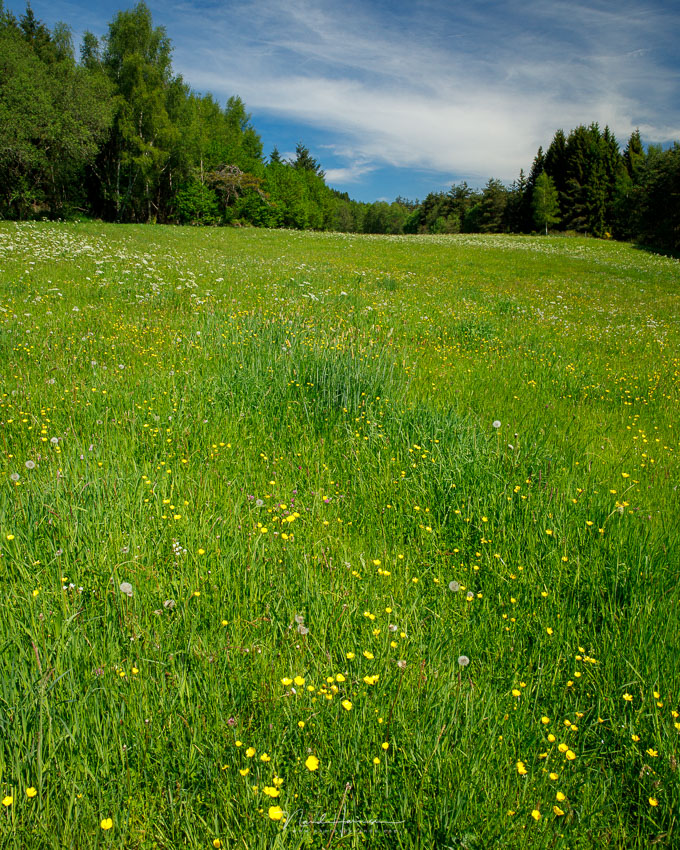
Take a look at the following landscape, a field with buttercups (at least, I believe they are buttercups). It is an overview photo in which the flowers do not stand out.
If you move closer, not much changes. You really have to get much closer before you can use the flowers as the subject. In a way, you have to crawl into the field, or between the flowers.
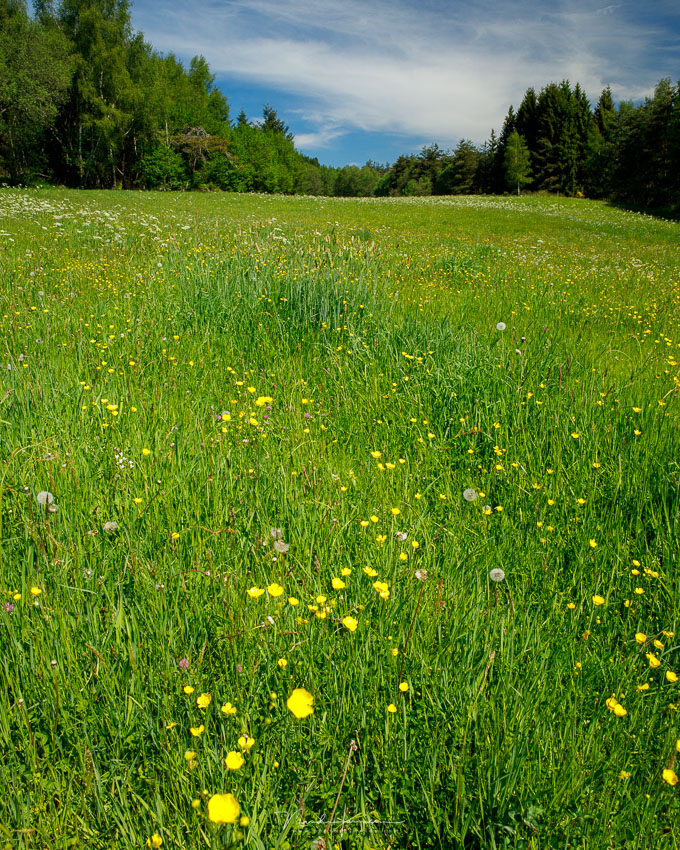
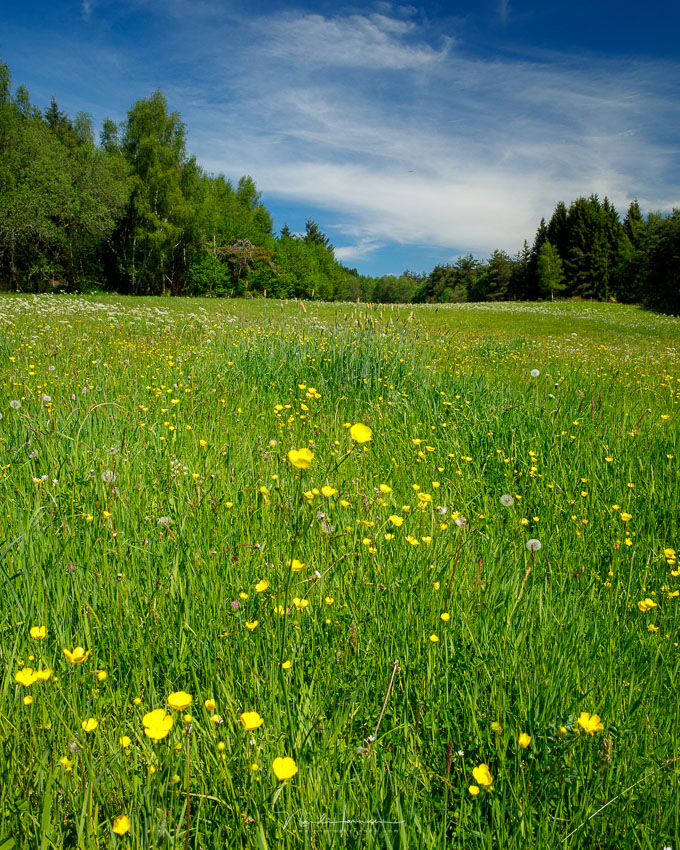
The flowers still blend into their surroundings too much. This is because the colour differs too little from the surroundings. Yellow and green do not contrast enough. It is also because there is so much to see behind the flowers. That attracts too much attention.
By now using a shallower depth of field, I can show the flowers to their full advantage. The background is less prominent in the frame. It is still recognisable as the landscape, but the attention is now directed better. Now you see a flower in the landscape.
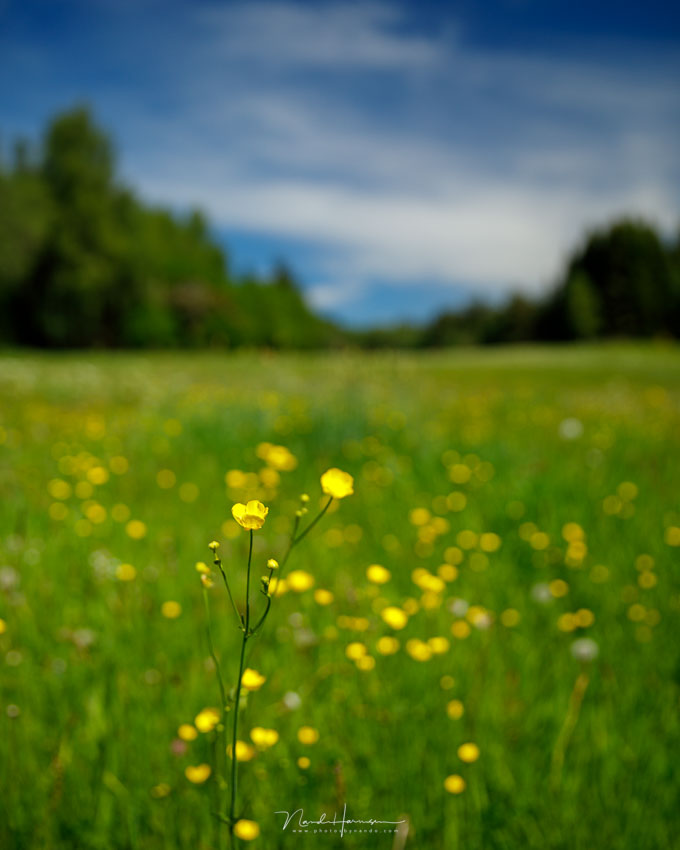
I have a few more examples of a landscape with a shallow depth of field. Each time, this shallow depth of field was chosen to make the subject stand out from the landscape. It can sometimes even create a real three-dimensional effect.
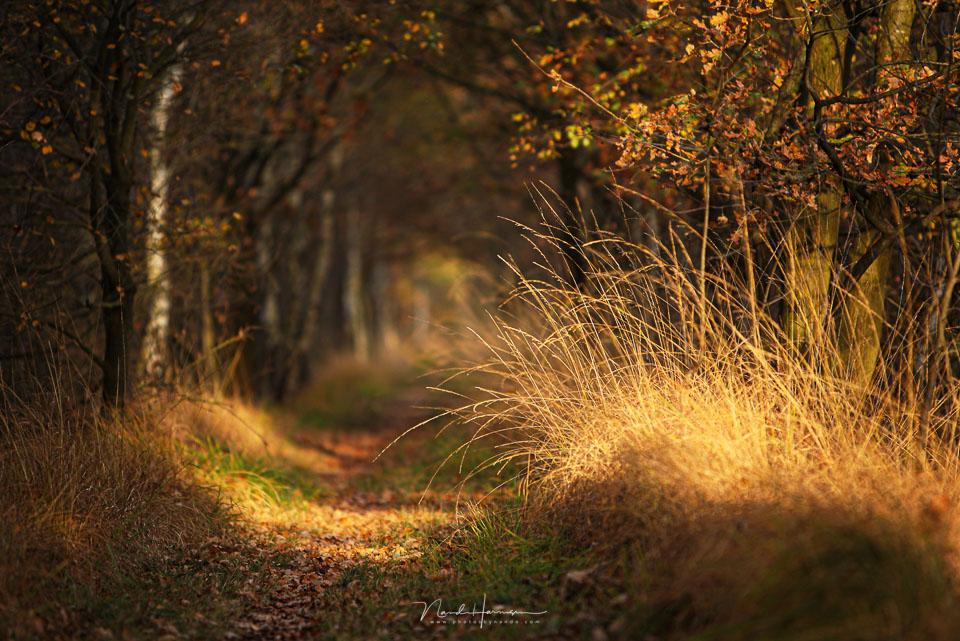

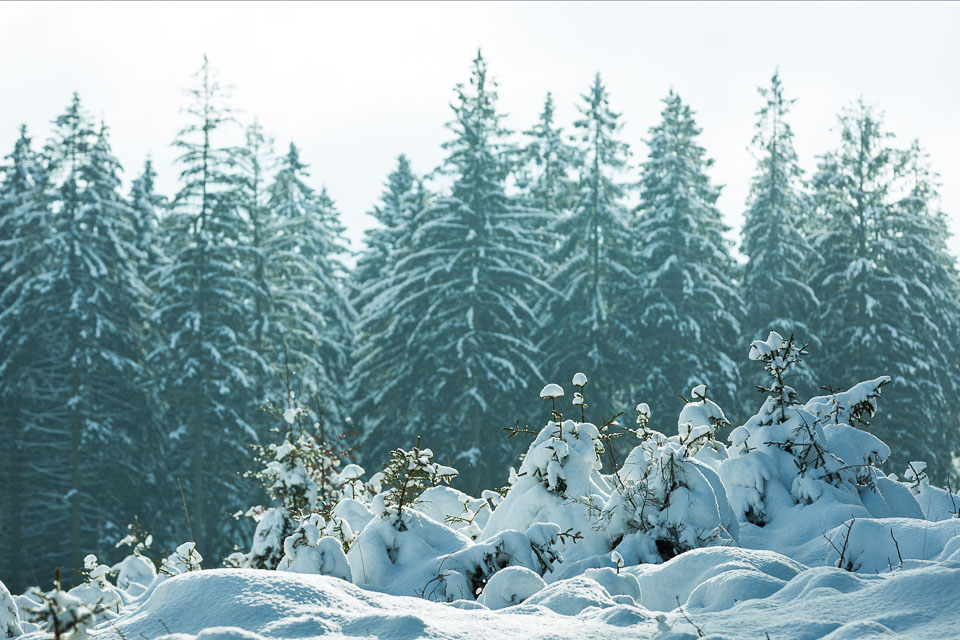
The right depth of field is important. Too much, and the background becomes too blurred and therefore unrecognisable. Too little, and you get the feeling that the background is just not sharp enough. So always try several apertures, and choose the one that works best.
About the author
Nando Harmsen has been photographing for more than 40 years. He specialises in wedding photography and landscape photography. Nando also gives talks, workshops, masterclasses and photo trips, and regularly reviews new and interesting equipment.
You might also like
-
 Canon announces the ultra-wide RF 14-35mm f/4L IS USM
by Nando Harmsen
-
 A shallow depth of field for landscapes
by Nando Harmsen
-
 The difference between bokeh and shallow depth of field
by Nando Harmsen
-
 A large aperture is not just for a shallow depth of field
by Nando Harmsen
-
 Review: Haida X in 1 Ultra-Low Reflection Magnetic Filter
by Nando Harmsen
-
 Review: Canon RF 10-20mm f/4L IS STM
by Nando Harmsen
0 comments
Be the first to share what you think!
Have your say
Please note: Articles older than a week can only be commented on by signed-in visitors.Would you still like to comment? sign in or create a free account.
Become a better photographer every week
A practical photography tip in your inbox every week.
39,079 photography enthusiasts already receive the tips! More about the weekly mail. Or keep up to date via  Facebook.

Elja Trum
Photofacts; everything to do with photography!
Would you like to take better photos and keep up with what is happening in photography? Photofacts publishes articles that teach you something about photography — from a product announcement to a practical shooting tip or a look at a website. Photofacts covers photography every day and is a hobby project of Elja Trum's that got out of hand. The articles are written by a team of volunteer authors. If you would enjoy writing one or more articles for Photofacts, do get in touch.More about PhotofactsPhotofacts is made possible in part by
