

Review: Haida X in 1 Ultra-Low Reflection Magnetic Filter
Friday 31 July 2026, 14:28 by Nando Harmsen | 2,048 views | 0 commentsThis article was translated from Dutch with the help of AI. Read the original.
The downside of variable ND filters is cross-patterning. Parts of the photo become dark because of the principle behind these filters. Haida has released the X in 1 Ultra-Low Reflection Magnetic Filter, which cleverly minimises this problem.
Haida sent me the new X in 1 filter(s) for a review. It is a variation on the well-known CPL-VND which I also reviewed earlier. I use this filter for video, and am very happy with it.

It can be a disadvantage that this CPL-VND filter has an adjustable strength between 3 stops and 7 stops. If 3 stops is too much, you are out of luck and still have to find another way to achieve the desired exposure.
There is a reason why this range is limited. This is related to the cross-patterning that occurs when the extreme end of the ND range is used. The Haida X in 1 Ultra-Low Reflection Magnetic Filter solves this in a simple way.

The filter is once again a combined VND-CPL filter. The range is now 1 stop to 5 stops, however. Do you want to block more than 5 stops of light? Then you place the supplied 2-stop ND filter in front of it. At that point, you have a 3-7-stop VND filter.
The magnetic filter
The new X in 1 Ultra-Low Reflection Magnetic Filter uses magnets. You screw the filter onto the lens, just like any other screw-in filter. The front has a magnet for additional filters.
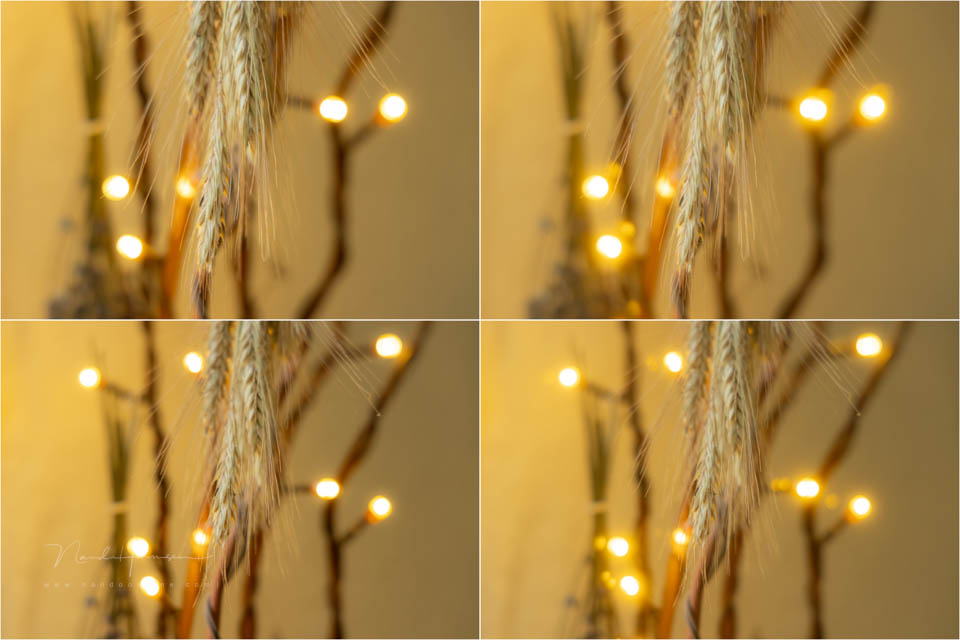
As well as a magnetic 2-stop ND filter, Haida supplies a magnetic 1/4 Mist Black filter, for that pleasant glow around light sources. You can also attach all other magnetic NanoPro filters from Haida.
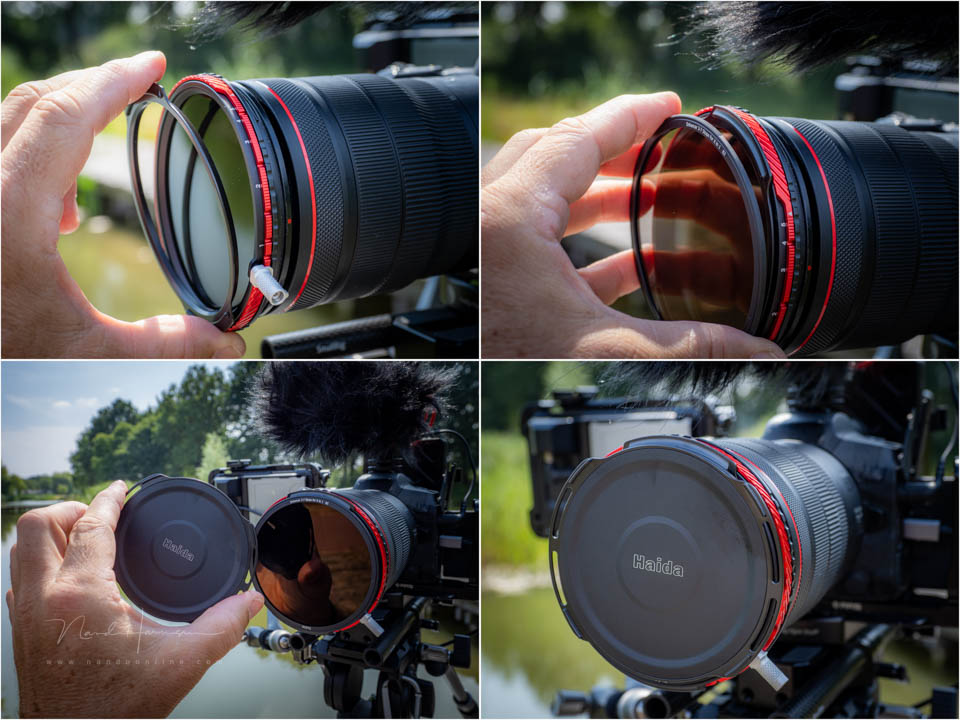
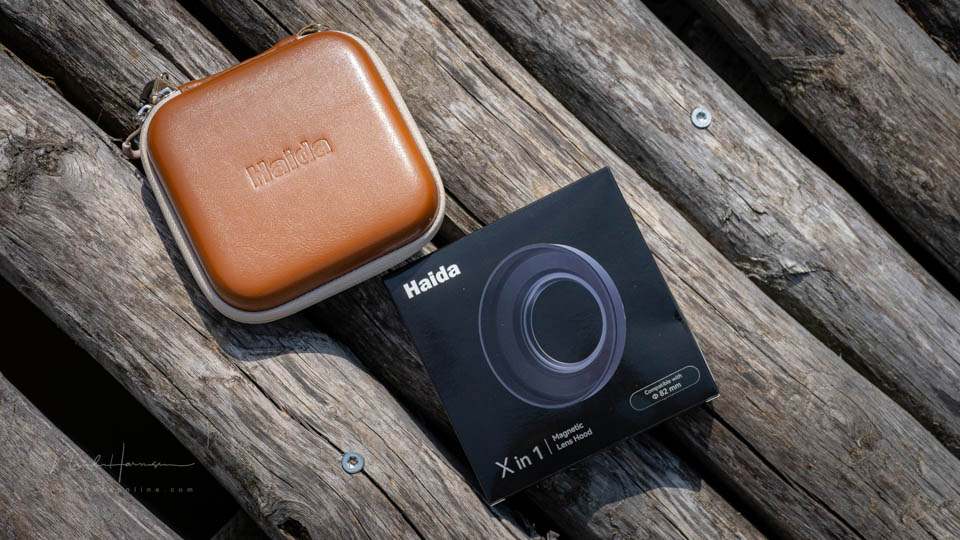
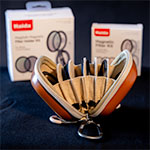
You buy the Haida X in 1 Ultra-Low Reflection Magnetic Filter in attractive luxury packaging with a neat pouch. Inside, you will find the VND-CPL filter, the 2-stop ND filter and the 1/4 Mist Black. You also get a special connector ring and a lens cap.
You can also buy a rubber lens hood as an accessory. This also attaches magnetically to the variable ND filter.
Using it
Using the filters is very intuitive. You screw the filter onto the lens and set the desired strength. If required, you can use the 2-stop ND filter when you want to block up to seven stops.

The extra 2-stop filter is called Enhancer 3-7 stops, which makes clear what strength you get after fitting the filter. This prevents confusion if it had only said 2-stop ND. A small but important detail.
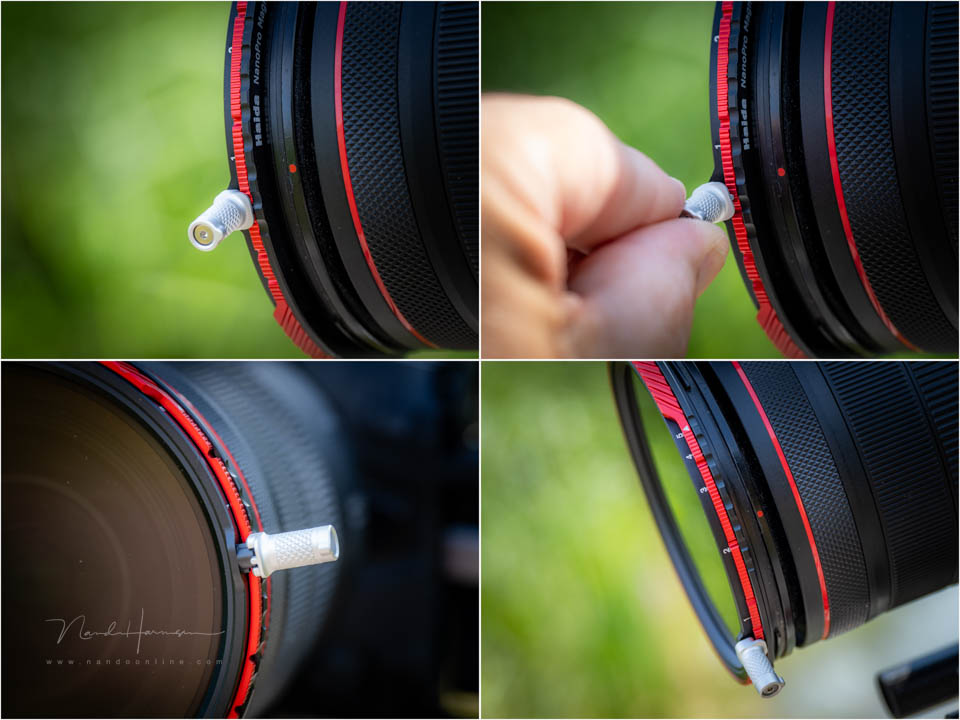
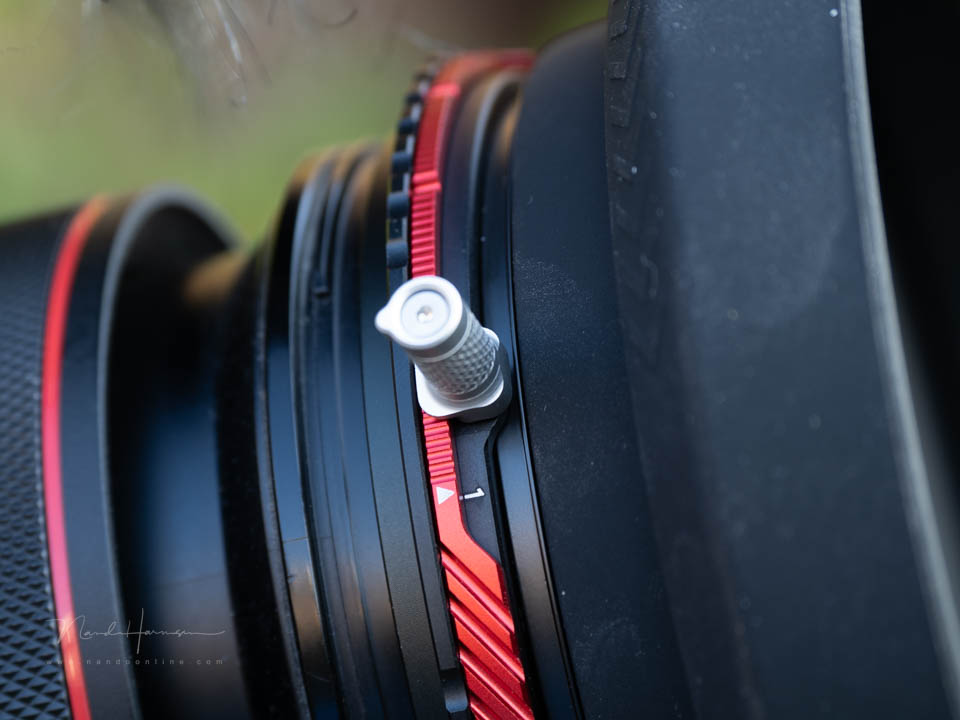
The lever is spring-loaded and slots into notches. This keeps the set strength fixed when you adjust the polarisation. The polarisation must be adjusted second, because setting the ND strength affects the polarisation.
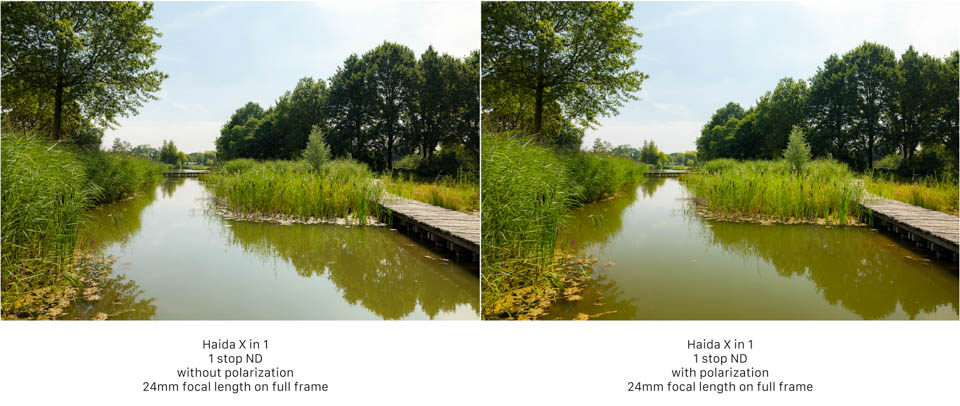
Image quality
In my tests on a sunny day, the filter showed that there are no colour casts. The colours remain unchanged both with and without the Enhancer. This does change when adjusting the polarising filter.
The colours become warmer as the strength of the polarisation is increased. This is normal for polarisation. Naturally, it also removes reflections.
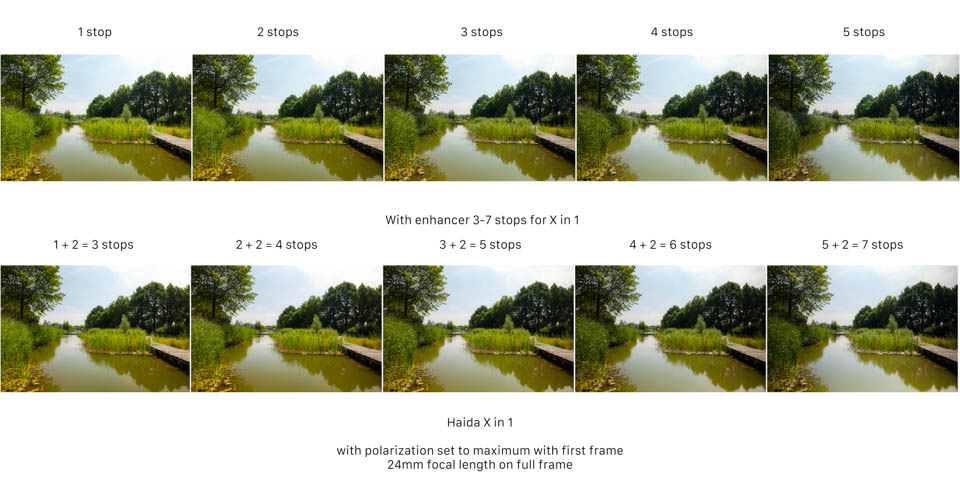
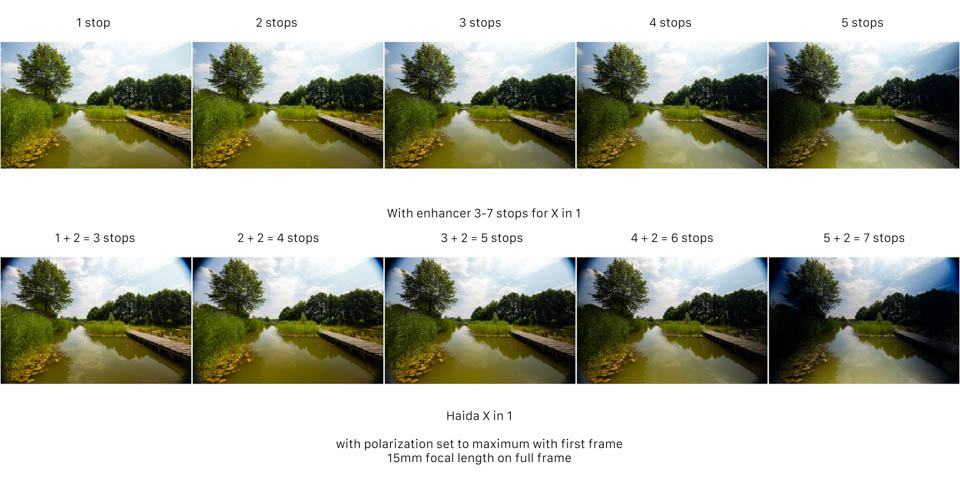
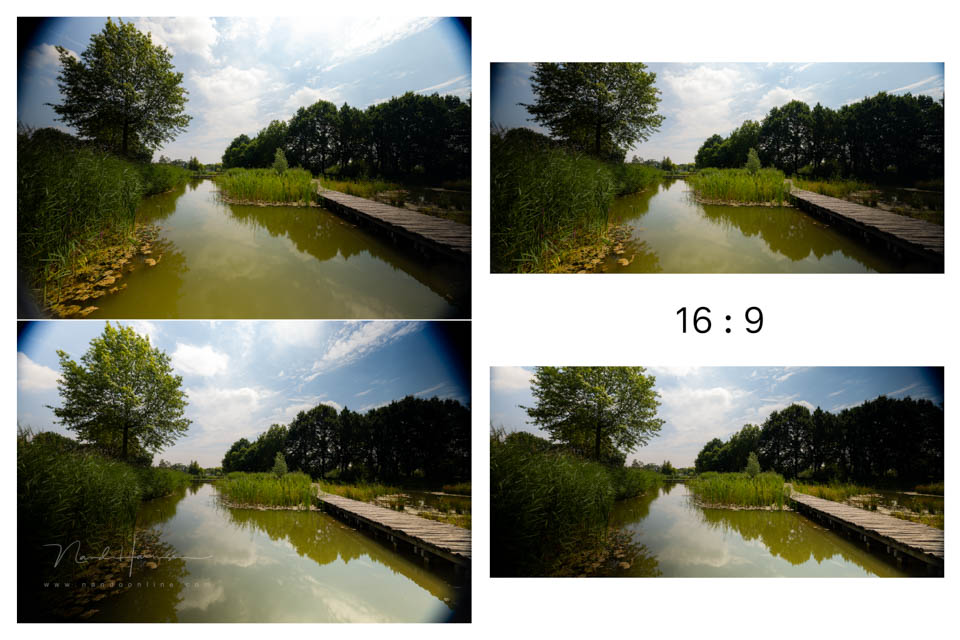
There is no distracting cross-patterning at the maximum strength of the filter. Not at a 24mm focal length. When 15mm is selected, the corners of the image do become darker.
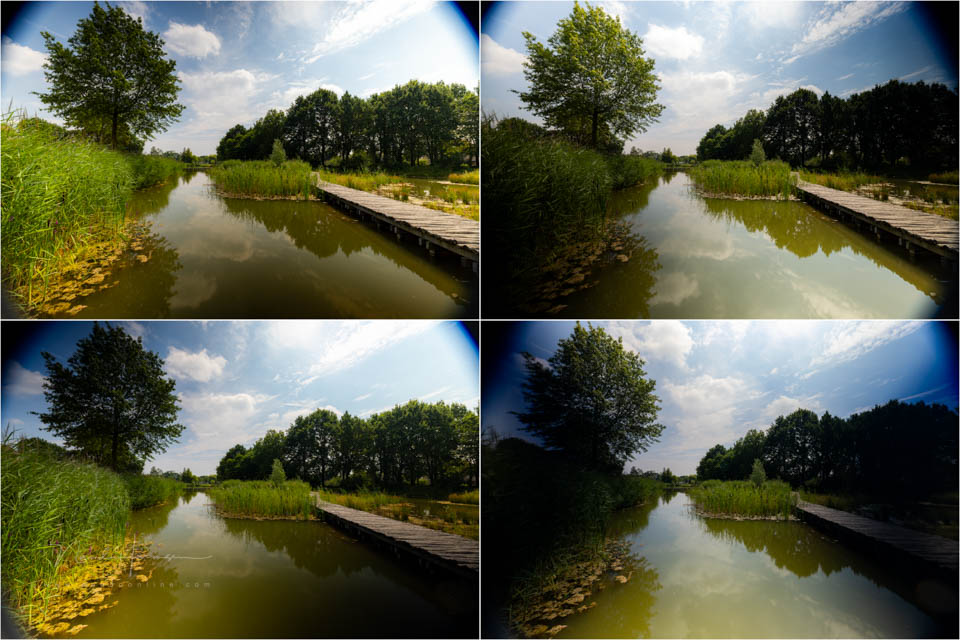
This can also be caused by the polarisation. An extreme wide-angle lens has uneven polarisation across the image, after all. A maximum angle of view of 20mm on full frame is recommended for this filter.
There is also vignetting when the Enhancer is used with a 15mm focal length. The filter is less suitable for this.
These tests are for photography. This has a 3:2 ratio on full frame. Video usually uses a 16:9 ratio. This removes the extreme corners, so you are also less affected by the effects mentioned above.
Using the lens hood
The lens hood is magnetic too. It clicks onto the filter and stays firmly in place. Things are different when you want to click the lens hood onto the Enhancer or 1/4 Mist Black. The lens hood will not stay in place then.
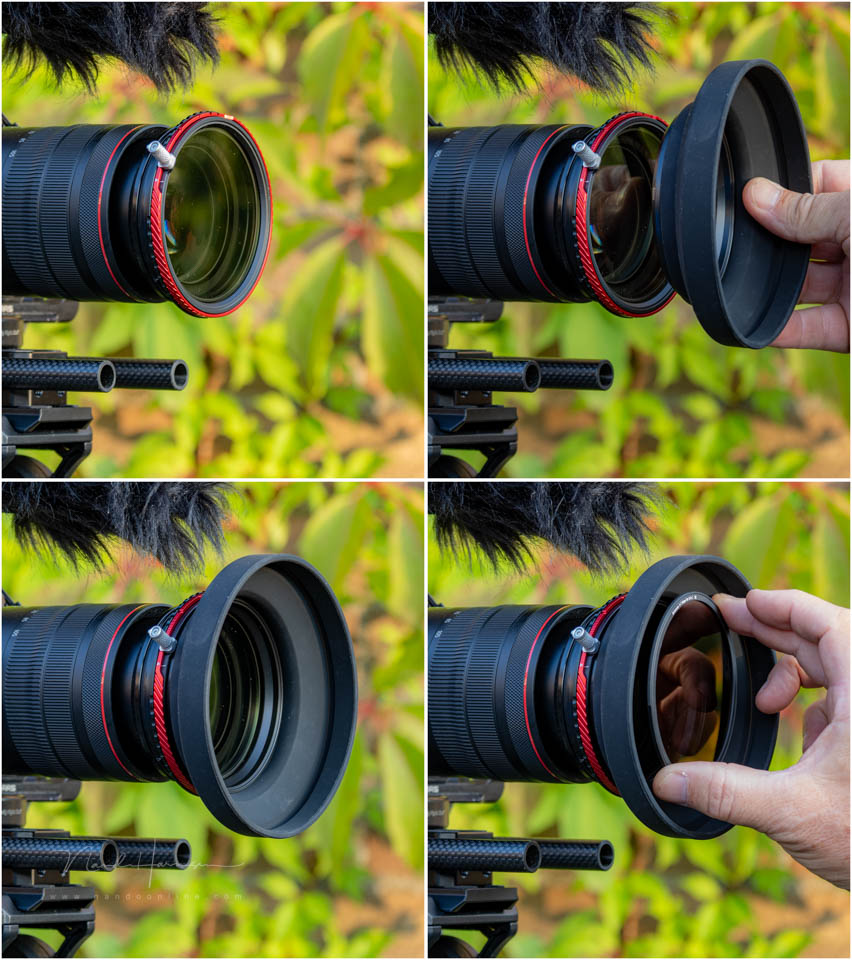
This is the result of incorrect use. The lens hood must always be attached directly to the filter. The extra Enhancer, or another filter, then clicks into the lens hood. This is important.

The lens hood is not very deep, and will have less and less effect at focal lengths from 35mm onwards. Be careful with focal lengths shorter than 24mm. Unless you are filming in 16:9, the lens hood will soon become visible.
Conclusion
The new Haida X in 1 filter is a welcome improvement over the first NanoPro CPL-VND filter. Being able to lock the set ND strength is very practical and useful.

Being able to use an extra ND filter, the Enhancer, solves the problem with the range. Sometimes 3 stops was just too much. Now 1-stop and 2-stop ND are also available. The separate filter is a clever solution.
Although Haida's standard magnetic NanoPro filters can also be used, you do need to allow for a larger filter size. For an 82mm filter, you need 86mm for the magnetic filters.

Any filters you already own may therefore not fit this filter. It is a consequence of the design, rather than a disadvantage as such. It is something to be aware of.
Are you looking for a good and flexible variable ND filter? Then the Haida X in 1 is a very good choice. The complete set, supplied in a nice pouch, costs around 200 euros.
Advantages
- Built-in polarising filter
- No cross-patterning due to the limited ND range of 1 to 5 stops
- Extra 3-7 Stop Enhancer increases the ND range by 2 stops
- 1/4 Mist Black included
- Magnetic system works quickly and reliably
- Larger filter diameter prevents vignetting down to an angle of view of around 20mm
- Other Haida NanoPro magnetic filters can be used
- Lever for setting the ND strength can be locked
- No noticeable colour cast
- Nice lens pouch included
- Lens hood available as an accessory
- Easy to use
Disadvantages
- The filter has to be screwed on. This could also be done with a magnetic ring
- A separate magnetic adapter for using the 1/4 Mist Black on its own is not included
- Filters placed in the lens hood are difficult to remove
Thanks to Haida for making this filter available.
About the author
Nando Harmsen has been photographing for more than 40 years. He specialises in wedding photography and landscape photography. Nando also gives talks, workshops, masterclasses and photo trips, and regularly reviews new and interesting equipment.
You might also like
-
 Review: Haida variable ND filter with built-in polarisation
by Nando Harmsen
-
 Review: Haida M10 Insert Variable ND filter
by Nando Harmsen
-
 Review: Haida MagSafe Magnetic Filter Holder for Smartphones
by Nando Harmsen
-
 Haida magnetic filters, a perfect alternative to a filter system
by Nando Harmsen
-
 Variable ND filter, or not?
by Nando Harmsen

0 comments
Be the first to share what you think!
Have your say
Please note: Articles older than a week can only be commented on by signed-in visitors.Would you still like to comment? sign in or create a free account.
Become a better photographer every week
A practical photography tip in your inbox every week.
39,079 photography enthusiasts already receive the tips! More about the weekly mail. Or keep up to date via  Facebook.

Elja Trum
Photofacts; everything to do with photography!
Would you like to take better photos and keep up with what is happening in photography? Photofacts publishes articles that teach you something about photography — from a product announcement to a practical shooting tip or a look at a website. Photofacts covers photography every day and is a hobby project of Elja Trum's that got out of hand. The articles are written by a team of volunteer authors. If you would enjoy writing one or more articles for Photofacts, do get in touch.More about PhotofactsPhotofacts is made possible in part by
