

Photographing dragonflies requires preparation, precision and patience (part 1)
Saturday 28 May 2022, 15:51 by Erik Nevels | 4,971 views | 2 commentsThis article was translated from Dutch with the help of AI. Read the original.
It is dragonfly season again. A number of species of these active daytime fliers have been around for several weeks now. Photographing dragonflies is not easy, but I find that makes it all the more challenging.
A precision job that requires patience and attention. Good preparation is half the work. That is what this first part is about.
Knowledge
As a photographer, having knowledge of nature gives you a real advantage. Knowing about animal behaviour, for example, helps enormously.
It is no different with dragonflies. If you know which months they appear, where and at what time of day, you are already well on your way.
It does require some study, because with the division into 'true dragonflies' and 'damselflies', around 70 species occur in the Netherlands. Worldwide, there are no fewer than 6,300.
As well as in field guides, you can also gain a lot of knowledge about dragonflies online, for example at Vlinderstichting.nl.
The weather
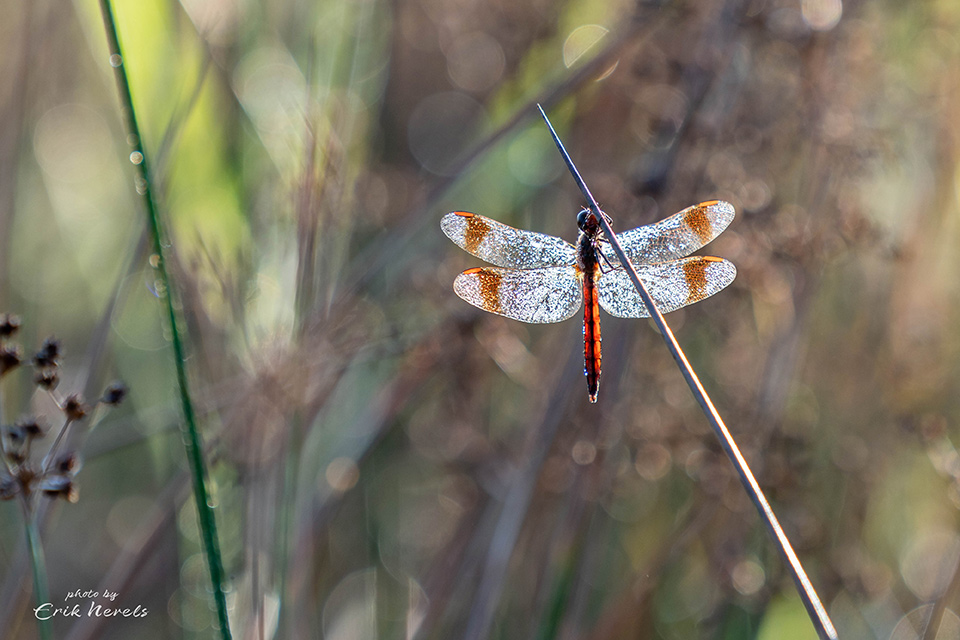
Before I go out to photograph dragonflies, I check the weather. There are a few conditions it needs to meet for photographing dragonflies to be successful.
Little or no wind is one of them. That means I can work with slower shutter speeds and do not have to turn up the ISO.
A second condition is sunshine. When the sun is shining, dragonflies like to come out. They depend on the sun's warmth to regulate their body temperature.
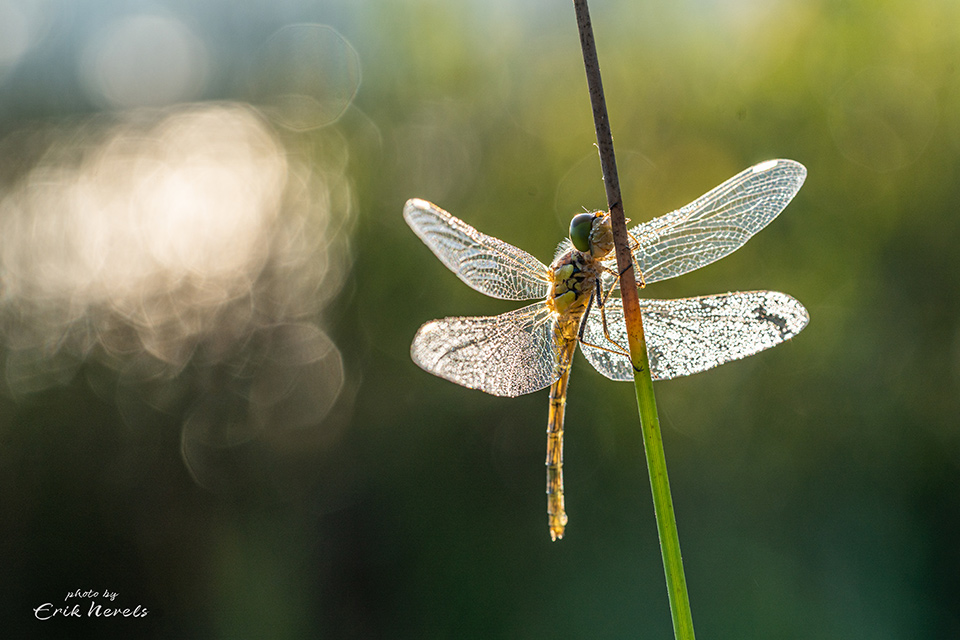
Last but not least, I check the weather for the chance of dew. Covered in dew drops in the early morning, a dragonfly cannot fly yet. Besides, all those drops are literally and figuratively brilliant.
Time of year and time of day
The dragonfly season starts in April, when the first dragonflies emerge. It gets much busier in May. Some species do not die off until late autumn, partly depending on the weather conditions.
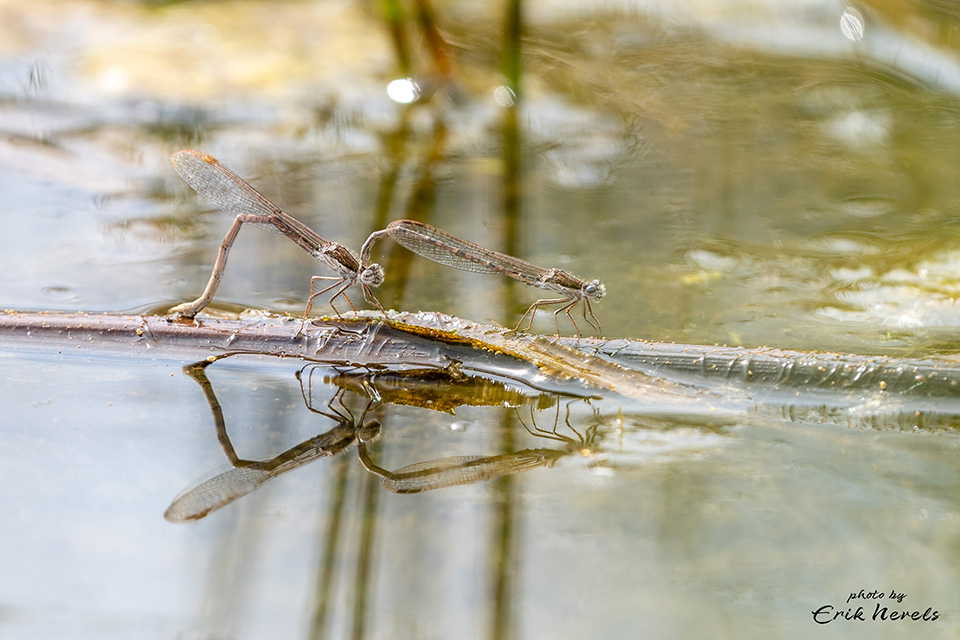
The exceptions are the common and northern winter damselflies, which overwinter as imagoes, that is, as the flying insects we know as dragonflies.
You can photograph dragonflies all day, but as mentioned, early morning is favourable. The light is not too harsh yet, and dew-covered dragonflies stay put until they have dried off. A dewy dragonfly also stands out quite well among the vegetation.
You can also photograph them during the day, although the bright sunlight is not ideal and many species are mainly flying around then. If they do land, they require an extremely careful approach.
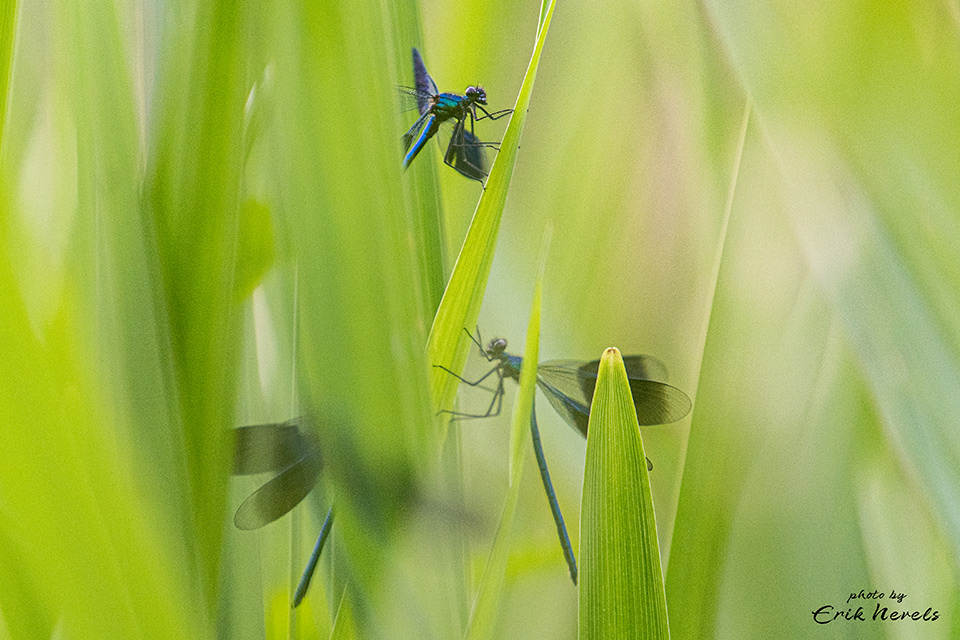
In the evening, the dragonflies look for a place to spend the night. In the evening twilight, for example, banded demoiselles gather in groups to sleep.
The location
To photograph dragonflies, I look for water because they need it to reproduce. Streams, ditches and pools are ideal.
The dragonflies find their food above the water, but certainly also in the surrounding area. This consists of all kinds of small, usually flying insects such as mosquitoes, flies and moths.
What do I take with me?
When photographing dragonflies, I always take two lenses with me. Obviously my macro lens, but also my 200-600mm telephoto lens.
The macro lens speaks for itself. It allows me to photograph from close up and take close-up photos.
I also regularly use my telephoto lens, out of necessity because the dragonfly is too far away and I do not want to trample the vegetation flat to get closer.
But even when that necessity is not there, I often choose the telephoto lens because it allows me to photograph the dragonfly small in the frame against a blurred background, or in and with its surroundings.
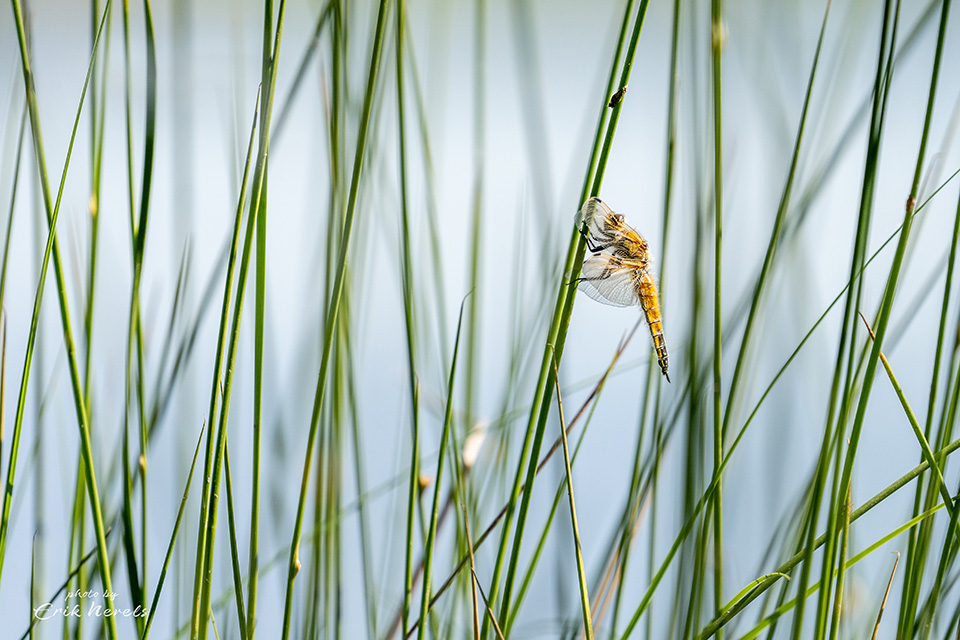
I always take my tripod with me too, and use it regularly when I have the macro lens on the camera, and quite often with the telephoto lens as well.
I shoot handheld when the tripod cannot be positioned properly or when I want to be able to act quickly, for example when the dragonfly does not stay perched for long.
I also take a polarising filter and, for occasional use, a small reflector and cable release.
How and when?
More about that in part 2 of this blog.
About the author
Steeds weer boeiend en op zoek naar de essentie! Dat is wat fotograferen in de natuur voor mij is. Gefocust op het landschap of het onderwerp in diens omgeving tracht ik meer dan alleen te registreren. Een continue uitdaging waarvan ik elke keer volop geniet. Meer foto's? Volg mij op Instagram en/of kijk op mijn website
You might also like
-
 Bird photography often requires a lot of patience
by Erik Nevels
-
 Photographing with a purpose
by Erik Nevels
-
 Up early to photograph banded darters
by Erik Nevels
-
 The Plan
by Michiel Heijmans
-
 Adventures with the Sony 200-600mm (week 1)
by Erik Nevels
2 comments


Have your say
Please note: Articles older than a week can only be commented on by signed-in visitors.Would you still like to comment? sign in or create a free account.
Become a better photographer every week
A practical photography tip in your inbox every week.
38,981 photography enthusiasts already receive the tips! More about the weekly mail. Or keep up to date via  Facebook.

Elja Trum
Photofacts; everything to do with photography!
Would you like to take better photos and keep up with what is happening in photography? Photofacts publishes articles that teach you something about photography — from a product announcement to a practical shooting tip or a look at a website. Photofacts covers photography every day and is a hobby project of Elja Trum's that got out of hand. The articles are written by a team of volunteer authors. If you would enjoy writing one or more articles for Photofacts, do get in touch.More about PhotofactsPhotofacts is made possible in part by
