
Photographing with a purpose
Saturday 12 June 2021, 22:44 by Erik Nevels | 5,358 views | 2 commentsThis article was translated from Dutch with the help of AI. Read the original.
When my mate and I go out to take photos, we have a purpose in mind. Usually, this is a subject we want to photograph, but it can also be a technique we want to use.
I then think about how I can achieve that purpose. I try to picture the photos I want to take in advance.
Why have a purpose?
Having a purpose and an accompanying plan is an essential part of my photography hobby. It gives direction, provides a challenge and leads to better results.
The fun starts during the preparation, too. Which plants or animals are there to photograph? What do the landscapes look like now?
Over the years, I have learnt more and more about nature and what is available at which time. Knowledge of the seasons and species helps me set goals and make good plans. It significantly increases my chances of success.
The subject
As a nature photographer, I have plenty of subjects to choose from. Such a subject can be broad, for example ‘birds’, or very specific, such as ‘a singing bluethroat’.
Even so, subjects return more often the longer I have been taking photos. They continue to fascinate and challenge me. I try to avoid repeating what I have already made, and instead create new images.
Weather and location
I have already mentioned it, but the weather is an important aspect to take into account. Rainfall, temperature, wind, sun or cloud, it all makes a difference. What kind of light does the weather bring? If it is too windy, macro photography in the field becomes very difficult.
A few days in advance, I check the weather forecast and ask myself whether the weather on my photography day is suitable for photographing the subject I want.
The opposite happens too. Which subject suits the predicted weather? For the chosen subject, I then look for a suitable location in consultation with my mate.
Plan B
As weather forecasts regularly turn out differently from what was predicted, having a plan B is useful and sensible. I therefore regularly discuss a plan B with my photography mate on the evening before.
Equipment
Having a plan also tells me what I need to take with me and what I can leave behind. I described why I still often take more than I need in my previous blog, ‘I set off and let myself be surprised’.
‘Old’ plan: my favourite tree
Last year, I wrote a blog, Inspired by the documentary, The World of Lars van de Goor, about photographing my favourite tree.
I already had a plan to return to ‘my’ tree at sunrise, with light mist, and in the period from late May to early June because of where the sun rises at that time.
The weather forecast for 28 May promised sun and mist. I set the alarm for 4.30 am and arrived at the location well in time. I explored two viewpoints.
I had already planned the first one quite specifically. It was intended for a portrait-format shot of the first rays of sunlight. I wanted to use the second viewpoint for a landscape-format shot showing the entire lake.
At 5.30 am, the sun reached the tops of the trees on the horizon. Time for the first shots. Fortunately, the contrails in the sky had just disappeared in time.
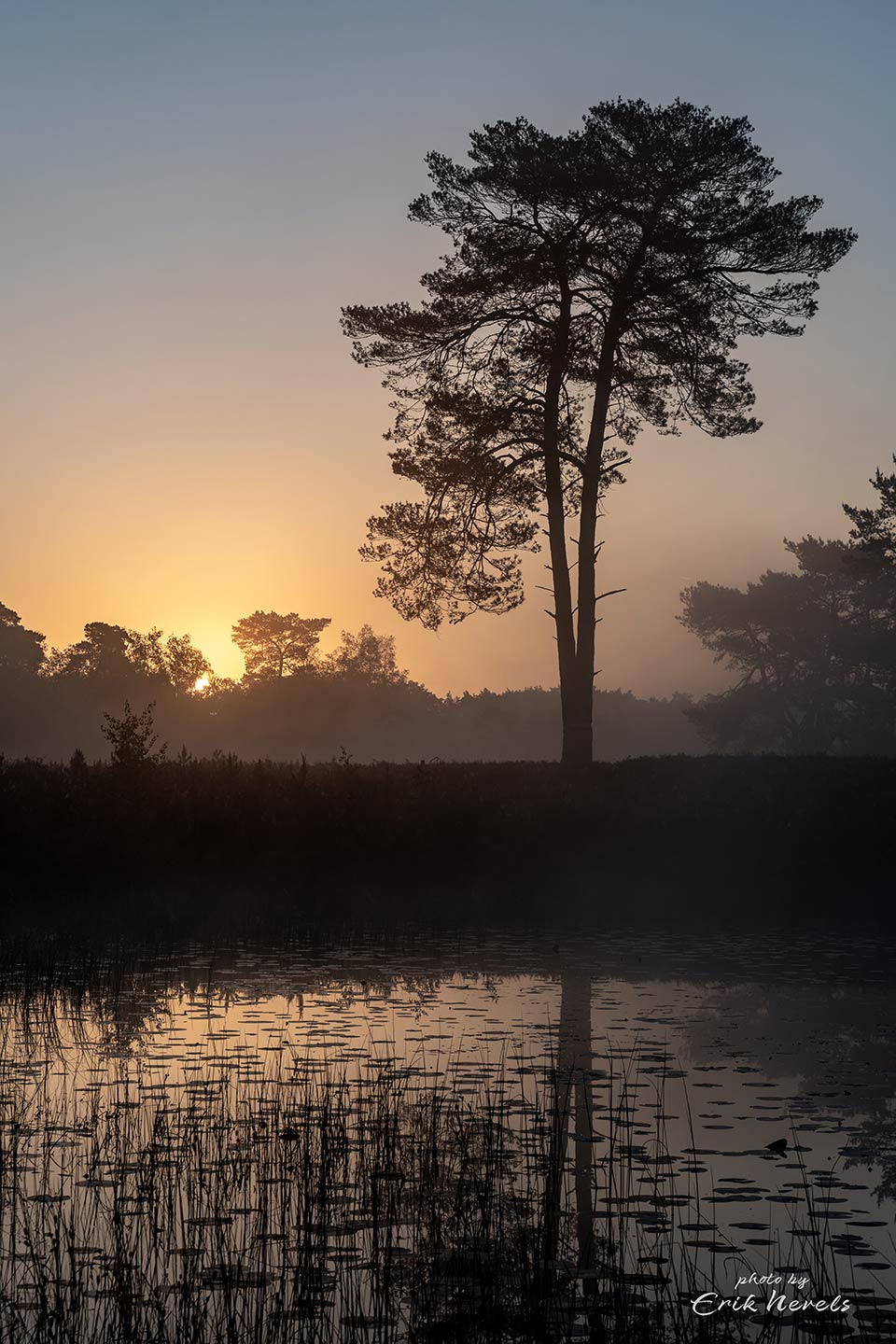
The results are a little disappointing. The mist is less visible than I had hoped, the sun is less red and the little cloud has disappeared. Meanwhile, the sun continues to rise steadily.
By the time it is fully above the horizon, I have already moved to the second viewpoint I explored earlier. As well as having the entire lake in the frame, I want the now bright sun behind the branches of the tree, to break up the light.
That idea produces a surprising image. The light is broken up, making the mist visible. That looks more like it, and I enthusiastically take several shots. To prevent a blown-out sun, I underexpose by one stop.
I also vary the focal length because I am not entirely sure about the treetop in the upper left of the image. Does it add something and make the photo more balanced, or is it distracting?
In the end, I cannot get it out of the frame without compromising the other parts of the photo. Standing closer is not an option because I am already at the widest angle.
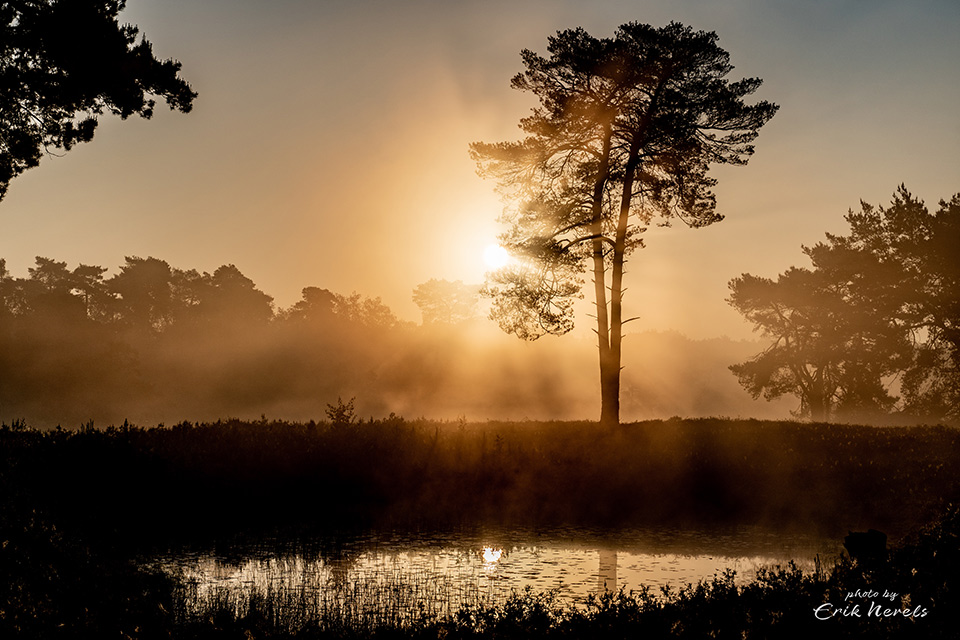
Satisfied, I would give it a 7.5 out of 10, I swap my zoom lens for the macro lens and go looking for dewy damselflies.
New plan: emerging dragonflies
My photography mate has a challenging plan: photographing emerging dragonflies, in other words, the final moult of a fully grown dragonfly larva. The skin on the head and thorax of the larva bursts open, and the adult dragonfly slowly emerges.
We are lucky. The plan can go ahead because it is a warm, sunny and almost windless day. We know the location from previous visits.
We can reach the water’s edge, and with dragonfly season in full swing, it is a matter of searching carefully and having some luck. Even so, it takes more than half an hour before I discover the first emerging dragonfly.
We can get to work. Each from our own viewpoint. At first, I photograph at 600mm. The dragonfly is about three metres from the bank, and that seems to be the only way to get it somewhat ‘macro’ in the frame.
However, I am not satisfied and pick up my macro lens. The decision to put on my wellies proves to be a great one. Carefully, I wade into the water and walk right up to the emerging dragonfly, with the water coming almost to the top of my wellies.
The dragonfly is low down, and crouching is risky. Experience shows that your wellies can still fill with water, or you can end up with a wet backside.
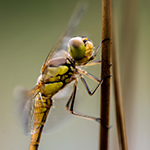
For the image I have in mind, however, I am willing to take a lot of risks. It only results in slightly wet trousers and a little water in my left welly. In return, I get this lovely photo!
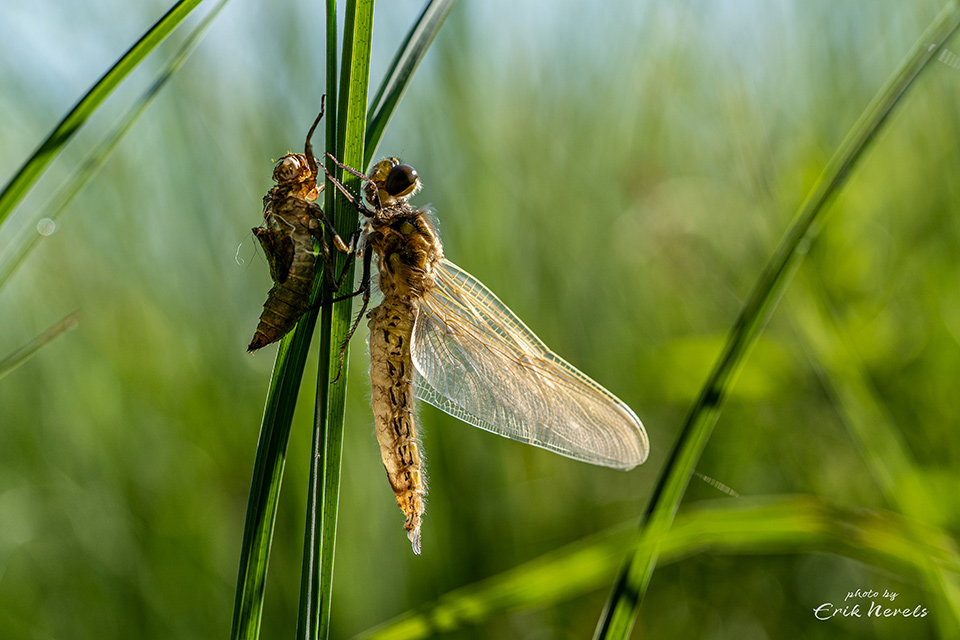
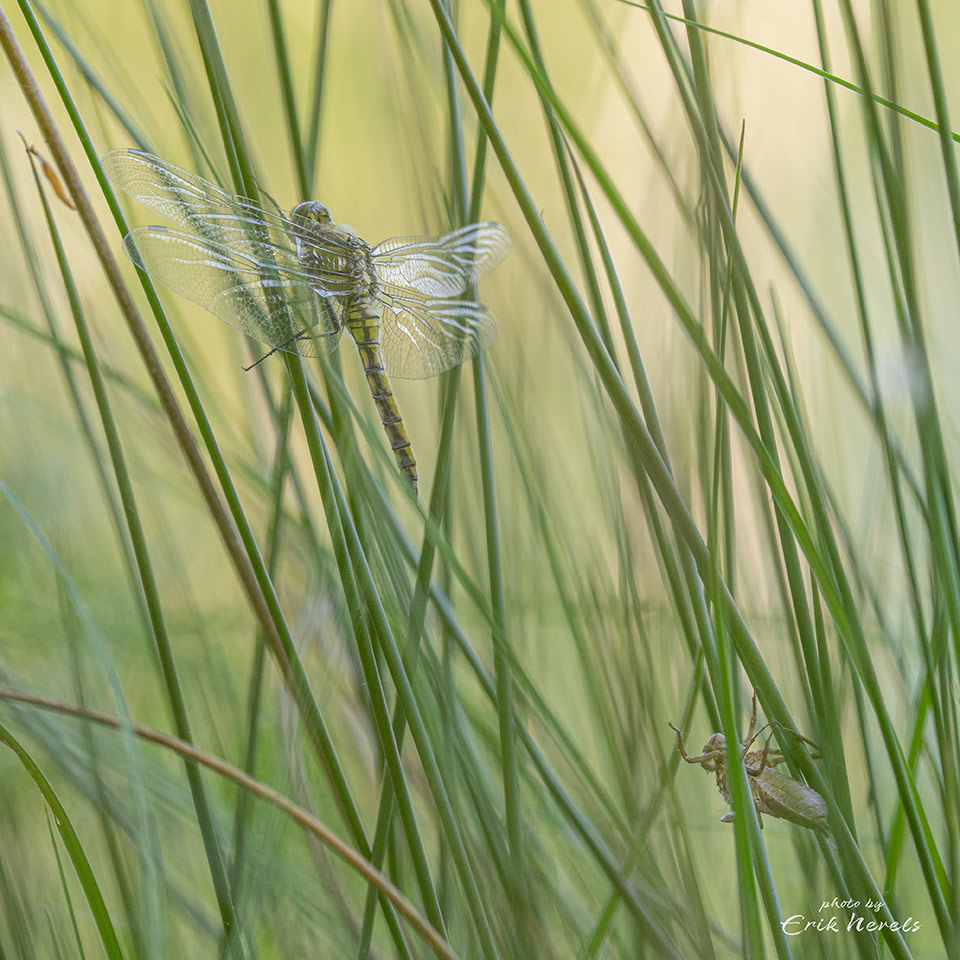
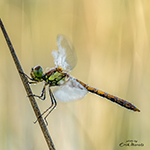
Later that morning, we discover more emerging dragonflies, including this one. By then, the 200-600mm is back on my camera, and my feet and trousers stay dry.
The light reflects beautifully on the wings, and the combination of the shed skin and the newly emerged dragonfly tells a story. This is one of the new images I had in mind.
Recommended
I recommend that everyone goes out to take photos with a purpose in mind and plans their photo shoot carefully. Try not to take the photos you have already made, but create new images.
Think about this beforehand and try to picture the images in advance. Challenge yourself in this way and, like me, you will probably get even more enjoyment from our wonderful hobby.
About the author
Steeds weer boeiend en op zoek naar de essentie! Dat is wat fotograferen in de natuur voor mij is. Gefocust op het landschap of het onderwerp in diens omgeving tracht ik meer dan alleen te registreren. Een continue uitdaging waarvan ik elke keer volop geniet. Meer foto's? Volg mij op Instagram en/of kijk op mijn website
You might also like
-
 7 Tips for Macro Photography
by Mike Muizebelt
-
 Review: The Canon RF 85mm macro lens
by Nando Harmsen
-
 The Plan
by Michiel Heijmans
-
 Planning a landscape photo down to the last detail, or not?
by Nando Harmsen
2 comments
-

 primefoto.nl wrote on Tuesday 22 June 2021 at 12:41
| reply
primefoto.nl wrote on Tuesday 22 June 2021 at 12:41
| reply
I share the experience that working purposefully gives you a better chance of achieving beautiful results. It also depends a bit on what genre you’re doing. With street and other people photography, I find the unexpected particularly interesting. But even then, I have determined beforehand that I’m going to do people photography, where I’m going to do it and with what gear. Driving around aimlessly and looking for something you don’t know you’re looking for isn’t really my thing.
Translated from Dutch. -
 Erik wrote on Tuesday 22 June 2021 at 18:41
| reply
Erik wrote on Tuesday 22 June 2021 at 18:41
| reply
@primefoto.nl
Translated from Dutch.
Thanks for your response and nice that you share my experience. The genre does make a difference indeed. But in nature too, the unexpected is interesting, as I wrote in my penultimate blog post. Good luck going forward with setting goals and achieving them!
Have your say
Please note: Articles older than a week can only be commented on by signed-in visitors.Would you still like to comment? sign in or create a free account.
Become a better photographer every week
A practical photography tip in your inbox every week.
38,981 photography enthusiasts already receive the tips! More about the weekly mail. Or keep up to date via  Facebook.

Elja Trum
Photofacts; everything to do with photography!
Would you like to take better photos and keep up with what is happening in photography? Photofacts publishes articles that teach you something about photography — from a product announcement to a practical shooting tip or a look at a website. Photofacts covers photography every day and is a hobby project of Elja Trum's that got out of hand. The articles are written by a team of volunteer authors. If you would enjoy writing one or more articles for Photofacts, do get in touch.More about PhotofactsPhotofacts is made possible in part by
