

Night photography tip: long exposure noise reduction
Friday 18 February 2022, 14:14 by Nando Harmsen | 6,428 views | 2 commentsThis article was translated from Dutch with the help of AI. Read the original.
When it is dark, you will often need longer shutter speeds to take a good photo. Do you have noise reduction switched on in your camera, or not? High ISO noise reduction will not make much difference when taking photos. But watch out for long exposure noise reduction.
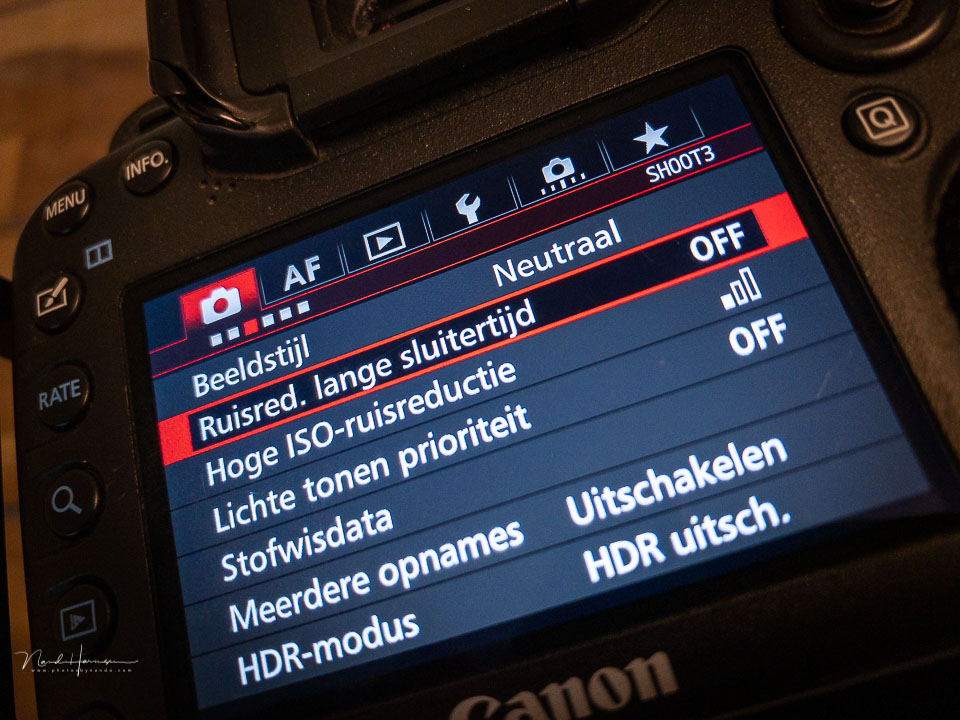
A high ISO value will often cause extra noise in your photo. Very long shutter speeds can also cause extra noise. Of course, you do not want that, and your camera has the option to do something about it. In fact, your camera has two noise reduction functions built in, each for a different purpose.
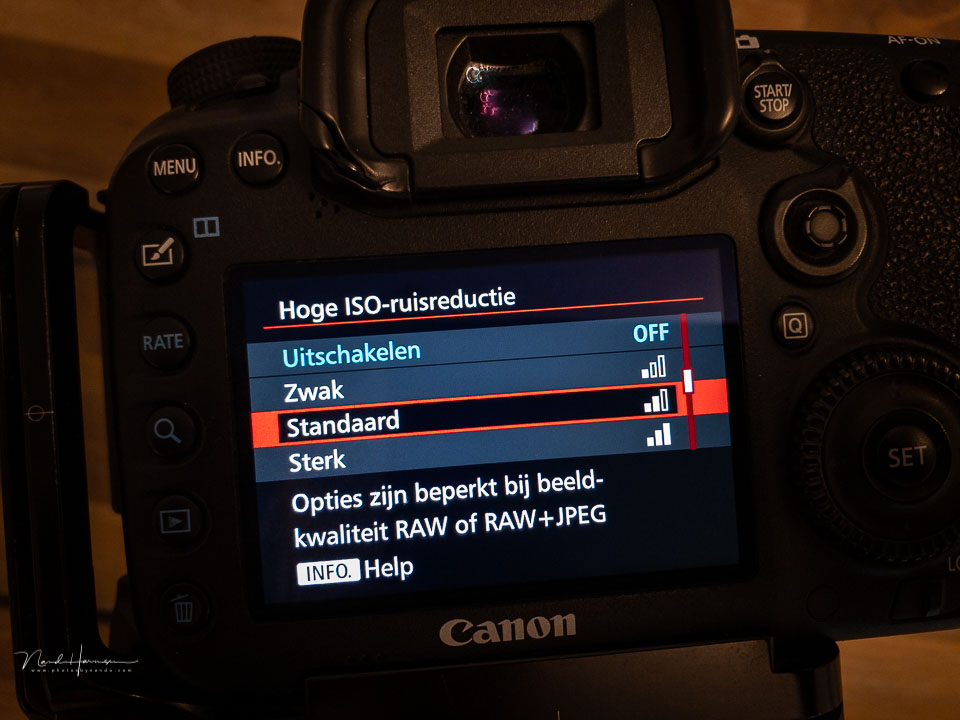
The standard noise reduction is intended for the noise caused by a high ISO value. This setting only applies if you photograph in jpeg. It filters the noise out of the jpeg produced by your camera.
If you use raw, the noise reduction setting will be stored in your raw file, but you can still choose to apply, adjust or disable this processing later. For the raw photographer, this setting in the camera is effectively not important.
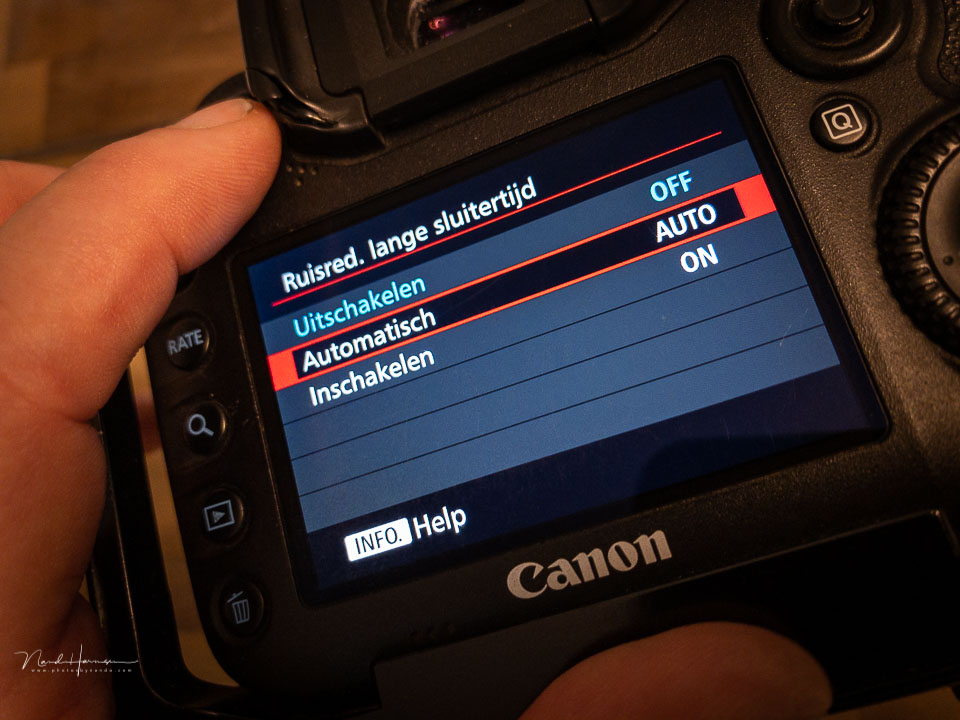
There is also long exposure noise reduction, which is important for both jpeg and raw photographers. Long exposure noise reduction takes an extra photo without any light reaching the sensor. This records hot pixels, which are then automatically filtered out of the actual photo.
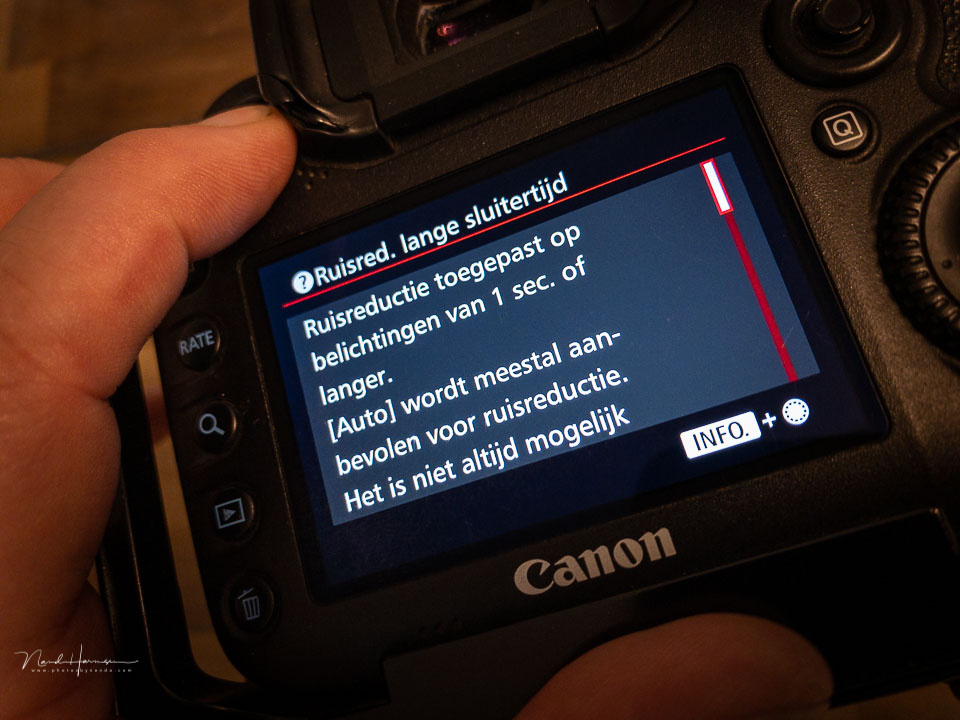
Long exposure noise reduction is often enabled for shutter speeds of 1 second or longer. Because an extra photo is taken without any light, a dark frame, taking the photo effectively takes twice as long. One second becomes two seconds. Thirty seconds becomes a minute.
Of course, this is not much of a problem until your shutter speed becomes really long. Just do the maths, one minute becomes two minutes. Five minutes becomes ten minutes. If your shutter speed is fifteen minutes, it will take half an hour for your photo to be taken.
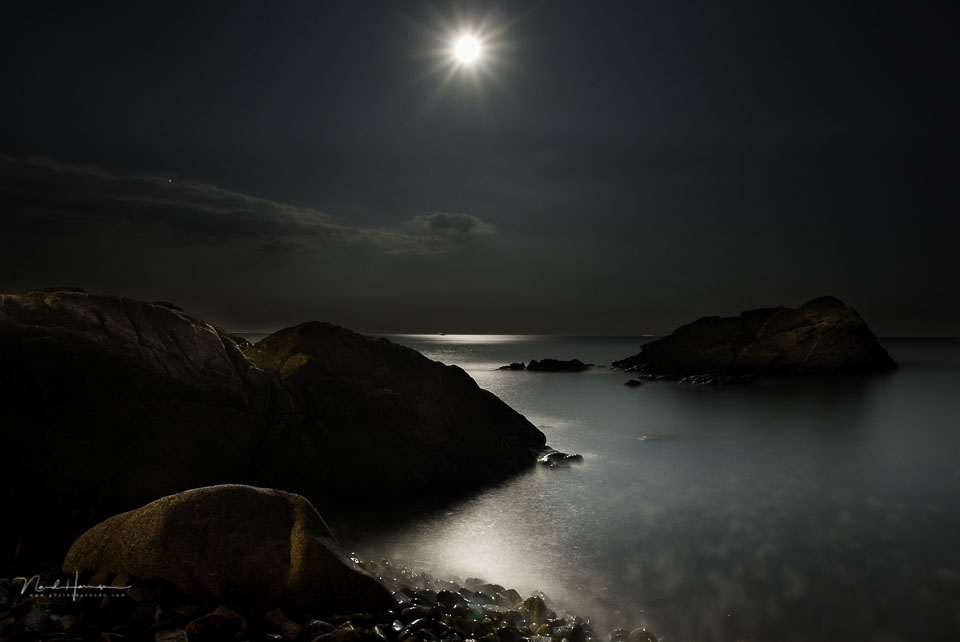
It is best to switch long exposure noise reduction off when you do not need it. This saves a lot of waiting time when doing night photography.
If you do want to use a dark frame, you can also make one yourself for each photo session, and use it for several photos. The exposure time of your dark frame must match the exposure time of your photo.
Also read Huub Keulers' article on reducing noise in your photo, for tips on dealing with noise in your photo.
About the author
Nando Harmsen has been photographing for more than 40 years. He specialises in wedding photography and landscape photography. Nando also gives talks, workshops, masterclasses and photo trips, and regularly reviews new and interesting equipment.
You might also like
-
 Which is better? Stacking or noise reduction?
by Nando Harmsen
-
 New update for Lightroom Classic enables AI noise reduction
by Nando Harmsen
-
 Removing noise? Use it in moderation
by Nando Harmsen
-
 How can you avoid and reduce noise in your photos?
by Huub Keulers
-
 Night photography tip: the eye is drawn to the brightest point
by Nando Harmsen

2 comments
-
 Matt wrote on Friday 18 February 2022 at 17:19 | reply
As far as I know, dark frame subtraction (that is, noise reduction for long shutter speeds), is not performed when you shoot RAW. In that case it's just a pure waste of time.
Translated from Dutch.
But maybe this is camera-dependent. -


Have your say
Please note: Articles older than a week can only be commented on by signed-in visitors.Would you still like to comment? sign in or create a free account.
Become a better photographer every week
A practical photography tip in your inbox every week.
39,024 photography enthusiasts already receive the tips! More about the weekly mail. Or keep up to date via  Facebook.

Elja Trum
Photofacts; everything to do with photography!
Would you like to take better photos and keep up with what is happening in photography? Photofacts publishes articles that teach you something about photography — from a product announcement to a practical shooting tip or a look at a website. Photofacts covers photography every day and is a hobby project of Elja Trum's that got out of hand. The articles are written by a team of volunteer authors. If you would enjoy writing one or more articles for Photofacts, do get in touch.More about PhotofactsPhotofacts is made possible in part by
