
The Blood Moon on Auto?
Saturday 4 August 2018, 13:13 by Tanja Thomas | 10,339 views | 2 commentsThis article was translated from Dutch with the help of AI. Read the original.
I couldn't see, let alone photograph, the blood moon or lunar eclipse from the States. So I was very curious about the results from my photographer friends in the Netherlands.
I nearly fell off my chair when I saw what was possible with a Panasonic Lumix DC-FZ82 with a 20-1200mm optical zoom!
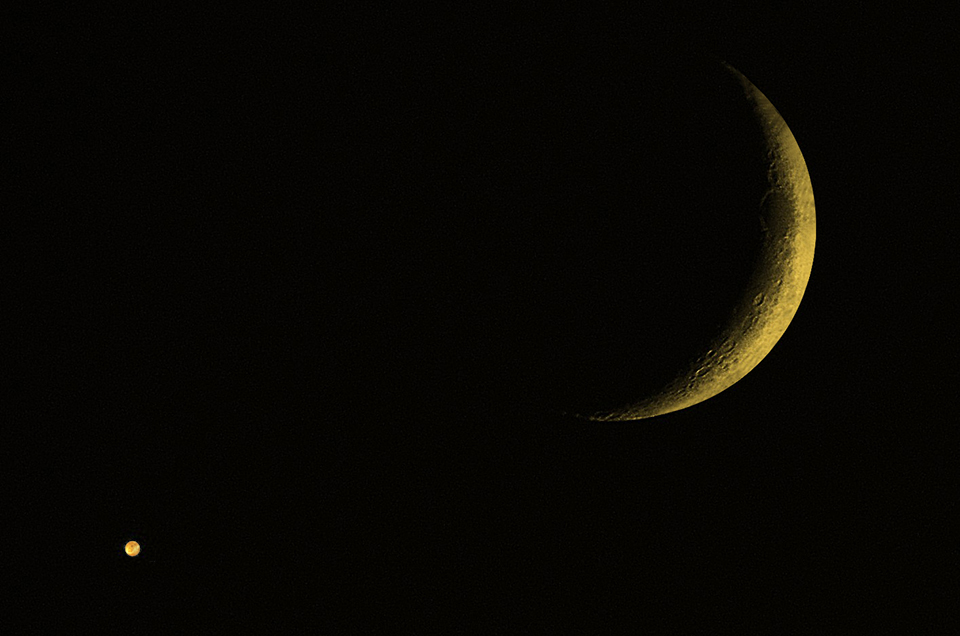
We had just experienced the "moon dance" with the planet Venus here in Methow. While photographing this phenomenon, I discovered that capturing objects like these requires quite a bit of skill and attention. Especially with a DSLR camera.
Planets and the moon remain difficult to photograph, despite all the experience you gain with them.
Chorizo slices
I waited patiently for the photos of the beautiful blood moon and lunar eclipse to appear online. At first, photos of dark skies with tiny little red dots started appearing, probably taken with mobile phones.
There were also beautiful photos with huge, unnatural-looking moons and fantastic subjects in the foreground. From these photos, I could see that a lot of attention had gone into them and that they had also undergone some editing.
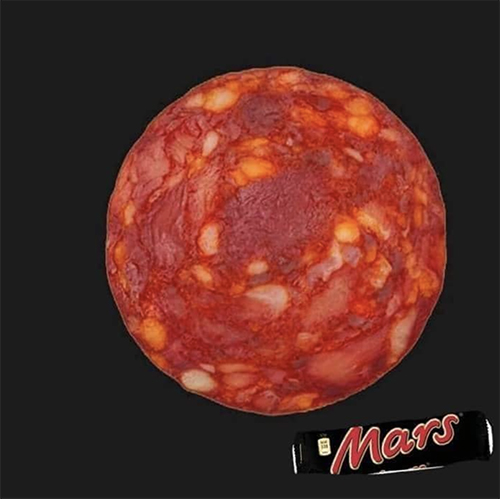
Photos of hilarious chorizo slices could also easily pass for the blood moon without glasses, or for people with poor eyesight. What caught my attention more, however, were the photos taken by two friends.
I knew that these people did not exactly have cameras with a huge zoom range. Nor did they have much experience photographing planets or moons.
Wow!
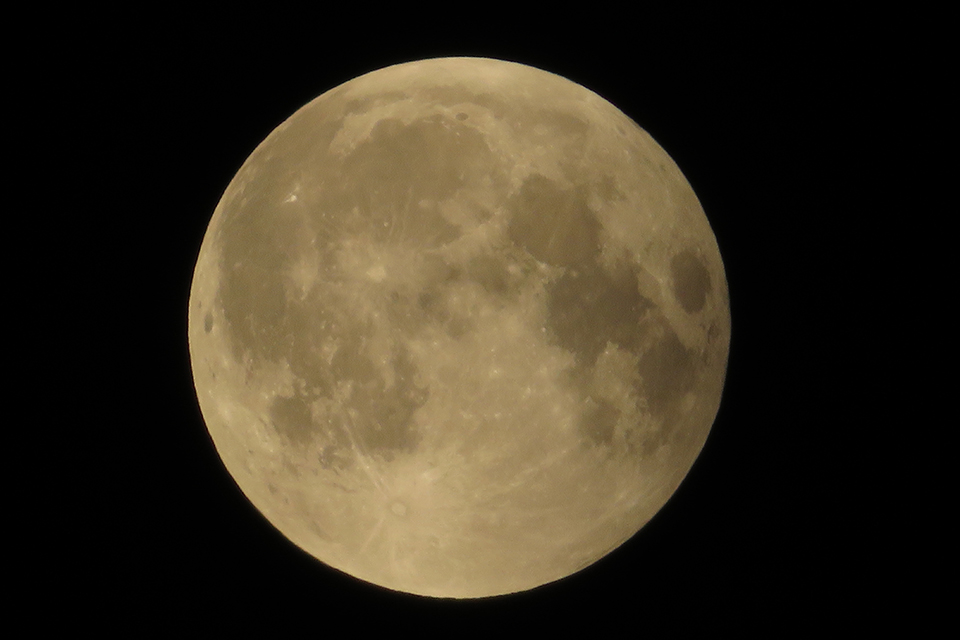
Their photos were of astonishing quality to me. The moon was very large, simple and clear in the frame. After asking a few questions about the photos, it soon became clear that they had used so-called mirrorless compact or bridge cameras.
These types of camera have fixed zoom lenses with a huge range. And they had simply used the automatic settings...
The photo below, for example, was taken by Rian Graat with a Canon SX720HS Powershot in automatic mode. She was leaning over the edge of a tractor and did not even use a tripod.
Canon PowerShot SX720 HS
The Canon PowerShot SX720 HS is a compact camera with 40X optical zoom (24-960mm!), allowing you to capture distant subjects without losing image quality.
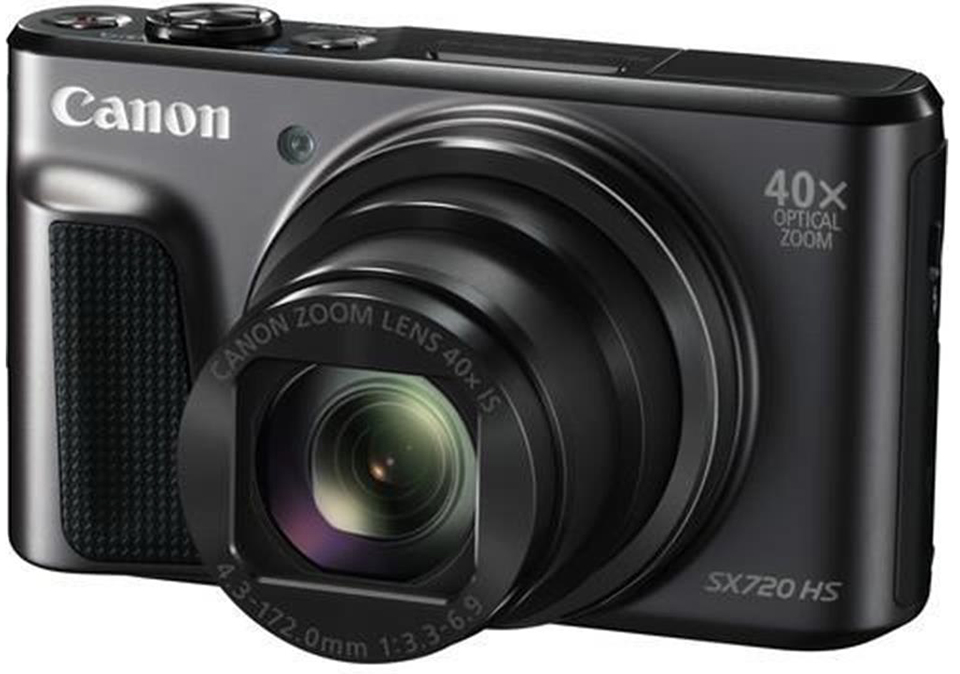
This camera has so-called "focus peaking", which colours the sharp part of a photo on the LCD screen. This lets you see exactly what you are focusing on. The camera also does a lot in the background, helping your photos turn out well in different lighting conditions without you having to think too much about it.
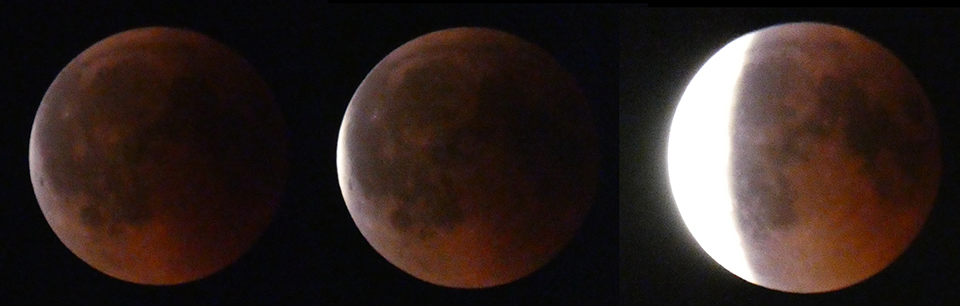
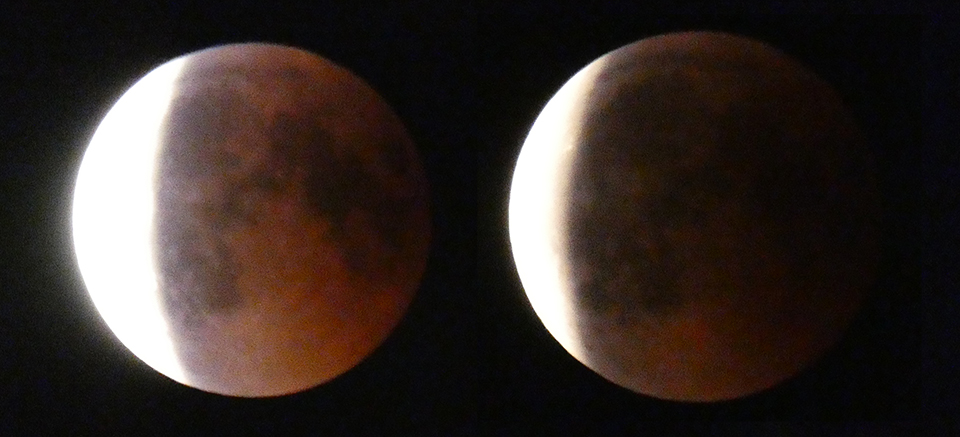
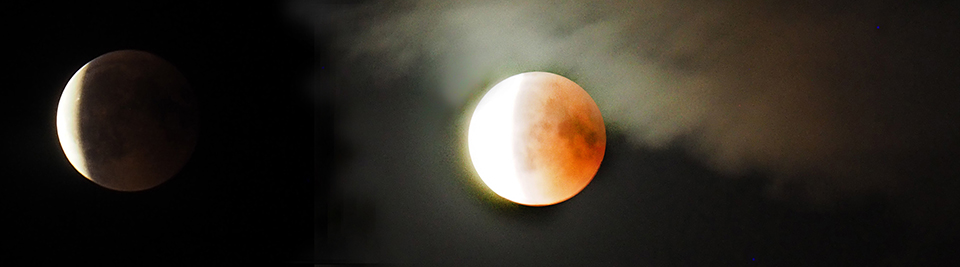
These photos of the blood moon and lunar eclipse were taken by Monique Loman with a Panasonic Lumix DC-FZ82, also using the automatic setting
Panasonic Lumix DC-FZ82
The Panasonic Lumix DC-FZ82 is a bridge camera, also with a fixed lens and an impressive 60x optical zoom. Like the camera mentioned above, you can clearly capture subjects from a long way away thanks to its enormous zoom range.
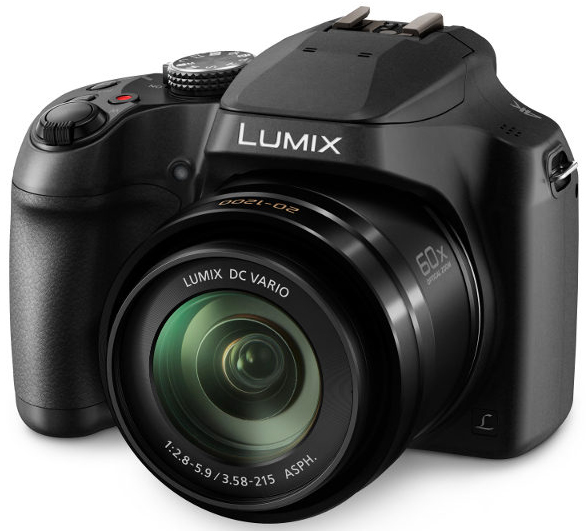
This camera even has a Post Focus function, which lets you decide after taking the photo which point you want to focus on. The built-in image stabilisation and fast lens allow you to take clear handheld photos in low-light conditions.
Monique used the iA, the intelligent Auto setting, on this camera and did not change any of the settings. She did not use a tripod either, although she did lean on a fence for support, and zoomed in as far as possible.
She explained that when the moon slowly became visible again, she could not zoom in quite as far because the bright moonlight made focusing more difficult. In hindsight, she would have chosen a different automatic setting: Automatic (A) with an "expressive" filter.
She thought her moon photos were too dark, and according to her, the Expressive filter on the camera would make the photos much more colourful and attractive.
DSLR or compact/bridge camera?
All in all, these experiences with this type of camera gave me food for thought. I have always been a great advocate of the DSLR camera and would never even have considered using compact cameras.
However, the technology and popularity of these cameras are growing rapidly, even among professionals. A lightweight camera with lightweight, optically stabilised lenses, whether fixed or not, with an enormous zoom range, and results that are visibly good in quality, is not such a bad idea.
Perhaps it could be something for me as a second camera? In any case, I was hugely impressed by the photos and the experiences my friends described. It has prompted me to do some more research into this type of camera.
About the author
Altijd 'ready and alert' en gewapend een fotocamera wandelt Tanja Thomas dagelijks in het ruige landschap van Methow (Washington State). De kansen op het spotten en fotograferen van wildlife liggen hier voor het grijpen, maar je moet alert zijn. 'Quick draw!' is hierbij haar motto.
You might also like
-
 Photograph tomorrow's lunar eclipse
by Michelle Peeters
-
 10 January partial lunar eclipse
by Michelle Peeters
-
 A bridge camera for wildlife photography?
by Rob Dijkstra
-
 How to photograph the moon
by Michelle Peeters
-
 Total lunar eclipse on Blue Monday
by Michelle Peeters
-
 Photographing the Full Moon creatively
by Nando Harmsen
2 comments
-
 marij wrote on Tuesday 7 August 2018 at 17:20 | reply
With my Nikon Coolpix P610 I was also able to capture the blood moon very well, from total eclipse to full moon. In Full Moon mode, this happens automatically and as the moon becomes more visible, F, S and ISO also change. Only when the moon was completely eclipsed could I hardly focus on the moon, fortunately Mars was also in view and I used that to focus.
Translated from Dutch. -

 Tanja Thomas
wrote on Tuesday 7 August 2018 at 18:12
| reply
Thank you Marij for your response. A 'Full Moon-' setting on your camera seems enormously useful to me. These kinds of cameras certainly deserve a bit more attention. Nice that you managed to capture the blood moon nicely!
Translated from Dutch.
Have your say
Please note: Articles older than a week can only be commented on by signed-in visitors.Would you still like to comment? sign in or create a free account.
Become a better photographer every week
A practical photography tip in your inbox every week.
38,890 photography enthusiasts already receive the tips! More about the weekly mail. Or keep up to date via  Facebook.

Elja Trum
Photofacts; everything to do with photography!
Would you like to take better photos and keep up with what is happening in photography? Photofacts publishes articles that teach you something about photography — from a product announcement to a practical shooting tip or a look at a website. Photofacts covers photography every day and is a hobby project of Elja Trum's that got out of hand. The articles are written by a team of volunteer authors. If you would enjoy writing one or more articles for Photofacts, do get in touch.More about PhotofactsPhotofacts is made possible in part by
