

What do you need to photograph planets?
Wednesday 8 July 2020, 15:51 by Nando Harmsen | 10,030 views | 2 commentsThis article was translated from Dutch with the help of AI. Read the original.
They move through the night sky and are in a slightly different place every night, the wandering stars, or planets. They are often incredibly bright and immediately stand out.
At dusk, we can see Venus as the evening star or morning star, and sometimes Mercury if we know where to look. During the rest of the night, Mars, Jupiter and Saturn may be visible in the sky.
The other two planets in our solar system cannot be seen with the naked eye.
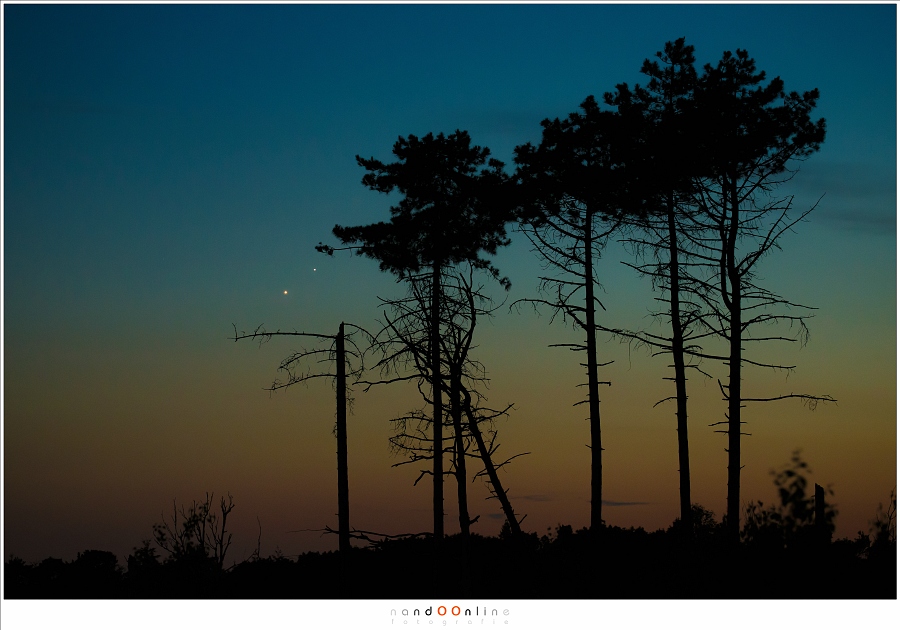
Photographing the planets is easy. They appear as bright stars in the photo. That looks great as an extra detail in a landscape photo. But it becomes very different when we actually want to photograph the planets up close.
A telephoto lens is often still too short for that. If we want to do this, we will need to use a telescope.
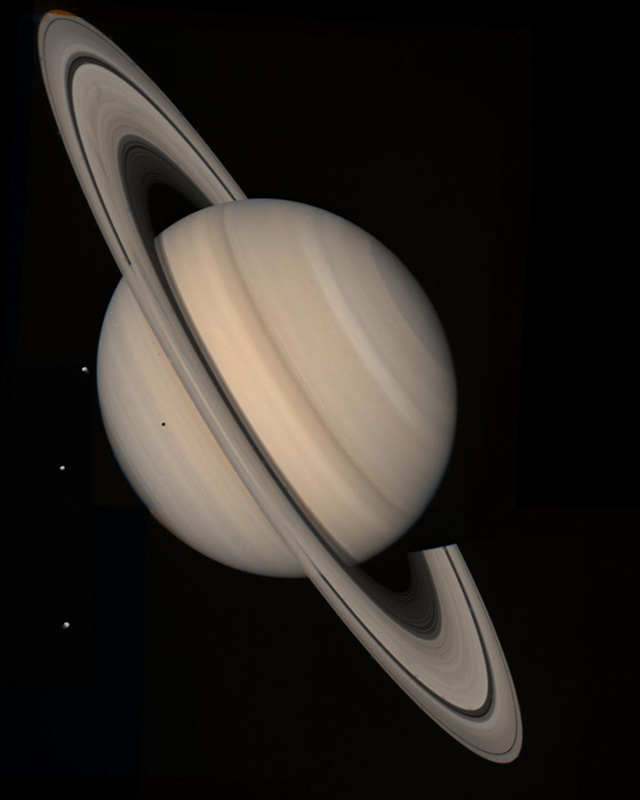
In this YouTube video by AstroBackyard, Trevor Jones shows how he takes his first photos of the planet Saturn. You know, that beautiful ringed planet that we normally only know from NASA's photos.
Step by step, Trevor explains how he works, with some help from Dylan O'Donnal, who is more experienced in this kind of photography. He uses a Celestron Edge HD11, a 2800mm f/10 telescope with a diameter of no less than 11 inches (approximately 28 cm), and a ZWO ASI290mm mini camera.
They took 1,500 exposures, of which the 200 best were used for the final photo.
It is an interesting video with lots of useful information for anyone who wants to get started or is thinking about learning more about this kind of photography
About the author
Nando Harmsen has been photographing for more than 40 years. He specialises in wedding photography and landscape photography. Nando also gives talks, workshops, masterclasses and photo trips, and regularly reviews new and interesting equipment.
You might also like
-
 Night photography on Schiermonnikoog (part 2)
by Erik Nevels
-
 Night photography on Schiermonnikoog, part 1
by Erik Nevels
-
 Night photography tip: the eye is drawn to the brightest point
by Nando Harmsen
-
 The annoying red light when taking night photographs
by Nando Harmsen
-
 Night photography tip: turn light sources into stars
by Nando Harmsen
-
 Night photography tip: wear a reflective vest for your safety
by Nando Harmsen
2 comments
-
 Edwin Mathlener wrote on Thursday 9 July 2020 at 16:31 | reply
Anyone in the Netherlands who wants to get started with astrophotography can turn to KNVWS Moon & Planets Working Group and Astrophotography Working Group. A lot also goes on in local associations and public observatories affiliated with the KNVWS.
Translated from Dutch. -


Have your say
Please note: Articles older than a week can only be commented on by signed-in visitors.Would you still like to comment? sign in or create a free account.
Become a better photographer every week
A practical photography tip in your inbox every week.
38,982 photography enthusiasts already receive the tips! More about the weekly mail. Or keep up to date via  Facebook.

Elja Trum
Photofacts; everything to do with photography!
Would you like to take better photos and keep up with what is happening in photography? Photofacts publishes articles that teach you something about photography — from a product announcement to a practical shooting tip or a look at a website. Photofacts covers photography every day and is a hobby project of Elja Trum's that got out of hand. The articles are written by a team of volunteer authors. If you would enjoy writing one or more articles for Photofacts, do get in touch.More about PhotofactsPhotofacts is made possible in part by
