

Should a camera manufacturer also release cameras without video functions?
Saturday 8 May 2021, 16:32 by Nando Harmsen | 5,309 views | 17 commentsThis article was translated from Dutch with the help of AI. Read the original.
Almost every camera in the shops can also shoot video. So as a photographer, you are effectively buying a video camera too, even if you never shoot video. Should manufacturers release cameras without video functions? Or not?
Let's go back to the past for a moment. In the 1980s, I took a video course. Don't expect too much from that. It didn't turn me into a filmmaker. At the time, I filmed with what was essentially a large VHS video recorder with a zoom lens attached.
The idea of taking photos with such a camera simply didn't occur to you. It wasn't even possible. Back then, you deliberately chose either a video camera or a stills camera. And that made sense, because filming is a very different skill from photography, as became very clear during that video course.
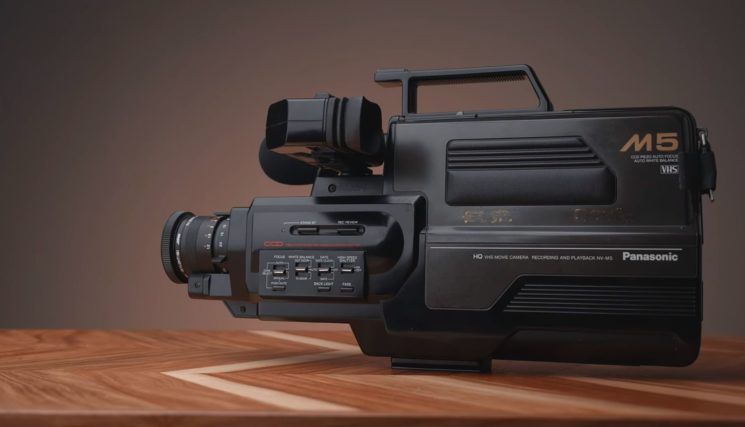
Let's go back to the future, just like in the film. Everything has now become digital. Images are recorded using sensors. The data from those sensors is stored incredibly quickly, making amazingly fast continuous shooting possible.
The latest cameras can shoot as many as 30 frames per second at the full sensor size. Did you know that this is faster than the traditional frame rate of a film? That's 25 frames per second. In other words, we can take as many photos per second as are used in film footage.
In short, digital cameras have everything they need to make films. The only thing still missing is a bit of software so that it can also be stored as video.
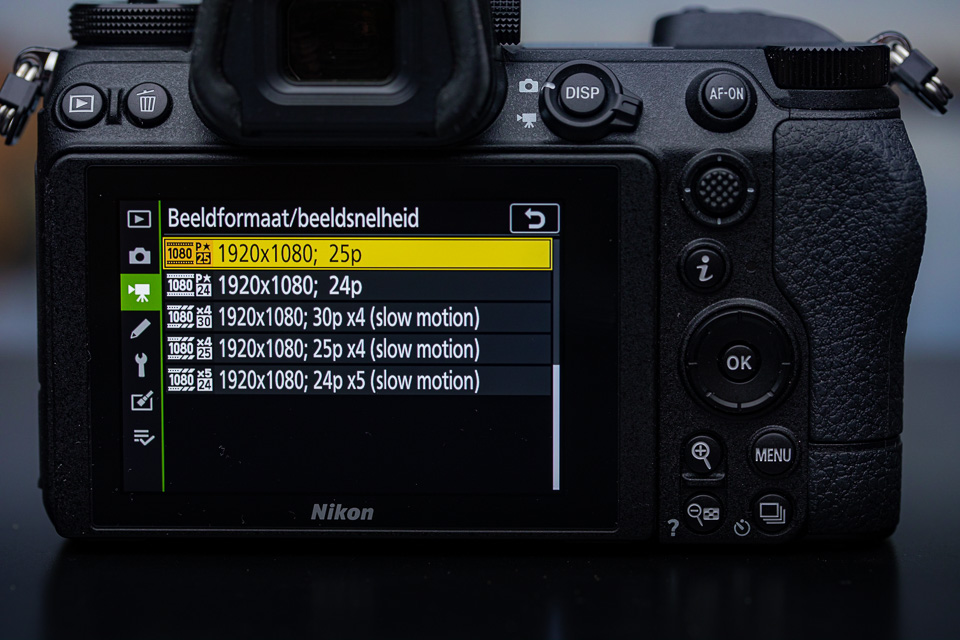
Video functions in a stills camera, simply because it's possible
The title of this chapter says it all. It's possible, so the function is added. All the ingredients are already there anyway. All that's still needed is the programming to record it. And that already exists... in real video cameras.
A video function is really just like all the other functions in a camera. Why leave it out? Because you don't use it? That would be like leaving PSA out of the PSAM modes because you always shoot in M. Or leaving out the manual white balance settings because you only use auto white balance.
Video functions in a stills camera, simply because they're expected
As strange as it sounds, manufacturers are expected to build them in. That's just how the photography community works, whether we like it or not. When a manufacturer doesn't include video functions, the camera is seen as handicapped.
The argument is simple. The ingredients for video are already there, so why would they deny us the option? The trend is simply that a camera has to be packed with functions, regardless of whether they're often needed or not.
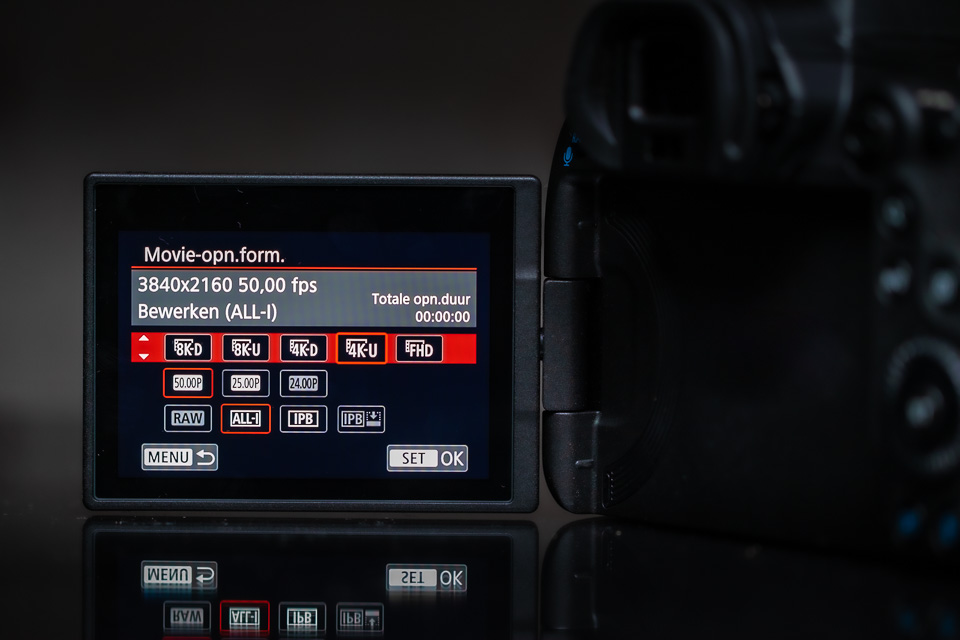
Video functions in a stills camera, would leaving them out lower the price?
This is a question I've thought about for a long time. Every answer is an assumption because I don't know exactly what it costs a manufacturer to add this function to a camera. But my suspicion is that leaving out video functions would barely lower the price.
The reason is, once again, that the ingredients for video capabilities are already present. It only costs software, and that has already been developed for a whole range of other cameras. Perhaps it could save a few tens of euros, but it wouldn't be more than that.
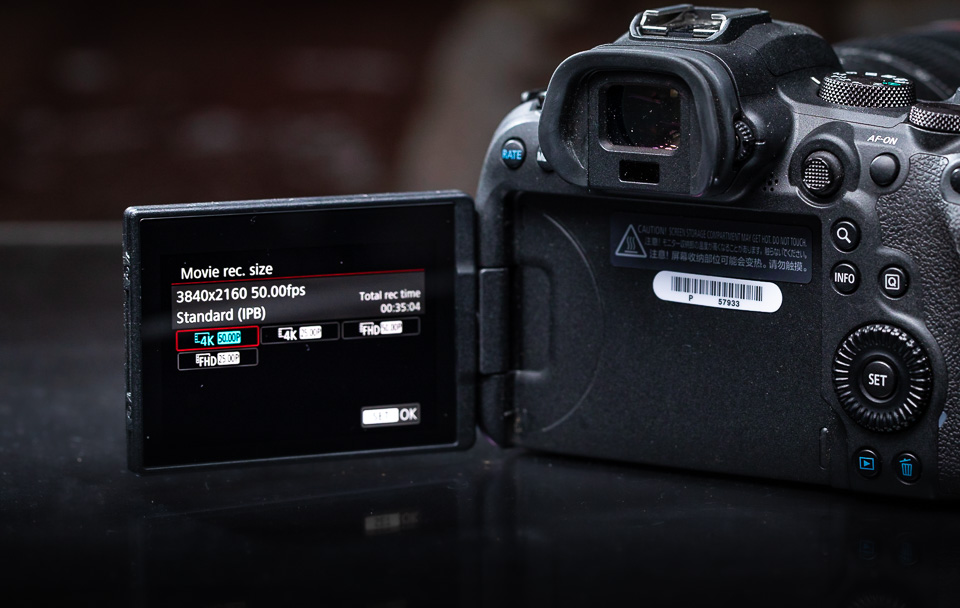
Never shoot video? When choosing your camera, you could opt for a model with only basic video capabilities. So, not a camera with the latest video features. You would probably see this reflected in the price too, because such a camera would probably soon be considered less advanced.
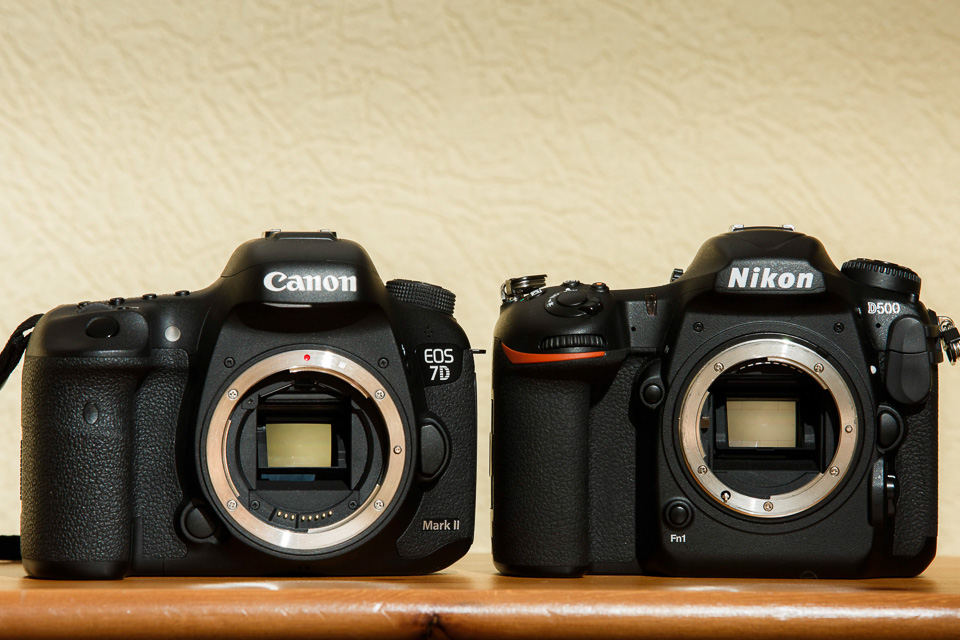
A stills camera with video functions, or a video camera?
The strange thing is that many video enthusiasts still choose a camera with video functions. At least, that's the impression I often get. That's something I've always found surprising. Why choose a stills camera if you never take photos? Why not choose a proper video camera?
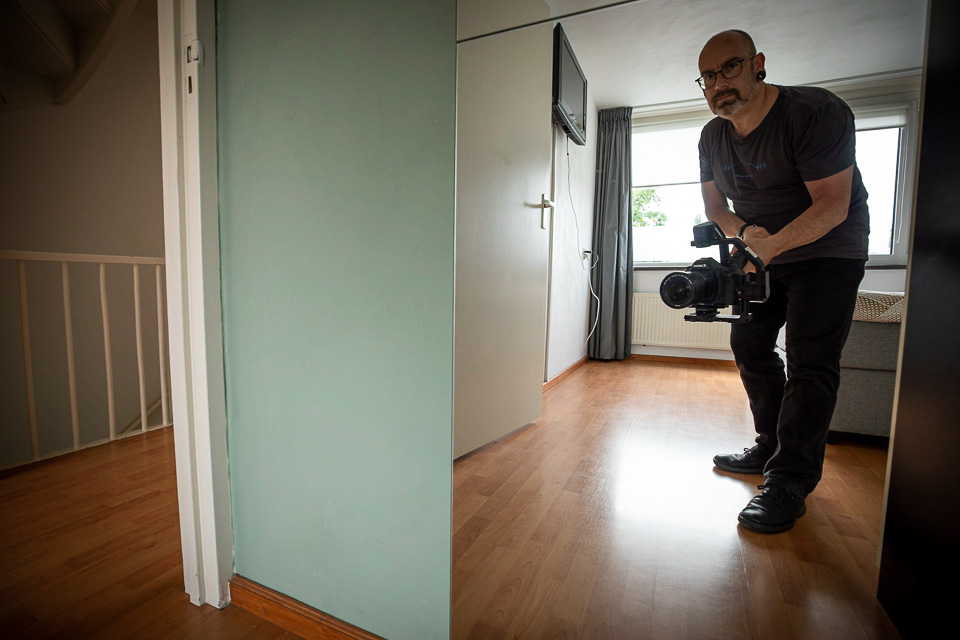
The videographers, or filmmakers, could probably give a better answer. Proper dedicated video cameras often have functions built in that were made specifically for that purpose. So why choose the limitations of stills cameras with video functions? The right tool for the right job.
But I'm a photographer who now regularly shoots video footage. I'm pleased with the video functions on my camera. They save me from having to buy an extra, expensive video camera. Everything in one package. Perhaps that could also be the reason for videographers, who knows?
Finally
Although I was initially very dismissive of video capabilities in stills cameras, I'm now glad that they're possible. I also realise that it's simply an extension of the capabilities, thanks to technology that is already there.
I make relatively little use of the video capabilities my camera offers. But if shooting video made up most of my work, or all of it, I would definitely choose a dedicated video camera over a DSLR or mirrorless camera with video functions.

I understand that some photographers who will never shoot video would just as soon see the video functions removed. I would say, simply ignore those functions and take photos. I don't expect the absence of video capabilities to offer much benefit. Not in terms of price either.
What do you think? Do you think manufacturers should also release cameras without video functions, even if the photography world would probably rate such a camera much lower? Would you still buy such a camera, even if reviews mentioned that the manufacturer had deliberately limited its capabilities?
Share your opinion below this post. I'm curious to hear what you think of this academic question.
About the author
Nando Harmsen has been photographing for more than 40 years. He specialises in wedding photography and landscape photography. Nando also gives talks, workshops, masterclasses and photo trips, and regularly reviews new and interesting equipment.
You might also like
-
 Healthy scepticism about manufacturers' promises
by Nando Harmsen
-
 Using a cable release to capture the right moment
by Nando Harmsen
-
 Photoshop tip: use the export function
by Nando Harmsen
-
 When your camera has too many custom buttons
by Nando Harmsen
-
 Are manufacturers relying more and more on digital image correction?
by Nando Harmsen
-
 Sony releases the A7R VI and a new 100-400mm G Master
by Nando Harmsen
17 comments
-

 Donald Willemsen
wrote on Tuesday 11 May 2021 at 00:09
| reply
Donald Willemsen
wrote on Tuesday 11 May 2021 at 00:09
| reply
Nando, you write the following, among other things: 'However strange it may sound, manufacturers are expected to build it in.'
Translated from Dutch.
This doesn't seem right to me. What does the industry do, after all? They tell you hundreds of times that it is possible to start filming with a camera as well. How clever is that, huh? So what actually happens? A need is cultivated among consumers to want those devices. The developers have succeeded in forcing their inventions on consumers. It is not the case that just because something is possible, it necessarily has to be there.
You also notice it in reviews. They say that the manufacturer has improved the filming functions in certain models. You notice that, for example, with the Canon EOS R series and also, for example, with the Canon EOS 90D, because that is supposed to have better filming capabilities than the Canon EOS 80D.
I am a (hobby) photographer and I only want to take photos. I have an atrocious dislike of filming. I also categorically do not want to take photographs with a smartphone.
So as far as I'm concerned, that filming option can disappear from the camera, preferably as quickly as possible. Instead, let them put software or hardware in it that benefits photography, such as improved light metering, a Kelvin meter, etc.
So it is not the case that consumers are asking for it (perhaps they are now), a need was first cultivated by the industry and commerce, because that is how it works. When digital photography made its entrance, there was no consumer asking for a camera that also had to be able to film. When commerce told consumers that the camera could also happen to film, a need arose among consumers and the filming option became a selling point. Just like the number of megapixels, a selling point that makes no sense whatsoever. Can you see the difference between a photo taken with a 12MP camera and a 20MP camera? There is only one sector that benefits from the filming option on a camera, and that is the industry itself. They do not have to spend money developing and building film cameras separately for consumers. That is a huge cost saving.
Nando, I have all the respect for you and I am happy with your courses, but I do not always agree with you, and certainly not about the filming option in a camera. -
Donald Willemsen
wrote on Tuesday 11 May 2021 at 00:13
| reply
Nando, just to add to my previous contribution. I am glad about your article on this subject, because it can lead to an engaging discussion/exchange of ideas.
Translated from Dutch. -
 R K wrote on Tuesday 11 May 2021 at 10:29 | reply
The video functions don't make current cameras more expensive, but actually cheaper. The necessary hardware is already in there for photography, the video option costs nothing extra.
Translated from Dutch.
Manufacturers do save costs, though - 1 production line instead of 2 (pure photo cameras and separate photo/video cameras for which there is demand), 1 expensive marketing campaign instead of 2 (in which the difference between 2 models would have to be explained), etc.
It is also not entirely coincidental that an expensive niche brand like Leica is one of the few manufacturers that doesn't do video functions. -
 Ron A.B. wrote on Tuesday 11 May 2021 at 18:36 | reply
It happens to me quite often that I accidentally press the wrong button and the camera starts filming without me wanting it to..... simply the fact that it saves buttons and control space is reason enough to prefer having a camera that you can't film with...
Translated from Dutch. -
 Harry VB wrote on Tuesday 11 May 2021 at 19:38 | reply
Apart from accidentally pressing that button (with the necessary swearing because I can't take photos for a moment), I've never used it in the almost 10 years it's been on my cameras
Translated from Dutch. -
 Adriaan wrote on Tuesday 11 May 2021 at 20:13 | reply
Filming is easy, that it can. Although I rarely use it. I am a photographer in heart and soul. What I run into more are the countless settings and endless filters on my camera. You must have had higher education to understand it. Many members of my photo club run into the same problem. I need a camera with an automatic setting and manual settings for aperture, shutter speed and ISO.
Translated from Dutch.
A friend of mine is an avid video maker and has just bought a video camera with good photo capabilities. Where is the line? You may say
-
 Paul wrote on Wednesday 12 May 2021 at 08:13 | reply
I really don't understand why some people are so negative about the video function on their camera. It's as if you were to say "why buy an expensive car, it's just as far by bike anyway". I use the video function on my Canon R5 very often and it works perfectly too. If you know your camera a little, then I don't understand how you can press the wrong button. I have set the buttons on my eos R5 completely to my liking and with just one press of a button I switch from photo to video function and vice versa.
Translated from Dutch.
What is actually the problem????
Nando, thanks again for your clear explanation. -
Donald Willemsen
wrote on Wednesday 12 May 2021 at 09:43
| reply
@Paul, it is not about whether the video function of your Canon R5 is good or bad. Should a CAMERA have a video function, yes or no? Then I say no, because I only want to take photographs.
Translated from Dutch.
@R.K. your reasoning is flawed. The camera does not become cheaper by putting a video function in it. It is just a bit of software.
That there is demand for such a dual function (photo/video), is because the industry deliberately cultivated the need for it. In the 19th century, no one had a need for a television. The industry cultivated the need for everyone to now have an 8K TV, while you can also watch TV with a traditional CRT.
We keep falling for it time and time again: the psychology of the consumer society. -
 Toon van Hoek wrote on Wednesday 12 May 2021 at 10:07 | reply
Hi Nando,
Translated from Dutch.
Thanks for keeping your promise and taking the trouble to explore this item in more depth! The story is clear in any case - as we're used to from you! Now we just have to wait and see what the follow-up will be.
Warm regards: Toon -
Paul wrote on Wednesday 12 May 2021 at 10:42 | reply
Dear Donald, somehow you will have to keep up with the times. I still hear many analogue photographers saying 20 years ago that a digital camera would never match an analogue one, and what do we see today?
Translated from Dutch.
But Donald, I do understand you to some extent. I have actually experienced it myself with my mobile phone. I thought my mobile phone was for making phone calls, but by now that has become a secondary matter for most people. I never wanted to delve into it, with the result that I now have to ask my grandchildren how that damn thing works. -
R K wrote on Wednesday 12 May 2021 at 11:44 | reply
@Donald: when manufacturers have to make two versions of a camera (1 for photo purists like you and 1 for people who also want video), the cameras do indeed become more expensive. After all, they have to set up two separate production lines and, for example, launch two different marketing campaigns. So my reasoning is correct: all-in-one models are the cheapest option.
Translated from Dutch.
You cannot make a camera (or mobile phone) for everyone that only contains what they want or really need. Many cameras also have built-in black-and-white or sepia filters; should manufacturers then also start making separate versions without these filters for everyone who does not want to use them?
With the younger generations of YouTubers, vloggers, TikTokkers etc. there is simply a lot of demand for video capabilities. It makes sense that manufacturers are happy to encourage that - camera sales have been declining sharply for years and so they need a new market. They cannot survive on the group of older, more conservative consumers.
Finally: nobody is forcing you to make videos, just because your camera happens to be capable of doing so. I never do it myself either. -
Donald Willemsen
wrote on Wednesday 12 May 2021 at 12:56
| reply
@Paul, I have no problem keeping up with the times. In fact, I’d like that. As a consumer and photographer, I want to have the choice of buying a digital camera without a film option.
Translated from Dutch.
As for the mobile phone, I use most of its options EXCEPT the photo/video option. I refuse to take photos/film with the mobile phone. Those crappy little lenses in them aren’t even suitable for taking holiday snapshots, let alone serious, high-quality portraits.
If I had the financial means, I would also buy top lenses instead of mid-range ones. -
 Hay Smits wrote on Wednesday 12 May 2021 at 14:49 | reply
One of my hobbies is traveling. And during the winter months, short films are edited with still and moving images. Audio/video, that is. Some subjects are more suitable for photography, others more for video. Buildings and landscapes? Photo! But a dance group? Video.
Translated from Dutch.
It's just what you want... -
Ron A.B. wrote on Wednesday 12 May 2021 at 18:54 | reply
I actually wonder why separate and specialized video cameras are made and sold, but no specialized photo cameras....
Translated from Dutch. -
 martinphili wrote on Wednesday 12 May 2021 at 19:27
| reply
martinphili wrote on Wednesday 12 May 2021 at 19:27
| reply
@ Donald Willemsen: as a user of a digital camera, you have the choice not to use the film option. And I have the idea that you are a bit mistaken when it comes to the quality of phone cameras.
Translated from Dutch.
I honestly don't understand what anyone is getting worked up about. Does anyone wonder whether a car manufacturer would be better off selling cars without air conditioning? Are there people who wonder whether a manufacturer would be better off not making paprika-flavored chips because they themselves don't like them?
Or should I start complaining that Canon should also make cameras without an automatic mode, simply because I never use it?
Come on. -
Donald Willemsen
wrote on Thursday 13 May 2021 at 10:19
| reply
@Martinphili. A car with air conditioning uses more energy. You can still choose a car without air conditioning. The same goes for crisps. You can choose with or without paprika. There are enough system and compact cameras with an automatic option. For mid-range and professional SLRs, such an option isn't really necessary because advanced amateurs and professionals don't use it anyway.
Translated from Dutch.
Phone cameras almost all have only one fixed aperture, no optical zoom, editing software isn't much to write home about, because they cater to the lowest common denominator.
Just like Ron A.B., I also wonder why there are specialist video cameras and no, or only unaffordable, specialist cameras.
But anyway, everyone is entitled to their opinion and so are you. -
 Stefanie
wrote on Wednesday 19 May 2021 at 14:30
| reply
Stefanie
wrote on Wednesday 19 May 2021 at 14:30
| reply
If it really only made a difference of a few tens of euros, I would still buy the option with filming. The main thing for me is the photography capabilities, but I see filming as a nice extra option. On holiday, you quite often come across a situation where the filming option comes in handy, dance, music for example. And last winter I was busy with soap bubbles and at a certain point I filmed that too, so a nice extra. If it were really a big price difference, I would choose photography only and then I would film with my phone while on holiday
Translated from Dutch.
Have your say
Please note: Articles older than a week can only be commented on by signed-in visitors.Would you still like to comment? sign in or create a free account.
Become a better photographer every week
A practical photography tip in your inbox every week.
39,080 photography enthusiasts already receive the tips! More about the weekly mail. Or keep up to date via  Facebook.

Elja Trum
Photofacts; everything to do with photography!
Would you like to take better photos and keep up with what is happening in photography? Photofacts publishes articles that teach you something about photography — from a product announcement to a practical shooting tip or a look at a website. Photofacts covers photography every day and is a hobby project of Elja Trum's that got out of hand. The articles are written by a team of volunteer authors. If you would enjoy writing one or more articles for Photofacts, do get in touch.More about PhotofactsPhotofacts is made possible in part by
