

Is it necessary to choose a lens with a wide aperture?
Monday 7 December 2020, 20:40 by Nando Harmsen | 11,635 views | 28 commentsThis article was translated from Dutch with the help of AI. Read the original.
It is very tempting to choose a lens with a very wide maximum aperture. f/2.8 if possible, and even wider apertures if you choose a prime lens. But is it necessary to choose such a wide aperture? In this article, I try to answer that question.
The first lens I bought alongside my 'kit lens' was a Canon EF 70-200mm f/2,8L IS USM. The name is quite a mouthful, but it basically meant that I had chosen a zoom lens with a maximum aperture of f/2.8 throughout the entire zoom range.
This lens is large, heavy, very white, and particularly noticeable. So much so that people were impressed when they saw me with this lens. I could also have chosen a similar lens with a maximum aperture of f/4. That one was white too, but considerably cheaper, smaller, and above all lighter.
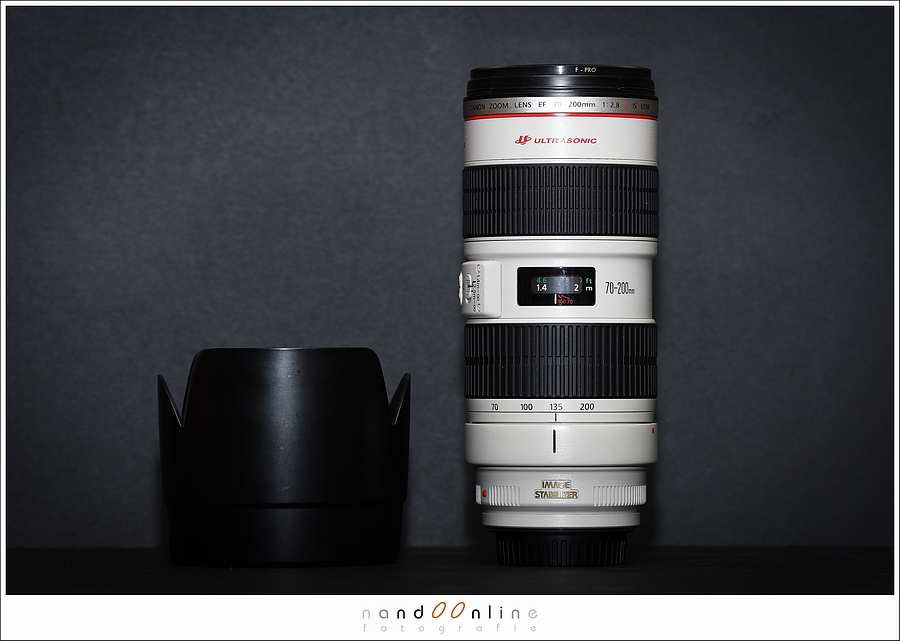
Since then, I have chosen f/2.8 as the maximum aperture for almost every zoom lens I have bought.
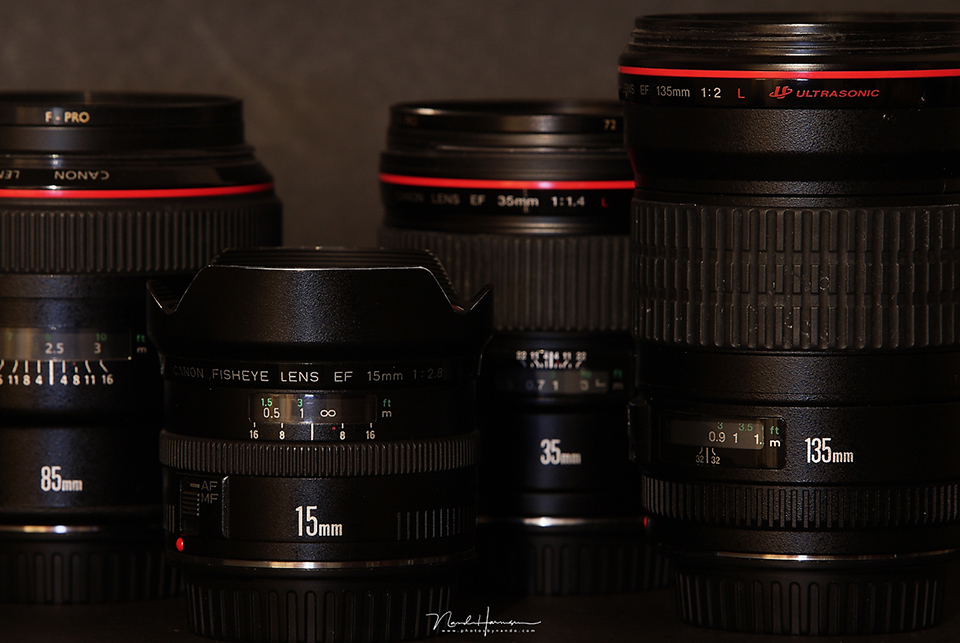
Except for the Canon EF 17-40mm f/4L IS USM, which naturally had f/4 as its maximum aperture. For prime lenses, I chose the f/1.4 versions, or the f/2 version, or even the f/1.2 version.
This choice has given me a fantastic collection of lenses, which I have used with great pleasure, and I still put the new models that are released on my camera with great enthusiasm. But at the same time, it has cost me a great deal of money and resulted in a very heavy camera bag, while they do not necessarily deliver the best possible quality.
Advantages of lenses with a wide aperture
So why did I choose these lenses after all? To answer that question, I first want to list the advantages of a lens with a wide aperture.
- Photographing with an extremely shallow depth of field and very pleasant bokeh
- Photographing in dark environments while still being able to capture enough light
- Achieving faster shutter speeds in dark environments
- Making optimal use of your camera's autofocus capabilities
You may have thought of these reasons too, and perhaps you know a few more reasons why you might choose a lens with a wide aperture. But there are also some things you need to take into account.
Disadvantages of lenses with a wide aperture
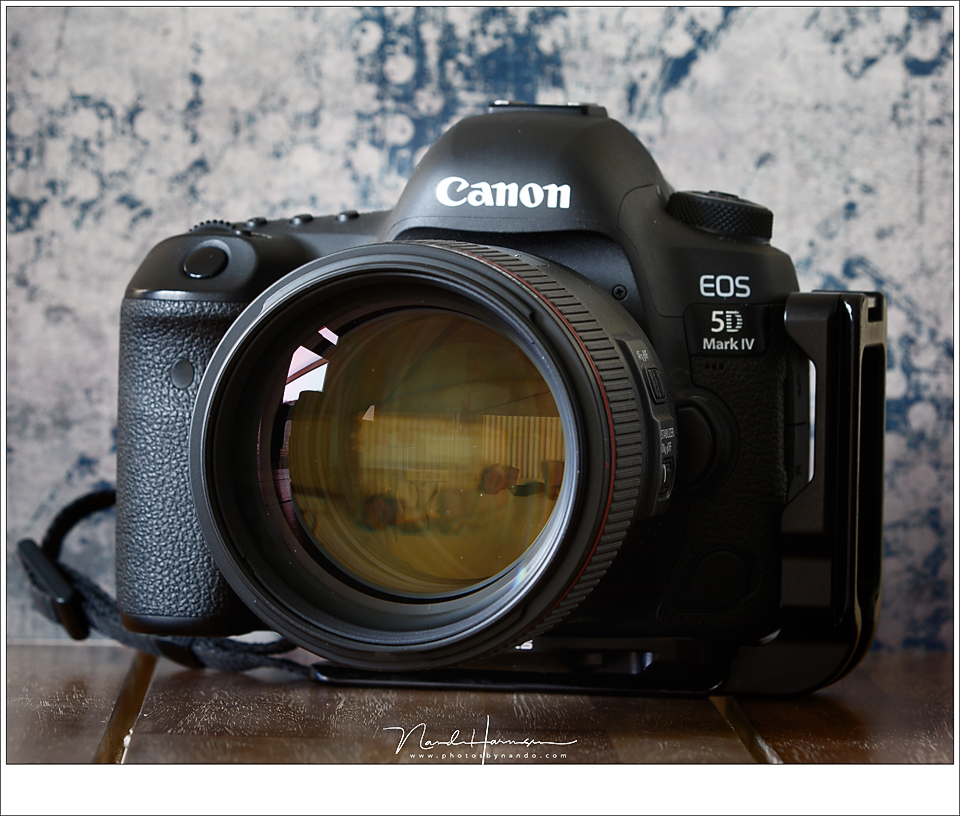
First of all, it is good to realise that a lens with an extremely wide aperture does not always deliver the best quality. A good example is the Canon EF 85mm f/1,2L II, which was outperformed by the much cheaper Canon EF 85mm f/1,8.
There were also several other disadvantages, which in fact generally apply to lenses with very wide apertures.
1. The price
Lenses with a wide aperture are expensive. Sometimes extremely expensive. This is not surprising, because a lot of glass is needed to let a lot of light through a lens. Large lenses are more difficult to make, and it is also more complicated to correct any lens faults.
The larger lenses will also make such a lens larger and heavier. In addition, the autofocus system has to move the larger lenses, and moving more mass means that the autofocus motor must be larger and more powerful.

All this means that a lens with a wide aperture costs more to produce. And we feel that twice over in the price.
2. Size and weight
I have already mentioned this in the reason above: more glass and the additional requirements in the construction mean that most lenses with wide apertures are large and heavy. This can be an obstacle.
A lens weighing more than one kilogram on your camera, or a lens weighing 500 grams, may not seem to make much difference, but in reality that difference is enormous.
3. Fast, low light, shallow depth of field
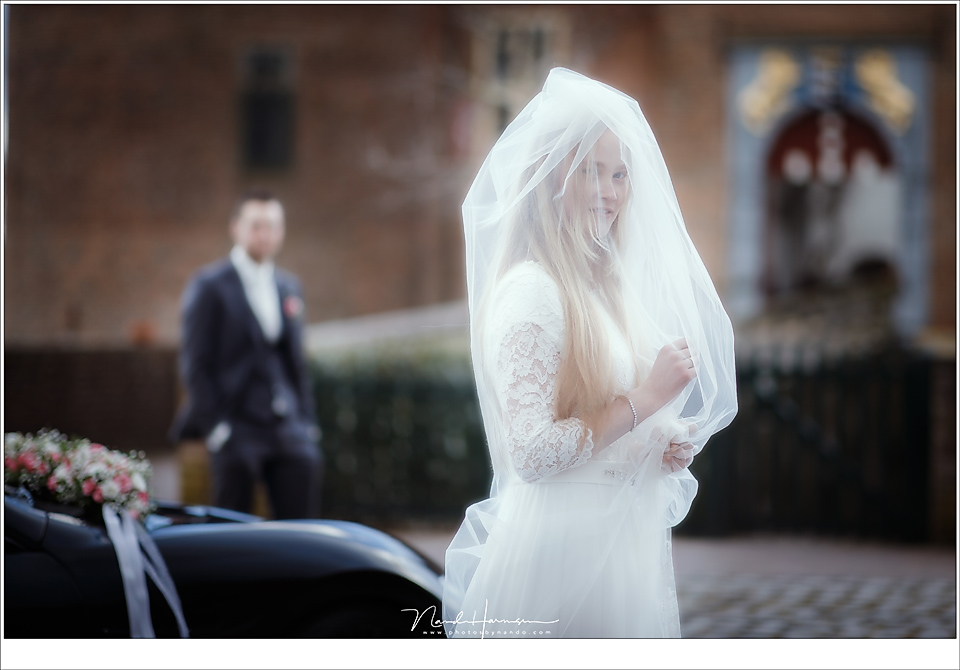
A lens with a wide aperture may be able to focus well and produce fast shutter speeds in low-light situations, but it also produces a very shallow depth of field. It can be so shallow that it sometimes makes things unworkable.
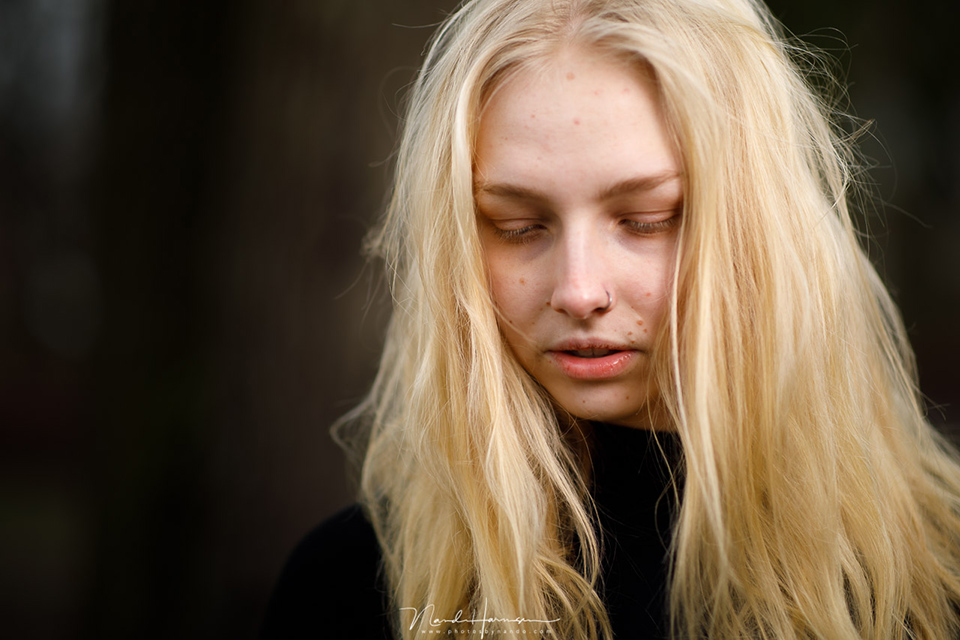
A shallow depth of field does not just mean that only a small part of the image is sharp, it also means that focusing has to be extremely accurate.
If I use a portrait as an example, poor focusing means that only one eye is sharp and the nose is not. Or the nose is sharp and the eyes are not.
Another example is photographing larger groups of people, at a wedding for instance. A wide aperture can prevent you from having to use flash, but it also means that you only have one person, or part of one person, sharply in the image.
4. Better quality
Using the widest aperture means that you have to take various lens faults into account. Vignetting is often clearly visible at a wide aperture, and softness can occur in the corners of the image, although this may be masked by the shallow depth of field.
The chance of chromatic aberrations and fringing, where you can get all kinds of red, blue or green edges around high-contrast transitions, will often also be greater in an image taken at a wide aperture.
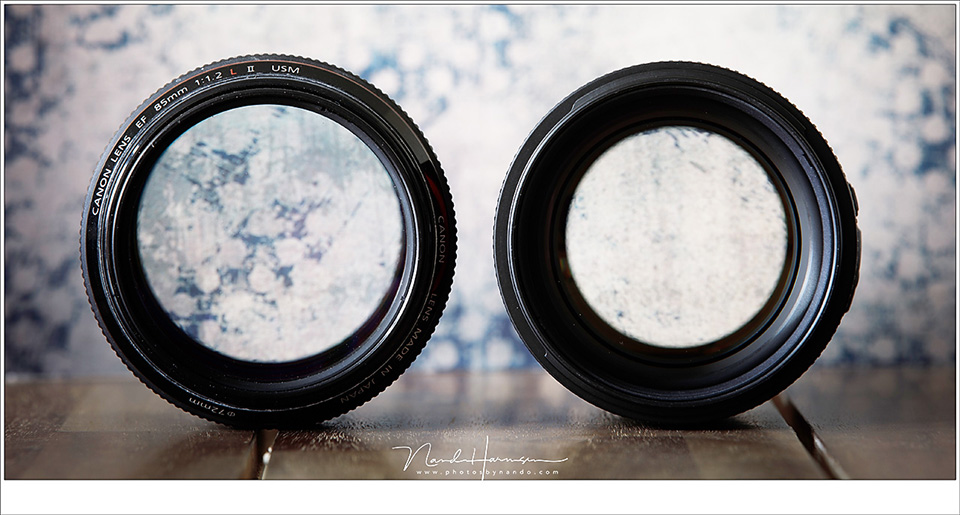
By stopping down your aperture, these faults will often disappear, until the sweet spot is reached, the aperture at which the sharpness of your lens is optimal. Lenses with a slightly narrower aperture, such as f/1,8 instead of f/1,4, therefore often deliver better quality at their widest aperture.
Should you choose a lens with a wide aperture, or not?
Although it is naturally a very personal choice, I do not think it is necessarily necessary to invest in lenses with an extremely wide aperture. It is sensible to first look at the type of photography you do before choosing which lens to buy.
Do you like taking photos with an extremely shallow depth of field? Then of course you need to make the investment. But if you mainly do studio work, photographing somewhere between f/5,6 and f/11, then investing in a lens with a wide aperture is not really necessary.
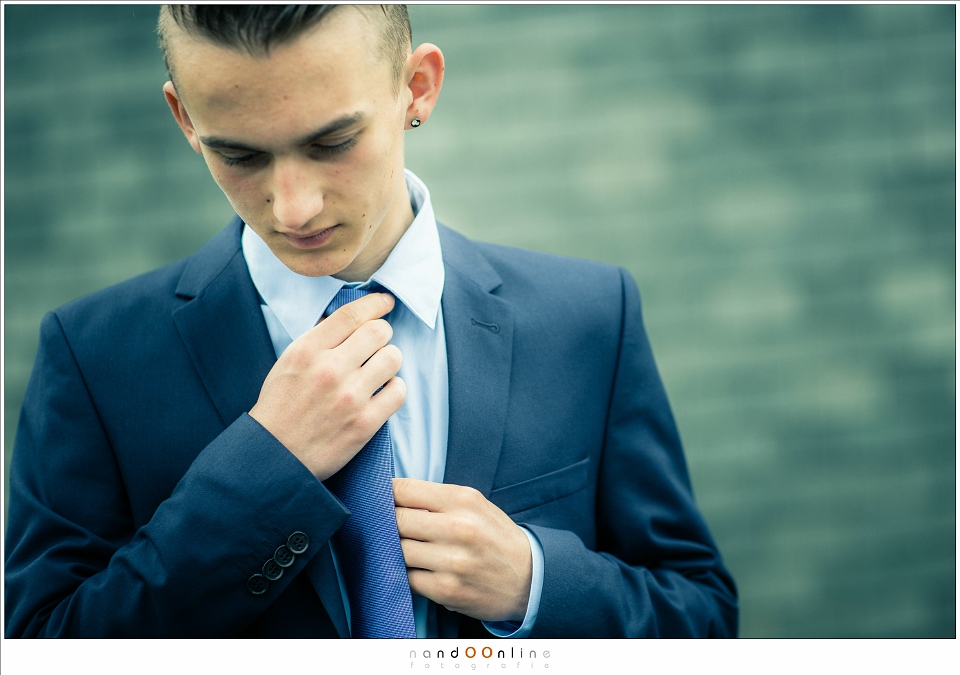
Do you enjoy photographing landscapes? Then you will often use a somewhat greater depth of field. A f/2,8 zoom lens has hardly any added value in that case, especially when using a wide angle. You will do just as well with an f/4 lens.
However, if you use these lenses at a wedding or a party, that extra stop of light can be very useful.
A photographer who likes to photograph a night sky full of stars will be better off with a lens with a wide aperture. If necessary, stop down by one stop, so that you suffer less from vignetting. Find the best lens for this purpose.
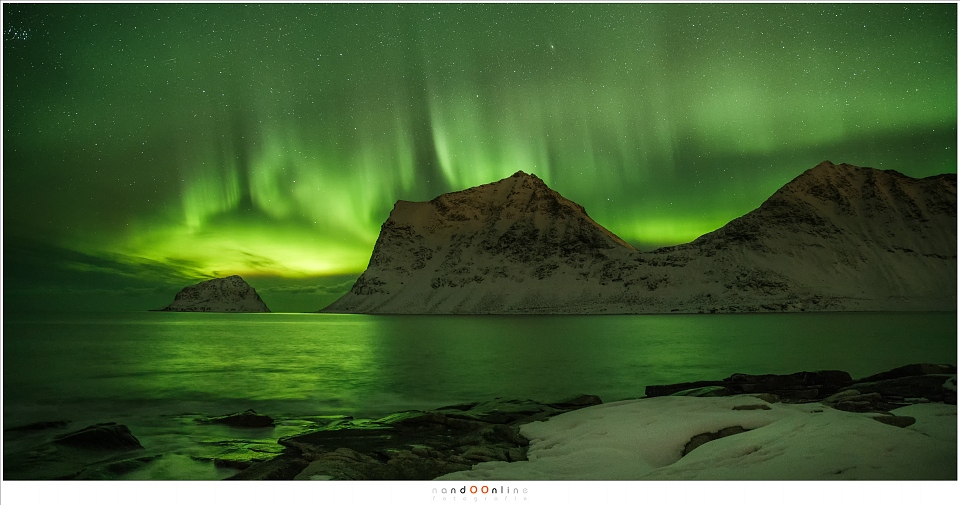
Photographers who travel a lot will also prefer to use a smaller, lighter lens. Three lenses weighing more than a kilo each, or three lenses that together weigh less than one and a half kilos, is an enormous difference.
Choose what you need, but choose wisely
The choice is of course yours. You have to decide for yourself whether a lens with a very wide aperture is right for you.
But choose wisely, and do not be influenced too much by all the stories about how much better off you would be with a fast lens. They are not necessarily better, and may have more disadvantages than advantages for you.
Which lenses do you prefer to use, with a wide or a narrower aperture? Did you choose this consciously, or not?
I invite you to share your experience and opinion in a comment below this post.
About the author
Nando Harmsen has been photographing for more than 40 years. He specialises in wedding photography and landscape photography. Nando also gives talks, workshops, masterclasses and photo trips, and regularly reviews new and interesting equipment.
You might also like
-
 Away from the Open Space
by Michiel Heijmans
-
 Review: Canon RF 28mm f/2.8 STM
by Nando Harmsen




28 comments
-
 Mac wrote on Tuesday 8 December 2020 at 08:27 | reply
I actually always see 1 major mistake in articles about lenses with a large aperture.
Translated from Dutch.
People keep talking about bokeh, sharpness, etc. But buying a lens with a wide aperture does not mean that you also have to use it. You can also stop down lenses with a large aperture. You don't not have to shoot wide open.
The biggest reason for me to have lenses with a large aperture is because they let in more light, and focusing, etc. is also a lot easier, even in a studio or with landscape photography. That does not mean that I will take the photo wide open.
I also have lenses of f4 or smaller, which are indeed lighter and therefore easier to take with you. And that is indeed what I have them for.
I do have a question about the Canon lenses. What is the image quality of the 1.2 at f1.8? Because if you will be photographing a lot at f1.8, and the quality of the 1.2 at f1.8 is better than that of the 1.8 wide open, it may be better to buy the 1.2. if you can afford it and are willing to carry the weight. -
Tom wrote on Tuesday 8 December 2020 at 09:06 | reply
You write: "Do you like taking photos with an extremely small aperture? Then of course it is necessary to make the investment." I assume you mean a large aperture?
Translated from Dutch. -

-
-
Mac wrote on Tuesday 8 December 2020 at 10:13 | reply
@nando
Translated from Dutch.
true, the camera is often the bottleneck, so it's nice when more light reaches the sensor, which makes focusing easier. especially when the light gets a bit lower, you can really notice the difference. -
Kit Lens wrote on Tuesday 8 December 2020 at 10:27 | reply
It’s very simple. The advantages of a fast lens are negligible and sometimes even a disadvantage. Only pixel peepers can see the difference in quality. Even a kit lens takes perfectly good pictures these days.
Translated from Dutch.
It’s all just showing off, those big lenses. -
 Stefan wrote on Tuesday 8 December 2020 at 10:28 | reply
A very good example, I think, is the difference between the Nikon 85mm with f1.8 or f1.4. The gain in light is minimal, not even 1 stop. The difference in depth of field is also negligible, a few mm. But the difference at the checkout is more than €1000. If you are mainly going to use them as a portrait lens in the studio at f5.6 or f8.... then for the price difference you can get a whole battery of Elinchroms.... I mean.....
Translated from Dutch. -

 Donald Willemsen
wrote on Tuesday 8 December 2020 at 11:04
| reply
Donald Willemsen
wrote on Tuesday 8 December 2020 at 11:04
| reply
Nando, thank you very much for this clear explanation. Fast lenses are not for me, simply because they are unaffordable for me. For the same reason I cannot buy a full-frame camera.
Translated from Dutch.
The annoying thing is that with less light-sensitive lenses you soon have to increase the ISO value and that this increases the chance of noise. There are 2 things I absolutely hate and they are:
1. Visible noise at 100% and
2. Insufficient depth of field.
For example, I think it is awful in a portrait when the eyes are sharp while at the same time the tip of the nose and the edges of the ears are blurry.
Noise, however minimal, clearly visible on solid colour surfaces, I consider a crime. That is why my post-processing always includes checking for noise and, if necessary, applying noise reduction. I do make sure that noise reduction does not also lead to distracting blurriness. So I do pay attention to that.
What I do notice is the difference in the onset of noise at a certain ISO value between a crop camera and a full-frame one. With a crop camera, noise appears at a lower ISO value Than with a full-frame one. I suspect that has to do with the size of the pixels on the sensor. If a crop sensor and a full-frame sensor both have 24mp, then the difference must almost lie in the size of the pixels.
It seems logical to me, then, that with a crop camera you will use a faster lens sooner than with a full-frame one.
Maybe I am being a nitpicker and should just accept a tiny bit of noise. A nitpicker who pays attention to that, as they sometimes say.
In any case Nando, your article has broadened my perspective and I will nevertheless be a little less quick to give priority to a fast lens, which is also 'og eens good for the weight and especially for the wallet 😉 -
 Leopold Murk wrote on Tuesday 8 December 2020 at 11:24 | reply
In my opinion, that hunger for and preference for large apertures comes from the time when light-gathering power was necessary because we used film with ISO 100 and had to focus manually on the focusing screen, which is much more difficult with slower lenses. After all, every lens is only sharp at a small point and the rest will be considered acceptably sharp according to the depth-of-field range. At that time, the Canon FD 50mm 1.8 was so sharp that its optics were placed exactly as they were in the EF50mm 1.8 because maximum sharpness at enlargements was limited by the emulsion used. Nikon is no different either, and that is why only certain lenses are recommended for today's high-resolution bodies.
Translated from Dutch.
-
Nando
wrote on Tuesday 8 December 2020 at 11:32
| reply
@Donald:
Translated from Dutch.
you're confusing two things. Fast lenses have nothing to do with noise or higher ISO if you choose a somewhat greater depth of field to begin with. If you want to use f/8 for your depth of field, then a fast lens doesn't make a difference. You will have to raise the ISO anyway, whether your largest aperture is f/1.2 or f/5.6.
The discussion about noise is a completely different one, which doesn't belong here. If you have trouble setting the ISO too high, then you should use a tripod. Unless your subject doesn't stay still long enough. -
Donald Willemsen
wrote on Tuesday 8 December 2020 at 11:47
| reply
@Nando, there is a connection between light intensity (amount of light), aperture (size of the lens opening), shutter speeds, ISO values and therefore also the amount of noise. That is why I mentioned them in my comment. Not to have that discussion in relation to your article, but to mention it as a consequence.
Translated from Dutch.
Additionally, you are not properly aware of my (im)mobility, which means it is not possible for me to carry all kinds of things with me when I go photographing in nature. The first thing that stays at home is a tripod. -
 ifiamminghi wrote on Tuesday 8 December 2020 at 11:49
| reply
ifiamminghi wrote on Tuesday 8 December 2020 at 11:49
| reply
(once again) a clear explanation, thank you!
Translated from Dutch. -
Donald Willemsen
wrote on Tuesday 8 December 2020 at 11:55
| reply
@ Kit Lens, I find dismissing those big lenses as showing off to be a generalizing and moreover insulting remark towards all amateur and professional photographers who use their 'big lenses' to let everyone enjoy what nature, even if it is small, has to offer. Often those 'big lenses' are also desirable in order not to disturb what one wants to photograph.
Translated from Dutch. -
Mac wrote on Tuesday 8 December 2020 at 12:10 | reply
@kit Lens
Translated from Dutch.
You don't just buy a fast lens for image quality, which is often better (whether you can see it is another matter). But more often precisely for photographing in darker conditions.
I photograph a lot of dance and theatre, and you won't get far with a kit lens. Often little light, fast movements, dark clothing. f2.8 is often the minimum you need then. And even then you don't always manage, and an f1.8 or f1.4 lens goes on. -
 John Jansen wrote on Tuesday 8 December 2020 at 13:12 | reply
I have Nikon's "holy" 3, of which I hardly ever use the 24-70 and 70-200. The 14-24 is a different story, I use that a lot but never at full aperture for landscape photography. I do have a 12 mm Laowa which I occasionally use at full aperture and then only for astrophotography. For "wildlife I still have a 500mm, depending on the distance to the subject I almost always use this wide open. If I had to start over now, I would still make a different choice for a number of lenses, e.g. a 24-200 F4, great lens for travelling and two lenses in 1.
Translated from Dutch. -
 Hans wrote on Tuesday 8 December 2020 at 13:55 | reply
Dear Nando, good that you are talking about it. The Canon 70-200mm l 2.8 II was part of my equipment, an unmistakably top lens, but because of its weight it remained in the cupboard. traded in for the 70-200mm l 4.0 II, never been so happy with it, beautiful boked, fast, sharp and also a shorter focusing distance with a higher magnification factor as an extra. this lens now belongs to my standard equipment just like the 35mm 2.0 is, the 85mm 1.8 but also the sigma 135mm 1.8, two steps forward 200mm two steps back 100mm.
Translated from Dutch. -
 PixelDude wrote on Tuesday 8 December 2020 at 14:13 | reply
Thanks to micro 4/3, there is no question of big bazookas at all. An even better solution for the majority of photographers. Huge gains in price, size, and weight compared to only a minuscule loss in quality, not visible in FB pictures and for prints up to 60x40cm or even larger.
Translated from Dutch.
It is a persistent misconception, still based on technology that is passé, to choose lenses with huge apertures and FF. Probably pointless for 90% of photographers ... Whoever can really defend that FF in combination with very small F values is necessary for her/his type of photography, yes, that person has the right to speak. But only those, the others ... nonsense. -
 Eduard wrote on Tuesday 8 December 2020 at 14:26 | reply
Good article, I’m very happy with the 85mm Canon with the gold ring and the 100mm from the analogue era. Not expensive and excellent to use on my 5D Mark III
Translated from Dutch. -
 Paulussie wrote on Tuesday 8 December 2020 at 15:29
| reply
Paulussie wrote on Tuesday 8 December 2020 at 15:29
| reply
In the analog days I had several 2.8 lenses, for reasons already mentioned, fixed ISO, back then still DIN or ASA, and having to set them on a rather dark focusing screen. Now just one 2.8, the 105 mm Micro-Nikkor. And a 1.8 35 for when it gets very dark. For general photography on my the Nikon, the 3.5-5.6 and the F4 lenses are fine, except when you really want to limit depth of field.
Translated from Dutch.
A 17-50 or even better a 17-70 2.8 I would like to have, but the image quality of the existing ones is not adequate (sorry Tamron and Sigma) or much too expensive (Nikon)
Tamron does have one now that seems to be good, but only for Sony,....... -
Nando
wrote on Tuesday 8 December 2020 at 17:37
| reply
@Donald:
Translated from Dutch.
You're mixing two things up. Maximum aperture is merely the largest lens opening available. Only the aperture you set has an effect on your exposure.
By the way, I indeed don't know those limitations. But if you pixel-peep by viewing the noise at 100% size, and you get annoyed by a little bit of noise, then a tripod is the only way to prevent it. If that's not possible with your limitations, then you'll have to make concessions and accept that you'll need to use higher ISO values.
But that's a different discussion. -
 Anja wrote on Tuesday 8 December 2020 at 18:13 | reply
Very good article. I actually almost always work in the studio and have a number of expensive, heavy, fast lenses, but honestly the Canon 85mm 1.8 is one of the sharpest lenses I have. That is not the case for the Canon 50mm 1.8, by the way. It really can't compete with the Sigma Art 50mm 1.4, but that's okay because the price difference is very large.
Translated from Dutch. -
Robert wrote on Tuesday 8 December 2020 at 19:11 | reply
Choices as is apparent from the earlier response are very personal Nando and photographers .
Translated from Dutch.
I notice from the responses that everyone has found their own way with the lenses. And that is good. I myself do like weight and lots of ' big ' for example 77mm glass.
I cherish my 2.8 and 1.2 lens and am completely happy with them. They date back to my film journalist days.
I still use them on my digital Nikons now.
Super all your responses and explanations about using them.
With photo-shooting regards Robert -
 Freddy Van Erp wrote on Tuesday 8 December 2020 at 20:31 | reply
It isn't immediately necessary to buy an expensive fast lens, according to you. Then let me ask you whether a camera with a better sensor would give me more? Replacing my 6-year-old Olympus M10 Mark II (16MP) with the Olympus M5 Mark III (20MP), for example. Upgrading my lenses?
Translated from Dutch. -
Paulussie wrote on Tuesday 8 December 2020 at 23:32
| reply
@Freddy:
Translated from Dutch.
If that new camera only offers more pixels, that makes no sense.
I replaced my D7000 (16Mp) with the D500 with 20Mp, but more because of the viewfinder.
As for sharpness and image transfer I still have my doubts, often get the impression that that 700 delivers nicer images..... -
Nando
wrote on Wednesday 9 December 2020 at 09:22
| reply
@Freddy:
Translated from Dutch.
That upgrade doesn't deliver that many more pixels. Four million seems like a lot, but it's actually not too bad. Nevertheless, 20mp is a very nice resolution, though.
You probably don't need to upgrade your lenses. If you were to choose a camera now that has 30, 40 or 50 million pixels, it could be that one or more lenses don't have sufficient resolving power. But even then, this has nothing to do with light-gathering capability. -
 Wim wrote on Wednesday 9 December 2020 at 18:50 | reply
Familiar story. However, I miss the choice for a mirrorless camera, such as Nikon's Z series, where both the body and the lenses are considerably lighter in weight than the comparable DSLR and accompanying lenses.
Translated from Dutch.
This is mainly the result of eliminating the prism and mirror of the DSLR and the larger lens mount of the Nikon Z body. As a result, the construction of the lens has also become ‘simpler’, which manifests itself in better properties of the Z lenses, which are therefore also lighter in weight.
In addition, the sensor of, for example, the Nikon Z6 has improved enormously, allowing you to work with considerably higher ISO values without really losing quality. With the higher ISO values, you can still manage well with a 4.0 lens under worse lighting conditions and you do not need the more expensive 2.8.
Only if minimal depth of field is an absolute requirement are the fast lenses a must. -
Paulussie wrote on Wednesday 9 December 2020 at 19:52
| reply
@Wim:
Translated from Dutch.
A 2.8 70_200 for the Z will be just as heavy, darker heavier. You simply need that glass. Only fast wide-angle and standard becomes (a bit) simpler.
The option hey laws won't be any different.
Personally, I also don't think a camera with an LCD screen to set things on is ideal.
They are indeed a lot simpler in construction, but just as much more expensive, so for the time being I'll leave them alone. Just a shame that almost nothing comes out for De anymore. -
Paulussie wrote on Wednesday 9 December 2020 at 23:13
| reply
Autocorrect has made a real mess of it.
Translated from Dutch.
Dark shouldn't be like that, grootboek is of course groothoek.
The option hé wetten is optical laws, and De should be Dx.
Sometimes autocorrect drives you crazy.
Have your say
Please note: Articles older than a week can only be commented on by signed-in visitors.Would you still like to comment? sign in or create a free account.
Become a better photographer every week
A practical photography tip in your inbox every week.
39,079 photography enthusiasts already receive the tips! More about the weekly mail. Or keep up to date via  Facebook.

Elja Trum
Photofacts; everything to do with photography!
Would you like to take better photos and keep up with what is happening in photography? Photofacts publishes articles that teach you something about photography — from a product announcement to a practical shooting tip or a look at a website. Photofacts covers photography every day and is a hobby project of Elja Trum's that got out of hand. The articles are written by a team of volunteer authors. If you would enjoy writing one or more articles for Photofacts, do get in touch.More about PhotofactsPhotofacts is made possible in part by
