

The Hidden Costs of Using AI
Tuesday 26 May 2026, 21:21 by Nando Harmsen | 1,452 views | 2 commentsThis article was translated from Dutch with the help of AI. Read the original.
You can't avoid it: AI in photo editing. Whether you want it or not, manufacturers are pushing it on you. Although AI can sometimes be useful, it can also become a trap. Or rather, a bottomless pit into which a lot of money can disappear.
First of all, I need to make it clear that I am not against AI. Although I detest the name AI itself, it certainly has its uses, including in photography. It can be a valuable addition, as long as it is used within limits.
Think of automatically making selections based on image recognition. Or effectively removing small distracting objects from a photo. With the emphasis on small. The AI functionality is very useful and practical for this.
I can also appreciate the creation of artificial images using AI. It is simply a new, different way of creating images. Although it is debatable whether this can still be called real creativity.
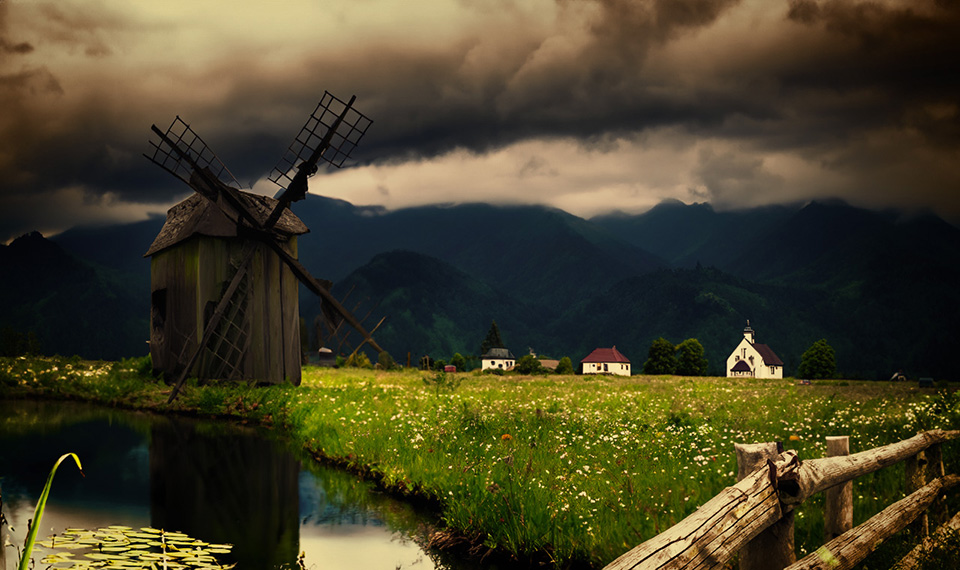
I am not against a photographer manipulating their photo so much that it is no longer reality. Replacing, adding or completely changing things. Just be honest about it and don't call it a photograph anymore. Because it isn't one anymore.
But be careful with all those creations made using AI. They cost you credits or an (extra) subscription. In other words, using AI in this way costs money. The worst thing is, if you don't like the result, you've lost the money.
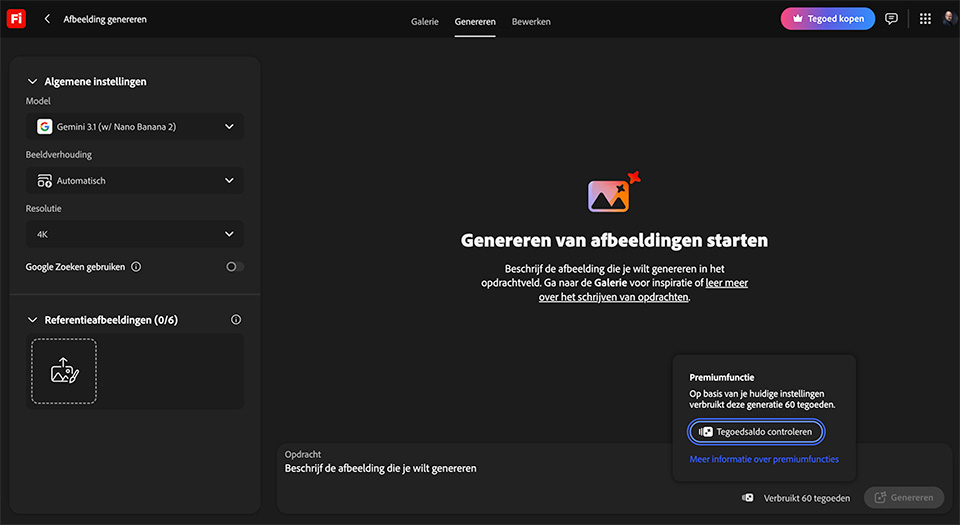
You can have something generated. A photo, a video or whatever. You have to pay for this. If you don't like the result, you cannot reclaim the credits or the money. You simply have to do it again, and you pay for it again.

Fortunately, using the simple AI functionalities for photographers, making selections and removing objects, is still free. But if you use it for real image manipulation, it can become a bottomless pit into which a lot of money can disappear.
Adobe uses credits. You get a certain number, but you can buy more. Affinity charges a monthly fee for using AI functions. I don't know how other AI providers do it. But it is wise to look into it carefully.
About the author
Nando Harmsen has been photographing for more than 40 years. He specialises in wedding photography and landscape photography. Nando also gives talks, workshops, masterclasses and photo trips, and regularly reviews new and interesting equipment.
You might also like
-
 Adobe's AI credit system
by Nando Harmsen
-
 New AI feature for Lightroom and Lightroom Classic
by Nando Harmsen
-
 Don't want AI editing? Turn it off in ACR
by Nando Harmsen
-
 Lightroom update with generative AI
by Nando Harmsen
-
 Adobe and the cost of AI generative fill
by Nando Harmsen
-
Does AI generative removal make you a lazy photographer?
by Nando Harmsen
2 comments
-
 Mac wrote on Wednesday 27 May 2026 at 08:06 | reply
Don't forget the hidden costs of the gigantic water consumption of data centers when using AI.
Translated from Dutch.
They of course already consume a lot of water, but especially when you also start generating images. -


Have your say
Please note: Articles older than a week can only be commented on by signed-in visitors.Would you still like to comment? sign in or create a free account.
Become a better photographer every week
A practical photography tip in your inbox every week.
39,079 photography enthusiasts already receive the tips! More about the weekly mail. Or keep up to date via  Facebook.

Elja Trum
Photofacts; everything to do with photography!
Would you like to take better photos and keep up with what is happening in photography? Photofacts publishes articles that teach you something about photography — from a product announcement to a practical shooting tip or a look at a website. Photofacts covers photography every day and is a hobby project of Elja Trum's that got out of hand. The articles are written by a team of volunteer authors. If you would enjoy writing one or more articles for Photofacts, do get in touch.More about PhotofactsPhotofacts is made possible in part by
