

What if your camera is no longer made?
Saturday 11 November 2023, 22:44 by Nando Harmsen | 3,256 views | 5 commentsThis article was translated from Dutch with the help of AI. Read the original.
Canon recently announced that it is stopping production of the EOS-M camera models. This also means that no new lenses will be made. Do you need to worry about that? I give my opinion, and the answer probably won't surprise you.
You can think of the Canon EOS M cameras as the smaller brothers of the standard EOS models. They have their own lens mount, with a select number of lenses available, such as an 11-22mm, a 15-45mm, the 18-150mm and a 55-200mm.
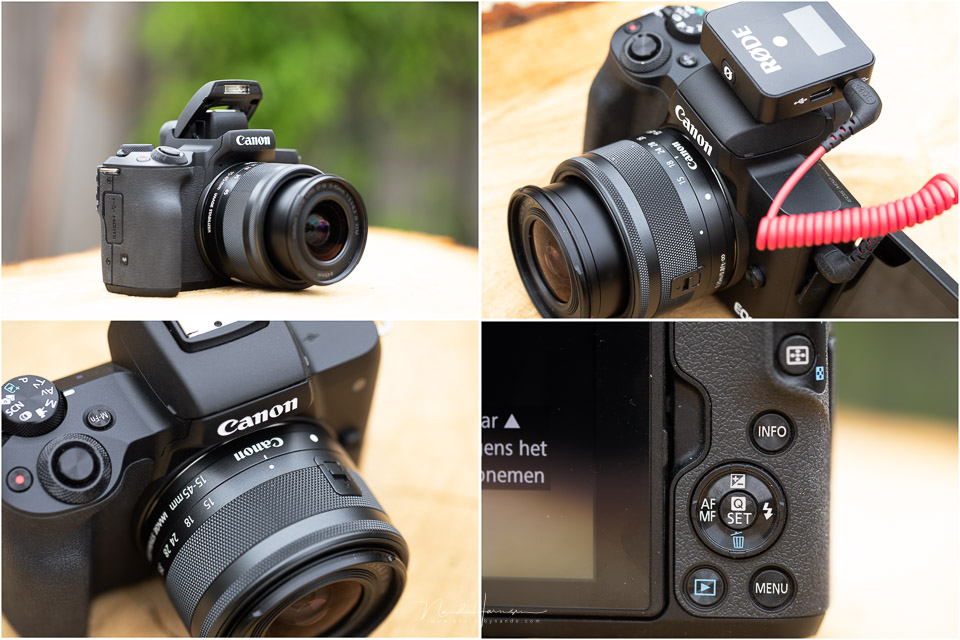
If you prefer primes, that is possible too. Is the range as large as the lenses for the standard EOS models? No, it isn't. But there are solutions for that too.
Have you ever chosen this type of camera, and bought one or more lenses for it? Then you probably have everything you need for your photography. How bad is it, then, when the manufacturer decides to stop making this model?
I often recommended the Canon EOS M50 and EOS M50 II. They were aimed at photographers who wanted a simple, good compact system without having to break the bank. But it was still a camera with plenty of options.
These were not photographers who wanted to use the best and most expensive lenses. It had to be easy and accessible. Often just a camera and a single lens. Two at most.
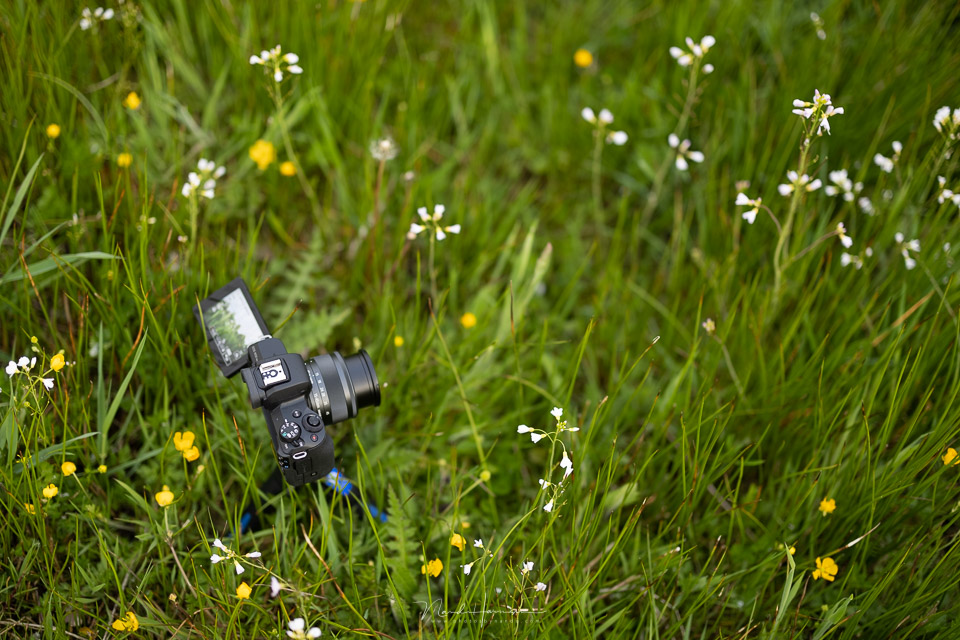
These photographers later told me they were happy with what they had bought. They don't look back at whatever new product has appeared on the market. They take photos with what they have and are happy with the results. The fact that these cameras are no longer being made doesn't change that.
But suppose one of them does want to take the next step in photography. In that case, there is a good chance they would look at the standard EOS models. Or at a camera from another brand, because that is an option too. They have outgrown the target audience for the EOS-M.
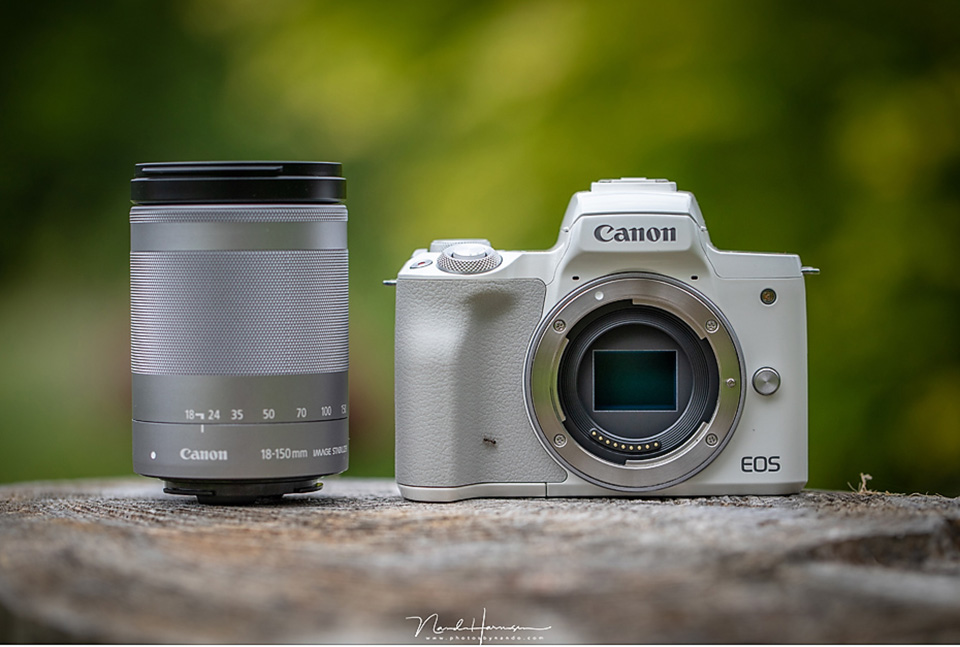
I have used the Canon EOS-M as an example because this recently made the news. And because I have experience with the EOS M50. But of course, this applies to any camera brand that stops making a camera model.
Do you have a camera with one or more lenses that you are happy photographing with? Then don't worry about the supposedly shocking news that your camera is no longer being made.
Just keep taking photos, because the photos won't get any worse in this situation. If, for whatever reason, you do still want an extra lens, there may even be a larger selection on the second-hand market.
Oh, and of course this also applies to DSLRs. They will no longer be made in the foreseeable future. But you can still take perfect photos with them. You could do that for years already, and that isn't going to change.
About the author
Nando Harmsen has been photographing for more than 40 years. He specialises in wedding photography and landscape photography. Nando also gives talks, workshops, masterclasses and photo trips, and regularly reviews new and interesting equipment.
You might also like
-
 Leica announces M EV1 with electronic viewfinder
by Elja Trum
-
 Review: Canon EOS R7
by Nando Harmsen
-
 The new Canon EOS R50 and EOS R8
by Nando Harmsen
-
 Canon announces the long-awaited EOS R3
by Nando Harmsen
-
 Canon introduces mirrorless crop cameras: the EOS R7 and EOS R10
by Nando Harmsen
-
 Canon introduces the EOS C50 and the RF 85mm f/1.4L VCM
by Nando Harmsen
5 comments
-

 Donald Willemsen
wrote on Saturday 11 November 2023 at 23:59
| reply
Donald Willemsen
wrote on Saturday 11 November 2023 at 23:59
| reply
Nando, I do see a problem if you want to switch to another EOS camera, whether that is a DSLR or one from the R series. If you switch from a DSLR to a camera from the R series, you can continue using all EF lenses, because an adapter is available. As far as I know, there is no adapter that makes M lenses suitable for use on a DSLR or one from the R series.
Translated from Dutch.
The EOS M has thus become a bit of a stepchild of Canon. I do understand Canon's move, but by doing so they are leaving EOS M users out in the cold. -
 Nando
wrote on Monday 13 November 2023 at 17:57
| reply
Nando
wrote on Monday 13 November 2023 at 17:57
| reply
I expect this is rarely a problem. Anyone who has this kind of camera will have at most two, maybe three lenses. You sell the whole kit because when you move to a new camera, regardless of whether it's Canon or another brand, you'll also want different lenses. Then you won't stick with these lenses.
Translated from Dutch. -
Donald Willemsen wrote on Tuesday 14 November 2023 at 14:09 | reply
Nando, I switched from the Eos 70D and 80D to the Eos R7 in October last year. I only traded in the 2 bodies and kept the EF -(S) lenses, because I can also use those on the R7. That's a good thing too because with a tight budget you don't immediately replace all your EF lenses with RF lenses. Especially not when you see that prices have risen considerably since the beginning of this year. The R7 kit I bought last year is now 180€ more expensive.
Translated from Dutch.
The users of the M series will therefore be considerably more expensive off if they want to switch. -
Nando
wrote on Tuesday 14 November 2023 at 14:21
| reply
Well. Suppose you have an M50, to take as an example, and you have a nice 18-140mm mounted on it. You photograph the things you like photographing with it and you are satisfied with the results, the camera, and so on.
Translated from Dutch.
Then you have no reason to switch to another camera. Then you don't have to worry about that camera no longer being in production.
And a new lens... well, then you look second-hand with a limited budget. If a camera and the lenses are no longer in production, what exists doesn't suddenly disappear into nothingness.
You assume that everyone wants to switch to something new. That's not not how it is. You only look at it from your perspective. -
 Matt wrote on Thursday 16 November 2023 at 16:26 | reply
Camera systems come and go. At the moment I still photograph with Sony A-mount cameras and lenses, a system that, although not officially discontinued, you can be sure will no longer have any new cameras and lenses released for it.
Translated from Dutch.
Is that a problem? It depends. Of course, you no longer experience any new developments, since no new cameras will be released. If something breaks, there is a reasonable chance it can no longer be repaired due to a lack of parts. For replacement, you are dependent on the second-hand market.
As long as the equipment keeps working and the result meets your expectations, there is little to worry about. Just keep using it.
Have your say
Please note: Articles older than a week can only be commented on by signed-in visitors.Would you still like to comment? sign in or create a free account.
Become a better photographer every week
A practical photography tip in your inbox every week.
39,103 photography enthusiasts already receive the tips! More about the weekly mail. Or keep up to date via  Facebook.

Elja Trum
Photofacts; everything to do with photography!
Would you like to take better photos and keep up with what is happening in photography? Photofacts publishes articles that teach you something about photography — from a product announcement to a practical shooting tip or a look at a website. Photofacts covers photography every day and is a hobby project of Elja Trum's that got out of hand. The articles are written by a team of volunteer authors. If you would enjoy writing one or more articles for Photofacts, do get in touch.More about PhotofactsPhotofacts is made possible in part by
