

Why did you choose your camera brand?
Monday 5 January 2026, 22:11 by Nando Harmsen | 4,559 views | 100 commentsThis article was translated from Dutch with the help of AI. Read the original.
There are many camera brands. Nikon, Canon, Sony, Fujifilm, Olympus, Panasonic and Pentax are perhaps the best known. You also have Leica, Hasselblad and of course Phase One. Which one do you have, and why did you choose that brand?
I have not mentioned a few other brands yet. Think of Ricoh, Samsung and Sigma. You own one of these brands. Maybe you have several, and there is always a good reason for that. What was the reason for choosing that brand?
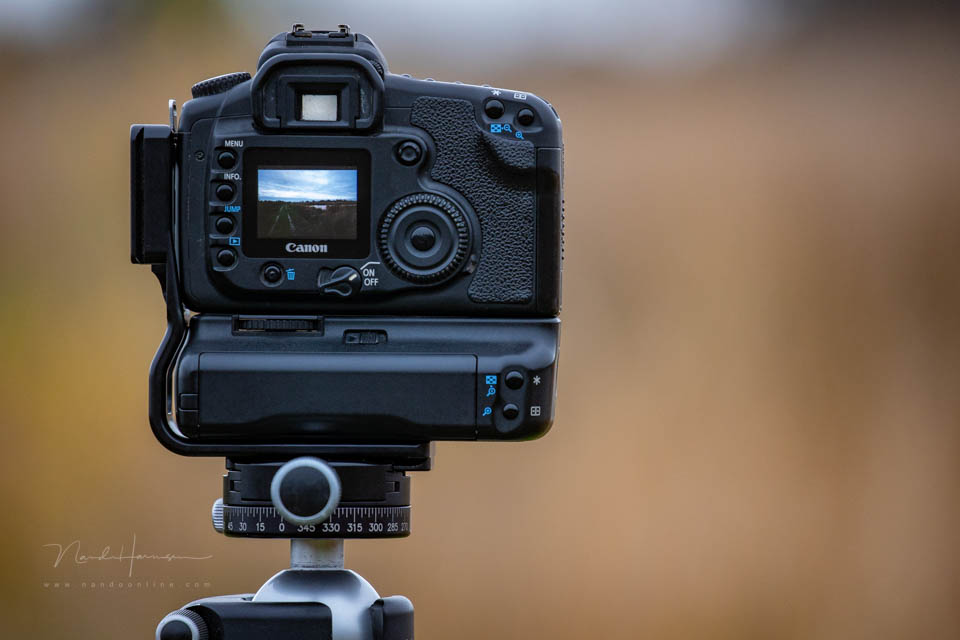
I have Canon, as you may know. The reason for that is a little strange. I actually went out to buy a Nikon. But once I was in the shop, the Canon felt much more comfortable in my hands and I preferred the controls.
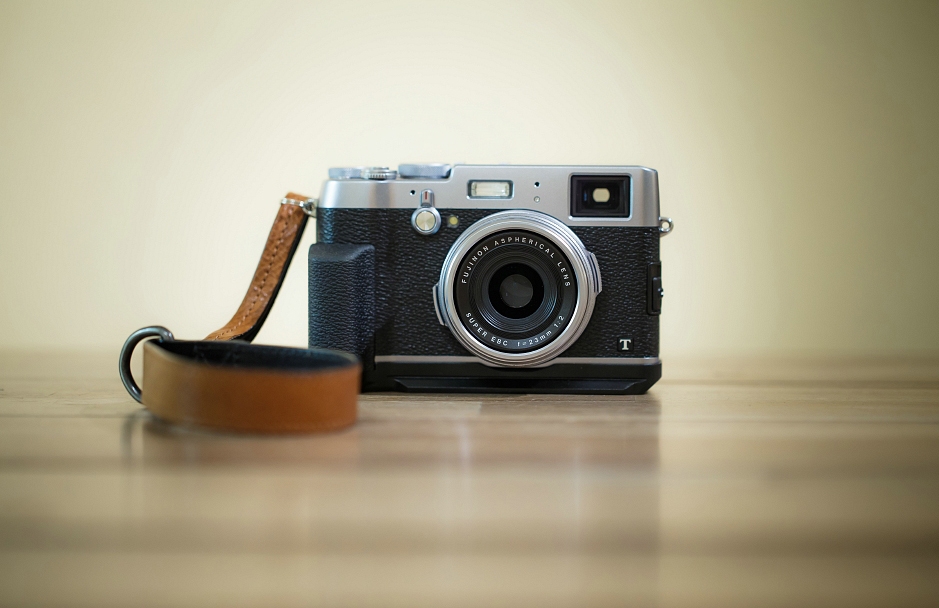
Later, when I was looking for a compact camera, I bought a Fujifilm compact camera. I chose it over the Sony because I thought the Fujifilm looked better and was much more convenient.
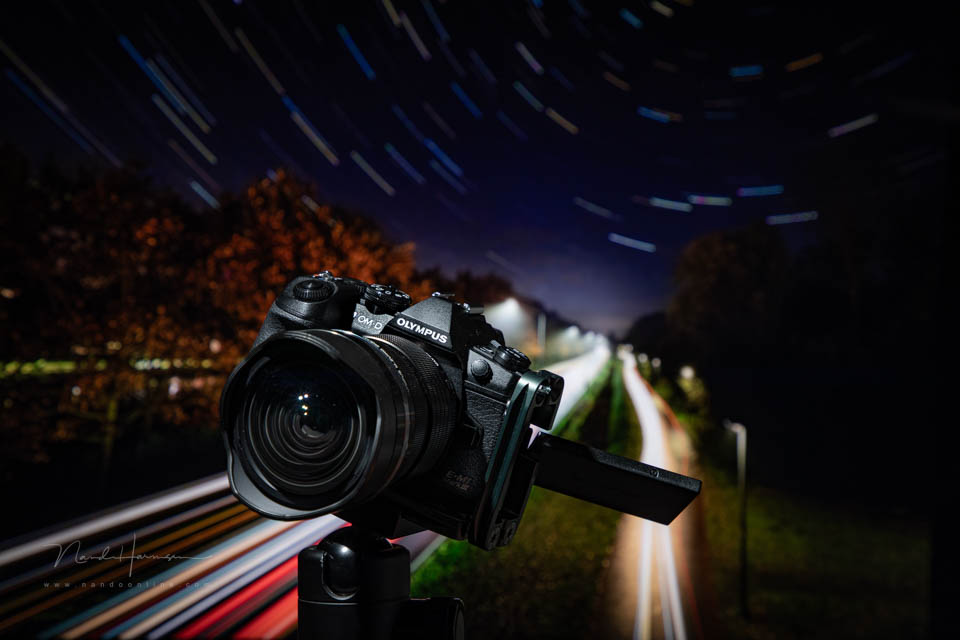
I bought the Olympus that I have owned since 2023 because of its live composite shooting capabilities. This feature makes light painting easier.
Both the Fujifilm and Olympus were chosen very deliberately for reasons that were important to me. That included both appearance and handling. And features that were available in those specific cameras.
All camera brands do the same thing: they let you capture the world around you. The features you get with them can differ. Every brand has its strengths and weaknesses. No camera is perfect for everything.
There are many reasons to choose. You choose the brand and type for the features that are important to you and your photography. Or perhaps you choose it for the choice of lenses that comes with it.
Your choice may also have another reason. Ergonomics or a pleasant menu can play a part. Or perhaps you simply like the look of the camera. Whatever the reason, it is always a good reason. Simply because the reason is very personal.
I am genuinely interested to know why you chose the brand you currently use. I am also curious whether, looking back, you think it was a good choice. Or would you choose a different brand now? Share it in a comment below this post.
About the author
Nando Harmsen has been photographing for more than 40 years. He specialises in wedding photography and landscape photography. Nando also gives talks, workshops, masterclasses and photo trips, and regularly reviews new and interesting equipment.
You might also like
-
 Loyal to a brand? Or not?
by Nando Harmsen
-
 The unique features of an Olympus
by Nando Harmsen
-
 Olympus's Live Bulb in practice
by Nando Harmsen
-
 Panasonic announces the LUMIX S1RII
by Nando Harmsen
-
 The new Olympus is called OM Systems OM-5
by Nando Harmsen
100 comments
-
 Donald Willemsen wrote on Monday 5 January 2026 at 23:40 | reply
I chose Canon. It started with the 400D, then the 600D and later the 70D and the 80D. I switched from DSLR to mirrorless and that became the R7. They were and are all cameras with an APS-C sensor. The possibilities offered by these cameras appealed to me and were financially within my budget.
Translated from Dutch.
The Canon menu is logically structured and is often similar across the models. The camera feels comfortable in the hand and there is a wide choice of lenses.
In the analogue era I worked with Ricoh SLRs.
The current R7 will be the last one if it doesn't give up the ghost. I am happy with it. I especially like the AF system of the R7 very much.
Canon has never led the way with new developments and that is not necessary for me either.
So I will not change brands anymore. -
 Mac wrote on Tuesday 6 January 2026 at 09:23 | reply
I went to a camera shop for a second-hand manual SLR (in the analogue era). And there they recommended Pentax.
Translated from Dutch.
Good cameras, lots of lenses available for them, etc.
And I simply switched to digital with Pentax, and I still photograph with it. -
 Harrie Vangangelt wrote on Tuesday 6 January 2026 at 10:25 | reply
I made my choice in 2007. It was a Pentax K10. Cheaper for the same quality compared to Canon and Nikon. Stabilization in the body (not in the lens) and waterproof to boot. Besides, I am also the kind of person who wants to choose something different from what the majority does. Stuck with Pentax. After the K10 came the K5 and now I have the K1.
Translated from Dutch. -
 Ad Bervoets wrote on Tuesday 6 January 2026 at 10:28 | reply
I once started with an analogue Zenith SLR and then a Nikon, which I liked much better. And that’s where the Nikon seed was planted. And then came Nikon’s digital cameras: a small compact with no less than 2.0 megapixels(!), a D40 and now for a very long time the D5300 with an 18-200 Nikkor lens, a great all-round camera with good performance for my kind of photography.
Translated from Dutch. -
 Vera wrote on Tuesday 6 January 2026 at 10:37 | reply
On the advice of the camera store, I chose the Canon 70D. With my not-so-large hands, it works better than a full-frame camera.I am still very happy with this camera and the functions it has. My compact became the Panasonic TZ 90: easy to take along in a small bag or even a jacket pocket, lots of functions and a decent zoom possible. The latter was the deciding factor.
Translated from Dutch. -
 Ron wrote on Tuesday 6 January 2026 at 10:43 | reply
As a beginner hobbyist went for the Canon eos rebel t3i nice and simple and lots of lenses nice and sturdy in the hand.
Translated from Dutch. -
 Frans wrote on Tuesday 6 January 2026 at 10:44 | reply
In the digital age I chose a Canon because I had also owned a Canon in the analogue past. Later I learned that this was the wrong choice because I should not have been guided by the choice of camera but by the quality of the lenses offered by a camera brand. In the end I stuck with Canon because switching body brands also meant switching my 5 lenses; too expensive. By now I can read and write with Canon and see no reason whatsoever to start over with, for example, Fuji (the frustration I saw in my photography friend for quite a long time).
Translated from Dutch. -
 Dennis te Lintelo wrote on Tuesday 6 January 2026 at 10:46 | reply
In 2010 chose Canon, simply because there was a great deal on a 1000D with 2 lenses. It could just as easily have been Nikon or another brand at the time.
Translated from Dutch.
Always stuck with Canon because it worked perfectly well for me. The 1000D became a 7D, a 6D and eventually the hobby completely got out of hand, with an R5 and an R7 now, including the necessary L lenses .
. -
 Ron Maarschalkerweerd wrote on Tuesday 6 January 2026 at 11:12 | reply
Beyond the technical capabilities of current cameras, they all think that their specific color space is the best. Personally, I don't think Nikon green is all that great, but what if you bring your RAW image into, say, Lightroom or Adobe Camera RAW with Adobe Color or Adobe Standard, then little remains of your camera's color space. I'd rather convert my RAW to DNG to use within a piece of software that Adobe made in 2012 to linearize the camera image, which gives you all the highlights and even somewhat better shadows, but also defines color better. Adobe never updated this software, probably so as not to shoot themselves in the foot, because with a workflow preset you get much better results than with all those terrible wangbars that they shove down your throat as an update, like, look at us doing such a good job, and thus bind you like meek sheep.
Translated from Dutch. -

-
 Hans wrote on Tuesday 6 January 2026 at 11:18 | reply
I once started with Nikon! The first camera was an analogue one, from a Nikormat to the F2. After that the F501-F801
Translated from Dutch.
Switched to the D70, after various models such as the D700/810 because of weight etc. discovered the Z series
Had saved up a nice set because of the switch to landscape photography. Among others Nikon Z7II with 3 beautiful lenses and also a filter set and Gitzo tripod...until disaster struck in 2025! The complete set was stolen during a burglary. Fortunately well insured and then switched to a medium format, the Fuji GFX50II with among others the 20-35 and 100-200 lenses
What a beautiful set and how happy I am with it, even though I was always satisfied with Nikon. But who knows, maybe I would have started with Canon -
 Piet Wendrich wrote on Tuesday 6 January 2026 at 11:18 | reply
A long, long time ago I photographed with the analogue Olympus OM-2n. When autofocus started to become popular Olympus, in my opinion, neglected it too much. And I fell in love with the Canon EOS 50. Photographed with it for years. When digital photography became affordable, it was logical for me to continue with Canon, because I could keep using all my lenses. The first was the Canon EOS 20D, followed by an EOS 1D mk III and an EOS 5D mk II.
Translated from Dutch.
Due to physical circumstances I switched back to Olympus and I now have an OM-D E-M1 mk II [2x] and an OM-D E-M1X with 8 lenses, 3 of which are from the PRO series.
So for me it was initially purely the weight of the Canon equipment. And I haven't regretted it for a moment. Although I must say that the new Canon EOS R3 and the RF Z lenses are also very attractive (but the investment in them is a bit too much...) -
 bert wrote on Tuesday 6 January 2026 at 11:28 | reply
I started with the Pentax MX and then various other Pentax cameras, and when I bought the MX it came with a lens that I can still use on my K3 3.
Translated from Dutch. -

 bram.stanja@gmail.com wrote on Tuesday 6 January 2026 at 11:29
| reply
bram.stanja@gmail.com wrote on Tuesday 6 January 2026 at 11:29
| reply
Almost 50 years ago I bought an Olympus OM10, as a 14-year-old boy. About 20 years later I switched to a Canon Eos50e with accessories, then a digital Eos350d because everything worked with it (even the flash's zoom function). 10 years ago I bought an EOS6D, including L lenses, among other things because of how user-friendly it was. Last year I traded everything in and switched to a Sony RX10iv, because of the weight and the space everything takes up when travelling and on my daily walks. It took some getting used to, but I have no regrets!
Translated from Dutch. -
 Lauran wrote on Tuesday 6 January 2026 at 11:31 | reply
In the studio I mainly work with Nikon for model photography/nude photography D 850.
Translated from Dutch.
Furthermore with a Hasselblad. -
 Hans De Smaele wrote on Tuesday 6 January 2026 at 11:36 | reply
A long time ago, a friend gave me a Nikon D80. Then came the D7000, D7100 and D7200 because I could always keep using the same lenses. Then I switched to full frame with a Nikon D3s (beautiful machine !) and afterwards a D5. Because I could still get a fair amount of money for it at the time (for the D5), I switched to a Nikon Z9. That camera does everything I need (especially speed). If I had to start over again, I don't know if I would take the same route. The Z9 is formidable but of course also quite big to take with you always and everywhere, and the Nikon Z lenses are quite expensive, I think. But look, I'm happy with what I have and that is still the most important thing !
Translated from Dutch. -
 Tanja wrote on Tuesday 6 January 2026 at 11:42 | reply
Nikon, I started my education with it in the analog era. At work too (equipment rental service at the university college) it has always been Nikon, so I continued to follow this. Force of habit? But also very satisfied with the Nikon(Z) series.
Translated from Dutch. -
 Harry Kuyper wrote on Tuesday 6 January 2026 at 11:46 | reply
My first digital camera was a Canon on the recommendation of the camera shop. After I had to get a new camera (due to water damage), it became a Canon again because the lenses and filters that I have by now fit on it.
Translated from Dutch.
And besides, I think Canon cameras are perfectly fine -
 Kees Ham wrote on Tuesday 6 January 2026 at 11:46 | reply
I once started out with analog photography with an Asahi Pentax and switched to Nikon for quality reasons because I inherited a Nikon from my father. At some point, still shooting analog, I bought a Nikon F-60 with a few different lenses (with an F mount) in Singapore, and then when switching to digital I started with a D80, partly so I could continue using the same lenses. Then a D7200, followed by a D800, and now a Z7, with the Z50 as a lightweight option. Nikon feels comfortable in my hand and I have grown attached to Nikon's menu structure.
Translated from Dutch. -
 Pixeldude wrote on Tuesday 6 January 2026 at 11:51 | reply
Long before I became a hobbyist photographer in 2015, I used a Canon, I don't remember which one anymore.
Translated from Dutch.
I also owned a small Olympus, with, I think, 8MP.
In 2015, in preparation for my retirement a few years later, photography sparked my interest. At first I also considered drawing and painting, which I had become quite skilled at in my teenage years (7 years at Sunday academy, winning first prize in all but one year), but ... you need a studio for that and I wasn't keen on that. Photography was the solution.
I had read about M4/3, with the advantage of a very large weight saving and lower cost of the lenses, and I thought 'man, you're getting older and you'll already have enough to carry around, so look for lightweight equipment'. That's how I ended up with Olympus and I liked it. I bought my first E-M1 and 2 accompanying Zuiko zoom lenses, a 10-40 2.8 and a 40-150 2.8. And a year later I bought a second E-M1 because I often went out into nature and liked having my 2 lenses available without having to change them. Quite a lot of different lenses, 1.2 and 2.0 converters and other equipment were added. In 2020 I bought the Olympus flagship at the time, the E-M1X. That was also the reason why, a few years later, I had my oldest E-M1 converted into an IR device.
For drone photography, which I have also been doing since 2023, I first bought a DJI Mini 2 and later, after taking a mandatory exam, a heavier DJI Air 3S.
I will undoubtedly stick with OM and DJI for the rest of my life. -
 Ruthger Schoonderbeek wrote on Tuesday 6 January 2026 at 11:56 | reply
Initially, I started with (digital) Canon DSLRs. For several reasons: sturdy and robust bodies that feel good in the hand, controls that I find pleasant to use and a wide range of lenses. I have owned various models: 20D, 40D, 50D, 5D, 5Dii.
Translated from Dutch.
When mirrorless cameras became more commonplace, I switched to Fujifilm. An X-T3 and an X-H1. Mainly because of their acclaimed image quality and the quality of the lenses. I actually never really managed to get used to the Fujifilm bodies. I didn't find them particularly comfortable to hold (on the small side compared to Canon) and there were too many buttons and functions, which I sometimes activated unintentionally. It came at the expense of my enjoyment of photography and by now I have partly returned to Canon.
I sold the Fuji X-T3 and bought a used Canon 5Diii to replace it. Technically perhaps a step backwards, but I find it more enjoyable to take photographs with. I did keep the Fuji X-H1 because of the IBIS the camera has and because I have a decent collection of analogue lenses (including Helios, Jupiter, Volna), all with adapters to Fuji as well. So that has become more of my camera for “special projects”.
I am still struggling with the question of whether I should switch from my Canon 5Diii to a (full-frame) Canon mirrorless camera, but I haven't decided yet. It is of course another substantial investment, while I don't know whether that would outweigh an increase in quality and my enjoyment of photography. Time will tell…
I also wouldn't know yet which mirrorless camera model I should go for. That would then be another difficult choice. -
 Wil wrote on Tuesday 6 January 2026 at 12:02 | reply
About 15 years ago I went to South Africa for the first time with a simple (digital) SX10 from Fuji??? with a fixed zoom lens. Looking forward to the images; but they were a huge disappointment. Especially the digitally zoomed-in wildlife photos (necessary after all, if you wanted something recognizable in the photo) were rubbish. Under the motto: "this isn't happening to me again", I started looking for an SLR. It became the 1000D from Canon; it was affordable, felt a bit better in my hands and I found the menu more logical. Via the Canon 60D and 6D, I've now been using a Canon R6 for 3 years. I have never felt the need to switch brands (apart from the cost of replacing all the lenses/accessories). By the way, I still use my EF-L lenses.
Translated from Dutch.
If I don't feel like "lugging gear", I use a Canon M5 with 2 little lenses, which I picked up for next to nothing a few years ago. Small, light and easy to take along in a small bag. The quality is more than sufficient for my needs. -
Peter wrote on Tuesday 6 January 2026 at 12:05 | reply
Years ago I chose a Canon 450D. I liked the weight and controls and it felt good in my hand. I have never regretted this choice. In the meantime I have had several more types and more and more lenses have been added, which have now almost all been exchanged for RF lenses.
Translated from Dutch.
I will not switch to another brand anymore, Canon suits me well and replacing all the lenses would be far too expensive.
I would like to try a Sony sometime. -
-
bram.stanja@gmail.com wrote on Tuesday 6 January 2026 at 16:51
| reply
Yes, the menu structure is a bit of a thing if you're used to Canon. But you'll get the hang of that over time too ??
Translated from Dutch. -
 schepers marc wrote on Tuesday 6 January 2026 at 12:16 | reply
Once started with an analogue Praktica MTL3 then an MTL5 then a digital Sony compact.
Translated from Dutch.
and then The first Nikon and now I am on the 5th one a Z 6 X Why once you are with a brand and have multiple lenses it is too expensive to throw everything overboard and buy everything new and you get used to a menu and the structure of a brand...... -
 Ilse wrote on Tuesday 6 January 2026 at 12:16 | reply
Sony. Because when I started, there was a lot being said and written about Sony, and I could relate to the price/capabilities of my camera at the time (compact). Since then, it has always been Sony, even though the menu is complicated (and I probably don't get nearly everything out of my cameras) and Dutch-language manuals are either impossible or very difficult to find. In the meantime, I have the Sony RX 10 IV and the Sony A6700 with various prime lenses. It is a shame that the local photography club consists almost entirely of Nikon and Canon users. Otherwise, I would definitely pick their brains to get even more out of my camera.
Translated from Dutch. -
 Jan Spoel wrote on Tuesday 6 January 2026 at 12:21 | reply
Previously worked with Canon F1 and Hasselblad 500C.
Translated from Dutch.
Stuck with these, now Canon EOS 1DX lll and Hasselblad H6 -
 Ben Geurdes wrote on Tuesday 6 January 2026 at 12:24 | reply
I once started out in my youth with an analogue Praktika SLR. An affordable Eastern Bloc camera with which I still took beautiful photos despite all its limitations.
Translated from Dutch.
Much later switched to Nikon.
It has always stayed that way. Simply because there was no reason to switch and the D lenses were still usable.
Now I use the Nikon Z 6 III
Very satisfied with all the bells and whistles, lightning-fast autofocus with eye, animal etc. detection.
Compact in size with the stacked sensor and 24 Mp is enough for me. -
 Peter wrote on Tuesday 6 January 2026 at 12:35 | reply
Started out with a Miranda Sensorex because of the quality, and the cameras went on sale because of what later turned out to be financial problems. Had a lot of fun with it for years, but due to moving there was no darkroom anymore. Then nothing for a long time. Until I felt the need for photography again in 2015. Looked into a lot, but still ended up in the Miranda corner again, with Pentax. Same reason again. Technically fantastic, fast, in-camera stabilisation and handy compared to others. Looked around and managed to get hold of a Pentax Kr set in Bonn. Then switched to the K3, bought from a studio photographer in Berlin with 15,000 clicks. Still to my great satisfaction. Affordable lenses, in-camera stabilisation, weather sealed, technically very good and very handy for handheld photography outdoors. also in the early morning. Rarely or never need a tripod.
Translated from Dutch. -
 Rene Prevo wrote on Tuesday 6 January 2026 at 12:43 | reply
Olympus, since the 70s,
Translated from Dutch.
Digital since 2004.
Good quality, light in weight, small dimensions. Still satisfied, now with E-M1MII -
 Guy De Smet wrote on Tuesday 6 January 2026 at 12:49 | reply
Everything I read here also did, first reflex a Minolta SRT100, XGM, XG2 and X700. Minolta then changed mount and I switched to Nikon F301, F801 and F801S.
Translated from Dutch.
Canon then came out with an affordable Digital camera, the rest lagged somewhat behind and I acquired a Canon D60, then a whole series of Canon cameras followed up to the 5DmkIII with corresponding L glass. After some time the whole thing became somewhat heavy and Sony came into view, first the A7, it was not a success and was quickly sold. Until Sony released the A7III and RIII, love at first sight and the switch was a fact. Still with the RIII and corresponding glass. In addition, to great satisfaction, the side step to to Fuji GFX 50SII medium format, heavy but the quality brings the lightness. -
 Fons wrote on Tuesday 6 January 2026 at 12:53 | reply
I started in the analogue days with a Nikon Fm, on the advice of a friend's father, who was a journalist at the newspaper Le Soir. Then switched to a Nikon D750. Now, after water damage to my D750, switched to a Z6III. With an adaptor (FTZ II), I can still use all my previous lenses ( Nikkor AF-S 70-200mm f 1/4 and Tamron SP 24-70mm f-2.8 ). My flash is the Nikon Speedlight SB-910.Next purchase probably NIKKOR Z 24-120mm f/4 S.
Translated from Dutch. -
 Paul wrote on Tuesday 6 January 2026 at 12:58 | reply
By chance started with Nikon 55 years ago and subsequently stuck with Nikon. For larger formats of course other brands
Translated from Dutch. -
 ROELOF HOLTLAND wrote on Tuesday 6 January 2026 at 13:00 | reply
From an analog Minolta 3i I automatically ended up with Sony and I still have that because of the compatibility of the flash and lenses.
Translated from Dutch.
Had various models, great cameras and never had any problems even though the camera also often goes along on the motorcycle by now I have ended up with the A850 and A77II -
 Roel van Gompel wrote on Tuesday 6 January 2026 at 13:01 | reply
Started 50 years ago with Ricoh 35mm, then switched to Minolta Vectis in 1999, Then Minolta 7D and subsequently to Sony A77 and A99. Now considering the new 7 IV or 7 V.
Translated from Dutch. -
Leen K wrote on Tuesday 6 January 2026 at 13:04 | reply
As a former professional photographer, I photographed for a long time with Mamiya, Hasselblad and Bronica in the studio and successively Praktica, Pentax, (only two weeks) Canon, Fuji, Minolta and Leica as an analog photographer, and switched to digital in 2002 with successively Fuji, Nikon, another Fuji, Nikon and in 2015, after I stopped, Panasonic.
Translated from Dutch.
Why my choice for Panasonic? First of all, weight and size. It makes a huge difference whether you have to carry Nikon or Panasonic with you, not so much the camera, but the lenses. Moreover, I use it almost exclusively for photos on Facebook, so I absolutely don't need the quality of full frame. A Panasonic 14-140 (combined with a 100-300 in emergencies) and an Olympus 8-25 are more than sufficient. -
 Ton wrote on Tuesday 6 January 2026 at 13:14 | reply
At the beginning of the 1970s I went to visit my uncles and their families in Canada during the holidays. The day before, I bought a Yashica compact camera at Capilux. I really enjoyed photography and when I got my hands on a colleague's Olympus OM-1 a year later, I was sold. I bought one too and later also an OM-2. I still have both cameras (in working order) as well as a series of original Zuiko lenses.
Translated from Dutch.
Then the children came along and the savings had to be spent in a different way.
At the beginning of the digital era I bought a simple Fuji camera and later also several digital Olympus compacts. Then an Olympus E-450 SLR. I have always continued using the original Zuiko lenses with great results.
In the meantime, via the Olympus OMD E-5, Olympus OMD E-10 MK I, MK II and MK III, I now own an OM-5. In addition, for convenience, a Pen EPL-8, which always comes along on outings with the grandchildren. Never regretted my choice of Olympus; the lenses in particular are still fantastic. -
 Hans wrote on Tuesday 6 January 2026 at 13:19 | reply
Over 50 years ago I made a special trip to "the City" to get some good advice. It became Nikon and it has remained that way ever since, to my complete satisfaction.
Translated from Dutch. -
 Viviane wrote on Tuesday 6 January 2026 at 13:19 | reply
I chose Canon DSLR and Canon mirrorless because …‘to me’ … the controls and menus fit together more logically. I rented both the Nikon and the Sony but Canon was also more comfortable for my small hands
Translated from Dutch. -
 Cor van Kuijk wrote on Tuesday 6 January 2026 at 13:28 | reply
I first had a Mamiya, but when I wanted to buy another lens for it, they had changed their mount. Eventually photographed with a Canon F1 for 30 years. The prints became so bad because the labs changed their baths less and less that, on the advice of my photo shop, I switched to a Canon 5D, which became a Mark II, Mark III and Mark IV. Recently added an R3 as well, although I have to get used to it a lot.
Translated from Dutch. -
 Liesbeth Verkade wrote on Tuesday 6 January 2026 at 13:31
| reply
Liesbeth Verkade wrote on Tuesday 6 January 2026 at 13:31
| reply
I have been photographing for a very long time, but with interruptions. At the moment I have a Canon Eos 90D, which I am super happy with. Before that I had a Canon 500D, my first DSR.
Translated from Dutch.
I took photos with it for over 10 years with great pleasure. I replaced it because I wanted more larger files (more pixels), so that I had more possibilities to crop images.
Once, a very long time ago, at the end of the '60s, I took my first steps in photography with my mother's camera, a Zeis Ikon 6x9. I no longer know the exact type. In the mid-'80s I bought an Olympus Penn half-frame camera. Fully automatic. Lots of photos on 1 roll of film. In 1999 I went on a study trip to Israel. I took my husband's analog SLR, a Pentax ME, with me to make slides. When digital photography started to emerge, I got a Sony Cybershot for my birthday. I took photos with it with great pleasure, but then I also discovered that I actually wanted more, and in particular a camera with which I could make RAW images. After saving up and thoroughly orienting myself on all kinds of internet sites, I decided to buy the Canon 500D. I looked at other cameras in the store as well, but decided on this one. It felt good in the hand, had a zoom kit lens and a telephoto lens was affordable.
The lenses of the 500D fit the 90D. That was a nice bonus. Two years ago the old kit lens started to develop some problems and I replaced it with an 18-135mm lens from Canon. I am also extremely pleased with that.
I am not immediately looking for another camera, unless it would be a small compact camera with which RAW images can be made so I don't always have to take the drote with me. -
 guest wrote on Tuesday 6 January 2026 at 13:38 | reply
In 2006 I started with a Fujifinepix S9500 but in 2008 I switched to a dslr so I could also really do macro with a macro lens. This became the Sony alpha 350, which felt good in the hand and was also still somewhat affordable. I added a sigma 105 for the macro, certainly not a bad lens for that price.
Translated from Dutch.
Took quite a lot of nice photos with this combination but what I really ran into was that only iso 100 and 200 were usable, everything above that was immediately a horrible load of noise. Because I often tried to photograph under some dark bushes, that caused so much frustration that in 2010 I switched to the Canon 7D, which had just been released with very nice reviews. I enjoyed that for many years until I could switch to the 6Dmark, later a second-hand 5Dmark2 and now the R6mark2...
I did look at Nikon for a while but found it functioned so illogically and the lenses were even more expensive etcetera...
Besides this I also got an Olympus about 10 years ago, walking with a hernia calls for a lightweight camera. With that one I also progressed to the OM 1 mark for the typical possibilities such as Nando has already mentioned. It simply depends on what I am going to do and what I feel like doing but it is very nice to have the choice of those 2 completely different systems. -
 Lucas Muylaert wrote on Tuesday 6 January 2026 at 13:42 | reply
I have been photographing since 1967. With my savings I bought a Pentax Spotmatic at the time. The camera was recommended to me by a passionate teacher of mine who sparked my interest in photography. I still use the original Takumar lens on my current camera, a Pentax K70. A very good camera, convenient to use, cheaper than Canon, Nikon ...The advantage of Pentax is that my old lenses (and there are quite a few by now) can indeed be used on the new cameras, albeit with limitations.
Translated from Dutch.
I also have a Panasonic TZ 100. A compact camera with a powerful zoom lens. Handy for city and travel photography. -
 herman wrote on Tuesday 6 January 2026 at 13:54
| reply
herman wrote on Tuesday 6 January 2026 at 13:54
| reply
Once upon a time, when animals still spoke, I started with a Zenith, later switching to a Canon (analogue).
Translated from Dutch.
my first digital SLR became a Sony, for the simple reason that it was the first one with a tilting screen, but now, after purchasing extra lenses and a flash, I have stayed with this brand because of the cost.
my "compact" camera is a Panasonic FZ82 because of the 60x zoom, and I still learn "new little secrets" from that device every day, I could no longer do without either of them! -
herman wrote on Wednesday 7 January 2026 at 14:52
| reply
oh yes, almost forgot, when I was 12 and had my "solemn communion", I got a little camera from my godfather, a Kodak Instamatic 100, with that film in a 126 cassette, which I still own (I'm 70 by now) and that's actually when the "photo seed" was planted and (with ups and downs) actually never went away
Translated from Dutch. -
 trudy visman wrote on Tuesday 6 January 2026 at 14:00 | reply
For myself, I had made a wish list that the camera had to meet, including live view, light in weight, and a tilting screen.
Translated from Dutch.
The Olympus E M10 lll met all the requirements. Bought 3 lenses with it.
A macro lens 60 mm 1:2.8/ a 14- 150 mm lens and a telephoto lens 75-300 mm.
I mainly use the first two often.
I love macro and everything small that appears in my image (unseen to the naked eye), or even later on my Eizo monitor, during post-processing( Once won at Photofacts)
The 2nd lens for street and landscape photography.
I rarely use the telephoto lens. Mainly because I also have to bring my tripod for the best result
I have now had my camera for 7 years.
Had it checked again recently and once again everything is still in order.
Still very happy with it.
Kind regards. -
 Jozef "De Groof" wrote on Tuesday 6 January 2026 at 14:13 | reply
have Pentax because I already had it in analogue and it was almost the only brand whose lenses could all still be used with digital cameras and it was also one of the better ones to hold have meanwhile bought the latest new and better lenses
Translated from Dutch. -
 Marnix Baetens wrote on Tuesday 6 January 2026 at 14:19 | reply
for about 25 years, took exclusively black-and-white photos with a Pentax 67 (6x7 negative) format.
Translated from Dutch.
Only switched to digital in 2019, and since a ‘ display model’ Canon 80D, with 17/55 lens, was on promotion in my camera shop for about half the price, this became the one… -
 Vergracht Redgy wrote on Tuesday 6 January 2026 at 14:32 | reply
Started out with Minolta, so the most logical choice was to switch to Sony when they took over Minolta. I already had many quality lenses and they still work fine on the Sony with A-mount
Translated from Dutch. -
 Langenaeken Jef wrote on Tuesday 6 January 2026 at 14:40 | reply
My father bought himself an Agfa Isolette V in 1954. From my 12th birthday onwards, I was allowed to shoot some black-and-white pictures with it from time to time.
Translated from Dutch.
I 1993 bought my first analogue camera myself on the recommendation of a friend (professional photographer with a shop), a Minolta 3xi. In 2003 I acquired a Minolta 7 Limited. A fantastic camera that, by the way, I still own.
From 2006 I made the logical switch to the digital world and logically bought a Sony A100 (because I could continue using the lenses from my analogue camera), later followed by a number of successors.
Currently, to my great satisfaction, I photograph with a Sony A7RIII and a Sony A1 equipped with a number of Sony lenses. -
 Ernst van Erkelens wrote on Tuesday 6 January 2026 at 15:06 | reply
I have a Canon camera and my photography buddy has a Nikon. In special circumstances such as night photography, I am done setting things up much faster with the Canon than my photography buddy is with the Nikon.
Translated from Dutch. -
 Hermann Schilt wrote on Tuesday 6 January 2026 at 15:20 | reply
Started with Practica in 1972 and switched to Pentax in 1977 (various models up to the LX). I liked them very much, unfortunately Pentax couldn't keep up with the transition to digital. Digital photography allowed me to save considerably on film and printing costs. First with a Fuji FinePix (the first model). Good camera with few setting options. When the Nikon D70 came onto the market, I bought one. Now I photograph with the Z8. The best camera I've ever had. Before buying Nikon, I looked at Canon and Olympus, but ultimately I went with Nikon. Because of all the current accessories, switching to another brand would now be a costly affair.
Translated from Dutch. -
herman wrote on Tuesday 6 January 2026 at 15:55
| reply
I think that Hermann Schilt's last argument concerning the cost price does play a (major) role for many photographers: in the past, a lens could be used (almost) universally on different brands, but since digitization one is (almost) obliged to stick with the same brand.
Translated from Dutch. -
Nando
wrote on Tuesday 6 January 2026 at 16:01
| reply
Then you're talking about a very long time ago, when it was still M42. Although you also had M39 and Exakta mount.
Translated from Dutch.
Even well before digitization, the brand-specific mount was a fact: Canon FD mount, Minolta A-mount, Nikon F-mount, Praktica B-mount, Petnax K-mount, Contax C/Y-mount... -
 Sonja wrote on Tuesday 6 January 2026 at 16:34 | reply
It started with my first digital compact camera that I bought from Olympus while on holiday. I could read and write with it. When I wanted to take photographs for real, I stuck with Olympus and bought the OM-D E-M5 with a prime 19mm lens from Marktplaats. That was so nice and still is (okay, it has now become the Mark III), this is the camera that goes on holiday with me! For my photography at farewells I needed a camera that was good in dark situations and was silent. I went for an update of the Olympus but came home with the Sony A7iii. A real 'workhorse' for me and still super happy with it. Although my feeling is still with the Olympus OM-DE-M5. Nice to read everyone's stories!
Translated from Dutch. -
 Gertjan Paans wrote on Tuesday 6 January 2026 at 17:00 | reply
I have a pentax. Works perfectly. I do need to start taking more photos again.
Translated from Dutch.
It became pentax because most people go for nikos or canon. I kind of have it in me to choose something different then. My brother had good experiences with pentax. Hence the choice. No experience with other brands. -
 André Kremer wrote on Tuesday 6 January 2026 at 17:05 | reply
Started with a Yashica (twin-lens reflex). Then moved to 35mm, Mamiya Sekor 1000DTL. That one didn't survive the Paris uprising of 1968. Later photographed architecture with a technical camera (Linhof). But that belonged to my work, not privately. Then moved to Canon 35mm, AE1 and A1. The latter met its end when I fell into the water.... Then digital, the Minolta (among others 5D) with quite a few lenses, so after that Sony, among others 700, 99. Now an A7RV, after my A7RIV (and the 700 and the 99) were stolen in a burglary, with some lenses. Now actually just 1 camera and my mobile. I mostly use the Tokina 35-150, especially in the studio. Besides that, a Sigma 2.8 24-70 (quite a bit lighter, so for going out), and A-mount 24-70 Zeiss and 100mm macro Minolta, and a Minolta 80-200 2.8 with converter and some more from the beercan series. But I hardly do anything with those anymore. Why these cameras and lenses; first as a school pupil and student because I could get them cheaply, later a bit on feeling, especially regarding the handling. And from the Minolta onwards I stayed with Sony because of the lenses I have, although in the beginning it was making do with the very poor support for Minolta customers.
Translated from Dutch. -
 Devan wrote on Tuesday 6 January 2026 at 17:14 | reply
My first camera was the Minolta SRT303 followed by the Nikon FM and FE followed by Canon, but eventually I ended up with the fantastic SONY Alpha7rV with its amazing 61Mp sensor and I haven't regretted that switch for a second.
Translated from Dutch.
The ultimate in terms of image quality, equipment and, not to be forgotten, the Sony G-master lenses -
 Paul Van Dorpe wrote on Tuesday 6 January 2026 at 17:35 | reply
My first camera (60 years ago) was a Kodak Brownie Model I made in England and won in a raffle. It did introduce me to the love of photography. I then switched to a Miranda Sensorex. Enjoyed it for years. When the brand stopped, I switched to a Canon 300D. It fit very well in the hand and I found the controls simple. I stayed with Canon after that. I have a lot of confidence in it and now have a Canon 7D and have just bought a second-hand Canon 5D Mark III from someone who switched to a system camera. I am convinced that Nikon makes cameras that are at least as good. It is all very personal. I would also like to take this opportunity to mention once again that your courses are very well put together and I have already learned a great deal from them. Congratulations.
Translated from Dutch. -
 Trees van Hoek wrote on Tuesday 6 January 2026 at 17:50 | reply
Started around 1985 (for financial reasons) with a Ricoh. A few years later took a photography course (4 years) at the Beeldenaar in Breda, built a black-and-white darkroom myself and developed rolls and printed photos.
Translated from Dutch.
Continued digitally with Ricoh.
Bought a compact camera Canon sx 730 hs for holidays (not sure of the model).
Later, in any case in 2021, switched to the SONY-DSC-HX5V because of the weight of the camera (and my reduced mobility).
Because of my mobility and ability to carry equipment declining further and further, chose a mobile phone with good camera capabilities: Samsung Galaxy X24 Ultra.
Advantage: always with me ... -
 Ton Veldman wrote on Tuesday 6 January 2026 at 18:09 | reply
I started with an Olympus E510.
Translated from Dutch.
I liked this camera, except that it quickly produced a lot of noise at higher ISO values.
Partly because of that, I switched to a full-frame camera.
That became a Nikon 610.
Then a Nikon 800E as a second camera.
I traded in both cameras in 2025 for a Nikon Z6 iii.
A fine camera, BUT I am dissatisfied with the manual because it is very user-unfriendly. -
 crissy wrote on Tuesday 6 January 2026 at 18:34 | reply
What an extensive response to this question of yours Nando ! It is the chance for all "seasoned" photographers ( I mean this kindly ) like me, to express their affection for the camera / brand they have enjoyed so much for so many years. Respect for the extremely sharp photos, desired results, aesthetics and understanding of the failures (it was my fault, not my equipment's ). What makes you happy, you hold close to your heart.
Translated from Dutch. -
 Bart Rijvers wrote on Tuesday 6 January 2026 at 19:39 | reply
My first camera, an Olympus Trip 35, was given to me by my uncle. After that I bought an Olympus OM-1 and could also use my father's lenses. Digitally, it was first a Sony compact, then Panasonic with a Zeiss lens. It became serious witht he Canon 100D, followed by the 700D and 6DII. In my eyes, the latter had too poor a dynamic range, which is why I shot a lot of brackets.
Translated from Dutch.
Professionally, I was already working with Sony BSI sensors at the time, including the IMX253 medium format 150-megapixel sensor. My current camera is therefore the Sony A7R4 and I am very satisfied with it. Dynamic range and detail are insane. There are an awful lot of lenses available that are certainly affordable second-hand. The only disadvantage I find is that the sensor gets dust on it very quickly. -
 Paul Lefevere wrote on Tuesday 6 January 2026 at 20:00 | reply
In 1970, at the age of 17, I started with a Canon FTb. I have always been very happy with it. But when I wanted to switch to analogue, I could no longer use any of my lenses. That, and the immediate good feeling I had with the Nikon D5000, convinced me to choose Nikon. In the meantime, a D600, a D500 and a D780 have come and gone. For now, I don't think switching to mirrorless is worth it.
Translated from Dutch. -
 ludo everars wrote on Tuesday 6 January 2026 at 21:18 | reply
Years ago started with chinon and three lenses for what would cost 500 euros now, after years of having nothing, a few years ago I happened to end up with Canon 1300d , 200d , 80d and now R7 and hopefully this year still an R6 mii or M3iii to add, I haven't decided yet .
Translated from Dutch. -
 Henk Donkers wrote on Tuesday 6 January 2026 at 21:30 | reply
Nice question Nando. When I was about 20, I bought a Practica LTL3. Learned a lot with it but switched to an Olympus OM-1 and then the OM-2 spot. Took a huge amount of photos with it up until the digital era. I still had a preference for Olympus but they only had the 3/4 format. I didn't want that. So it became a Canon 400D because it was more affordable than a comparable Nikon. Sony and Pentax, in my opinion, weren't quite there yet at the time. Stayed with Canon because of the lenses, with an EOS 5DII and now the EOS 5DIV. I'm very happy with this camera. Still no need to switch to mirrorless. Also because of the lenses.
Translated from Dutch. -
 Paul Compiet wrote on Tuesday 6 January 2026 at 22:12 | reply
It was in 1977, I was 16 at the time, that I went to a well-known photography shop and, on their recommendation, bought a second-hand Praktica SLR for 100 guilders, with a 50 mm standard lens. I learned the basics with this, and about 4 years later, based on my budget and with advice from the photographer, a Ricoh KR5 with a 50 mm standard lens and a Tokina zoom lens max 150mm. I photographed with this until 1992. After that I switched to Nikon, a choice based on “ how it felt in the hand and also what was in stock in the shop. The advantage was that I already knew what was possible, rather than looking at the specifications. After that I stayed with Nikon for the SLR, because it was a camera that had never let me down. First with the D300 because it performed very well in the tests and about ten years later my current camera, the D500, purchased because I wanted a higher light sensitivity as a base in combination with my 24-70 -2.8 lens for photographing indoor sports moments while keeping my available lenses. Besides the SLR, I soon had a compact camera, a Canon camera, because Canon's gave better images. Later, to discover digitization, I had a Kodak, which at that time was one of the first that was still somewhat affordable and available. Later I switched back to Canon, the handling and menu structure still suit me. Current one is the Canon G5X
Translated from Dutch. -
 W. M. Moerkerken wrote on Tuesday 6 January 2026 at 23:02 | reply
At a fairly young age I started with an Olympus Trip 35, famous and widely sold at the time, so one you could make an impression with, but I soon bought an Eastern European Exakta RTL 1000. A hell of an SLR, completely manual and even with a separate exposure meter, which taught you a lot but also made you unlearn being able to quickly "take" something.
Translated from Dutch.
When I finally bought a Nikon F50 in the 90s, I imagined myself in a world of luxury and convenience: what a delight it was to be able to click away quickly one after another! After the F60, it was time to go digital, the next big step was a Nikon D80 with an 18X135mm lens. You saw those Nikon SLRs everywhere, as if they cost and weighed nothing. The latter was precisely the decisive objection to switching to a system camera after a D90 with an 18X200mm, which I was otherwise very satisfied with. In the long run, you got fed up with lugging around that "lump", which was also generously large. My first system camera was and is a Panasonic DMC GX8 with a DMC 14X140mm, gosh, what a wonderful improvement in use. Lighter and smaller, but also somewhat smoother to use, which still makes photography a pleasant hobby for me as a senior. Another thing that stands out is the beautiful tilting and swiveling screen on the back!
In my opinion, it was also high time that Panasonic was mentioned here again, because unfortunately they are in the minority in this vertical roundup, which I think is unjustified! A renowned Dutch nature photographer once pointed out to me during a photo session that, in his opinion, Panasonics are for the sensitive ones among photographers. For me, a free, great and unsolicited compliment!
Wim Moerkerken -
 Wim wrote on Tuesday 6 January 2026 at 23:32 | reply
Started in 1968 with a Pentax Spotmatic. I also bought a second-hand Rolleicord (twin-lens) back then I soon grew to love the larger formats. Later I bought the Mamiya 645 with 3 lenses. Mamiya Sekor 55 mm 2.8, 80 mm 2.8 and the 150 mm F4. I still have the latter with the 3 lenses but I no longer use it. I switched from photography and filming (Super 8) to analogue video first and later to digital video (always with Sony video cameras) That is how I later ended up with Sony mirrorless cameras
Translated from Dutch.
Currently I have several Sony A7IV bodies and have 3 lenses. Sony 20-70 F4, Sony 16-36 F4 and a Sigma 60-600 F4.5-6.3
I do a lot of professional filming and with their full-frame sensors, these cameras deliver excellent television quality. For photography, this Sony A7IV with its 33 megapixels is certainly not among the top, but it still does excellent work for what I need it for. And yes, just as I was in love with the larger negative formats in the old analogue photography, I remain a big fan of full-frame, mainly because in video it allows me to crop seriously into the image during editing. -
Trees van Hoek wrote on Wednesday 7 January 2026 at 01:04 | reply
You make me curious, Crissy. Which brand/device are you talking about???
Translated from Dutch. -
 Johan Huiskens wrote on Wednesday 7 January 2026 at 08:14 | reply
,, I have been a fan of Nikon since the 1960s, with an analogue Nikkormat camera that was not only used ,in Vietnam,for photography but also as a weapon and was really a Top camera and used for a very long time .With the digital era, the Nikon D50 was the beginning for me, followed by the D7000 & the D7100, this because of the use of the lenses I already had with the D 7000 ,, the current end result is the Nikon D750, which I use with great pleasure almost every week for many receptions and otherwise in the centre of Amsterdam, but the only thing that remains and is that a certain weight is added and at a certain point I came across a message with and about cameras without a mirror and so I came into contact with the Panasonic G series, which I am very happy that I did, even if it was only for the weight, which is much less than the Nikon D750 . With this consideration I started with a Lumix G70, which I recently replaced with a Lumix G90 (my camera shop is 80% ,Foto Koch in Düsseldorf). I also bought a Lumix G9 body a year ago and 3 months ago the 12-60mm f2.8-4.0 ASPH lens, and I already had most of the lenses for the G series ,, I am actually very happy with this equipment, even if it was only for the weight ,, With friendly greetings from Amsterdam Johan Huiskens
Translated from Dutch. -
 Paulus van Aken wrote on Wednesday 7 January 2026 at 10:08 | reply
In 1960, my great-uncle, who was a photographer, gave me my first little camera, an Ensign FullVue, an improved box camera. Later a Lubitel II, bought with my first earned pennies, both still in the house. Film costs were too high for me, so I looked for a small format. A fixed lens soon became a limitation, so I got a Zenit B, screw thread, so all kinds of lenses could be found. Bought a number of second-hand screw-thread cameras as well, including a Pentax Spotmatic, but when I really needed something new in the 90s, when I started using it, there was no more screw thread. In one of the local shops that still existed at the time, I could choose from Pentax, Minolta, Canon or Nikon.
Translated from Dutch.
It became Nikon, an F50, because of the way it fit in my hand. Not the best camera of theirs, but I was able to sell it well, and bought a second-hand F801. In hindsight, I'm glad, because Nikon stuck with the F mount for a very long time, meaning you can browse through a large arsenal of second-hand lenses cheaply. After a number of years with that 801, switched to digital, a step back because of the costs, a D80, a few years later a D7000, wonderful camera, and in '18 with a lucky break a D500, which will have to last until I'm dead, because I don't see myself switching to such an ugly mirrorless camera, also because of the accumulated glassware, from 8 to 600 mm, which would then need an adapter. -
 Blondeel wrote on Wednesday 7 January 2026 at 10:21 | reply
Started with the first Olympus digital and now years later still Olympus (0M-1) because it has the best stabilization and sensor cleaning in the camera. Also because I mostly photograph birds and the crobfactor of 2 is an advantage, a 500 mm lens becomes 1000 mm FF.
Translated from Dutch. -
 Hans van Sterkenburg wrote on Wednesday 7 January 2026 at 11:51 | reply
My father had a camera from 'before the war'. With one of those bellows. Whenever another child was born, which happened every 1.5 years, the photographer would come. Father paid with potatoes etc. After the war, my father was given the camera as thanks for this. It has a small mark on it which I read as: IHAAGEE - Camera Works - Steenbergen - Dresden.
Translated from Dutch.
I always photographed with Canon, from the 400D to the R6. Now with the Sony 6700. The reason: I used to walk in order to photograph, now I photograph because I walk. The weight and the quality were the deciding factors. And the fact that my wife also works with the 6700.
Regards,
Hans van Sterkenburg. -
 N Nijgh wrote on Wednesday 7 January 2026 at 12:22 | reply
I bought a Pentax P30 in 1985 and later expanded it with lenses, then the K10, K5 and now the K3 and also acquired quite a lot of lenses via Marktplaats, including ones that are 45 years old and prime lenses for a small price that you can simply use on the Pentax because of the green button on the camera and focusing is also no problem, you can see it in the camera and you hear a beep. I don't know if it is the same with other brands. That's why I have remained loyal to Pentax
Translated from Dutch. -
 Ed van Hoof wrote on Wednesday 7 January 2026 at 12:46 | reply
After my time with analogue cameras, such as the Minoltas, in the digital age I have had an SLR from
Translated from Dutch. -
Ed van Hoof wrote on Wednesday 7 January 2026 at 12:51 | reply
After my period with Minolta, I started with a Sony alpha 100 and last year I switched to a Sony 7 A IV and I photograph in RAW and Jpeg, which also led me to start taking courses for Lightroom I am very satisfied with my camera, although sometimes you have to be an IT specialist and there are countless possibilities. I usually photograph in M. furthermore I still want to expand my lenses.
Translated from Dutch. -
Peter wrote on Wednesday 7 January 2026 at 13:06 | reply
I worked in a camera store myself for about 10 years, so I’ve had all the gear in my hands. Based on that, I’ve always chosen Nikon because of the build quality, durability, ergonomics, menu structure and image quality straight out of the camera. A D700 like that, for example, can even still be used as a hammer in an emergency, so to speak.
Translated from Dutch. -
 Erik
wrote on Wednesday 7 January 2026 at 16:31
| reply
Erik
wrote on Wednesday 7 January 2026 at 16:31
| reply
At a certain point came the switch to digital. that first became a Kodak to see if it would be an alternative to film. Soon I wanted more, a Sigma DS10 came and later a DS14. The latter died much too quickly and repair turned out not to be possible. a visit to a camera shop resulted in the advice, Nikon"" on their advice a Nikon came with a Sigma 18-55 f2.8 lens. and a Lensbaby composer pro . that had not been available for the Sigma. but had been on my wish list for a very long time. the seller didn't understand it at all. I never left Nikon again. several cameras further on and active in the Nikon Clun Nederland. What more could a person want.
Translated from Dutch. -
 Hans Lauffer wrote on Wednesday 7 January 2026 at 17:09 | reply
Nikon. Why? Very simply because we use those at work too. No different menus....
Translated from Dutch. -
 Jim wrote on Wednesday 7 January 2026 at 20:16 | reply
Once tried and played around with my father’s and uncles’ twin-lens Rolleis and Leica rangefinder cameras. Then in the early ‘70s of the last century, I bought two new Canon 35mm analogue SLR cameras with a few lenses. Which turned out to be a total failure in hindsight. Very shortly afterwards, traded them in for two Nikkormats with a few lenses. In addition to the various medium-format cameras from Pentax 6x7; Bronica 6x6; Hasselblad 6x6; various Fujis and the Cambo 4x5/8x10 inch cameras. So far I’ve had various types of Nikon cameras and have always remained loyal to Nikon, mainly because of their reliability and sturdiness! In addition, I still have the Fuji X-Pro 2 with matching lenses for added variety and of course because of the good quality and the weight saving on the road.
Translated from Dutch.
As a press, medical and documentary photographer, I had the advantage of being able to try out and use various camera brands and types, even Leicas. Of Leica, the M6 and M11 rangefinder cameras are my preference, but the latter have become unaffordable nowadays and I haven’t even mentioned the lenses. Even a former Focus editor couldn’t see the difference in image between Nikon and Leica SLRs, and that says quite a lot about Nikon! -
jahiba112@gmail.com wrote on Wednesday 7 January 2026 at 21:30 | reply
My interest in photography arose because I started taking a Photoshop module at a photography course in Ghent. They used photographs that had been made available, and I actually thought that I should be able to take those photographs myself. Subsequently, I started that course and at some point ran into the limitations of my Sony. Since most of my fellow students had a Nikon, I decided to do that too, thinking that if I didn’t understand something....there would surely be someone who could help me. And I didn’t find any reason to choose another brand when making my next purchase, so I still have a Nikon.
Translated from Dutch. -
 Gert-Jan wrote on Wednesday 7 January 2026 at 22:10 | reply
I chose Panasonic MFT. This is a lightweight camera at an affordable price.
Translated from Dutch.
The choice of lenses is also sufficient, so you can find something across the full range -
 Arjan Spaander wrote on Thursday 8 January 2026 at 10:11 | reply
Bought my first Pentax over 40 years ago.... the K10D in 2008 and now the K3III for quite some time. The big advantage: I can still even use my 50mm from the first Pentax. Top cameras.
Translated from Dutch. -
Wim Moerkerken wrote on Thursday 8 January 2026 at 12:06 | reply
Which type of Panasonic do you have, Gert-Jan?
Translated from Dutch. -
Jim wrote on Thursday 8 January 2026 at 13:20 | reply
Dear Nando, I read Ton Veldman’s response with his criticism of the manual for his Nikon camera. He is absolutely right about that! But this is not only the case with Nikon. Because shortly after purchasing my Fuji X-Pro 2 camera, I immediately afterwards bought an extra book for €40 about that camera, as a more extensive and better understandable manual than the manual supplied with the camera!
Translated from Dutch.
Purely for commercial reasons, most camera manufacturers pay little, or even no, attention to the care and composition, but especially to making the current very advanced electronic cameras come across understandably, which are quite different from, for example, a Hasselblad M501 or something from the 1980s of the last century.
Perhaps it is your task to also draw attention to that in particular in your articles! In my opinion, sales of all those kinds of accessories are going far too well, while they can be of essential importance. After all, they are not a dustpan and brush that you just casually buy!
Furthermore, my compliments for the attention you pay to the many responses. -
Nando
wrote on Thursday 8 January 2026 at 15:50
| reply
A camera manual is a list of the functions and where to find them. Along with a brief explanation of how to use them. You can't/shouldn't expect more from a manufacturer.
Translated from Dutch.
You can't expect an extensive explanation of all the ins and outs. Then it would become an even thicker book in A3 format.
Use the manual as a reference work. That's what it's intended for. If you really want to learn the camera and its functions, then you have to start taking photos, trying things out, experimenting. A course helps, specifically for the use you have in mind. A course to learn everything is a study. You won't learn that in half a day.
By the way, also take a look at the manufacturer's website. There are often tutorials and articles about using a camera's functions. -
Donald Willemsen wrote on Thursday 8 January 2026 at 14:47 | reply
@Jim. I agree with you. It actually has nothing to do with the subject. My camera has a 1000-page manual and even then they are too terse in their explanations on many points.
Translated from Dutch.
But I also have to admit that Nando has already made the necessary videos in which he explains how to use different cameras. Of course, it can always be more extensive, but the interested hobby photographer can also study the camera at home on the couch and settings in oeten that he/she uses most in his/her branch of photography.
And then there are the necessary workshops organized by various companies and professional photographers. I, for example, attended a workshop about the AF system of my Canon Eos R7. Such a workshop really does take you further. Just like Nando's videos. -
Hans van Sterkenburg wrote on Thursday 8 January 2026 at 16:31 | reply
In response to the thick manuals: what does the above-mentioned collective think about A.I.? A question I asked A.I. about sensor cleaning gave a surprisingly clear answer in 2 parts; a concise explanation followed by a step-by-step explanation. For your information; I asked about something I already knew, I was curious about the answer.
Translated from Dutch.
Regards,
Hans -
-
Paul van Aken wrote on Thursday 8 January 2026 at 17:28 | reply
I really think this latest addition is great!
Translated from Dutch.
Half the world gushes over AI but this is the best description -
donald Willemsen wrote on Thursday 8 January 2026 at 23:01 | reply
Who still remembers the camera with the brand name 'Diana' or 'Diane'. A little camera from the Eastern Bloc and made entirely of plastic. 120 roll film went in. The camera had 2 apertures; one with a sun and one with a cloud. As an extra, the camera also had a built-in yellow filter.
Translated from Dutch.
I was 10-11 years old and got it from my grandfather. If I remember correctly, back then you could buy one at Hema, among other places. -
 Harold wrote on Friday 9 January 2026 at 11:52 | reply
I started with Canon sometime in the 1980s. At the time, I liked the user-friendliness and the then-modern EOS USM autofocus system with an electronic connection between camera and lens. Once you're in such an ecosystem, switching to another brand is difficult since you have to replace all your lenses, flashes, etc. So I still photograph with Canon to my satisfaction.
Translated from Dutch. -
Donald Willemsen wrote on Friday 9 January 2026 at 12:31 | reply
It turns out that the Diana camera does not come from the Eastern Bloc, but was produced (around 1960) in Hong Kong. This brand was also often used in lomography. This brand was also known as a 'toy camera'.
Translated from Dutch. -
Paul van Aken wrote on Friday 9 January 2026 at 12:36 | reply
I had that for a short while too.
Translated from Dutch.
Took 16 shots 4x4 on 120 film.
But it was 'plastic fantastic', fun but hopeless. They're now being sold again as so-called "Lomography", whatever that may be . -
herman wrote on Saturday 10 January 2026 at 17:57
| reply
"lomography" is according to Wikipedia nothing more than photographing impulsively, the result is of less importance (best not to do it with an analogue camera, it could turn out to be VERY expensive)
Translated from Dutch. -
 Patrick Vergoosen wrote on Sunday 11 January 2026 at 16:41 | reply
Bought my first camera in 1984, a Nikon F-401. A huge improvement over the old Olympus that I was sometimes allowed to handle at my parents' place.
Translated from Dutch.
Now, well, I stuck with Nikon in the analogue days, right up to the digital D800, Nikon's first full-frame camera. And that was a disappointment. The device worked fine in the studio, but during assignments it was simply too slow to respond quickly to action.
Still slightly disappointed, I started trying other brands. A Canon 5D from work - not my thing because it worked quite differently from Nikon.
I bought a Fujifilm X-T1 myself. Actually quite a nice little camera, although it was a crop sensor. The menu and operation were (logically) close to Nikon. I even stuck with Fujifilm for a while (X-T2 and X-T4), only to eventually return to Nikon when the Z6ii came onto the market.
In the meantime, I work with the Nikon Z8. My best camera ever. The best price too :-( But the choices are now definitive. My older lenses were sold and replaced with a few Z lenses. What a difference again. -
 Arthur Wittendorp
wrote on Monday 19 January 2026 at 12:11
| reply
Arthur Wittendorp
wrote on Monday 19 January 2026 at 12:11
| reply
Really nice to read all those stories. I started in the mid-90s (I was still a teenager) with a Canon EOS 500 analogue SLR camera. This was not long after Canon had switched to the EF fitting. In 2008 I switched to digital photography with the Canon EOS 450d. Although I bought the accompanying EF-S lenses (18/135mm & 55/250mm) with it, it was also nice that I could continue using my various EF lenses. When I started photographing semi-professionally in 2013 I bought a Canon EOS 5d/MIII with L lenses. In 2019 I moved to the Canon EOS R (Classic) with some RF lenses and some of my 'old' EF lenses from the L series. I still use these cameras (I have 2 by now) for semi-professional photography work.
Translated from Dutch.
I no longer feel the need to upgrade again. I notice that I am not necessarily going to take better photos with a newer camera (body). As long as these cameras continue to meet my requirements and my clients are satisfied, I will continue to use these cameras semi-professionally.
As a hobby, I still enjoy using my now ancient (but perfectly functioning) Canon EOS 450d. This summer I was still able to take photos of the Milky Way in France with this old camera! -
 Fritsflow wrote on Monday 7 September 2026 at 18:42
| reply
Fritsflow wrote on Monday 7 September 2026 at 18:42
| reply
Nikon and Leica. I've been photographing with Nikon for more than 40 years. That creates a bond.. Started with the F-301, then FE2 (which I photographed with for a very long time, up to digital: D70, D90, D610 and D810. Now I still have a D750 and a D850. Top cameras, especially the last one.
Translated from Dutch.
For my hobby, street photography, I've had a Leica Q3-28 for 2 or 3 years. Fantastic! Although you do have to learn to work with a fixed 28mm but especially the 60Mp sensor. A camera movement is quickly on the image... Because I found the Q3 a little too heavy to carry with you almost daily, I bought a Leica D-lux8 to go with it. Very nice little camera. Those are the 4 cameras I have now and I won't be making any changes to that for the time being either. Nikon Z is beautiful but I still have many lenses for the D850. So I'm not going to do that.
I have tried out a lot (bought and sold again, that is..) Fuji X100V, also very nice but too much overlap with the superior Q3. And then Sony A6100, Ricoh GRII. Those didn't quite suit me.
Have your say
Please note: Articles older than a week can only be commented on by signed-in visitors.Would you still like to comment? sign in or create a free account.
Become a better photographer every week
A practical photography tip in your inbox every week.
39,079 photography enthusiasts already receive the tips! More about the weekly mail. Or keep up to date via  Facebook.

Elja Trum
Photofacts; everything to do with photography!
Would you like to take better photos and keep up with what is happening in photography? Photofacts publishes articles that teach you something about photography — from a product announcement to a practical shooting tip or a look at a website. Photofacts covers photography every day and is a hobby project of Elja Trum's that got out of hand. The articles are written by a team of volunteer authors. If you would enjoy writing one or more articles for Photofacts, do get in touch.More about PhotofactsPhotofacts is made possible in part by
