

Flash intensity is simply stops
Thursday 23 April 2026, 21:12 by Nando Harmsen | 1,400 views | 0 commentsThis article was translated from Dutch with the help of AI. Read the original.
With flash, you need to set the right light intensity. It must not be too much, but not too little either. Is the amount of light wrong? Then you need to adjust it. This also means working with stops, just like everything related to exposure.
A stop in photography is the doubling or halving of the amount of light. You can control this with ISO, aperture or shutter speed. Using flash? Then you set it with the flash too. Simple.
Perhaps the most important rule in flash photography is to set the exposure on the camera for the ambient light. Flash provides the exposure for your subject. The exposure for the surroundings and the subject can be set independently of each other.

Do you notice that the flash is not correct? Then the subject is either overexposed or underexposed. You should not correct the exposure on the camera, but the flash itself. Just as with normal exposure compensation, this is done in stops.
You need to adjust the flash intensity in the right direction. More light if the subject is too dark, less if the subject is too light. Suppose your flash intensity is set to 1/8, then you can adjust this in whole stops.
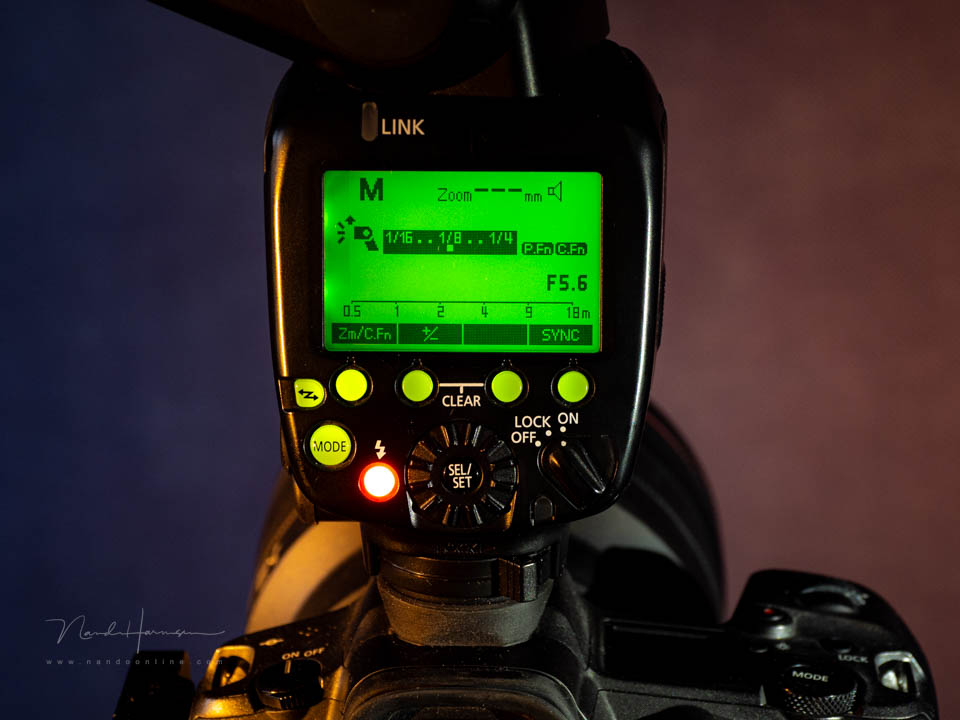
One stop more light makes it 1/4. That is twice as much light. If you set it to 1/2, it is four times as much light. Two stops, then. At the maximum flash intensity, 1/1, it is eight times as much light: three stops.
The other direction is, of course, correcting for less light. Going from 1/4 to 1/8 is half as much light. One stop less, then. One more stop less makes it 1/16, and three stops means setting it to 1/32.
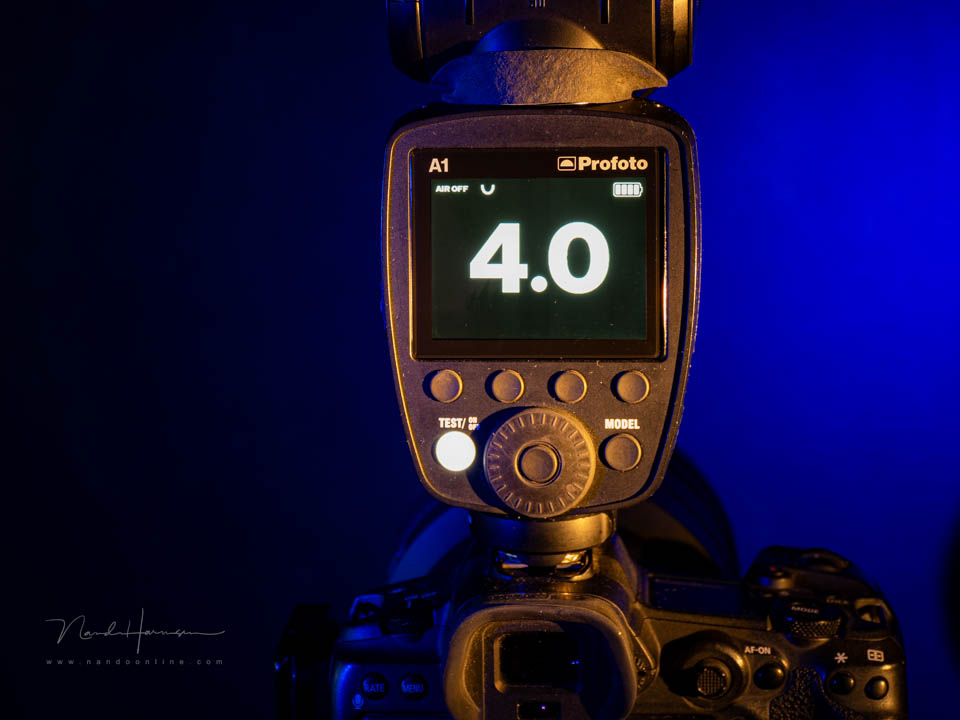
These days, there are also flashes that display whole stops instead of fractions. Learn what your flash shows and remember that it is simply a matter of working with stops.
If you find yourself in a situation where the maximum flash intensity is still too low, you will need to adjust the ISO or aperture. Keep in mind that the exposure for the surroundings will also change.
Correct every change in ISO or aperture with the shutter speed. This allows you to keep the exposure for the surroundings the same. The shutter speed does not matter for the flash.
About the author
Nando Harmsen has been photographing for more than 40 years. He specialises in wedding photography and landscape photography. Nando also gives talks, workshops, masterclasses and photo trips, and regularly reviews new and interesting equipment.
You might also like
-
 Lens flares: a nudge in the wrong direction
by Michelle Peeters
-
 How to create an intense red sky in your landscape photo?
by Nando Harmsen
-
 Wrong settings or just not optimal settings?
by Nando Harmsen
-
 A Vertical or Horizontal Landscape Photo - Part 2
by Nando Harmsen
-
 7 wrong ideas that stop you improving your photography
by Nando Harmsen
-
 A workshop must not be an escape from your own uncertainty
by Michiel Heijmans
0 comments
Be the first to share what you think!
Have your say
Please note: Articles older than a week can only be commented on by signed-in visitors.Would you still like to comment? sign in or create a free account.
Become a better photographer every week
A practical photography tip in your inbox every week.
38,982 photography enthusiasts already receive the tips! More about the weekly mail. Or keep up to date via  Facebook.

Elja Trum
Photofacts; everything to do with photography!
Would you like to take better photos and keep up with what is happening in photography? Photofacts publishes articles that teach you something about photography — from a product announcement to a practical shooting tip or a look at a website. Photofacts covers photography every day and is a hobby project of Elja Trum's that got out of hand. The articles are written by a team of volunteer authors. If you would enjoy writing one or more articles for Photofacts, do get in touch.More about PhotofactsPhotofacts is made possible in part by
