

Wrong settings or just not optimal settings?
Monday 2 February 2026, 16:08 by Nando Harmsen | 2,861 views | 9 commentsThis article was translated from Dutch with the help of AI. Read the original.
Recently, I read that someone had taken photos with the wrong settings. The reason was simple: there was no time to choose the right settings. That results in failed photos. Or does it?
Wrong settings naturally result in failed photos. A shutter speed that is too slow causes motion blur. The wrong aperture gives you an unwanted depth of field.
You can also get failed photos if the camera focuses on the wrong subject. That is the same as a blurry photo. Although that is more a case of the camera behaving incorrectly, it can be caused by an incorrect autofocus setting.
You can think of many more wrong settings. But what if the photo is simply successful anyway? If the subject is sharp, the focus is right and the exposure is correct... Were the settings then wrong? After all, the photo is successful.
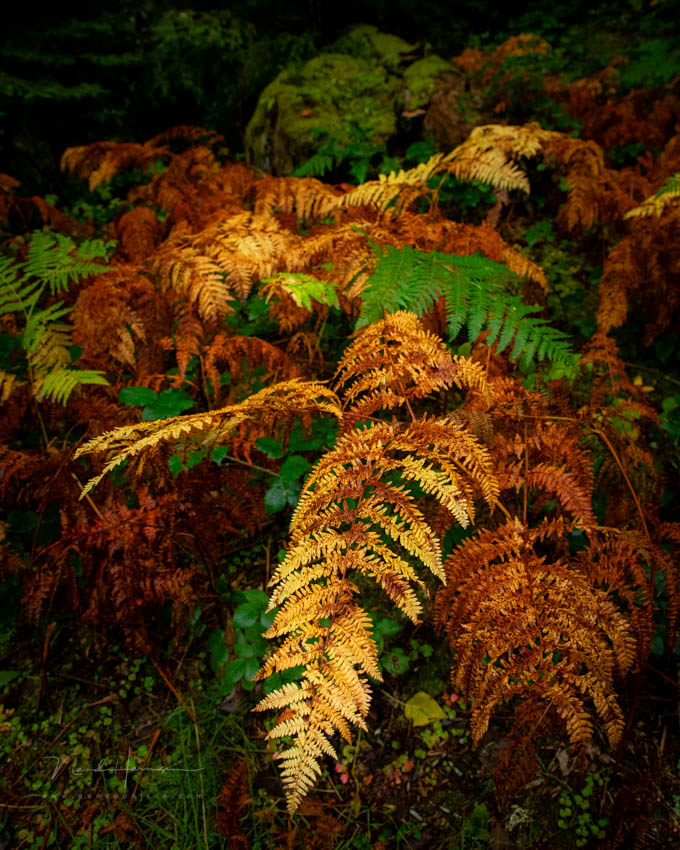
It does not matter if you use different settings from the ones you would normally use. It does not matter if the ISO is higher than necessary or if aperture priority was used when you normally set things manually. If the photo turned out well, they were good settings.
What can be the case, however, is that the settings were not optimal. That, if you had had the time, you would have made different choices. However, in the end, a good photo is what counts. Sharp where it needs to be, and well exposed.
What do you think? Do the settings used matter when a photo is successful? Or is a successful image more important? Let us know in a comment below this post.
About the author
Nando Harmsen has been photographing for more than 40 years. He specialises in wedding photography and landscape photography. Nando also gives talks, workshops, masterclasses and photo trips, and regularly reviews new and interesting equipment.
You might also like
-
 7 wrong ideas that stop you improving your photography
by Nando Harmsen
-
 The optimal exposure setting for every situation
by Nando Harmsen
-
 Lens flares: a nudge in the wrong direction
by Michelle Peeters
-
 Having someone take a photo? Make sure everything is set up
by Nando Harmsen
-
 Is your exposure wrong? Use exposure compensation to correct it
by Nando Harmsen
-
 What goes wrong when you look at a photo
by Elvira Smit
9 comments
-
 Mac wrote on Tuesday 3 February 2026 at 08:08 | reply
Once long ago, an ISO1600 roll in the camera, but I forgot to set the camera to ISO 1600, and it was still set to ISO100.
Translated from Dutch.
Many failed photos of course, but also a number that I still consider among the best I've ever made. -

-
 Toon Rekkers wrote on Tuesday 3 February 2026 at 13:55 | reply
So-called failed photos (not sharp, poorly flashed, wrong shutter speed, etc.) are often photos that are surprisingly different from what you had thought. Often they are simply fine too. Especially when the photos have turned out differently than expected, they often offer a different perspective on your photography and you can make something creative out of them in a photo-editing program (or old-fashioned with scissors and glue). I also keep failed photos to do something with them later. I usually do make something of them then (but). It often gives you enormous freedom to indulge your photographic creativity.
Translated from Dutch. -
 Fred Hermans wrote on Tuesday 3 February 2026 at 14:08 | reply
I think you still need to mention one element. A photo can indeed be good, meaning sharpness, exposure, etc., but is it also what you wanted to create..... Suppose the photo is sharp but not in the place where you wanted it to be, or that there is no movement in it even though that is what you actually wanted to capture. In that case, you did not have the right settings for what you wanted to capture. That the result still produces a 'good' photo is nice, but it is not what you wanted. So settings are important for getting the photo you wanted to create, not necessarily for getting a good photo as the result.
Translated from Dutch. -
 Donald Willemsen wrote on Tuesday 3 February 2026 at 14:23 | reply
Wrong settings with the argument that the photographer didn’t have time? Often complete nonsense. You’re going to take photographs and you prepare that properly. And that also includes setting up the camera. The only thing I can imagine is that a surprising situation suddenly arises that definitely needs to be photographed. Then you indeed have no time.
Translated from Dutch.
When a photo is good, there are no wrong settings as far as I’m concerned. The photo is good and then it doesn’t matter what settings the photo was taken with.
Moreover, if you photograph in Raw, you can always correct certain settings afterwards.
Take, for example, that photo of the ferns that you show. Still a fine photo, right? Okay, the photo could also have been taken in a way that fits the circumstances present there better. But what does it matter anymore? Nothing, because the photo is fine. -
-
Donald Willemsen wrote on Tuesday 3 February 2026 at 14:59 | reply
Nando, it's not that thoughtless. Such a surprising situation is an exception to the argument of having 'no time'. In all other cases, you take the time to take a good photo and set the camera as correctly as possible.
Translated from Dutch. -
Donald Willemsen wrote on Tuesday 3 February 2026 at 15:01 | reply
And it has nothing to do with respect. I respect everyone.
Translated from Dutch. -
 Roberto Buth wrote on Thursday 5 February 2026 at 17:14 | reply
Indeed, what is wrong. I was on vacation on a dolphin tour, but they weren't in the mood to show off their tricks for a moment. At that moment a boat came along that had the bright sun 'at its back'. I shot without thinking and the result was an 'overexposed' photo that nevertheless turned out to be beautiful. Shame that I can't share it with you.
Translated from Dutch.


Have your say
Please note: Articles older than a week can only be commented on by signed-in visitors.Would you still like to comment? sign in or create a free account.
Become a better photographer every week
A practical photography tip in your inbox every week.
38,982 photography enthusiasts already receive the tips! More about the weekly mail. Or keep up to date via  Facebook.

Elja Trum
Photofacts; everything to do with photography!
Would you like to take better photos and keep up with what is happening in photography? Photofacts publishes articles that teach you something about photography — from a product announcement to a practical shooting tip or a look at a website. Photofacts covers photography every day and is a hobby project of Elja Trum's that got out of hand. The articles are written by a team of volunteer authors. If you would enjoy writing one or more articles for Photofacts, do get in touch.More about PhotofactsPhotofacts is made possible in part by
