

Sony RX10 V bridge camera announced
Thursday 9 July 2026, 23:23 by Elja Trum | 1,549 views | 1 commentThis article was translated from Dutch with the help of AI. Read the original.
Sony has announced the RX10 V, the long-awaited successor to the popular RX10 IV. With it, Sony is breathing new life into a type of camera that seemed to have faded into the background in recent years: the serious bridge camera with a large fixed zoom lens.
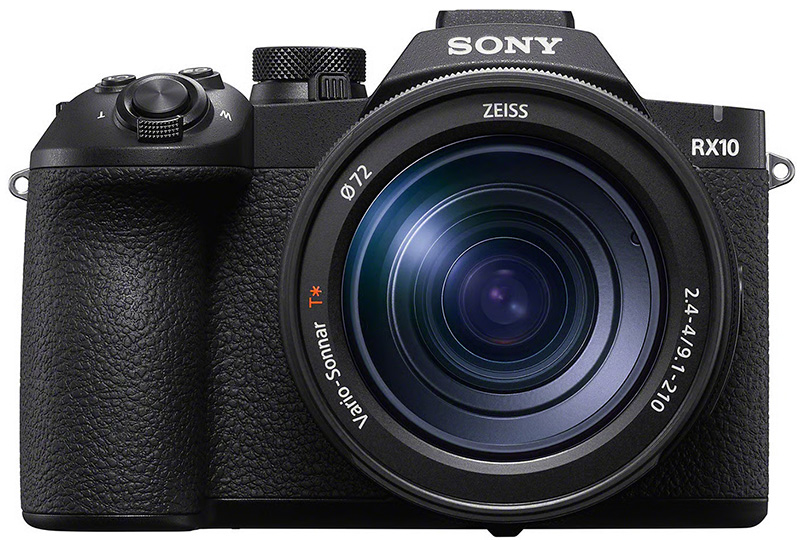
The Sony RX10 V is particularly interesting for photographers who want to take as little equipment as possible, while still having a huge zoom range at their disposal. The camera once again has a ZEISS Vario-Sonnar T* 24-600mm f/2.4-4.0 lens.
This takes you from wide angle to serious telephoto without changing lenses. Ideal for travel, nature, sport, holidays and actually anything where you need to be able to react quickly.
Inside is a 1-inch Exmor RS CMOS sensor with 20.1 megapixels. That sounds familiar, because the fundamentals seem very similar to those of the RX10 IV. The main improvements are therefore in processing and operation. Sony has equipped the RX10 V with the BIONZ XR processor and an AI processor, as we also know from recent Alpha cameras.
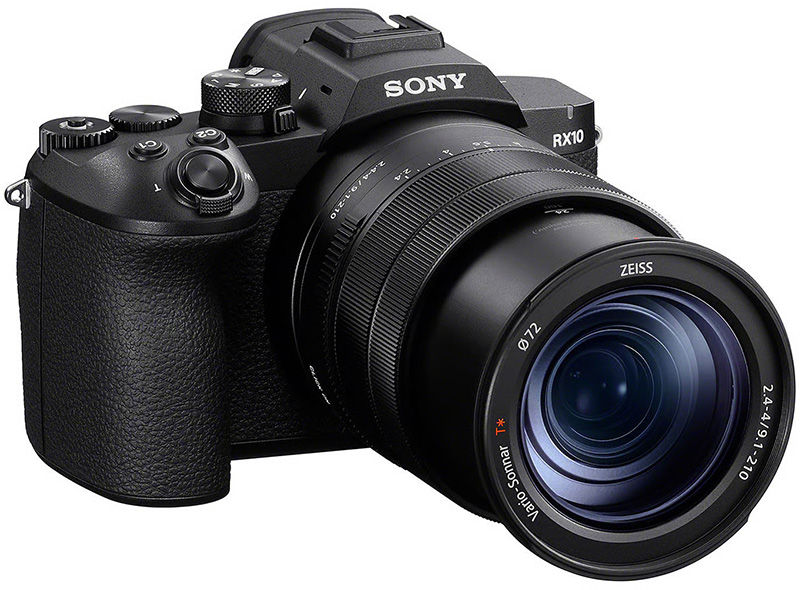
As a result, the camera gets Real-time Recognition autofocus for people, animals, birds, insects, cars, trains and aeroplanes, among other things. The autofocus works with up to 575 phase-detection points, and Sony promises much better tracking of moving subjects.
The RX10 V can also shoot at up to 30 frames per second, with autofocus and exposure tracking and no blackout in the viewfinder.
For video, the camera has been brought up to date. The RX10 V can record 4K 60p across the full width of the sensor and 4K 120p with a crop. 10-bit 4:2:2, All-Intra, S-Cinetone, S-Log3 and LUT support are also included. This makes the bridge camera interesting not just for photographers, but also for hybrid creators who want to shoot both photos and video with one compact setup.
Sony has also given the body a more modern design. According to reviewers who have already had it in their hands, the camera feels more like a recent Alpha camera. It has an improved grip, a new 3.68-million-dot OLED viewfinder, a tilting 3-inch touchscreen and an AF joystick.
Another nice touch: the old NP-FW50 battery has been replaced by the larger NP-FZ100 battery. According to Sony, this provides over 50 per cent more battery life. The camera is also dust- and splash-resistant.
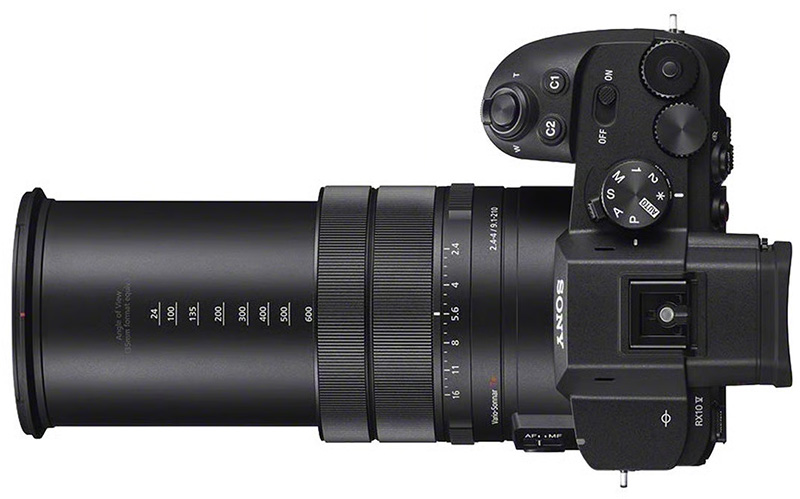
There are still some things to criticise about the RX10 V. The lens and sensor are not really new at their core. That means you are still working with the limitations of a 1-inch sensor. In good light, this can produce beautiful results, but in low light or at higher ISO settings, an APS-C or full-frame camera remains clearly superior.
The price is also high. It looks like you will have to pay 2,499 euros for the RX10 V.
For that amount, you can also buy a decent mirrorless camera with a nice lens. You just will not get that huge 24-600mm range in one fixed, relatively compact camera.
That makes the Sony RX10 V mainly a camera for photographers who know exactly why they want it. If you are looking for maximum image quality, you would be better off with a mirrorless camera. But if you want one camera that can photograph and film almost anything without changing lenses, the RX10 V is probably the most complete bridge camera available at the moment.
The camera is due to be in shops at the end of this month.
About the author
Elja Trum is the founder of Photofacts and online photography course website Photofacts Academy. He has been writing about photography since 2006. Elja is also the author of (Dutch) books on composition, black-and-white photography, flash photography and portrait photography.
You might also like
-
 Sony announces successor to the Sony A7R IV, the camera with AI
by Nando Harmsen
-
 Review: Sony A7 IV
by Nando Harmsen
-
 Review: Sony A7R V mirrorless camera
by Nando Harmsen
-
 Review: Sony Xperia 10 IV smartphone for photography
by Nando Harmsen
-
 Sony launches the A7 V and FE 28-70mm f/3.5-5.6 OSS II
by Nando Harmsen
-
 Sony a7 mark IV announced
by Elja Trum
1 comment
-
 Bakkie wrote on Friday 10 July 2026 at 15:49 | reply
Technically speaking, this is a 1-inch sensor with a crop factor of approximately 2.7×. So the lens is actually about 220 mm f/4, which corresponds to 600 mm on full-frame in terms of angle of view.
Translated from Dutch.
That f/4 also applies to the exposure, but not to the depth of field. For comparable background blur, you end up at approximately f/10.8 on full-frame.
In addition, a 1-inch sensor is approximately 7.4× smaller in area than a full-frame sensor, which means that with the same sensor technology and settings, approximately 7.4× less light is captured overall.
It remains an impressively compact camera, but a "600 mm f/4" without context can give a distorted impression of what you can expect compared to a full-frame 600 mm f/4.
Have your say
Please note: Articles older than a week can only be commented on by signed-in visitors.Would you still like to comment? sign in or create a free account.
Become a better photographer every week
A practical photography tip in your inbox every week.
39,079 photography enthusiasts already receive the tips! More about the weekly mail. Or keep up to date via  Facebook.

Elja Trum
Photofacts; everything to do with photography!
Would you like to take better photos and keep up with what is happening in photography? Photofacts publishes articles that teach you something about photography — from a product announcement to a practical shooting tip or a look at a website. Photofacts covers photography every day and is a hobby project of Elja Trum's that got out of hand. The articles are written by a team of volunteer authors. If you would enjoy writing one or more articles for Photofacts, do get in touch.More about PhotofactsPhotofacts is made possible in part by
