

Preview: Canon EOS R
Saturday 8 September 2018, 15:15 by Elja Trum | 9,288 views | 11 commentsThis article was translated from Dutch with the help of AI. Read the original.
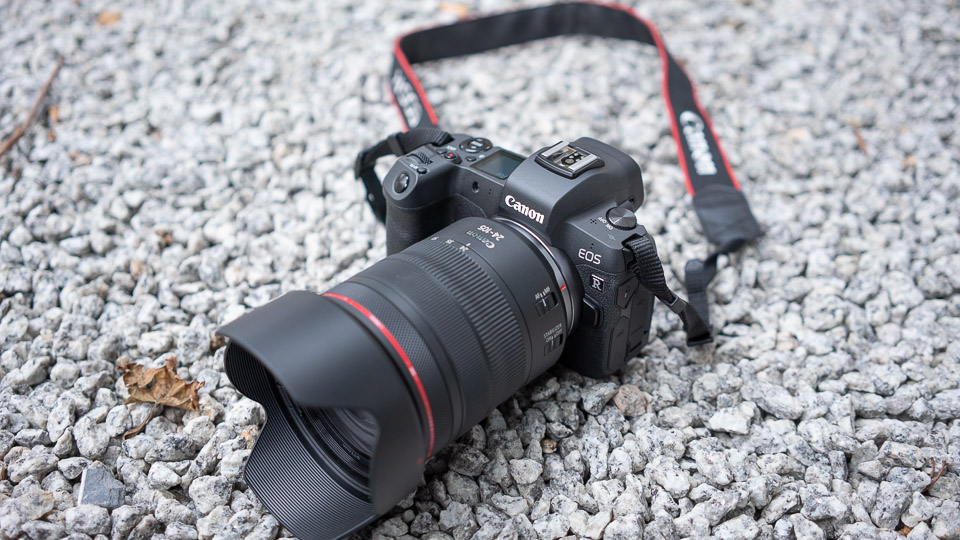
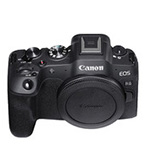
Last Wednesday, Canon announced its first full-frame mirrorless camera, the Canon EOS R. This new camera also comes with a completely new system. We were able to work with the camera for a full day in London. In this article, our first impressions.
Canon EOS R specifications
- Canon RF mount (EF and EF-S lenses can also be used with adapters)
- 30.3-megapixel full-frame CMOS sensor
- Sensitivity: 100 - 40,000 ISO (native, extendable to 102,400 ISO)
- Dual Pixel CMOS autofocus with 5,655 autofocus points (focusing down to -6EV at f/1.2)
- 8 frames per second (3 with continuous autofocus)
- 5-axis image stabilisation (video only)
- 4K 30p video (with a 1.7x crop) with Canon Log and 10-bit 4:2:2 HDMI output
- Electronic viewfinder with 3.69 million dots (100% of the image)
- Tilting and swivelling touchscreen
- Focusing in 0.05 seconds
- DIGIC8 processor
This camera is a major step for Canon, and they have certainly taken their time over it. Canon itself compares it to the step from the FD to the FE mount in 1987.
A few weeks ago, Nikon did the same with the Z6 and Z7 cameras. This is also a major step for them. Finally, you could say, because we had been waiting for it for years.
Many Canon and Nikon users thought the wait was simply too long and have already switched to Sony, which has been offering excellent full-frame mirrorless cameras for years. I don't expect many of those people to quickly return to their old brand now.
In the hand
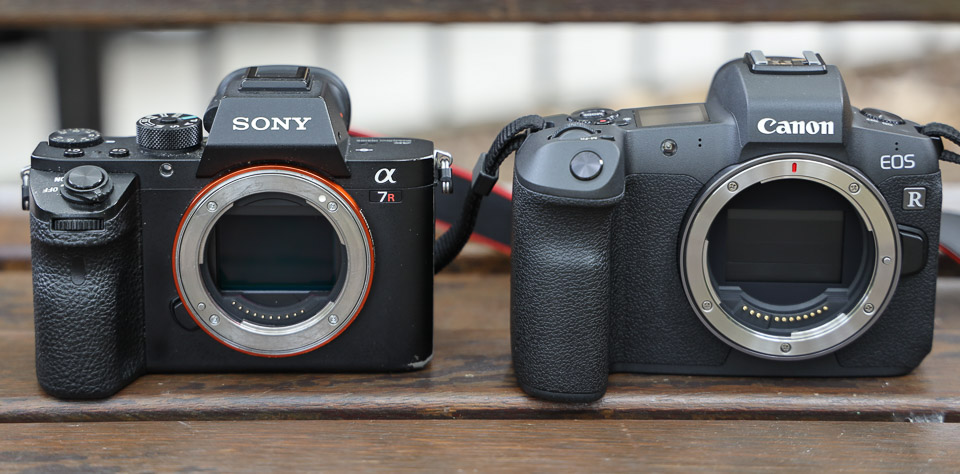
The Canon EOS R immediately feels very familiar to a Canon user. The camera sits comfortably in your hand, even if you have fairly large hands. Canon clearly did not focus on keeping the camera as compact as possible.
Even so, the camera is of course considerably more compact than a professional DSLR, but this is mainly because of its thickness. A battery grip will also be available for the EOS R, in case you find the camera too small.
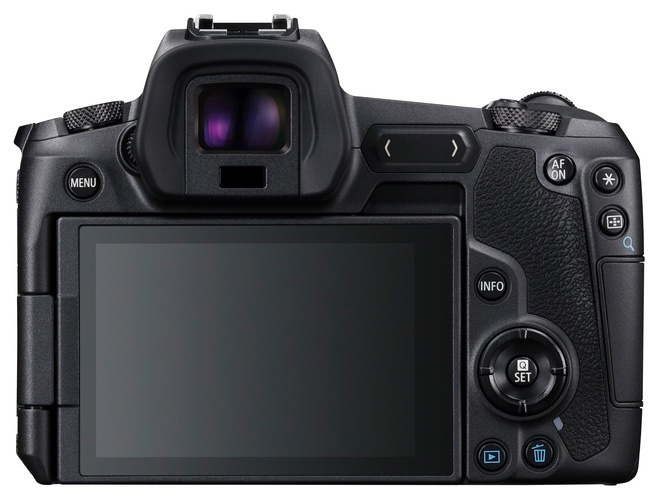
Although the camera looks and feels familiar, quite a few things are different from the DSLR range. For example, the mode dial is no longer on a separate wheel. To change it, you have to press a button on top of the camera.
The on/off switch also takes some getting used to. It is now located, all on its own, on the left side of the camera, and at first it takes a moment to find it. It is also inconvenient that you can no longer quickly switch the camera on or off with one hand.
The touch-sensitive slider is new. It can perform three functions. You can press on either side, but you can also slide from right to left, or vice versa, to change a setting.
I set the ISO setting to this button for a while, but in practice I noticed that I regularly changed the sensitivity without realising it. So often, in fact, that I switched it off again during the day.
The question is therefore which setting will work well with this button. After all, you can always change it without realising it.
Programmable buttons
This is something that really stands out about the Canon EOS R: the extent to which you can configure it exactly as you want. You can set almost every button, and dial, as you wish. You can really make this camera your own.
Unfortunately, there is not yet a way to save your favourite settings to an SD card, for example. That would be a welcome addition once you have become completely used to your specific settings after a few weeks of use.
The RF lenses also have an extra control ring. This can be programmed too, for example to adjust the aperture. A nice addition!
Focusing
The Canon EOS R brings some innovations in the area of focusing. Canon's Dual Pixel autofocus is a nice, fast way of focusing.
Canon has also added the option to focus automatically on an eye. We have seen this before with Sony, for example, and it is a useful feature when photographing people.
In practice, it did not work quite as smoothly for me as it does on the Sony a7R mark III that I also own, but I expect this to improve with a firmware update.
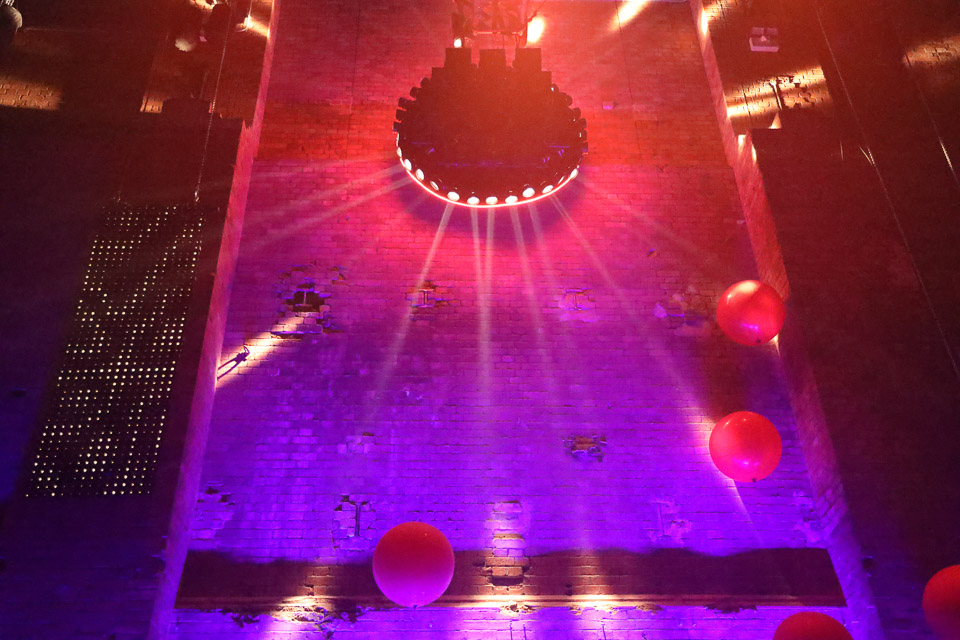
Canon's confidence in the focusing capabilities of the EOS R was clear from the afternoon programme we had. We ended up in a dark hall with lots of coloured light and moving subjects.
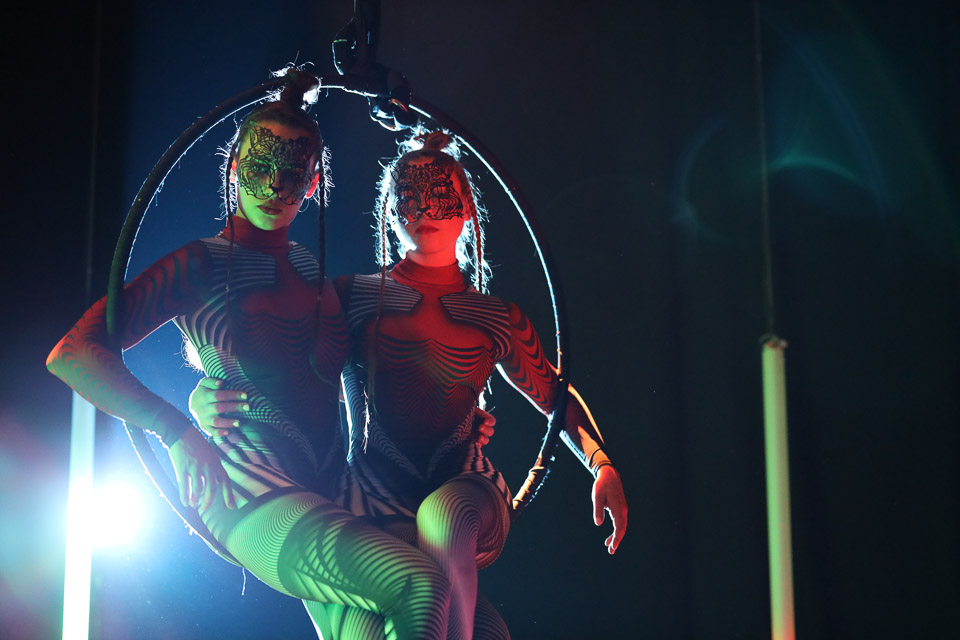
f/1.6, 1/80s @ 5,000 ISO @ 50mm
I hardly experienced any focusing problems, even though I regularly had to use 40,000 ISO to take a good photo.
The camera has 5,655 autofocus points, which means you can focus almost anywhere in your image.
You can also do this using what Canon calls drag AF. You drag your thumb across the 'disabled' touchscreen while looking through the electronic viewfinder. This lets you determine the focus point by moving your thumb 'by feel'. In practice, this works very well.
EF-mount adapter
Canon immediately announced four lenses for the new RF mount. That is quite good, but of course it cannot be compared with the huge range of Canon lenses with the EF mount.
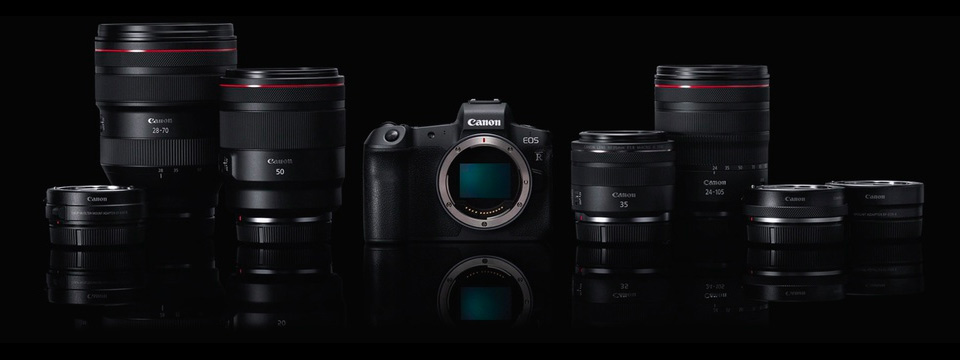
Canon has naturally also made an adapter that allows you to use EF lenses on an RF mount. We were able to try this straight away last Wednesday, and at first glance it seems to work excellently.
Canon told me that the adapters, Canon is releasing three different adapters from EF to RF, do not translate to the new RF system. Instead, when using an EF lens, the camera switches to the old, familiar EF protocol.
The camera therefore communicates with the lens in the usual old way. According to Canon, this works better than translating between the systems.
The advantage of a mirrorless camera
In the early days of mirrorless cameras, there was still quite a bit to criticise. Mirrorless cameras have now been around for about ten years, however, and the technology has matured considerably during that time. To such an extent that, in my view, a mirrorless camera is superior to a DSLR.
The biggest advantage, as far as I am concerned, is the electronic viewfinder. Its quality is now so high that you hardly notice any more that you are looking at a screen. There is also no longer any noticeable delay in the image.
What makes the electronic viewfinder so useful is that you see the photo you are taking live through it when you press the shutter. You therefore hardly ever need to look at the display on the back to check whether your photo worked.
This direct feedback, seeing the photo before you take it with the depth of field and exposure settings as they really are, helps you to be much more creative than with a DSLR.
With a DSLR, you see the image at the widest aperture and without the exposure corresponding to your settings. You have to use your experience to predict what your image will look like beforehand. With a mirrorless camera, you remove this entire step. Ideal.
With the Canon EOS R, you can also see exactly through the viewfinder what image you are going to take. It is then easy to decide that you might want to overexpose the photo slightly, for example. One turn of a dial and you immediately know whether the overexposure is what you want.

f/1.4, 1/50s, ISO 200 @ 50mm
I took the photo above like this, for example. I saw the image through the viewfinder and decided that it would look good overexposed. Without taking my eye away from the viewfinder, I was able to create the image exactly as I had imagined it.
Another advantage of the electronic viewfinder is that in a dark room you can actually see more through the viewfinder than with the naked eye. This was very noticeable in the dark environment where we were able to try out the camera.
Missed opportunity: image stabilisation on the sensor
Although you do have a form of image stabilisation for video, mainly software-based, there is no image stabilisation on the sensor at all when taking photos. Canon is sticking with image stabilisation in its lenses for now.
In my view, this is a missed opportunity. The move to a mirrorless camera would have been a good moment to start using image stabilisation on the sensor. Most other brands now offer this, and the experiences with it have been very positive.
Video
The Canon EOS R has quite a few video options, but unfortunately they are still too limited. For example, 4K video is available at a maximum of 29.97 frames per second, and in this mode a 1.7x crop is also applied to the full image. This makes things difficult for wide-angle shots.
In Full HD mode, the camera does not go beyond 60 frames per second. That is not particularly impressive either.
Video on the Canon EOS R is perfectly usable and sufficient for many situations, but serious videographers will expect more from a camera at this price.
Preliminary conclusion
In my view, Canon has made a successful move into the professional mirrorless camera market with the Canon EOS R. You can see the EOS R as a more compact and improved Canon 6D mark II.
If you already have Canon EF lenses and are looking for a professional all-rounder in a relatively compact body, the Canon EOS R is certainly worth considering.
Canon will probably continue its DSLR line for the next few years, but in my view you would then be buying an example of a dying breed. The Canon EOS R range is clearly the future.
More information
- Canon EOS R preview on Tweakers (Dutch)
- Canon EOS R on DP Review
About the author
Elja Trum is the founder of Photofacts and online photography course website Photofacts Academy. He has been writing about photography since 2006. Elja is also the author of (Dutch) books on composition, black-and-white photography, flash photography and portrait photography.
You might also like
-
 Canon announces full-frame EOS R mirrorless camera
by Elja Trum
-
Review: Canon EOS R full-frame mirrorless camera
by Elja Trum
-
 Review: Canon EOS R
by Michelle Peeters
-
 Canon introduces mirrorless crop cameras: the EOS R7 and EOS R10
by Nando Harmsen
-
 Canon EOS RP mirrorless camera announced
by Elja Trum
-
 The new Canon EOS R50 and EOS R8
by Nando Harmsen
11 comments
-
 Eugène wrote on Sunday 9 September 2018 at 00:51 | reply
Sony A9 is also shutterless. This Canon R still has a shutter. So there is still complex, wear-prone, contamination-causing mechanics on board, close to the sensor. The mechanical shutter will also have to go in the future.
Translated from Dutch. -

-

 Paul Oosterlaak wrote on Sunday 9 September 2018 at 13:21
| reply
@Eugène The A9 is not shutterless, it simply has a mechanical shutter. Electronic shutters still really have too many disadvantages in situations with flashes and of course rolling shutter.
Translated from Dutch. -
Eugène wrote on Sunday 9 September 2018 at 14:35 | reply
@Elja and Paul. I start talking about the shutter because I still have a Canon 5D M1. These need regular maintenance because the shutter even comes into contact with the image sensor. Hence my next one will be shutterless. According to reviews, the A9 is at least with an electronic shutter and with the fastest shutter speed of 1/32,000th. I don't have one myself, but if it has a mechanical one then I would find that very strange. This shutter speed mechanically? You could photograph a bullet with it if it happened to fly past. Maybe there is an A9 user who can confirm or deny this? With all that cleaning (read: not dust but grease) from the past, I see major advantages in a shutterless camera. R remains a super beautiful thing, but that aside.
Translated from Dutch. -
Elja Trum
wrote on Sunday 9 September 2018 at 15:02
| reply
@Eugène; the Canon also has the option to work only with an electronic shutter. It's a setting. I think it's the same with the A9.
Translated from Dutch.
With an electronic shutter you can achieve higher shutter speeds, but it has the disadvantages Paul points out. So with these cameras you can use both options, allowing you to choose what suits your situation. -
Eugène wrote on Sunday 9 September 2018 at 15:40 | reply
Yes, clearly an addition to mechanical. I see it now too, now that I’m digging a bit deeper into it on the internet. The electronic one is often mentioned, creating the impression that there’s nothing mechanical in it. Sorry for the error.
Translated from Dutch. -
 Peter Heins wrote on Sunday 9 September 2018 at 18:19 | reply
Isn't it getting rather messy at Canon with all those different lens mounts? EF-S , EOS M and now the R mount as well. It is said here that the mirrorless camera is now superior to the DSLR , but many a sports-and-action photographer will think differently about that with only 3 photos per second with continuous focus. Moreover, this is only within reach of the pro the consumer really won't put €2000 down for a body. We are on our way but that road is still long before I stop seeing DSLRs on city trips. I myself use the Canon M5 to my full satisfaction , but alongside the 760D( for studio and sports).
Translated from Dutch. -
Elja Trum
wrote on Sunday 9 September 2018 at 19:52
| reply
@Peter; This Canon EOS R is indeed not the camera for everyone, but mirrorless cameras themselves are the next step after DSLRs.
Translated from Dutch.
For sports photographers, for example, there is the Sony A9. There are no DSLRs that can shoot 20 photos per second. Canon will undoubtedly also come with an R camera for sports photographers. -
 MarkdeZwart wrote on Tuesday 11 September 2018 at 16:06 | reply
This really isn't any competition for Sony. Canon is completely missing the mark with this mirrorless camera. Especially because they are also going to use a new mount, which means you are once again tied to adapters, and there is always the question of whether your autofocus still works optimally. (The biggest issue for Sony users)
Translated from Dutch.
I think very few people will go for this camera and Canon may push even more customers towards Sony.
I am curious to see what Sony comes up with for the new 7Slll. -
Paul Oosterlaak wrote on Tuesday 11 September 2018 at 19:44
| reply
@MarkdeZwart: Don't exaggerate. Yes, in my opinion Sony still has the best full-frame mirrorless system camera, but saying that Canon is completely missing the mark is going a bit far too. When Sony came out with their A7 series, they only had a handful of lenses for it as well. In addition, the EOS M has shown that Canon EF lenses work fine with an adapter in terms of autofocus. Sony's advantage is that they started a few years earlier and don't try to boycott all third-party lenses. Something Nikon and Canon do have a habit of doing. Zeiss had already been producing lenses for Sony from the very beginning, and now Tamron and especially Sigma are also making a serious effort. I don't see this happening for Canon R anytime soon.
Translated from Dutch.
I'm also quite curious about the A7SIII, but it's not particularly interesting for photography. -
Eugène wrote on Friday 14 September 2018 at 11:17 | reply
Maybe a photographer could dedicate a blog to the mechanical-electronic shutter. This really is quite an important innovation in shutter technology that something could be blogged about. Because it is fairly new, I think there are more people who want to understand how it works a bit better. If this can be turned ON and OFF then it still leaves me puzzled what its effects are under certain circumstances in photo and video.
Translated from Dutch.
Have your say
Please note: Articles older than a week can only be commented on by signed-in visitors.Would you still like to comment? sign in or create a free account.
Become a better photographer every week
A practical photography tip in your inbox every week.
38,886 photography enthusiasts already receive the tips! More about the weekly mail. Or keep up to date via  Facebook.

Elja Trum
Photofacts; everything to do with photography!
Would you like to take better photos and keep up with what is happening in photography? Photofacts publishes articles that teach you something about photography — from a product announcement to a practical shooting tip or a look at a website. Photofacts covers photography every day and is a hobby project of Elja Trum's that got out of hand. The articles are written by a team of volunteer authors. If you would enjoy writing one or more articles for Photofacts, do get in touch.More about PhotofactsPhotofacts is made possible in part by
