

Review: Canon RF 10-20mm f/4L IS STM
Friday 19 January 2024, 15:30 by Nando Harmsen | 4,185 views | 3 commentsThis article was translated from Dutch with the help of AI. Read the original.
Do you remember Canon's ultra-wide-angle zoom lens? There is now an RF version, which also reduces the shortest focal length by another 1 mm. In this review, you can read more about the performance of this unique lens.
In 2015, Canon gave me a very special lens to review. This was the EF 11-24mm f/4L USM, a huge and heavy lens. The 11mm focal length was what made this lens so special. Read the review again.
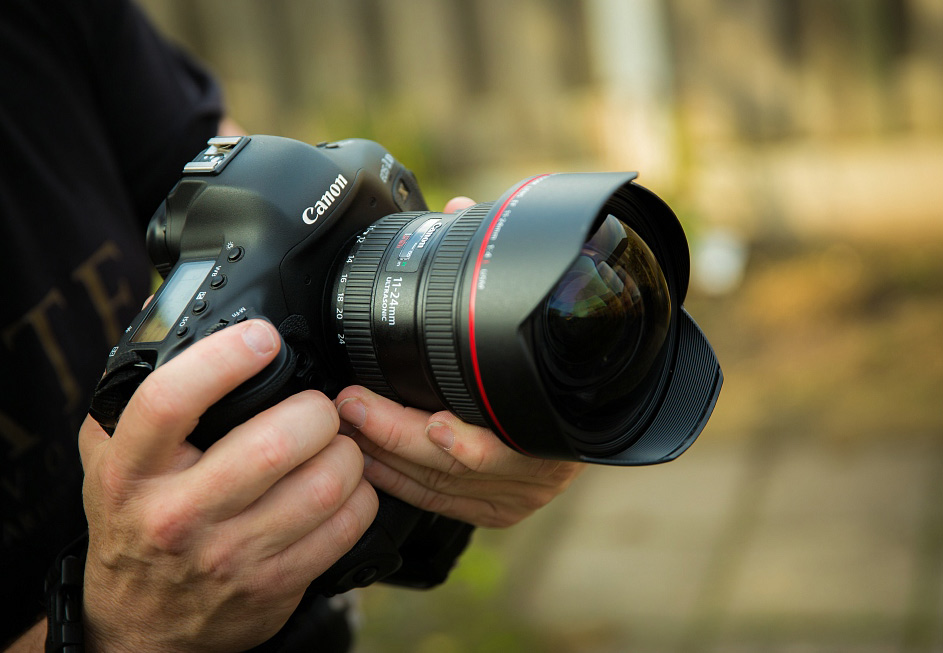
One disadvantage was its size and weight. Put simply, it was big and heavy, which made taking it with you less appealing. The RF version of this lens has changed that. You also get just a little more wide-angle coverage.
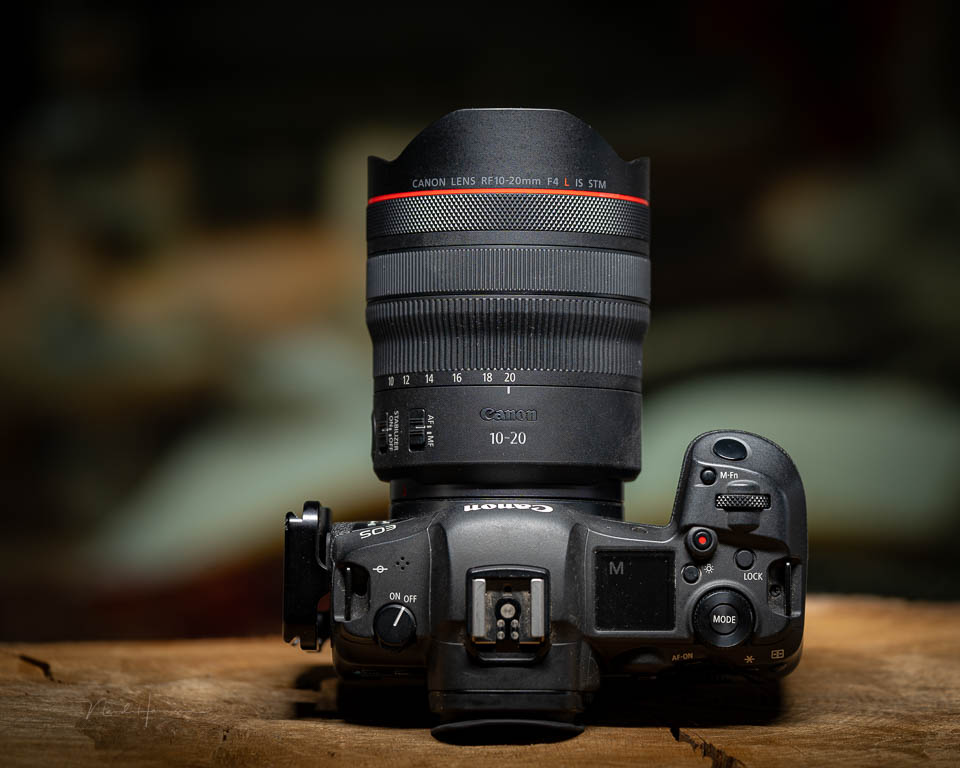
Appearance
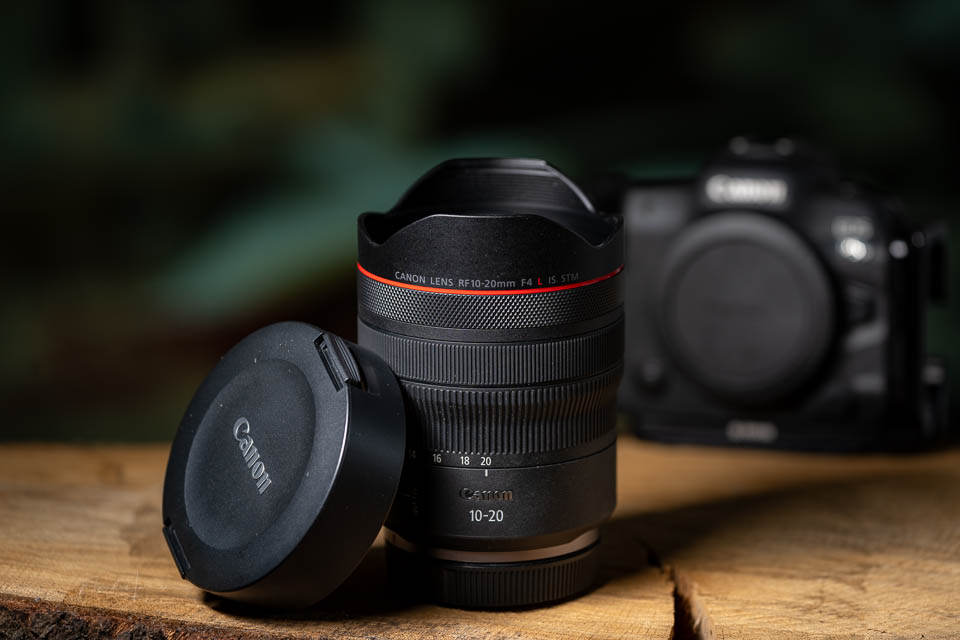
It is surprising how compact the RF 10-20mm f/4L IS STM is. This is partly thanks to the short distance to the sensor made possible by the mirrorless system. Measuring 83.7 x 112mm and weighing 570 grams, this lens makes you want to take it with you.
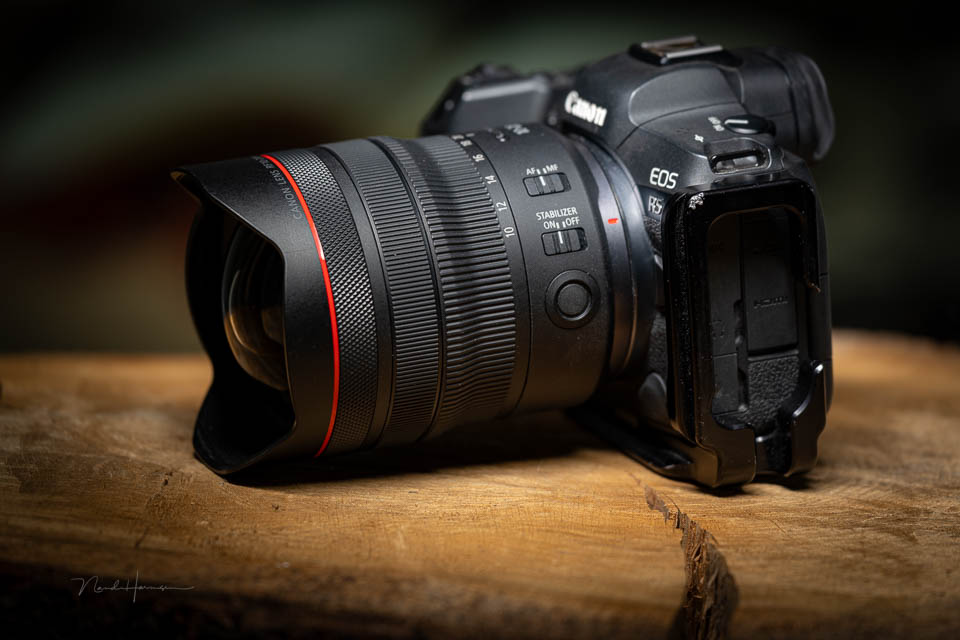
The lens hood, if you can really call it that at this angle of view, is built in. Instead of protecting against oblique light, it mainly protects the curved front element. This remains inside the hood, which is useful.
Besides the zoom ring, focus ring and control ring, the RF10-20L also has a programmable button. There is, of course, an autofocus switch, and a switch for the stabilisation. Indeed, this lens has image stabilisation.
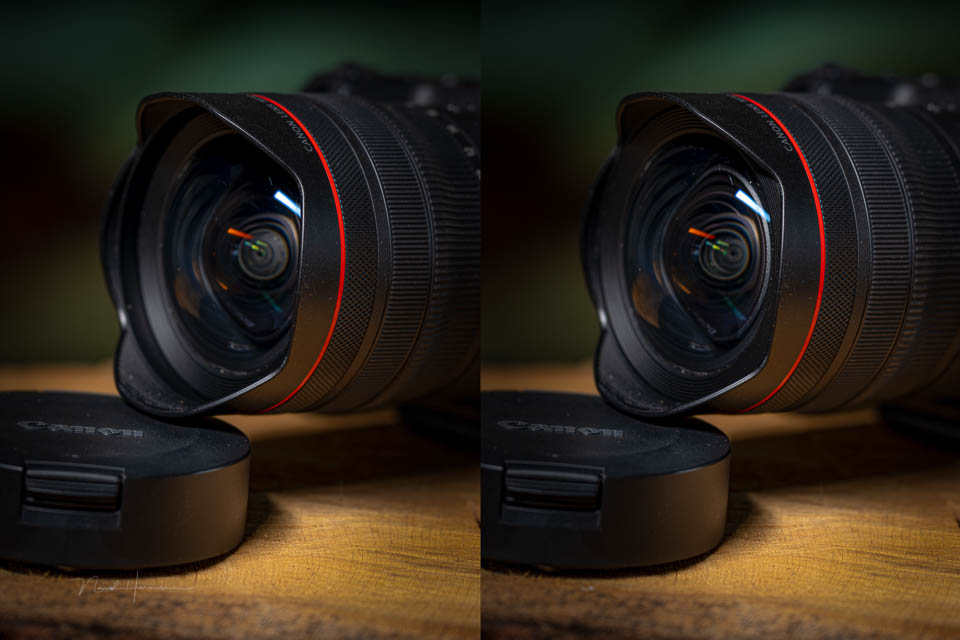
The lens has a minimum focusing distance of just 25 centimetres. This gives you a maximum magnification of 0.12x at 20mm, and 0.06x at 10mm. This low magnification is of course not surprising with the extreme angle of view of this lens.
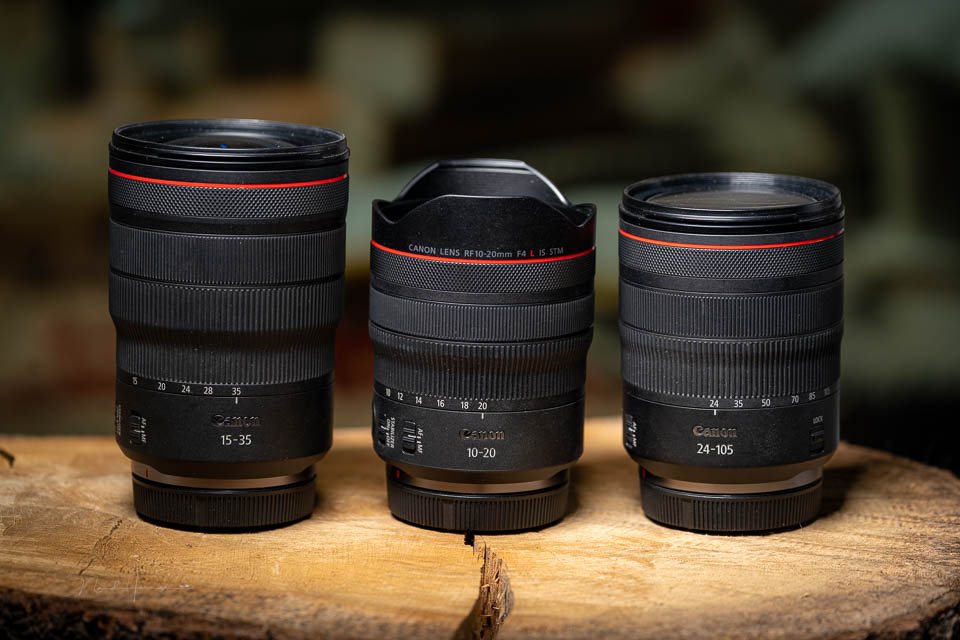
The curved front element means you cannot use screw-in filters. There is room for gelatin filters at the rear of the lens. Filter manufacturer Haida has already developed an adapter for using filters with the lens. You do need the huge 150mm filters.
Angle of view
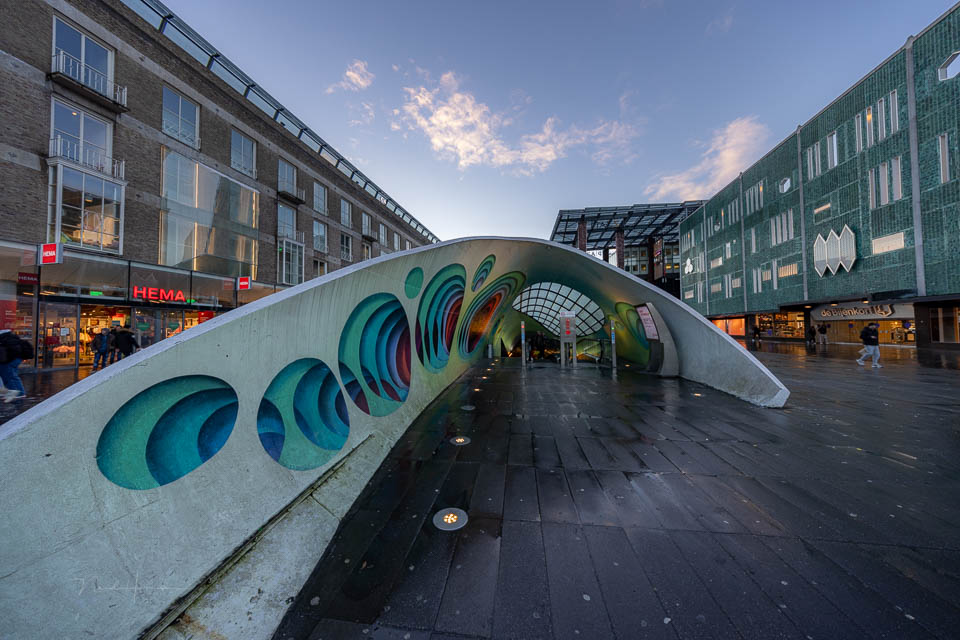
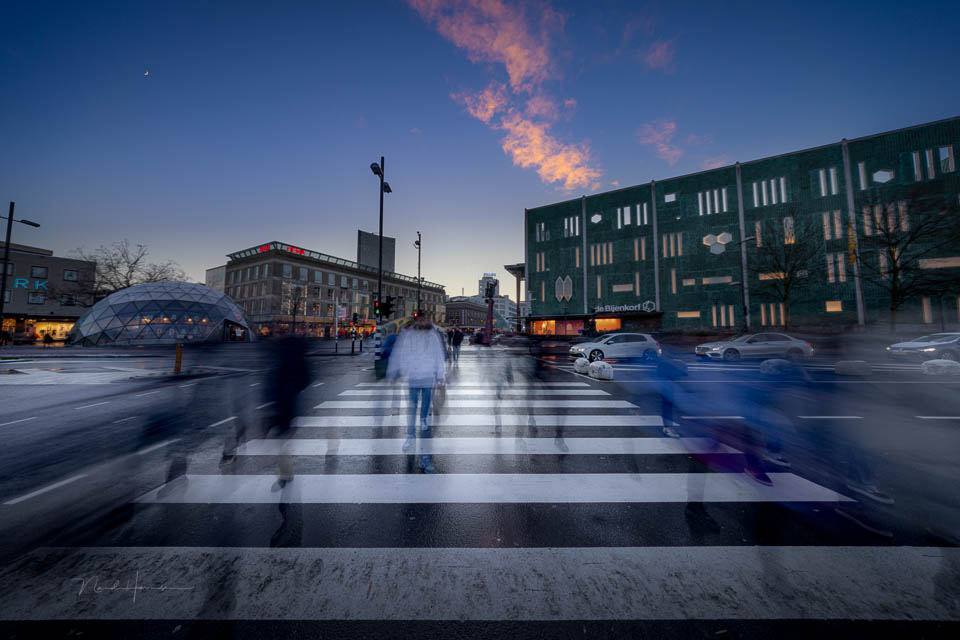
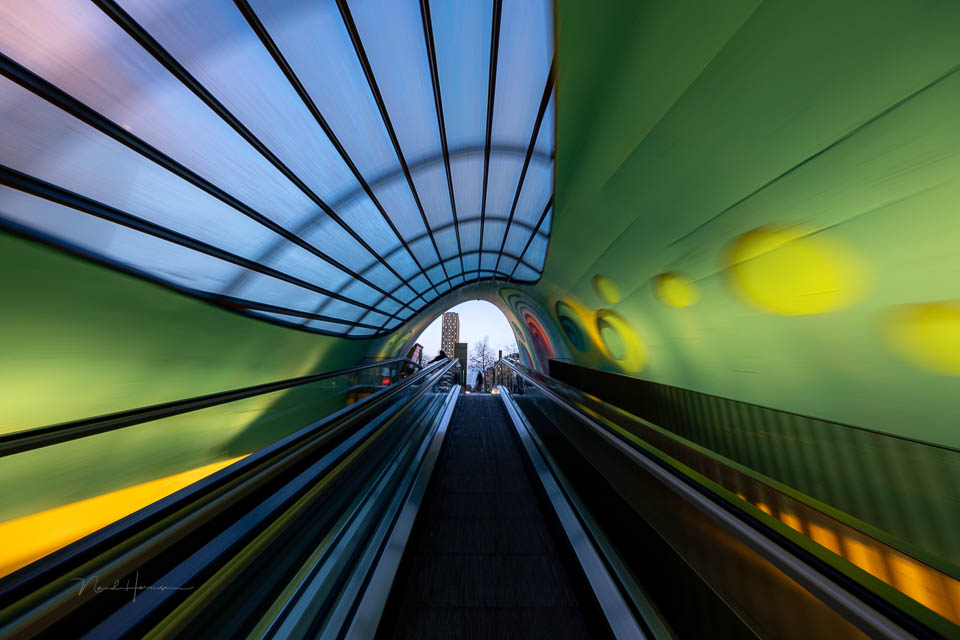
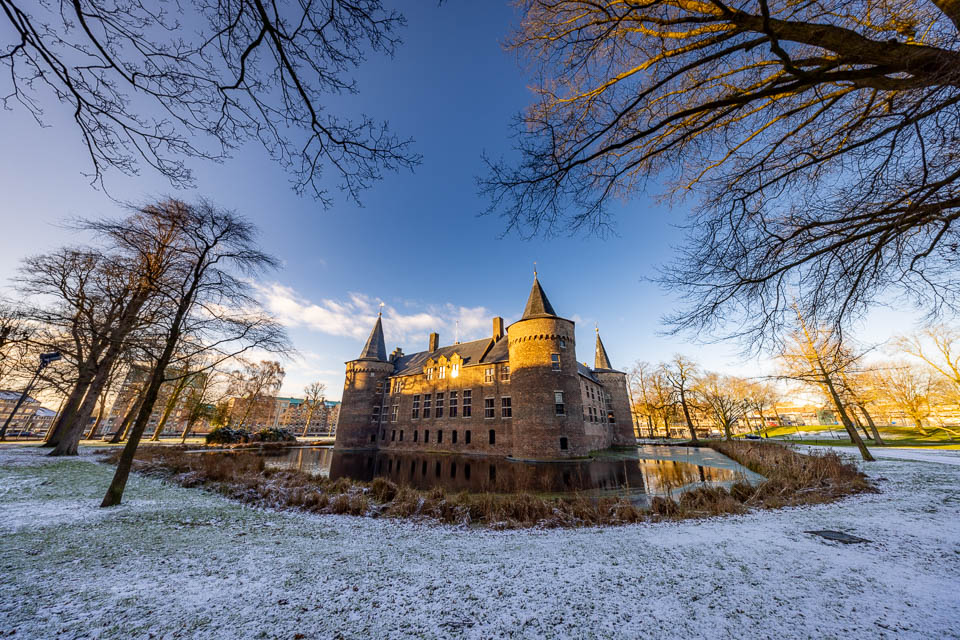
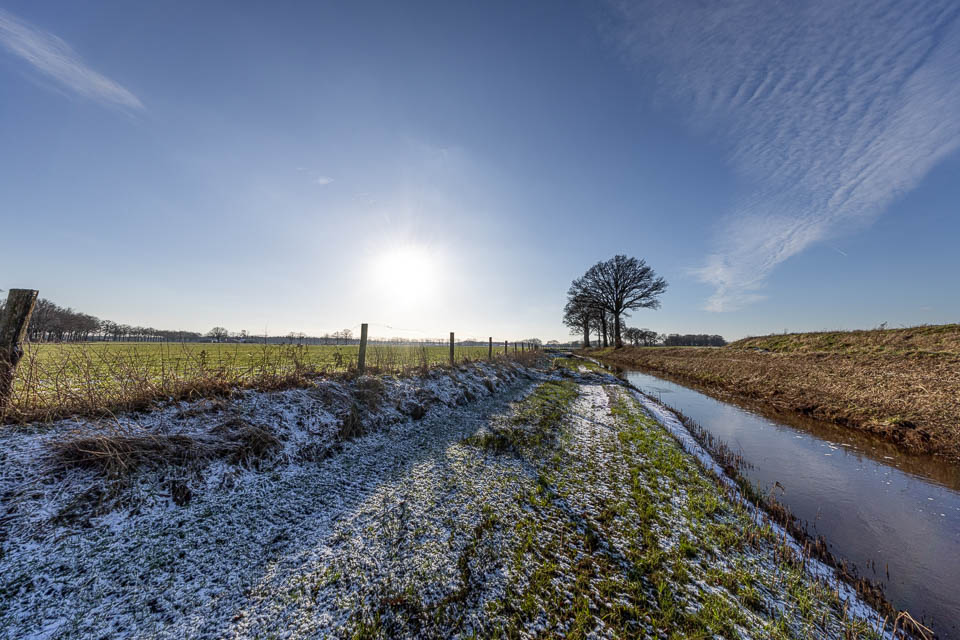
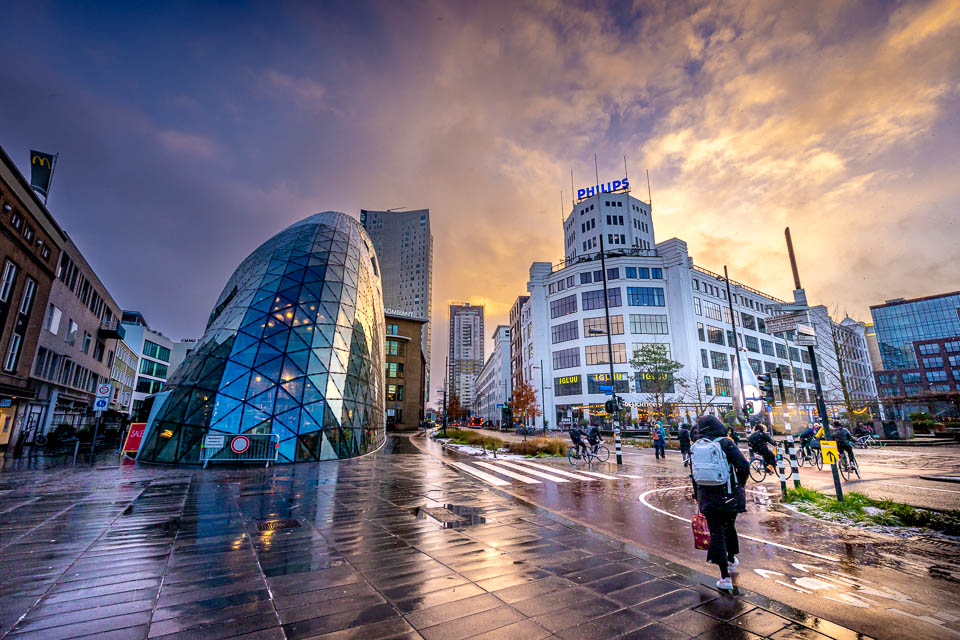
A 10mm focal length on a full-frame sensor gives a diagonal angle of view of no less than 130º. This is just a number that says little. You have to see it to know how wide it really is. Although it is not a true fisheye, it comes fairly close.
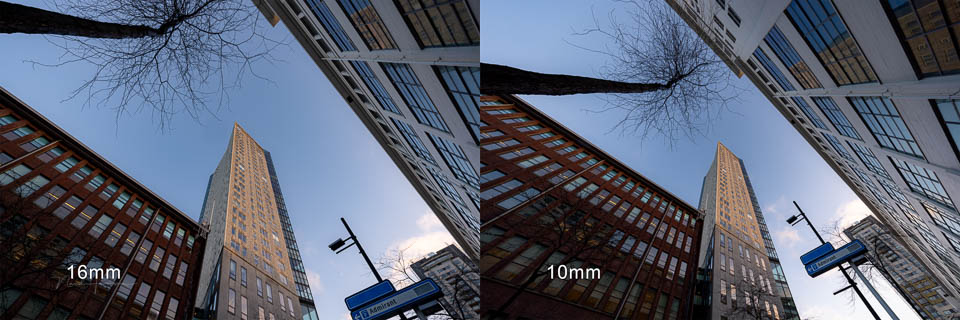
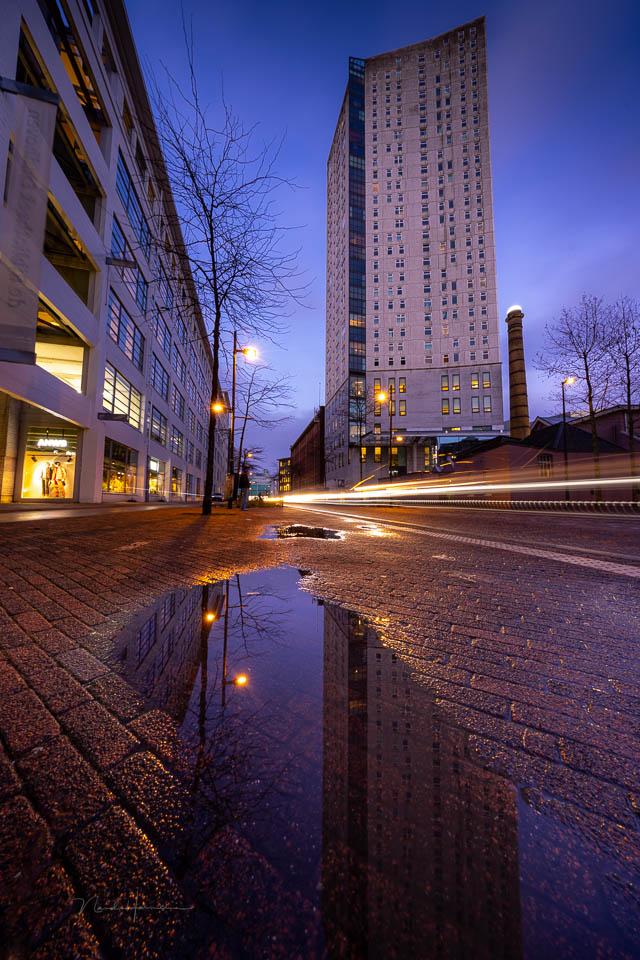
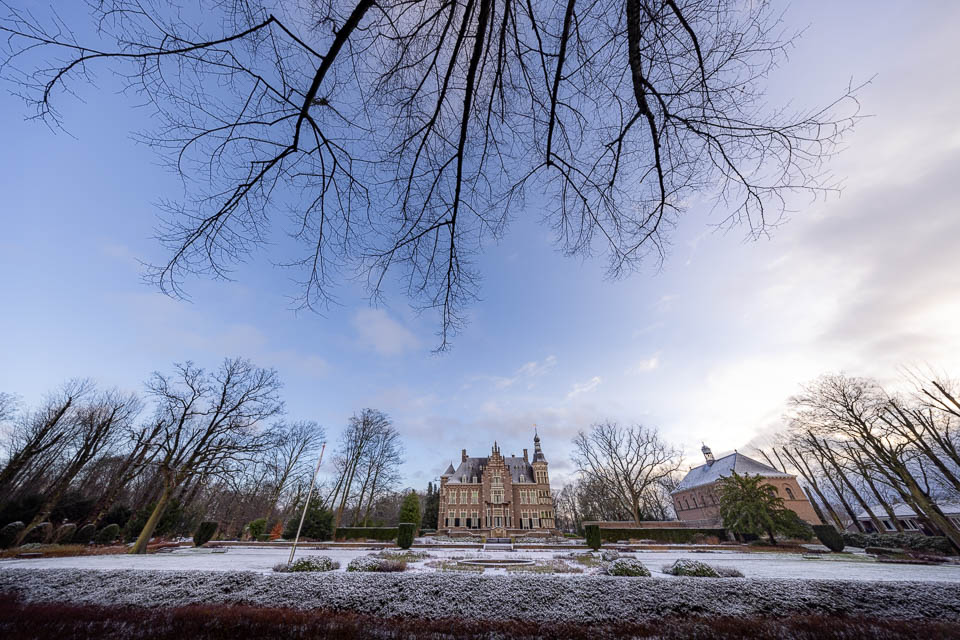
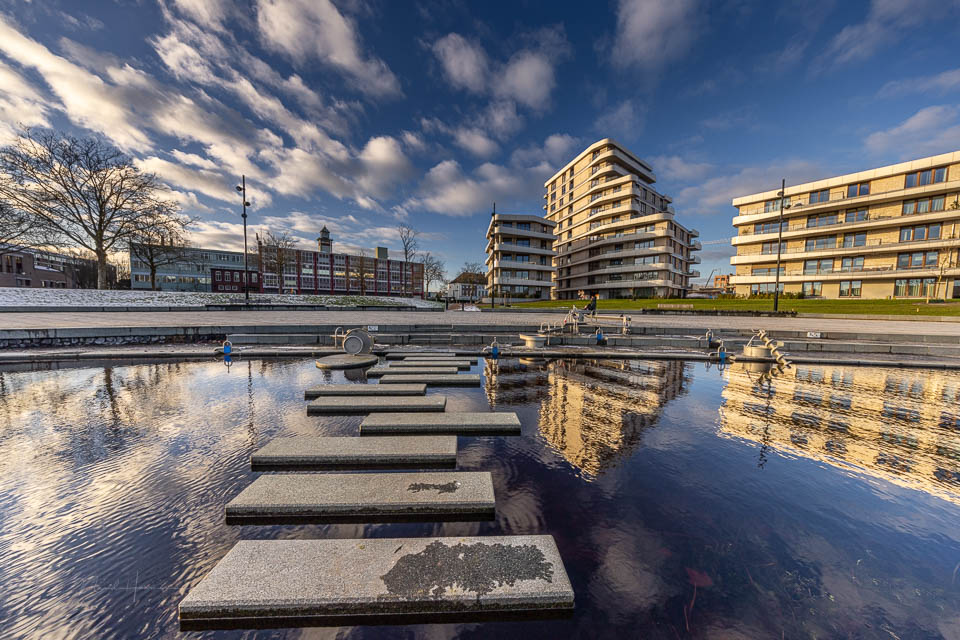
This angle of view has a major effect on the image, especially when photographing upwards or downwards. Vertical lines become increasingly slanted as you move further from the centre of the photo. This is normal for wide-angle lenses, but extreme at 10mm.
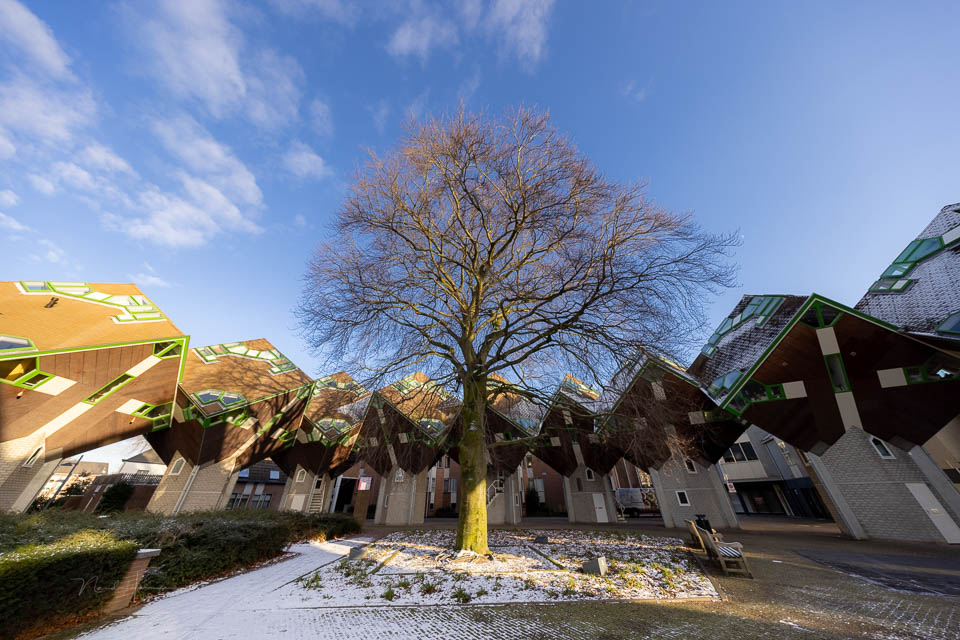
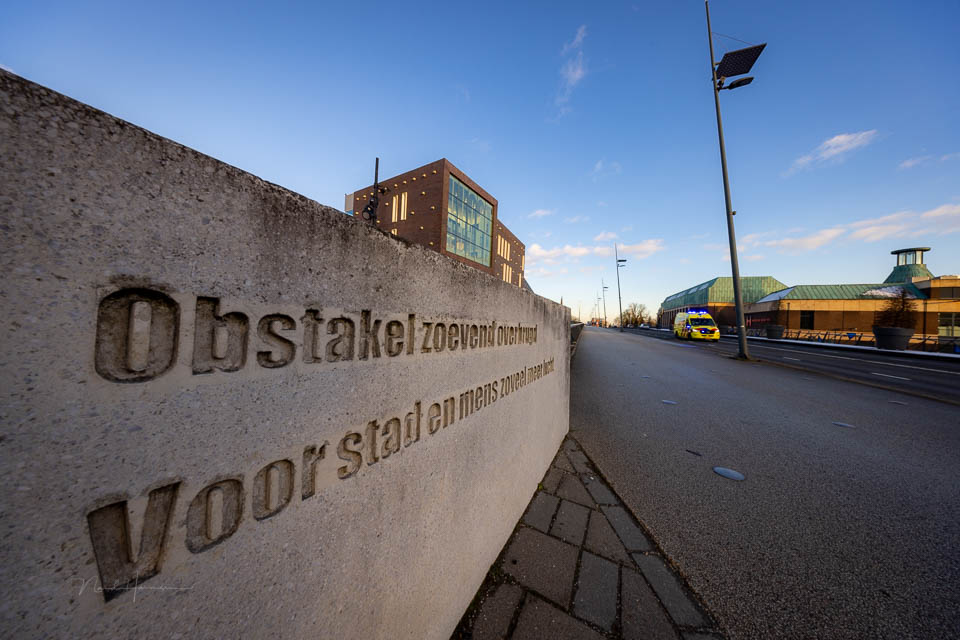
Besides the falling lines when pointing upwards or downwards, objects at the side of the photo are stretched. This is also a natural consequence of ultra-wide angle, which is extreme at 10mm. A car or television at the side of the frame can quickly appear two or three times as long as it really is.
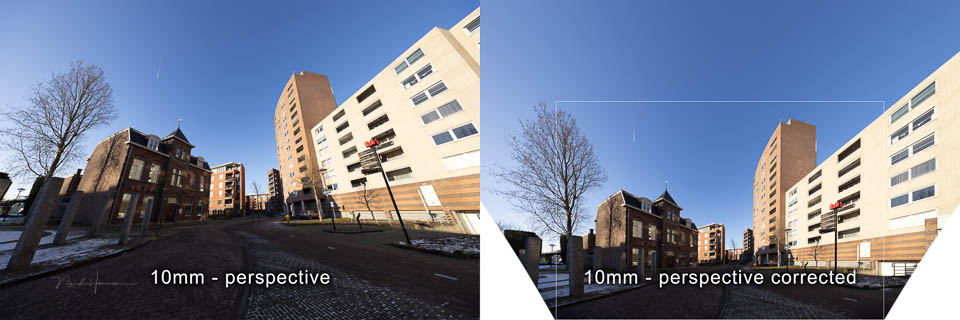
Although stretching cannot easily be corrected, perspective distortion can be corrected. This can be done in all software. The consequence is that your angle of view becomes smaller, as does the resolution of your photo.
Photographing without perspective distortion means you have to use a tilt-shift lens. There are none with such an extreme angle of view. For comparison, I placed a photo at 10mm with perspective correction next to one taken with a 17mm tilt-shift lens.
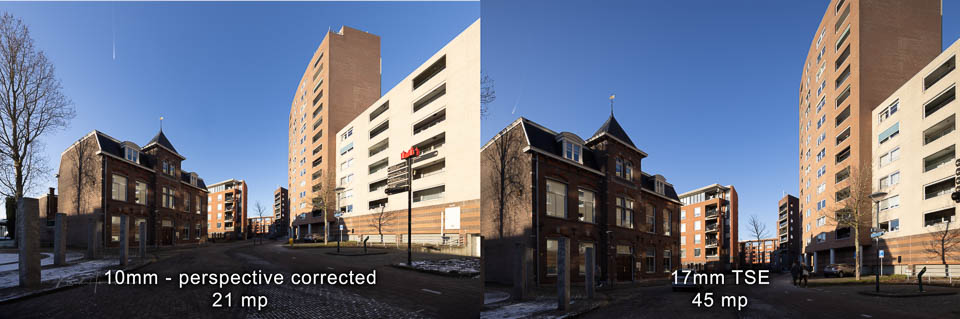
Although the tilt-shift lens does not need perspective correction afterwards, the angle of view at 10mm after correction is still larger. In this case, however, this results in a photo with only half the resolution remaining.
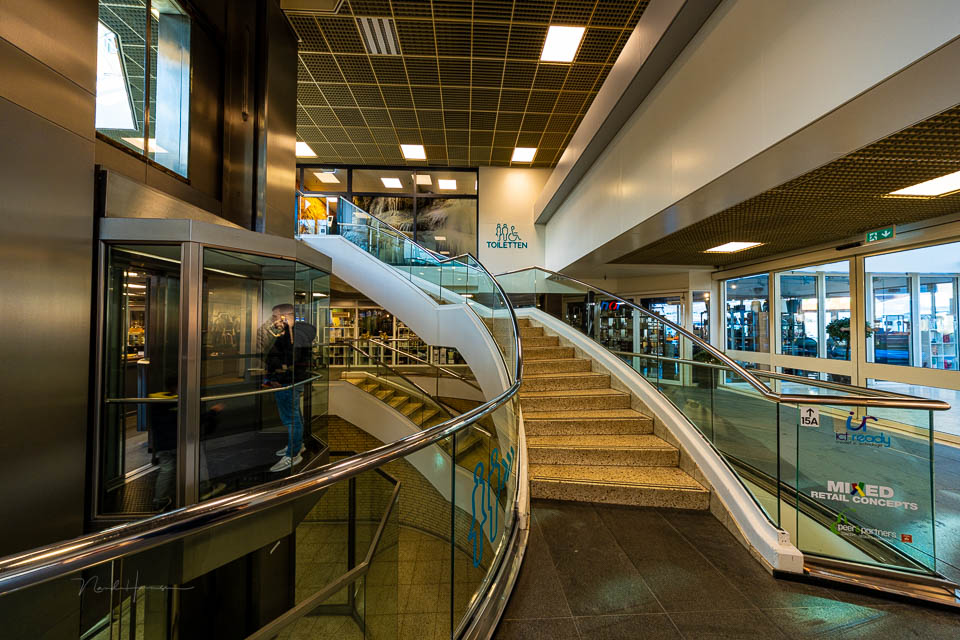
Image quality
Image quality is extremely important. The centre of the image is usually fine, but many lenses quickly become less sharp or even completely unsharp in the corners. This is a serious problem, especially with wide-angle and ultra-wide-angle lenses.
But first, it should be clear that this lens, like all other modern lenses in this focal range, is heavily dependent on in-camera lens correction. What this means becomes clear when lens correction is disabled. In this example, I photographed a wall just 50 centimetres away.
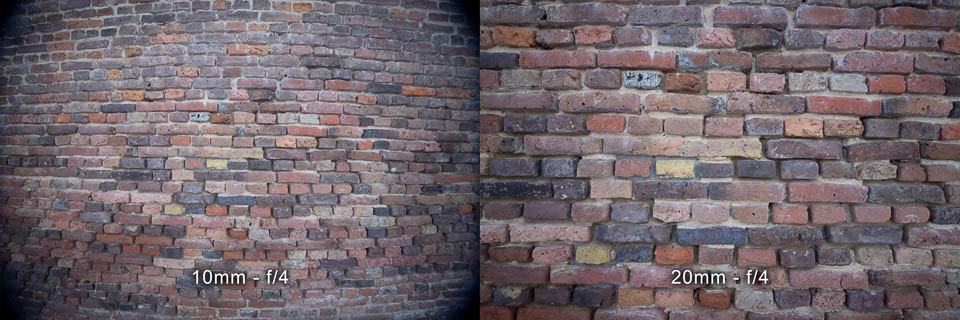
The barrel distortion of the image at 10mm is understandable, but the vignetting may come as a shock. In the corners, it looks as if the lens is literally photographing against the edge of the hood.
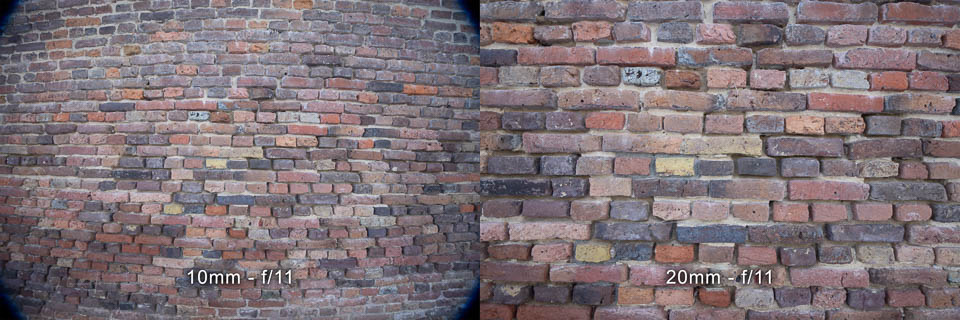
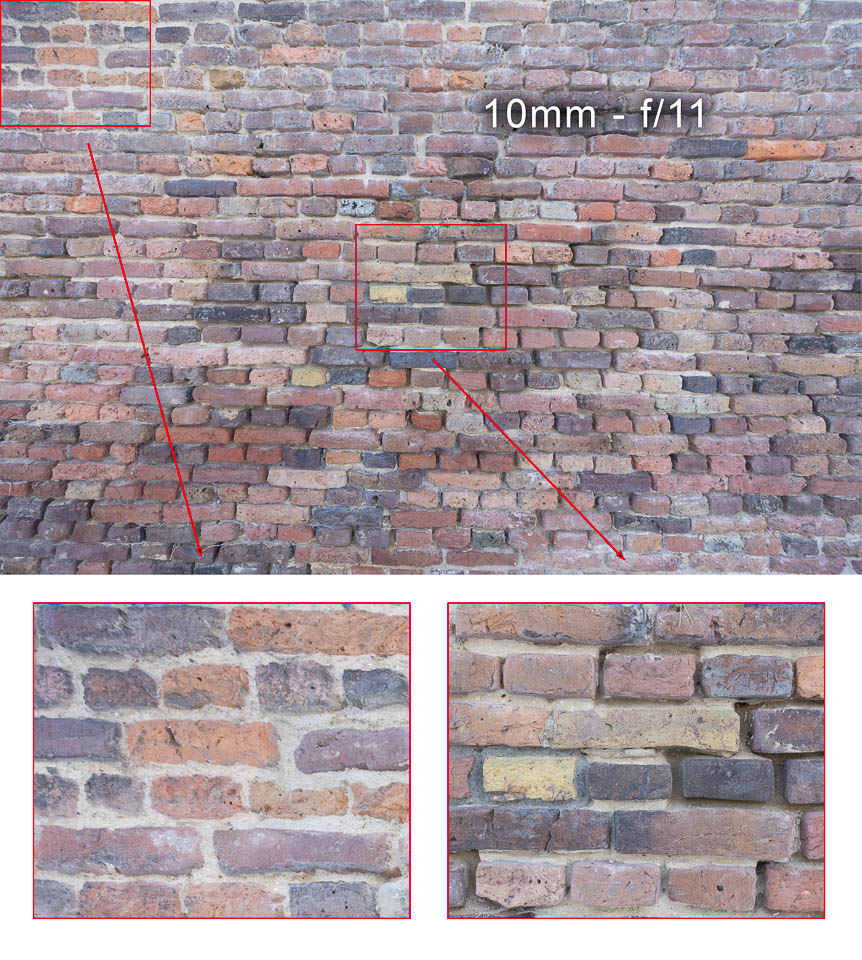
Stopping down to f/11 reduces the amount of vignetting, especially at 20mm, where this is very clear. But at 10mm, there is still a dark corner despite some improvement.
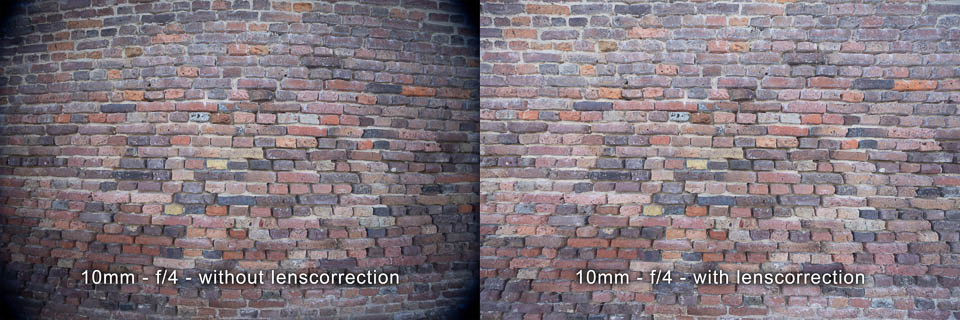
The significance of lens correction becomes clear when you see a photo at 10mm with and without correction. There is still a hint of vignetting, but the dark corners have disappeared. The barrel distortion has also almost completely gone.
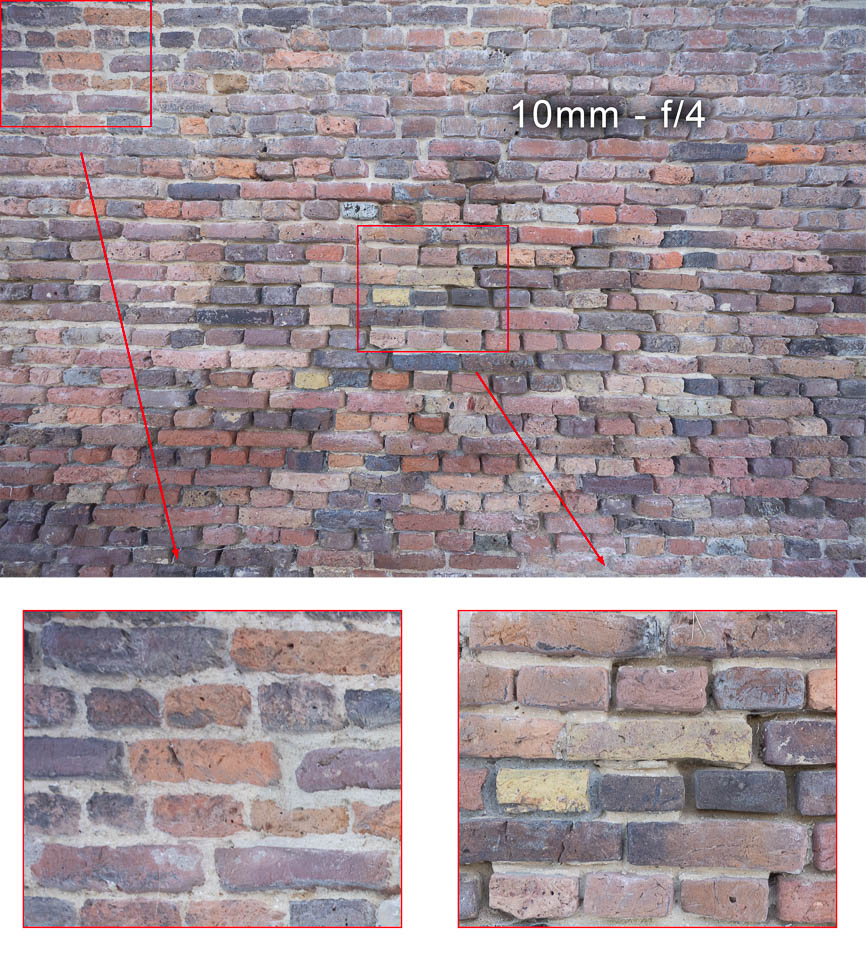
What effect does this have on sharpness? An enlargement of the corrected photo, one from the centre and one from a corner, shows that at 10mm the corners are slightly less sharp than the centre. Stopping down to f/11 improves this.
Coma and flare sensitivity
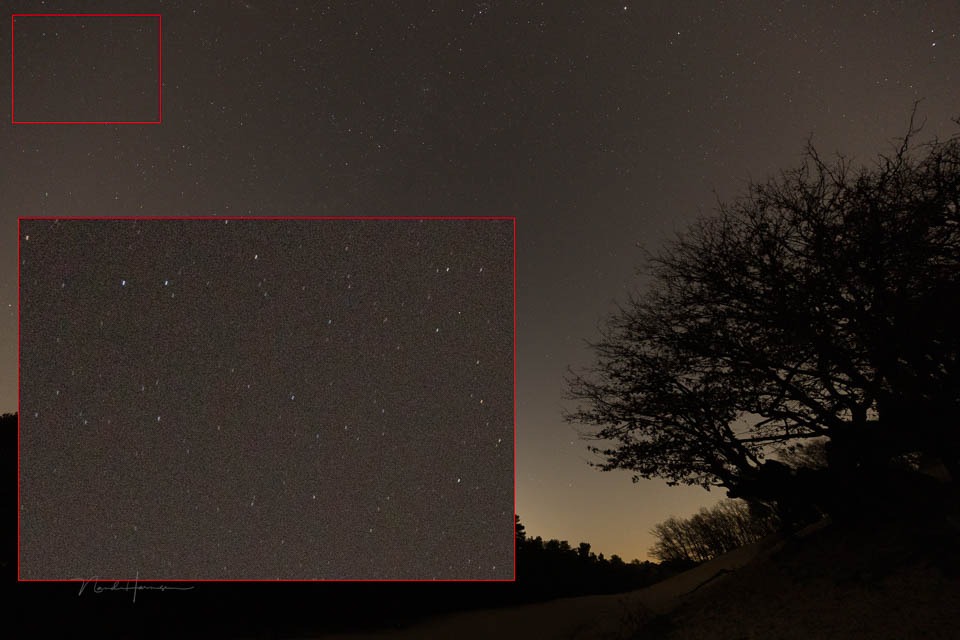
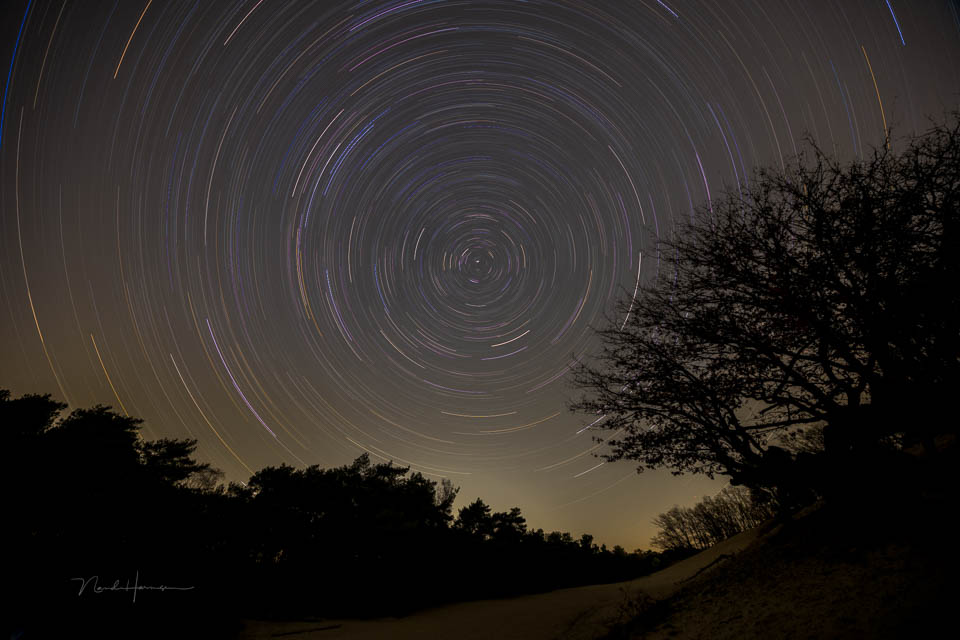
Because of the distortion of the image in the corners, objects become distorted, the so-called coma distortion. This is easy to see in astrophotography, where points of light from stars become distorted. In the case of the RF10-20L, this distortion is minimal. Points become very small streaks, but otherwise show no deviations in shape.
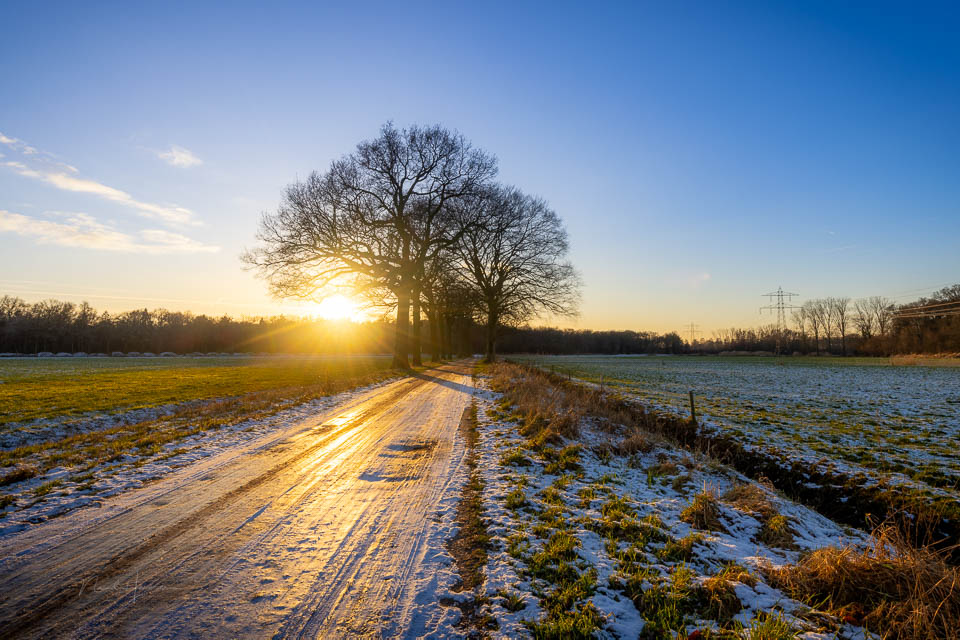
With a curved front element and a diagonal angle of view of 130º, the chance of flare with a bright light source in the frame should be very high. At least, that was my assumption. However, of the various photos I took with the sun fully in the frame, not one showed flare. That is impressive.
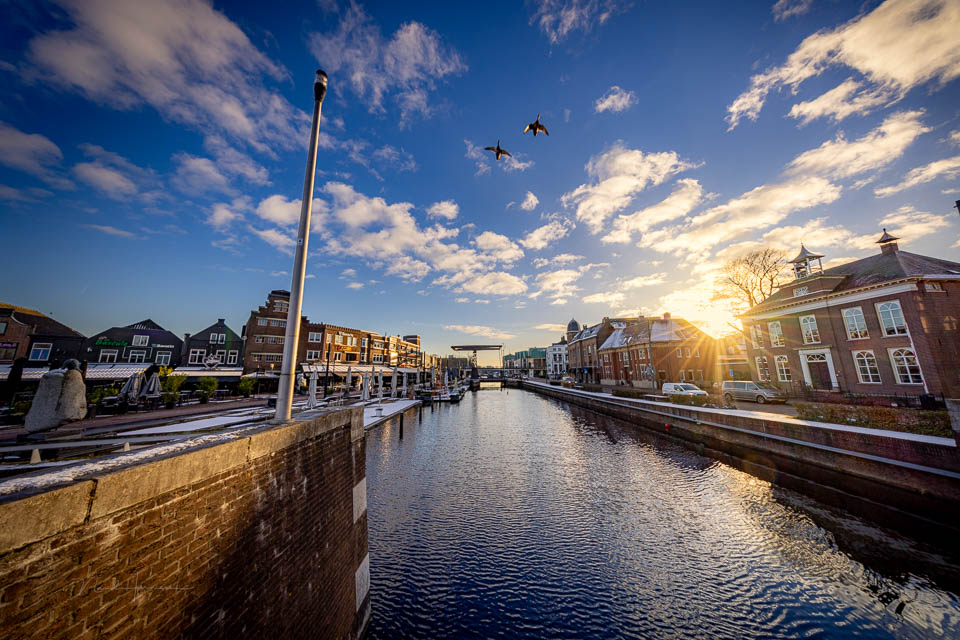
There are undoubtedly situations in which flare can occur. However, that was not the case during the short period I had this lens available.
What is this lens suitable for?
Who needs a 10mm focal length? Apart from photographers using an APS-C camera, where the angle of view at 10mm corresponds to 16mm, landscape and architectural photographers are the most likely target group.
It is important to realise that 10mm is very wide. You therefore have to stand very close to your subject to make it large enough in the frame. And that means extra distortion. Something that is one metre closer will also appear noticeably larger in the frame.
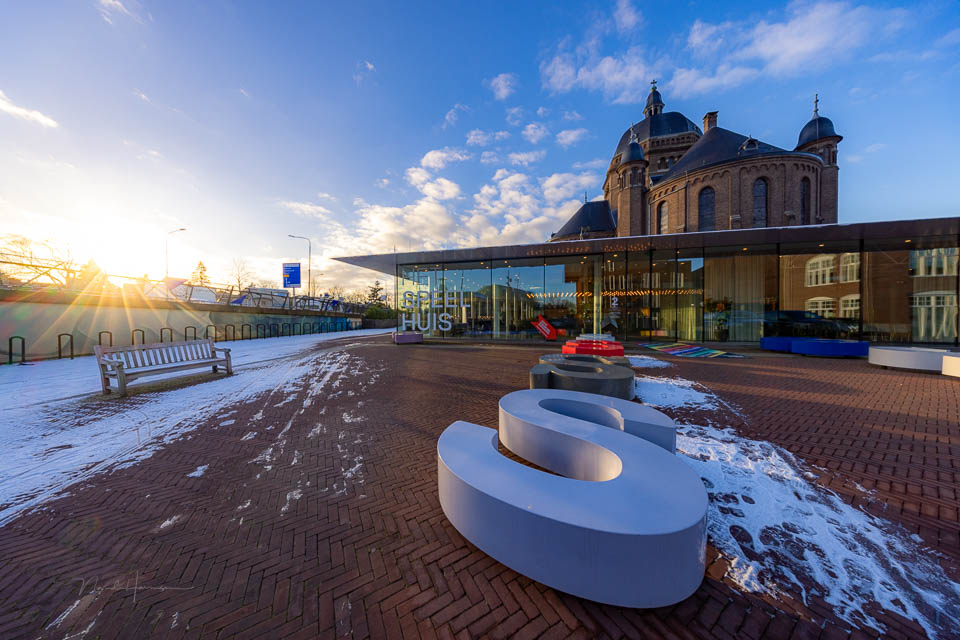
Perspective distortion is also something to keep a close eye on. If you photograph exactly horizontally, the problem is not really present, apart from objects being stretched at the side of the photo. Photographing upwards or downwards makes lines fall over considerably. This can be distracting.
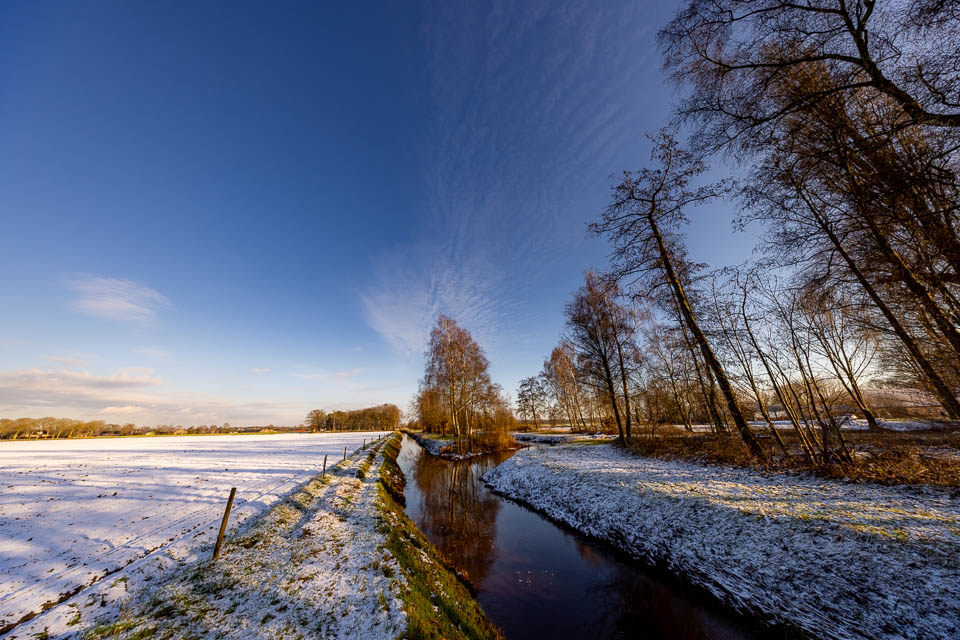
For landscape photographers, this can mean that all the trees are at a 45º angle when you want to include a lot of sky. For architecture, these are walls, lampposts, towers... You name it. In fact, it is even more distracting there because there are many more straight lines than in a landscape.
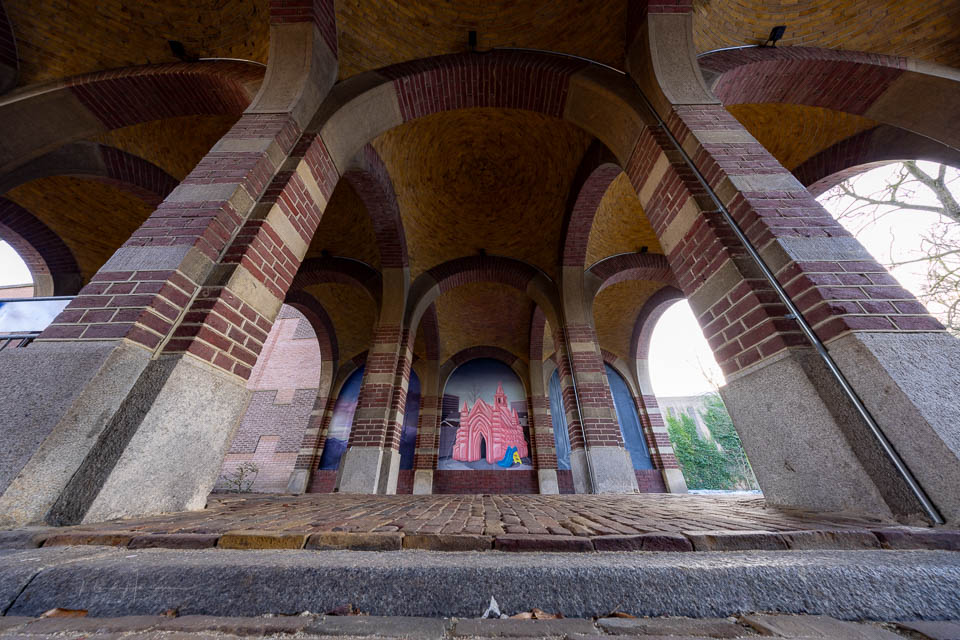
Astrophotography is also a suitable subject for a lens with this angle of view. Bear in mind that at 10mm there is always a high risk of including too much in the frame, or of everything being shown far too small if you stand too far from your subject.
Conclusion
I am impressed by this lens. The angle of view may be more than you actually need, but you can zoom in and also use 12mm, 14mm, 16mm, or even 20mm. The image quality is impressive and the absence of flare in the photos is very welcome.
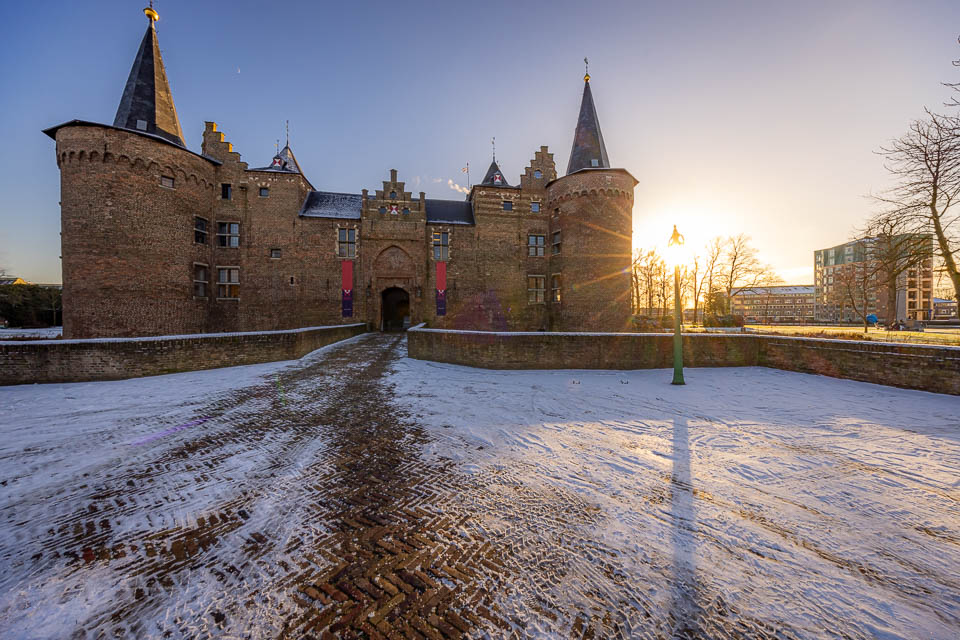
What I like most is the size of this lens. It is small and compact, making it very easy to take with you. Especially when you compare it with the EF11-24mm from a few years ago.
Photographing with this angle of view is very difficult. You get so much in the frame that the photo quickly looks unattractive. Composition, image arrangement and the position you take relative to your subject are extremely important. Remember that including more in the frame is not necessarily better.
Pros
- Small and compact
- Image stabilisation up to 6 stops
- Separate programmable button
- Silent STM autofocus
- Huge angle of view at 10mm
- Good image quality
- Little coma distortion
- Not sensitive to flare
- Lens cap stays firmly in place
- Gelatin filter holder
- Beautiful star shapes around light sources
Cons
- Depends on in-camera image correction
- Use of a 100mm filter system is not possible
- Lens correction makes the image soft in the corners.
As you can see, I have few disadvantages to mention. Anything I could mention is more related to the extreme angle of view than to the quality of this lens. For anyone who finds a 16mm wide-angle lens insufficient and wants to go as wide as possible, the RF10-20mm f/4L IS STM is highly recommended.
Many thanks to Canon Nederland for making this lens available.
Gallery
About the author
Nando Harmsen has been photographing for more than 40 years. He specialises in wedding photography and landscape photography. Nando also gives talks, workshops, masterclasses and photo trips, and regularly reviews new and interesting equipment.
You might also like
-
 Canon announces the RF 10-20mm f/4L IS STM
by Nando Harmsen
-
 Review: the Canon RF 50mm f/1.8 STM
by Nando Harmsen
-
 Review: Canon RF 24mm f/1.8 macro IS STM
by Nando Harmsen
-
 Review: Canon RF 28mm f/2.8 STM
by Nando Harmsen
-
 Review: The Canon RF 85mm macro lens
by Nando Harmsen
-
 Canon announces the ultra-wide RF 14-35mm f/4L IS USM
by Nando Harmsen
3 comments
-
 Donald Willemsen wrote on Friday 19 January 2024 at 15:50 | reply
For budgetary reasons, I’m sticking with the RF-S 10-18mm on my R7. Even more compact and lighter😄
Translated from Dutch. -

-

 peterheins
wrote on Wednesday 31 January 2024 at 12:56
| reply
peterheins
wrote on Wednesday 31 January 2024 at 12:56
| reply
For budgetary reasons I stick with the Canon 6D Mark II and the Canon EF F4 16-35mm IS L , I already have enough trouble keeping the distortion within limits with that. I often see amateur photographers walking around with an R5 and 15-30mm , together about 7 thousand euros , then I think : Why? Most of your photos don't get any further than Flickr , Insta or Facebook anyway. Professional work is another story but even there I sometimes think why? Then you can also keep your cost price a bit lower and compete better. People also look at the price. And the average customer can't see whether you took the photos with a Canon 5D Mark IV or an R5. The IRIX 11mm is also a good alternative to this lens I think. I once got to look through one at Palendorp Petten , but the poles at the edge were simply straight . But to each their own.
Translated from Dutch.
Have your say
Please note: Articles older than a week can only be commented on by signed-in visitors.Would you still like to comment? sign in or create a free account.
Become a better photographer every week
A practical photography tip in your inbox every week.
39,020 photography enthusiasts already receive the tips! More about the weekly mail. Or keep up to date via  Facebook.

Elja Trum
Photofacts; everything to do with photography!
Would you like to take better photos and keep up with what is happening in photography? Photofacts publishes articles that teach you something about photography — from a product announcement to a practical shooting tip or a look at a website. Photofacts covers photography every day and is a hobby project of Elja Trum's that got out of hand. The articles are written by a team of volunteer authors. If you would enjoy writing one or more articles for Photofacts, do get in touch.More about PhotofactsPhotofacts is made possible in part by
