

Review: Canon RF 24-105mm f/2.8L IS USM Z
Friday 12 April 2024, 16:32 by Nando Harmsen | 5,685 views | 9 commentsThis article was translated from Dutch with the help of AI. Read the original.
Wouldn't it be great if there were a 24-105mm zoom lens with an aperture of f/2.8? You get a little more zoom range than with a 24-70mm, while still having that desirable wide aperture. Canon now has the RF 24-105mm f/2.8L IS USM. It is a very different lens from what you might expect.
A 24-105mm offers the most versatile focal range. You get wide angle and a little telephoto in a single lens. It is not without reason that this is almost always the standard zoom lens. The top models of this type of lens have a maximum aperture of 'only' f/4.
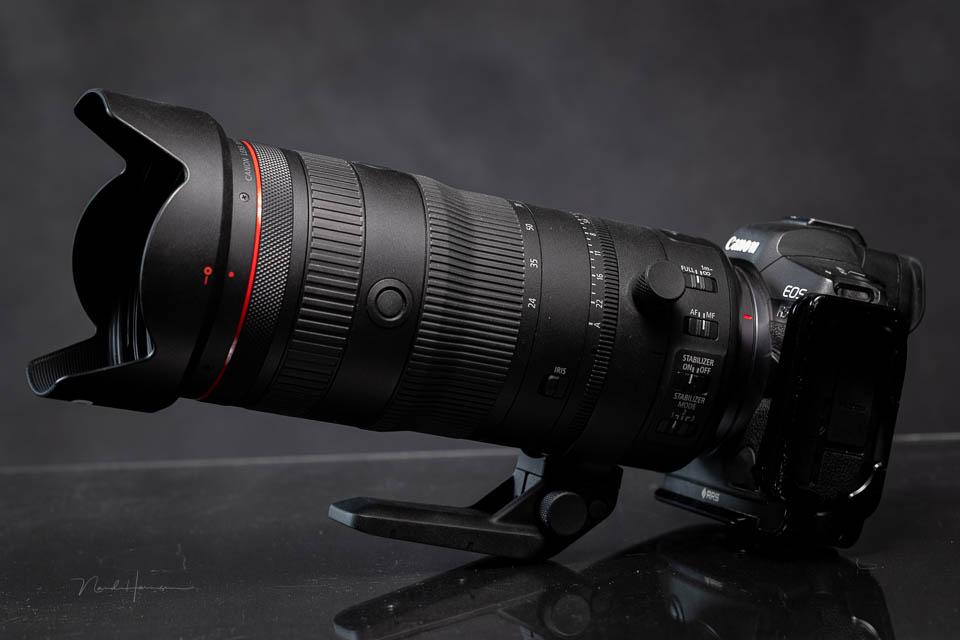
Canon has now changed that with the RF 24-105mm f/2.8L IS USM Z. This lens lets in twice as much light as the standard versions we know so well. However, it is no longer a compact lens. Let me give you some specifications.
- Aperture of f/2.8 throughout the zoom range
- Length of 199mm and diameter of 88.5mm
- Weight of 1.43 kilograms
- 23 lens elements in 18 groups, including 4 US, 2 GMo aspherical and 1 replica aspherical lens
- Aperture ring for video with lock in A position
- Two programmable lens buttons
- Minimum focusing distance of 45cm, with 0.08x magnification and 0.29x magnification at focal lengths of 24mm and 105mm respectively
- Up to 5.5 stops of image stabilisation, and 8 stops in combination with IBIS
- Dual Nano USM autofocus motor
- Removable tripod foot
- Connections for Power Zoom adaptors and lens holder
First impression
It is already clear that this is not a small lens. It is larger and heavier than an RF 70-200mm f/2.8L IS USM lens. In terms of size and weight, you can compare it more closely with an RF 100-500mm f/4.5-7.1L IS USM.
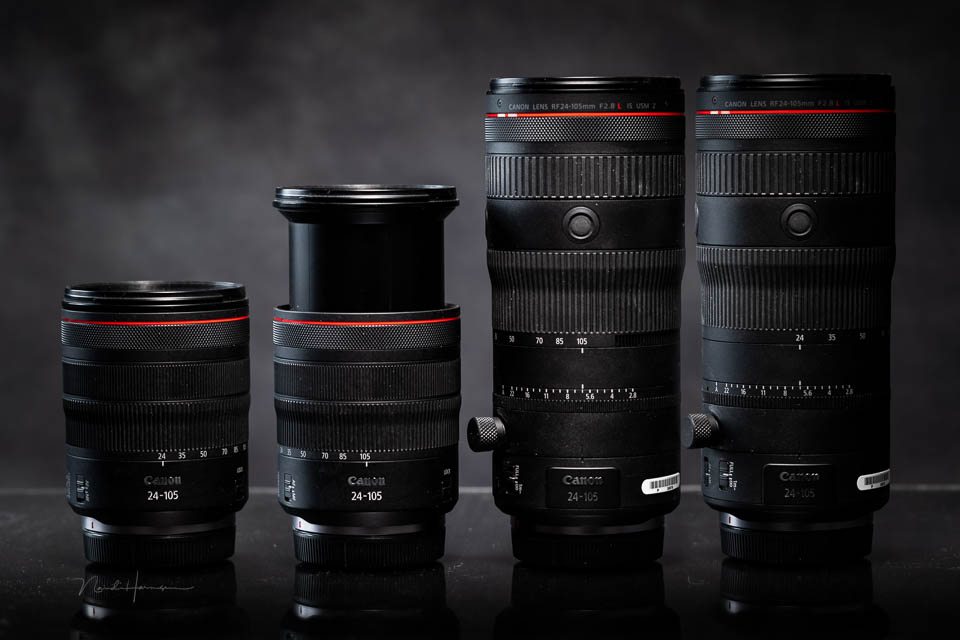
Compared to the f/4 version, this f/2.8 lens is simply twice as large and heavy. This means it is not a lens you can leave on your camera for convenience. It is too large and heavy for that.
The RF 24-105mm f/2.8L IS USM Z has a very smooth zoom mechanism that rotates through 90 degrees. The focus ring turns evenly and is perfect for precise focusing. Of course, there is the control ring, but it is the aperture ring that stands out. You can change the aperture continuously.
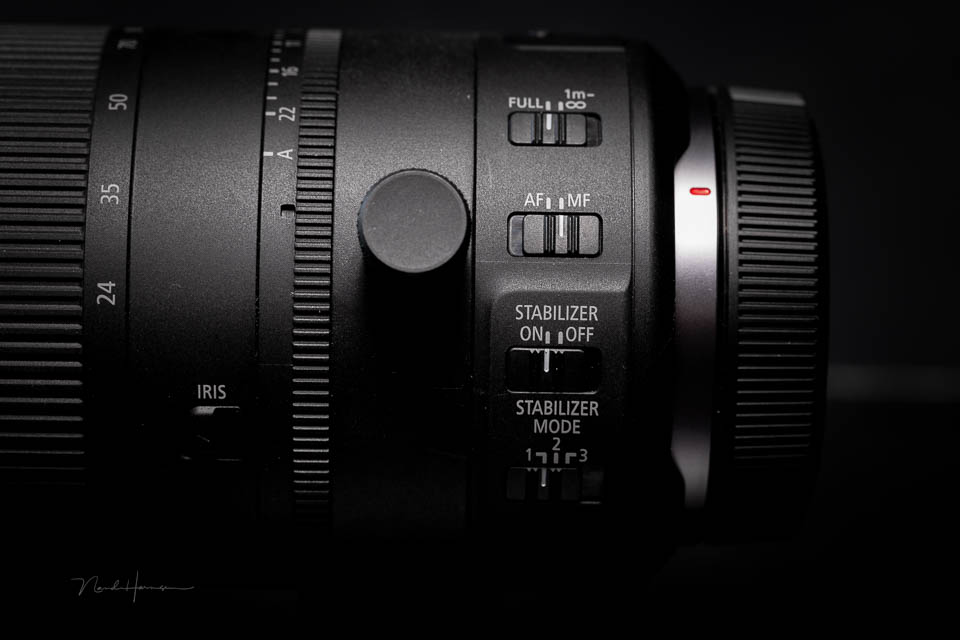
There are also the familiar switches for focusing and image stabilisation. The lens also has two programmable lens buttons. Because of its size and weight, there is a tripod collar, whose foot can be removed.
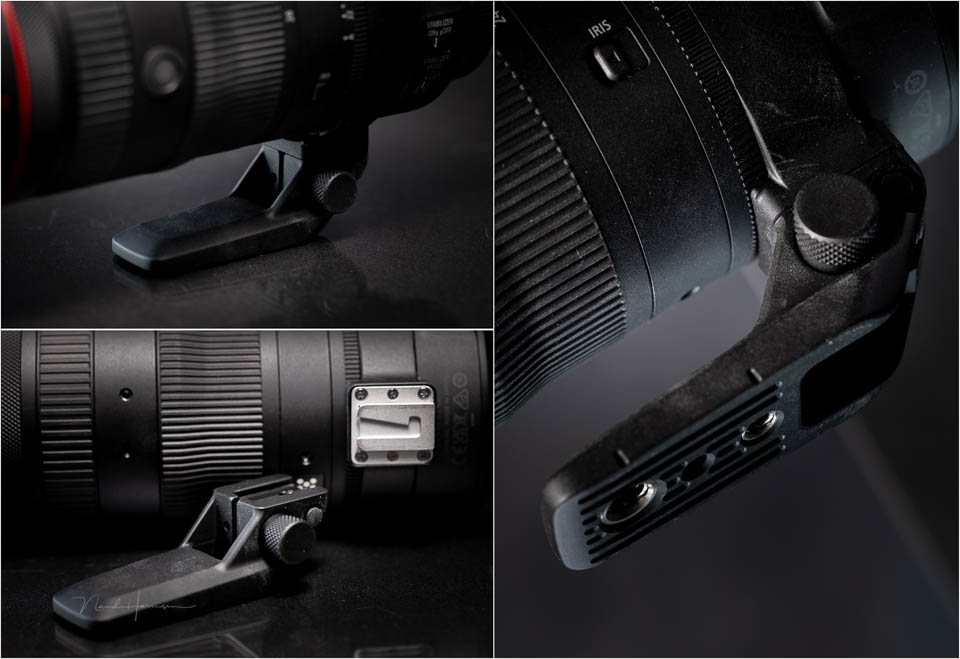
Image quality
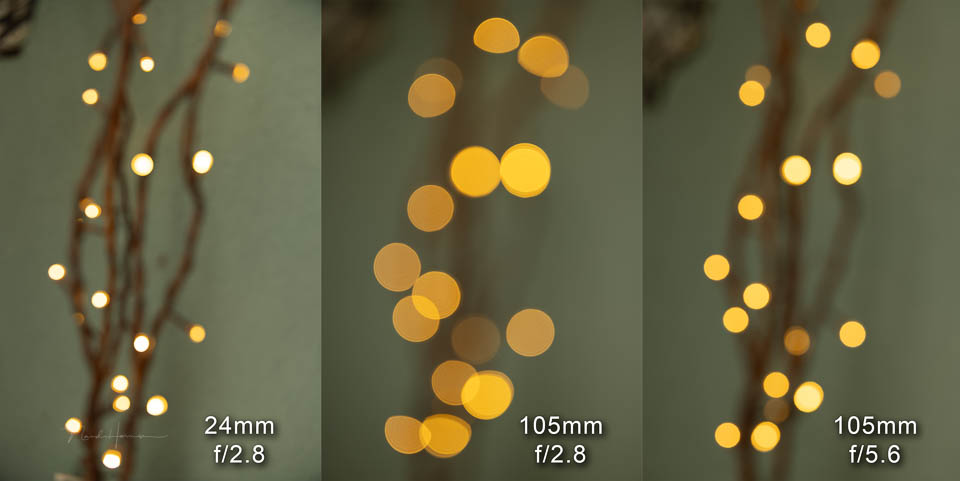
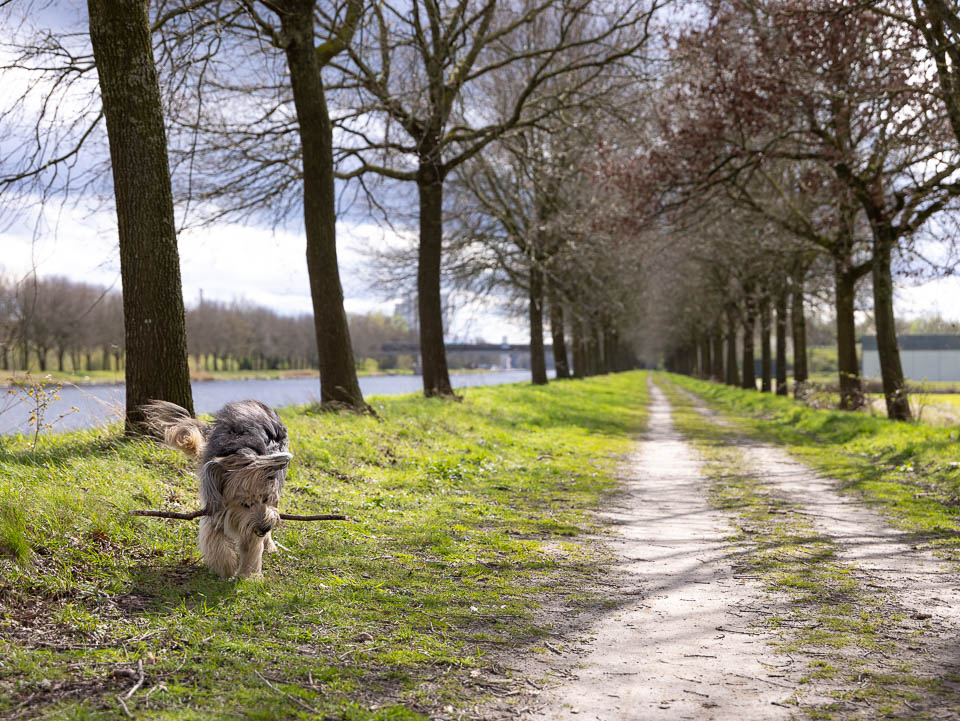
Of course, f/2.8 is not only useful for letting in more light. It also allows you to achieve a shallow depth of field. This is less spectacular at 24mm, but at a focal length of 105mm, f/2.8 can separate the subject nicely from the background.
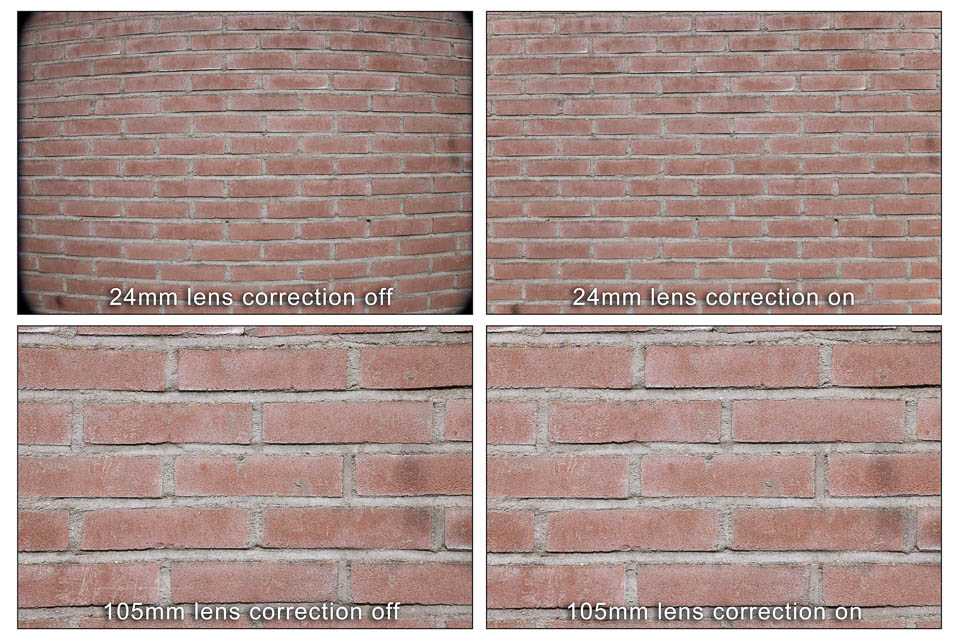
There is an extreme amount of distortion at 24mm. The image has pincushion distortion with black corners. At 105mm, this changes to barrel distortion, but it is less extreme. Lens correction is essential for this lens.
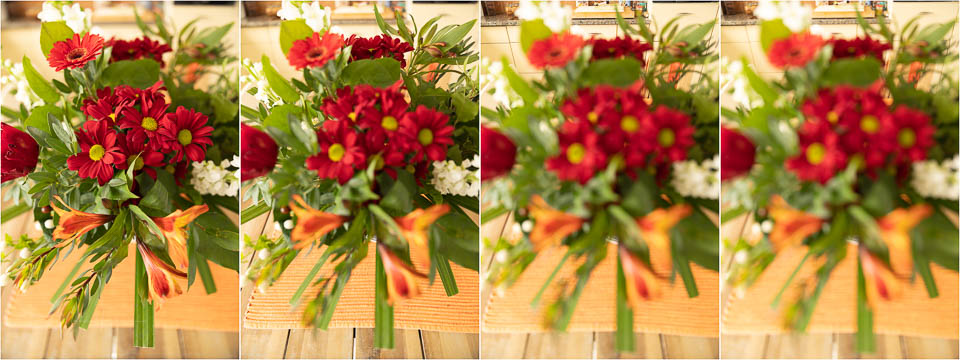
The lens shows a small amount of focus breathing, where the subject changes size when it comes into or out of focus. On the other hand, the focus does not change while zooming with this lens.
In use
The lens is large and heavy, but if you are used to the old EF 70-200mm f/2.8L IS USM II, this is not much of a problem. The zoom mechanism works wonderfully smoothly. The fact that the lens does not change size while zooming naturally gives it perfect balance.
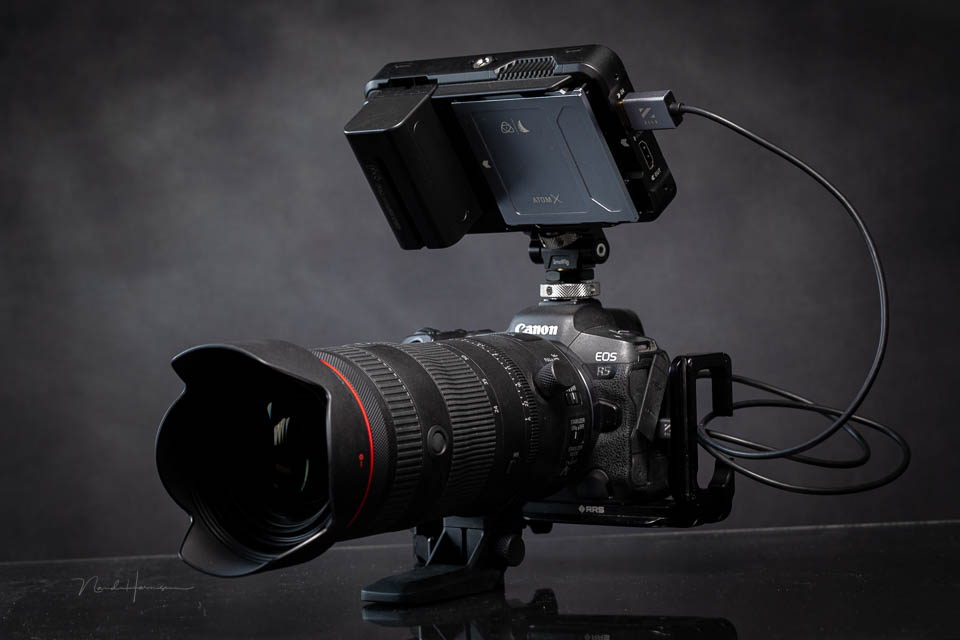
Unfortunately, the aperture ring does not work for photography. At least, not with the cameras I have. From what I hear, the EOS-R models from 2024 onwards will be able to use the aperture ring. It only works for video on pre-2024 models.
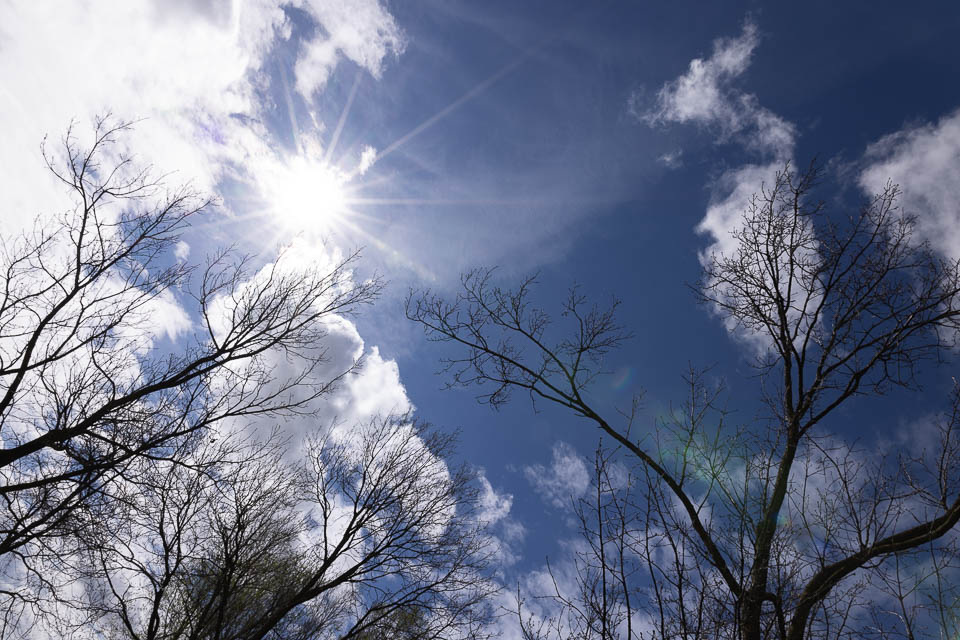
The extreme image distortion at 24mm causes no problems thanks to image correction. There is still some light fall-off at f/2.8, but it is hardly distracting. Especially for video, when a 16:9 aspect ratio is used, the weak points of every lens fall outside the image. The same applies to the RF 24-105mm f/2.8L IS USM Z.
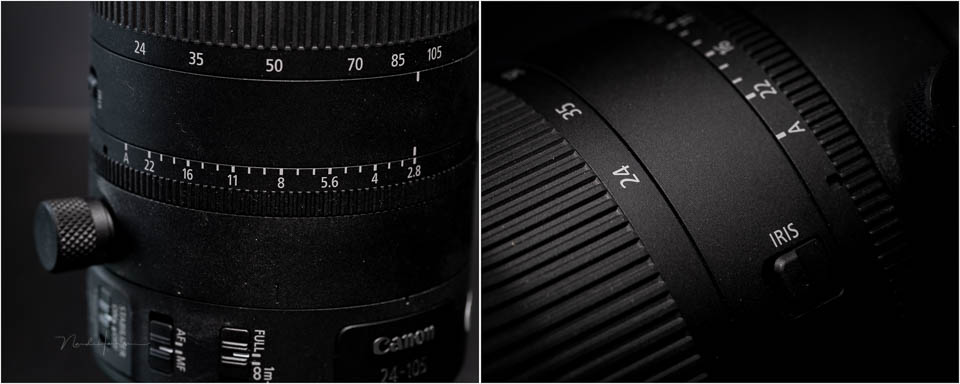
It is obvious that this lens is aimed at video. This is clear not only from the aperture ring, but also from the smooth zoom mechanism and the precise manual focus ring. Its parfocal behaviour, where the focus does not change while zooming, is perfect for video.
The Power Zoom adaptors
Another sign that this lens is aimed at video is the connection options for the Power Zoom adaptors. Hence the letter Z in the name of the lens.
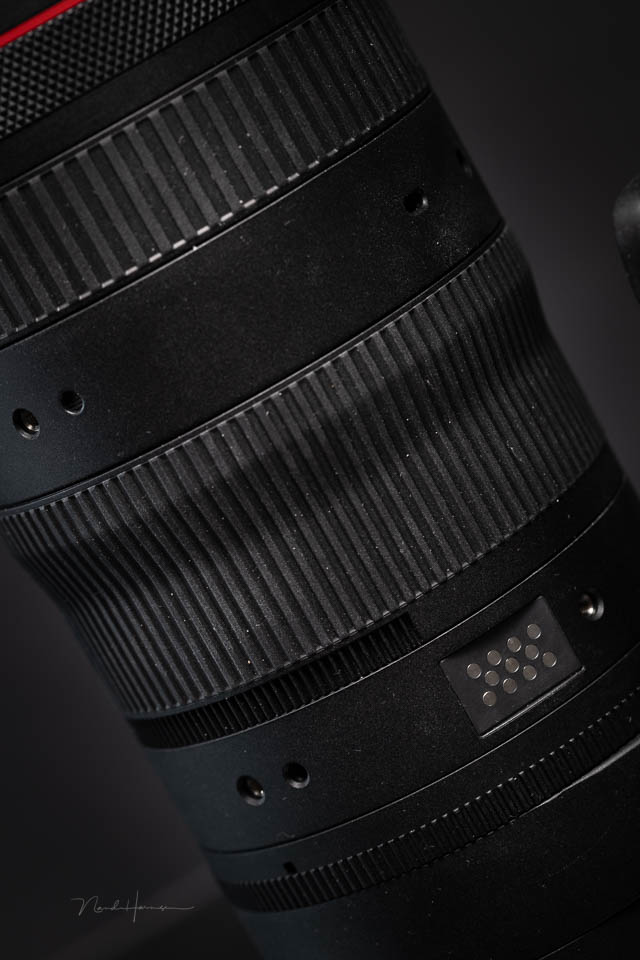
These adaptors, the PZ-E2 and PZ-E2B, provide a smooth zoom at an adjustable speed. These adaptors are powered via USB-PD or through the camera. They can be operated remotely with the EOS Utility app.
The lens also has an LH-E1 lens holder connection that provides extra support when using a video rig setup. Given the weight and size of the RF 24-105mm f/2.8L IS USM Z, that is no unnecessary luxury.
Conclusion
Anyone who thinks that an f/2.8 aperture is ideal for a 24-105mm zoom lens should think about the consequences. You no longer have a compact lens, but a large and heavy one.
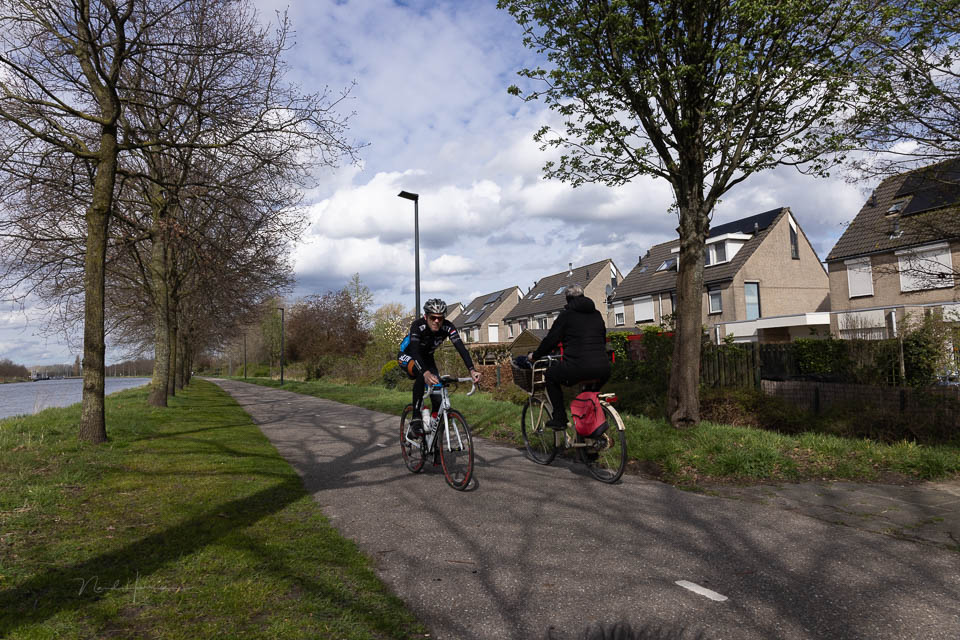
Despite that, it is pleasant to work with, including for photography. The zoom ring in particular is a joy to use. Still, this lens offers little extra for photographers apart from the wide aperture. It also relies heavily on in-camera lens correction for a good image.
Videographers get more benefits, such as a continuous aperture ring and the option to use Power Zoom adaptors. Focus breathing is minimal, and focus does not change while zooming.
With the RF 24-105mm f/2.8L IS USM Z, videographers get a lens that comes close to a real Cine lens in terms of usability, at a somewhat lower cost. The lens is clearly aimed at the professional market.
For photography only, the high cost of this lens is harder to justify. Although f/2.8 is attractive, I think the f/4 version of the 24-105mm zoom lens is the most sensible choice for most photographers.
Pros
- f/2.8 throughout the zoom range
- Smooth zoom ring
- Focus ring works very precisely
- Focus does not change while zooming
- Nice bokeh at f/2.8 and 105mm
- Lens buttons included
- Aperture ring
- Image sharpness is good
- Power Zoom adaptors can be used
- Image stabilisation of 5.5 stops and 8 stops in combination with IBIS
- Removable tripod foot
Cons
- Large and heavy
- Aperture ring does not work for photography
- There is a small amount of focus breathing
- Image distortion is extreme, although corrected with lens correction
- Strong chromatic aberration at 105mm
- Tripod foot has a completely different design
- Price is high if it is intended exclusively for photography
Many thanks to Canon Nederland for providing this lens.
About the author
Nando Harmsen has been photographing for more than 40 years. He specialises in wedding photography and landscape photography. Nando also gives talks, workshops, masterclasses and photo trips, and regularly reviews new and interesting equipment.
You might also like
-
 Canon introduces RF 10-18mm, 200-800mm and 24-105mm lenses
by Nando Harmsen
-
 Review: Canon RF 24-240mm f/4-6.3
by Michelle Peeters
-
 Review: Canon RF 100mm f/2.8L IS macro lens
by Nando Harmsen
-
 Review: Canon RF 100-300mm f/2.8L IS USM
by Nando Harmsen
-
 Review: Canon RF 28mm f/2.8 STM
by Nando Harmsen
-
 Review: Canon RF 70-200mm f/4L IS USM
by Nando Harmsen
9 comments
-
 Hochzeitsfotograf wrote on Sunday 14 April 2024 at 13:55 | reply
Thank you for the review! I would really love to work with this lens. I am a wedding photographer from Munich.
Translated from Dutch. -
 Donald Willemsen wrote on Tuesday 16 April 2024 at 10:55 | reply
I’m glad to have read this review. Since I only take photographs, this lens will have no added value for me. Besides, it’s too heavy and unaffordable for me.
Translated from Dutch.
What I actually did miss in the review, is how the lens performs on a crop camera like the R7. What remains, for example, of the enormous distortion mentioned in the review? -

-
 Edwin wrote on Tuesday 16 April 2024 at 10:56 | reply
Seems like a great lens but because of the limitations when photographing I'll stick with the 4.0 version for now
Translated from Dutch. -
Donald Willemsen wrote on Tuesday 16 April 2024 at 11:52 | reply
Indeed Nando, due to the crop factor and smaller sensor, you have a narrower angle of view. In addition, I had thought that the distortion would be less noticeable as a result.
Translated from Dutch. -
 Nando
wrote on Tuesday 16 April 2024 at 11:57
| reply
Nando
wrote on Tuesday 16 April 2024 at 11:57
| reply
Not the crop factor AND smaller sensor. The crop factor is because of the smaller sensor.
Translated from Dutch.
You get less of the distortion in the frame, that's correct. But I assume you just have lens correction turned on. Then it doesn't make any difference. -
 Theo wrote on Tuesday 16 April 2024 at 12:06 | reply
Clear review. Thanks for that.
Translated from Dutch.
At first I thought: maybe trade in my EF 24-70 / 2.8 for this one after all. At the end, clear information that makes me decide not to trade in my old lens for this one, because I only take photos. -
 kpeters wrote on Wednesday 5 November 2025 at 19:50
| reply
kpeters wrote on Wednesday 5 November 2025 at 19:50
| reply
Thank you for the honest review.
Translated from Dutch.
I am considering purchasing this lens instead of the RF24-70 F2.8. However, not so much for the range but for the bokeh. Because of the longer focal length, I suspect/expect/hope that the bokeh effect will be more pronounced and therefore lean more towards the 70-200 in terms of bokeh.
Do you have any experience with how these 3 lenses compare to each other in terms of bokeh? -
Nando
wrote on Thursday 6 November 2025 at 09:39
| reply
Well, the amount of blur you get depends not only on the aperture/focal length, but especially on the ratio between the distance to your subject and the distance to the background.
Translated from Dutch.
How the quality of the blur is (the bokeh), you can judge from the example I made.
If I may advise, I would choose both a 24-70 f/2.8 and a 70-200mm f/2.8. That gives you complete freedom. You could also fall back on the EF versions with an adapter.
Have your say
Please note: Articles older than a week can only be commented on by signed-in visitors.Would you still like to comment? sign in or create a free account.
Become a better photographer every week
A practical photography tip in your inbox every week.
38,982 photography enthusiasts already receive the tips! More about the weekly mail. Or keep up to date via  Facebook.

Elja Trum
Photofacts; everything to do with photography!
Would you like to take better photos and keep up with what is happening in photography? Photofacts publishes articles that teach you something about photography — from a product announcement to a practical shooting tip or a look at a website. Photofacts covers photography every day and is a hobby project of Elja Trum's that got out of hand. The articles are written by a team of volunteer authors. If you would enjoy writing one or more articles for Photofacts, do get in touch.More about PhotofactsPhotofacts is made possible in part by
