

Review: Canon RF 70-200mm f/2.8L IS
Friday 24 July 2020, 15:51 by Nando Harmsen | 8,263 views | 7 commentsThis article was translated from Dutch with the help of AI. Read the original.
Until the end of 2019, users of Canon mirrorless cameras had to rely on the excellent EF versions of the 70-200mm lens, which could be mounted on the Canon EOS R and RP using an adapter. It works very well, but of course it is not ideal.
The RF version of the 70-200 has arrived at just the right time.
A focal length range of 70-200mm is perfect for portraits, sports, and wildlife photography. You can also use it very well for semi-macro photography. It allows you to keep some distance from your subject while still maintaining a connection with it.
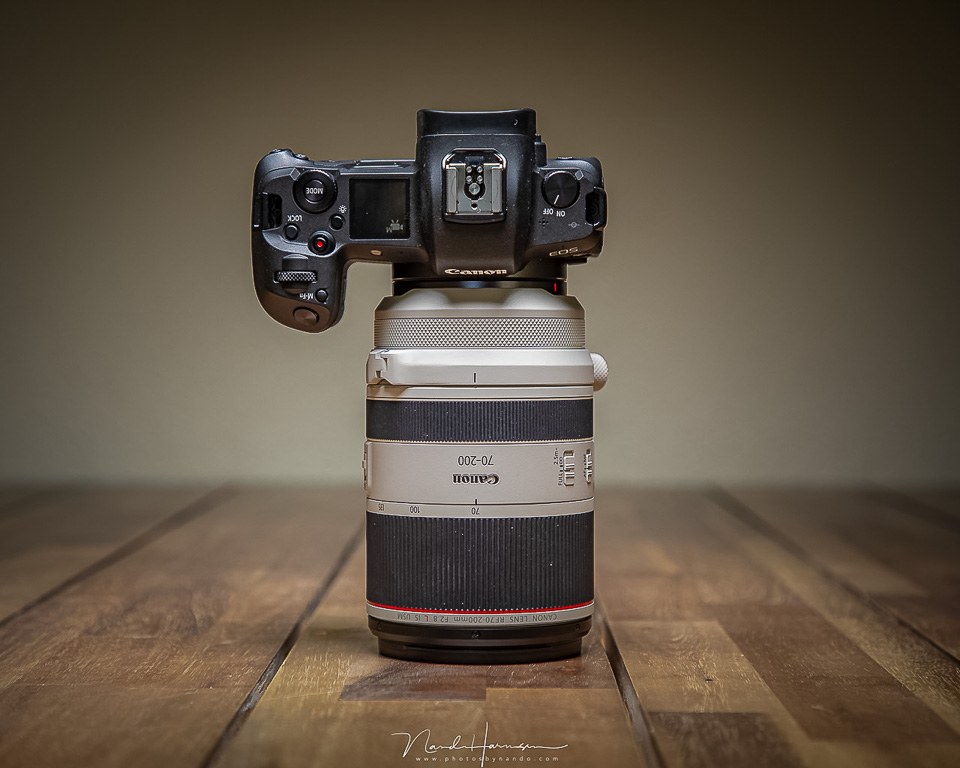
The appearance of the RF 70-200mm f/2,8L IS USM
Anyone used to an EF 70-200mm f/2,8L IS USM will be surprised by the appearance of the RF 70-200mm f/2,8L IS USM. The new lens has a completely different construction. The zoom mechanism is no longer internal, so the lens becomes longer when zooming.

At 70mm, the RF 70-200L, as I will abbreviate the name from now on for convenience, is a very compact lens that is only a fraction of the length. This has the major advantage that the lens no longer has to lie horizontally in a bag. The RF 70-200L fits upright in many bags, just like other lenses.
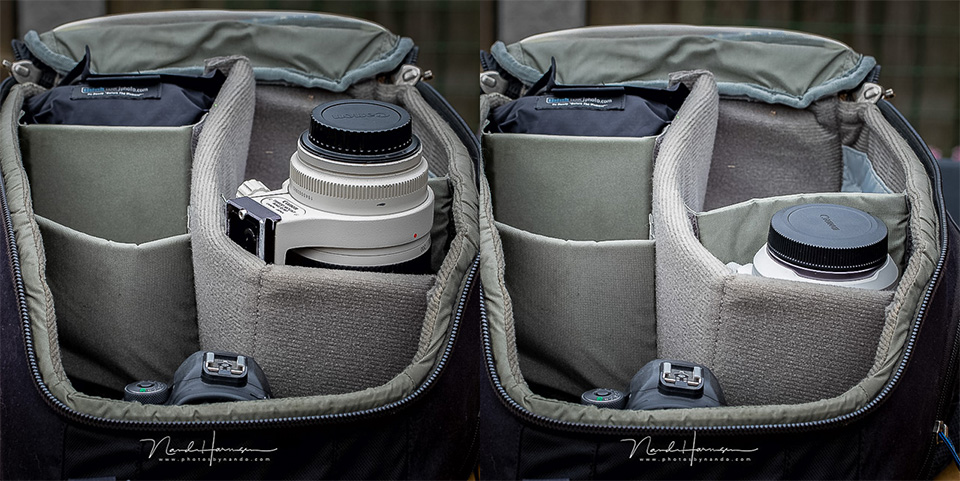
The construction of the lens looks similar at first glance to the excellent EF 100-400mm f/4,5-5,6L II IS USM. Its length also changes when zooming. You do not have to worry about dust or moisture getting into the lens this way.
In all the years I have used the EF 100-400mm f4,5-5,6L II IS USM in harsh weather conditions, that has never happened. The seals on the RF 70-200L will certainly be the same, if not better.
The RF 70-200mm also has a completely new tripod collar. It can be removed easily, without having to remove the lens from the camera. This is a major advantage over the EF versions.
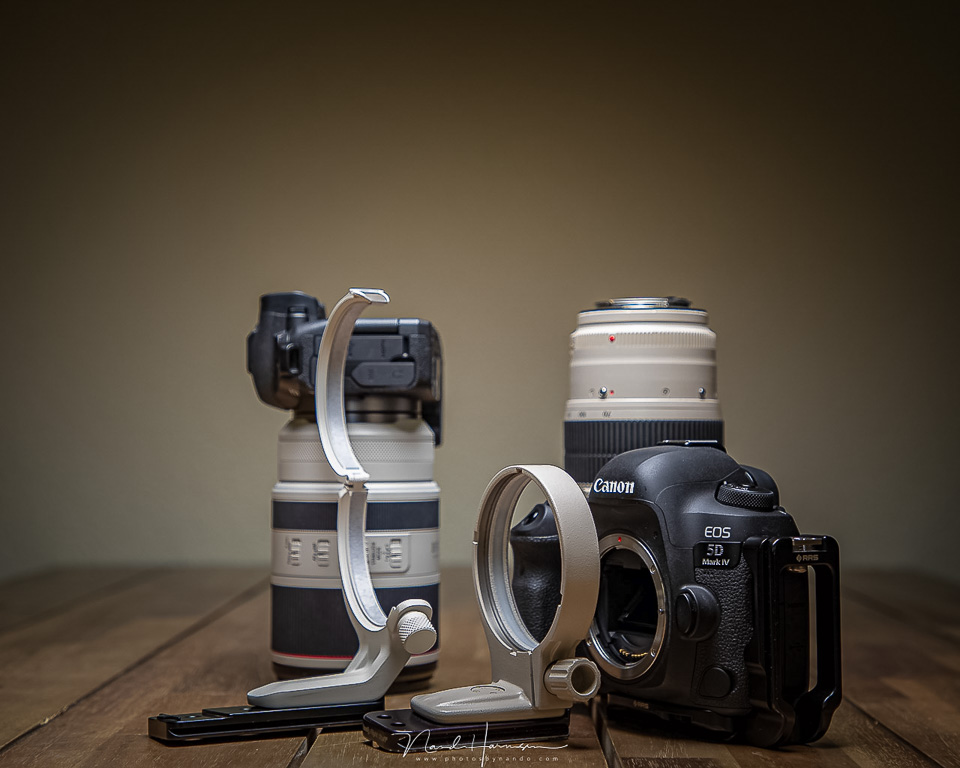
After removing the tripod collar, the lens still looks good. Although this is personal, and does not affect the way the lens works, I still think it is important. After all, you pay a lot of money, so attention should certainly be paid to its appearance.
The construction of the lens is almost perfect. A lot of attention has been paid to detail and finish. Internally, the lens also appears to have been designed to be particularly robust and well thought out (source: lensrentals). This gives confidence that this lens will provide many years of faithful service.
About the aperture, image stabilisation and control ring
Although the lens changes length when zooming, the maximum aperture is f/2,8 throughout the zoom range. Focusing is quiet and fast, and the lens has image stabilisation of up to 5.5 stops.
Of course, you can switch between the different image stabilisation options, such as a mode for panning.
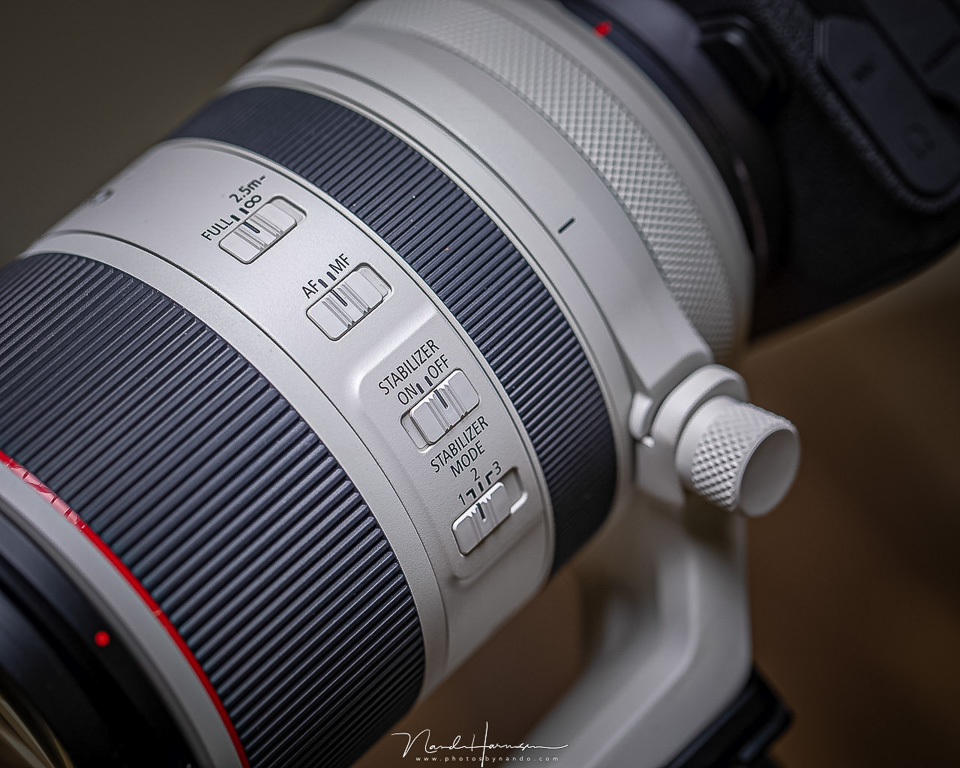
A characteristic feature of all RF lenses is the control ring. The RF 70-200L has one too. It is positioned close to the bayonet mount, which means you cannot reach it without moving your hand.
This may be the only disadvantage of this lens. Especially if the ring is programmed for an option you use often, you quickly lose your balance. On the other hand, you will certainly learn to work with it.
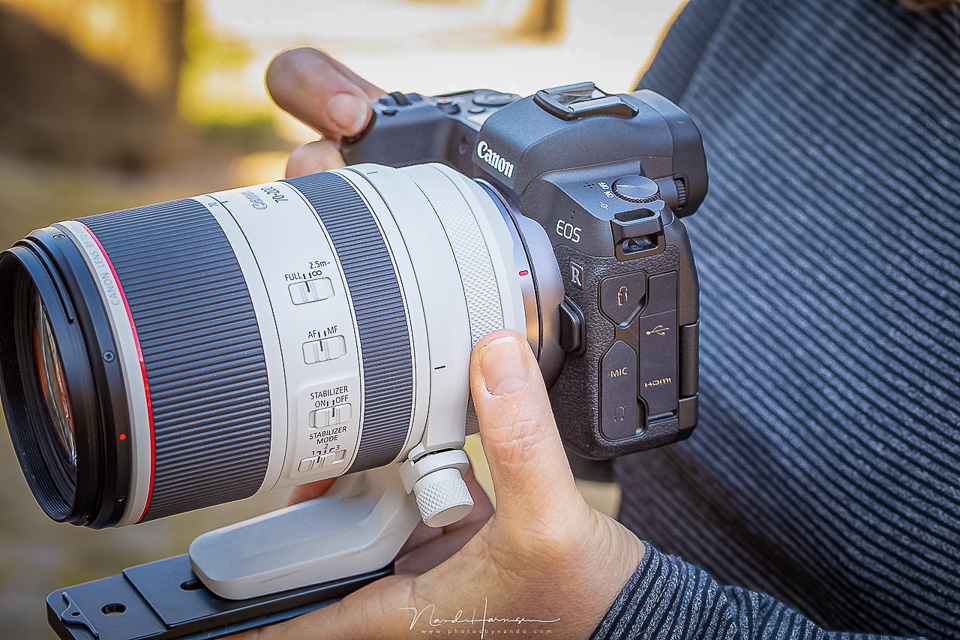
Image quality and focusing
The most important thing about a lens is of course image quality. But focusing speed also matters, especially because a 70-200mm range is perfect for wildlife photography. Think of photographing pets or horses.

Focusing is simply fast and quiet. Because the RF 70-200L was tested on a Canon EOS R, and there is no direct comparison available, it is difficult to get a good impression of its focusing speed.
Nevertheless, I have the feeling that this lens focuses so quickly that the limiting factor is the autofocus system of the EOS R itself. When Canon brings the more professional mirrorless full-frame cameras to the market, such as the EOS R5 and R6, it will certainly become clear how fast the RF 70-200L will be.

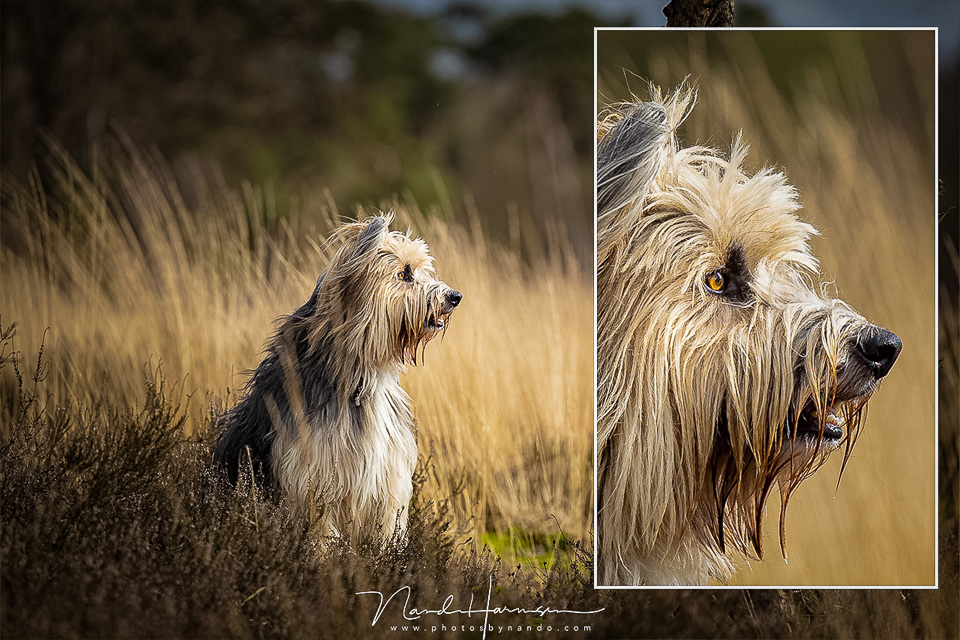
In terms of image quality, the lens performs very well. There is some vignetting at the maximum aperture, but this decreases quickly when stopping down.
I tested the lens in normal use and did not carry out any specific quality tests, but the findings of specialist testing websites confirm this (source: the-digital-picture).
A conclusion
The RF 70-200L was used extensively as if it were my own lens. I photographed landscapes, portraits, and dogs in action to try out as many aspects of this beautiful lens as possible.
I do not call it a beautiful lens for nothing, because I think Canon has outdone itself in the field of 70-200mm lenses.

The compact dimensions in particular make it a very friendly lens. It fits much better in camera bags and backpacks than the longer EF versions. When zoomed out, the RF 70-200mm may be just as long, but that is not how you carry a lens.
The build is perfect, as we have come to expect from a Canon L lens. Attention to detail and finish means that the lens is not only robust and suitable for intensive use, it is also visually appealing. Even with the tripod collar removed.

The latter is of course a matter of personal preference, but it certainly counts for me. The most important thing, however, is that you can rely on good focusing, almost perfect image quality, and excellent image stabilisation.
There is only one disadvantage. The location of the control ring is not ideal. I would prefer to see it further forward, so that you could reach it more easily without losing your grip.
The Canon RF 70-200mm f/2,8L IS USM was made available together with the Canon EOS R by Cameraland.nl.
About the author
Nando Harmsen has been photographing for more than 40 years. He specialises in wedding photography and landscape photography. Nando also gives talks, workshops, masterclasses and photo trips, and regularly reviews new and interesting equipment.
You might also like
-
 Review: Canon RF 70-200mm f/4L IS USM
by Nando Harmsen
-
 Review: Canon RF 100-300mm f/2.8L IS USM
by Nando Harmsen
-
 Review: Canon RF 100mm f/2.8L IS macro lens
by Nando Harmsen
-
 Review: the Canon RF 50mm f/1.8 STM
by Nando Harmsen
-
 Review: Canon EOS R3
by Nando Harmsen
-
 Review: The Canon RF 85mm macro lens
by Nando Harmsen
7 comments
-

 Wolves fotografie
wrote on Saturday 30 September 2023 at 06:57
| reply
Wolves fotografie
wrote on Saturday 30 September 2023 at 06:57
| reply
You write: "The RF70-200L doesn't have an internal zoom mechanism. That is absolutely not a downside." So I totally disagree with you there. For me, this is even the reason I won't buy the lens. How are you supposed to photograph through glass or mesh with a lens that changes length if you zoom even a little?
Translated from Dutch. -

-
Wolves fotografie
wrote on Tuesday 10 October 2023 at 10:21
| reply
Stepping back doesn't work, because then you'll see the mesh in your photos. So unfortunately for me it's still the EF lens and hoping that they fixed this in the Mark II version of the RF.
Translated from Dutch. -
Nando
wrote on Tuesday 10 October 2023 at 10:34
| reply
Of course that does work. You can move back a little and still place the front lens against the fence again?
Translated from Dutch.
The only disadvantage is that when zooming out, you have to move further forward to place your front lens against the fence again, and vice versa. I would only find this annoying when working from a tripod, but handheld it is easy to do. -
Wolves fotografie
wrote on Tuesday 10 October 2023 at 21:27
| reply
That costs just that little bit of time which, in wildlife photography, can make the difference between catching exactly the right moment and having a fantastic photo and taking a photo that's pretty decent.
Translated from Dutch.
-
 Eddy wrote on Friday 19 January 2024 at 15:48
| reply
Eddy wrote on Friday 19 January 2024 at 15:48
| reply
Dear Nando You write: "The RF70-200L does not have an internal zoom mechanism. That is absolutely not a downside." That is actually a major downside. Lenses that extend and retract are vacuum cleaners. Kind regards Eddy
Translated from Dutch. -
Nando
wrote on Friday 19 January 2024 at 21:53
| reply
That urban myth is persistent.
Translated from Dutch.
I have been using this kind of lens for many, many decades, and so have many others. And that has never caused any problems.
If it really were such a problem, manufacturers would have stopped doing it long ago.
Have your say
Please note: Articles older than a week can only be commented on by signed-in visitors.Would you still like to comment? sign in or create a free account.
Become a better photographer every week
A practical photography tip in your inbox every week.
39,027 photography enthusiasts already receive the tips! More about the weekly mail. Or keep up to date via  Facebook.

Elja Trum
Photofacts; everything to do with photography!
Would you like to take better photos and keep up with what is happening in photography? Photofacts publishes articles that teach you something about photography — from a product announcement to a practical shooting tip or a look at a website. Photofacts covers photography every day and is a hobby project of Elja Trum's that got out of hand. The articles are written by a team of volunteer authors. If you would enjoy writing one or more articles for Photofacts, do get in touch.More about PhotofactsPhotofacts is made possible in part by
