

Review: Canon RF 24mm, 35mm and 50mm VCM lenses
Friday 25 July 2025, 15:30 by Nando Harmsen | 4,148 views | 0 commentsThis article was translated from Dutch with the help of AI. Read the original.
Canon has released several compact prime lenses with wide apertures. They carry the VCM designation and form a new range of lenses. I had the chance to test three of them.
The lenses I received from Canon Nederland are the RF 24mm f/1,4L VCM, RF 35mm f/1,4L VCM and the RF 50mm f/1,4L VCM. They are lenses for full-frame cameras and are more or less aimed at videography.
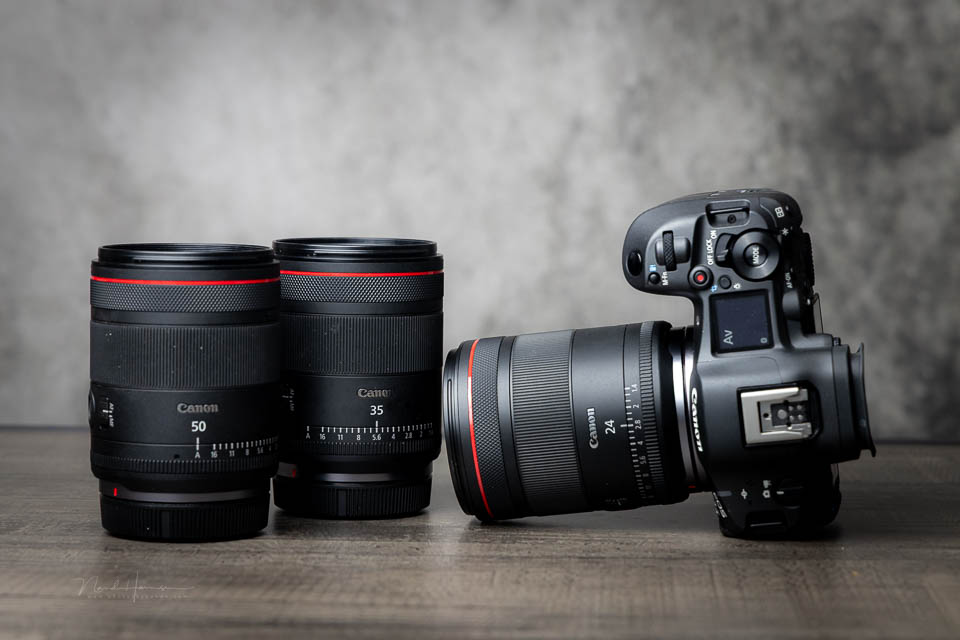
The distinguishing feature of these lenses is the VCM designation, which stands for Voice Coil Motor. This autofocus motor is quiet and fast, which is perfect for video where any sound from the equipment can be distracting.
The uniform appearance
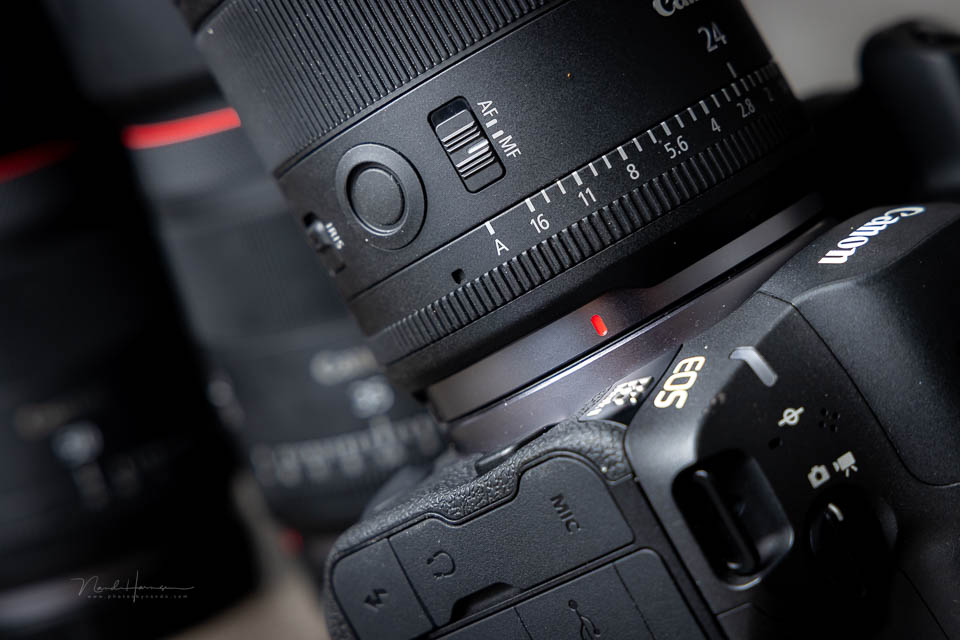
Another distinguishing feature of these lenses is the aperture ring. It is stepless and makes no clicking sounds. You can use a spring-loaded switch to lock this ring to automatic. There is also a programmable button on these lenses.
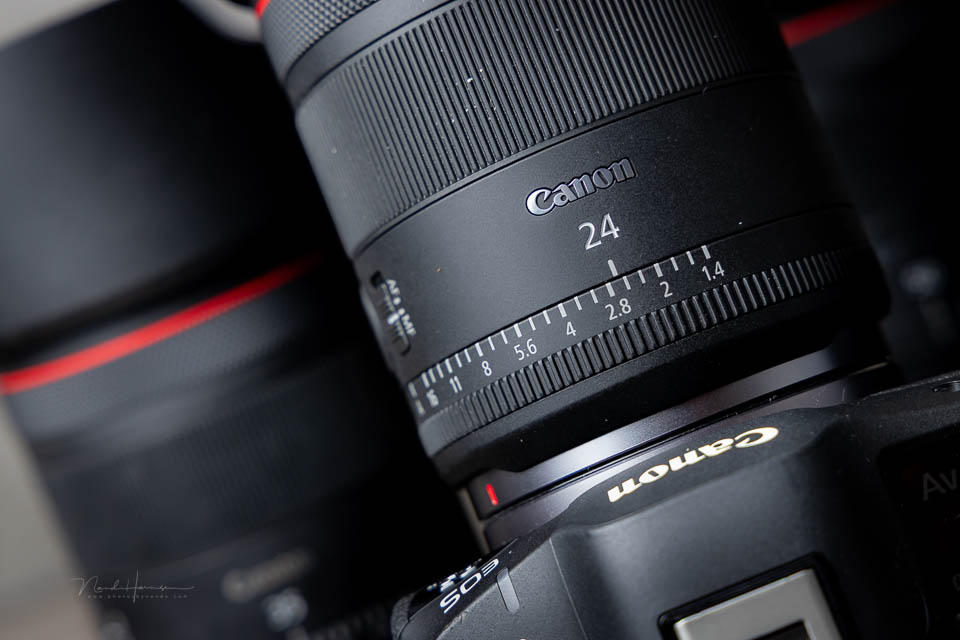
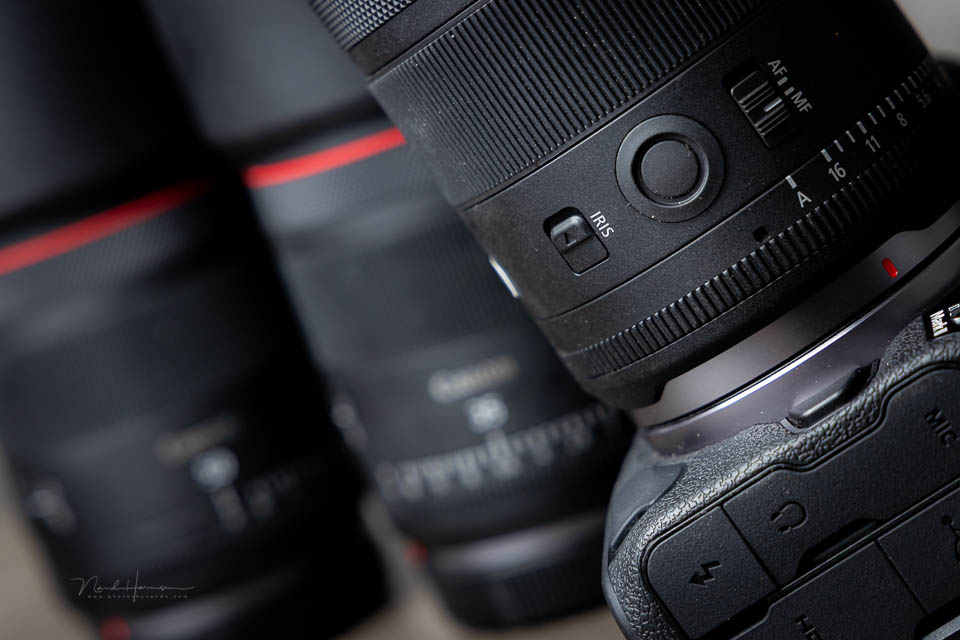
Besides the aperture ring, the lenses have a broad focus ring. There is a switch for choosing between manual and automatic focus. The typical control ring of the RF lenses is also present.
This trio of lenses, with focal lengths of 24mm, 35mm and 50mm, has exactly the same dimensions. This makes it easy for videographers to change lenses on a gimbal. No rebalancing is needed.
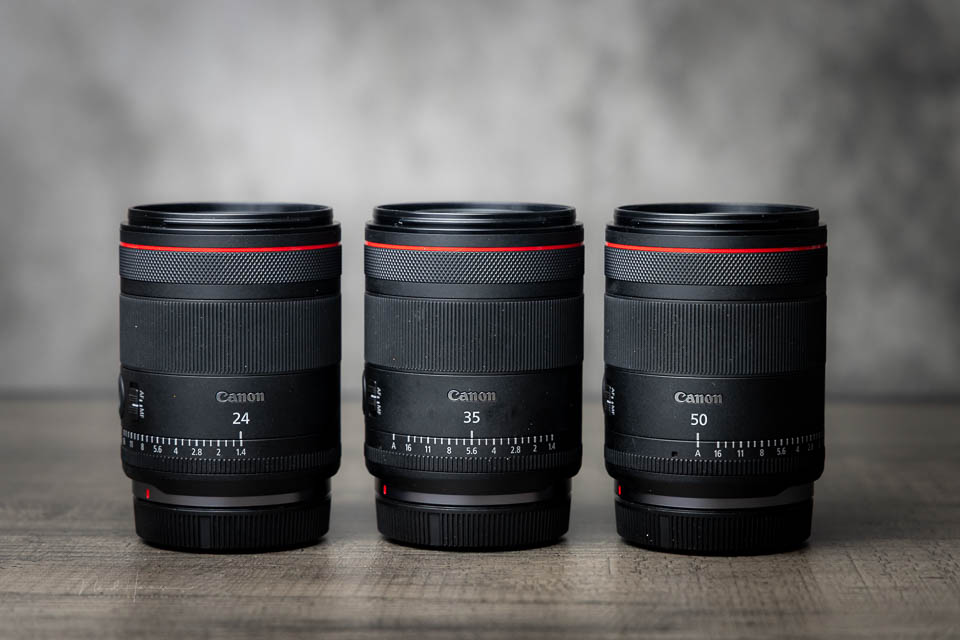
All three lenses have the same 67mm filter size. This is useful if you use filters, such as a variable ND filter for video.
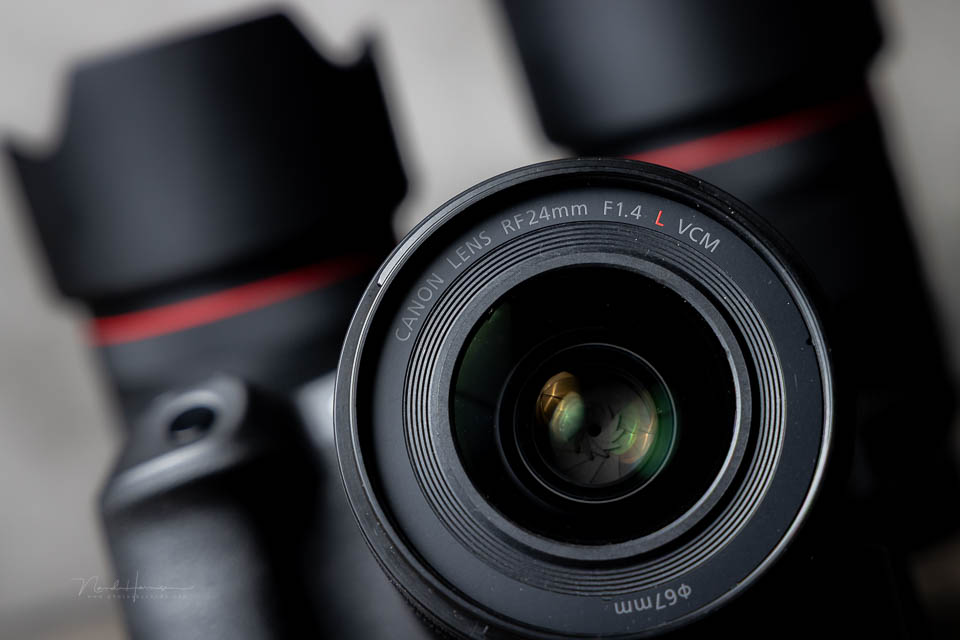
Image correction is essential
It is important to know that these lenses rely heavily on in-camera image correction. Canon therefore advises you to always use this camera setting. When it is disabled, you can see how much correction is needed.
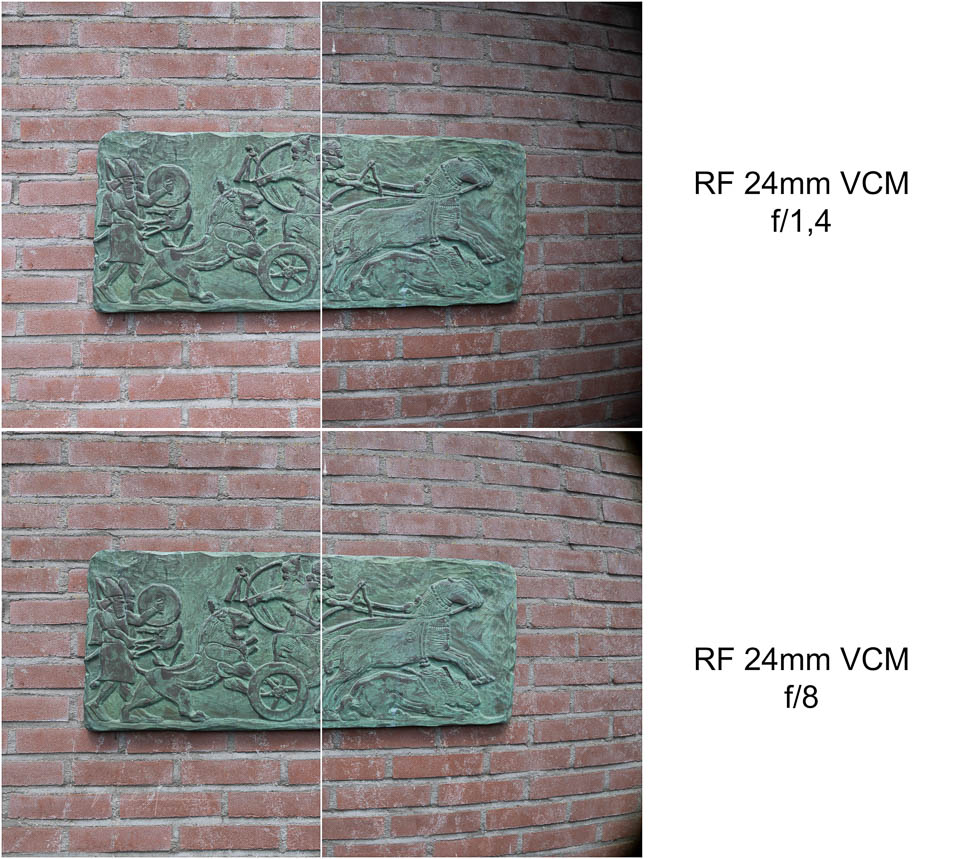
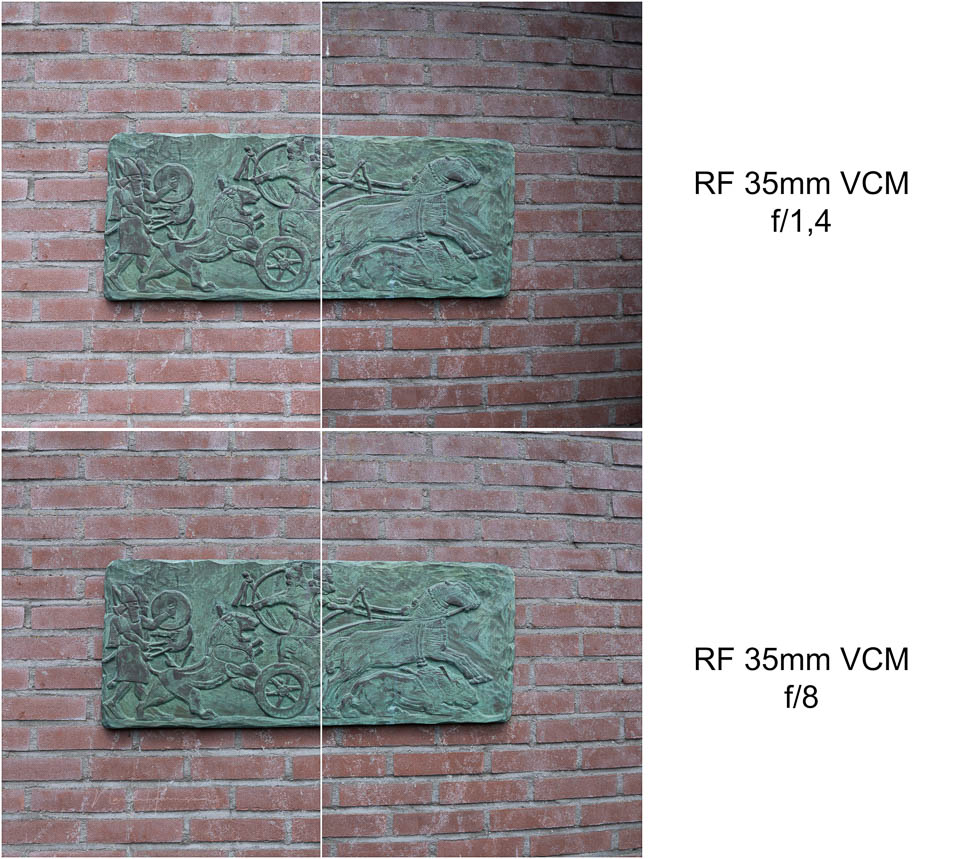
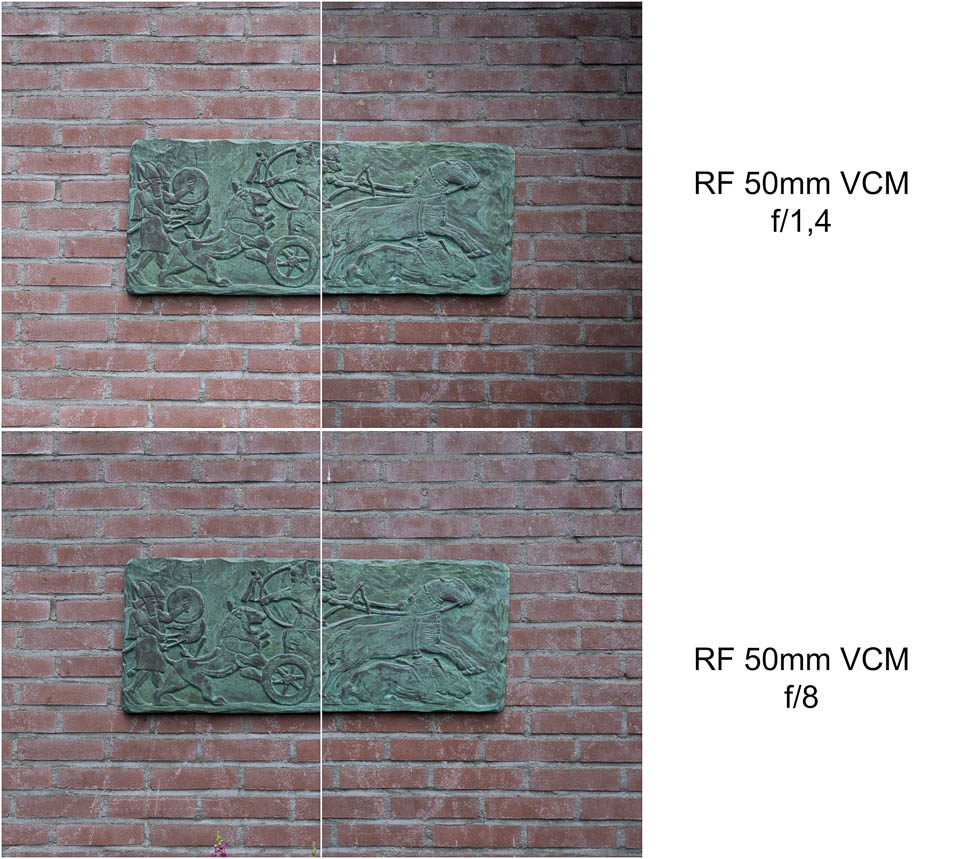
The distortion that is corrected is strongest at the widest aperture. Stopping down improves the image. The RF 24mm f/1,4L VCM has the most extreme distortion of the three lenses. Dark corners are still present at f/8.
Canon assures us that digital correction is more accurate and produces better quality compared with optical correction. The lenses are optimised for higher resolutions, so any loss of quality caused by correction is not noticeable.
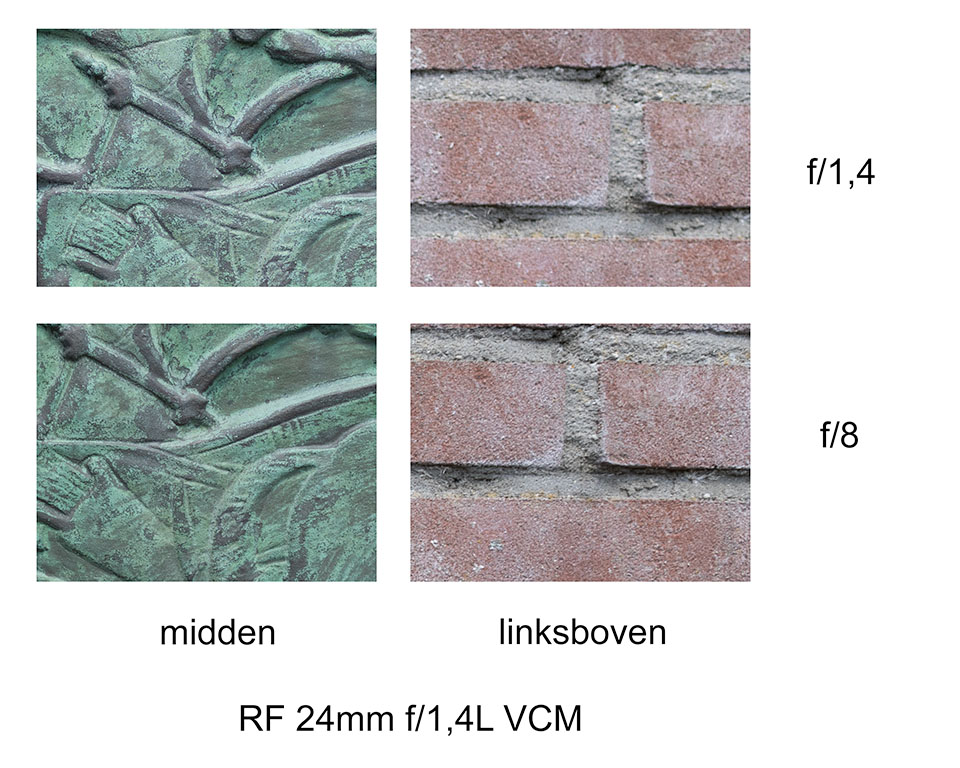
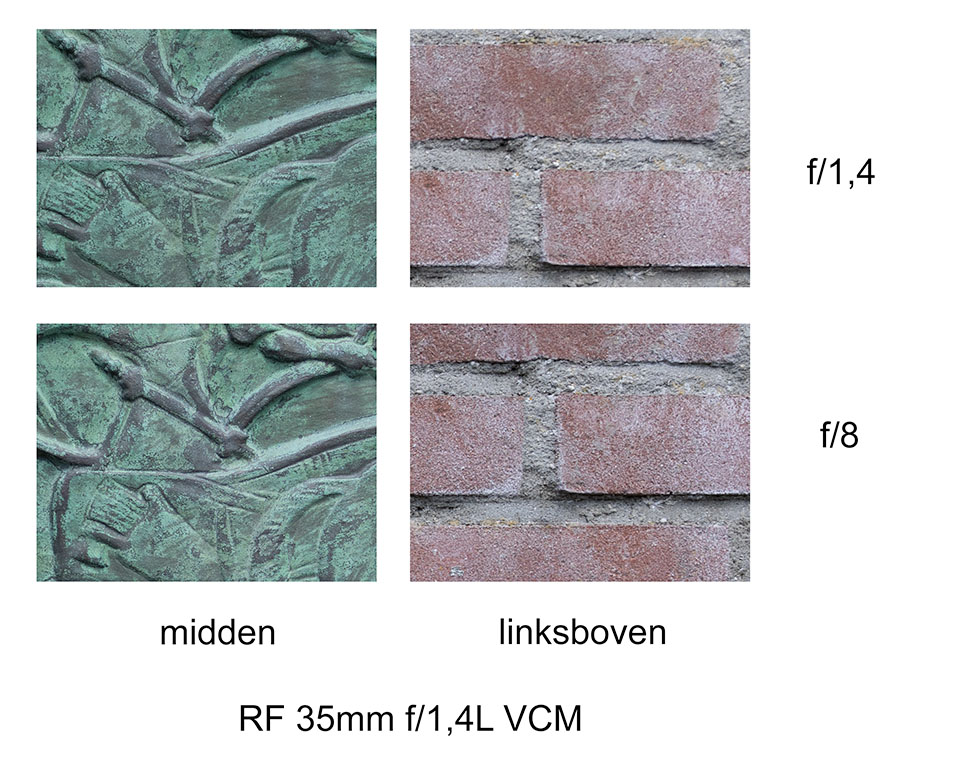
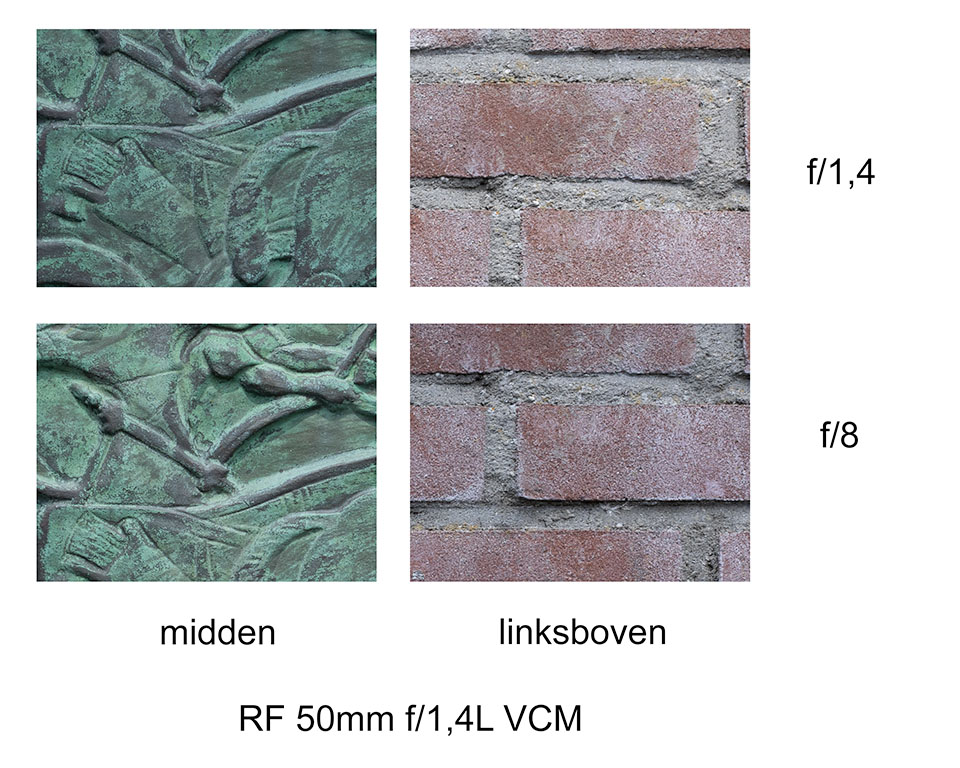
As expected, the centre is very sharp at every aperture. At the widest aperture, the corners show reduced sharpness. This is strongest at 24mm.
Sharpness in the corners increases when you stop down. Despite this, sharpness is more than sufficient even at the widest aperture. There is hardly any sign of oblique coma distortion, partly thanks to the excellent image correction.
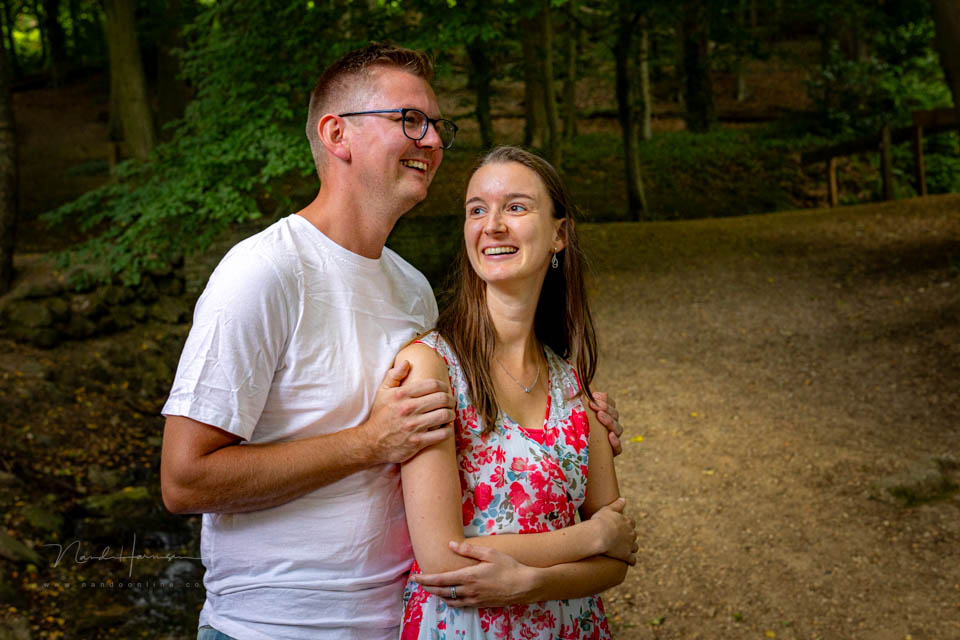
Bokeh and flares
All three lenses have f/1,4 as their widest aperture. This lets in plenty of light. It also gives you the opportunity to achieve a shallow depth of field.
The amount of blur is determined partly by the focal length. The longer the focal length, the shallower the depth of field can be. The distance to the subject also plays a major role, of course.
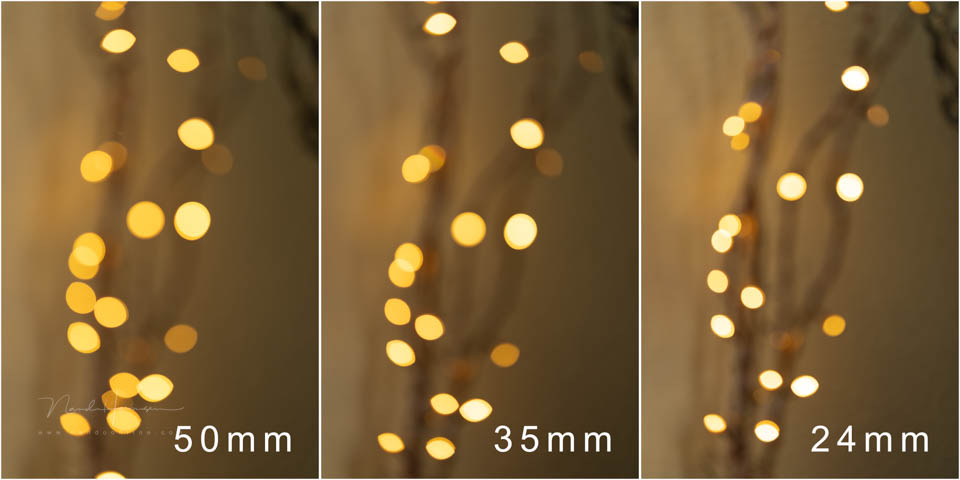
It goes without saying that the blur is considerably less at 24mm. The appearance of the blur is very attractive with all three lenses, though. The bokeh balls are neat circles with no onion-ring effects.
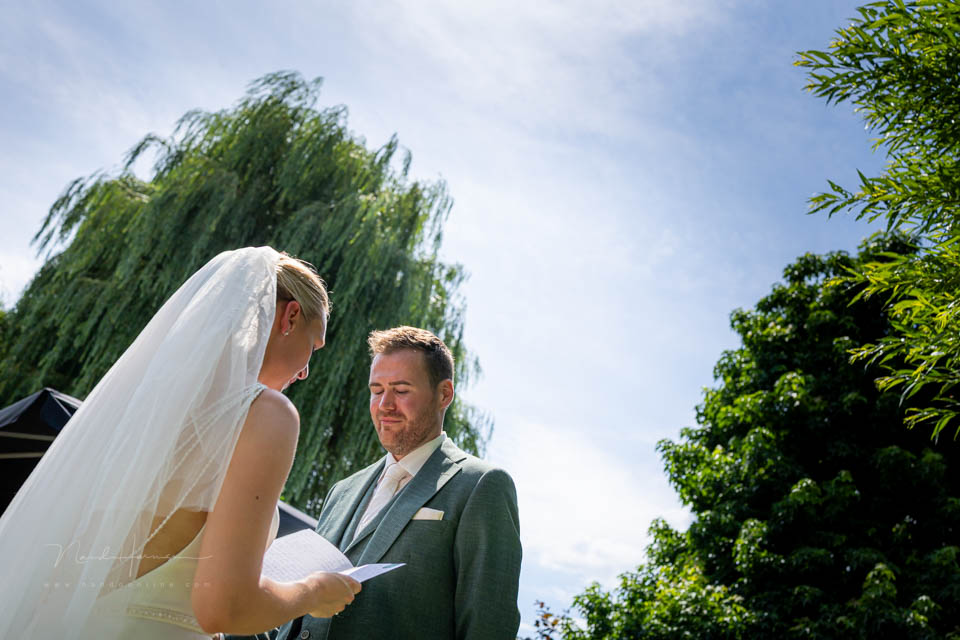
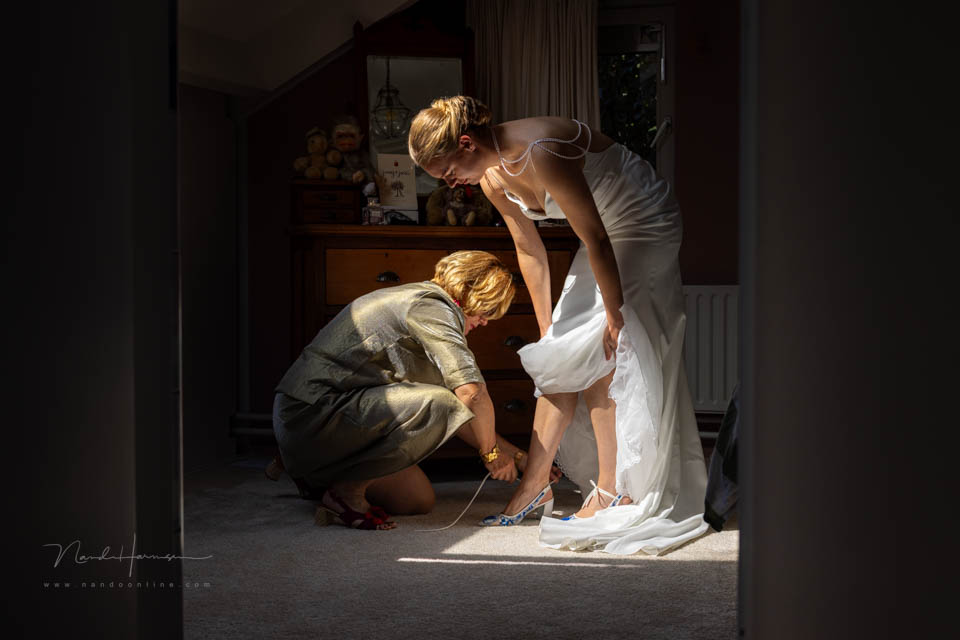
The wedding ceremony I photographed with these lenses took place in the full afternoon sun. None of the photos suffered from flares, despite not using a lens hood. This was, of course, a real-life situation, and I did not seek out extremes to test the susceptibility to flare.
Autofocus
The Voice Coil Motor is completely silent. You cannot hear any sound at all while focusing. As these lenses do not have image stabilisation, you will not be bothered by that sound either. Focusing is particularly fast and accurate.
The lens does not change length while focusing. Because focusing is electronic, the lens must be attached to the camera to work, even when manual focus is selected.
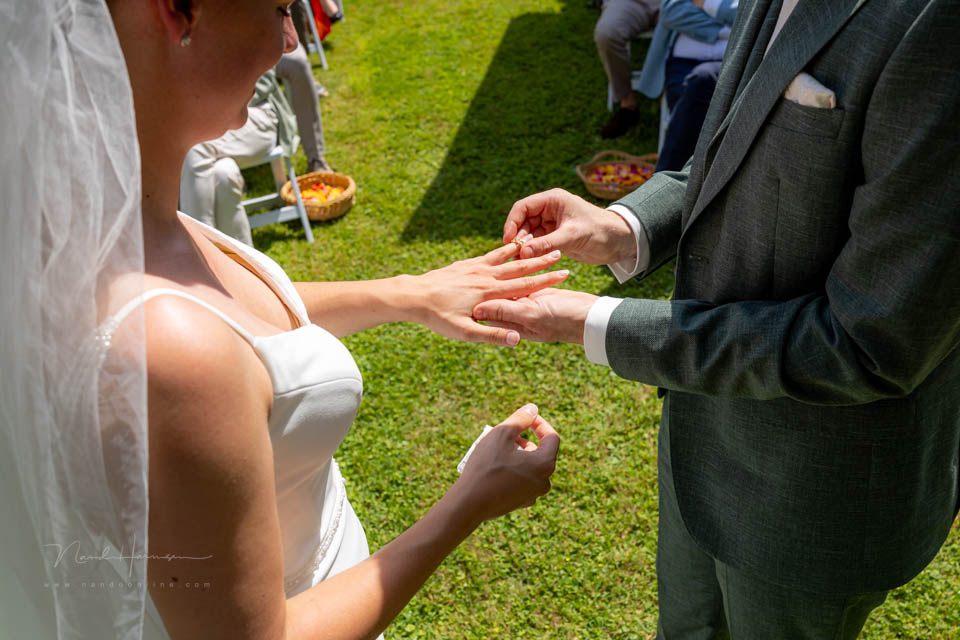
Focus breathing is minimal or completely absent with this range of lenses when in-camera focus breathing correction is enabled. This is of little importance to photographers, of course, but it can be essential for videographers.
Using them for photography
I used this trio of lenses for a wedding and a couples shoot. The compact size and low weight are very welcome, especially on a long wedding day.
The identical appearance of these lenses can sometimes be deceptive. You cannot blindly pick the right lens from your bag by feel. You have to check which focal length you are holding.
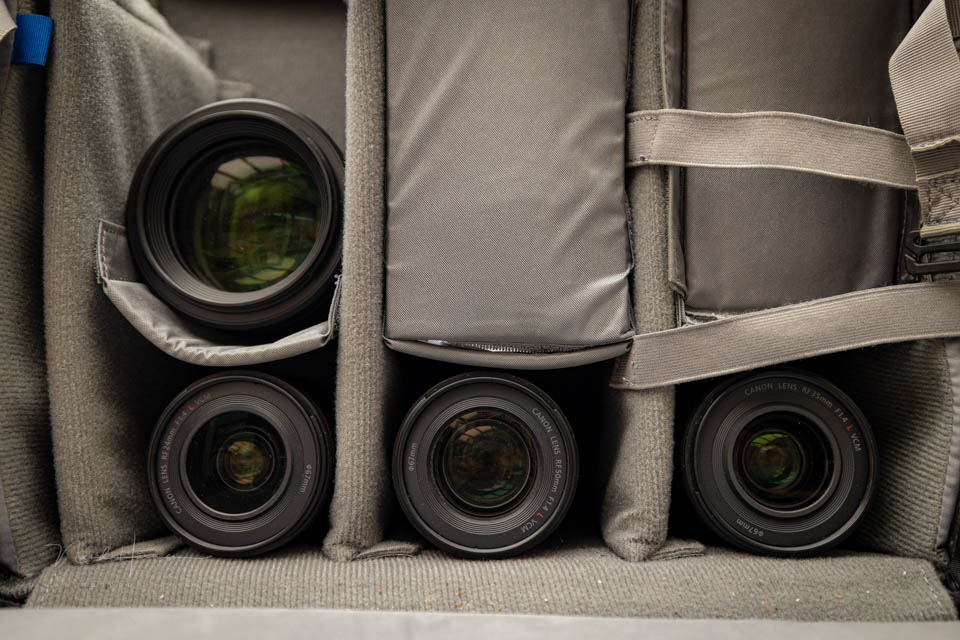
Alternating a lens with an aperture ring and one without can be confusing. In that case, it is better to set the aperture ring to automatic and set the aperture as usual with the scroll wheel.

If you use only VCM lenses, the aperture ring is pleasant to use. The lack of clicks is useful for video, but for photography the clicks would provide useful feedback.
Astrophotography
The RF 24mm f/1,4L VCM lens is an attractive option for astrophotography. Its light-gathering ability can be a major advantage.
By stacking multiple photos, it is possible to reduce noise in a star photo. This is a widely used technique for this type of photography. Star trails are also created in this way.
Image correction can, however, have undesirable effects when stacking photos and cause banding. If you encounter this problem, you need to stack without image correction. That could be very disadvantageous with these lenses.
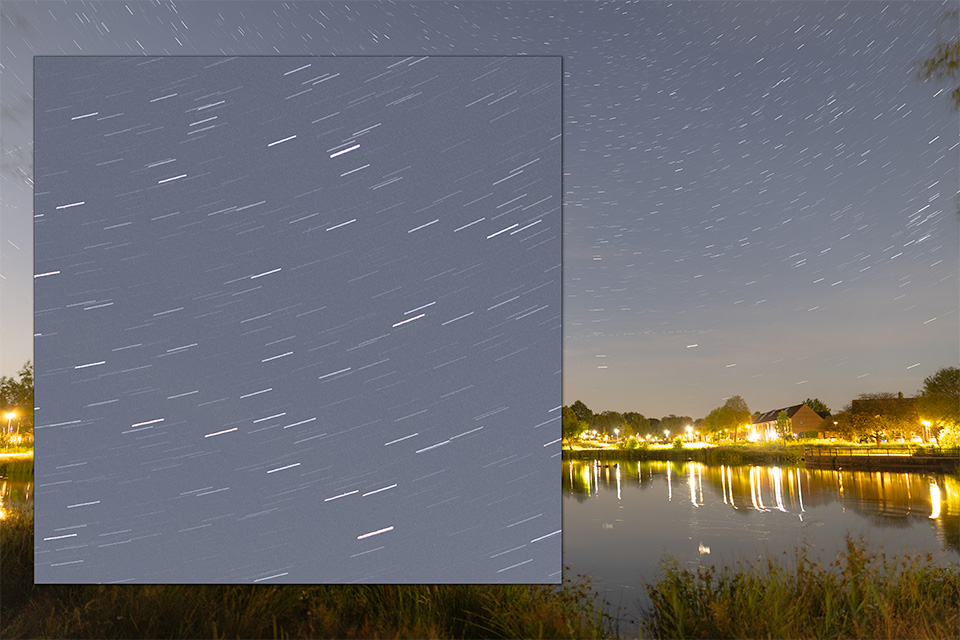
For this test, I took 74 photos with the RF 24mm. I stacked them with image correction enabled. It is striking how minimal the banding effect is.
Stacking in the familiar StarStaX programme does produce a minimal amount of banding. In Photoshop, it is completely absent. This makes the RF 24mm f/1,4L VCM well suited to this type of photography.

Conclusion
The design makes the lenses in the VCM range very pleasant to use. The identical dimensions and filter size are a well-thought-out concept. The fact that you cannot recognise the lenses blindly and by feel is simply a matter of getting used to them.
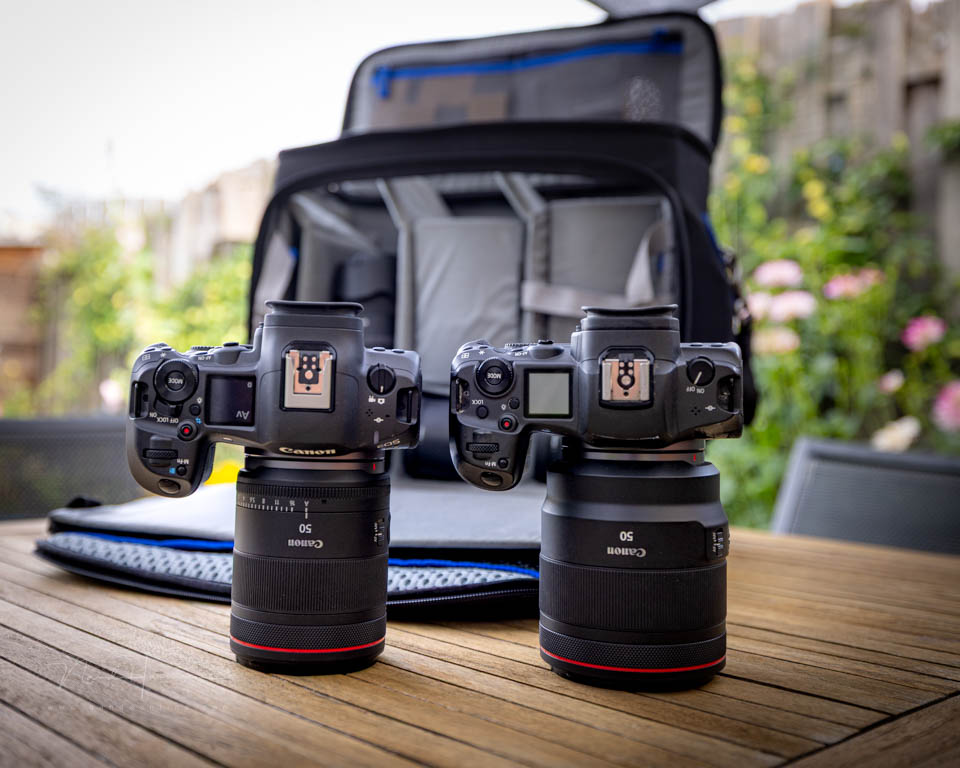
The aperture ring is a useful addition to these lenses. If only it were fully usable with all Canon cameras. On cameras launched before 2025, the aperture ring can only be used for video. It does not work for photography.
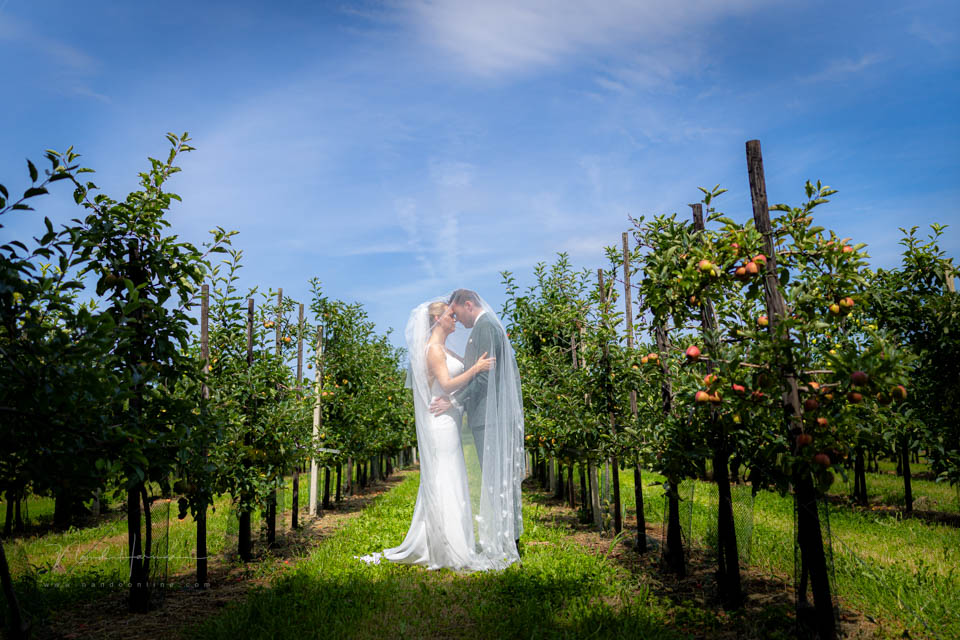
The VCM lenses have many positive points. This makes them a good choice for most photographers. The price of these three lenses is between 1620 and 1770 euros, depending on the focal length chosen.
What I like about the VCM lenses
- Compact and lightweight, around half a kilogram
- All three lenses have the same size and weight
- The same small filter size
- In-camera focus breathing correction
- Aperture ring without clicks
- Programmable button on the lens
- Good image quality after in-camera correction
- Image correction produces little or no banding when stacking
- Resistant to moisture and dust
- Competitive price
What I do not like about the VCM lenses
- Aperture ring only works on newer cameras for photography
- Completely dependent on in-camera image correction
- No image stabilisation
- No switch to make the aperture clickable
- The identical shape and size make it impossible to distinguish them blindly and by feel
Thanks to Canon Nederland for making this trio of VCM lenses available.
About the author
Nando Harmsen has been photographing for more than 40 years. He specialises in wedding photography and landscape photography. Nando also gives talks, workshops, masterclasses and photo trips, and regularly reviews new and interesting equipment.
You might also like
-
 Review: Canon RF 24mm f/1.8 macro IS STM
by Nando Harmsen
-
 Review: the Canon RF 50mm f/1.8 STM
by Nando Harmsen
-
 Review: Canon RF 28mm f/2.8 STM
by Nando Harmsen
-
 Review: Sony FE 16-25mm and FE 24-50mm f/2.8 G lenses
by Nando Harmsen
-
 Review: Canon EOS R5
by Nando Harmsen
-
 Review: Canon EOS R50 mirrorless camera
by Nando Harmsen
0 comments
Be the first to share what you think!
Have your say
Please note: Articles older than a week can only be commented on by signed-in visitors.Would you still like to comment? sign in or create a free account.
Become a better photographer every week
A practical photography tip in your inbox every week.
38,982 photography enthusiasts already receive the tips! More about the weekly mail. Or keep up to date via  Facebook.

Elja Trum
Photofacts; everything to do with photography!
Would you like to take better photos and keep up with what is happening in photography? Photofacts publishes articles that teach you something about photography — from a product announcement to a practical shooting tip or a look at a website. Photofacts covers photography every day and is a hobby project of Elja Trum's that got out of hand. The articles are written by a team of volunteer authors. If you would enjoy writing one or more articles for Photofacts, do get in touch.More about PhotofactsPhotofacts is made possible in part by
