

Review: Sony Xperia 1 IV smartphone for photography
Friday 30 September 2022, 14:07 by Nando Harmsen | 5,003 views | 0 commentsThis article was translated from Dutch with the help of AI. Read the original.
Sony Nederland sent me the Sony Xperia 1 IV smartphone for a review. I started taking photographs with this new smartphone to see what it is like to work as a photographer this way. You can read all about it in this review.
First of all, it is useful to put the Sony Xperia 1 IV into perspective. There are a large number of smartphones, such as the previously reviewed Xperia 10 IV and Xperia 5 III.
The simplest way to do this is by looking at the price. The recommended retail price is 1,399 euros, although there are offers bringing it down to around 1,200 euros.
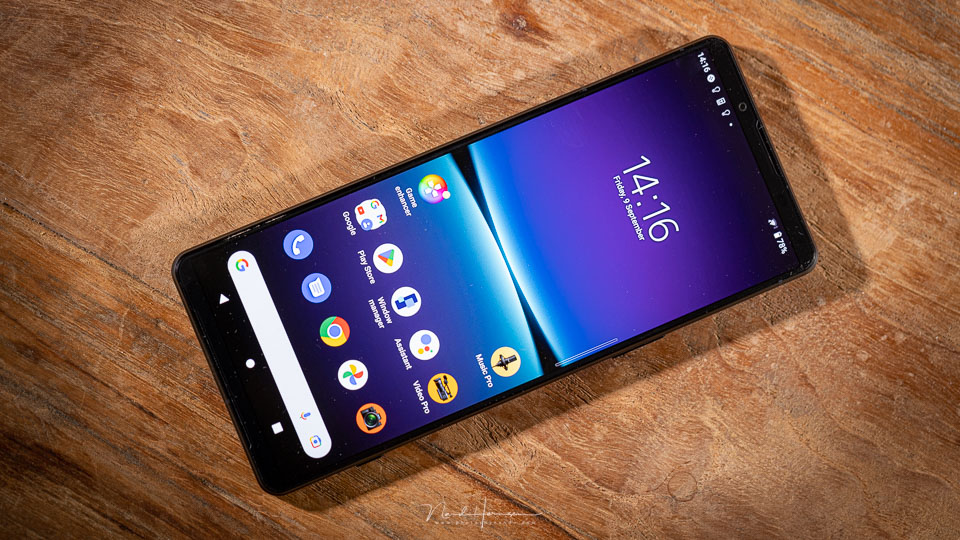
This makes the Xperia 1 IV a smartphone from the higher segment. You can place it above the Xperia 5 III. As we will see in this review, the two models have many similarities.
Of course, this review mainly looks at its qualities as a camera for photography.
Some specifications
- Dimensions 165 x 71 x 8.2 mm, 185 grams, water-resistant
- Corning Gorilla Glass Victus screen
- 5000 mAh battery
- Three lenses, 16mm f/2.2, 24mm f/1.7 and 85-125mm f/2.3-2.8 optical zoom
- Hybrid zoom up to 15.6x (compared with 24mm) and AI super-resolution zoom
- All sensors are 12 megapixels, with different sensor sizes
- Burst shooting up to 20 frames per second (in JPEG)
- Eye AF (people and animals) with subject tracking on all lenses
- 16.5 cm (6.5 inch) 21:9 4K HDR OLED display with 120 fps refresh rate
- Camera interface based on Sony mirrorless cameras
- 256 GB internal memory, expandable by up to 1 TB with micro SDXD
- 4K HDR video up to 120 fps with full AF functionality
- 3.5mm headphone socket and USB-C connection
- Dual SIM (nano-SIM and eSIM
- Android 12 operating system and Snapdragon 8 Gen 1 processor
The Xperia 1 IV is slightly heavier and larger than the Xperia 5 III. The lenses and sensors are the same, except for the telephoto lens. More on that later. The front-facing camera is 12 megapixels instead of 8 megapixels.
Unlike the Xperia 5 III, the Xperia 1 IV can shoot up to 20 frames per second with all lenses. This is no longer limited to the 24mm camera. Otherwise, the two cameras are very similar, including in terms of their features.
Appearance
The Xperia 1 IV is long and narrow. There are few physical buttons, only a shutter button for the camera, the volume button and a button with a fingerprint scanner. Everything is on the right-hand side of the device.
The 3.5mm headphone socket is at the top, while at the bottom you find the USB-C connector and the slot for the SIM card and a memory card. The second SIM is an e-SIM, so there is no physical card.
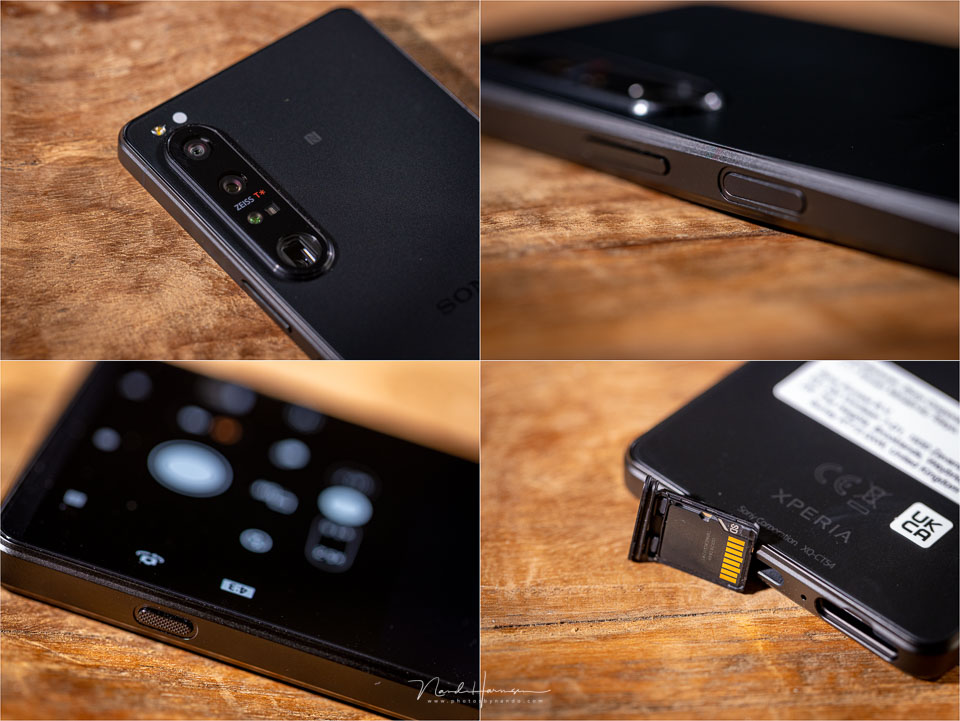
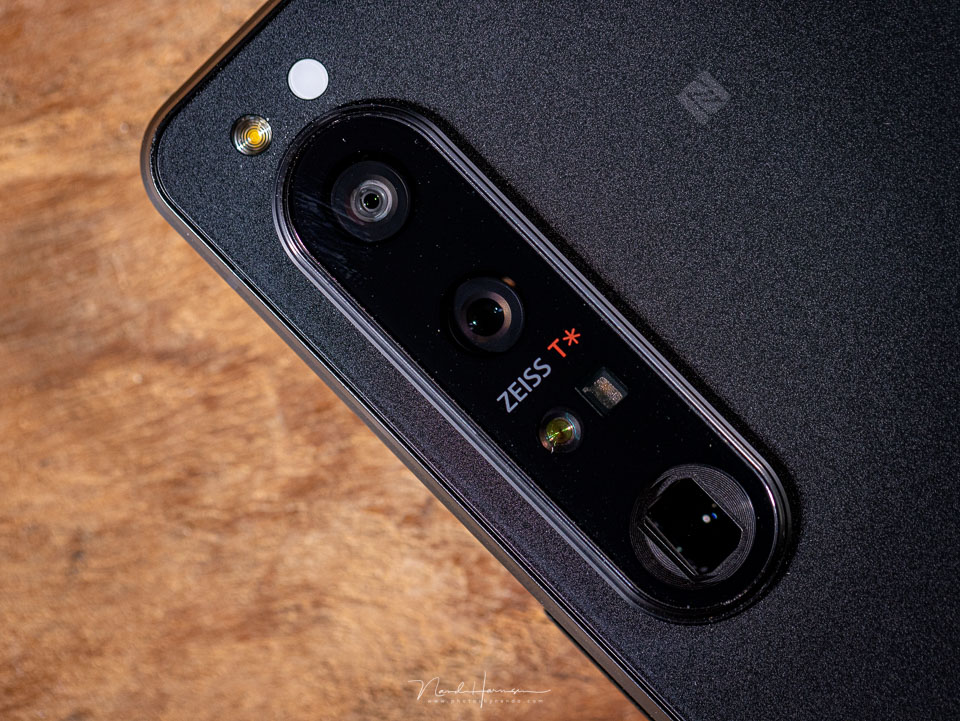
The camera module on the back is elongated, with the three lenses positioned below one another. There is also an LED that can act as a torch and flash.
The glass on the camera module is naturally prone to fingerprints. It is sensible to wipe the glass clean with a cloth before taking photographs.
A fingerprint can significantly reduce image quality. Of course, this applies to all smartphones.
Using it for photography
Despite its considerable length of 16.5 cm, the Xperia 1 IV is narrow enough to hold comfortably. This makes normal smartphone use easy.
For photography, turn the smartphone 90 degrees so that the buttons are on top.

You can zoom with the volume button, but you have to be very careful not to put your fingers in front of the lens. You will obviously see this straight away, but you can avoid it by simply using the touchscreen.
You can then quickly switch between the 16mm, 24mm and 85-125mm lenses. Zooming in or out does not automatically switch between the different lenses.
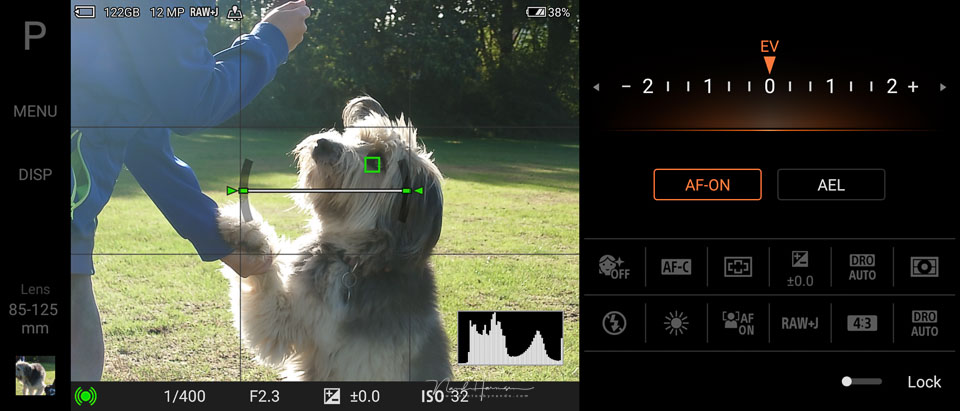
If you use the dedicated camera controls, you also need the right-hand side of the screen. This is where you find the more advanced controls.
I noticed that I regularly had to take the smartphone in my other hand to change the settings.
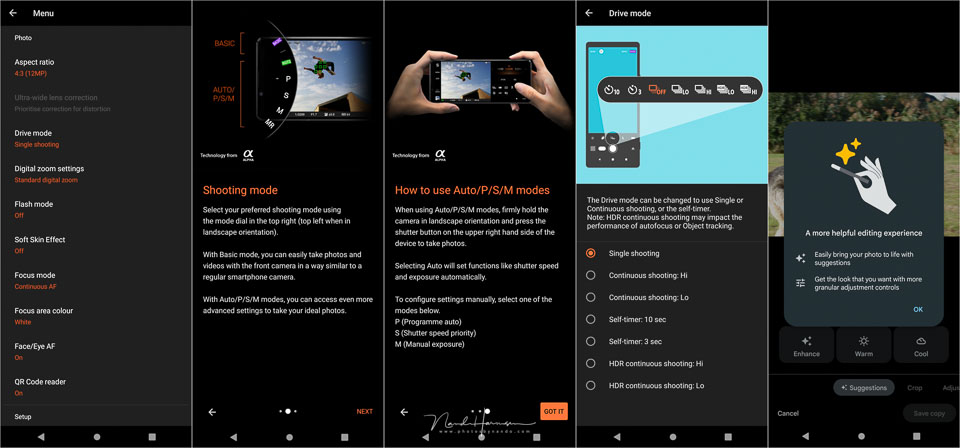
Three lenses, including a zoom lens
The Xperia 1 IV has a genuine zoom lens built in. It zooms between focal lengths of 85mm and 125mm, converted to full frame.
The other two lenses have focal lengths of 24mm and 16mm, again converted to full frame. The actual focal lengths are 2.67mm, 5.11mm and 10.52-14.5mm.
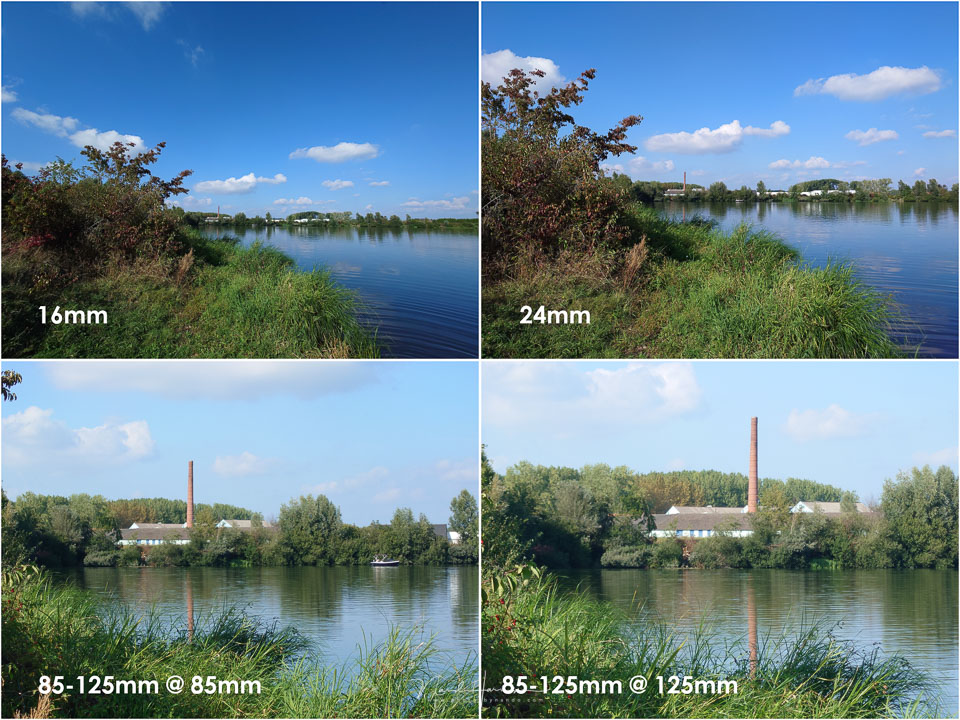
The angle of view is achieved not only through a different focal length, but also through a different sensor size. Using a smaller sensor automatically gives you a greater crop factor, making longer focal lengths easier to achieve.
The 24mm main camera has a 1/1.7-inch sensor, the 16mm camera has a 1/2.5-inch sensor, and the camera with the zoom lens has a 1/3.5-inch sensor.
This means that all three cameras also have different image quality and performance. This is noticeable in the ISO range and even in the maximum shutter speeds that can be used.
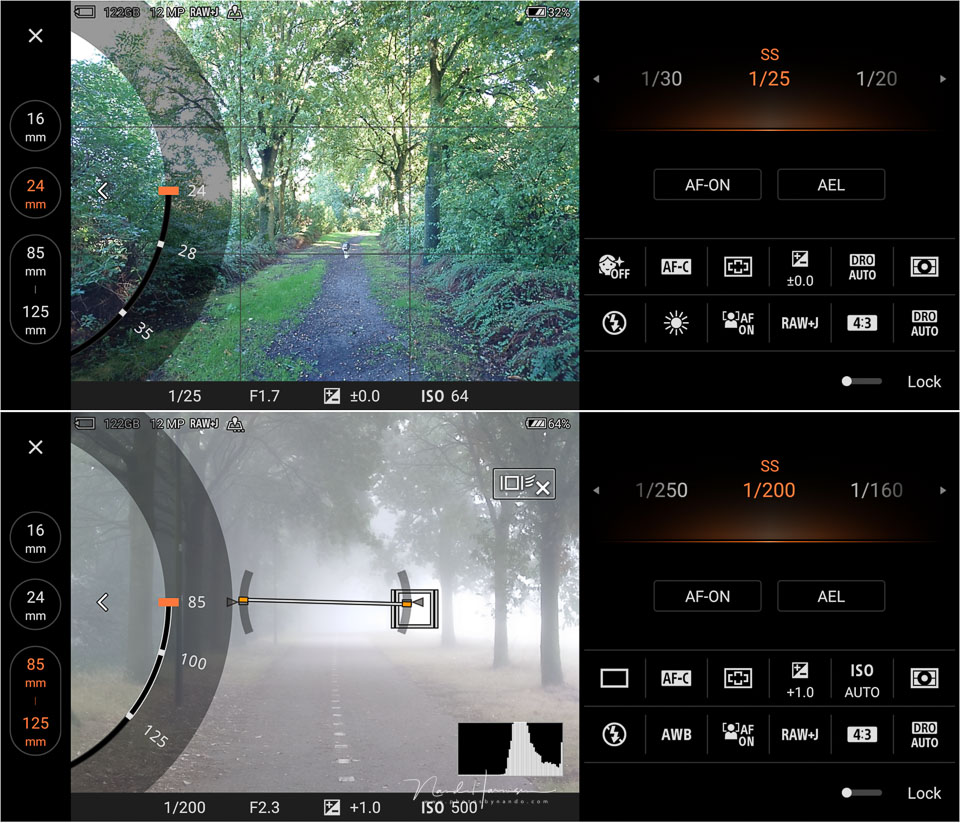
The focal lengths on the Xperia 1 IV have not been chosen very conveniently. I noticed this with the Xperia 5 III as well, but the step from the normal focal length to the telephoto lens is now even larger. This means that you immediately enter digital zoom when 24mm is too wide and 85mm is too long.
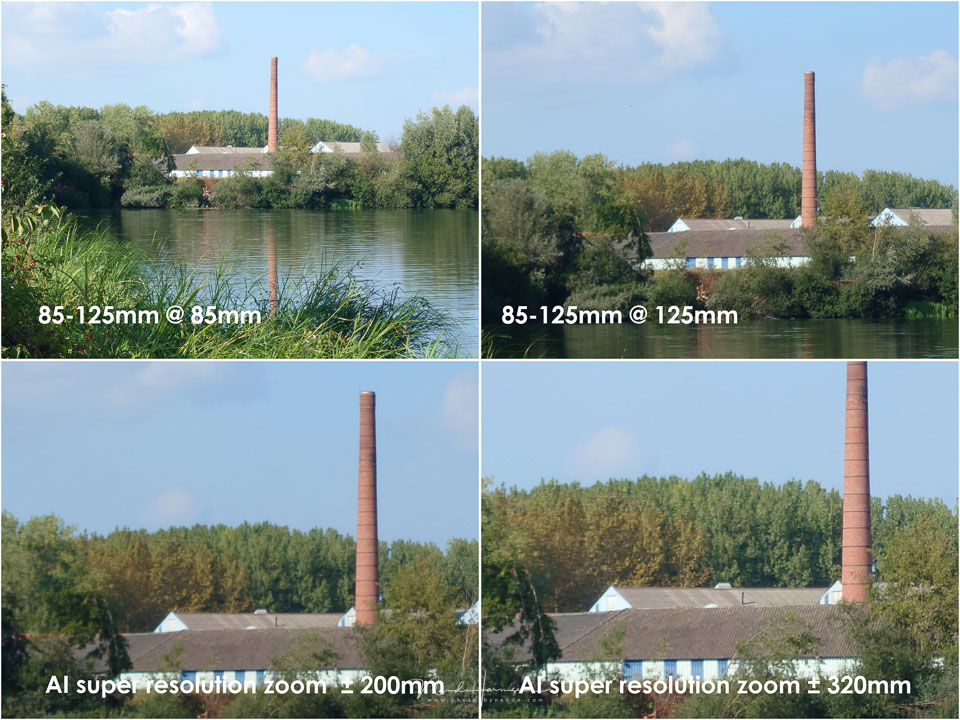
Digital zoom can retain the resolution. In other words, although a crop is made, you still retain the 12-megapixel resolution.
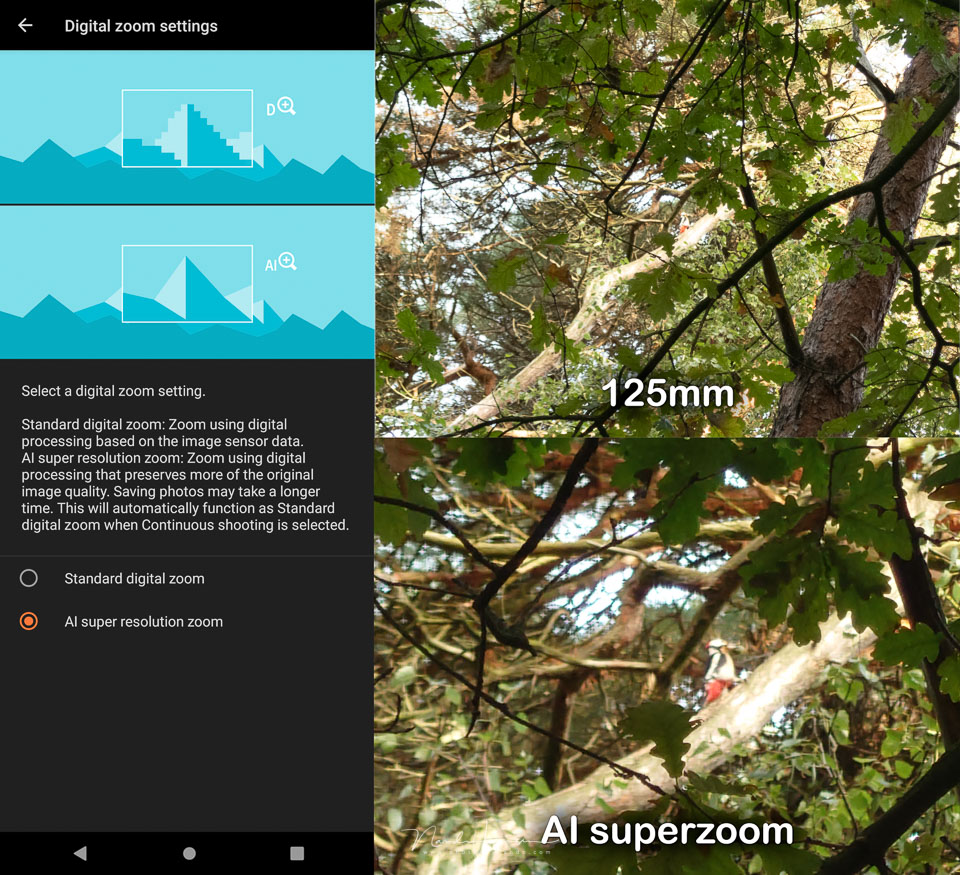
The Xperia 1 IV uses AI super-resolution zoom for this, if you enable it, to keep image quality as high as possible. Despite this, you still notice a considerable loss of detail.
To be precise, you can zoom in as much as 15.6x based on the 24mm focal length. This produces 375mm. That is three times the maximum focal length of your 85-125mm lens.
You mainly notice the loss of quality from the AI super-resolution zoom when zooming in extremely far. Although you have 3x digital zoom available at a focal length of 125mm, it is practically unusable.
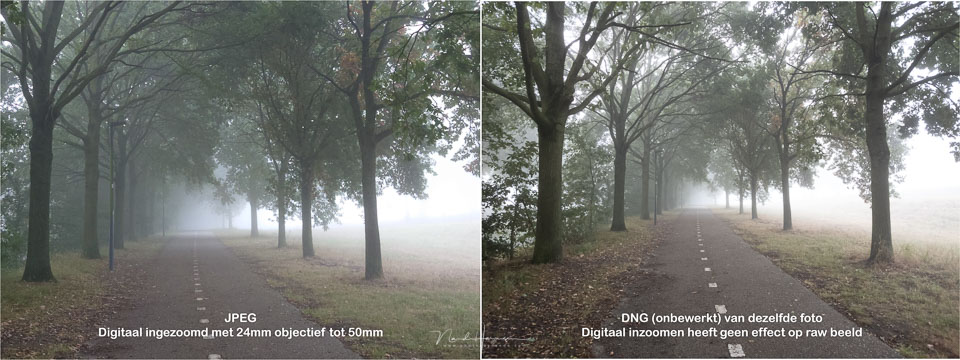
It may seem attractive to use this function because the term AI, or Artificial Intelligence, inspires confidence. However, it is best to leave it alone. If you shoot in DNG, you cannot use digital zoom anyway.
Shooting in RAW or JPEG
With the Sony Xperia 5 III, I noticed that the image quality of the DNG file was not very good. I was therefore curious whether this would be better with the Xperia 1 IV.
For this reason, I saved almost all photographs as both JPEG and DNG so I could make a proper comparison. Below is a direct comparison.
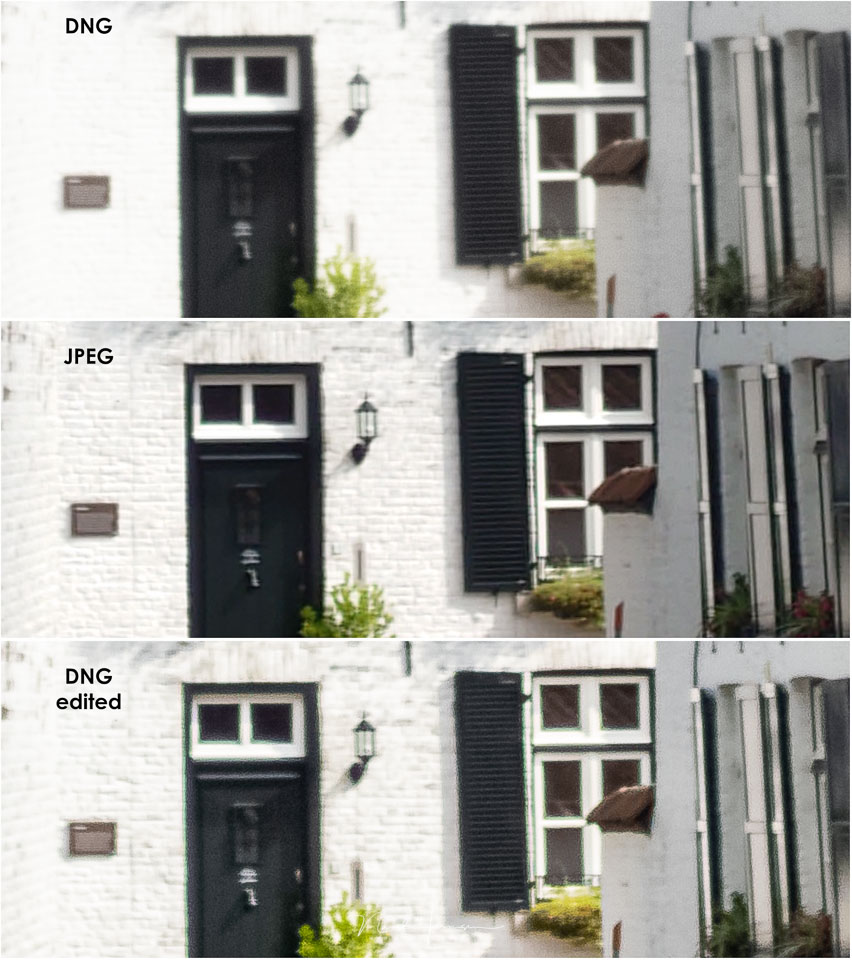
The quality of the unedited DNG file is very disappointing. It is very soft, smeared and even feels out of focus. It takes aggressive sharpening to bring out detail in the image.
A DNG file does of course provide more dynamic range, but in the end the JPEG file from the smartphone seems to produce better results than an edited DNG file.
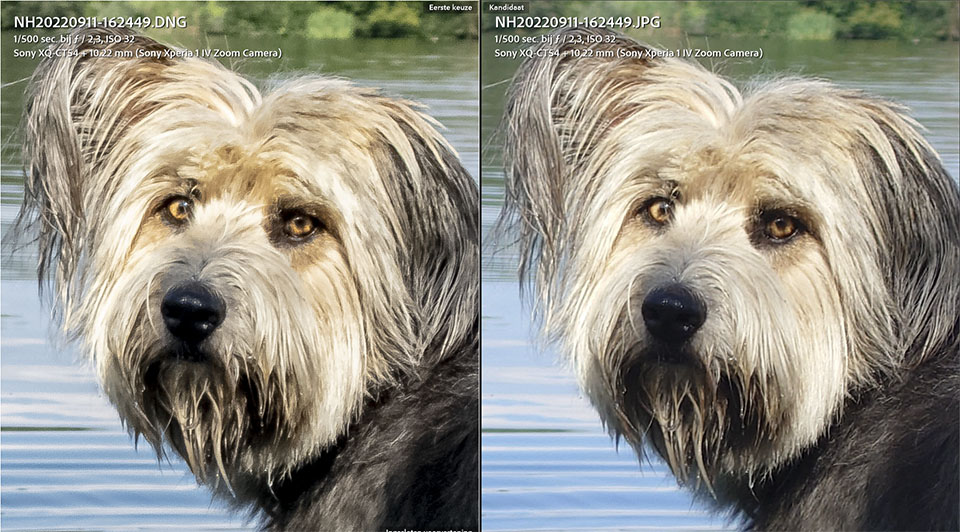
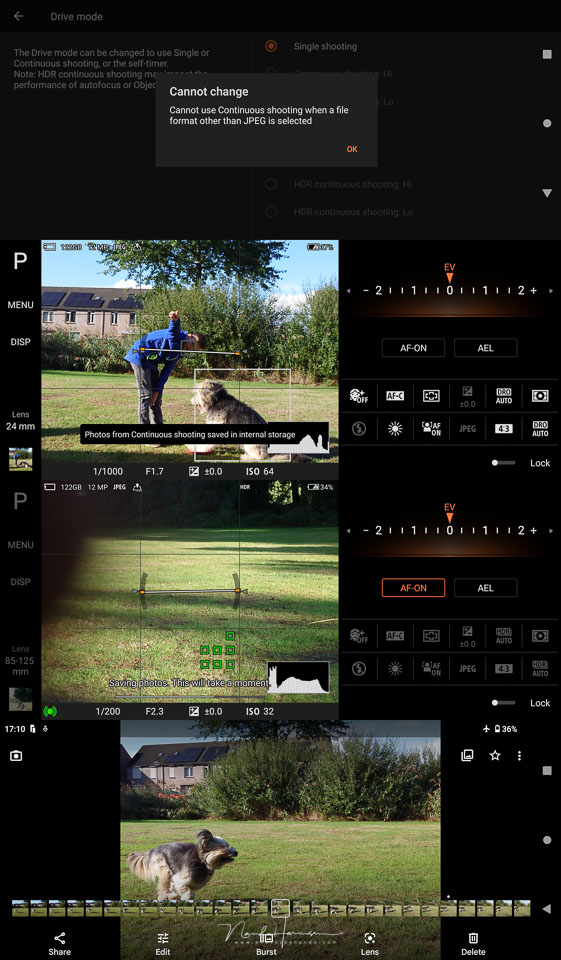
With the DNG file, it is also not possible to use the AI zoom function, among other things. You cannot use the HDR function, and you cannot use high-speed burst shooting. For all these functions, the smartphone must be set to JPEG format.
Autofocus features and action photography
Sony has put software in the Xperia 1 IV that is similar to, or perhaps the same as, the software in its Alpha mirrorless camera range. This makes eye AF available for people and animals, along with AF tracking that can follow every movement.
Add the high-speed shooting rate of 20 frames per second, and you have almost a real action camera.
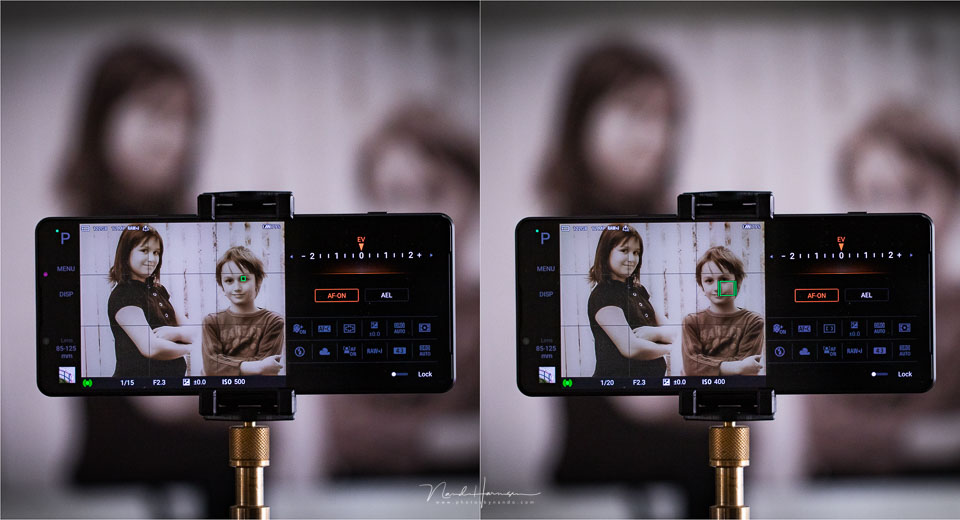
The eye AF works well. In the screenshot earlier in the article, you can see how the autofocus found our dog Bruc's eye. Naturally, it works with people too.
The Xperia 1 IV performs very well here, and also manages to keep focus during action photography.
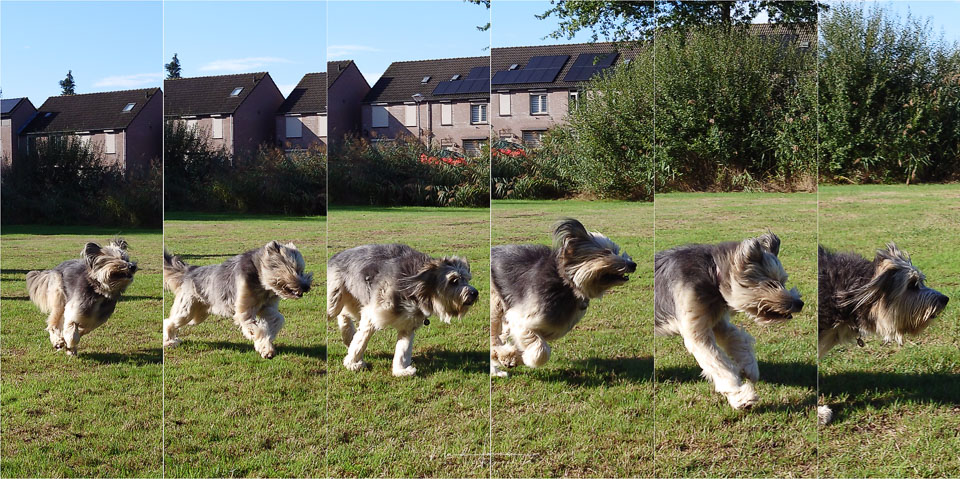
There is one limitation for action photography. You must set the smartphone to JPEG format to make burst shooting available. It does not work in DNG.
If the dynamic range of the scene is too large, it is also possible to shoot bursts in HDR. This does mean that the smartphone may lose some speed.
Dynamic range, ISO and noise
You cannot expect the small 1/1.7-inch, 1/2.5-inch and 1/3.5-inch sensors to perform as well for noise and dynamic range as larger APS-C or full-frame sensors.
A lot of software processing is applied to the images to make them as good as possible.
I carried out a simple test to see how the three cameras perform. I took DNG photographs at different ISO values, but also deliberately underexposed them to see how brightening dark photographs affects noise performance.
Because these are three different cameras, it is worth remembering that the same ISO range is not available for every camera. For the 16mm camera, you have ISO 64 to ISO 3,200.
For the 24mm camera, the ISO range runs from ISO 64 to ISO 6,400. If you use the 85-125mm zoom camera, the range runs from ISO 32 to ISO 1,600. The maximum shutter speed also varies between cameras.
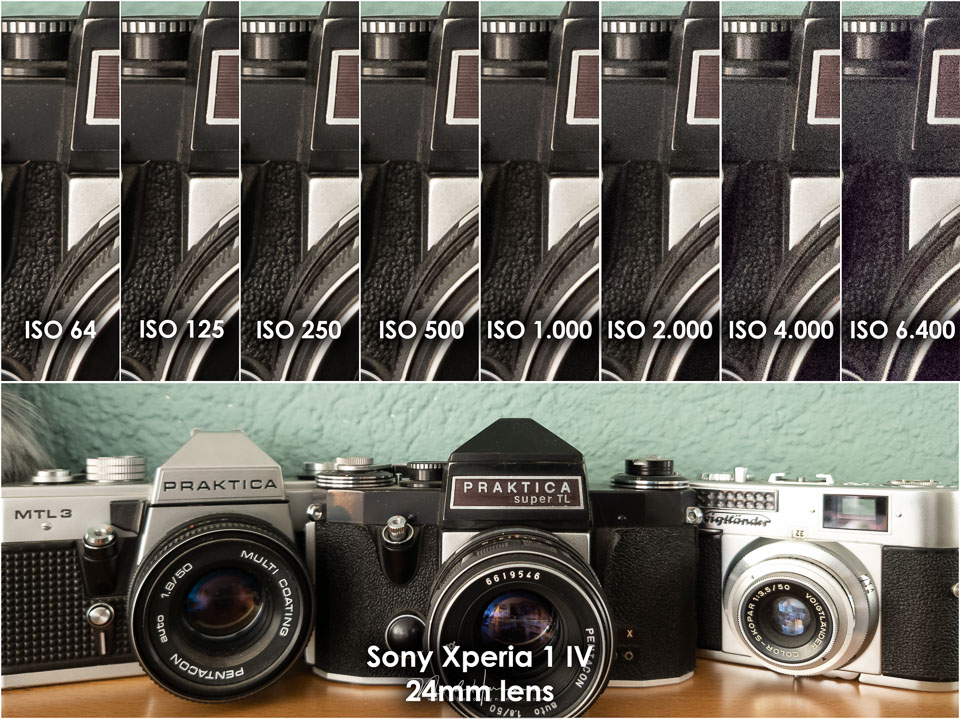
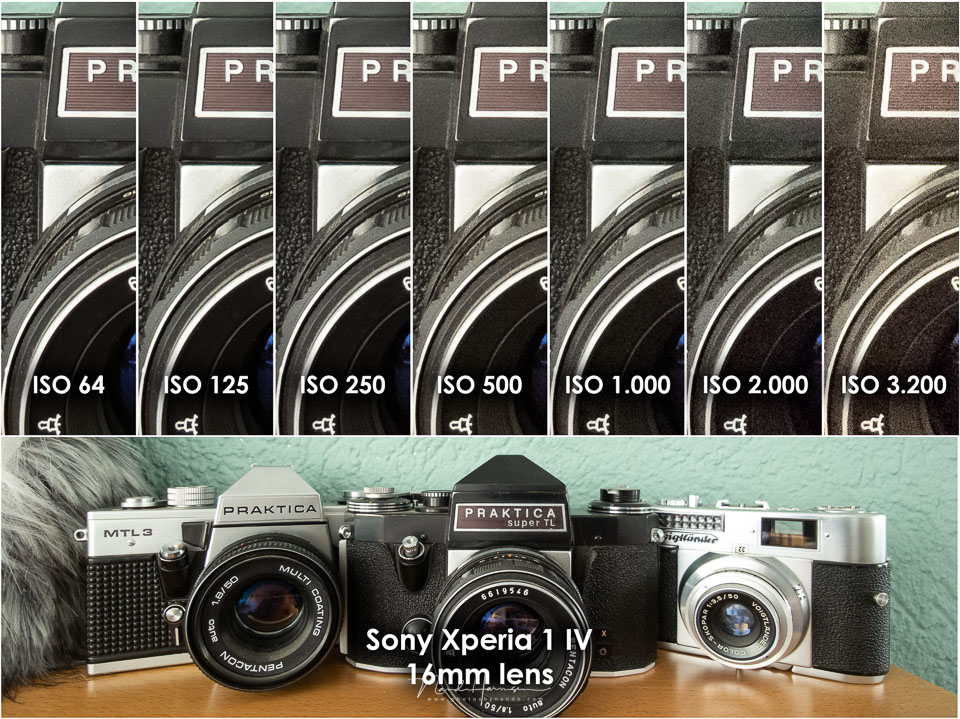
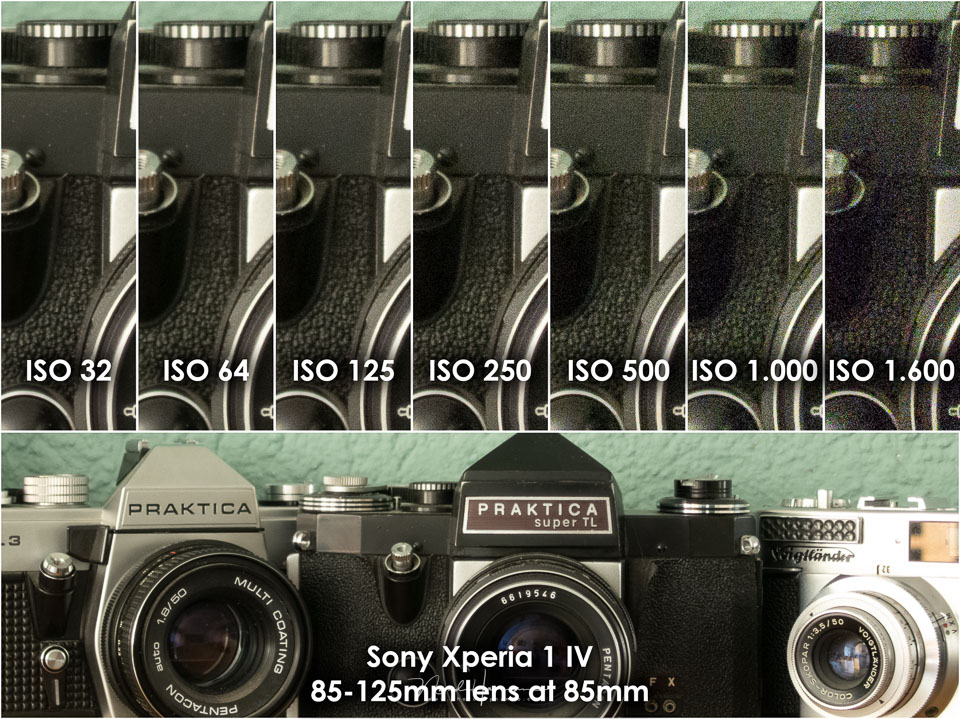
To see how the cameras perform when brightening dark areas, I took photographs that were deliberately underexposed.
From the series of underexposed photographs, made from -1 EV to -5 EV, I have shown only the photograph where the limit of what is possible was reached. Naturally, I did this for each camera separately.
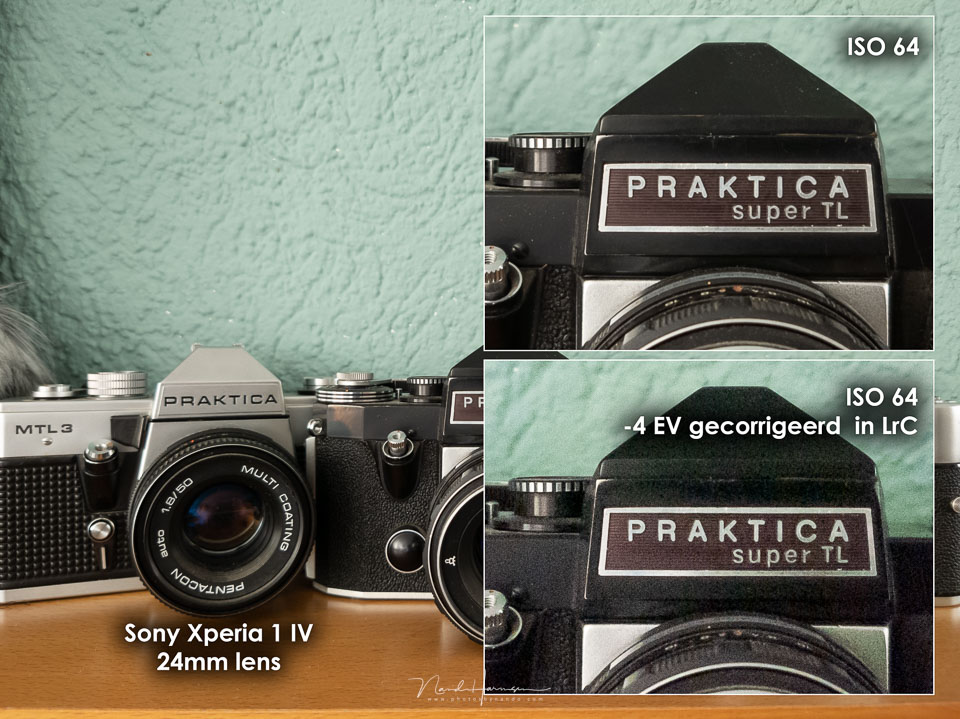
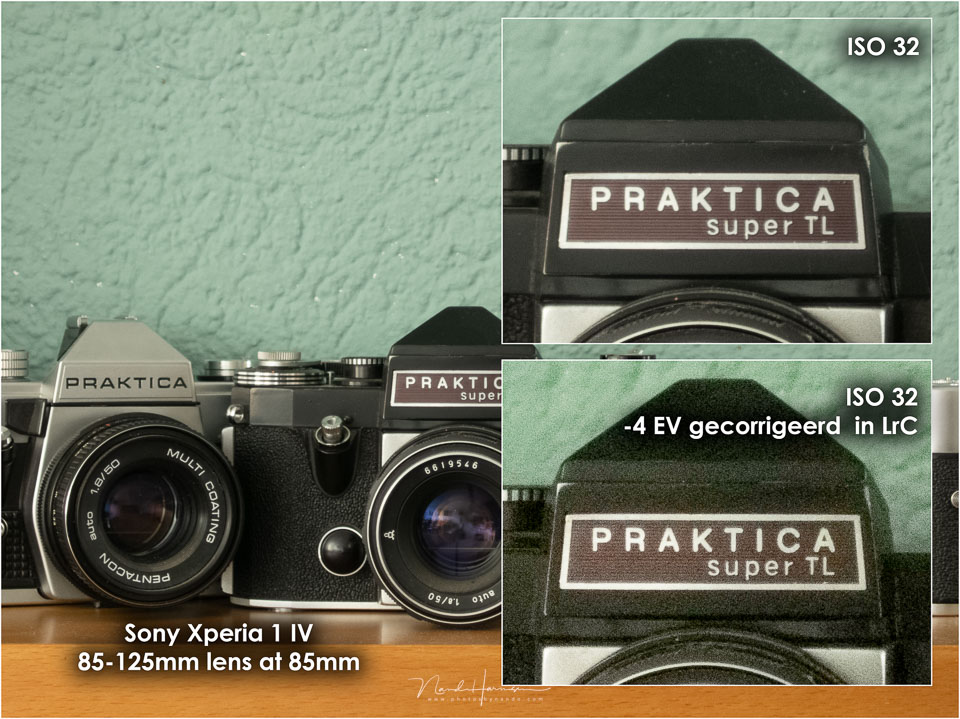
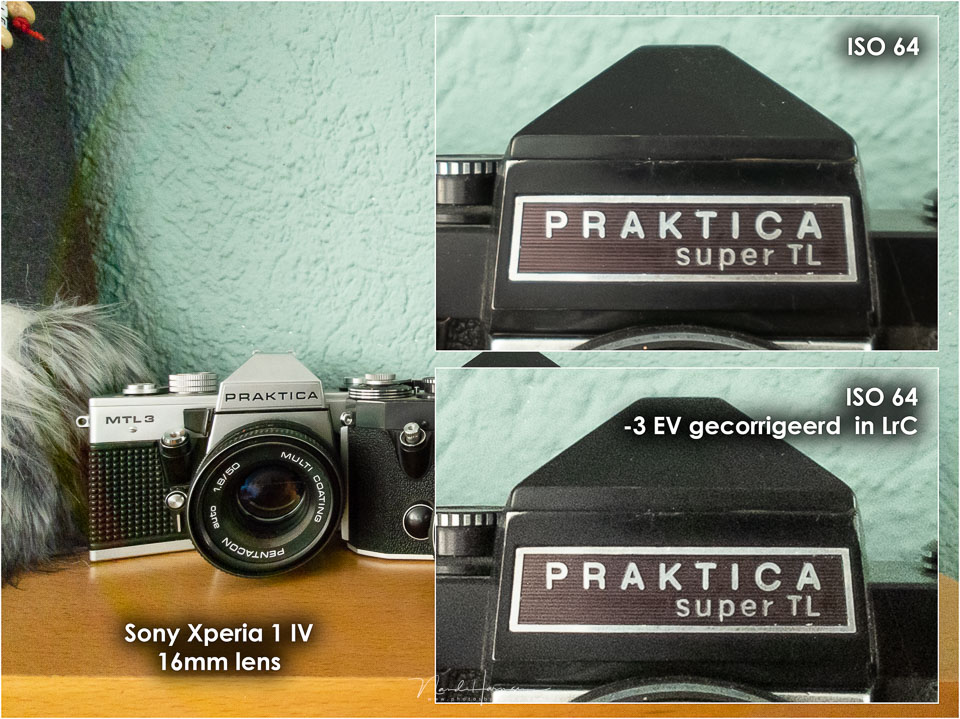
Brightening dark areas may be necessary when the contrast in the image is too high. It is certainly advisable to do this with a DNG file, because a JPEG immediately produces an unacceptable increase in noise.
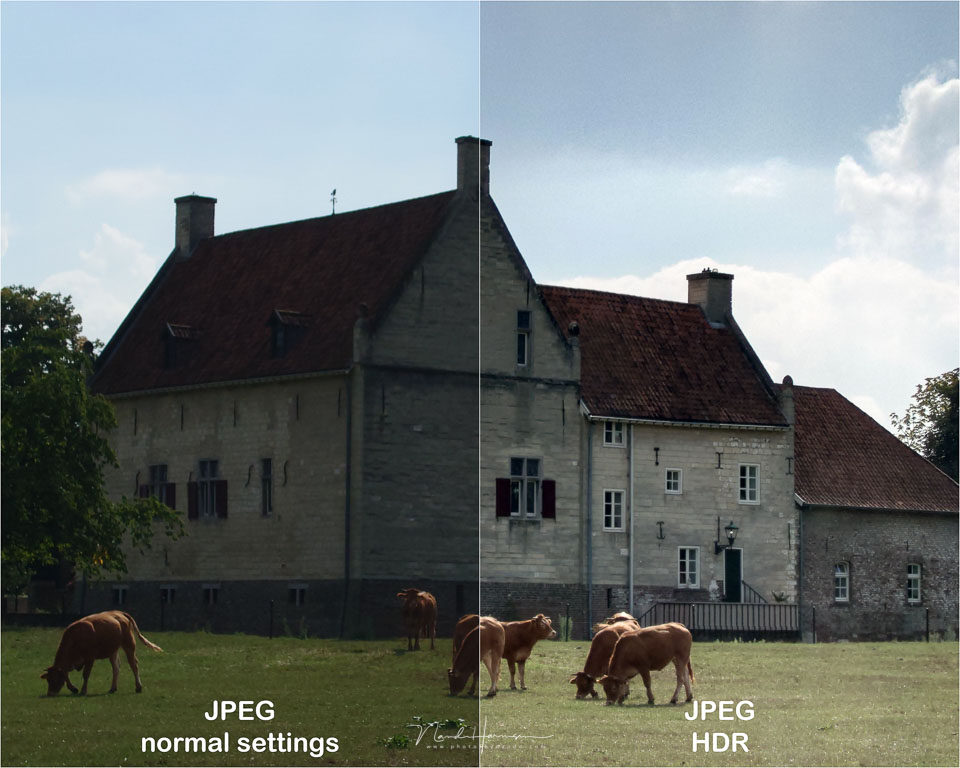
However, since the DNG files are already difficult to edit into a good final result, and the quality of brightening the dark areas depends heavily on which sensor you use, it may be better simply to use the HDR function.
Of course, this is only available when shooting in JPEG.
Night photography
There is a night mode on the Xperia 1 IV. This allows you to take better photographs in dark conditions. Night mode can be used with all three cameras, but the results depend heavily on which lens you use.
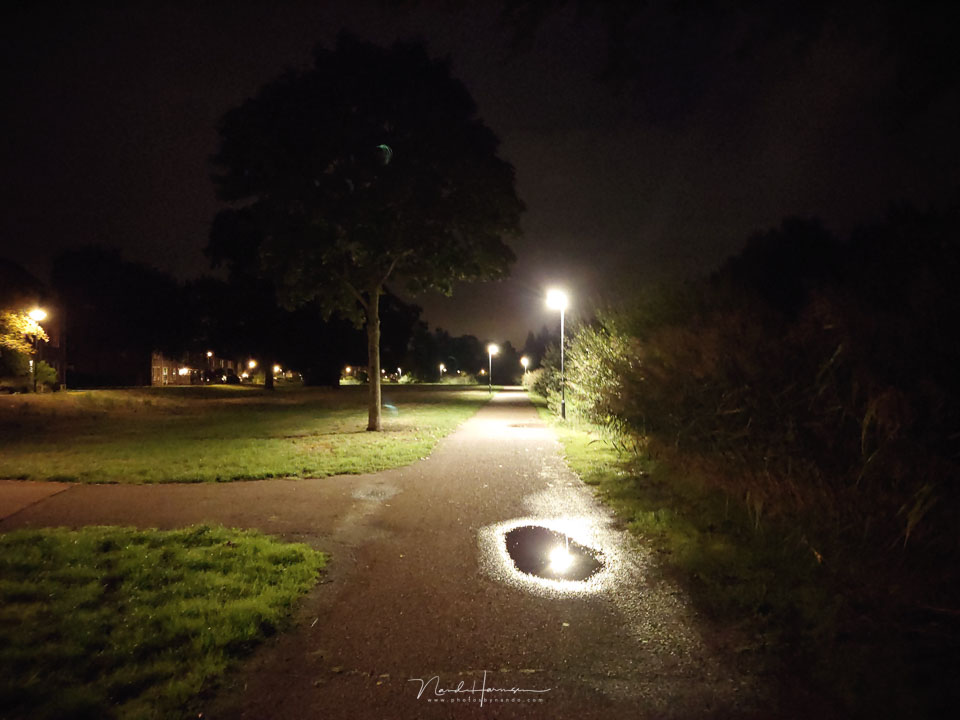
It is noticeable that the quality of night photographs in a normal street scene is still disappointing. Quite a lot of detail is lost through the processing applied to the photograph by the software. The Xperia 1 IV does not perform better here than the other models I have tested before.
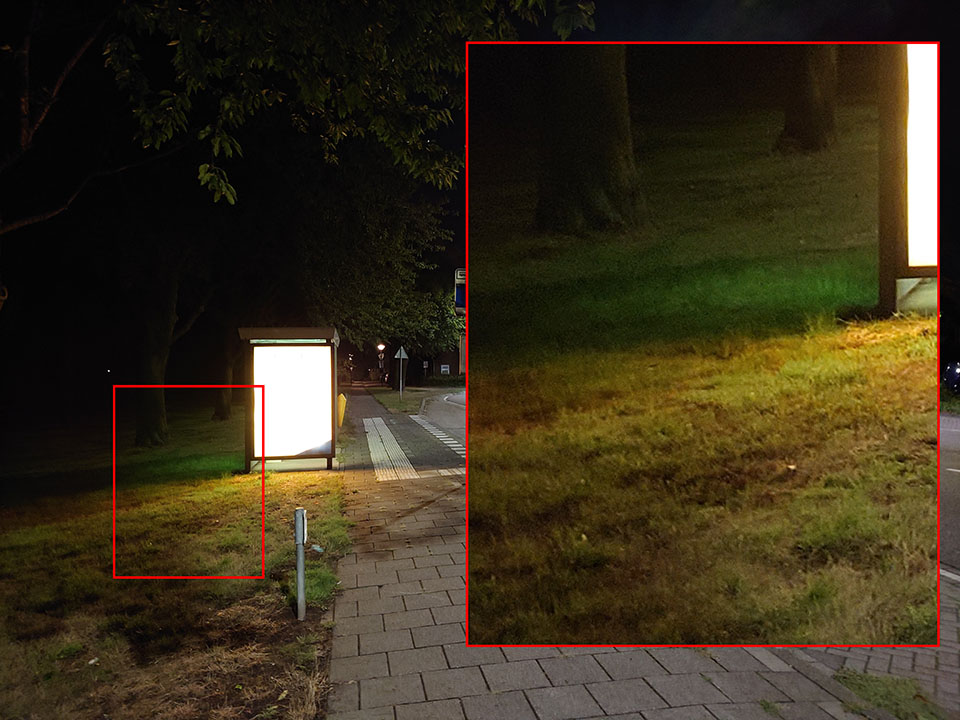
I did not test the function very extensively, and my findings are based on the few photographs I took. I must therefore describe my opinion as a first impression.
Besides, I have no comparison. To know whether the performance is good, it would really need to be compared with other smartphones.
Final verdict
The Sony Xperia 1 IV is not a cheap smartphone. It is a model from the top segment, which means that you should also be able to see this in the results from the camera, among other things.
Unfortunately, I am not impressed by the results. It should be clear that I am judging the smartphone only on the basis of the camera, and not its other functions.
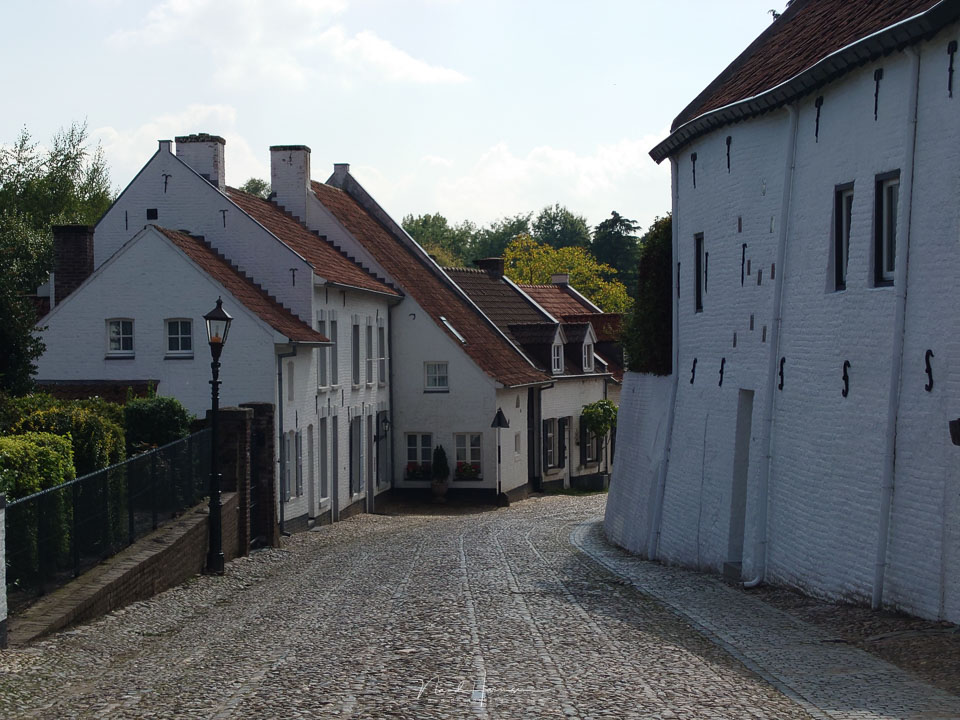
Sony is aiming high with the Xperia 1 IV by introducing a genuine zoom lens and using software that makes it possible to use the eye AF known from the Alpha range of mirrorless cameras.
Add burst shooting at up to 20 frames per second, and expectations are high.
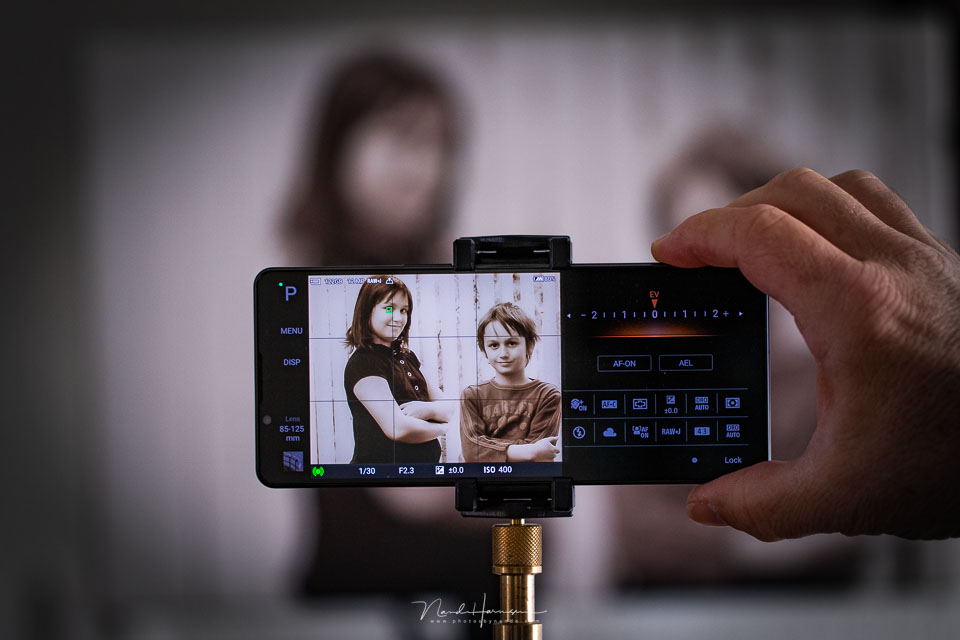
The Xperia 1 IV does not allow you to adjust the aperture. This is a shame and a limitation when it comes to the programme settings.
For example, a manual setting is then the same as shutter priority with manual ISO setting.
The P, S and M options are nice, but they do not have the functionality they would have on a camera with an adjustable aperture.
I therefore find the quality of the photographs disappointing. With the standard 24mm camera, it is reasonably good, but the quality of the 16mm and zoom cameras falls behind.
Especially when you want to shoot in DNG format, which should theoretically give you better image quality, you notice that you gain very little.
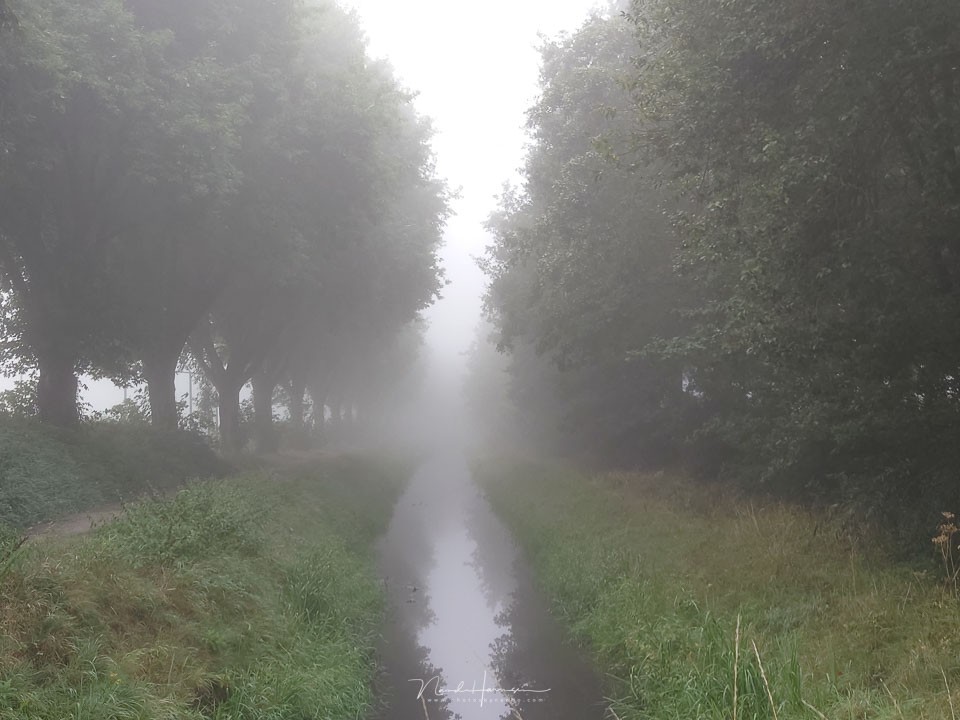
When I look at the zoom range, there is a huge gap between the 24mm and 85mm focal lengths. You can bridge this by zooming in digitally, possibly using AI super zoom, but the quality deteriorates visibly.
It is also of no use when shooting in DNG. Choosing a 50mm focal length, or a 50-100mm zoom, would have made much more sense.

Another problem you may encounter is colour temperature. The auto white balance sometimes chooses a colour that is too cool. This is very annoying with a JPEG.
In DNG, however, this is easy to correct, but once again you run into the image quality, and the lack of digital zoom or burst shooting.
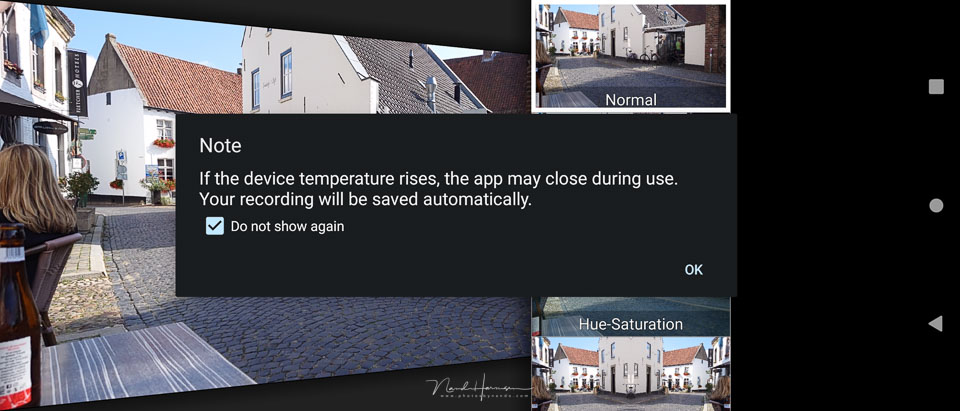
Bear in mind that the Sony Xperia 1 IV also gets very hot during use. It contains a powerful Snapdragon 8 Gen 1 processor, which will drive the smartphone's temperature up considerably, even if you are just taking a few photographs.
This has some consequences. The processor apparently becomes slower above a certain temperature, and there is a risk that the smartphone will close the photo app.
There is another very annoying thing that I regularly encountered. Because of the position of the fingerprint sensor, you often touch it accidentally. If this happens too often, the smartphone will be locked for no less than 30 seconds.
That is troublesome when you want to take a photograph, as you miss the moment this way. It may be possible to disable this lock, but I could not find how.
Pros
- Has a 16mm wide-angle lens
- Has an 85-125mm optical zoom lens
- Fantastic eye AF, for people and at least dogs
- AF tracking works well
- Can shoot up to 20 frames per second
- Extensive setting options, based on Sony Alpha cameras
- 120 fps screen refresh rate
- Water-resistant
Cons
- Smartphone gets very hot
- Burst shooting only in JPEG
- No option to adjust the aperture, not even simulated
- DNG files require aggressive editing
- AI superzoom adds little image quality
- Gap between the 24mm and 85mm focal lengths is too large
- Auto white balance often produces an image that is too cool
- You cannot automatically switch cameras by zooming
- Fingerprint sensor is in an awkward position
- Overall image quality is only reasonable and varies considerably between sensors
- Night photographs are not fantastic in quality, although this requires more testing
- Expensive

Although the Xperia 1 IV has some impressive specifications on paper, it is somewhat disappointing in practice. The critical smartphone photographer will probably not be happy with the result.
In terms of photography, I do not think the Xperia 1 IV performs better than the Xperia 5 III, or even the much cheaper Xperia 10 IV. The options are somewhat more extensive, and of course there is the optical zoom.
To be honest, I expected more quality from a smartphone in this price segment, especially one so focused on photography.
Perhaps the other functions of the Xperia 1 IV make the high price worthwhile, but that is something I did not test.
I would like to thank Sony Nederland for providing this smartphone.
About the author
Nando Harmsen has been photographing for more than 40 years. He specialises in wedding photography and landscape photography. Nando also gives talks, workshops, masterclasses and photo trips, and regularly reviews new and interesting equipment.
You might also like
-
 Review: Sony Xperia 10 IV smartphone for photography
by Nando Harmsen
-
 Review: Sony Xperia 5 III smartphone for photography
by Nando Harmsen
-
Choosing between a camera and a smartphone
by Nando Harmsen
-
 Review: Sony A7 IV
by Nando Harmsen
-
 Review: Sony FE 16-25mm and FE 24-50mm f/2.8 G lenses
by Nando Harmsen
-
 Review: Sony A7R V mirrorless camera
by Nando Harmsen
0 comments
Be the first to share what you think!
Have your say
Please note: Articles older than a week can only be commented on by signed-in visitors.Would you still like to comment? sign in or create a free account.
Become a better photographer every week
A practical photography tip in your inbox every week.
39,078 photography enthusiasts already receive the tips! More about the weekly mail. Or keep up to date via  Facebook.

Elja Trum
Photofacts; everything to do with photography!
Would you like to take better photos and keep up with what is happening in photography? Photofacts publishes articles that teach you something about photography — from a product announcement to a practical shooting tip or a look at a website. Photofacts covers photography every day and is a hobby project of Elja Trum's that got out of hand. The articles are written by a team of volunteer authors. If you would enjoy writing one or more articles for Photofacts, do get in touch.More about PhotofactsPhotofacts is made possible in part by
