

Review: Sony A9 mark III
Friday 19 April 2024, 15:30 by Nando Harmsen | 4,477 views | 2 commentsThis article was translated from Dutch with the help of AI. Read the original.
The Sony A9 mark III is the first camera with a global shutter. This reads the sensor in a single moment instead of line by line. I received this camera for an extensive review covering more than just the benefits of the global shutter.
The Sony A9 mark III is the third generation of Alpha cameras specifically aimed at action photography. The camera has a better ergonomic design and is easier to use thanks to more physical controls.
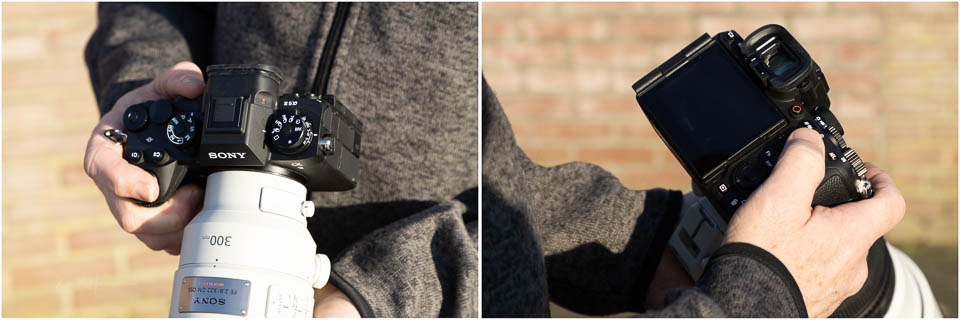
This improved ergonomics is achieved through a well-designed grip and a more steeply angled shutter button. This makes it easier to operate the control dial below it without taking your finger off the shutter button.
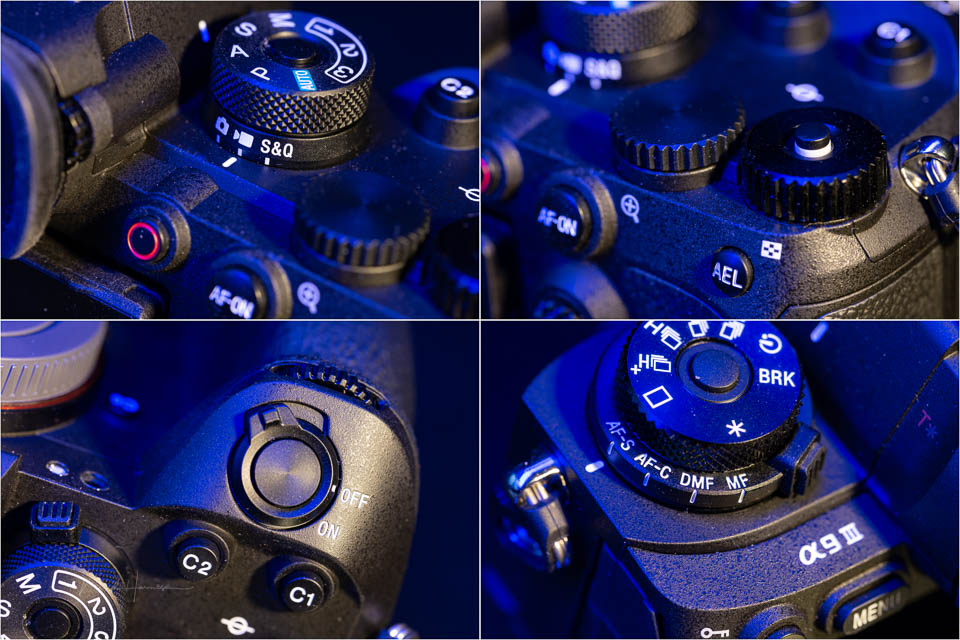
The buttons provide good feedback and have a clear pressure point. The joystick works nicely, and an extra fifth custom button offers more personalised control options. Unfortunately, the control dial on the rear, with its four buttons, remains difficult to operate.
There is a double control dial on the left shoulder for setting the shooting and autofocus options. This is a great advantage because you no longer have to dive into the menu. Beneath the PASM dial is the switch for the photo/video/S&Q setting.
The A9 mark III has inherited the fantastic tilting and flip-out screen from the A7R V. The electronic viewfinder has a high resolution and can refresh at up to 200 fps. This is perfect for fast action.
Speaking of action photography, the camera can capture up to 120 frames per second. This huge number means you will not miss a moment. Are you worried that you will be too late to take the photo? The pre-recording function can already capture images up to one second before you take the photo.
The autofocus has the familiar subject detection, with recognition for people, animals, birds, insects, cars/trains and aeroplanes. You can also choose a combined animal/bird setting. Unfortunately, the camera cannot automatically choose between these subjects. The AI engine allows the camera to predict movements, making autofocus tracking more accurate and faster.

The autofocus does not work flawlessly. There were more moments when the wrong subject was selected. The tracking also regularly failed, both in complex and simple situations.
The camera's control options are virtually endless. This means it is complicated to find the right settings. The autofocus options in particular can lead to disappointing results.

The camera has several disadvantages that are characteristic of Sony. Although the menu is much better than the old one, it is not always logically structured, and abbreviations are confusing. There are limitations to the control options, such as a limit for the bulb timer and exposure simulation, which only shows up to +/- three stops of correction.
The global shutter is, of course, what makes this camera unique. It reads the sensor in a single moment. This means there is no longer any rolling shutter effect. You no longer have to worry about image distortion when panning.

Another advantage is the ability to use flash with any desired shutter speed. In theory, this can even go up to 1/80,000th of a second, which is what the A9 mark III is capable of. In practice, there are hardly any flashes that can reach these fast speeds.
In practice, a shutter speed of 1/1,000th of a second will be the maximum for flash photography without resorting to high-speed sync. The flash duration is simply too long to get a good exposure at faster shutter speeds. Read more about this in my article on the subject.

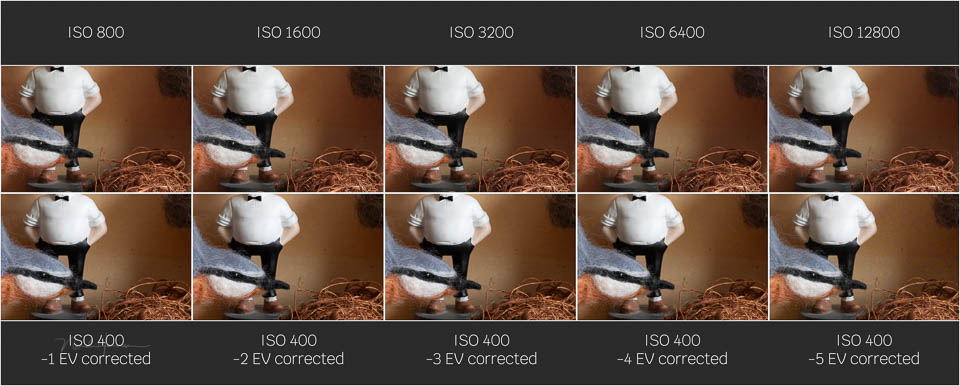
Because of its design, the base ISO is higher than what you are used to from other sensors. The lowest ISO value is ISO 250. You can force it down to ISO 125.
The ISO performance and dynamic range fall behind those of other Sony cameras. At ISO 6,400, noise is already clearly visible. You can brighten dark areas by up to four stops before the noise becomes distracting.
The Sony A9 mark III is a fantastic camera. I think it is the best camera Sony has made to date in terms of ergonomics, apart from a few minor drawbacks. The menu could be less cryptic, and it takes some study to find the optimal settings.
The global shutter is a fantastic technology that will particularly appeal to action photographers. Combine this with the huge frame rate and you have an ideal action camera. There are benefits for flash, but they are limited.

Are you not an action photographer, or do you only photograph fast action occasionally? In that case, the global shutter actually has more disadvantages. You give up a lot in terms of ISO performance and dynamic range.
Do you want to read everything about my findings, and the advantages and disadvantages? Then read my review on the Cameraland.nl website. The Sony A9 mark III is covered, along with the excellent Sony FE 300mm f/2.8 GM OSS.
Thanks to Cameraland.nl for making the camera and the 300mm lens available.
About the author
Nando Harmsen has been photographing for more than 40 years. He specialises in wedding photography and landscape photography. Nando also gives talks, workshops, masterclasses and photo trips, and regularly reviews new and interesting equipment.
You might also like
-
 The Sony A9 mark III with global shutter and flash
by Nando Harmsen
-
 Sony introduces the Sony A9 III
by Nando Harmsen
-
 Review: Sony A1 mirrorless camera
by Nando Harmsen
-
 Review: Sony A7 IV
by Nando Harmsen
-
 Review: Sony ZV-E1
by Antonette de Groot
-
 Review: Canon EOS R6 mark III
by Nando Harmsen
2 comments
-
 Jax wrote on Tuesday 23 April 2024 at 11:59 | reply
I always really enjoy reading the camera reviews, but when will there finally be a review of cameras that are affordable for everyone (lower segment). I think a lot of beginning photographers could benefit from that. Nice, a Sony a9 III, but the body alone already costs €6999,-. I can't get that past my wife.
Translated from Dutch. -

 Nando
wrote on Tuesday 23 April 2024 at 12:07
| reply
Nando
wrote on Tuesday 23 April 2024 at 12:07
| reply
Reviews of cheaper cameras have also been made. I have done a number of them for Canon (R50, R10 for example) and Sony (A6700, A7 IV for example)
Translated from Dutch.
https://www.photofacts.nl/fotografie/rubriek/reviews/review-sony-a6700-aps-c-mirrorless-camera.asp
https://www.photofacts.nl/fotografie/rubriek/reviews/review-canon-eos-r50-mirrorless-camera.asp
https://www.photofacts.nl/fotografie/rubriek/reviews/review-canon-eos-r8-full-frame-mirrorless-camera.asp
These from the more expensive segment should also be covered, of course.
Have your say
Please note: Articles older than a week can only be commented on by signed-in visitors.Would you still like to comment? sign in or create a free account.
Become a better photographer every week
A practical photography tip in your inbox every week.
39,024 photography enthusiasts already receive the tips! More about the weekly mail. Or keep up to date via  Facebook.

Elja Trum
Photofacts; everything to do with photography!
Would you like to take better photos and keep up with what is happening in photography? Photofacts publishes articles that teach you something about photography — from a product announcement to a practical shooting tip or a look at a website. Photofacts covers photography every day and is a hobby project of Elja Trum's that got out of hand. The articles are written by a team of volunteer authors. If you would enjoy writing one or more articles for Photofacts, do get in touch.More about PhotofactsPhotofacts is made possible in part by
