

The downside of a camera with lots of pixels
Monday 10 March 2025, 16:32 by Nando Harmsen | 10,938 views | 42 commentsThis article was translated from Dutch with the help of AI. Read the original.
How many pixels should your camera have? Are 20 megapixels or 24 megapixels enough? Or would 45 megapixels or more be better? In the end, more is not necessarily better. Sometimes it can even be a disadvantage.
The megapixel race is largely over. There was a time when there had to be more and more. Twelve megapixels was better than eight. Then it had to become twenty, thirty, and so on. But it is not completely over. If a new camera does not have more pixels than its predecessor, people are disappointed.
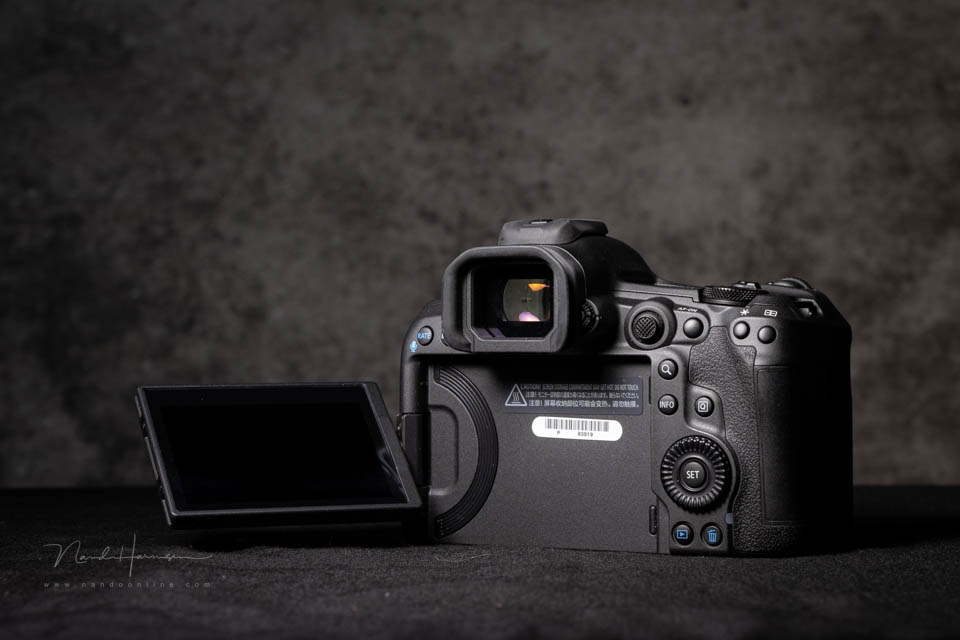
More pixels sounds fantastic, but it is not necessarily the best choice. Sometimes it can even be a disadvantage. In fact, twenty to thirty megapixels is already more than enough for many photographers. Especially when you consider what the photos will be used for.
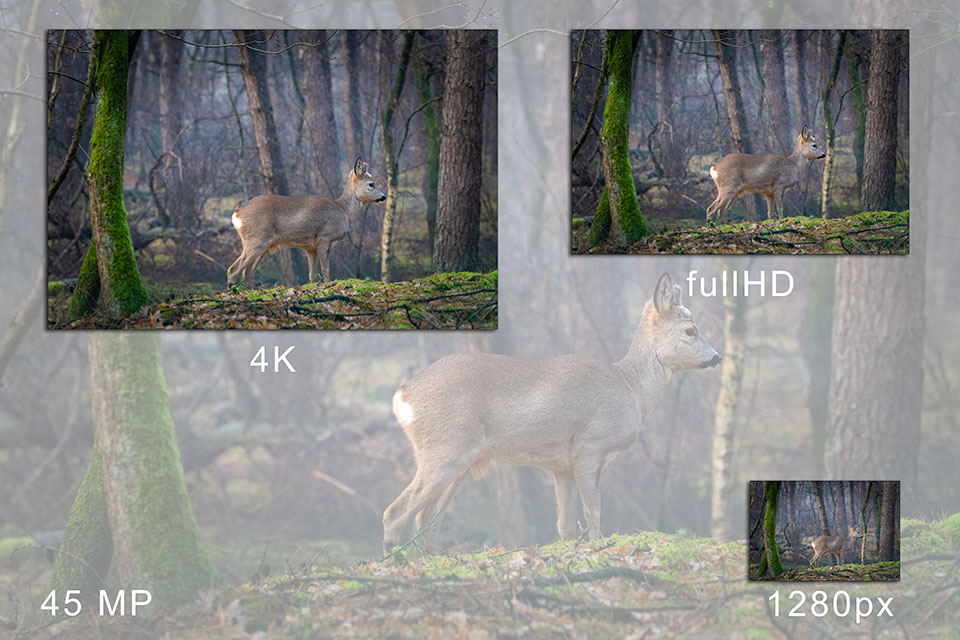
Bear in mind that a photo shown on the internet is often no more than 1200 pixels along its longest side. That is about one megapixel. If you view the photo on a full HD monitor, that is about two megapixels. A 4K image has just over eight megapixels.
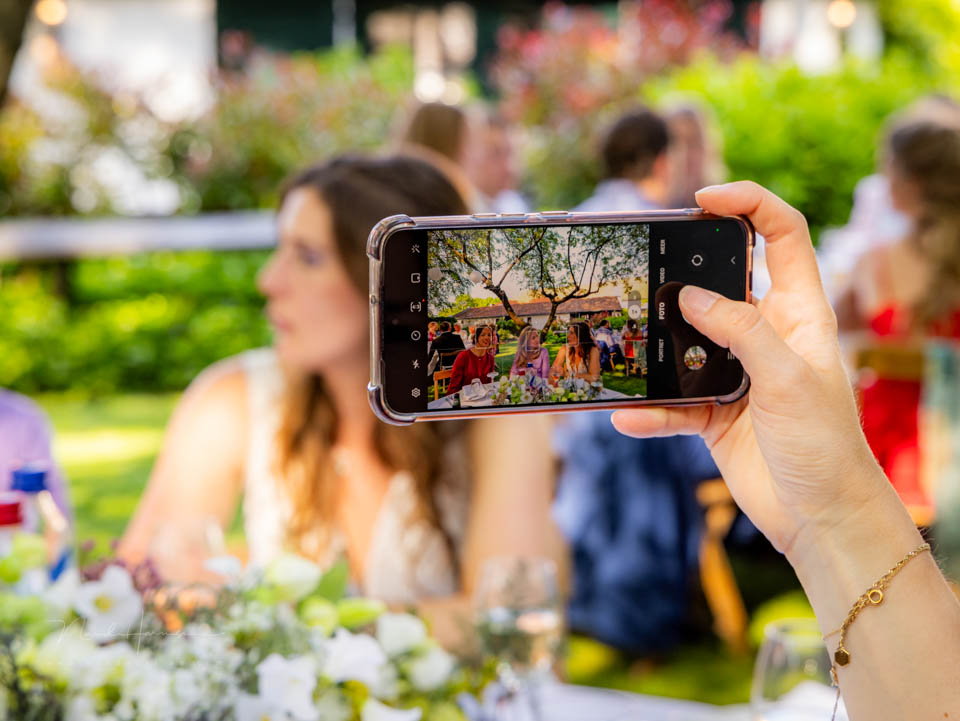
If you photograph with a 12-megapixel camera, you have more than enough resolution for almost all purposes. You even have some room left for cropping.
Suppose you are going to print. If we stick with 12 megapixels, you can print as large as 36 x 21 cm at 300 dpi. If you take the viewing distance into account, printing twice as large is not a problem at all.
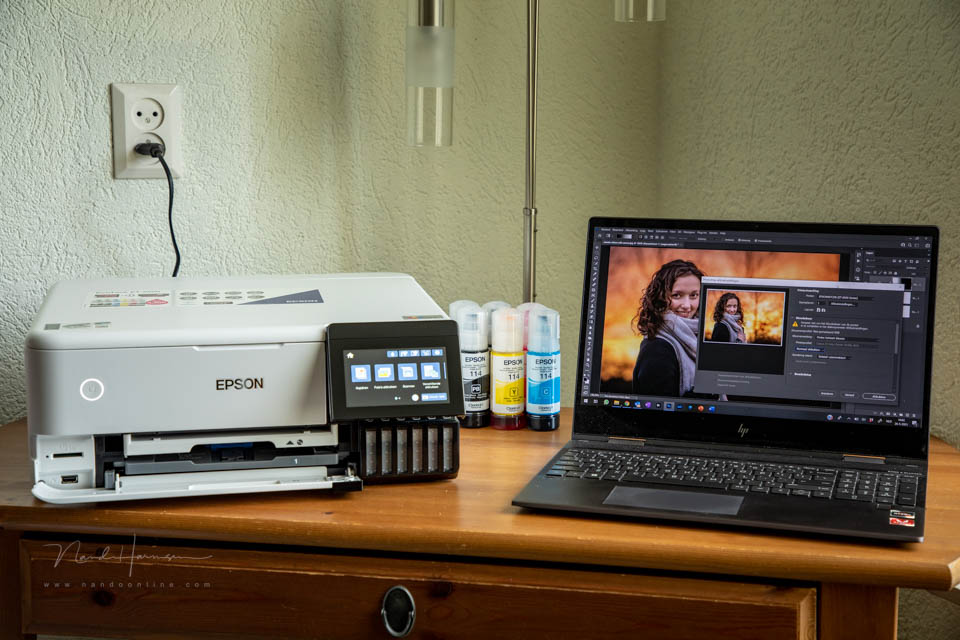
Most cameras nowadays have at least 20 to 25 megapixels. That gives you more than enough resolution. And you still have room left for cropping. More resolution is actually not necessary.
However, another problem arises with high resolutions. Because the resolving power becomes very high, lens faults will also become visible much sooner. Think of chromatic aberration, the green or red lines that appear with large differences in contrast.
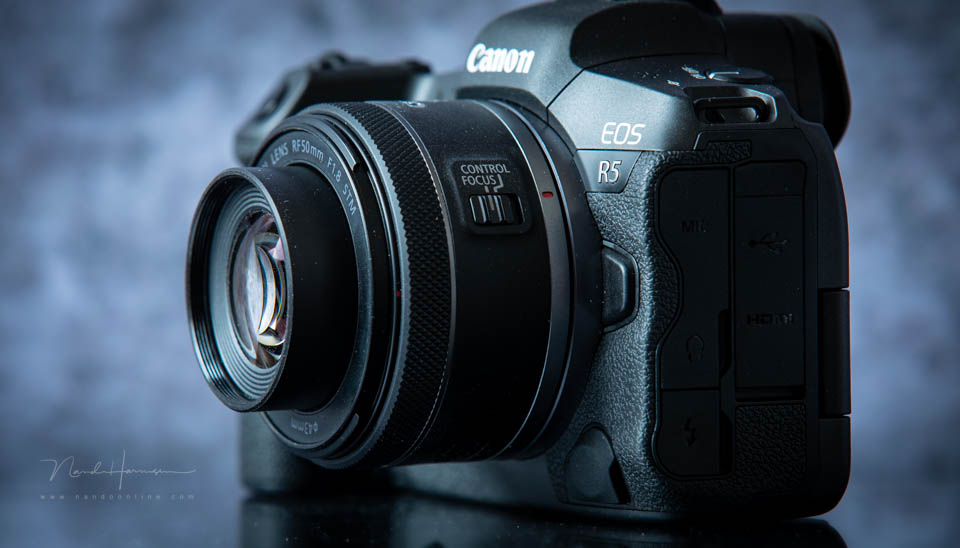
But blur can also become more obvious, especially with lenses that are not suitable for such high resolutions. Do not forget that the diffraction limit shifts. A 50-megapixel sensor can already start to suffer from diffraction blur at an aperture of f/5.6.
Another problem you may encounter with high resolutions is the increased chance of motion blur. The more resolution you have, the sooner motion blur becomes visible. Not just your own movements, which you have image stabilisation for, but also movement of your subject.
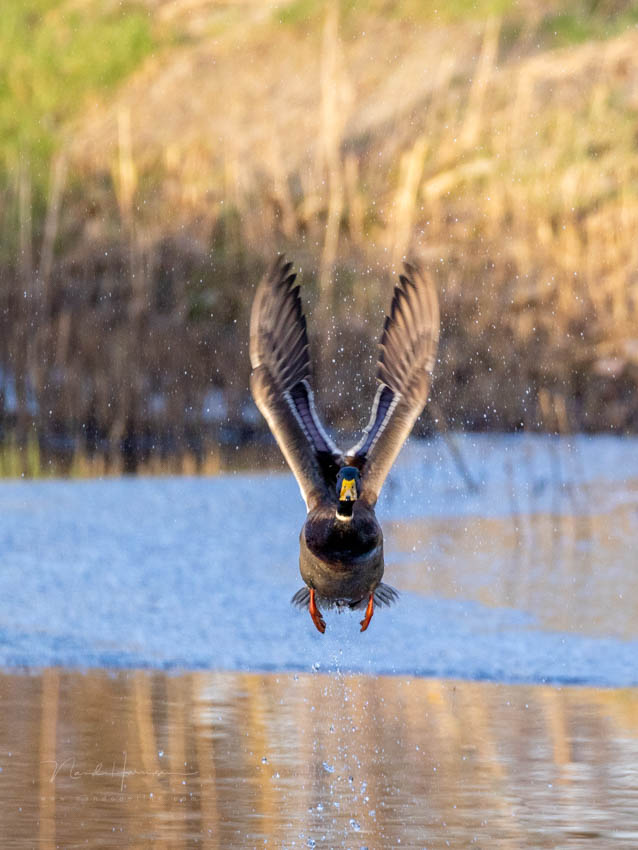
Of course, a high resolution gives you the option to crop heavily. This can compensate when your focal length was not long enough. However, bear in mind that this enlarges not only the image, but also any lens faults and blur.
I think 25 megapixels is the best choice for 90% of photographers. If you still want a little more resolution, choose around 50 megapixels. Bear in mind that you will almost never, or perhaps never at all, need more than about twelve megapixels.
What resolution does your camera have? Did you choose it based on that? And if so, how often have you needed that resolution? Let us know in a comment below this post.
About the author
Nando Harmsen has been photographing for more than 40 years. He specialises in wedding photography and landscape photography. Nando also gives talks, workshops, masterclasses and photo trips, and regularly reviews new and interesting equipment.
You might also like
-
 The difference between file size and resolution
by Nando Harmsen
-
 A 3,200-megapixel camera
by Nando Harmsen
-
 Leica SL3-P 44-megapixel camera announced
by Elja Trum
-
 Update your Canon EOS R5 and get 400-megapixel photos
by Nando Harmsen
-
 Sony announces the 50-megapixel Alpha 1 camera
by Nando Harmsen
-
 How do resolution, dpi and ppi actually work?
by Nando Harmsen
42 comments
-
 Donald Willemsen wrote on Monday 10 March 2025 at 19:56 | reply
Nando, a clear and well-reasoned argument. Yet you are still forgetting something. The more pixels there are on a sensor, the closer together they are and also the smaller the pixels become. This also seems to me to have an influence on light sensitivity and therefore also on the noise ratios.
Translated from Dutch.
If you then also put the number of pixels on a full-frame onto, for example, an APS-C sensor, it cannot help but have a negative impact on the image.
A high number of pixels, 50mp or more, only makes sense for gigantically large prints.
I have an R7 with 32mp myself. As far as I’m concerned, 24mp would have been enough too. -

-
 Stavros Kanakaris wrote on Tuesday 11 March 2025 at 03:34 | reply
The resolving power of the very best lens ever measured is 38mp. 24mp is really more than enough. Everything above 40mp is useless.
Translated from Dutch. -
 Nando
wrote on Tuesday 11 March 2025 at 09:55
| reply
Nando
wrote on Tuesday 11 March 2025 at 09:55
| reply
Do you have a source for this information? Because I find very different information about it. I read about resolving power going up to 100 MP (and beyond).
Translated from Dutch.
Keep the diffraction limit in mind. That factor plays a very major role in what the resolving power is. -
 Mac wrote on Tuesday 11 March 2025 at 07:59 | reply
The camera I still use the most has 14mp, and that is indeed more than enough for photobooks and prints. Even when I crop.
Translated from Dutch.
I also have a camera with 24mp, and that is very handy because I use it a lot for sports with a long lens, and even the longest lens is not always sufficient. So having a bit more room to crop is nice.
But when I print, and you look at it from a normal distance, you don't see any difference between the photos with the different sensors. -
 Lauran wrote on Tuesday 11 March 2025 at 11:01 | reply
You surely don't make many really large prints?
Translated from Dutch. -
-
 Ruud van de Steeg wrote on Tuesday 11 March 2025 at 11:24 | reply
I still regularly photograph with <10mp, even with 4mp.
Translated from Dutch.
Once exhibited, 4mp up to 30x40.. still top quality. I do believe in higher mp, but then the camera is also quite pricey.. Fuji Olympus -
 Emanuel wrote on Tuesday 11 March 2025 at 11:32 | reply
My first digital camera was a Nikon D200 (12Mpx). Solid camera but not very light-sensitive. Perfect in the studio because there is enough light, photos up to A3+ can be printed without problems. But outdoors it was a different story. Never set it more light-sensitive than 400ASA because of too much noise.
Translated from Dutch.
My next camera was a Nikon D800. What a relief in terms of light sensitivity. The sun doesn't have to be shining to have enough light. High ISO values without noise are possible. As it happens, that camera has a 36MPx resolution, apparently more than enough. Indeed the problems as described above. For me, light sensitivity is much more important than the number of pixels. Recently printed an A2 photo (taken with a smartphone) at 130 px/inch. You're not looking at it with your nose on it, so it doesn't have to be razor-sharp. -
 ronald-maas wrote on Tuesday 11 March 2025 at 11:42 | reply
Hi Nando, I agree with what you stated about "what is done with photos" I use sensors of 4 MP, 12 MP and 16 MP interchangeably .On the PC screen, in terms of presentation at normal viewing, sometimes only some colour difference can be noticed. Usually the difference in resolution is not disturbing
Translated from Dutch. -
 Luc Auwaerts wrote on Tuesday 11 March 2025 at 11:42 | reply
I agree with Donald Willemsen. The more pixels on the same sensor, the smaller the pixel becomes. The smaller the pixel, the more noise it generates.
Translated from Dutch. -
 Hans van Sterkenburg wrote on Tuesday 11 March 2025 at 11:43 | reply
Hi Nando
Translated from Dutch.
Clear argument, meaningful content.
My camera has 27mp on APS-C, my largest print; 75-50 cm, printer profotonet.
For your information: I used to walk to take photographs, now I take photographs because I walk. Hence my lighter and more compact equipment.
Works excellently.
Regards,
Hans. -
 Hans wrote on Tuesday 11 March 2025 at 11:44 | reply
I worked with a Nikon D3S for a long time and those images were always beautiful ! Now I have a Nikon Z9 and the images are... also beautiful. What isn't really addressed in the article is what you use the camera (and accompanying lenses) for. Lots of pixels allow for a lot of cropping (telephoto) but I like having lots of pixels for macro photography. In the past people said that the Nikon D3X (24 Mega pixels) had the same sensor as the D3S (12 Mega pixels) but that the D3S used the sensor differently and was therefore better suited for use in the dark. In any case, I loved my D3S and never felt that the resolution was too low for everyday work.
Translated from Dutch. -
 Paul van Aken wrote on Tuesday 11 March 2025 at 13:37 | reply
Hi Nando,
Translated from Dutch.
Once again a very clear story. My first DSLR was a Nikon D80, 10Mp. Even with that it was fine to work with, also for larger prints. later a D7000, with 26 Mp, prints at A3+ no problem. Now I've had a D500 for a number of years, 20Mp, you can do everything with that, but I've had more trouble with motion blur with this one before.
And speaking of cropping: I wanted a double decoration on A3+ for a cat lover, but one of the photos to be used was horizontal, the cat was located approximately halfway across that image, so it had to be cropped to make the diptych vertical. Result: 2 A3+ plates, which don't show any disturbing pixel artefacts even with your nose right up against them. Those were shots from the D80......
Does show that more pixels aren't really necessary.
It does have another disadvantage, by the way: editing a lot of pixels takes much longer than, for example, those 16 or 20Mp from my cameras, especially if you don't have a particularly powerful PC. -
Donald Willemsen wrote on Tuesday 11 March 2025 at 14:05 | reply
Luc, that is not necessarily the case. My current camera canon EOS R7 has 32mp and hardly any noise up to ISO 6400. My previous Canon Eos 80d with 24mp already had a lot of noise at ISO 800. Both cameras are APS -C.
Translated from Dutch. -
 wim van de meerendonk wrote on Tuesday 11 March 2025 at 14:06 | reply
I have 60 MB RAW (Sony), and for small birds it’s really a godsend because you can crop in so far. For landscapes I use my other camera (24 MB), and that’s more than enough.
Translated from Dutch. -
BeVe wrote on Tuesday 11 March 2025 at 14:07 | reply
Well... how many Mpix do you need?
Translated from Dutch. -
 KLaas Horrel wrote on Tuesday 11 March 2025 at 14:33 | reply
Nando, isn't it an assumption to suppose that people are disappointed because the R5 MK II has fewer pixels than its predecessor? After all, the R5 is a professional camera. I assume that its users are well aware of cameras and their specifications. I read that according to various sources, 90 percent of photographers would consider 25 megapixels the best choice. However, I think that for 90 percent of photographers, a good smartphone (such as the iPhone 16 or Samsung S25) would be the better choice, especially in combination with artificial intelligence. I use my smartphone a lot to take photos. Even you won't always see the difference.
Translated from Dutch. -
Nando
wrote on Tuesday 11 March 2025 at 15:12
| reply
No, that is not an assumption. I have seen the reactions to the announcements and the first previews and reviews. Many are disappointed, but those are not the pros. It is always the amateurs you hear from.
Translated from Dutch.
As for the smartphone, I don't agree with you. The fact alone that you say you use it 'not always' in your sentence is already sufficient argument.
But you are right that for social media and quickly putting things online, the quality of a smartphone is more than good enough. After having been seen on the screen for two seconds, nobody ever looks at it again. -
 Jan van de Lagemaat wrote on Tuesday 11 March 2025 at 14:48 | reply
I have the feeling that the calculation with the 12 Megapixels and a print of 50 cm x 35 cm isn't correct.
Translated from Dutch.
(50/2.54) x 300 = 5.905
(35/2.54) x 300 = 4.133
That gives me 24.4 Megapixels! -
-
 Bart Rijvers wrote on Tuesday 11 March 2025 at 15:57 | reply
I have a Sony A7R4 with 62 megapixels. An additional disadvantage of that resolution is the size of the raw files (130 MB), and that means you need larger SD cards and more backup space. The PC also needs better specs to still edit these photos smoothly.
Translated from Dutch.
On the other hand, the detail is phenomenal. For example, group photos of family, and you can zoom in a little more without loss of quality. That kingfisher in the park also still comes across well while 95% of the photo consists of background.
Yes, it can also be done with fewer megapixels... -
 Andre wrote on Tuesday 11 March 2025 at 16:08 | reply
A film in analog photography had 100 lines per mm or 200 lines per mm. On a 35mm film, 24x36, this amounts to 5080 image units per inch or 10160 image units per inch respectively, or for 100 lines per mm 34 Mega pixels and for 200 lines per mm 138 Mega pixels. So back to analog photography ?
Translated from Dutch. -
 Wim wrote on Tuesday 11 March 2025 at 16:54 | reply
Quick question: does the sensor size also have an influence here? Think medium format, APS-C or Micro Four Thirds, etc?
Translated from Dutch. -
-
Paul van Aken wrote on Tuesday 11 March 2025 at 17:17 | reply
@Andre:
Translated from Dutch.
With analogue there are 2 factors, the resolving power of the film and that of the lens. That of the film is therefore always variable, depending on brand, type and iso. Because of that you can't simply "convert" digital and analogue.
I used to read 'Focus' and they very often did tests like that, and at one point it said that for the test they used a special orthochromatic, very low-sensitivity black-and-white film, a so-called reproduction film, with its own resolving power of, if I remember correctly, 400 lines per millimeter.
Standard b&w and colour films didn't come close to that, indeed as you wrote 100 l/mm 200 was already exceptional (pan f for example) the Kodak ektar was the "sharpest" colour film, don't know how many l/mm. But because of the lens/film combination it always turned out less. Doesn't change the fact that a good negative scanned leads to exceptional results. Indeed sometimes better than digital, but usually less. -
 Stavros wrote on Tuesday 11 March 2025 at 17:20 | reply
@Andre: It's about the resolving power of LENSES, not sensors!
Translated from Dutch. -
Stavros wrote on Tuesday 11 March 2025 at 17:32 | reply
Of course. 50mp for example on a medium format or aps-c gives larger (more quality) or smaller pixels
Translated from Dutch. -
 Martin Smit wrote on Tuesday 11 March 2025 at 20:08 | reply
When you look at old 2mp photos on a 4K screen, you still get the feeling that you’re missing information with that postage stamp. To be future-proof (let’s say for 20 years), I would say that a digital photo should fill the screen on an 8K TV. With a 2x3 image format, you end up at 28 megapixels.
Translated from Dutch. -
 Liesbeth Verkade wrote on Tuesday 11 March 2025 at 20:09
| reply
Liesbeth Verkade wrote on Tuesday 11 March 2025 at 20:09
| reply
Hi Nando, thanks for your article. Very enlightening again.
Translated from Dutch.
My first digital camera was a Sony Cybershot DSC-W7 with 7.2 mp. A birthday present. With that camera I discovered the joy of photography and learned quite a bit already. I kept delving deeper, including into editing photos.
Because I wanted a camera with interchangeable lenses to have more possibilities, I bought a Canon EOS 500D (15.1mp) in 2010. Took a great many photos with it and often very beautiful ones (I think so myself). I did have problems with a lot of noise at high ISA, for example in churches, etc. In 2020 I therefore bought a 90D (32.5mp). I am still very happy with this camera. A great many (perhaps even too many) possibilities and very pleasant to use. With the 3 lenses I have, 50mm fixed, 18-135mm zoom and 70-300 zoom, I can photograph almost everything the way I want. I do like the high resolution because it gives me plenty of opportunity to crop, especially with nature photos. -
 Jan Valkhof wrote on Tuesday 11 March 2025 at 20:20 | reply
As a street photographer I work with a 26 Mp aps-c camera. The photos are used for my book and sometimes for a 50x70 poster. The vast majority is dropped, edited and printed on A4 and framed. I know my camera inside out and therefore get a result of 96%. Not everything is used of course, but for me an excellent result. Do I ever find myself lacking something? To be completely honest: No. Just take a look at my website www.streetphotographyvienna1030.com
Translated from Dutch. -
Klaas wrote on Tuesday 11 March 2025 at 22:21 | reply
Nando, Thanks for your clear explanation/response!
Translated from Dutch. -
 Thoni Houtveen wrote on Tuesday 11 March 2025 at 22:31 | reply
Why do you have a Canon R5 yourself then, Nando?
Translated from Dutch.
How about an article about the advantages for once? -
-
 Paul eos wrote on Wednesday 12 March 2025 at 07:50 | reply
Hi Klaas
Translated from Dutch.
The R5 MK II has exactly as many pixels as the R5 (1).
So 45 Mpix = 45 Mpix and that is more than enough.
I can't emphasize it enough, when you buy a camera regardless of which brand, it is important to get to know your camera. Try new settings and look at the differences, that way you can set up your camera for the kind of photography you do. -
Donald Willemsen wrote on Wednesday 12 March 2025 at 10:43 | reply
Nando, is that really the big problem? Just putting more and more pixels on a sensor surface. This makes the pixels smaller and puts them closer together, which can also have disadvantages.
Translated from Dutch.
I imagine that smaller pixels can capture less light at a certain ISO value, meaning you soon have to increase the ISO value.
I can imagine that a certain sensor size can contain an ideal number of pixels. So the larger the sensor, the more pixels can fit on it. In which case it should be taken into account that the pixels need to have a certain (ideal) size and need to be at a certain (ideal) distance from each other.
If my line of thinking is correct, sensor designs should be standardized worldwide.
Furthermore, we need to get rid of the sales pitch that more pixels is better.
It is ridiculous that, for example, a smartphone with a very small sensor has 50mp and also has a tiny crappy little lens. Then it cannot be otherwise than that a great deal has to be done in software to arrive at an acceptable image. -
 MacBigfoot wrote on Thursday 13 March 2025 at 23:02
| reply
MacBigfoot wrote on Thursday 13 March 2025 at 23:02
| reply
Just like with my Harley (what’s the horsepower and/or torque? “Enough.”), I only know approximately how many megapixels my camera has, enough in any case.
Translated from Dutch.
After I had sold my old set, I had free rein when it came to choosing a brand, camera type and sensor. I considered other requirements for the specifications more important. I still haven’t regretted my choice of my current Olympus set for a single moment. I secretly chuckle when I hear others with a heavier set wondering whether they should really take that one (heavy!) lens with them on a trip of a few hours.
And the printed photos are perfectly fine quality-wise for an exhibition in a large format.
I still shoot analog from time to time as well, and those prints are still good enough too, the difference is actually impossible to see. -
 Freek van Buul wrote on Friday 14 March 2025 at 10:01 | reply
My R6 is 20. The X100VI has 40 MP and I upgraded from V to VI because I can now digitally zoom to 50 mm and still have 20 MP left.
Translated from Dutch. -
 Erik wrote on Saturday 15 March 2025 at 16:09 | reply
isn't it the case then that the size of the pixel should also be taken into account in the story. 24 MP on crop is not the same as 24 MP on full frame. not to even look at micro 3/4 . have once read about quality of pixels. that was then traced back to how many mu one single pixel is in size.
Translated from Dutch. -
-
 Donald Willemsen
wrote on Monday 17 March 2025 at 10:44
| reply
Donald Willemsen
wrote on Monday 17 March 2025 at 10:44
| reply
Nando, 24mp on a crop or full-frame sensor is 24mp. That's the resolution. Correct. But on a full-frame, I think the pixels will then be larger and slightly farther apart. That must have an effect on, for example, light sensitivity.
Translated from Dutch. -

Have your say
Please note: Articles older than a week can only be commented on by signed-in visitors.Would you still like to comment? sign in or create a free account.
Become a better photographer every week
A practical photography tip in your inbox every week.
39,079 photography enthusiasts already receive the tips! More about the weekly mail. Or keep up to date via  Facebook.

Elja Trum
Photofacts; everything to do with photography!
Would you like to take better photos and keep up with what is happening in photography? Photofacts publishes articles that teach you something about photography — from a product announcement to a practical shooting tip or a look at a website. Photofacts covers photography every day and is a hobby project of Elja Trum's that got out of hand. The articles are written by a team of volunteer authors. If you would enjoy writing one or more articles for Photofacts, do get in touch.More about PhotofactsPhotofacts is made possible in part by
