

Good results with an on-camera flash
Saturday 19 March 2022, 19:19 by Nando Harmsen | 5,290 views | 0 commentsThis article was translated from Dutch with the help of AI. Read the original.
People always say that an on-camera flash does not produce good photos. This is absolutely not true. The reason why a photo taken with an on-camera flash does not look good is a lack of knowledge about photographing with flash.
In this article, I explain how you can achieve good results with an on-camera flash.
I do not mean the built-in flash here, but a separate flash on the camera. A so-called reportage flash. It is an ideal tool for drastically improving the quality of the light. Especially when you need to be or remain mobile, it is indispensable in many situations.
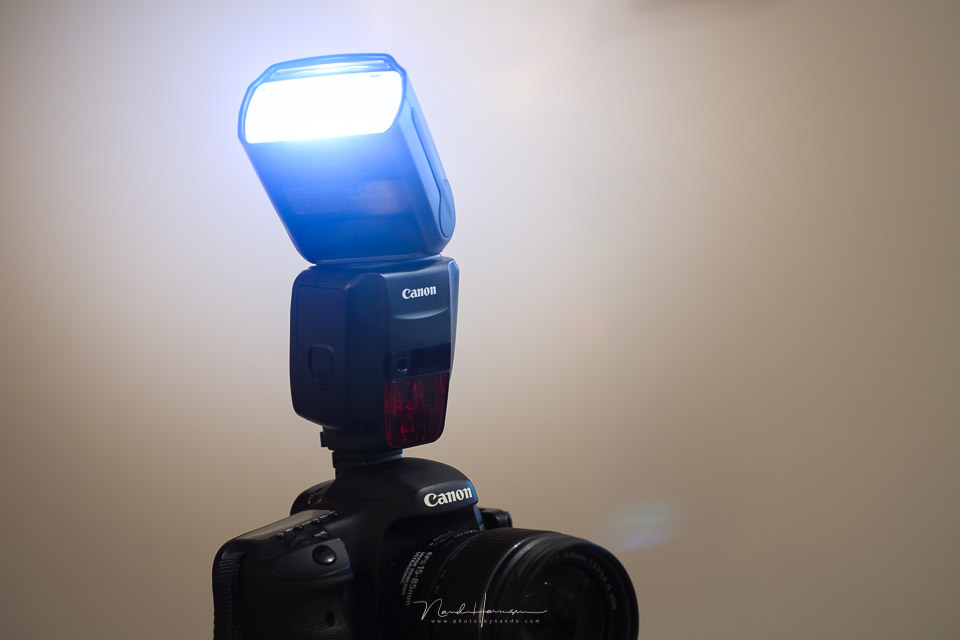
There are a few things you need to know to get a good photo with an on-camera reportage flash.
First, you need to know the basics. Setting the exposure for the surroundings and the flash are two different things. You set the exposure for your surroundings with the aperture, shutter speed and ISO. The flash provides the exposure for your subject.
Ambient light and flash are two different things
By choosing the exposure for the surroundings carefully, you mix the existing light with the flash for a natural look. The only thing you need to watch out for is that the subject does not become overexposed when setting the ambient light.
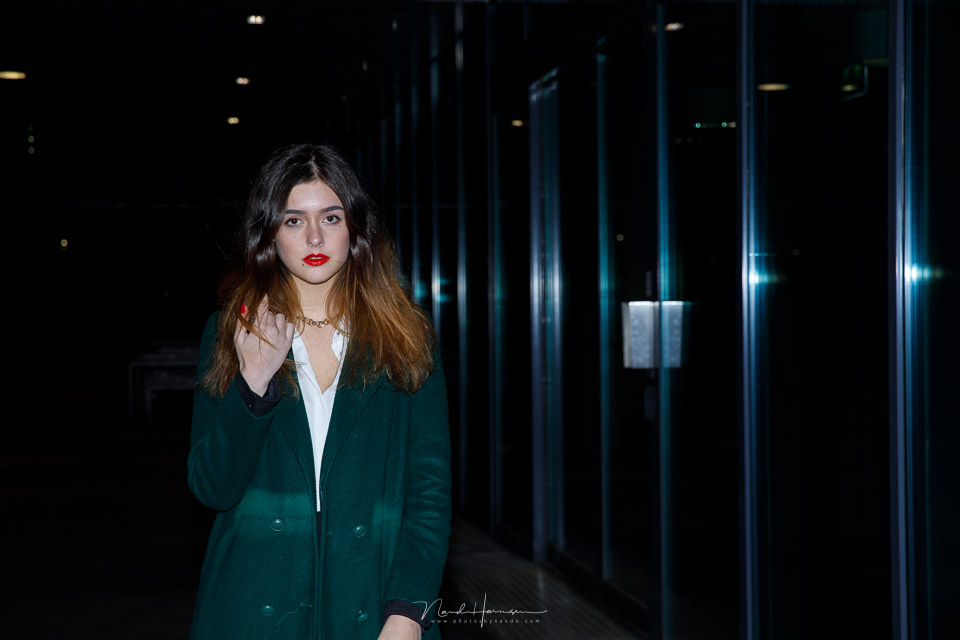
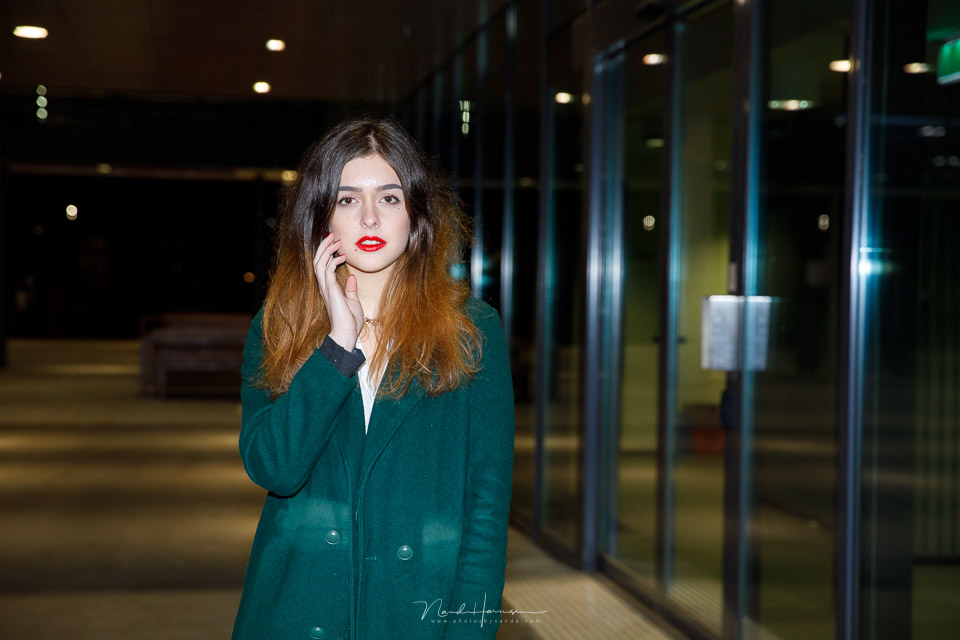
Next, the direction of the light is important. We all know direct flash, and how unflattering it is for your subject.
The term flat-lit will undoubtedly be familiar to you. You have already partly prevented this by balancing the ambient light with your flash. Giving the light a direction is the next step.
Give your flash direction
By giving the flash a direction that is different from straight on, you create shadows. Shadows add depth to your subject.
You do this by bouncing your flash off a wall. Indirect flash, in other words. The light gets better quality.
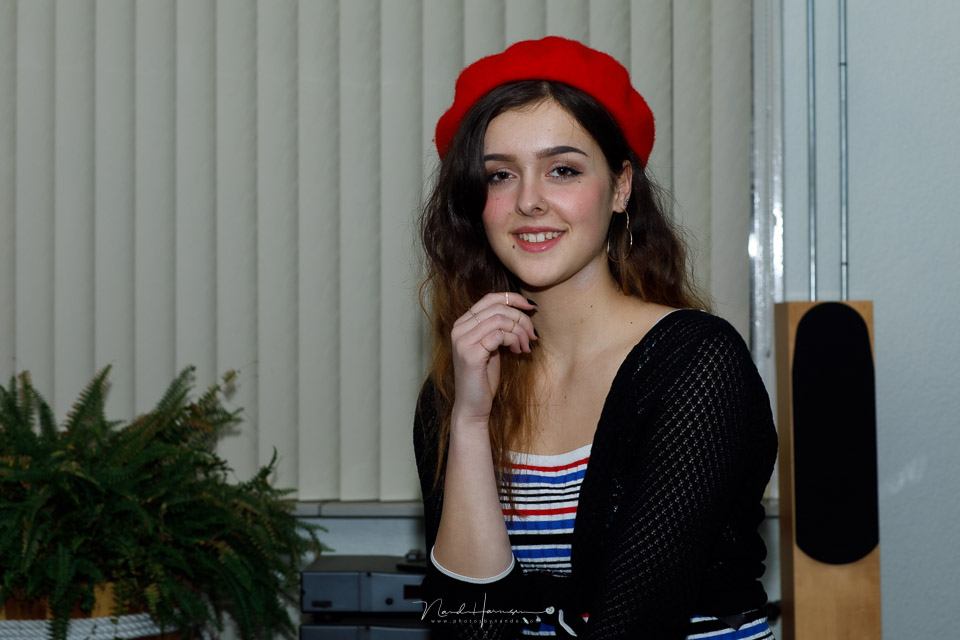
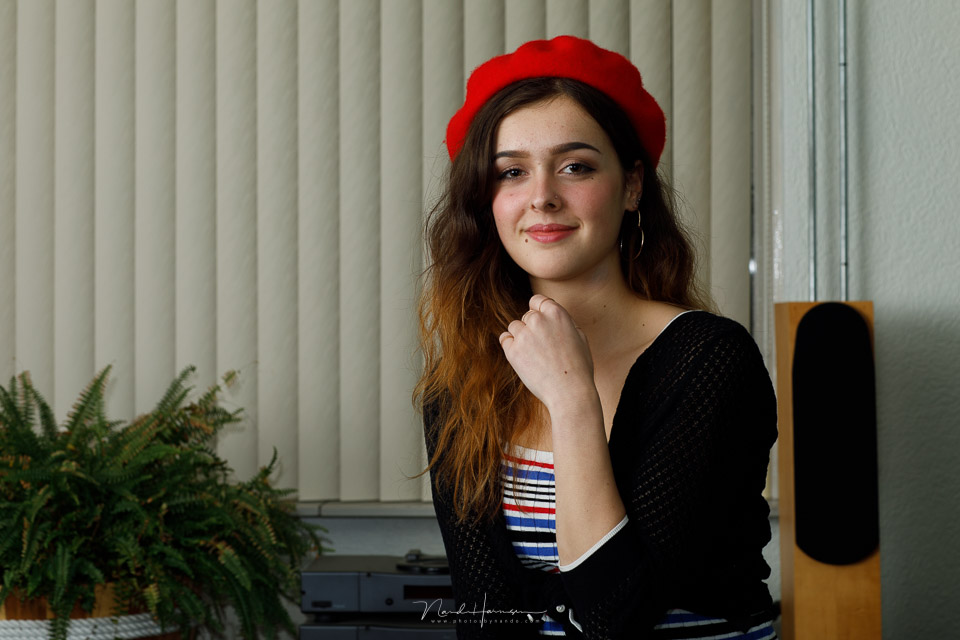
Preferably, do not bounce the flash off the ceiling. This creates ugly shadows under the eyebrows, nose and chin. Bounce the flash off a wall to the left, right, or if necessary behind you. The larger the wall, the softer the light. The wall becomes your softbox, just like the one you have in a studio.
Prevent direct light on your subject
There is a third way to shape the light. If you bounce your flash off a wall, direct flash will still fall on your subject.
By shielding the flash so that no light falls directly on your subject, you make sure that only light from the wall reaches it. You cannot even see that a flash was used anymore.
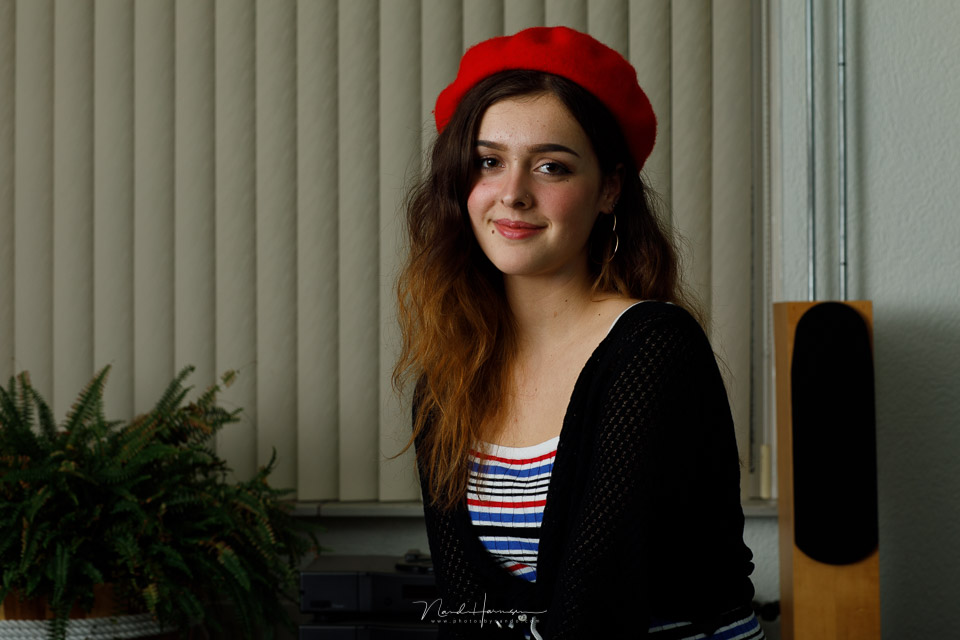
Everything at a glance
In summary, create a balance between ambient light and flash by choosing the right camera settings.
Then use a wall to the left or right to give the flash a direction.
If necessary, shield the flash so that no direct light falls on your subject.
Of course, there are more things that can help you take good photos with an on-camera flash. It all depends on the surroundings you are in, whether or not you have walls available, how many people you have in the frame, the power of your flash, and a number of other things.
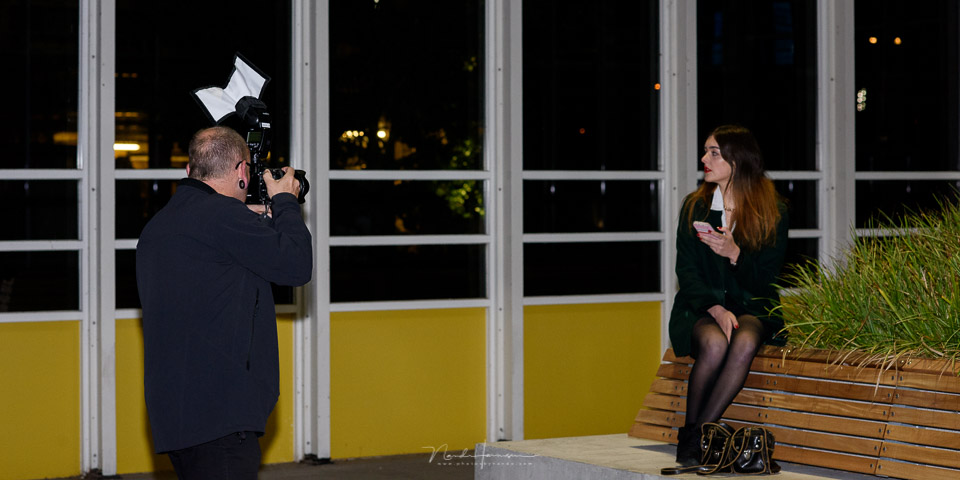
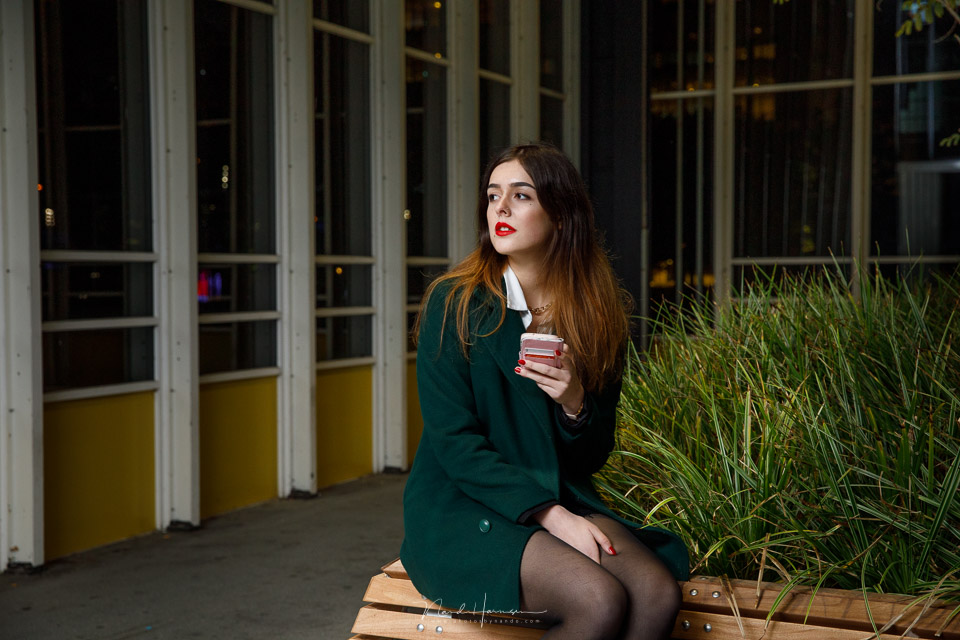
If you use the three things in this article as a starting point and build on them, you can take very successful, beautiful flash photos with an on-camera reportage flash.
Do you ever use a reportage flash? Tell us in a comment below this post how you do this, what your experience is, or whether you prefer another way of lighting.
About the author
Nando Harmsen has been photographing for more than 40 years. He specialises in wedding photography and landscape photography. Nando also gives talks, workshops, masterclasses and photo trips, and regularly reviews new and interesting equipment.
You might also like
-
 The tilt of a tilt-shift lens explained
by Nando Harmsen
-
 The Perfect Picture; Corona and Wet Nude Shoot
by Elja Trum
-
 Too perfect to be true
by Michiel Heijmans
-
The shift of a tilt-shift lens explained
by Nando Harmsen
-
 Nikon announces the Nikkor Z 35mm f/1.2 S
by Nando Harmsen
-
 Sometimes a black-and-white photo needs to be grey
by Nando Harmsen
0 comments
Be the first to share what you think!
Have your say
Please note: Articles older than a week can only be commented on by signed-in visitors.Would you still like to comment? sign in or create a free account.
Become a better photographer every week
A practical photography tip in your inbox every week.
39,024 photography enthusiasts already receive the tips! More about the weekly mail. Or keep up to date via  Facebook.

Elja Trum
Photofacts; everything to do with photography!
Would you like to take better photos and keep up with what is happening in photography? Photofacts publishes articles that teach you something about photography — from a product announcement to a practical shooting tip or a look at a website. Photofacts covers photography every day and is a hobby project of Elja Trum's that got out of hand. The articles are written by a team of volunteer authors. If you would enjoy writing one or more articles for Photofacts, do get in touch.More about PhotofactsPhotofacts is made possible in part by
