

Let your focal length ranges overlap
Sunday 1 December 2024, 22:11 by Nando Harmsen | 2,658 views | 9 commentsThis article was translated from Dutch with the help of AI. Read the original.
There was a time when almost every photographer was active on a forum. Their profile name was followed by a long list of lenses. The aim was to cover the entire range from 10mm to 1000mm, or more. Without overlap. That last part may actually be worth reconsidering.
It was almost a status symbol: a whole list of cameras, lenses, tripods, filters and whatever else under your name. Some people still do this on their website, as if they are trying to impress others.
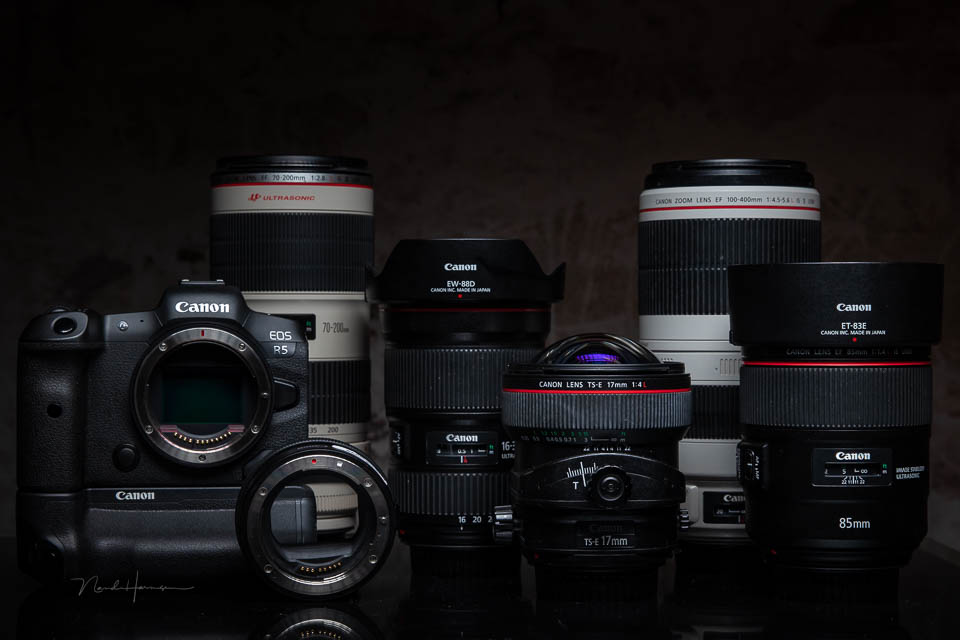
Equipment is certainly important. Anyone who says it isn't is either lying or doesn't have the financial means. Of course, you can take good photos with any camera, but the possibilities and ease of use are important.
That certainly applies to lenses too. They create the image recorded by the sensor. That should be good, or as good as possible. Then there is focal length, from wide angle to telephoto and everything in between. In the past, everyone wanted everything between ultra-wide angle and super-telephoto.
The list of focal lengths was something to show off about. My lens is bigger than yours. I have more range than you. The aim was to have perfectly matching zoom lenses.
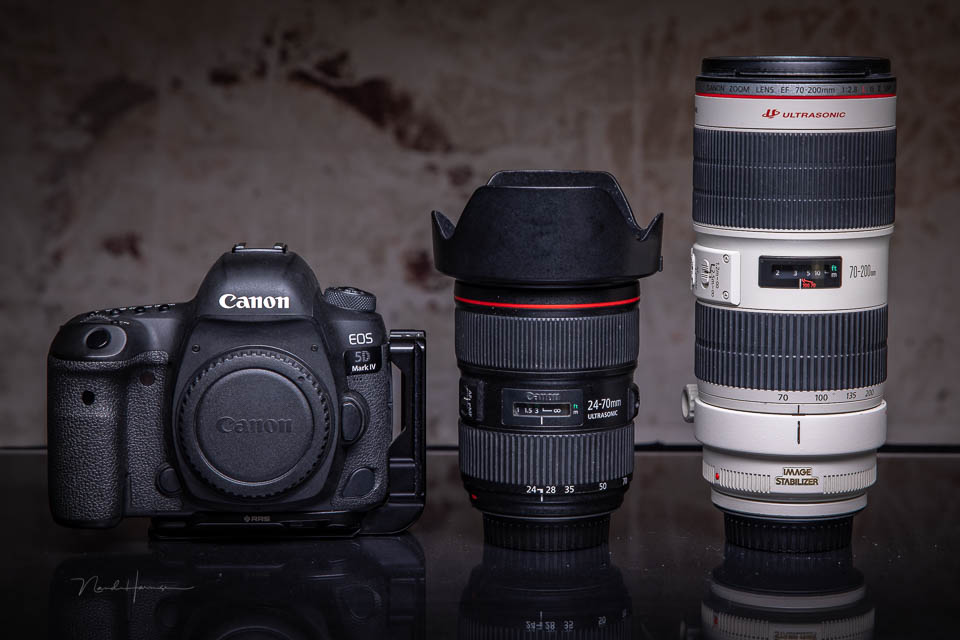
The well-known trinity may have originated from this: a 16-35mm, a 24-70mm and a 70-200mm, all with f/2.8, of course. There is only 10mm of overlap, but the rest matches perfectly.
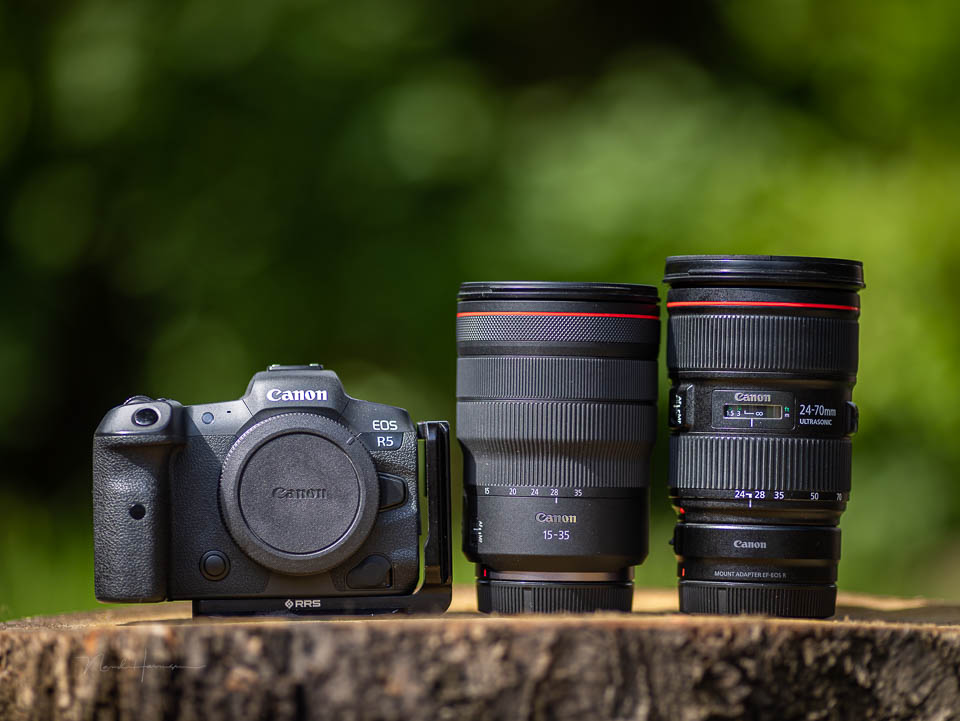
Still, I believe it is a good idea to have zoom lenses with some overlap. Are you still aiming to have everything, from wide angle to telephoto? Then don't make them match up seamlessly.
The 16-35mm and 24-70mm zoom is a good example. That 10mm overlap means you can keep photographing for longer with either the 16-35mm or the 24-70mm. You don't need to change lenses straight away when going from 24mm to 35mm, for example.
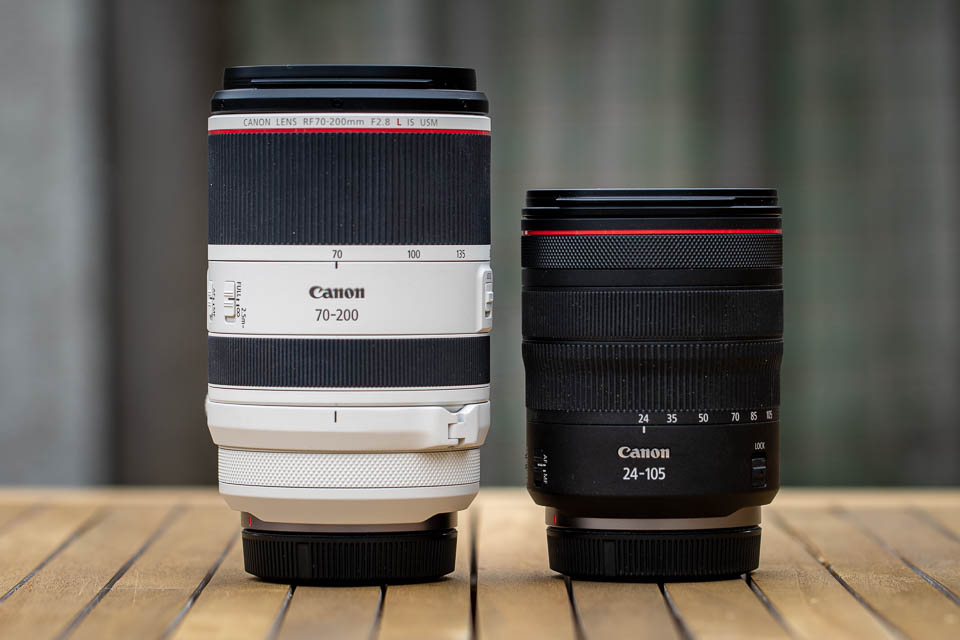
The 24-70mm and 70-200mm don't have that overlap. They match up seamlessly. This means that if 70mm isn't enough, you have to change lenses. I believe it would be wiser to have a 24-105mm instead.
You get no less than 35mm of overlap, which means you don't need to change to the 70-200mm as quickly. Isn't that useful? And this continues. A 70-200mm and a 150-600mm, for example. It gives you just a little more room at the short end with your super-telephoto lens.
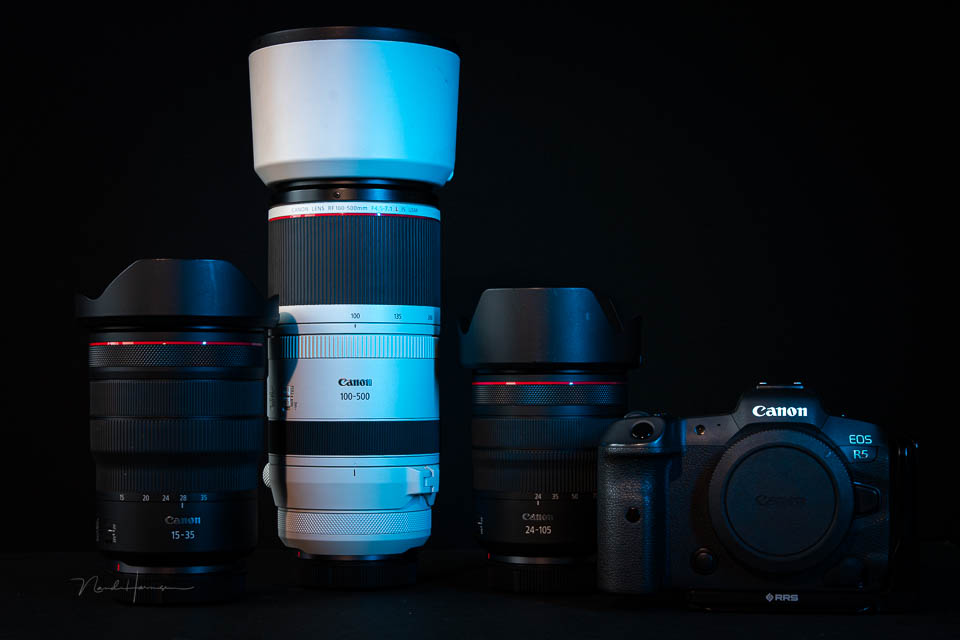
If I had to give advice, I would say make sure you have overlap. The 24-105mm and 70-200mm are a perfect example. Nikon has a 24-120mm lens, which is even better. It means you don't need to change lenses as often for the framing you want.
What I would not recommend, however, is a single lens that includes every focal length. A 24-200mm, or more. You will simply get too much loss of quality. Pincushion distortion, barrel distortion, light loss, softness in the corners, you name it.
On the other hand, if it's only for a few snapshots, why not. Although...
Are you still the photographer who takes pride in and shows off their equipment? Do you want all focal lengths to connect, preferably without overlap? Let us know in a comment below this post. I won't judge you for it, because it remains entirely a personal choice. Right?
About the author
Nando Harmsen has been photographing for more than 40 years. He specialises in wedding photography and landscape photography. Nando also gives talks, workshops, masterclasses and photo trips, and regularly reviews new and interesting equipment.
You might also like
-
 Don't Buy Photography Equipment, Rent It
by Nando Harmsen
-
 Nikon ambassador Sebastián Liste documents deforestation in the Amazon
by Michelle Peeters
-
 Flash photography tip: Get to know your equipment
by Elja Trum
-
 Composition tip: Don't let objects overlap
by Elja Trum
-
 Make a list of your favourite places
by Nando Harmsen
-
 The real purpose of a rain cover for your camera backpack
by Nando Harmsen
9 comments
-

 MacBigfoot wrote on Sunday 1 December 2024 at 23:34
| reply
MacBigfoot wrote on Sunday 1 December 2024 at 23:34
| reply
I have never let myself be guided by what others might think of it, or by what I would like them to think about my lenses.
Translated from Dutch.
I chose an Olympus, for zoom lenses you end up with Panasonic or Olympus. I wanted good quality, water-resistant, preferably a constant aperture when zooming. That already leaves few options. I chose the Olympus lenses because they technically match the body 100%, think among other things of image stabilization.
In the end, three remained, which I only purchased one at a time based on finances and the need to use them:
Subsequently the 12-40 f/2.8 , 40-150 f/2.8 and a 7-14 f/2.8.
And I never worried about overlap or not, there wasn't much choice, but in practice this choice never bothers me, there always comes a moment when you want (“have to”) switch zoom lenses. -
 Hans wrote on Tuesday 3 December 2024 at 11:22 | reply
Hi Nando,
Translated from Dutch.
Good to cover this subject, I used to think I needed everything too. (still quite a lot now)
these days I have a different kind of trinity set :
1. the Canon RF 24-240mm, not a bad little lens that can handle a lot, which I take with me depending on my needs.
2. Canon RF 14-35mm, RF 24-105mm, EF 100-400mm + 1.4X, and the EF 100mm macro, good quality and you won't miss anything, because of the weight also an EF 70-300mm.
3. then some faster glass, nothing spectacular but when needed I have the RF 24mm 1.8, the RF 35mm 1.8, and the RF 50mm 1.8.
Because of my goals, including holidays, nature, family, evening, zoo; and the contents and total weight of my camera bag, I can make some nice combinations from these to take with me.
Everything connected to two bodies, the R6 and the R7, which I see as my backup body with a 1.6X converter. -

-
 Frouke wrote on Tuesday 3 December 2024 at 13:13 | reply
Finally, someone who shares my opinion. I always advise my students to use an overlap as well. In addition, I also advise making sure that the diameter of the front lens of your lens is the same for all your lenses, so you only need to bring and purchase 1 set of polarizing/ND filters.
Translated from Dutch.
-
Nando
wrote on Tuesday 3 December 2024 at 13:21
| reply
Having the same filter diameters is convenient, but if that is an argument for whether or not to buy a lens, there is a good chance that you are limiting yourself a lot (or even far too much) in your choice of lens.
Translated from Dutch.
I would then prefer to advise buying a large-diameter filter, and step-up rings to make them fit smaller diameters. -
Hans wrote on Tuesday 3 December 2024 at 14:19 | reply
Absolutely, you do suffer from choice stress, especially if you know that you take 80 percent of your photos with your 24-105mm. because of that nice overlap, a telephoto starting at 70mm also comes along sooner.
Translated from Dutch. -
 Donald Willemsen wrote on Tuesday 3 December 2024 at 14:42 | reply
Nando, I agree with you that overlap is certainly not a bad idea. What I find equally important is the zoom range of a lens. As far as I’m concerned, it shouldn’t exceed 5x the shortest focal length for the reasons you also mention in the article. With my lenses I can cover from 7.5mm to 400mm (full-frame equivalent), a large part of which with overlap. So that includes zooms and primes.
Translated from Dutch. -
 Maurice wrote on Tuesday 3 December 2024 at 15:48
| reply
Maurice wrote on Tuesday 3 December 2024 at 15:48
| reply
Because I photograph with a Nikon Z8 and 45 MP is often not necessary, I use the room to drop for the overlap. Often I even go out with only two bodies, one with a 35-150 and one with a 14-24. There is a gap between them, but with a bit more walking and the room on top I can get pretty far.
Translated from Dutch. -
 guest wrote on Wednesday 4 December 2024 at 15:04 | reply
By now I have had all versions of the Canon 5D, from I through IV, and had 9 lenses for them. A number of prime lenses, particularly for the light-gathering ability (1.4/50/35/24), and a TS 24 MkII. And the 4.0/17-40, later replaced by the 4.0/16-35 (which is MUCH better) and a 4.0/70-200 which I replaced with the 2.8 L MkII version. I regretted that, because it was 600 grams heavier and I saw no difference in my photos because the 4.0/70-200 L was very good. All this supplemented with the Macro 100, later replaced by the L version, one hell of a lens!
Translated from Dutch.
Yet by far the most photos were taken with the 24-105 L on the camera. A handy and super-sharp lens. I hardly ever used the prime lenses, and the TS 24 mm L MkII also rarely came out of the cupboard.
By now I have switched to the R5 MkII and have only 'just' bought zoom lenses to go with it: 4.0/24-105, 4.0/70-200 and F 4.0/14-35 and the 4.0/10-20
'In the past', when you looked through the lens with a DSLR, the high light-gathering ability was still very nice: you could focus more easily with a brighter viewfinder image, partly because of the slightly shallower depth of field and the brighter viewfinder image in low light.
With a mirrorless camera, that high light-gathering ability is no longer so relevant, you usually work with the shooting apertures F 5.6 and F 8.0 anyway and the R series focuses perfectly, even with those less light-sensitive lenses in low light.
The image quality of the RF lenses is amazing: you really don't need to buy the F2.8 variants for that anymore. The small gain in sharpness is mainly theoretical: in practice you notice nothing of it, certainly not in prints smaller than 30x40 cm.
The R5 MkII is also a fantastic camera with incredible focusing.
It is wonderful to see that it has so many possibilities, but that is immediately its pitfall: who remembers an instruction manual of more than 1300 pages? Who can 'just' find a setting in that enormous menu of dozens of pages, especially when you don't have the camera in your hands every day?
The first camera I bought new was a Nikon F (1971). It had an instruction manual of about 24 pages, neatly printed and handy: I still know how everything works.....
Incidentally, it is outrageous that no printed instruction manual is included with a camera costing € 6,000. Much more convenient than having to search for something on a small screen with a search function that is difficult to use on a (cheap) phone

Have your say
Please note: Articles older than a week can only be commented on by signed-in visitors.Would you still like to comment? sign in or create a free account.
Become a better photographer every week
A practical photography tip in your inbox every week.
39,009 photography enthusiasts already receive the tips! More about the weekly mail. Or keep up to date via  Facebook.

Elja Trum
Photofacts; everything to do with photography!
Would you like to take better photos and keep up with what is happening in photography? Photofacts publishes articles that teach you something about photography — from a product announcement to a practical shooting tip or a look at a website. Photofacts covers photography every day and is a hobby project of Elja Trum's that got out of hand. The articles are written by a team of volunteer authors. If you would enjoy writing one or more articles for Photofacts, do get in touch.More about PhotofactsPhotofacts is made possible in part by
