

(Nude) portrait photography: get the light right and make contact
Saturday 24 June 2023, 21:50 by Erik van Rosmalen | 14,759 views | 11 commentsThis article was translated from Dutch with the help of AI. Read the original.
Elja recently asked me to review one of the courses from Photofacts Academy. I chose the nude photography course by Danyel Weideman. A popular genre, which I also pursue from time to time.
Other photographers regularly ask me where they should start. Or how they should start. My answer is often a little disappointing: start by photographing clothed people.
Why? For several reasons.
Why nude?
That is the first question you can ask. Why do we want to photograph nudes? The nude in art has been around for all time.
In Ancient Greece, art literally left little to the imagination. Gods, goddesses and heroes were invariably depicted nude. But even in prehistoric times, the nude was already a common subject, in cave paintings and primitive figurines.
Alongside all sorts of symbolic meanings, such as fertility, vitality, strength and pride, the nude in art sometimes also has an erotic or provocative aspect.
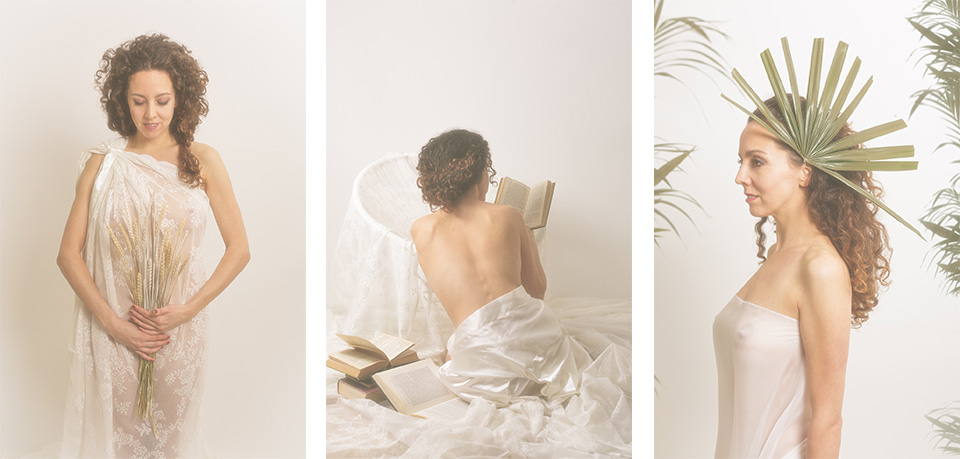
Yet more artistic nudes have often emerged from other motives too. To show purity, or because it gives a classical feel. Either way, first think about what you want to create, why and in what mood. Only then comes the rest: technique, light and, above all, communication.
Technique
Having your technique in order is the foundation. ISO, shutter speed and aperture. But also specifically focused on photographing people. Which focal lengths do you use for what?
And how do you get the eyes really sharp? You may have experience with other forms of photography, but make sure you really master this when applied to portraiture.
The advantage is that during a shoot you have to spend much less time dealing with your camera. That leaves room for what it is really about. And in fact, that is two things. The light and the contact with your model!
Light
I rarely work in a studio myself. I much prefer photographing on location. Often outdoors too. I always discuss with the model whether there is sufficient privacy.
I often photograph very early in the morning. It is much quieter in nature then, and the light is obviously much more suitable when the sun is still low.
.jpg "Amber(1)")
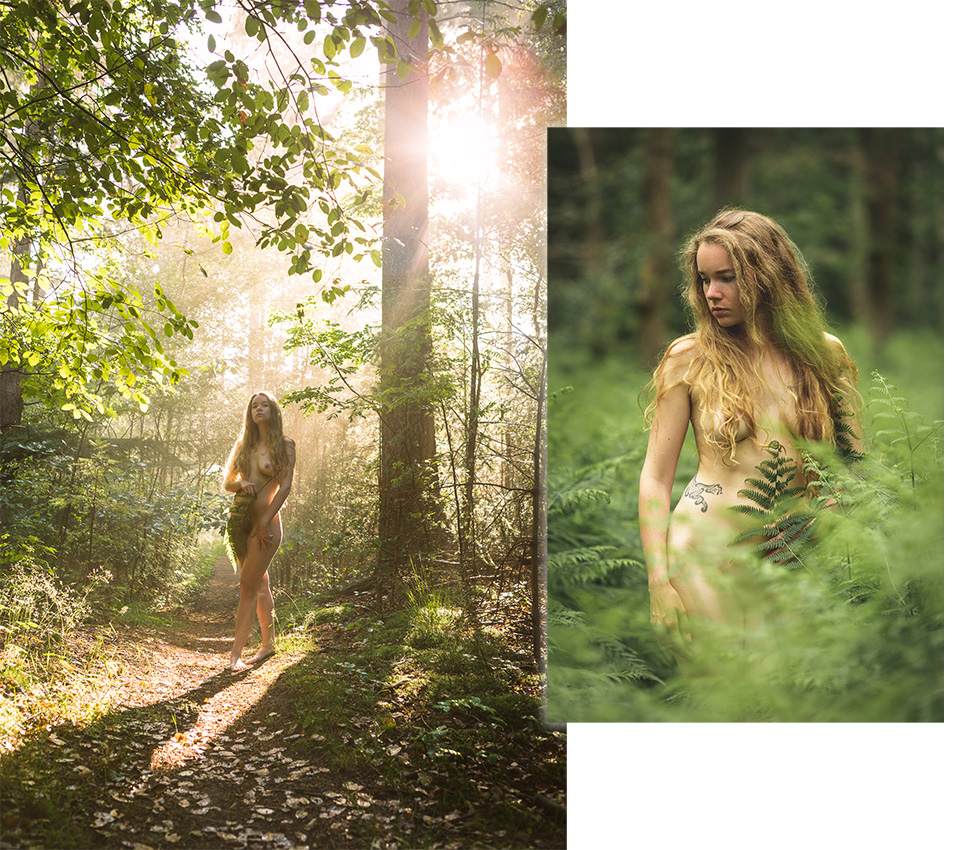
Because light is, of course, essential in every form of photography. But in nude photography it is even more important. Even more than with clothed photography, light can add or remove emphasis.
A single shadow can make or break a photo. Knowledge of natural light and of where the sun will be at a location is therefore very important. But also study what light does and learn to control it.
Contact
After 'technique' and 'light', there is another important component that is sometimes underestimated. Contact. With every form of people photography, your communication skills are hugely important.
Don't forget that someone having their portrait taken, even fully clothed, will always feel a little vulnerable. Let alone when they are wearing little or no clothing. You must never underestimate that!
Good communication naturally starts before the shoot. When finding a model, for example. Of course, you don't ask someone whether they want to pose nude for the first time during a shoot. You do that beforehand.
And you make clear agreements. What do you want to photograph, what style, does he or she feel comfortable with it... Also discuss the purpose of your photos, whether and how you want to publish them, and work with a contract if possible.
But during the shoot, it is of course also very important to keep communicating properly. Some photographers find that difficult, though. They are completely absorbed in concentration, focused entirely on the camera and the shoot, and almost forget that there is someone standing in front of them.
Keep in touch, create a relaxed atmosphere and make the model feel that you really see them.
In fact, if possible, try to establish better contact first. What kind of person is in front of your lens? Try to get to know her, or him, a little better, and vice versa.
Some tips, which also work perfectly well for clothed photography:
- Keep talking I recently spoke to a model who had worked with a photographer on an earlier shoot who hardly said anything. Just the occasional 'ooh', 'hmm', 'ah' or 'yes'. That kind of encouragement may be well meant, but it made her very uncomfortable. It can, and often will, have the opposite effect... Just keep the conversation going, tell them what you are doing and keep the contact open.
- Point out what is good So what should you do? Keep talking and focus on what is good. Don't say everything that is going wrong, point out what the model is doing well. So not 'Shame you are slouching a bit', but 'Your expression is beautiful, can you do that again, but this time with your shoulders slightly further back?'. For example.
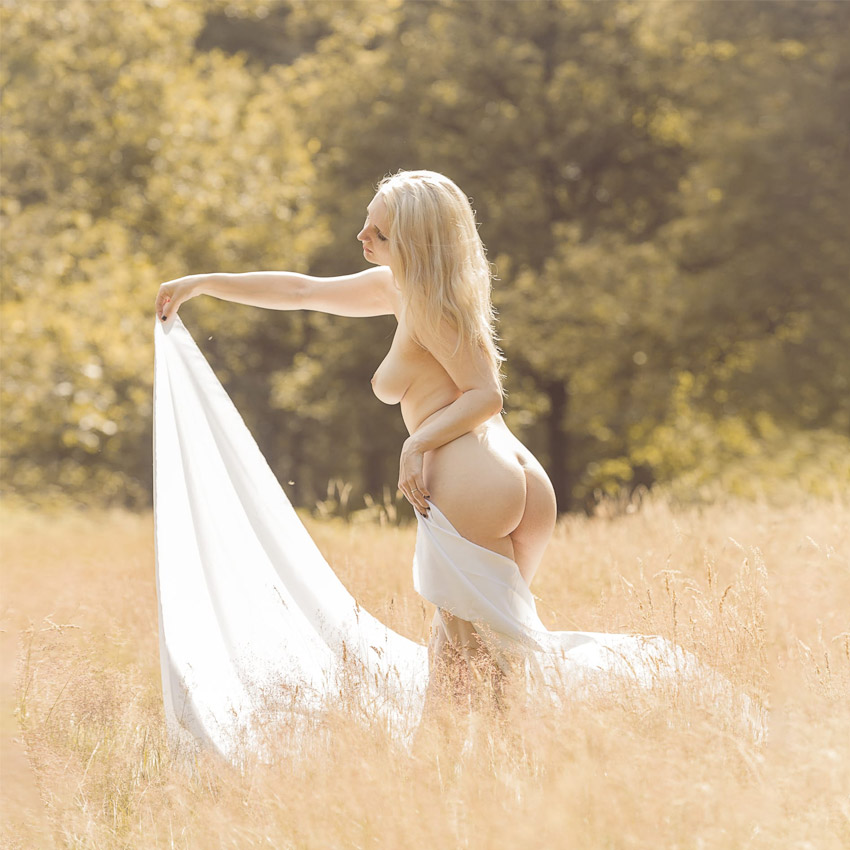
For this photo, I asked Shannon to move freely and gracefully with the white cloth. You inevitably get images where the pose is not quite right. Don't focus on that, but look together at what does work and what could be improved.
Depending on their experience, this will produce better or less good images. In any case, be clear, and demonstrate poses if necessary. In the worst case, you will look ridiculous in that pose. At least then you will have taken some of the tension out of the situation...
Doing lots is the best way to learn
Would you like to get started with nude portraits? Brush up on your technical knowledge and take a look at the courses on Photofacts Academy, such as Nude photography by Danyel Weideman or the course Boudoir photography, by Frederik Herregods.
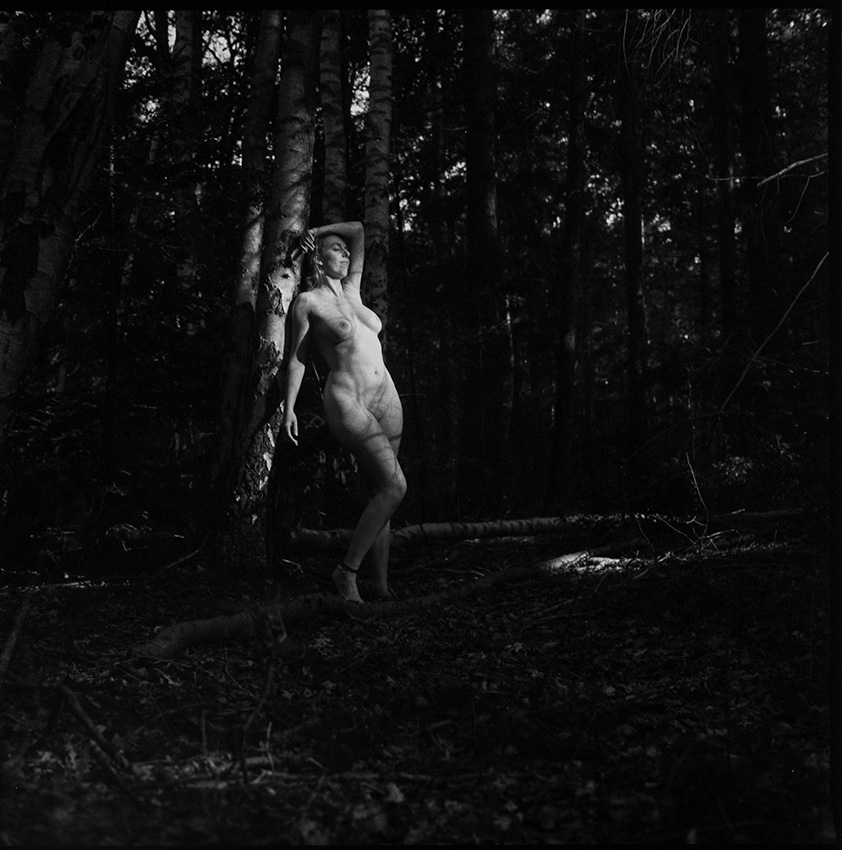
But above all, make sure you take lots of photos and keep working on your communication skills. After all, the best thing about photographing people is that you photograph with people and get to know them!
Dit artikel is voor het laatst bijgewerkt op 24 juni 2023.
De eerste publicatiedatum is zaterdag 21 januari 2023, 15:51.
About the author
Erik werkt als content specialist. Daarnaast is hij freelance tekstschrijver en fotograaf. Mensen vormen daarbij het hoofdonderwerp: portret- en reportage-fotografie. Volg Erik ook op Instagram!
You might also like
-
 How to find a model for nude photography
by Elja Trum
-
 The Perfect Picture; Corona and Wet Nude Shoot
by Elja Trum
-
 Het Perfecte Plaatje; Silence and nude models
by Elja Trum
-
 Marilyn Monroe-inspired nude shoot by Lindsay Adler
by Elja Trum
-
 Landscape photography: people in the frame or not?
by Erik van Rosmalen
11 comments
-

 martinphili wrote on Sunday 22 January 2023 at 08:44
| reply
martinphili wrote on Sunday 22 January 2023 at 08:44
| reply
Well explained!
Translated from Dutch.
A small addition: during the photo shoot, look the model in the eyes and don't let your gaze drift to something below them.
That may sound a bit strange and unnecessary, but I heard from models that there were still many photographers who (unintentionally) looked there anyway. And that was experienced as very unpleasant. -
 ErikvanRosmalen
wrote on Monday 23 January 2023 at 20:41
| reply
ErikvanRosmalen
wrote on Monday 23 January 2023 at 20:41
| reply
Yes, I still hear that one from models from time to time too, unfortunately.
Translated from Dutch. -
 RAWshooter wrote on Tuesday 24 January 2023 at 10:41 | reply
So this isn't a review of that course.
Translated from Dutch. -
ErikvanRosmalen
wrote on Tuesday 24 January 2023 at 10:52
| reply
That's right. The review of that course was published earlier, I refer to it in the link in the first paragraph.
Translated from Dutch. -
 Donald Willemsen wrote on Tuesday 24 January 2023 at 11:27 | reply
A good article Erik. Indeed, contact with the model is the most important thing of all. There must be a bond of trust, I think. In the analogue era I gained a lot of experience in nude photography. Especially in a club setting. Often an afternoon or evening was organised with a model and 5-6 photographers who would then stand there taking photographs. If one photographer had a model assume a certain pose for a beautiful photo, another photographer would be taking photographs from a different angle, which does not produce a photo that should be seen.
Translated from Dutch.
Hereby I want to indicate that you are always better off working one-on-one with a model. In the studio or on location, possibly accompanied by an assistant.
Working with people is actually what I like doing most during my photography. -
ErikvanRosmalen
wrote on Tuesday 24 January 2023 at 15:32
| reply
Agreed. In my view, this genre doesn't work that way either. Actually, almost no form of portrait does. Because you don't make that photo at the moment you press the button, but in the time around it, through the contact. And that doesn't work when there's such a peloton standing opposite a model!
Translated from Dutch. -
 Francis wrote on Tuesday 24 January 2023 at 12:13 | reply
Obviously, you shouldn't 'sneak a peek', but I do think it's necessary to look carefully at everything that ends up in your frame to avoid unwanted things appearing in it. And that means specifically not only looking into the model's eyes.
Translated from Dutch. -
ErikvanRosmalen
wrote on Tuesday 24 January 2023 at 15:33
| reply
That is correct (and that is no different with clothed or unclothed models). But it is indeed as you say already different whether you assess the composition/pose, or whether you seem to be having a conversation with someone's body part...
Translated from Dutch. -
Donald Willemsen wrote on Tuesday 24 January 2023 at 17:02 | reply
You also see that at photography fairs. A model then lies stretched out on a beautiful car and around it a whole battery of photographers with tripods, one even bigger than the other, and all pushing with their elbows. So for me that is not model/portrait photography.
Translated from Dutch.
Erik, then I would also like to hear your opinion on working with (semi-)professional models or working with amateur models.
One major disadvantage of professional models, in my opinion, is that they know so many poses and adopt them on their own because they think they look most flattering in the photo.
In my eyes, the photographer should have the initiative in hand. The photographer determines roughly what the photo should be like. Of course, the model has a say. That is why it is also so important that before the shoot it is discussed what the photographer has in mind regarding the kind of photos they should become.
With amateur models, as a photographer you can put more of your own ideas (poses) into it, because amateur models often do not yet know where their good, strong sides lie. Professional models know that all too well and they therefore make sure that precisely those sides appear in the picture. -
 Lauran wrote on Wednesday 25 January 2023 at 14:29 | reply
I’ve been photographing in this genre for quite a few years now. No matter how much commotion there is around you on location: concentrate on the model. By the way, I only work with professional models. They simply understand better what you want to portray as a photographer. Never had any problems with them just doing whatever themselves. That really is down to the photographer’s experience.
Translated from Dutch.
Experience is therefore a first requirement before you start with this style.
I also do a lot of studio photography, by the way. I think both have something to offer. -
ErikvanRosmalen
wrote on Thursday 26 January 2023 at 14:43
| reply
About professional versus amateur models:
Translated from Dutch.
I work with both. Amateur models require a bit more direction. As in awareness of light and camera: how they move in relation to the light and how they tense muscles and 'shape' limbs.
Personally, I have also never experienced more professional models 'doing their own thing'. I think that mainly happens with the category of models who are mainly at that kind of group workshop, facing five or six photographers. Precisely because there is no communication then.
Have your say
Please note: Articles older than a week can only be commented on by signed-in visitors.Would you still like to comment? sign in or create a free account.
Become a better photographer every week
A practical photography tip in your inbox every week.
39,079 photography enthusiasts already receive the tips! More about the weekly mail. Or keep up to date via  Facebook.

Elja Trum
Photofacts; everything to do with photography!
Would you like to take better photos and keep up with what is happening in photography? Photofacts publishes articles that teach you something about photography — from a product announcement to a practical shooting tip or a look at a website. Photofacts covers photography every day and is a hobby project of Elja Trum's that got out of hand. The articles are written by a team of volunteer authors. If you would enjoy writing one or more articles for Photofacts, do get in touch.More about PhotofactsPhotofacts is made possible in part by
