

Panning for action shots
Thursday 9 April 2026, 22:11 by Nando Harmsen | 1,603 views | 2 commentsThis article was translated from Dutch with the help of AI. Read the original.
You can photograph fast-moving subjects with a very fast shutter speed. The movement is frozen. Everything is still at that moment. Sometimes that is perfect. Sometimes you want to see movement. Panning is essential in both cases.
A frozen moment of fast movement requires a fast shutter speed. Sometimes that shutter speed needs to be 1/2000 sec or even faster. If you choose a slower shutter speed, you will start to see movement. Speed becomes visible.
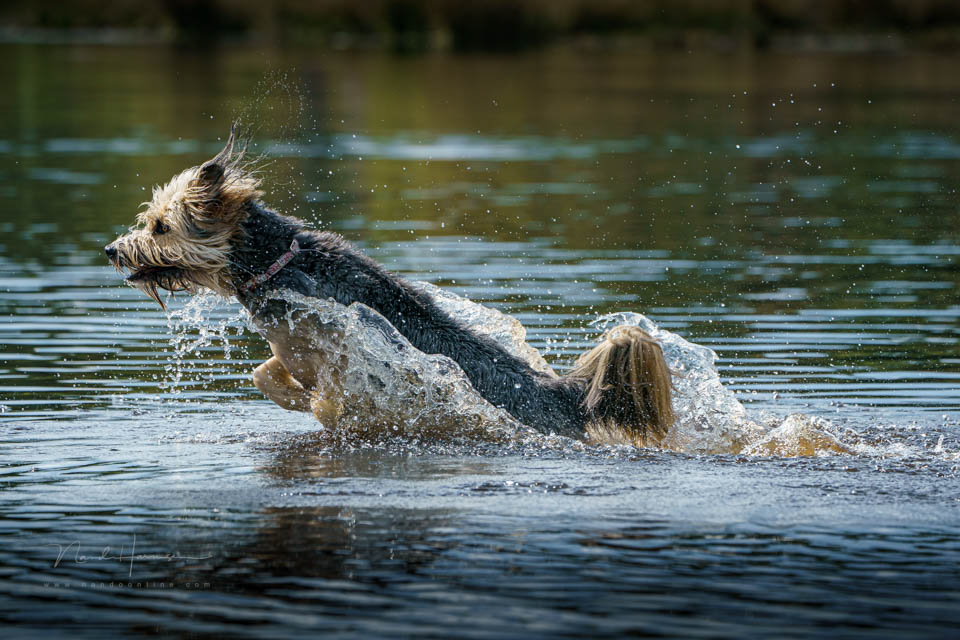
In both cases, you will need to move the camera along with the movement. It is almost impossible to keep the camera still and get a moving subject sharply in the frame. Especially with fast movements.
That is why you follow the subject and press the shutter button. You also take a (short) series of photos, at least in most cases. From these, you choose the best photo, which often depends on the position of the paws and legs, or the background.
This movement is called panning. You use it for all movements that go parallel to the camera. This is regardless of the shutter speed you use. Panning increases the chance of a successful action shot.
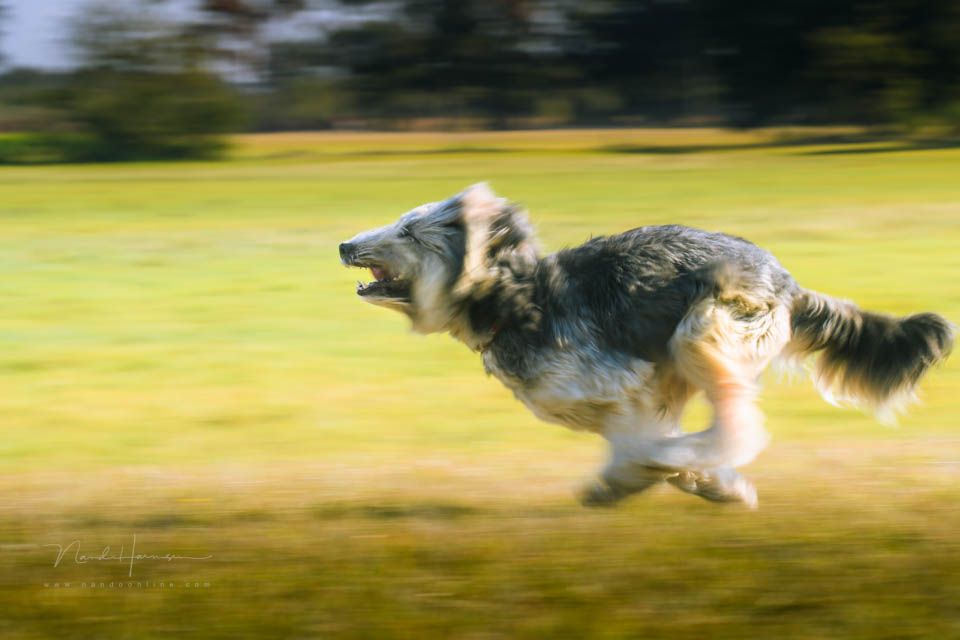
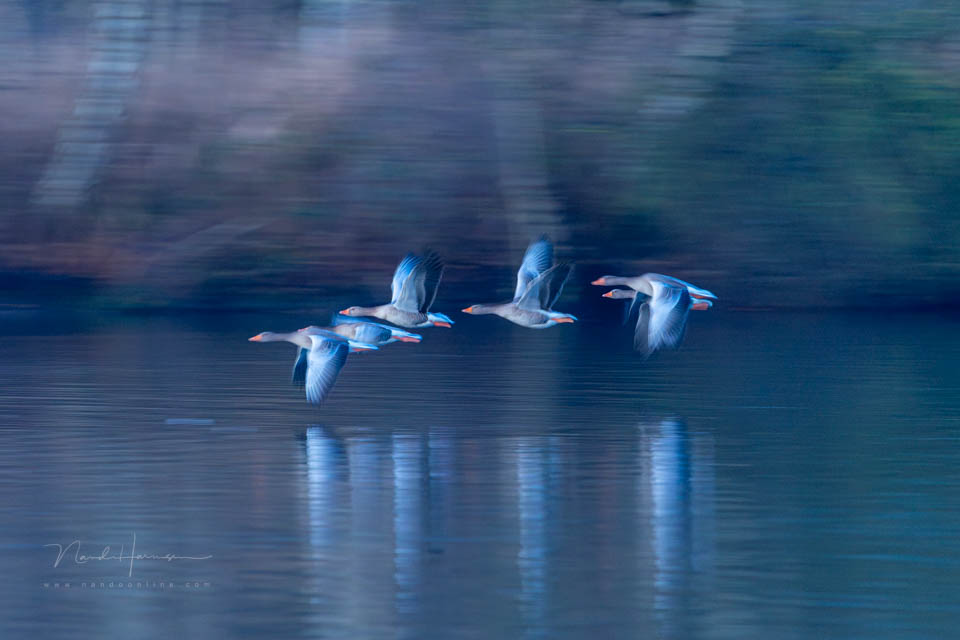
But panning also gives you the opportunity to make the movement visible. By deliberately using a slow shutter speed, you create a sense of speed. Paws and legs are no longer sharp, or the background becomes blurred.
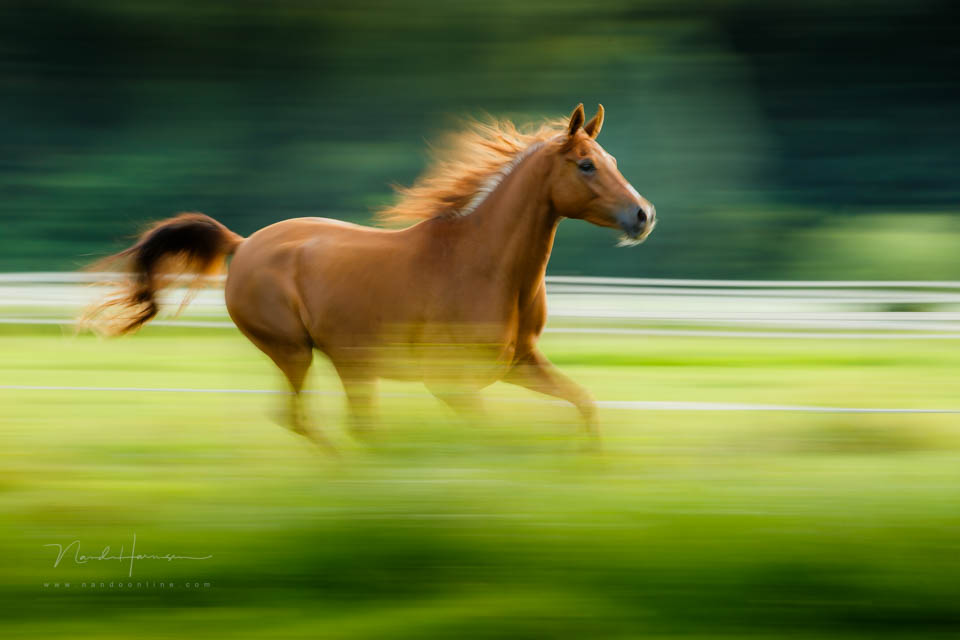
It is not easy to use panning with slower shutter speeds. It takes practice, and the way your subject moves plays a role in whether you succeed. A car or bicycle is relatively easy. That movement is constant.
Animals are more difficult, especially if the movement is unpredictable. The distance to the subject also plays a role, as does the focal length. The closer you are, the more difficult it is. And then there is also speed.
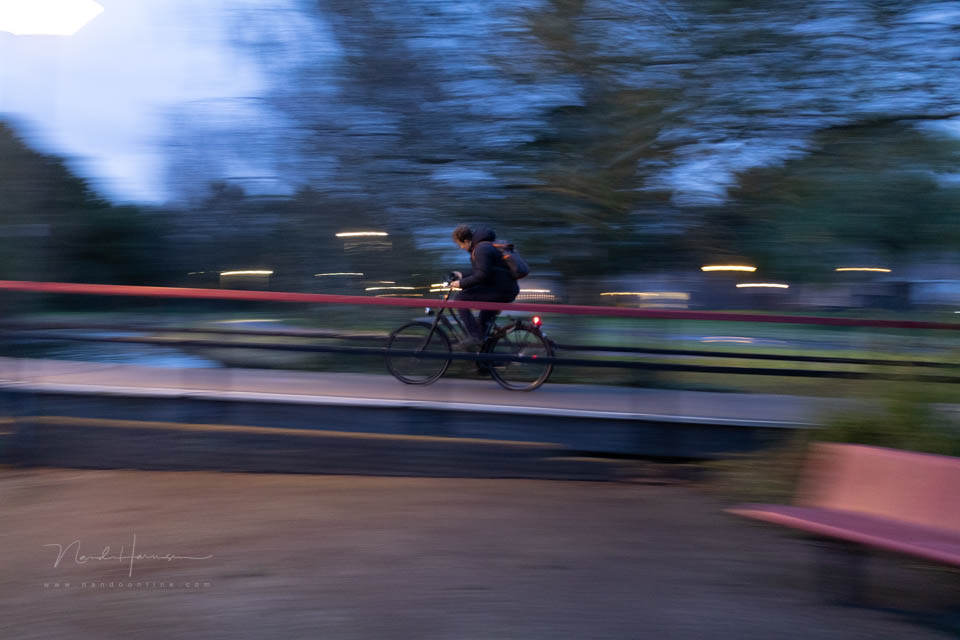
Moving along with a subject is fairly easy to practise and get the hang of. But choosing the shutter speed that gives the desired effect is difficult. This requires less practice than experience.
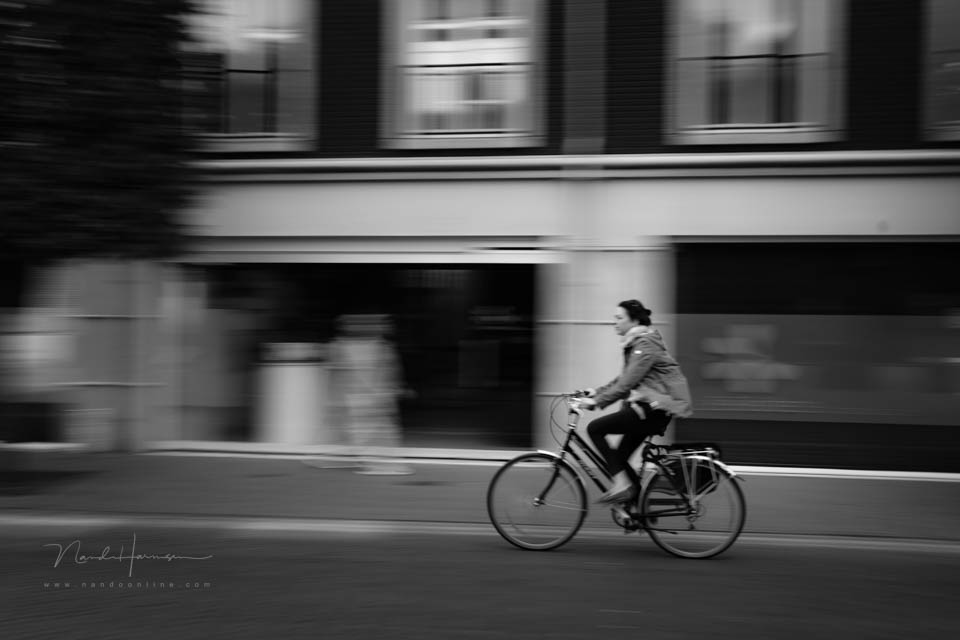
Sometimes 1/125 sec is right, while in other cases 1/20 sec is better. There are situations where half a second produces the desired effect. Take the movement of the subject itself, its speed, and the distance into account.
It becomes easier if you always photograph the same subject. Always horses, or dogs, or cars, or birds. You then gain experience with the appropriate shutter speed, because you develop a feel for the subject's movement and speed.
About the author
Nando Harmsen has been photographing for more than 40 years. He specialises in wedding photography and landscape photography. Nando also gives talks, workshops, masterclasses and photo trips, and regularly reviews new and interesting equipment.
You might also like
-
 10 tips for panning, moving the camera with the movement
by Nando Harmsen
-
.jpg "15 practical tips for sharper panning photos") 15 practical tips for sharper panning photos
15 practical tips for sharper panning photosby Huub Keulers
-
 Street photography tip: Try a panning shot
by Michiel Heijmans
-
 A little movement when panning
by Nando Harmsen
-
 The basic settings for action photography
by Nando Harmsen
-
 Sports photography tip: Focusing while panning
by Nico Delmeire
2 comments
-
 Govaerts wrote on Tuesday 14 April 2026 at 19:21 | reply
can you also use a tripod in order to avoid moving vertically as well
Translated from Dutch. -

 Nando
wrote on Tuesday 14 April 2026 at 22:53
| reply
Nando
wrote on Tuesday 14 April 2026 at 22:53
| reply
If the movement is perfectly horizontal, yes, that is possible provided that the movement of the tripod head is smooth enough.
Translated from Dutch.
If the movement deviates even slightly from the horizontal direction, it will become difficult or even impossible.
I advise not using a tripod.
Have your say
Please note: Articles older than a week can only be commented on by signed-in visitors.Would you still like to comment? sign in or create a free account.
Become a better photographer every week
A practical photography tip in your inbox every week.
39,079 photography enthusiasts already receive the tips! More about the weekly mail. Or keep up to date via  Facebook.

Elja Trum
Photofacts; everything to do with photography!
Would you like to take better photos and keep up with what is happening in photography? Photofacts publishes articles that teach you something about photography — from a product announcement to a practical shooting tip or a look at a website. Photofacts covers photography every day and is a hobby project of Elja Trum's that got out of hand. The articles are written by a team of volunteer authors. If you would enjoy writing one or more articles for Photofacts, do get in touch.More about PhotofactsPhotofacts is made possible in part by
