

Puzzling over crop sensors and depth of field
Monday 5 December 2016, 20:02 by Nando Harmsen | 19,772 views | 19 commentsThis article was translated from Dutch with the help of AI. Read the original.
Depth of field is the area that is rendered sharply in the photo, from a point in front to a point behind. We all more or less know that. What is less well understood is the relationship between depth of field and crop sensors. Let's puzzle over this to gain a better understanding.
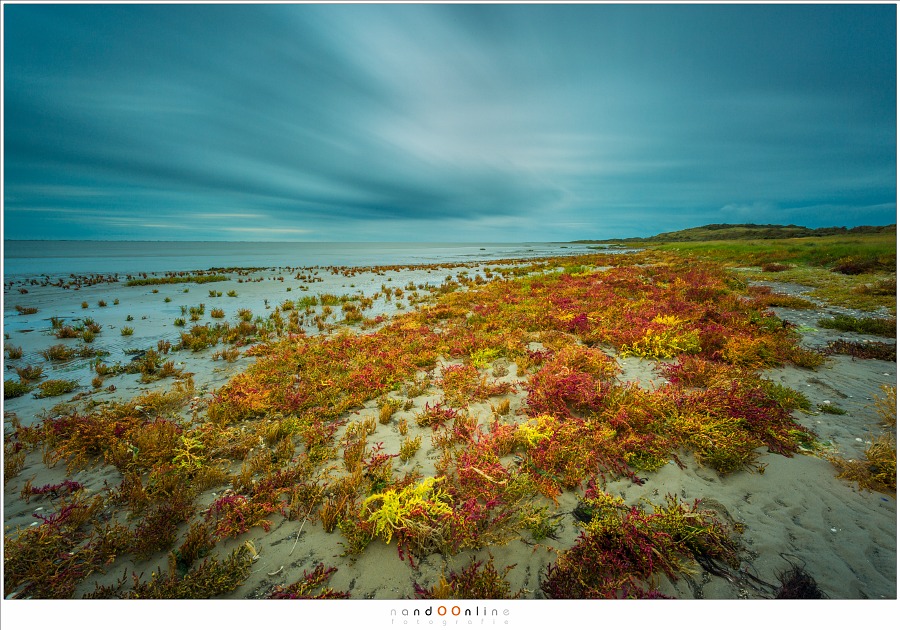
When you consider sharpness in a very clinical and physical way, only the point you focus on is truly sharp. But depending on the distance, focal length and, of course, the aperture, there is an area in front of and behind the focus point where the blur is too small to be visible in the photo.
As viewers, we therefore experience this as sharp. Anyone who looks further into this phenomenon will also encounter the term Circle of Confusion (CoC), a subject whose explanation goes far beyond the scope of this article.
So much for the clinical, physical reality. In practice, the sharpness of a photo is determined by how we view it. An out-of-focus photo can appear sharp when displayed on a small screen.
This is why the small three-inch screen on your camera can show a sharp photo, only for you to discover at home that the photo is not actually sharp on your computer. We have all experienced this at some point and, in fact, we all understand it to some extent.
This principle also applies to depth of field. A photo viewed at a small size will show a greater depth of field than when we view the same photo at a large size, simply because the blur in a small photo can be so slight that we can no longer see it. When the photo is displayed large, we enlarge the blur as well, making it much more visible.
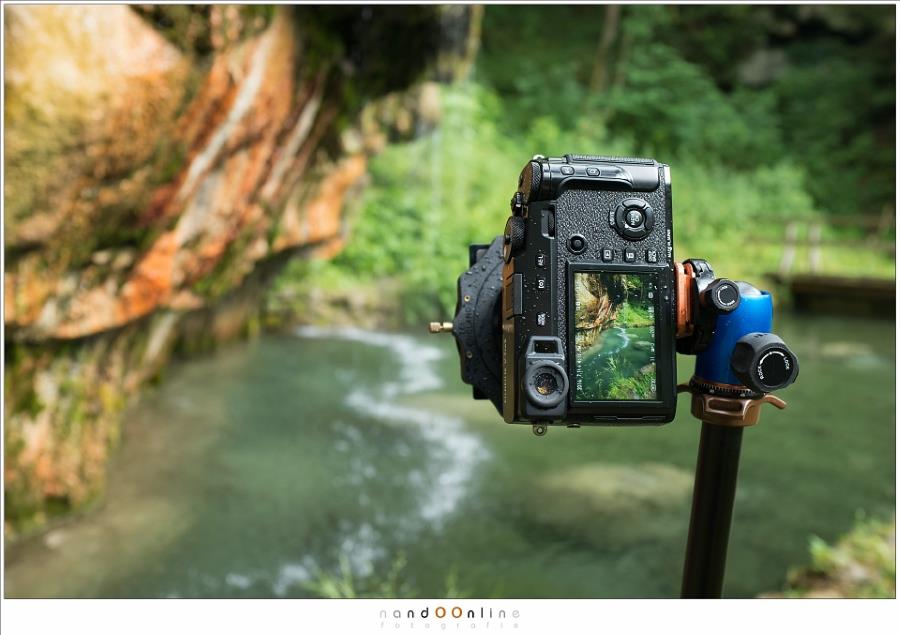
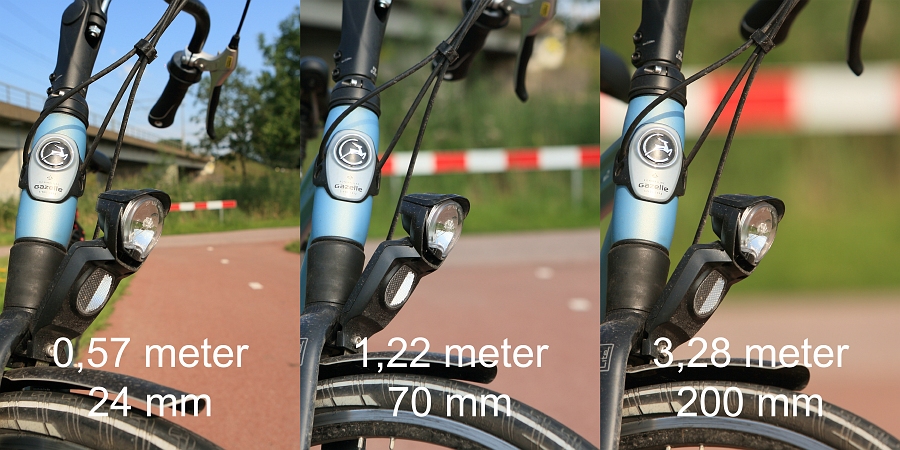
As photographers, we also understand the effect of the aperture opening on depth of field. The smaller the lens opening, or in other words, the higher the aperture number, the greater the depth of field.
Of course, we must always remember that the distance to the subject and the focal length also have a very significant influence on depth of field. Perhaps even more than the aperture alone.
With f/11 and a 17mm lens, we have a depth of field that runs from 0.73 metres to infinity (on a full-frame camera, focused at 5 metres). With the same aperture and a 200mm focal length, we have a depth of field of only 41 centimetres (again on a full-frame camera, focused at 5 metres).
Programs such as the one found at dofmaster.com can calculate this perfectly for us.
Less depth of field with a smaller sensor?
The theory involving formulas and calculations behind this subject is not particularly interesting to photographers, unless that is where your interest lies. Knowing the theory will generally not result in better photos.
But it is important for photographers to know what determines depth of field and how to play with it, so you can create a photo with the right atmosphere, appearance and... depth of field.
But what about a crop camera? What does a smaller sensor do to depth of field? Because let's be honest, a smaller sensor essentially only records a smaller part of the image captured by the full-frame sensor.
So with the same focal length, aperture and distance, the depth of field should remain the same, regardless of the sensor size, shouldn't it? Or not? The answer is yes and no, depending on how you look at it.
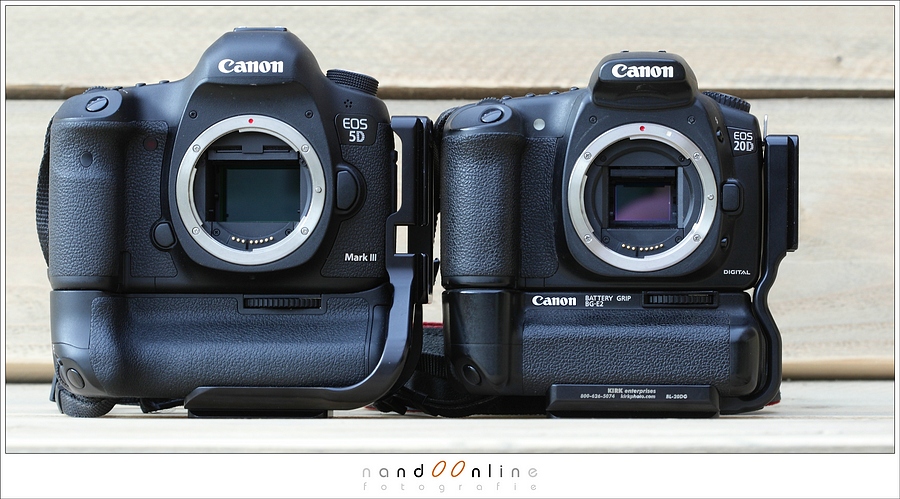
I will show this in small steps using a number of example photos. As a Canon user, I used an 85mm focal length on a full-frame Canon EOS 5D mark III and a Canon EOS 7D mark II with a 1.6x crop sensor.
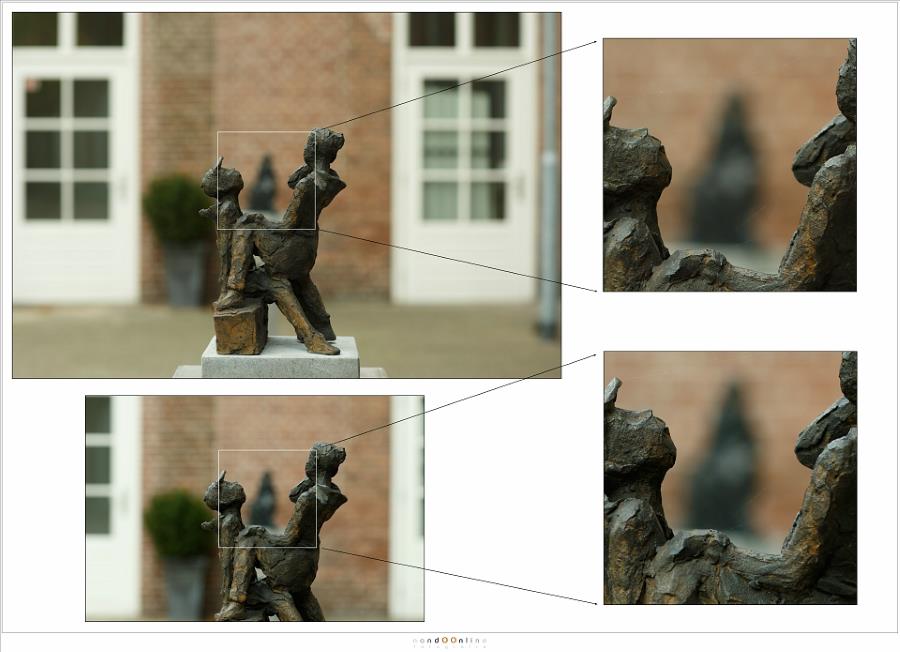
Regardless of the sensor size, the depth of field will always be the same for a given focal length, distance and aperture. The laws of physics take care of that. But we must then ensure that the photo from the crop camera is kept proportionally smaller than the full-frame photo.
That means that if we print the full-frame photo at 10x15 cm, we must not print the photo from the crop camera larger than 6x9 cm, 1.6 times smaller, because that is the crop factor in this case. Only then will the depth of field be the same in both photos (see photo 6).
Remember what I said at the beginning: '...that depth of field is determined by how we view a photo.' If we enlarge the photo from the crop camera to the same size as the full-frame photo, which in practice will always happen, we enlarge the blur as well.
And what do we find? The depth of field in the enlarged photo from the crop camera is smaller than that of the full-frame photo (see photo 7). That seems strange at first, because the opposite is always claimed.
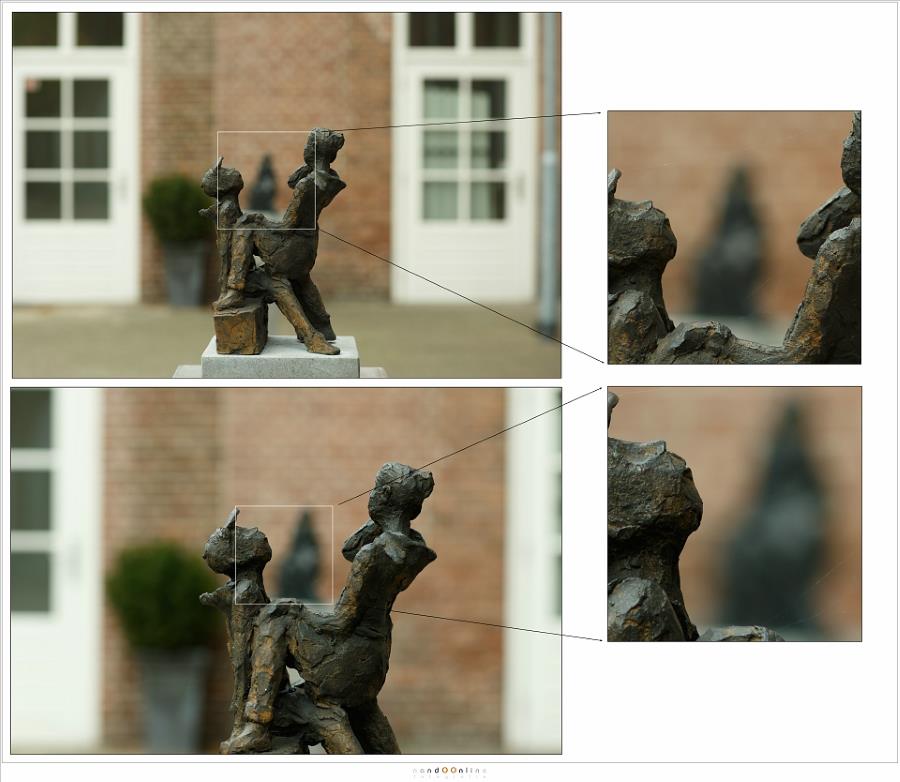
A calculation from the DOF calculator does show the same thing, provided we view both photos at exactly the same size, in this case both at 10x15 centimetres, as I used in the example earlier.
1.6 crop sensor (7D mark II): 7.39 - 8.73 metres in focus (DOF = 1.34 m)
Full-frame sensor (5D mark III): 7.07 - 9.21 metres in focus (DOF = 2.14 m)
What about the framing?
But wait. When we look at the photo, we see that the framing is not the same. That is logical, of course, because the crop camera has a smaller sensor, so much less appears in the photo.
As you can already see in photos 6 and 7, we enlarge the photo from the crop camera to the same size as the full-frame photo. The result is a photo that looks like what a full-frame camera would capture with a focal length 1.6 times longer. In this case, 85 x 1.6 = 136mm.
To get the same framing with the crop camera as with an 85mm focal length on the full-frame camera, we can do two things: use a shorter focal length, 1.6 times shorter to be precise, 53mm; or move further away, namely 1.6 times further away, 12.8 metres.
Only in those cases will the subject appear exactly the same size in the frame.
Let's return to the basics: we all know that focal length and distance to the subject also affect depth of field.
If we change one of these two things, it has a direct effect on depth of field, even if we use the same aperture. And this is naturally confirmed by the DOF calculator.
1.6 crop sensor (7D mark II): 11.3 - 14.8 m in focus (DOF = 3.49 m)
Focal length reduced to 53mm, aperture f/4, distance 8 metres
1.6 crop sensor (7D mark II): 6.58 - 10.2 m in focus (DOF = 3.61 m)
For comparison, the situation with the full-frame camera at 85mm, f/4 and a distance of 8 metres
Full-frame sensor (5D mark III): 7.07 - 9.21 m in focus (DOF = 2.14 m)
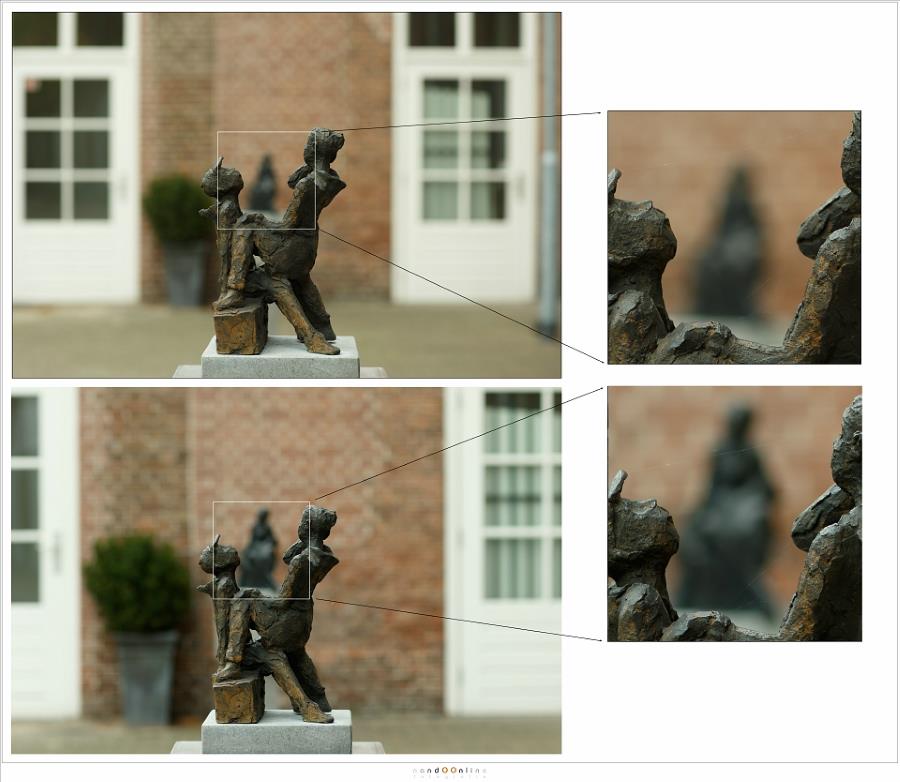
And what do we find? The depth of field of the photo from the crop camera is therefore greater than that of the full-frame camera (photo 8). The difference in depth of field therefore depends entirely on the distance to the subject and the change in the, fictional, focal length.
For that reason, a crop camera always has a greater depth of field than a full-frame camera, provided the subject is the same size in the frame. That is the condition, though.
Of course, it is also possible to calculate the other way around, by using a longer focal length on the full-frame camera, or by moving closer to your subject to achieve the crop camera's framing. Here too, the correction factor is once again the crop factor of 1.6.
Depth of field is difficult. Or is it?
By now we know that the aperture is not the only thing that determines depth of field. The focal length and distance to your subject also determine how sharp or blurred you have the background, or foreground, in your image.
If this is not completely clear yet, or if you would like to go over it again, I explained it in detail and in simple terms in my article Depth of Field in Practice.
In practice, very few people will use a crop camera and a full-frame camera alongside each other in this way, or even compare them. The theory and calculations about how great the depth of field actually is, or how much smaller it is with a crop camera than with a full-frame camera, are really not important at all.
But these calculations and comparisons do show that if you like working with minimal depth of field, a full-frame camera can be a better choice. And if you prefer working with a large depth of field, a crop camera is perfectly suitable.
Finally
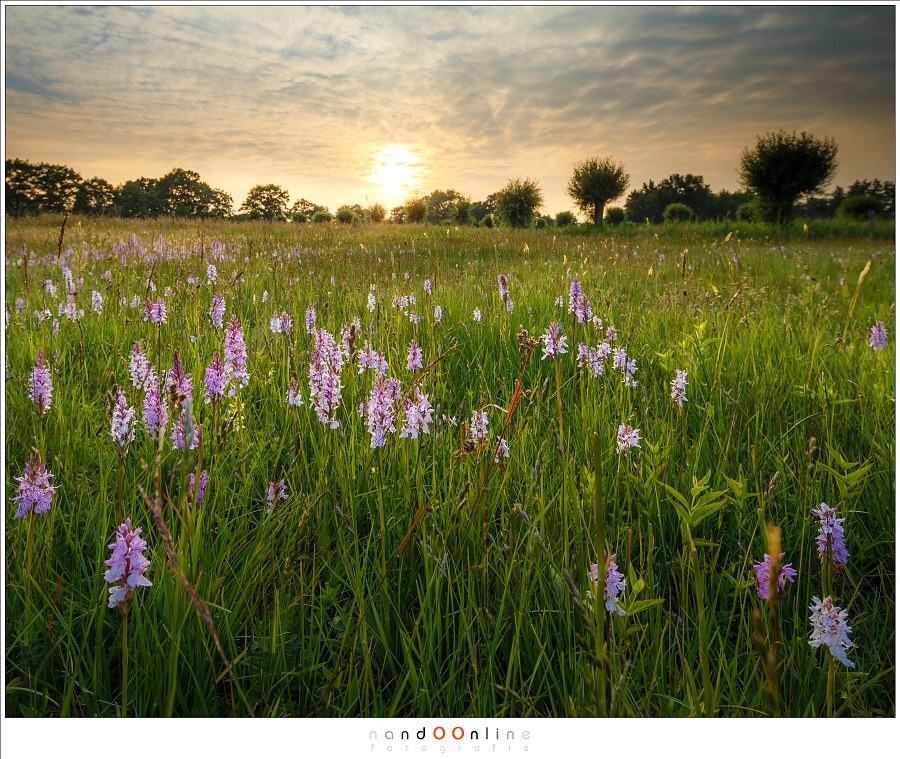
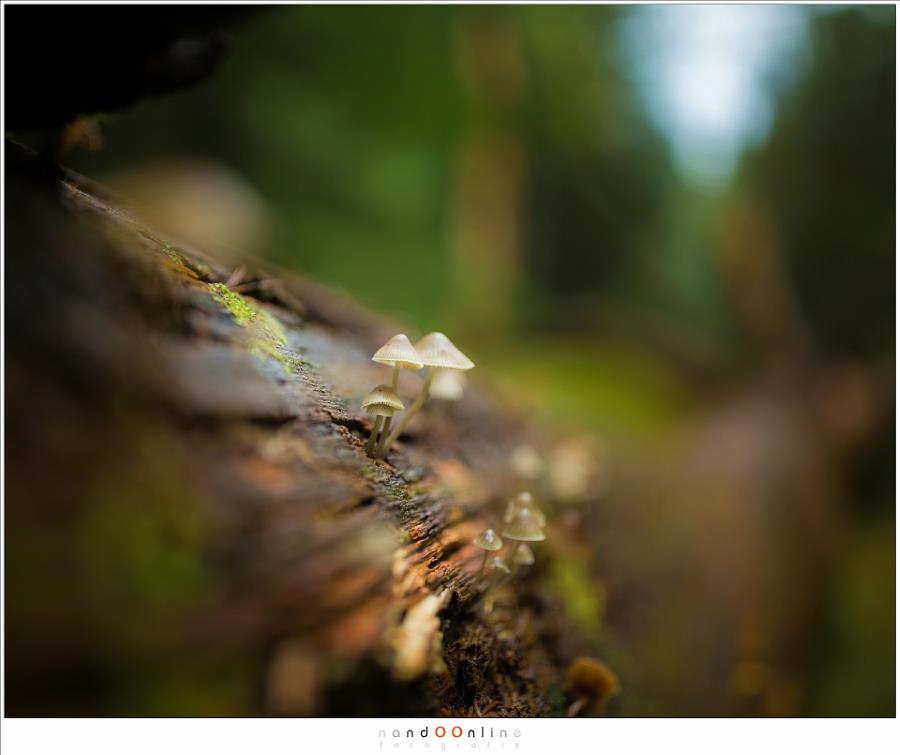
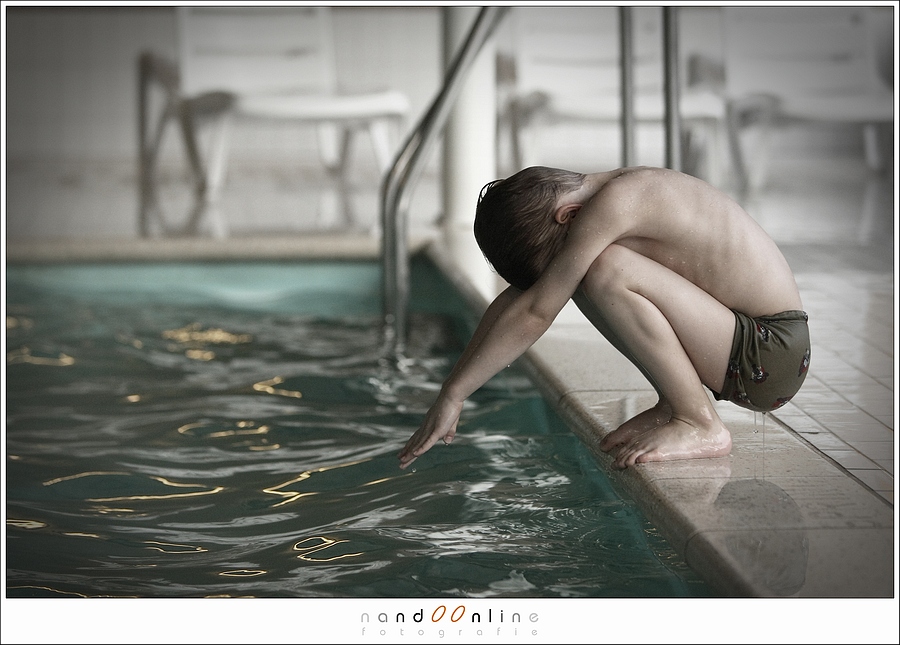
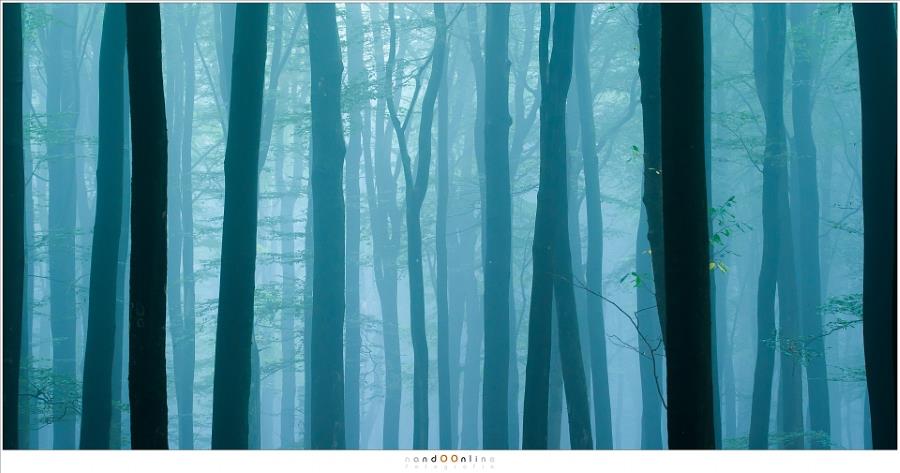
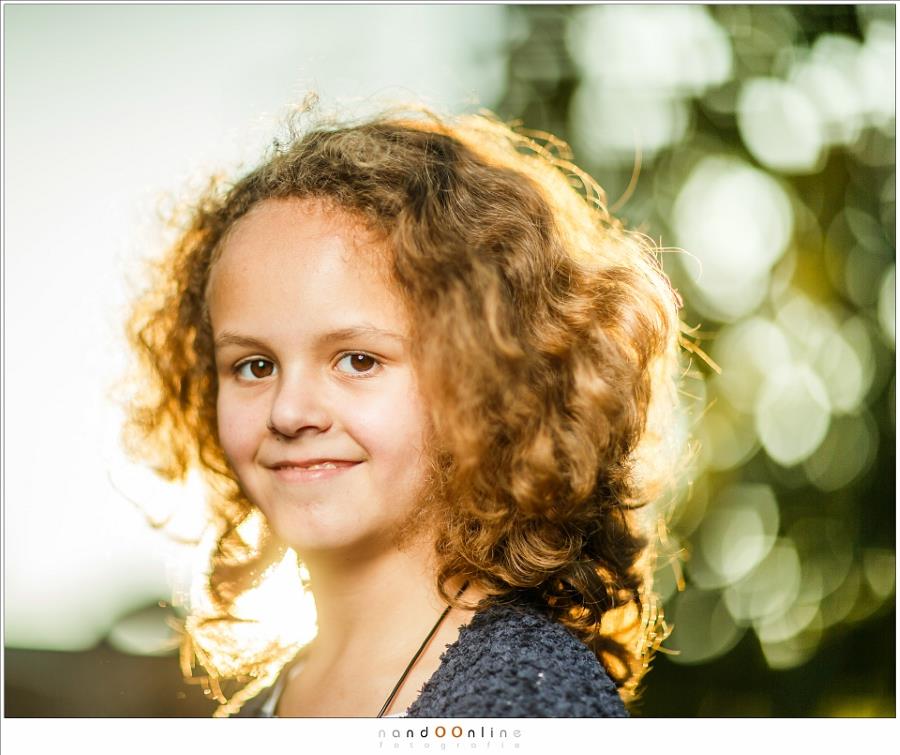
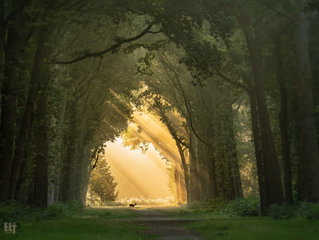
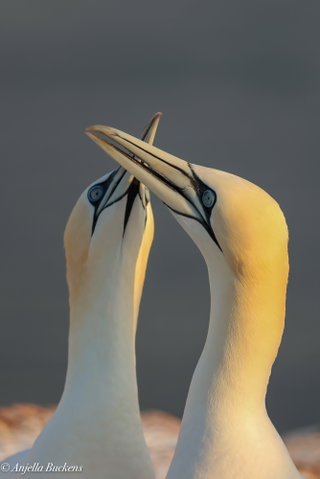
Fortunately, using depth of field is usually not a matter of extremes. A paper-thin depth of field, as in photo 12, can be fun, just like the maximum depth of field in a landscape such as photo 2.
Much more important is choosing the RIGHT depth of field. That can of course be minimal or maximum, but in most cases it is probably somewhere in between. The right depth of field is often a matter of feeling, or the photographer's preference.
Depth of field is therefore not just the number on the lens. The right depth of field runs from the desired point in front of the subject to the desired point behind it.
The aperture number that ultimately goes with this does depend on the crop factor, focal length and distance to the subject, but the exact number is less important.
About the author
Nando Harmsen has been photographing for more than 40 years. He specialises in wedding photography and landscape photography. Nando also gives talks, workshops, masterclasses and photo trips, and regularly reviews new and interesting equipment.
You might also like
-
 The opposite of cropping
by Nando Harmsen
-
 Cropping is good, but don't overdo it with animal photos
by Nando Harmsen
-
 Which is better, cropping a full-frame image or using a crop sensor?
by Nando Harmsen
-
 Crop or use a teleconverter?
by Nando Harmsen
-
A panorama or a panorama crop?
by Nando Harmsen
-
 Photographing or cropping a panorama
by Nando Harmsen
19 comments
-

 Paul Oosterlaak wrote on Monday 5 December 2016 at 20:31
| reply
Photo 9: Depth of field is influenced by more than just aperture. Focal length and distance to the subject also determine what the depth of field will be like, as can be seen in this example. All photos were taken at f/2.8, but with a different distance to the subject and focal length (see this page for more explanation about depth of field).
Translated from Dutch.
Here you are confusing depth of field and background blur. With a longer focal length and the same framing, depth of field is always the same. Background blur increases with a larger pupil (focal length : f-number).
For yet another explanation of this subject: https://gathering.tweakers.net/forum/list_messages/1738681 (especially the first part about equivalence). -
 Nando Harmsen wrote on Monday 5 December 2016 at 21:03 | reply
Thank you for your comment, Paul.
Translated from Dutch.
The photos in image 9 show the practice. If we check the theory exactly, and enlarge that small section of the red-and-white sign in the wide-angle shot to the same dimensions as in the telephoto shot, then we will indeed see the same blur.
But that is not how we look at the photo, theory notwithstanding. That is also not how it is depicted in the photo. This is how we experience the blur, and that means that for the viewer, the experience of depth of field is determined by distance, focal length, and aperture. -
Paul Oosterlaak wrote on Monday 5 December 2016 at 21:39
| reply
I understand what you mean, but that is something different from depth of field. That is simply background blur. I don't want to turn it into a technical discussion, because the rest of your article is good and clear (kuddo's for that), but I think a small nuance can't hurt, so that you're not only clear to the "layperson", but also theoretically correct.
Translated from Dutch. -
Nando Harmsen wrote on Monday 5 December 2016 at 22:02 | reply
Depth of field remains a subject that is open to debate. For a more practical approach to depth of field, you can read the article on my site, in which I went into depth about depth of field (have you read it yet?) I still maintain, however, that any physical, theoretical, or mathematical approach to this phenomenon is fun for the theoretician, but not for the photographer. They will base themselves on what the photo shows, how the photo is experienced.
Translated from Dutch.
Whatever the theory says; in the end, the way the photo is viewed determines the depth of field... or blur, if you like. A photo on a medium such as Facebook or any website will show a different depth of field/blur than when printed in billboard format, where the distance from which the photo is viewed will also have an influence.
In any case, thank you for your addition.
-
Paul Oosterlaak wrote on Monday 5 December 2016 at 22:44
| reply
It's your article, of course, and you may write whatever you want. By the way, there is an error on your website in this article: "The correct distribution is always 1/3 in front of the focus point, and 2/3 behind the focus point."
Translated from Dutch.
That is a misconception. And you know that too, because otherwise you could never focus hyperfocally. -
 Jan de B. wrote on Tuesday 6 December 2016 at 07:21 | reply
Informative article, interesting to now see in practice how the difference turns out.
Translated from Dutch.
@Paul: maybe it would be nice if you wrote an article about hyperfocal focusing and how it does (not) behave in relation to the 1/3-2/3 distribution. Now I'm curious about that! -
 Donald Willemsen
wrote on Tuesday 6 December 2016 at 08:31
| reply
Very informative article. I already knew that the crop factor plays a role in sharpness/depth. This article makes the difference with a full-frame very clear. I work with a Canon crop camera myself, because a full-frame is not affordable for me. As far as I'm concerned, the photos from a crop camera can be almost as good as those from a full-frame. The main difference is in fact the angle of view. Of course, there is also a difference in the way the pixels are distributed on the sensor, but for convenience I'll leave that out of consideration for now. It does of course account for part of the difference in quality between the 2 types of cameras.
Translated from Dutch. -
 Jan wrote on Tuesday 6 December 2016 at 10:43 | reply
Nice article but what I always wonder is WHY do I have more sharpness when I stop down my aperture from f2.8 to say f8. Usually this is presented as a given but I still don't really have a clear understanding of how it actually works.
Translated from Dutch. -
Greet wrote on Tuesday 6 December 2016 at 13:18 | reply
@Jan - a small aperture number (e.g. f2.8) gives a large aperture opening, resulting in a shorter shutter speed and a shallower depth of field. With higher aperture numbers you generally have longer shutter speeds, but there is more depth of field. A large aperture (low number) can be compared to a tap that is fully open: then your bucket (the amount of light needed to 'fill' your photo, i.e. expose it) fills up quickly. A small aperture (high number) is somewhat comparable to a thin paintbrush (a thin stream of light) - with this you can paint more precisely than with a thick brush. There are pictures to be found on the internet showing how this works exactly.
Translated from Dutch.
It is funny that you can also test this with your eye. I am nearsighted myself, for example, and see things blurry in the distance, but if I look through a very small hole, I can still see that part reasonably sharply!
When shutter speeds become too long, you again run the risk of motion blur (which can be countered with higher ISO values/image stabilization or a tripod). -
 Peter wrote on Tuesday 6 December 2016 at 16:32 | reply
I have learned that you have to multiply the diaphragm (regarding the depth-of-field scale) of the lens by the crop factor compared to a full frame, which automatically results in a greater area of sharpness with a sensor with a crop factor smaller than a full frame.
Translated from Dutch.
Whether all of that is really important in practice is of course another matter, you still try to create the maximum desired effect in the photo with the equipment you own or have with you.
Moreover, medium format will soon also become affordable (and therefore full frames will become cheaper again), possibly everything will shift again (the "croppers" move to full frame and the full framers move to medium format), will we then compare again to medium format (with a crop factor smaller than 1, [0,7] compared to a full frame)?? -
Paul Oosterlaak wrote on Tuesday 6 December 2016 at 19:06
| reply
@Peter: the problem with medium format is that the lenses for it aren't as fast, so for the shallowest depth of field you still have to go with 35mm.
Translated from Dutch. -
 Henk Pruij wrote on Wednesday 7 December 2016 at 10:52 | reply
Good morning, with thanks for all the beautiful tips and tricks... from a large field of knowledge and a lot of enthusiasm.
Translated from Dutch.
But.. I want to make an assessment. My idea is that of course your expertise is great, only in a different area than most people who gratefully make use of it. Precisely because you have so much experience and also possibly more advanced equipment than your followers, if I look at myself. I have a simple Canon 350 D and a Sony HX300 which I am satisfied with. May I still say that what you work with and explain from that perspective sometimes does not quite fit with your explanation with a "normal" wallet"? I understand the principles because I have immersed myself in them only that is not the case for everyone,, I hope you understand me.. See if you might want to take that step back once in a while, then it will also become recognizable for the other category.. the Enthusiast -
 Ward Van Nuffelen wrote on Wednesday 7 December 2016 at 18:05 | reply
There is something I don't understand.
Translated from Dutch.
I shoot with a Nikon D90 myself, a DX sensor and therefore also subject to the crop factor 1.6.
As far as I know, this only applies when using Full Frame lenses on a DX camera. In that case, an 85mm indeed becomes 136mm x 1.6.
But if I use a DX lens of 85mm on that camera with a DX sensor, it remains, however you look at it, an 85mm lens. -
Paul Oosterlaak wrote on Wednesday 7 December 2016 at 18:45
| reply
@Ward: that's not how it works. Of course: an 85mm lens remains an 85mm lens. But if you put that lens on a DX camera (crop factor 1.5), you get the same image as a 128mm lens on FX.
Translated from Dutch. -
Ward Van Nuffelen wrote on Wednesday 7 December 2016 at 19:04 | reply
Yes Paul, if that is, as I said, a full-frame lens!
Translated from Dutch.
If that is a DX lens, it remains an 85mm.
Maybe Canon only sells one kind of lens. But with Nikon you have lenses for DX and lenses for FX.
If you put a DX lens on an FX body you get vignetting, lens value :1.5.
If you put an FX lens on a DX body you get a greater focal length, lens value x1.5.
And so if you put an 85mm DX lens on a DX body ...
That is: 85mm x 1 = 85mm!!!
Just like putting an FX lens on an FX body.
Then that is 85mm x1 = 85mm, I would think. -
Paul Oosterlaak wrote on Wednesday 7 December 2016 at 19:55
| reply
Ward: I know what you said, but that doesn't make a damn bit of difference. And no, you shouldn't put a DX lens on an FX camera because of vignetting. And yes, I know what Nikon sells (nothing different from Canon).
Translated from Dutch.
Read carefully what I'm saying. The conversion only makes sense if you want to compare with a lens on an FX camera. So if, for example, you currently like photographing at 85mm on DX and you want to have the same angle of view on FX, you will have to put a 128mm (in practice 135mm) lens on it.
The focal length of that 85mm lens does not change on a DX camera, even if the lens is an FX lens. The only difference is that the angle of view of a lens on DX is narrower than on FX. -
Nando Harmsen wrote on Thursday 8 December 2016 at 08:10 | reply
@Peter
Translated from Dutch.
Or (simply put) that the depth of field can also be multiplied by the crop factor sounds logical. Whether it is directly proportional is the question, however. I don't know and it is interesting to take a closer look at that. With programs such as dofmaster.com it is easy to check whether this indeed works that way.
@Henk Pruij
All this about depth of field is completely unrelated to expensive or cheap equipment. Even with a simple (but excellent) 350D or HX300 you have to deal with depth of field and crop factors. So don't be put off by more expensive equipment.
@Ward Van Nuffelen
Focal length is a physical property of a lens, no manufacturer can change that. Lenses for crop cameras (EF-S for Canon and DX for Nikon) are no different in that respect. These lenses are namely built for smaller sensors and only have a smaller image circle. That is why they will vignette on full-frame cameras if they would fit on them.
Take a compact camera as a comparison; a camera that often has a crop factor of 5. The focal length of that lens is in the order of 5mm to 35mm, but converted that is then 25mm to 175mm. This is also a lens for a crop sensor.
Just read my article about crop factor. The linkis http://www.nandoonline.com/artikelen/de-cropfactor In particular the chapter "Crop factor versus focal length. Maybe it will become clearer then. And otherwise you can always check it yourself if you can borrow a full-frame lens from a friend or acquaintance: put your crop camera on a tripod and photograph the same focal length with a DX and FX lens. Then you will experience the difference yourself. -
 Cees v.. Coevering wrote on Thursday 8 December 2016 at 10:18 | reply
The article contains several references to the "Simple DoF" app by Montana Media.
Translated from Dutch.
I downloaded the app and it seems to me to be a very good tool for every photographer to gain more insight into the concept of "depth of field".
What I do miss in the app is a good explanation of the meaning of the numbers (such as the hyperfocal distance) that become visible when you choose a certain setting on the camera and enter it into the app.
Maybe a good idea to pay attention in an article to this and/or other apps designed for the same purpose.
-
 rene prevo wrote on Thursday 8 December 2016 at 13:30 | reply
Of course, you have to enter the circle of confusion in DOF Master, only then do the data from the DOF calculator have any value. Fortunately, DOFmaster has a little table for this. You can of course also install an APP on your phone, for example the DOF Calculator by Khapa Shapa.
Translated from Dutch.
Have your say
Please note: Articles older than a week can only be commented on by signed-in visitors.Would you still like to comment? sign in or create a free account.
Become a better photographer every week
A practical photography tip in your inbox every week.
38,783 photography enthusiasts already receive the tips! More about the weekly mail. Or keep up to date via  Facebook.

Elja Trum
Photofacts; everything to do with photography!
Would you like to take better photos and keep up with what is happening in photography? Photofacts publishes articles that teach you something about photography — from a product announcement to a practical shooting tip or a look at a website. Photofacts covers photography every day and is a hobby project of Elja Trum's that got out of hand. The articles are written by a team of volunteer authors. If you would enjoy writing one or more articles for Photofacts, do get in touch.More about Photofacts Photos
Photofacts is made possible in part by
