

Smarter exposure when photographing in snow
Monday 11 December 2023, 15:30 by Nando Harmsen | 6,374 views | 19 commentsThis article was translated from Dutch with the help of AI. Read the original.
Winter is just around the corner. That means that when it gets cold enough, the rain that falls will turn into snow. If you go out to take photos, you know that you need to overexpose to get the correct exposure. But not always. You can approach it more intelligently.
I advised this for years as well. If you are photographing a snow-covered landscape, set your exposure compensation to +1 EV or +2 EV. Sometimes you use just 1 extra stop, sometimes 2 extra stops. This is simple, isn't it?
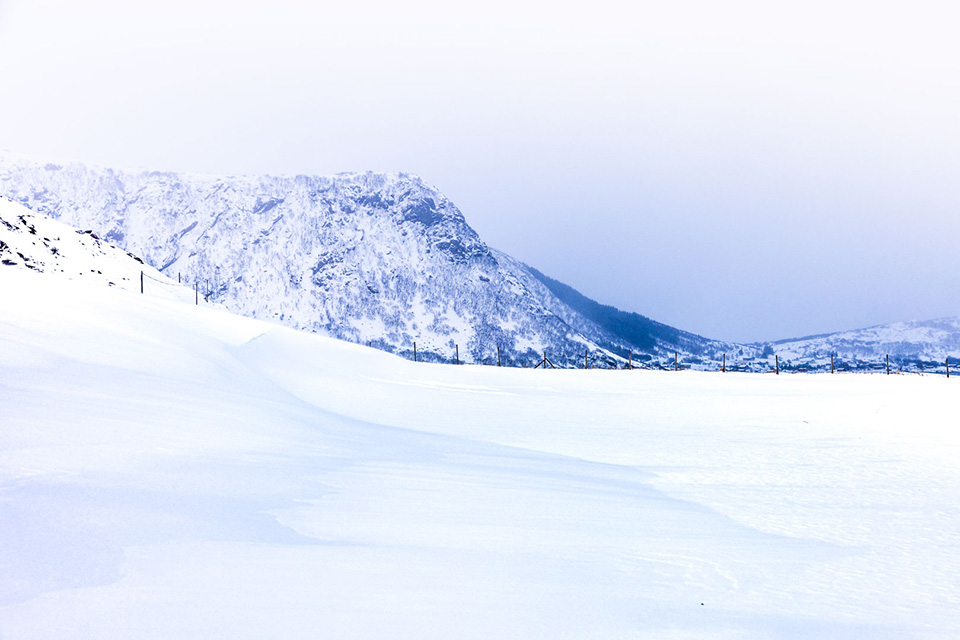
When do you use 1 stop, and when 2 stops? Are there also situations where you need to use 3 stops? Or are there times when you should not overexpose at all? This makes setting the exposure a bit of a guess again, unless you can estimate it from experience.
If you think about it, you can approach it more intelligently. You know that your camera's exposure meter is calibrated for an average brightness of 18% grey. In reality, this is 18% reflected light, which corresponds to 50% grey. But that does not matter for now.
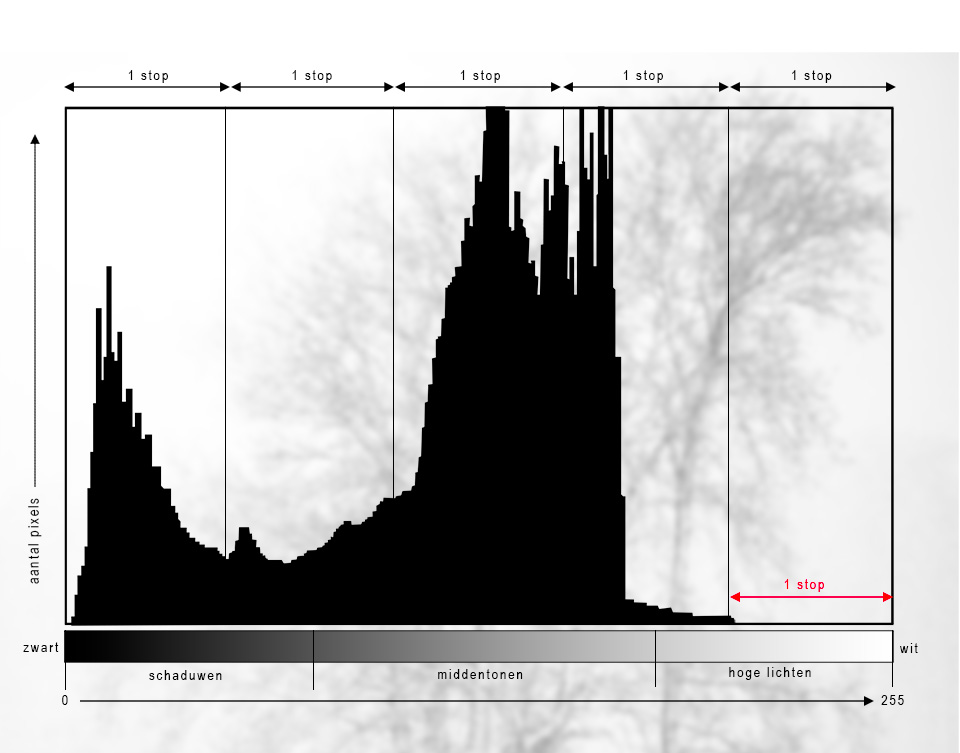
This means that if everything in your photo is white, the camera thinks it should be 50% grey. You then need to correct the exposure meter by 1, 2 or even 3 stops. You are not overexposing, you are exposing correctly.
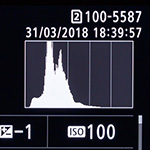
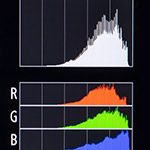
If you are photographing a snowy landscape, or people in the snow, do not blindly set the camera to 'overexposure'. First take a test photo and look at the histogram. It shows exactly how much you need to correct the exposure. If you have a mirrorless camera, you can already see the histogram without taking a test photo.
For each situation, you only need to do this once, in practice. That way, it is no longer a guess, and you can expose more intelligently when photographing in snow.
About the author
Nando Harmsen has been photographing for more than 40 years. He specialises in wedding photography and landscape photography. Nando also gives talks, workshops, masterclasses and photo trips, and regularly reviews new and interesting equipment.
You might also like
-
 7 tips for snow photos
by Elja Trum
-
 A few tips for photographing in the snow
by Nando Harmsen
-
 A Histogram Says Nothing Without a Photo
by Nando Harmsen
-
 White balance and exposure in snow
by Nando Harmsen
-
 Editing an EttR photo in Lightroom Classic
by Nando Harmsen
-
 Collected tips for snow photography
by Elja Trum
19 comments
-

 PixelDude Raoul
wrote on Tuesday 12 December 2023 at 11:11
| reply
PixelDude Raoul
wrote on Tuesday 12 December 2023 at 11:11
| reply
Your argument is missing a word about the white balance for a snowy landscape. Many a snow photo looks far too blue in the shadow areas, including your example photo.
Translated from Dutch. -
 Nando
wrote on Tuesday 12 December 2023 at 12:06
| reply
Nando
wrote on Tuesday 12 December 2023 at 12:06
| reply
This article is about exposure, which is something different from white balance.
Translated from Dutch.
The opinion about the blue tint differs from mine. This is exactly how I want the photo to look. After all, there is no white snow during the blue hour.
-
PixelDude Raoul
wrote on Tuesday 12 December 2023 at 11:12
| reply
You approached white balance in another article. 8-)
Translated from Dutch. -
 Donald Willemsen wrote on Tuesday 12 December 2023 at 11:17 | reply
I have regularly had a discussion about photos with snowy landscapes. I often see that the snow then has a light to moderate blue cast. I don't think that's beautiful. Snow should be white in the photo and may deviate a little in the case of shadows. The counterargument is then: The blue cast gives a cold atmosphere. Blue is, after all, a cold colour. I can't agree with that. For me, that blue cast is only acceptable when there is a clear blue sky present.
Translated from Dutch.
I don't know what you think about it, Nando. I'd love to hear from you. I'm going to watch that course on exposure again. -
Nando
wrote on Tuesday 12 December 2023 at 12:09
| reply
Snow doesn't have to be white. That depends on the available light. Snow is like a reflection screen, reflecting the available light. Perfectly white snow during the blue hour or during a fiery red sunset, is unrealistic.
Translated from Dutch.
Incidentally, with a clear blue sky, the snow is white.. But not in the shadows. Those naturally have a blue cast.
Despite all the discussion, it is also a matter of taste. The best solution here is simple: black and white -
PixelDude wrote on Tuesday 12 December 2023 at 12:48 | reply
So tastes differ. 8-) And that's a good thing.
Translated from Dutch.
In my opinion, snow should always be white (when it hasn't been driven flat into mud), also during the blue hour.
But this article is about exposure. Yet I've never had underexposed snow as a result with my settings? Maybe because I use a system camera where the too-dark parts light up blue and the overexposed parts red? This makes it easy for me to find the right exposure. When there is too great a difference between over- and underexposure, ... then I take an HDR photo. -
Nando
wrote on Tuesday 12 December 2023 at 14:27
| reply
A mirrorless camera is no miracle cure that would prevent this kind of thing. I think you haven't yet encountered situations where you needed exposure compensation. Because whether it's needed varies depending on the circumstances, as you can also read in the article.
Translated from Dutch. -
 wim wilmers wrote on Tuesday 12 December 2023 at 13:06 | reply
what Donald writes is only partly correct, when you go photographing during the blue hour in snowy conditions you really will get snow that will also look bluish. And we do want to capture it as true to nature as possible, I always think.
Translated from Dutch. -
Donald Willemsen wrote on Tuesday 12 December 2023 at 13:49 | reply
You can't always tell from a photo what time of day it was taken, because post-processing has a lot to do with making a photo suggest, for example, a blue hour, while nothing in the EXIF data shows that this was the case. But you're right that there's no arguing about taste.
Translated from Dutch. -
 Wim Tegelaar wrote on Tuesday 12 December 2023 at 14:29 | reply
What I miss is the colour sensitivity of the lens, which could also have an influence on the result. In addition, in analogue photography the films used had a colour rendering, Kodak was sensitive to red, Agfa had a blue cast and Fuji was sensitive to green. In digital applications these characteristics have been incorporated into the compensation of the digital unit. The old way I use is metering by hand and a UV or pink filter.
Translated from Dutch. -
PixelDude wrote on Tuesday 12 December 2023 at 16:00 | reply
Because of the blue and red indication, I normally always choose the correct exposure, which I can still adjust a little in an editing program if necessary. I don't even pay attention to the extra or fewer stops that are indicated. With an enabled blue-red indication, it's child's play. I eagerly use what technology offers me, but I don't know whether every system camera has that colour option.
Translated from Dutch. -
Donald Willemsen wrote on Tuesday 12 December 2023 at 16:08 | reply
I don't hold anything against you, Nando. It was never my intention to step on your toes. Far from it. A difference of opinion and taste should be possible, and of course one person trying to convince the other is fine too.
Translated from Dutch.
What I wanted to make clear is that these days it is so damn easy to give a photo a certain atmosphere/look that is far removed from reality. Especially with the possibilities AI currently offers. A good photographer like you doesn't need that.
I respect you as a person and as a photographer. -
Donald Willemsen wrote on Tuesday 12 December 2023 at 18:44 | reply
@PixelDude The EOS R7 doesn't have that option. The colored lines indicate what's in focus. I can see over- and underexposure from the histogram in the viewfinder before I take the photo.
Translated from Dutch. -
 guest wrote on Tuesday 12 December 2023 at 19:45 | reply
Guys, it's about exposure, not white balance. Just read it!
Translated from Dutch. -
 Viviane Bruggeman wrote on Wednesday 13 December 2023 at 08:25 | reply
Thank you Nando for the clear explanation and tips. After all, not everyone is an advanced photographer and moreover not everyone has a mirrorless camera. I have also encountered the situation you describe where doubt sets in..+1/+2 etc. many times (and probably many more people). I personally find the tip you give to look at your histogram to see how many stops you can correct to the right ‘the solution’ to never doubt again and shoot a ‘well-exposed’ photo. May I assume that this principle is also applicable when you are going to photograph a lot of black (a lot of darkness) (-1/-2 etc) and where you can also look at your histogram to see how many EV-stops you can still correct to the left? Kind regards
Translated from Dutch. -
-
PixelDude Raoul
wrote on Wednesday 13 December 2023 at 11:54
| reply
@ Guest. You too can read that it is largely about exposure when photographing snow.
Translated from Dutch.
What exactly is your opinion on exposure when photographing snow? That would actually be interesting.
With my cameras I can immediately choose the better exposure without worrying about the stops. There are quite a few photographers who don't have that option. So for them the whole stops story is very interesting. How do you do it? -
 Stefanie wrote on Wednesday 13 December 2023 at 13:28 | reply
'If you have a mirrorless camera, you can already see the histogram without a test photo' If you photograph in Live View (in Canon at least), you can also turn on the histogram, only with Canon it is the case that exposure simulation must be turned on because otherwise you won't see a histogram.
Translated from Dutch. -

Have your say
Please note: Articles older than a week can only be commented on by signed-in visitors.Would you still like to comment? sign in or create a free account.
Become a better photographer every week
A practical photography tip in your inbox every week.
39,024 photography enthusiasts already receive the tips! More about the weekly mail. Or keep up to date via  Facebook.

Elja Trum
Photofacts; everything to do with photography!
Would you like to take better photos and keep up with what is happening in photography? Photofacts publishes articles that teach you something about photography — from a product announcement to a practical shooting tip or a look at a website. Photofacts covers photography every day and is a hobby project of Elja Trum's that got out of hand. The articles are written by a team of volunteer authors. If you would enjoy writing one or more articles for Photofacts, do get in touch.More about PhotofactsPhotofacts is made possible in part by
