

5 Tips to Prevent Distortion
Thursday 13 December 2018, 12:43 by Michelle Peeters | 14,134 views | 15 commentsThis article was translated from Dutch with the help of AI. Read the original.
Architecture photographers often use a (super) wide-angle lens on a sturdy tripod. Do you want horizontal and especially vertical lines, such as those of a facade, to run perfectly straight without distortion? This article gives you 5 tips.
1. At the same height
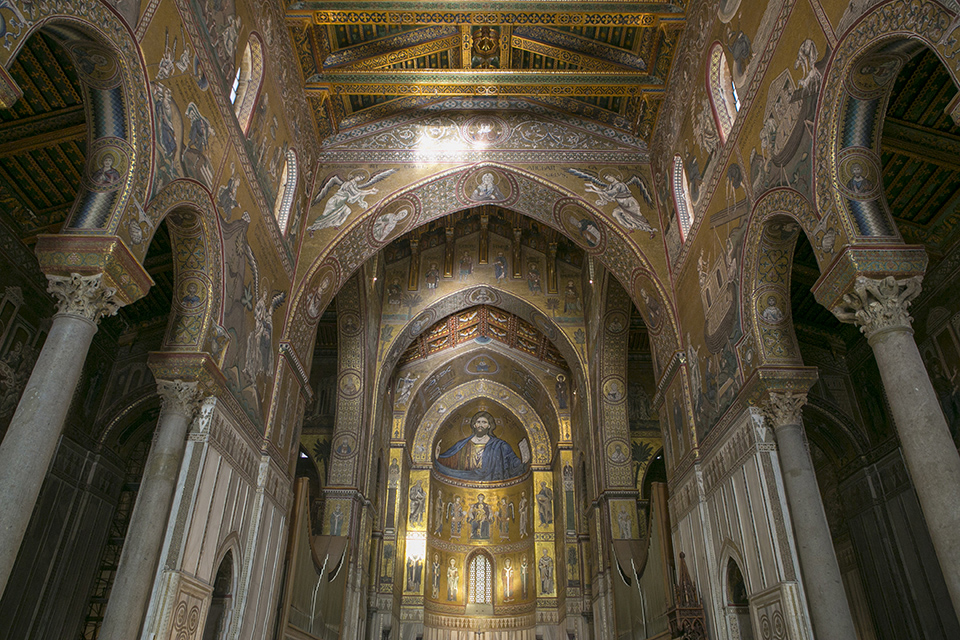
Point the camera exactly straight at the building. It helps if you are standing at roughly the same height as the middle of the building, so on a raised surface. If there isn't one, it helps to move further away from the building.
2. Spirit level
With a tripod that has a built-in spirit level in the tripod head, you can align everything properly.
There are also modern cameras with a built-in electronic spirit level, which makes it even easier to get everything straight. You can see the spirit level directly in the viewfinder or on the camera screen.
The problem is that buildings are often very tall. And if you point the camera straight ahead to prevent that distortion, you get a lot of irrelevant foreground in your photo.
Think of a busy road, people and parked cars, all things you would rather not have in your photo.
3. Tilt-shift lens
If you don't want to crop your photo, you can also choose a more expensive solution in the form of a tilt-shift lens. You shift the front of the lens upwards, so you can get the whole building nicely straight in the frame without having to point the camera diagonally upwards.
This also means there is no excess foreground in the photo. Tilt-shift lenses are very expensive, though!
4. Details
Sometimes it is also nice not to photograph a building in its entirety and instead go for beautiful details. You isolate these by using a standard or telephoto lens. In that case, you don't have to point the camera straight ahead either.
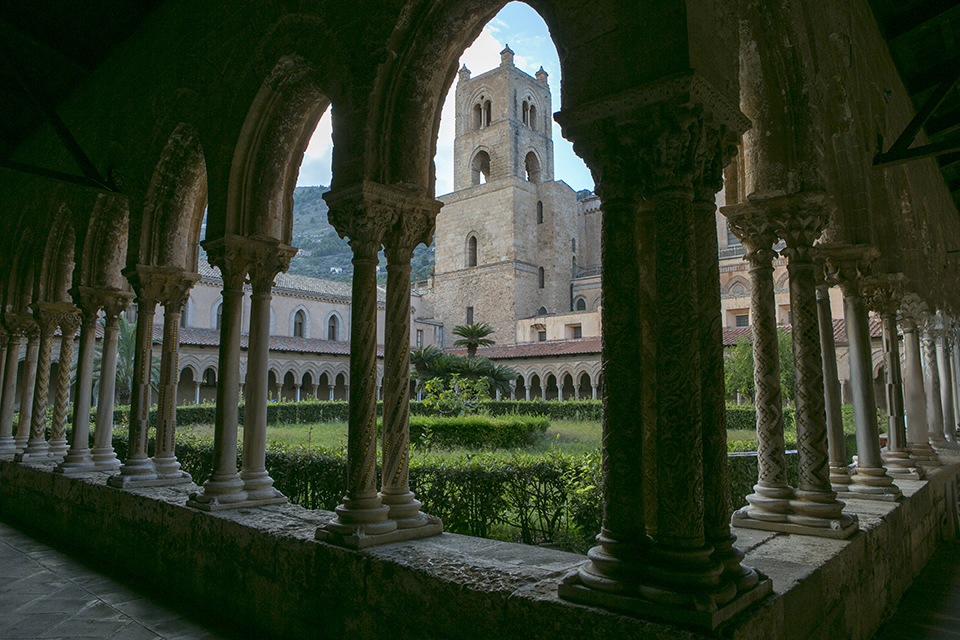
You can, for example, let facade lines run diagonally through the frame, creating beautiful depth.
5. Panorama
And if you simply don't have a wide enough lens available and still want to get an entire building in the shot, you could take separate photos and merge them into a panorama afterwards.
More tips?
More tips are always welcome, of course, so if you know anything else, let us know in the comments!
Home Photography Course
The concept of distortion is also covered extensively in the home photography course on Photofacts Academy.
You can follow this and other courses for two weeks with a free trial membership.
About the author
Michelle Peeters is fotografe en oprichter van DeuxBleus Fotografie. Michelle herkent het bijzondere in het gewone en het gewone in het bijzondere. Ze heeft zich nooit willen specialiseren en is daardoor van alle markten thuis.
You might also like
-
 The shift of a tilt-shift lens explained
by Nando Harmsen
-
Tilt-shift effect in landscape photography
by Nando Harmsen
-
The tilt of a tilt-shift lens explained
by Nando Harmsen
-
 A tilt-shift adapter for the Canon RF mount
by Nando Harmsen
-
 6 reasons to buy a tilt-shift lens
by Michelle Peeters

15 comments
-
 Mac wrote on Tuesday 9 October 2018 at 07:34 | reply
6. Use the distortion creatively.
Translated from Dutch. -

-
 Harry wrote on Tuesday 9 October 2018 at 13:26 | reply
You can also correct the perspective later in Photoshop, then you simply straighten the vertical lines and such by skewing. I do that very often.
Translated from Dutch. -

 Bernard wrote on Tuesday 9 October 2018 at 13:33
| reply
Distortion or converging lines. It remains a subject that calls for attention. The first question you can ask yourself is: "Is distortion unnatural?" and the second is: "How disturbing is it?".
Translated from Dutch.
In the past... in the darkroom you lifted the printing board on one side to "unconverge". Nowadays there are programs that digitally correct converging lines for you.
The two questions, however, remain. Is distortion, and by that we mean converging lines in this case (lines that seem to move towards each other in the distance), disturbing? Certainly not in all cases. If you look at two railway tracks (rails), it seems as if they touch each other at the horizon. Nobody has a problem with this, because this is an optical effect that is easy to explain.
A subject nearby seems larger than the same subject at a distance. The problem with the railway tracks would only arise if they continued to run parallel to the horizon in a photo. With this example, both the first and the second question have been answered.
Still... there are situations in which unnatural distortion is experienced as disturbing. A large building, for example a church, that appears to have been built in a pointed shape comes across as unnatural and some correction of these converging lines is not a bad idea.
You do, however, have to deal with blurring, because the same number of pixels is spread over a larger area. Above all, be careful not to make the "lines" run parallel across the entire photo, because that doesn't look right either and is very unnatural.
T&S has been mentioned, wonderful but not within everyone's reach. Another option for bringing a tower nicely into the frame is to make a vertical panorama of it, which limits the distortion caused by converging lines.
If you work with a fairly wide-angle lens, see what happens when you crouch down half a meter, go up half a meter, or tilt the camera slightly. In many cases you can already prevent convergence this way. -
 Dwars wrote on Tuesday 9 October 2018 at 14:05 | reply
With the warp function in PS, you can straighten out quite a lot, by the way, PS has more tricks to fix this.
Translated from Dutch. -
 Ad Verbiest wrote on Tuesday 9 October 2018 at 14:17 | reply
Additionally, straightening (skewing in Photoshop) is a piece of cake. The question is what does the photographer themselves think sometimes a tilted distortion is actually beautiful and makes the feeling that you have to look toward the center stronger just like the photo of the church.
Translated from Dutch. -
 Roland Haegeman wrote on Tuesday 9 October 2018 at 14:27 | reply
Interesting explanation
Translated from Dutch. -
 Bert Kamerman wrote on Tuesday 9 October 2018 at 15:48 | reply
If you use the DXO ViewPoint program, it straightens everything
Translated from Dutch. -

-
 Donald Willemsen
wrote on Tuesday 9 October 2018 at 17:41
| reply
Tip 3 will set you back a good €2600
Translated from Dutch. -
Mac wrote on Wednesday 10 October 2018 at 07:27 | reply
@Donald
Translated from Dutch.
It's not that bad, you can already get a really good Samyang for around €700 -
 Paul Oosterlaak wrote on Wednesday 10 October 2018 at 21:33
| reply
@Mac: optically, the Samyang is no better than the old Canon TS-E 24mm f/3.5, but mechanically the old Canon is a whole lot better. These can be found second-hand for about the same price.
Translated from Dutch.
This of course applies to people with a Canon or a mirrorless camera (with an adapter). -
Paul Oosterlaak wrote on Wednesday 10 October 2018 at 21:41
| reply
@Bernard: panorama vs wide-angle shot won't make any difference, since you still have the same viewpoint and you don't shift the lens relative to the sensor. So your perspective is still exactly the same. You do get a curved plane of focus with a panorama. I've tried this often enough in practice (a shot with 21mm and a panorama with 50mm of a tall building) and afterwards I can straighten just as much vertically.
Translated from Dutch. -
guest wrote on Wednesday 10 October 2018 at 22:05 | reply
Mac, I don't know how high your quality standards are, but mine are high for this kind of lens. If you're quickly satisfied with a Samyang costing around €700, then I immediately think of the saying (absolutely not meant offensively): a child is easily pleased.
Translated from Dutch. -
 Van Erp Freddy wrote on Thursday 11 October 2018 at 15:28 | reply
Buildings usually lean backwards and therefore show distortion. As a tip, which I also use, I would like to mention the following here! Include enough sky in your photo, above the building. This way you can adjust the distortion better with the perspective tool in your editing program without losing the top of your subject.
Translated from Dutch.
Have your say
Please note: Articles older than a week can only be commented on by signed-in visitors.Would you still like to comment? sign in or create a free account.
Become a better photographer every week
A practical photography tip in your inbox every week.
38,937 photography enthusiasts already receive the tips! More about the weekly mail. Or keep up to date via  Facebook.

Elja Trum
Photofacts; everything to do with photography!
Would you like to take better photos and keep up with what is happening in photography? Photofacts publishes articles that teach you something about photography — from a product announcement to a practical shooting tip or a look at a website. Photofacts covers photography every day and is a hobby project of Elja Trum's that got out of hand. The articles are written by a team of volunteer authors. If you would enjoy writing one or more articles for Photofacts, do get in touch.More about PhotofactsPhotofacts is made possible in part by
