

Which Aperture Should You Choose for a Lens?
Monday 23 March 2026, 15:30 by Nando Harmsen | 2,409 views | 15 commentsThis article was translated from Dutch with the help of AI. Read the original.
I bought a lens with a maximum aperture of f/4 for a Micro Four Thirds camera. Why didn't I choose f/2.8? In this article, I explain why a large aperture is not always necessary.
The larger the aperture, the more light can pass through the lens. An aperture of f/2.8 lets through twice as much light as f/4. If you choose f/2.0, that is no less than four times as much as with f/4. Is that better, or is it not?
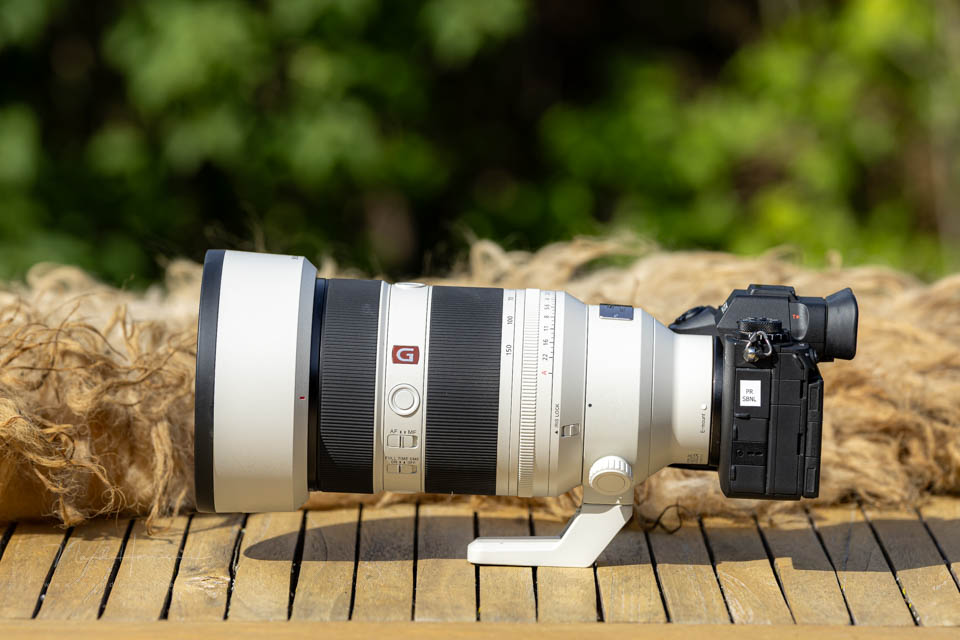
A fast lens naturally offers advantages, especially when there is less light available. You don't have to choose a higher ISO value, or it prevents shutter speeds at which you can no longer shoot handheld.
It also affects the depth of field. The larger the aperture, the smaller the depth of field. But it is not that simple. The distance to the subject and the distance to the background play a much bigger role. The same goes for the focal length.
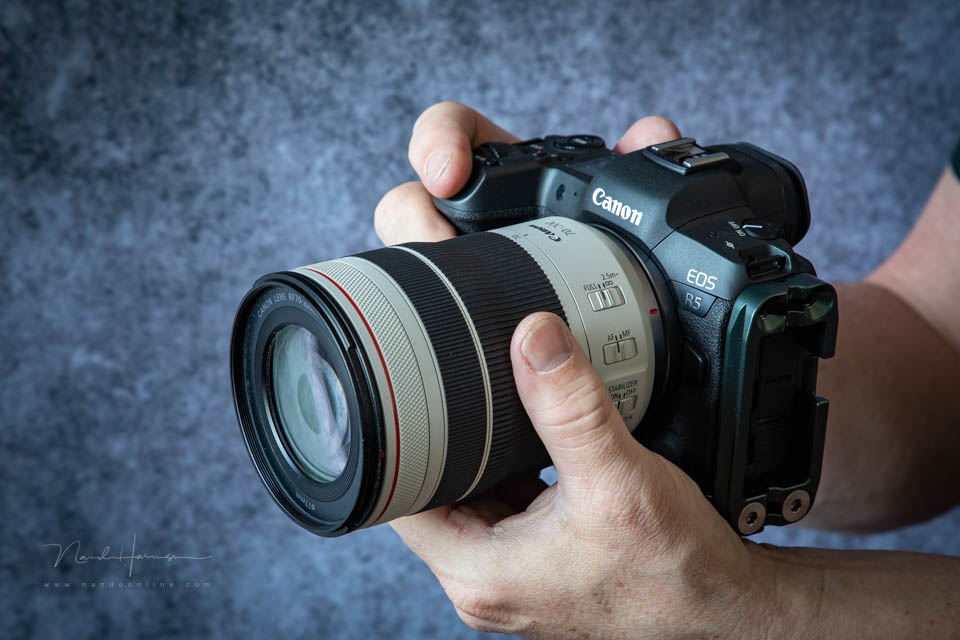
Choosing a lens with a larger aperture is not always the best choice. You also need to consider what you are going to use the lens for. Be critical and honest about this. You will find that a large aperture is not always necessary.
Do you often shoot in low light? Do you often want to use a very shallow depth of field, or do you prefer a greater depth of field? Do weight and size matter?
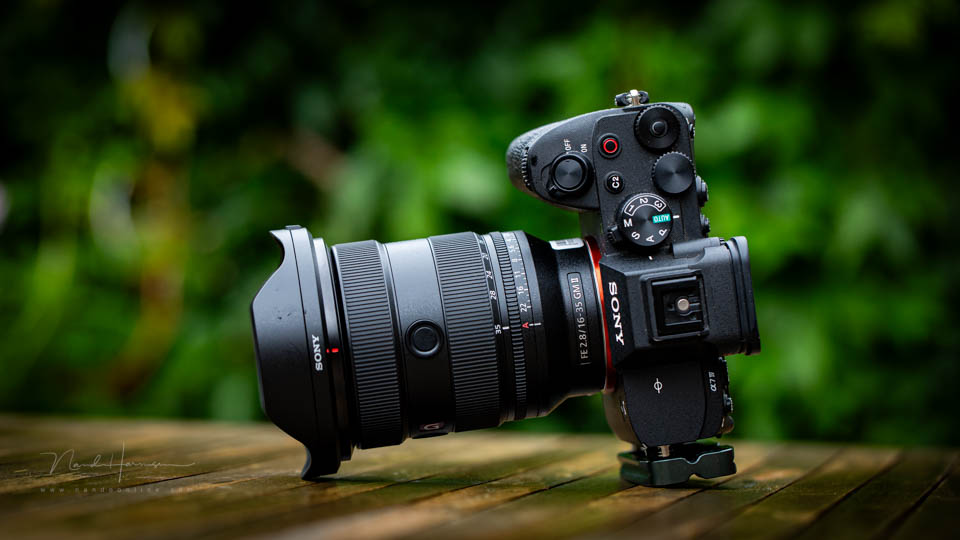
A large aperture has consequences. The lens often becomes much larger and heavier. In addition, the purchase price is many times higher. It may even mean that you need several lenses because not all the desired focal lengths are covered by one lens.
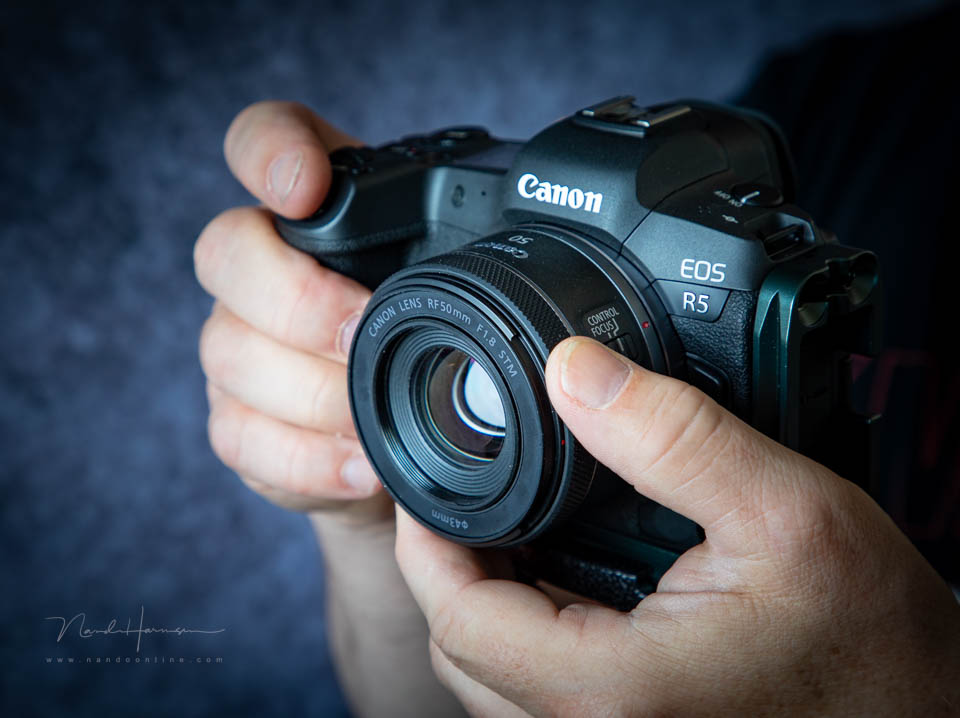
Are you looking for a new lens? Choose wisely, and don't be guided by the idea that a larger aperture is always the best option. It isn't.
About the author
Nando Harmsen has been photographing for more than 40 years. He specialises in wedding photography and landscape photography. Nando also gives talks, workshops, masterclasses and photo trips, and regularly reviews new and interesting equipment.
You might also like
-
 Why no Micro Four Thirds mirrorless camera?
by Luc Baert
-
 The ideal all-round lens for Micro Four-Thirds
by Nando Harmsen
-
 The perfect lens for Micro Four Thirds
by Nando Harmsen
-
 Olympus OM-1 micro four-thirds camera announced
by Elja Trum
-
 The Rule of Thirds Rule of Thumb
by Michelle Peeters
-
 Forget full-frame as the holy grail
by Nando Harmsen
15 comments
-
 Mac wrote on Tuesday 24 March 2026 at 07:57 | reply
There is 1 advantage of a wide aperture that you didn't mention.
Translated from Dutch.
You did talk about it indirectly, of course, and that is low light.
And then the advantage for AF, which always works better with more light than with less. Even if you don't need f2.8 for the photo, a lens with f2.8 can still be useful because of focus. Especially in somewhat more difficult lighting conditions, when there is some action. -

-
 Walter wrote on Tuesday 24 March 2026 at 11:56 | reply
Follow-up question. Is there also less glass in a less light-sensitive lens? In other words, what determines the showpiece of a lens? I'm curious about examples or how you know that the sharpness of a lens does not fall short.
Translated from Dutch. -
 Nando
wrote on Tuesday 24 March 2026 at 12:50
| reply
Nando
wrote on Tuesday 24 March 2026 at 12:50
| reply
Quality has nothing to do with that at all. 'Light-gathering ability' only has to do with maximum aperture, not quality.
Translated from Dutch.
If you want to see examples of quality, you should look at the specialized tests where these kinds of things are tested under controlled (laboratory) conditions.
In practice, you will rarely see those differences in quality. As long as you don't choose the absolute cheapest option. -
 paulusvanaken@gmail.com wrote on Tuesday 24 March 2026 at 12:52 | reply
As usual, clear and 'to the point'.
Translated from Dutch.
Those large apertures were much more important in the film era, you could barely get ISO 800, with grain and shifted colors, so you had more need for fast lenses. Now that you can go up to ISO 3200 or 6400 quite well with most cameras, that need is much less.
As a Nikon Dx user myself I only have 2, a 35 that I simply wanted to try and a 105 Macro (Nikon says micro-nikkor). The latter does have added value, because you lose light sensitivity when you get that close, and movement is extra damaging there. ( With those lenses they fiddle with the focal length, it is actually a kind of zoom lens) -
-
paulusvanaken@gmail.com wrote on Tuesday 24 March 2026 at 14:07 | reply
At the shortest distance it's still 4.8, one and a half stops less, not spectacular, but if it started at f4, then it would be a problem.
Translated from Dutch. -
-
 Frouke wrote on Tuesday 24 March 2026 at 14:18 | reply
People often choose a smaller aperture number because of the depth of field. As you say, the distance to the subject and background is also important. Another factor is the focal length being used. Try standing in one fixed spot (tripod) and take a photo with your widest angle and your longest telephoto, choose the same aperture for both, you can also take a photo with both your largest and smallest aperture. Then look for the differences. You will see that your aperture number has hardly any influence with the wide angle, while with your longest telephoto you can clearly see differences.
Translated from Dutch. -
paulusvanaken@gmail.com wrote on Tuesday 24 March 2026 at 14:38 | reply
Goes from 2.8 to 4.8. is quite relevant. If the aperture were F4 it would thus be something like 6.4...
Translated from Dutch.
Furthermore it's a nice lens, but that strange focal length change...
It does 1:1 at 31.5 cm, according to optics the actual focal length is then approximately 75mm.... -
-
 Paul eos wrote on Tuesday 24 March 2026 at 15:06 | reply
A lens with a low f-number doesn't always have to be expensive. I have a Canon RF35mm f/1.8 and paid something like a good 500 euros for it new back then. A great little lens for portraits, the city or crowds because it's small and light and you don't stand out with it. One downside is that you shouldn't walk around with it in pouring rain.
Translated from Dutch. -
Nando
wrote on Tuesday 24 March 2026 at 15:19
| reply
That's right, not always.
Translated from Dutch.
But do bear in mind that these kinds of cheaper versions rely heavily on digital image correction. All those modern VCM lenses from Canon are a good example of that, as is the RF 45mm f/1.2. You wouldn't want to use them without correction.
Sony does that too with many of its more affordable lenses.
But then again, that doesn't necessarily have to be a problem. -
 Jan Willem Hartmann wrote on Tuesday 24 March 2026 at 19:06 | reply
The Sony FE 20-70mm F4 G lens is an example of an F4 lens with beautiful results, nice and light, reasonably compact and a super travel lens. Together with the Sony A7V a perfect combination where you really don't have to be afraid to turn up the ISO value. Still bothered by noise afterwards? Then Lightroom Classic and/or Topaz Studio are your friends.....
Translated from Dutch. -

Have your say
Please note: Articles older than a week can only be commented on by signed-in visitors.Would you still like to comment? sign in or create a free account.
Become a better photographer every week
A practical photography tip in your inbox every week.
38,982 photography enthusiasts already receive the tips! More about the weekly mail. Or keep up to date via  Facebook.

Elja Trum
Photofacts; everything to do with photography!
Would you like to take better photos and keep up with what is happening in photography? Photofacts publishes articles that teach you something about photography — from a product announcement to a practical shooting tip or a look at a website. Photofacts covers photography every day and is a hobby project of Elja Trum's that got out of hand. The articles are written by a team of volunteer authors. If you would enjoy writing one or more articles for Photofacts, do get in touch.More about PhotofactsPhotofacts is made possible in part by
