

Forget full-frame as the holy grail
Monday 10 August 2026, 15:30 by Nando Harmsen | 4,173 views | 20 commentsThis article was translated from Dutch with the help of AI. Read the original.
The full-frame format still seems like the holy grail to many people. Only when they have a full-frame camera in their hands has the goal been achieved. But what was the goal really? A camera? Or taking beautiful photos?
Recently, I wrote an article about using a Micro Four-Thirds camera for landscape photography. The 2x crop sensor requires a shorter focal length, which naturally gives you greater depth of field.
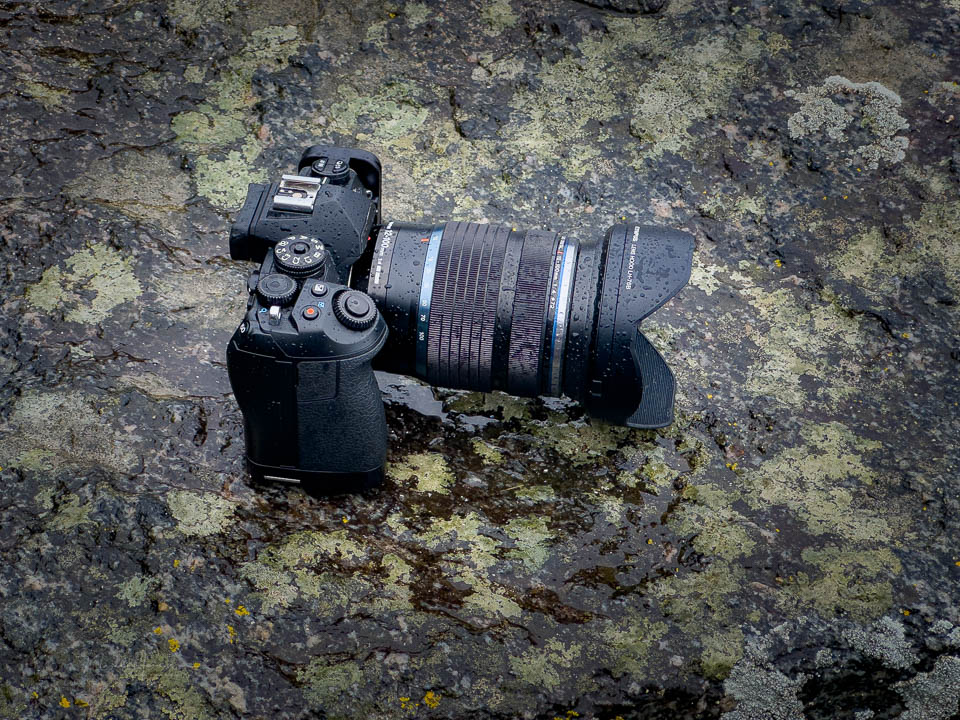
I received a surprised question in response. 'But isn't full-frame the best for photographing landscapes?' This proves that there is still a myth that full-frame is the best, and perhaps even the only good choice.
This is complete nonsense. Full-frame is nothing more than a sensor size, one of many. It used to be called 35mm small format. I think the name says enough: small format, a small negative, perfect for the hobbyist.
There is nothing magical about 35mm small format, which is now called full-frame. It is a sensor measuring 24x36mm. You can go smaller, or larger. Whichever you choose, they can all produce a good-quality photo.
Of course, there are the stories about light loss, depth of field, noise, dynamic range and more things like that. Much of it is just theoretical waffle that does not produce a better or worse photo.
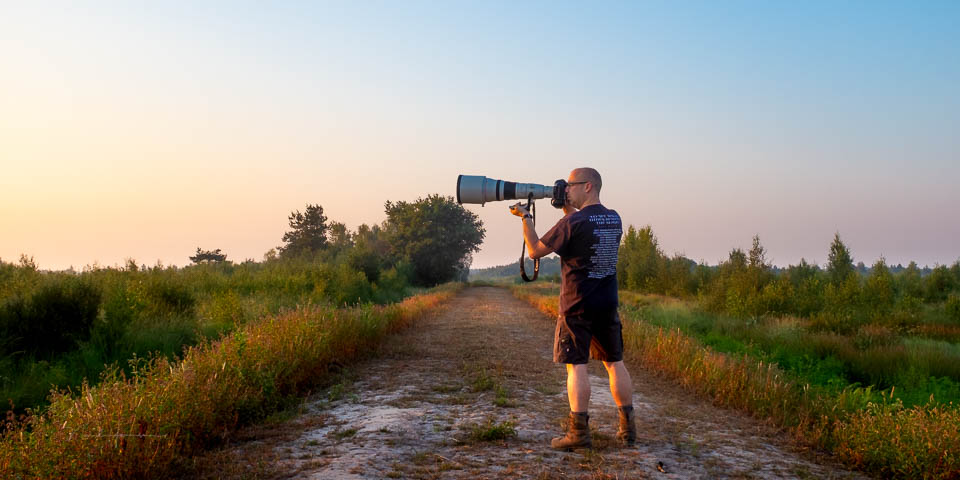
The size of the sensor mainly affects the focal length needed for a particular angle of view in practice. That in turn affects the depth of field.
It is true that a smaller sensor cannot achieve as shallow a depth of field. But are you looking for that? Or would you rather have a greater depth of field?
It is indeed true that with a smaller sensor, the pixels have to be closer together at a given resolution. This can produce more noise at high ISO settings. But how often do you need those high ISO settings?
Using a camera with a smaller sensor, whether that is Micro Four-Thirds or APS-C, does not make you a worse photographer. Your photos are not lower in quality either. A full-frame camera will not produce better photos.
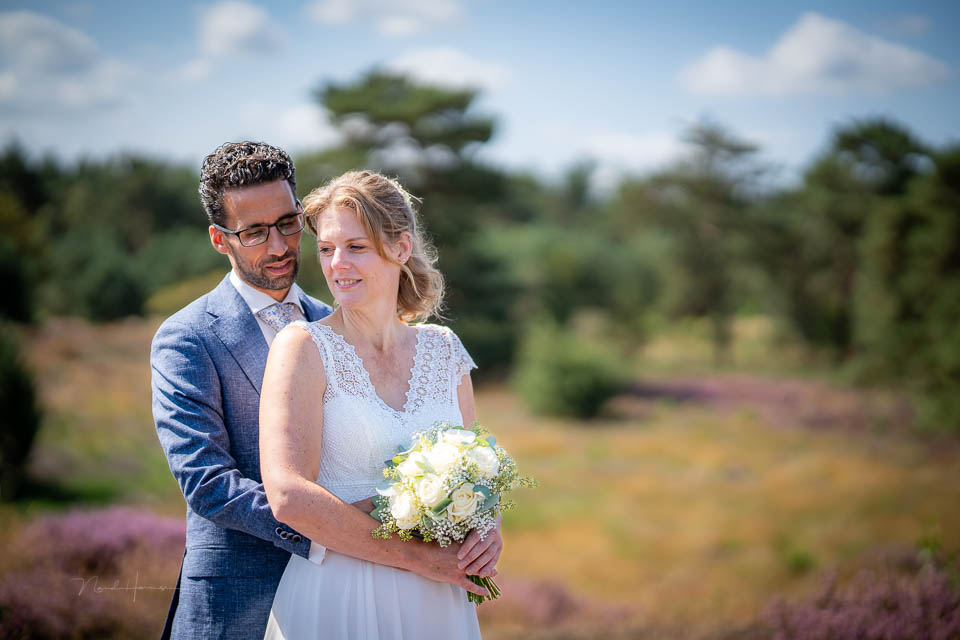
There is one caveat. Do you like an extremely shallow depth of field? Then you will run into limits with a small sensor. In that case, choose full-frame, or better still, medium format.
Do you often photograph in difficult lighting conditions that require high ISO settings? Then full-frame or medium format may give you an advantage. Or you can learn to photograph with flash if the subject allows it.
Do you want a long focal length because your subject is always far away? Consider a camera with a Micro Four-Thirds or APS-C-sized sensor. You get the advantage of the extra magnification, which makes your focal length appear longer.
Do you often use an extremely large depth of field, such as for landscapes? Then take advantage of the greater depth of field that results from having to use shorter focal lengths with a smaller sensor.
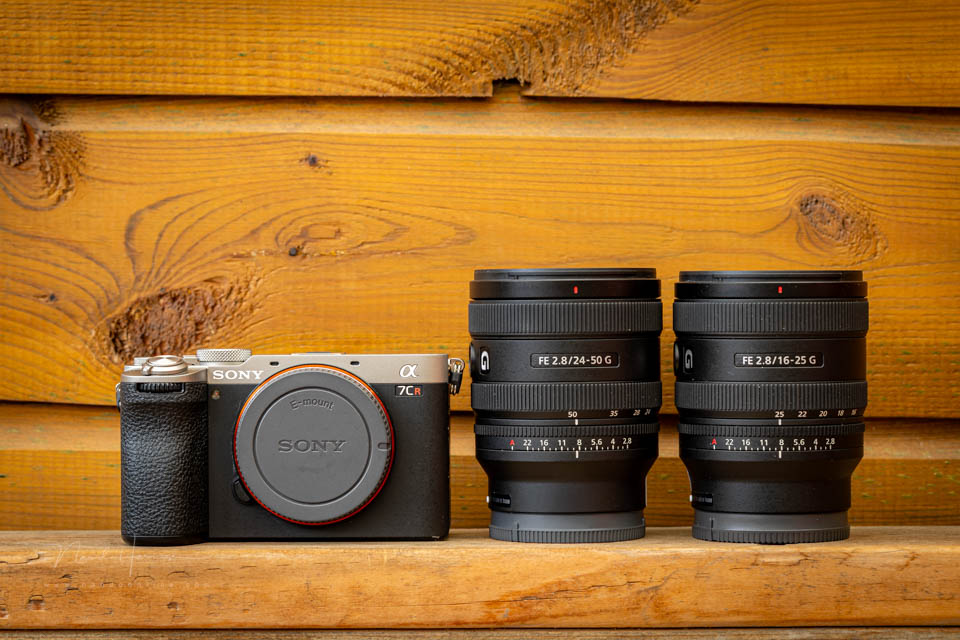
Are you looking for a lighter camera because the other one has become so large and heavy? Choose the camera with the smaller sensor. In that case, your lenses can also remain compact.
The story that full-frame is the only good choice, and that all cameras with smaller sensors are bad, is nothing more than nonsense. So do not let this story influence you and just go out and take photos.
About the author
Nando Harmsen has been photographing for more than 40 years. He specialises in wedding photography and landscape photography. Nando also gives talks, workshops, masterclasses and photo trips, and regularly reviews new and interesting equipment.
You might also like
-
 Why no Micro Four Thirds mirrorless camera?
by Luc Baert
-
 Review: Sony A6700 APS-C mirrorless camera
by Nando Harmsen
-
 The perfect lens for Micro Four Thirds
by Nando Harmsen
-
 The ideal all-round lens for Micro Four-Thirds
by Nando Harmsen
-
 Will Canon launch APS-C format R cameras?
by Elja Trum
-
 Review: Canon EOS R5 C for video
by Nando Harmsen
20 comments
-
 Liesbeth Van Asselt wrote on Tuesday 11 August 2026 at 11:12 | reply
A camera with a small sensor indeed works fine outdoors and in sufficient light. Indoors, unfortunately, it is often a different story.
Translated from Dutch.
A few years ago, I took a group of students to a factory to take photographs. Little light, a short shutter speed because people were working (movement). Using flash was not possible everywhere. The aperture was already wide open, so the ISO went up. For the person who photographed that afternoon with a small sensor, the enormous amount of noise in her photos (and seeing afterwards how much less there was in the photos taken with a full-frame camera) was the reason to switch to a full-frame camera. -
 Hans wrote on Tuesday 11 August 2026 at 11:58 | reply
Absolutely right Nando and Liesbeth also has a good point. I myself use a canon R6lll and in addition an R7 for extra tele, but for children's portraits I often use a 24-70mm 2.8 on the R7, lovely to work with, the wide angle isn't needed but just a bit more tele and what do you think of the rf 85mm macro 2.0 on the R7, just try it out , just like the 70-200mm 2.8 . Ok, fast lenses in combination with full frame really are the ultimate , still a lot more room to play with depth of field. And Liesbeth, I'm glad that sigma has now made a few nice lenses for my R7 : the 10-18mm and the 18-50mm , both 2.8, lightweight and sharp and the zoom direction is now the same as canon, they're going everywhere with me now.
Translated from Dutch. -
 Paulus van Aken wrote on Tuesday 11 August 2026 at 12:04 | reply
I've had an aps-c camera since 2007, first a D80, then a D7000 and now a D500.
Translated from Dutch.
And I've never missed anything, unless I wanted (very) little depth of field.
And I don't find Liesbeth's earlier response really realistic, the noise at iso 1600 is still quite manageable even with that D80, and the later models do even better. I eat how it is with those mirrorless things of today, but with the 500, 6400 is even fine.
The small format has more advantages than disadvantages, every lens seems 1.5 times as long, so long telephoto lenses don't need to be as long. On the wide-angle side there may be something to find, but the Sigma 8-12 really does provide a very wide angle (equivalent to 12 mm, there are shorter ones, but not many, and, as far as I know, no zooms) -
 Liesbeth Verkade wrote on Tuesday 11 August 2026 at 12:53 | reply
Hi Paul, I have the same experience. I had a 500D for a very long time.
Translated from Dutch.
I replaced that with a 90D 4 years ago and now I have even less trouble with noise when I turn the ISO up a lot. 6400 is actually always fine and higher aak is still possible too, but that also depends a bit on the rest of the settings. I’m still superhappy with my ASP-C camera!! -
 guest wrote on Tuesday 11 August 2026 at 12:21 | reply
The Nikon 7 II is a compact camera. I use it as a full-frame and as an APS-C camera (22 MP).
Translated from Dutch. -
 Matt wrote on Tuesday 11 August 2026 at 13:03 | reply
I'll go one step further: the new Sony RX10 V with its 20 MP 1" sensor and F2.4-4.0 24-600mm equiv. Zeiss lens is more than enough for 95% of cases.
Translated from Dutch.
The same accurate and fast AF and image processor as in the latest generation Sony alpha mirrorless cameras. Only in the exceptional situations where you need a very shallow depth of field or a very high ISO does this all-rounder fall short. -
 Donald Willemsen wrote on Tuesday 11 August 2026 at 13:15 | reply
As long as I have been photographing digitally, I have worked with an APS-C camera. This choice was mainly based on the cost.
Translated from Dutch.
I have also come to see a technical advantage in it. Especially for landscape and wildlife, I find my current R7 an ideal camera.
I do think it is a disadvantage that people are trying to cram more and more pixels onto a crop sensor. As a result, the pixels are much closer together, which means pixels can influence each other. In addition, the pixels are smaller and can therefore receive less light. Higher ISO values can produce more noise.
With my R7 I can go up to ISO 6400 without much trouble and without annoying noise. If there is still a lot of noise, noise reduction software nowadays is so good that you don't have to be afraid of noise.
For people with a small wallet, there is the option of choosing lenses developed for a crop camera. Of course, they do not have the quality of the L lenses, Canon's top segment. They are a lot lighter in weight, though.
I don't really need a full frame. I am very satisfied with my R7 -
 Peter de Wit wrote on Tuesday 11 August 2026 at 13:22 | reply
I think that as a photographer, with a full-frame you have more choice in terms of depth of field and less trouble with noise. In general, I would therefore answer the question with YES.
Translated from Dutch.
But a full-frame also has disadvantages: weight and cost. The lenses have grown considerably in size, especially with regard to system cameras. That is why the question is whether your type of photography really requires a full-frame.
A full-frame DSLR with older fixed-focus lenses is still reasonably compact. And for people with deep pockets, there is of course the Leica M series. -
 Boulanger wrote on Tuesday 11 August 2026 at 13:32 | reply
I think this article goes a bit too far in the other direction.
Translated from Dutch.
No one claims that you can only take beautiful photos with a full-frame camera. In the end, the photographer takes the photo. But dismissing the technical advantages of full frame as "theoretical nitpicking" is at least as misleading.
I photographed with Four Thirds and later Micro Four Thirds for years and eventually switched to full frame. For me, that was not a hype, but a huge step forward in image quality and flexibility.
A few points that I miss in this story:
Micro Four Thirds has a 4:3 aspect ratio. That is noticeably squarer than the 3:2 format of full frame. For landscapes, I find 3:2 much more pleasant because it naturally gives you a wider composition. With 4:3, I regularly crop away the top and bottom to get the same look.
The smaller sensor means smaller pixels at the same resolution. As a result, each pixel captures less light. In practice, you see that in more noise, less dynamic range and less room to maneuver at high ISO. That is not theory; especially when photographing sunrises, sunsets or forests, I have experienced that difference often enough.
The familiar claim that a 200mm f/2.8 "becomes a 400mm f/2.8" is simply incorrect. It remains a 200mm f/2.8 with the angle of view of a 400mm on full frame. In terms of depth of field, it behaves approximately like a 400mm f/5.6. That can be an advantage if you specifically want a lot of depth of field, but it also means that you can never achieve the same background blur as with a real full-frame 400mm f/2.8.
That is precisely the point: a full-frame photographer can always stop down to f/5.6 if more depth of field is desired. Conversely, a Micro Four Thirds photographer cannot suddenly create the shallow depth of field of full frame. Full frame therefore simply offers more creative flexibility.
The argument about large and heavy lenses is also more nuanced than the article suggests. If you compare systems fairly, you have to compare equivalent lenses. A 12-40mm f/2.8 on Micro Four Thirds provides approximately the same angle of view and depth of field as a 24-80mm f/5.6 on full frame. In practice, you would then more likely end up with a compact 24-70mm f/4. The difference in size and weight is then much smaller than is often suggested.
In addition, many modern full-frame cameras have 45 to 60 megapixels. This allows you to crop heavily and still retain a high resolution. That provides extra flexibility that you often have less of with Micro Four Thirds.
Micro Four Thirds is absolutely an excellent system. It is compact, relatively light and ideal when weight or extra depth of field is important. But pretending that full frame has hardly any advantages is just as much a myth as claiming that only full frame can produce good photos.
The right system depends on what you photograph. For me, switching to full frame was, in retrospect, one of the biggest improvements in quality I have made in years. I did not just see that difference on paper, but especially in my photos. -
Donald Willemsen wrote on Tuesday 11 August 2026 at 14:46 | reply
@Boulanger, I think Nando deliberately wrote the article provocatively to spark discussion and to knock down sacred cows. Judging by the responses, he succeeded. 😀
Translated from Dutch. -
Paulus van Aken wrote on Tuesday 11 August 2026 at 18:36 | reply
All well and good, but if your camera has 45 or even more pixels on ff, the whole advantage for noise goes down the drain, because your pixels are then just as small or even smaller than on aps-c
Translated from Dutch.
Having started with film myself (1962), I’m already very happy that I can use ISO 6400 on my aps-c camera without any problems, whereas that absolutely wasn’t possible with film. Color film of 400 or 800 was really exceptional and also particularly awful. Black-wir still worked up to 3200, but don’t ask what the grain was like! It was called semolina, I’d call it couscous..... -
 Peter Keltjens wrote on Tuesday 11 August 2026 at 13:40 | reply
It’s all correct, especially the noise in low light with an ASP-C. But I mainly do landscape and street photography. I consciously chose a Pentax 10 years ago. I’ve had a K3 for a number of years now. Low weight despite weather sealing and built-in stabilization. This means lightweight lenses. The total weight is almost always still under 1.25 kg. I miss the importance of the lens in this story. Good and light lenses on an ASP-C and shooting handheld is always a pleasure.
Translated from Dutch. -
 Maarten Karnekamp wrote on Tuesday 11 August 2026 at 17:14 | reply
Recently, alongside my Canon R, I also have an OM System OM-1 Mark II with 12-40mm and 150-600mm lenses (for this latter setup I traded in my Canon 5D Mark III with lenses). I wanted a smaller/lighter camera alongside the Canon R without making any particular concessions in terms of quality. And it works great!
Translated from Dutch. -
 Hans Lauffer wrote on Wednesday 12 August 2026 at 14:22 | reply
Every format has its own pros and cons. However, camera manufacturers have to keep selling and will continue to convince us that full frame and mirrorless cameras are "better". In my eyes, nothing could be further from the truth. Take a critical look at what you use the camera for and base your choice on that. You do that with your glass too, don't you. Personally, I can keep going with my (crop) D500 for quite a while.
Translated from Dutch. -
 Raphaël wrote on Wednesday 12 August 2026 at 22:29 | reply
Small, light and handy are the basic criteria for me. Right after that come the sensor and the lenses.
Translated from Dutch.
In the meantime, I have been photographing for a few years with a Lumix G9 Mark II body and the Leica 10-25mm F1.7 zoom lens as the basic setup.
In full frame, that setup would be so large and heavy that it would be unpleasant to have to lug it around all the time.
I also have a full frame Lumix S5D with various lenses, by the way, but it hardly gets used.
That is telling too.
My five cents:
The very best camera is the device you have with you when you need it. -
Boulanger wrote on Thursday 13 August 2026 at 10:06 | reply
Comment on Raphaël.
Translated from Dutch.
You mention "small, light and handy" as the most important criteria. That is precisely why I compared your combination with a modern full-frame set.
Lumix G9 II + Leica 10-25mm f/1.7
Total weight: 1,348 grams
Body: 134.3 × 102.3 × 90.1 mm
Lens: 128 mm long, 88 mm diameter
Sony A7 V + Sony 20-70mm f/4 G
Total weight: 1,098 grams
Body: 130.3 × 96.4 × 82.4 mm
Lens: 99 mm long, 78.7 mm diameter
So the full-frame combination is not only 250 grams lighter, but also more compact. The body is smaller in all dimensions and the lens is nearly 3 cm shorter and clearly slimmer. On top of that, you also get a 20-70 mm range instead of 20-50 mm equivalent, so more flexibility without extra weight.
In addition, full frame offers several advantages that you do not see in the dimensions alone: a greater dynamic range, better performance in low light, more resolution (33 MP versus 25.2 MP) and a much more advanced autofocus system. And although the Leica is an f/1.7 lens, the depth of field due to the 2x crop factor is approximately equivalent to f/3.4 to f/3.5 on full frame. In practice, the difference from an f/4 zoom is therefore much smaller than the specifications suggest.
Don't get me wrong: the G9 II is an excellent camera and if Micro Four Thirds is the best choice for your photography, then of course that's perfectly fine.
But I no longer consider the claim that a comparable full-frame set is by definition larger, heavier and therefore less handy to be valid in 2026.
Technology has made enormous strides in recent years and it is precisely the newest full-frame combinations that show that compact and full frame can go together very well nowadays.
In fact: if compactness really is the highest priority, there is also the Sony FE 24-50mm f/2.8 G. That makes the set even smaller and lighter, while thanks to the full-frame sensor you can also achieve a shallower depth of field than with the Leica 10-25mm f/1.7 on Micro Four Thirds. -
 Zeddammer wrote on Tuesday 18 August 2026 at 22:31
| reply
Zeddammer wrote on Tuesday 18 August 2026 at 22:31
| reply
Reply to Boulanger:
Translated from Dutch.
Thanks for the arguments put forward.
But comparing the PanaLeica10-25mm F/1.7 lens with the Sony 20-70mm f/4 G or with the Sony FE 24-50mm f/2.8 G is missing the mark a bit. There simply is no equivalent of the 10-25mm F/1.7 in full frame. And I don't expect one to come onto the market anytime soon; a full frame version of that lens would be far too large, heavy and expensive.
The G9 II body with the 10-25mm F1.7 lens is my favorite combo. But that doesn't mean I take it everywhere with me.
At the beginning of September I will get on my bike to climb Mont Ventoux and then continue on to Santiago de Compostella in northwestern Spain. On that trip I will take a complete camera setup with me: A Panasonic Lumix GM5 body (211 grams) with the following Lumix lenses: 12-32mm (70 grams), 20mm (87 grams) and 35-100mm (135 grams). And a flash (26 grams).
The total weight of this equipment is 529 grams.
That is less than half the lightest combo, the Sony A7 V + Sony 20-70mm f/4 G.
I think the camera bag still has room for my 188-gram Laowa 6mm f/2.0 Zero-D MFT ultra-wide-angle lens... 🙂
That brings the weight of the set to 717 grams. -
Boulanger wrote on Wednesday 19 August 2026 at 13:39
| reply
Reply to Raphaël:
Translated from Dutch.
Thanks for your response. But in my opinion there is a fundamental error in your reasoning, especially in this sentence:
“Quite simply, there is no equivalent to the 10-25mm F/1.7 in full frame.”
That is precisely what you can create when you look at the actual properties of the combination and not just at the number written on the lens.
Your Leica 10-25mm f/1.7 is on Micro Four Thirds behind a 2x crop factor. This means the angle of view is equivalent to approximately 20-50mm on full frame.
But you also have to convert the depth of field. f/1.7 on MFT, with a comparable angle of view and framing, corresponds approximately to f/3.4 on full frame in terms of depth of field.
So:
Leica 10-25mm f/1.7 MFT ≈ 20-50mm f/3.4 full frame.
And therefore there really is a full-frame equivalent.
In fact: the Sony FE 24-50mm f/2.8 G is a very interesting comparison.
Leica 10-25mm f/1.7
20-50mm full-frame equivalent
approximately f/3.4 full-frame equivalent in terms of depth of field
128 mm long
87.6 mm diameter
690 grams
Sony FE 24-50mm f/2.8 G
24-50mm full frame
f/2.8
92.3 mm long
74.8 mm diameter
440 grams
So the Sony has almost the same practical range, with 24-50mm compared to the Leica's 20-50mm equivalent, but is 250 grams lighter, almost 36 mm shorter and almost 13 mm narrower.
And in terms of depth of field, the Sony goes even further: f/2.8 on full frame gives a shallower depth of field than f/1.7 on MFT.
So when you compare the actual angle of view, depth of field, dimensions and weight delivered, it becomes very difficult to maintain that there is no full-frame alternative to your Leica.
In fact, on these points the Sony comes out quite well.
And then your GM5.
There I think the comparison completely goes off the rails.
Originally, we were talking about the Lumix G9 II. Then you suddenly bring up a 2015 Lumix GM5, a camera that, in terms of design philosophy, technical development and capabilities, comes from a completely different category.
The fact that the GM5 weighs only 211 grams is of course fantastic. But in terms of technical capabilities, autofocus, speed, stabilisation and overall camera performance, a GM5 is simply not a serious comparison with a G9 II, let alone with a modern Sony A7 V.
So your 529 grams for the GM5 setup is absolutely impressive, but all you prove with that is that you can build an extremely lightweight travel kit with an ultra-compact MFT body from 2015 and small lenses.
I do not dispute that at all.
But it is not an answer to the comparison we originally made.
My original point was not that you cannot build a lighter kit with MFT.
My point was:
Full frame is not necessarily larger and heavier than MFT in 2026.
And that is precisely what still stands.
You do not even have to choose an A7 V with a large professional zoom for that. A Sony A7C, for example, weighs 509 grams and an A7C II 514 grams. That is even more than 140 grams less than the G9 II.
So as soon as we start comparing modern cameras, the argument “full frame = automatically larger and heavier” simply becomes untenable.
If we want to compare honestly, we must either put modern cameras from the same class side by side, or compare complete systems with comparable photographic capabilities.
A 2015 GM5 with three small lenses versus an A7 V with one zoom is neither. -
Zeddammer wrote on Wednesday 19 August 2026 at 21:06
| reply
Dear Boulanger,
Translated from Dutch.
I myself have not used the word "depth of field" even once in this discussion so far. And for a reason: to me, it is not an important factor. So the fact that the F-number of a lens changes when you convert it using the factor "full-frame equivalent in terms of depth of field" doesn't help me.
The lens simply has a constant aperture of F/1.7. And if I want less depth of field, I just use a longer lens, for example - to keep it from getting too extreme - my Sigma 50mm F1.4 Art lens in combination with the Metabones Canon EF to MFT adapter.
Or the same adapter with a focal reducer, which reduces a full-frame image to fit on an MFT sensor. In that process, the light-gathering capability increases by 1 stop.
As for the comparison: I deliberately looked for the extremes there. A comparison of a very lightweight but complete set, so body including lenses, from 2016 can easily be made with a recent small full-frame camera body with a corresponding lens.
That GM5 may look like a toy camera, but it is anything but. It is not for nothing that 8 to 10-year-old GM5 bodies have recently been offered for absurdly high prices through websites such as Marktplaats.nl. And they are still sold quickly too.
The reason? Photography is not only about (the latest state of) technology, but also about things like experience, emotion and even nostalgia. See for example https://m.youtube.com/watch?v=0zNF1aXdxYM -
Boulanger wrote on Thursday 20 August 2026 at 00:34
| reply
Dear Zeddammer,
Translated from Dutch.
Fair enough that depth of field is not a criterion for you. Then I'll leave that discussion here.
But something interesting does remain in your own response. You mention the Metabones with focal reducer, "which increases the light-gathering by 1 stop."
That is exactly right. And it is also exactly why equivalence is not theoretical nonsense.
A focal reducer exists precisely because a smaller sensor costs you both angle of view and light. The glass compresses the entire full-frame image circle onto the smaller MFT surface. You gain a stop, not out of nowhere, but because you are still capturing the light that a full-frame sensor naturally receives. Your Sigma 50mm f/1.4 thereby becomes approximately a 35mm f/1.0, which in terms of angle of view and depth of field amounts to 70mm f/2.0 on full frame.
That is not a refutation of equivalence. That is equivalence, cast in glass.
And that is also exactly why I did not simply start calculating. The f-number describes the light-gathering per unit of area, and that is indeed constant. But the amount of light collected by the entire sensor does depend on the sensor area, and that has consequences for the signal-to-noise ratio and low-light performance. At the same angle of view, your f/1.7 on MFT corresponds in terms of total light collection approximately to f/3.4 on full frame, which you can honestly also see in the measurement data of both sensors.
And then the point I was originally getting at: you mention "small, light and handy" as your basic criteria. But as soon as you want more than the kit can provide, your solution is a 815-gram Sigma 50mm f/1.4 Art plus a roughly 150-gram Metabones adapter. That puts you at almost a kilo of glass and adapter, on a system you specifically chose for its compactness. A modern full-frame 50mm f/1.4 simply delivers that depth of field natively, without an adapter.
That is not a reproach. It is simply the point: with MFT, the compactness advantage is greatest at moderate light-gathering, and it becomes smaller as you demand more light-gathering and a shallower depth of field. With full frame, that ratio is different.
That is why I find "full frame is bigger and heavier by definition" untenable in 2026. An A7C II weighs 514 grams, for example, compared with 658 grams for the G9 II.
As for your GM5 story: I won't argue with that. A camera you take with you to the Ventoux and Santiago beats any camera that stays at home.
My point was also never that you are making the wrong choice. My point was that the technical arguments often put forward in favor of MFT are, upon closer examination, less convincing than they sound.
Have fun on the bike!
Have your say
Please note: Articles older than a week can only be commented on by signed-in visitors.Would you still like to comment? sign in or create a free account.
Become a better photographer every week
A practical photography tip in your inbox every week.
39,024 photography enthusiasts already receive the tips! More about the weekly mail. Or keep up to date via  Facebook.

Elja Trum
Photofacts; everything to do with photography!
Would you like to take better photos and keep up with what is happening in photography? Photofacts publishes articles that teach you something about photography — from a product announcement to a practical shooting tip or a look at a website. Photofacts covers photography every day and is a hobby project of Elja Trum's that got out of hand. The articles are written by a team of volunteer authors. If you would enjoy writing one or more articles for Photofacts, do get in touch.More about PhotofactsPhotofacts is made possible in part by
