

Zone focus, another way of focusing
Thursday 13 December 2018, 11:07 by Michelle Peeters | 12,931 views | 13 commentsThis article was translated from Dutch with the help of AI. Read the original.
You normally focus while looking at your camera. There is another way of focusing that is very fast and easier to use. It is especially useful for genres such as street photography, because you have to react extremely quickly and do not want to stand out too much.
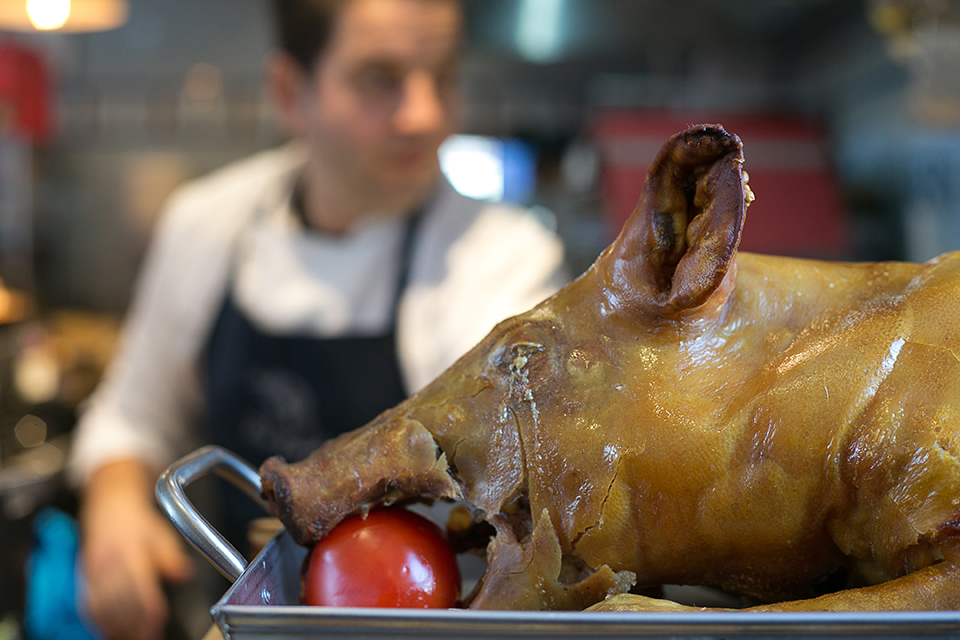
The trick is to set your camera so that everything from, for example, 1 to 3 metres is in focus. You then only have to keep this distance from your subject to get a sharp image. In fact, you act as the 'focuser' yourself.
This is called 'zone focusing'. The focus now lies within a certain zone. But how do you achieve this? Since a particular aperture corresponds to a certain depth of field, you can calculate which distance you need to set.
There are several free apps available for this. I installed Easy DoF on my iPhone. You set the desired aperture, your focal length and the focus distance. The app then shows the distance range within which your photo will be sharp, for example from 0.6 to 3 metres.
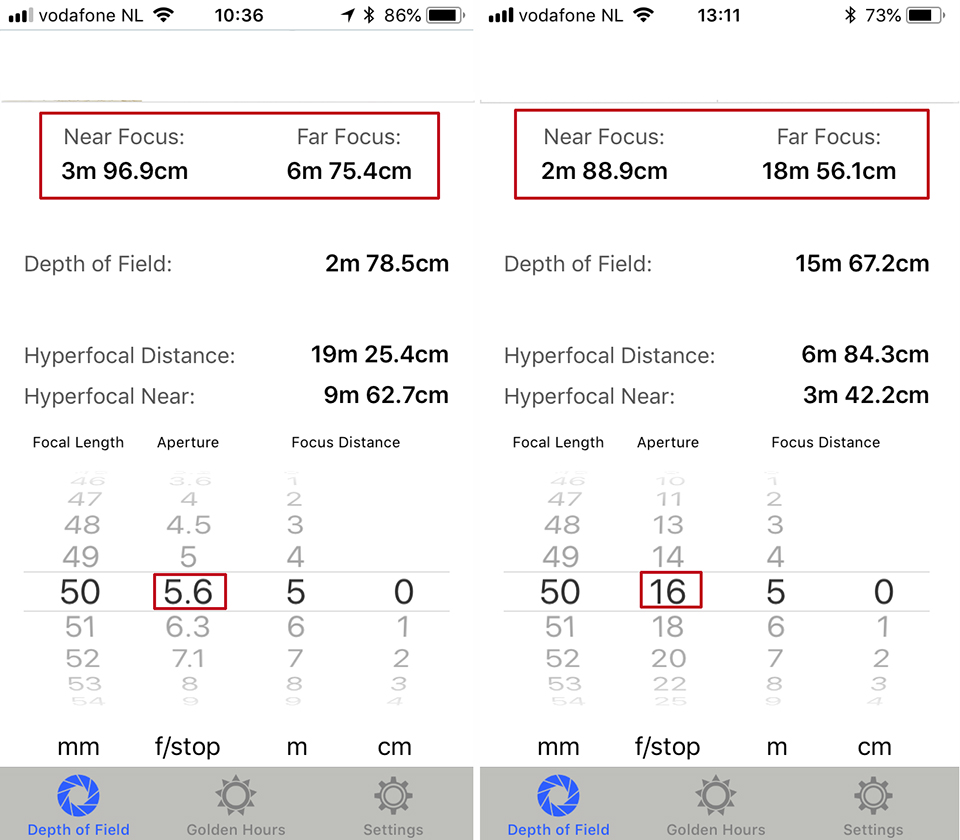
If you keep to this distance while taking photos, you do not have to worry about the photos being out of focus. If you have plenty of light, you can stop down your aperture all the way to 16 or 22.
As a result, at a focus distance of 1 metre, you will most likely have everything from 0.3 metres to infinity in focus.
You can make a list of the focus distances for the depth of field of your lenses, but you can also use the app on your phone, entering the focal length used for each lens every time.
Sports photography course
The zone-focus technique is also often used for street and sports photography. Would you like to learn more about this? Then our sports photography course on Photofacts Academy might be just right for you.
» Go straight to the Sports Photography course
The course is taught by professional photographer Nico Delmeire. Nico has more than 12 years of experience as a sports photographer and during that time has photographed several important matches and finals, both at national and international level.
Dit artikel is voor het laatst bijgewerkt op 13 december 2018.
De eerste publicatiedatum is zaterdag 26 mei 2018, 22:44.
About the author
Michelle Peeters is fotografe en oprichter van DeuxBleus Fotografie. Michelle herkent het bijzondere in het gewone en het gewone in het bijzondere. Ze heeft zich nooit willen specialiseren en is daardoor van alle markten thuis.
You might also like
-
 Zone focus: a good friend in 'tough' autofocus situations
by Huub Keulers
-
 Street photography tip: Use zone focusing
by Michiel Heijmans
-
 Black and white photography using the Zone System
by Liesbeth van Asselt
-
 Never focus again, not even automatically
by Nando Harmsen
-
 Edit an HDR like a normal photo
by Nando Harmsen
-
 Replacing skies in Photoshop is getting easier
by Johan Elzenga
13 comments
-

 Paul Oosterlaak wrote on Sunday 27 May 2018 at 10:58
| reply
Or you buy a manual focus lens with a decent depth of field scale on it, then you can immediately see on the lens what is going to be in focus.
Translated from Dutch. -
 Michelle Peeters wrote on Sunday 27 May 2018 at 15:13
| reply
@Paul: yes indeed, good tip!
Translated from Dutch. -
 martinphili wrote on Sunday 27 May 2018 at 20:48
| reply
Or you could use a 1937 Kodak Brownie. It works on exactly the same principle.
Translated from Dutch.
-
 Yannick wrote on Tuesday 29 May 2018 at 13:04 | reply
With many modern lenses, it is no longer even possible to focus using the depth-of-field scale. This is because of the ED and fluorite glass they use nowadays, which changes focus due to changes in outside temperature.
Translated from Dutch. -
Paul Oosterlaak wrote on Tuesday 29 May 2018 at 19:05
| reply
@Yannick: that's not true. Otherwise you wouldn't be able to focus these lenses with AF either, and fluorite used to be used precisely for this (think of the Canon FD lenses with fluorite). Nowadays, glass with fluorite-like dispersion is used.
Translated from Dutch. -
Yannick wrote on Tuesday 29 May 2018 at 20:29 | reply
@Paul
Translated from Dutch.
ED glass and such is definitely temperature sensitive. And that concerns autofocus, the camera simply looks at when the image is sharp and that is why the focus area beyond the infinity point on your focus scale is also intended to still have infinity focus at higher temperatures. This is also one of the reasons why Canon telephoto lenses are white in color, to keep the temperature as low as possible for ED/fluorite glass and the internal air vibrations. -
Yannick wrote on Tuesday 29 May 2018 at 20:32 | reply
@paul
Translated from Dutch.
Fluorite and polymers have a coefficient of expansion that is more than ten times higher than that of glass. Glass types with low chromatic dispersion also have a higher coefficient of expansion. So they expand much more than glass when they get warm. This also means that they cannot be used everywhere in a lens and that the focus varies under the influence of the temperature. That is why you can turn the focusing ring of many lenses past the point indicating that it is set to infinity.
Source:
http://www.digifotopro.nl/alles-over-de-glas-en-plasticsoorten-in-je-objectief -
 andre jansen wrote on Tuesday 29 May 2018 at 21:16 | reply
what is the difference compared to the AF setting on the Canon lens
Translated from Dutch. -
Yannick wrote on Tuesday 29 May 2018 at 21:30 | reply
@andre nothing other than with other lenses from other brands
Translated from Dutch. -
Paul Oosterlaak wrote on Wednesday 30 May 2018 at 00:04
| reply
Strange that this still all works so well with black Nikon telephoto lenses... Additionally: the AF performs a distance measurement beforehand using phase detection. This system does not take temperature into account. As a result, the AF would constantly be off. After all, there is no contrast detection to check whether the focus is optimal.
Translated from Dutch.
Nice article on digifotopro, but what is its scientific source? The expansion is a fact, but it takes place in all directions, meaning that the optical center of the lens barely shifts. The problem of expansion should also not be sought in the glass, but in the metals that move the lenses and hold them in place. These expand much more than the types of glass. The coefficient of expansion of CaF2 at normal temperatures (around 300K) is a factor of 3-4 lower than that of aluminium and magnesium.
Zeiss and Leica (and many others) make modern manual focus lenses with ultra-low dispersion types of glass and also aspherical elements (only Leica makes these from 1 piece of glass), and they also simply have a DoF scale on them. I have a few Zeiss lenses myself, and that DoF scale is simply correct, regardless of the temperature. -
 Tom wrote on Wednesday 30 May 2018 at 10:02 | reply
Toys that you hardly use in practice. The depth of field depends, among other things, on the size of the sensor or your negative and on the size of the final print. All of it can be traced back to the desired Circle of confusion (Coc) ... and that's where the difficulty begins ...which one do you choose? ... and it becomes downright disappointing when diffraction ruins your photo at larger f-numbers. Focusing at the 'correct hyperfocal distance' is also just guesswork in practice. The book "The ins and outs of focus" by Merklinger has given me much more insight into this subject. I often photograph landscapes with the focus set to infinity.
Translated from Dutch. -
andre jansen wrote on Wednesday 30 May 2018 at 15:19 | reply
regarding Yannick's comment:
Translated from Dutch.
I still don't understand the setting/principle. is the idea that you choose an aperture and from there know at what distance (zone) you focus, I don't find that logical because with ASF everything is sharp regardless of the aperture. So there must be a different logic behind focusing. But which?? -
Paul Oosterlaak wrote on Thursday 31 May 2018 at 09:23
| reply
@andre: asf? Everything in focus regardless of aperture can never be the case, at any rate. Your depth of field partly depends on the aperture, after all.
Translated from Dutch.
Have your say
Please note: Articles older than a week can only be commented on by signed-in visitors.Would you still like to comment? sign in or create a free account.
Become a better photographer every week
A practical photography tip in your inbox every week.
38,886 photography enthusiasts already receive the tips! More about the weekly mail. Or keep up to date via  Facebook.

Elja Trum
Photofacts; everything to do with photography!
Would you like to take better photos and keep up with what is happening in photography? Photofacts publishes articles that teach you something about photography — from a product announcement to a practical shooting tip or a look at a website. Photofacts covers photography every day and is a hobby project of Elja Trum's that got out of hand. The articles are written by a team of volunteer authors. If you would enjoy writing one or more articles for Photofacts, do get in touch.More about PhotofactsPhotofacts is made possible in part by
