

Shooting in Manual mode and zoom lenses
Sunday 2 July 2023, 22:22 by Nando Harmsen | 3,988 views | 9 commentsThis article was translated from Dutch with the help of AI. Read the original.
Do you like shooting in Manual mode? Then you know that you have to balance all three exposure settings. Only then can you get a good exposure. Do you use a zoom lens? Then it is worth taking a closer look at it. In some situations, it can cause a problem.
Setting the exposure manually is not better. It is simply one of the possible ways of using a camera. Shooting in Manual mode does not give you more control over your exposure, and it does not produce a better photo. It does not make you a serious or professional photographer.
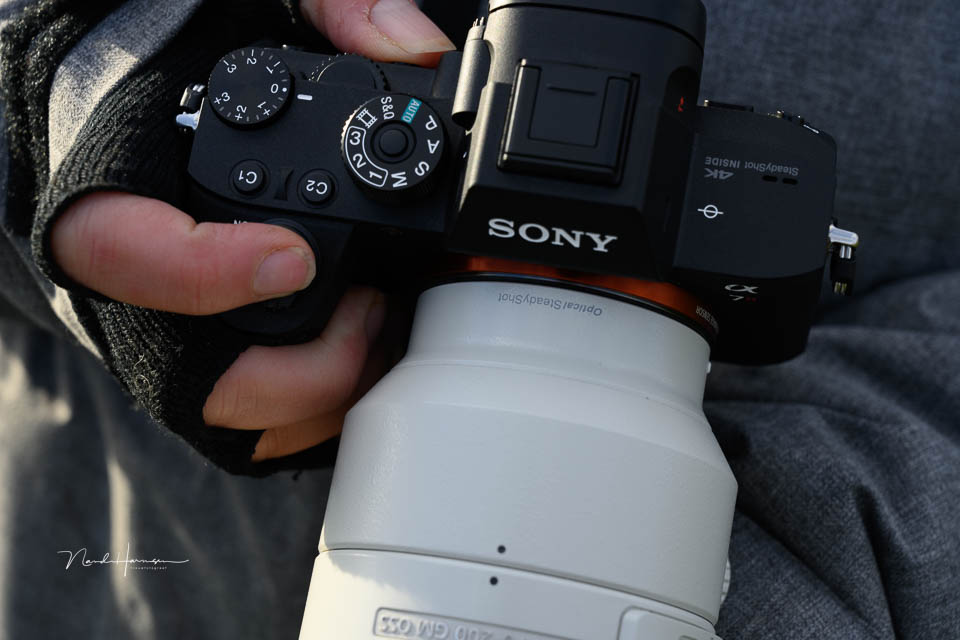
There is nothing wrong with setting your camera's exposure manually. Just as there is nothing wrong with letting the camera do part of it. In both cases, the result is what matters: a correctly exposed photo.
Do you use a zoom lens? Then it is worth looking at it carefully. Especially at the maximum aperture of the lens. Is the maximum aperture constant throughout the zoom range, or does it change when you zoom in or out?
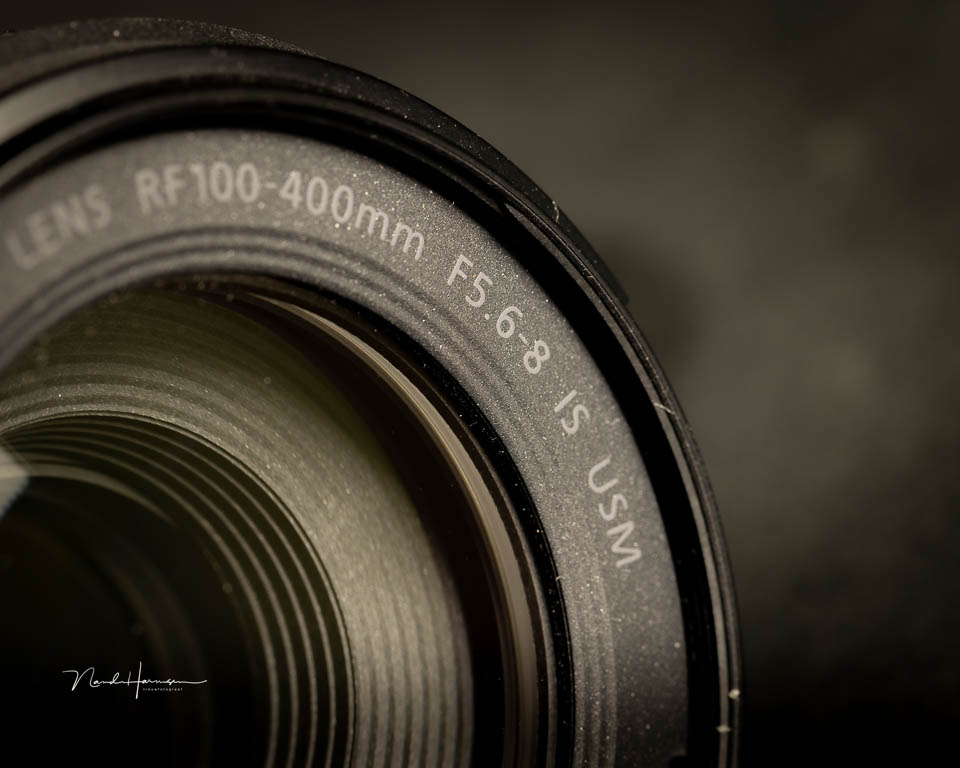
Are you shooting at the widest possible aperture and have you chosen to set your exposure manually? Then there is no problem with a zoom lens that has a constant maximum aperture throughout the zoom range.
If your zoom lens has a variable maximum aperture, you need to pay close attention to the exposure when zooming in and out. After all, if the aperture changes, you will no longer have the correct exposure if it is set to Manual mode. When you zoom in or out, you need to correct the exposure settings.
Take the Tamrom 18-400mm f/3.5-6.3 as an example. This lens has an aperture of f/3.5 at an 18mm focal length, and f/6.3 at 400mm. While zooming in, the aperture will change from f/3.5 to f/4, then to f/5.6, and finally to f/6.3 at 400mm.
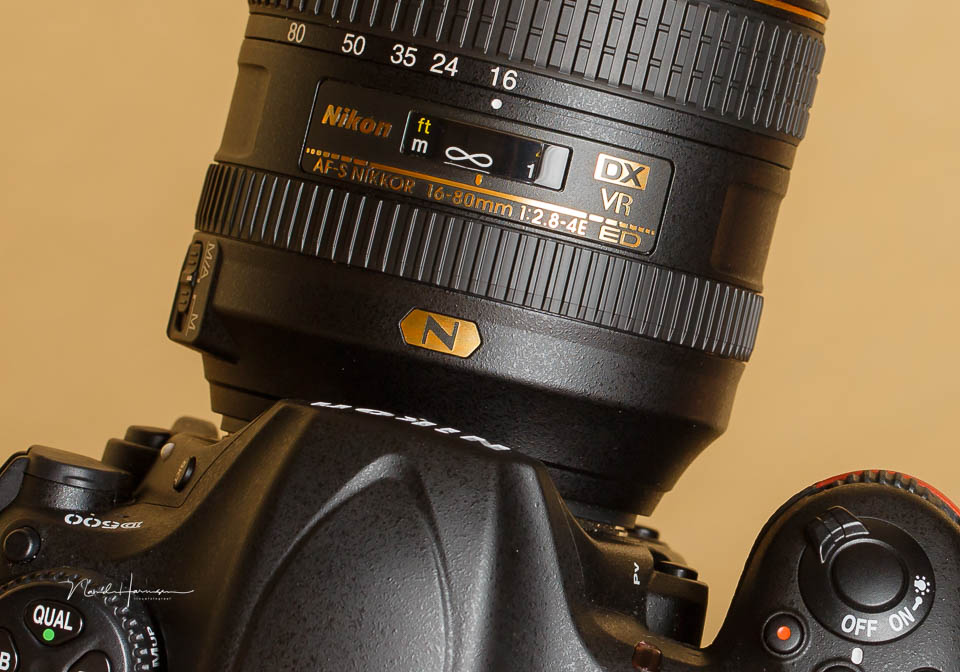
Suppose you measured an exposure at f/3.5 and manually set the camera to 1/125 second and ISO 100 for the correct exposure. Now you zoom in from 18mm to 400mm because an animal you want to photograph appears in the frame. Your photo will suddenly be 2 stops too dark.
The reason should be clear. The exposure was correct at f/3.5, 1/125s and ISO100. By zooming in, the exposure suddenly becomes f/6.3, 1/125s and ISO100. This means you have to increase the ISO by 2 stops, or set the shutter speed to 1/30s to get a correct exposure at 400mm.
To make it more complicated, if you only zoom in to 300mm, your maximum aperture may be f/5.6. If you zoom back to 200mm, your aperture may have become f/4.5. And so on.
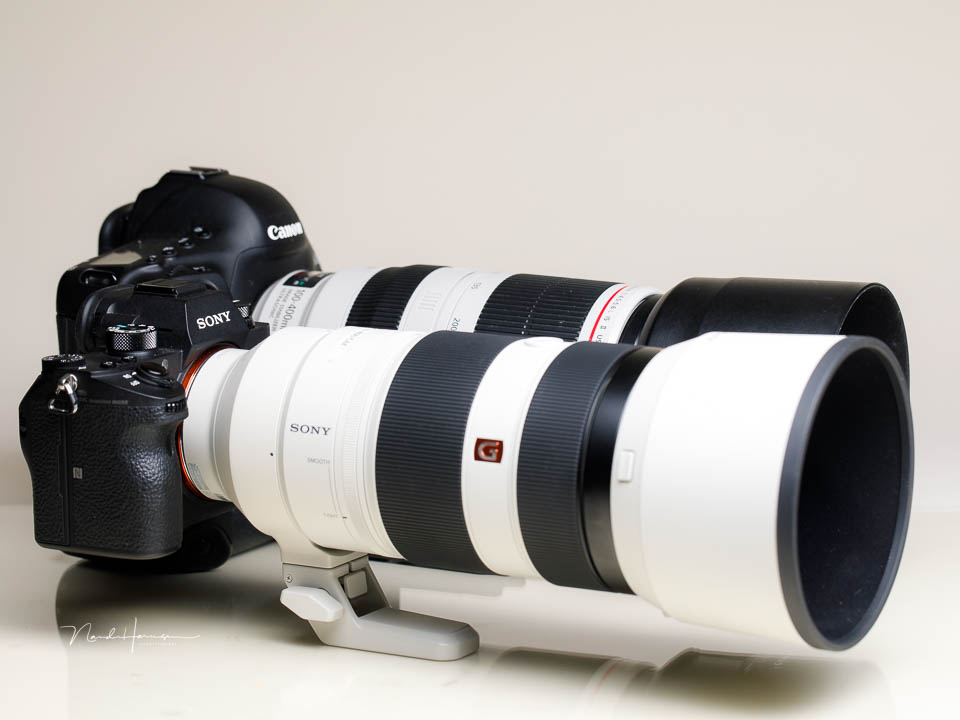
This is only something you need to watch out for when shooting at the widest aperture. If you set the aperture of the lens from my example to f/6.3 or smaller, it will remain at that value throughout the zoom range.
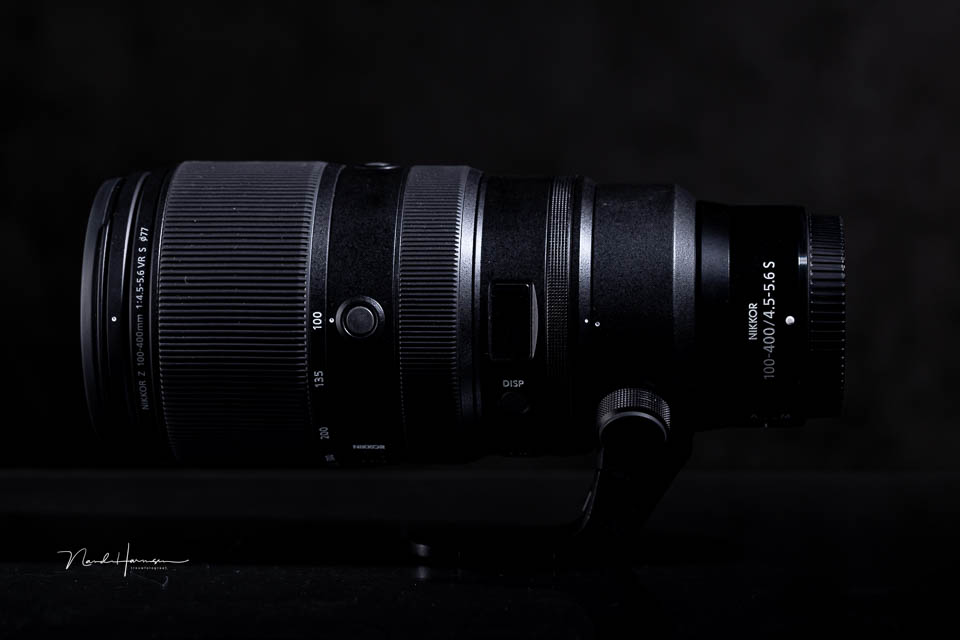
Not all lenses have a 2-stop difference in maximum aperture when zooming. It can also be 1 stop, or less. One stop can usually be corrected, and perhaps 2 stops as well. But it can be difficult.
If you shoot in aperture priority mode, or in Tv mode with auto ISO, the camera will automatically correct the difference in aperture for you. So you only need to be aware of it when shooting in Manual mode with the maximum aperture.
About the author
Nando Harmsen has been photographing for more than 40 years. He specialises in wedding photography and landscape photography. Nando also gives talks, workshops, masterclasses and photo trips, and regularly reviews new and interesting equipment.
You might also like
-
 The only real reason to set the exposure manually
by Nando Harmsen
-
 Situations where manual mode is (actually) perfect
by Nando Harmsen
-
 Flash photography tip: Use your flash's zoom setting
by Elja Trum
-
 Flash photography tip: Set your camera manually
by Elja Trum
-
 Why would you zoom with your flash?
by Liesbeth van Asselt
-
 White balance and exposure in snow
by Nando Harmsen
9 comments
-
 Paul wrote on Tuesday 4 July 2023 at 14:43 | reply
Good piece, Nando. Especially because you make it clear that manual isn't better, and not more professional either. Some kind of dickhead at a seminar talked my daughter into that, and now she's constantly messing things up, because she has to adjust the settings every time, and dad, who has only been taking photos for 60 years, of course doesn't know anything.
Translated from Dutch.
Indeed something to look at with lenses that become more than 1 stop less light-sensitive, a stop is no issue with almost all modern cameras. My Sigma 150-600 goes from 5 to 6.3 or something, you hardly notice that, but my 16-85, from 3.5 to 5.6, you can see to some extent.
But these days my camera is set to A 90% of the time (Nikon, so aperture priority) then you don't notice it at all...... -

-
 Wim Langen wrote on Tuesday 4 July 2023 at 19:55 | reply
I have a Panasonic Lumix S5M2 camera with the corresponding 24-105 and 70-200 zoom lenses, with a starting aperture of F4 throughout the entire zoom range .
Translated from Dutch.
I always photograph in manual mode and my camera chooses the correct ISO value itself.
The Lumix camera can go to a very high ISO value, with the noise barely visible even when enlarged to A3 size.
I recommend that every photographer take a good look at this camera and not keep sticking with the renowned brands such as Canon and Nikon. -
 Nando
wrote on Thursday 6 July 2023 at 09:57
| reply
Nando
wrote on Thursday 6 July 2023 at 09:57
| reply
As Mac says, you’re not photographing fully manually if you let the camera choose the ISO. The camera then sets the exposure for you, but uses the ISO value for that instead of the aperture (in A) or the shutter speed (in S).
Translated from Dutch. -
 Mac wrote on Wednesday 5 July 2023 at 07:45 | reply
@Wim,
Translated from Dutch.
That is not photographing manually. Because you still let the camera decide.
But indeed a nice piece, just to point out again that manual is not the best.
But maybe for the next piece you are going to write, to then talk about when it is best to use manual (I use it a lot myself, because for what and how I often photograph, manual is simply the best), when aperture priority, and when shutter speed priority. (and possibly when to let ISO vary).
Because none is the best, but each is the best in certain circumstances. -
-
 Matt wrote on Wednesday 5 July 2023 at 16:38 | reply
I mainly shoot in M mode, but that actually came out of necessity.
Translated from Dutch.
My first digital camera (a Konica-Minolta A2) was used for photographing classical concerts. The lighting conditions were often extreme, and the light meter in the camera often made a mess of it, just like the white balance. So there was little choice but to use M mode and set A, S, ISO and the white balance myself. Over the years I continued to photograph this way out of habit.
So M mode can really add something, but only in the more exceptional situations, where the camera itself loses track a bit, or because you want to achieve a certain effect and therefore want to force a certain exposure/atmosphere. -
Wim Langen wrote on Friday 7 July 2023 at 12:08 | reply
With my Lumix S5M2 camera, the ISO value is again of secondary importance, because hardly any noise can be detected at the higher ISO values.
Translated from Dutch.
For me, photographing in M mode is the way in which I can play with the aperture and shutter speed to determine the depth of field and motion blur myself.
For the correct exposure, the camera chooses the correct ISO value.
So M mode is a pleasant mode to photograph with. -
Nando
wrote on Friday 7 July 2023 at 21:48
| reply
You may have the camera set to M mode, but as long as you don't set the ISO manually, you are not manually setting your exposure.
Translated from Dutch.
That doesn't matter, if that works for you, that's fine. There is nothing wrong with that
But you are not setting your exposure manually. You are still photographing in a mode where the camera chooses and sets your exposure for you.
Have your say
Please note: Articles older than a week can only be commented on by signed-in visitors.Would you still like to comment? sign in or create a free account.
Become a better photographer every week
A practical photography tip in your inbox every week.
39,077 photography enthusiasts already receive the tips! More about the weekly mail. Or keep up to date via  Facebook.

Elja Trum
Photofacts; everything to do with photography!
Would you like to take better photos and keep up with what is happening in photography? Photofacts publishes articles that teach you something about photography — from a product announcement to a practical shooting tip or a look at a website. Photofacts covers photography every day and is a hobby project of Elja Trum's that got out of hand. The articles are written by a team of volunteer authors. If you would enjoy writing one or more articles for Photofacts, do get in touch.More about PhotofactsPhotofacts is made possible in part by
