

Situations where manual mode is (actually) perfect
Monday 9 May 2022, 20:02 by Nando Harmsen | 11,677 views | 17 commentsThis article was translated from Dutch with the help of AI. Read the original.
There are still photographers who think that photographing in manual mode is the only proper way, whatever the situation. That is of course nonsense, something that fortunately more and more photographers are beginning to realise. Even so, there are situations in which manual mode can be the best choice.
Photographing in manual mode is nothing more than photographing the old-fashioned way. It dates back to a time when there were no cameras that could help you set one or more exposure values.
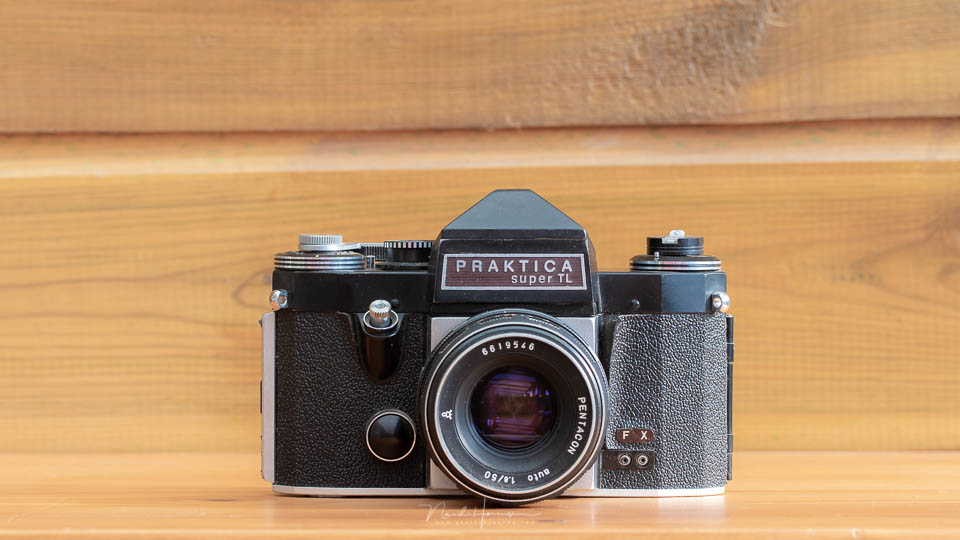
You set the exposure using the exposure meter. It tells you whether you will be too light or too dark, and you adjust the values until the camera indicates that the correct exposure has been set.
It is often easier to let the camera set the correct value. It is often much quicker too. So the camera helps you by taking some of the work off your hands.
If the value set by the camera is not right, you have the exposure compensation button available. You therefore retain full control over the exposure, something many photographers use as an argument for setting it manually.
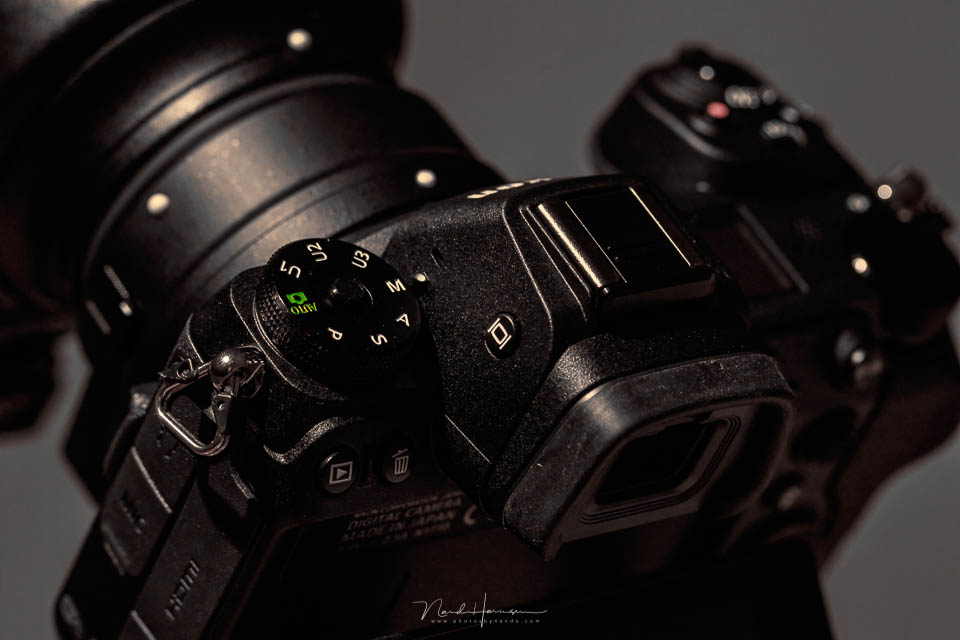
When manual settings are a better choice
It is of course fantastic that the camera can take some of the work off your hands. You can then focus more on composition and bringing your subject into the frame.
That does not mean, however, that there are no circumstances in which setting things manually is a better choice. I will list a few situations for you.
1 - To learn the relationship between aperture/shutter speed/ISO
Are you a beginner? Then you need to know the relationship between aperture, shutter speed and ISO. This is difficult to learn from a book. But a manual setting can help you with this. It makes you aware of the changes these settings produce.
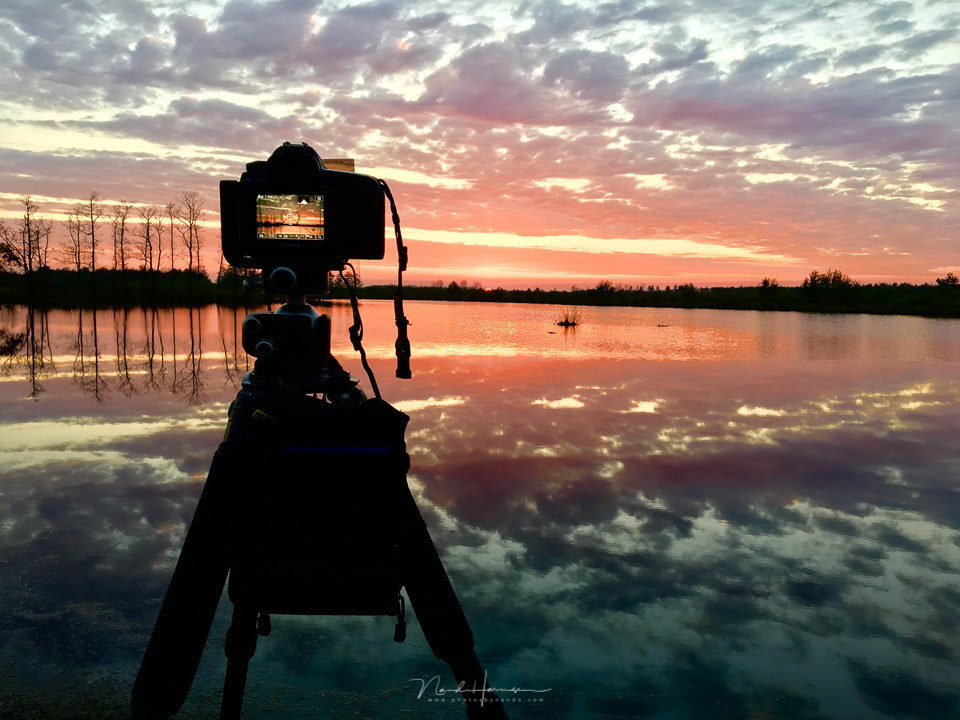
Practising and learning this way works well, but it takes time. So only do this when you have time for it. If you do not have time, do not be afraid, or ashamed, to use your camera's automatic settings after all.
Never forget, a good photo is more important than the way you set up your camera.
2 - Flash photography indoors
Anyone who photographs with flash knows that the flash light provides a well-exposed subject or person. The camera setting determines the exposure of the ambient light.
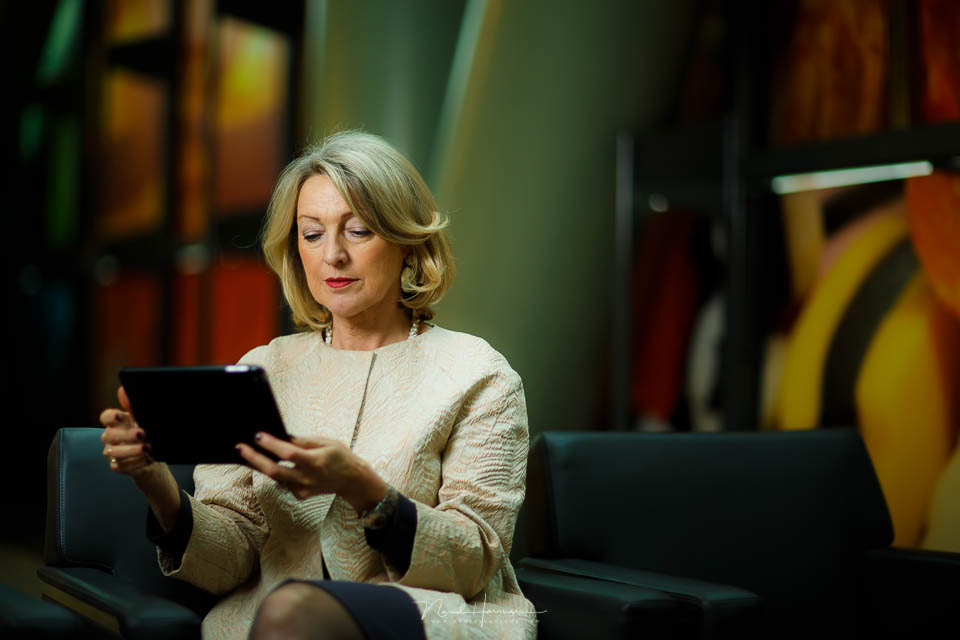
Indoors, the lighting conditions are often constant. This means that a manual setting provides an unchanged exposure of the surroundings. If you used aperture priority, the meter would react immediately to a window or light source appearing in the frame. The exposure of the surroundings could then go in all directions.
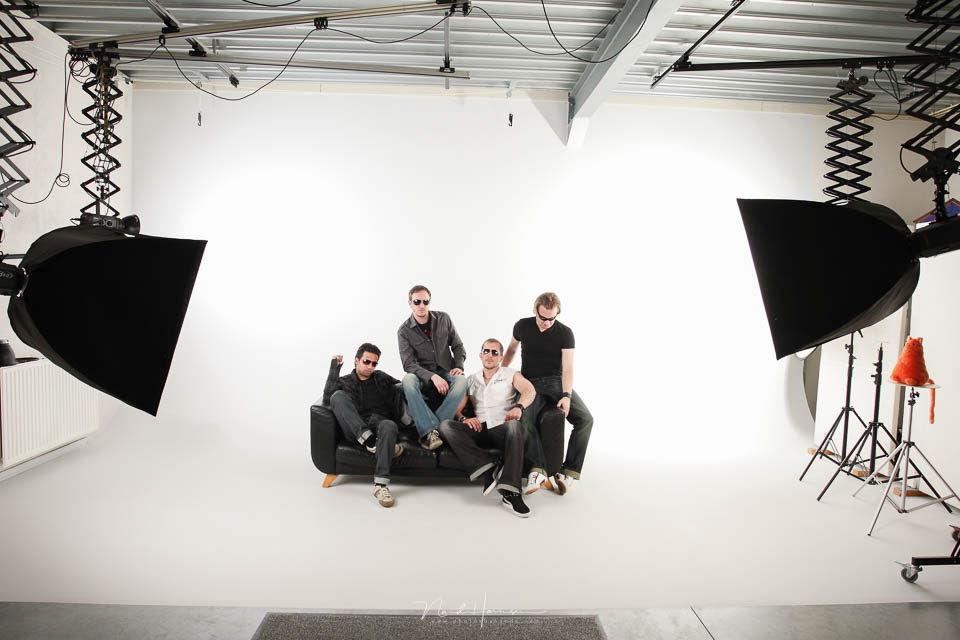
So, for indoor flash photography, do the following: set your camera manually for the exposure of the ambient light, and let the flash light illuminate your subject or person.
3 - Photographing indoors without flash
The light indoors is usually constant. At least, if you stay in a single room. By setting a manual exposure, you will maintain a good exposure, even if you get a window in the frame.
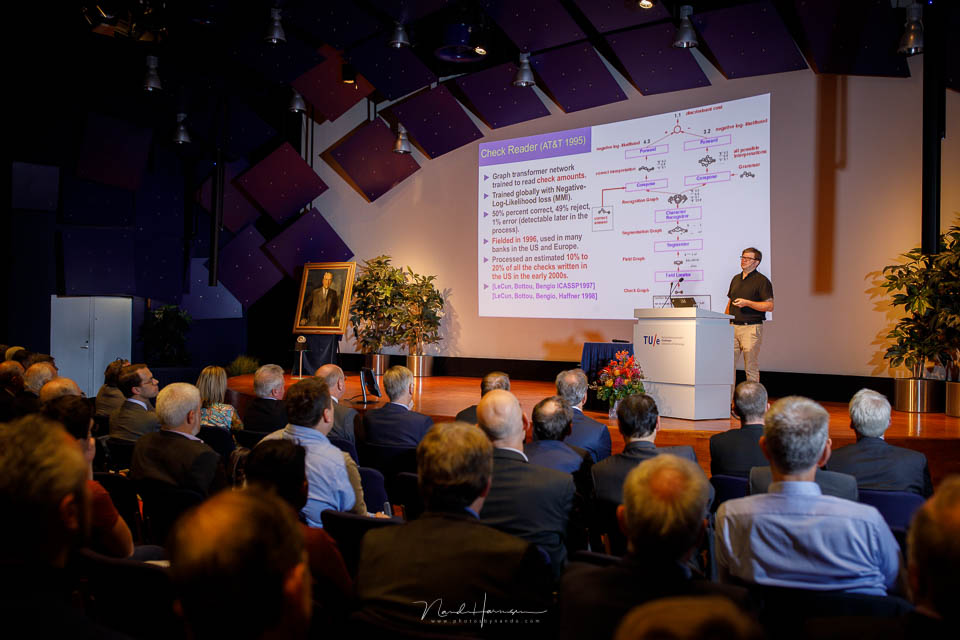
Do bear in mind that the exposure must be measured again for each new room. This means that if you move through many different rooms, it can sometimes be easier to take the camera out of manual mode. Correct it with the exposure compensation button if necessary.
4 - Panorama photography
Are you working on a panorama? Then the exposure meter may indicate different values depending on the angle relative to the light. This can result in an uneven exposure, which will be visible in the panorama.
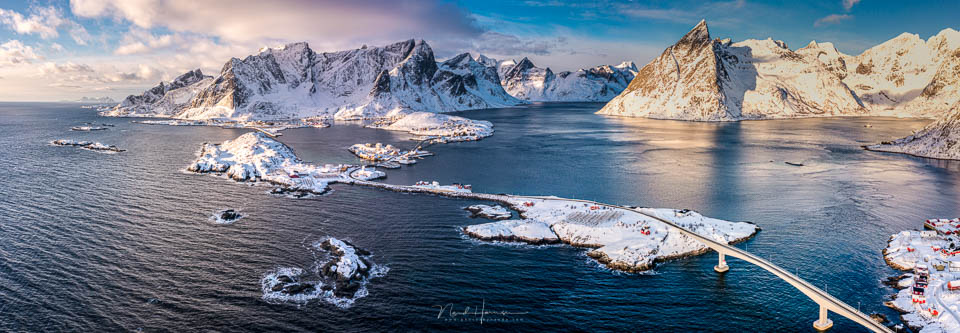
It is therefore best to choose a good average reading of the entire angle of view you are going to photograph.
5 - Night photography
If you practise night photography, the exposure meter can let you down. Shutter speeds longer than 30 seconds, or a series of shots where the exposure must not vary, may be needed.
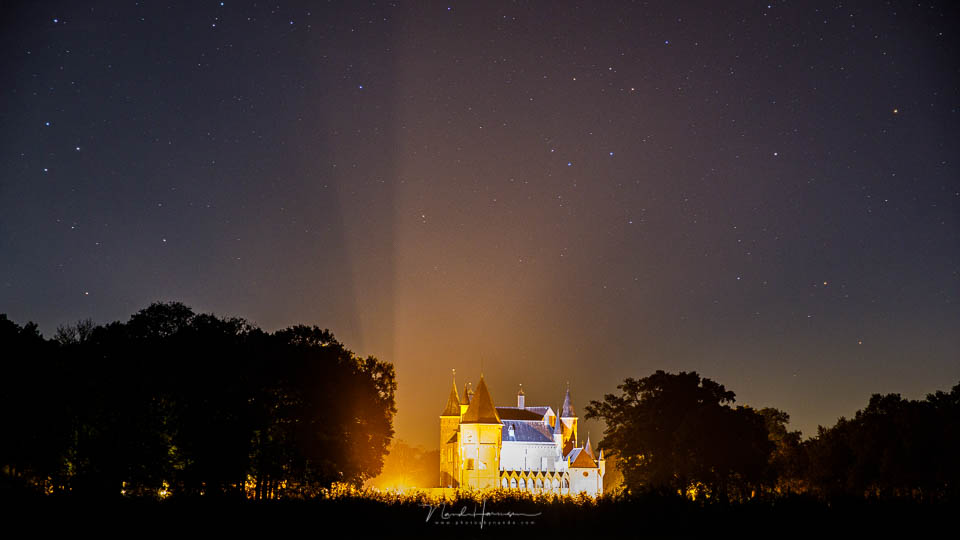
Usually, it is enough to determine the exposure once and then set it. You can then continue photographing without any problems.
6 - When the light can suddenly change
When you photograph in situations where there can be major changes in the light over a short period, the result can be unpredictable. Light painting is a good example, where the exposure meter can fluctuate significantly if there is suddenly a lot of light.
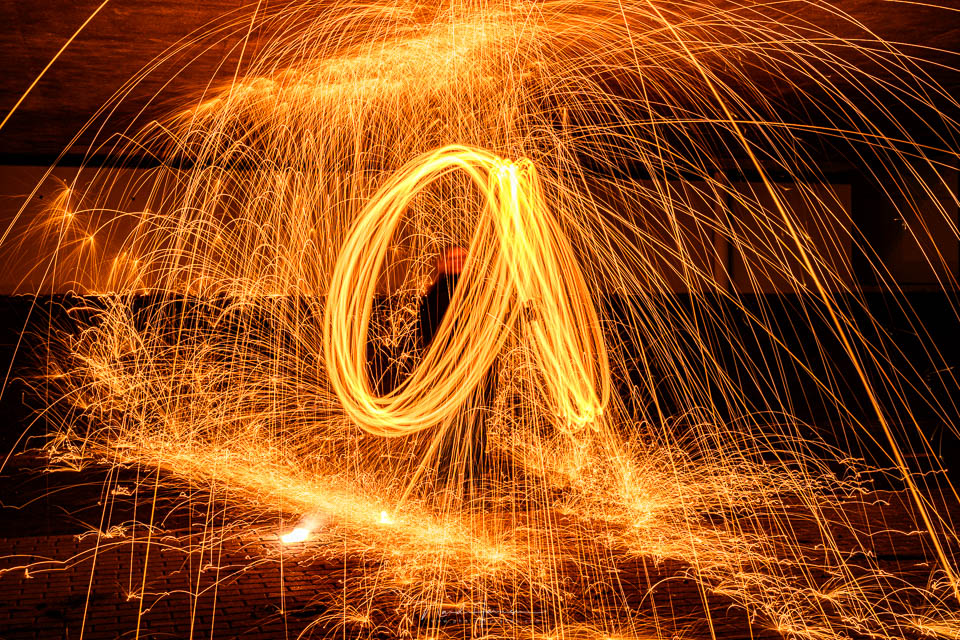
A manual exposure ensures that you retain control over the correct exposure. You do have to determine what that exposure should be properly.
7 - Long shutter speeds
Do you use long shutter speeds? Then your camera may not be able to meter with a grey filter on your lens. After determining the exposure without the filter, the correct shutter speed will then have to be set manually.
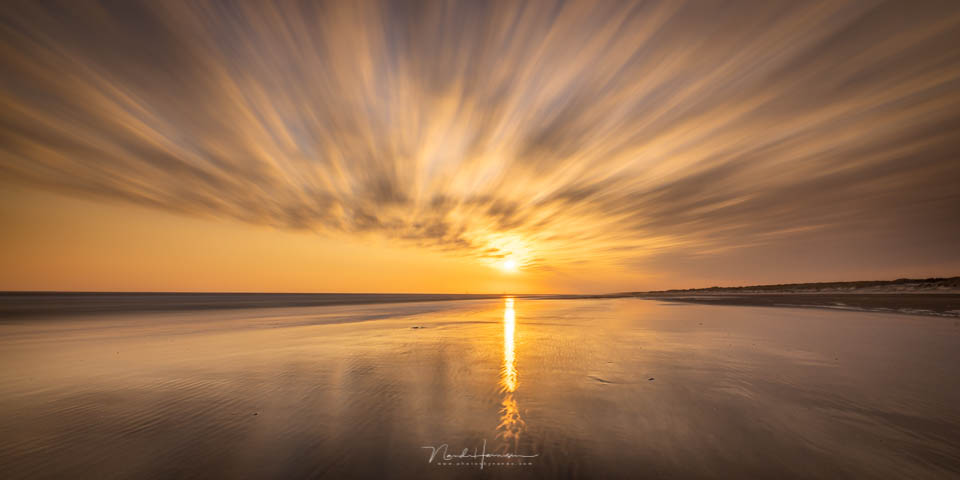
It can even happen that the exposure time becomes so long that you have to use BULB mode. In fact, that is also a manual setting.
Use your camera in the most efficient way
There is a lot of technology in a camera. It is all available to you. Use that technology to your advantage, including setting part of the exposure yourself. This allows you to pay more attention to the actual photography.
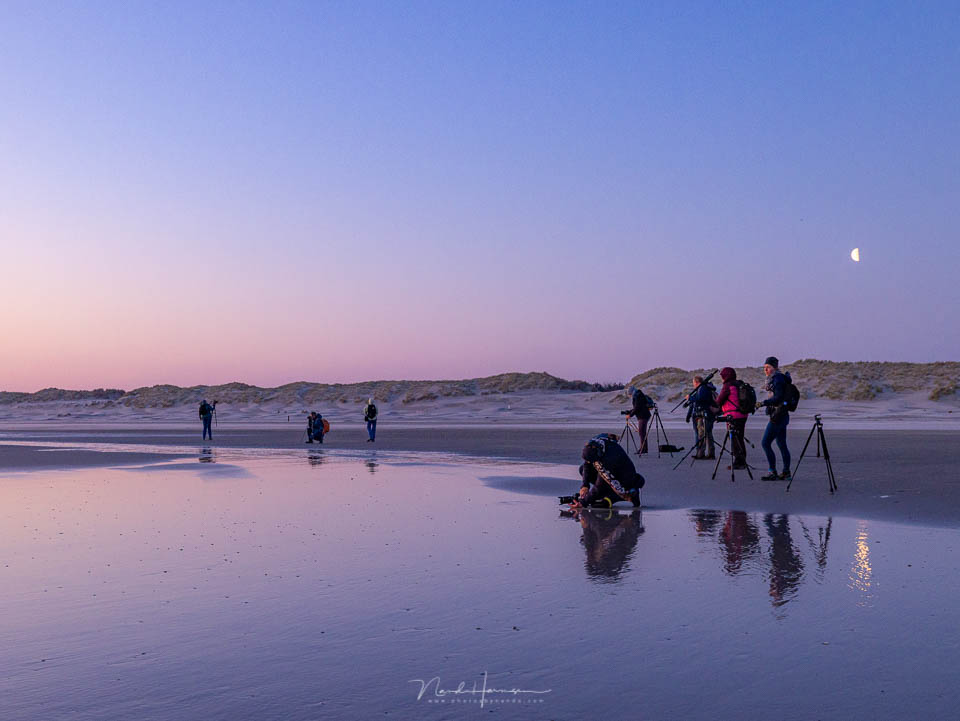
The way you set things is not really that important. What is important is taking a good photo. Achieving a good exposure is essential, but the way you do it is not. A manually set exposure does not produce a better result, nor does it give you more control. Not always.
Do not make things more difficult for yourself than necessary. Use the setting method you find most comfortable. In the end, it is only about the final result: the photo.
Are you someone who insists on photographing manually? Are you convinced that this produces the best results? Share your opinion in a comment below this post, and explain why. I look forward to your response.
About the author
Nando Harmsen has been photographing for more than 40 years. He specialises in wedding photography and landscape photography. Nando also gives talks, workshops, masterclasses and photo trips, and regularly reviews new and interesting equipment.
You might also like
-
 The only real reason to set the exposure manually
by Nando Harmsen
-
Shooting in Manual mode and zoom lenses
by Nando Harmsen
-
 How to set the exposure manually
by Nando Harmsen
-
 Aeroplane mode on a camera
by Nando Harmsen
-
 Flash photography tip: Set your camera manually
by Elja Trum
-
 Flash photography tip: Set your flash manually
by Elja Trum
17 comments
-

 Donald Willemsen
wrote on Monday 9 May 2022 at 22:43
| reply
Donald Willemsen
wrote on Monday 9 May 2022 at 22:43
| reply
An article I can actually use, and I therefore read it with great attention. I usually work with aperture priority, because I find DoF an important element in a photo. I mainly use M mode when I use filters such as ND filters and NDG filters. In principle, you can always use exposure compensation.
Translated from Dutch.
About that exposure compensation, I have a question. If you work with aperture priority and a fixed ISO value, then when using exposure compensation the shutter speed will always change. With shutter priority, the aperture will be adjusted. But now comes my problem: Sometimes I also work in P mode. The camera then basically controls all the elements in the exposure triangle independently. But what happens if you also set exposure compensation here for creative reasons; What will the camera adjust then? The shutter speed? The aperture, the ISO value? That is purely guesswork, it seems to me. One time the camera will adjust the shutter speed and the other time the aperture, even if you take a photo shortly after the previous one. So you are dealing with an uncertain factor, I think. You do not know beforehand what the camera will choose. That is why I have not tried it yet. Partly because of this article I started thinking about it. Am I making it too difficult or am I completely wrong? -
 Nico wrote on Tuesday 10 May 2022 at 12:02 | reply
Good article!!!
Translated from Dutch.
I have my camera set to auto ISO (almost) all the time - I prefer to choose the aperture and shutter speed myself. I use autofocus via a function button, which means I choose myself where the focus should be - by now that has become automatic. And of course I use the exposure compensation button when necessary. I make sure my camera is set up in advance for what I expect to be photographing. -
 Freek L.J. van Buul wrote on Tuesday 10 May 2022 at 12:27 | reply
Be careful with mirrorless cameras. There you can see what your photo will look like.
Translated from Dutch.
Before you know it, the preview looks good with iso 102400 or a shutter speed of 1/2 second.
Therefore, don't just look at that preview but also at the values that have been set! -
 Leen Koper wrote on Tuesday 10 May 2022 at 12:31 | reply
Yes, but if you don't shoot in M mode you can never show that you're a much better photographer than all those others.
Translated from Dutch. -
 guest wrote on Tuesday 10 May 2022 at 14:16 | reply
A photographer sets up his own camera, otherwise he is an amateur. Everyone can take a photo. That is precisely what is fun and exciting about M a beautiful photo that you created yourself.
Translated from Dutch.
Otherwise there is nothing to it.
I don't feel good about all the automatic stuff, just give me M, I gladly accept all the failures.
-
 Evert Jan wrote on Tuesday 10 May 2022 at 17:23 | reply
You really do have a lot more control over the photo when you shoot in M mode. Not that semi-automatic doesn't work well. There are certainly situations where I use that too. But if you know your camera well, it's a piece of cake to quickly set both the shutter speed and aperture to your own liking.
Translated from Dutch.
Most of my photography work is in the studio. there, M mode is simply a must. You can't rely on the camera's meters there. So I'm used to it and therefore actually don't do anything else. And I like that just fine.
A bit short-sighted and condescending, I think, to say that there are "still photographers who shoot in M mode". As if they are losers who don't know any better!
Everyone does what suits him or her best, right?
Choose the mode that gives you the result you have in mind!
-
 Dwarsje wrote on Tuesday 10 May 2022 at 22:54 | reply
If you don't set the camera to M mode, you often can't turn off the flash either. There are all kinds of tricks to get around that, but everyone often knows the lousy result when your photo has been taken with flash.
Translated from Dutch. -
Mac wrote on Wednesday 11 May 2022 at 07:36 | reply
I use M mode mainly for theater and action photography.
Translated from Dutch.
Then I want to have a certain shutter speed and often a certain aperture. And especially in theater the light can change quickly. But that's no different, and with the sensors of today you can handle quite a lot.
@Donald
I obviously don't know which camera you have, but most cameras can personalize P mode. So you can indicate what happens when you operate the front or rear e-dial, and what happens when you use exposure compensation. -
Donald Willemsen
wrote on Wednesday 11 May 2022 at 09:34
| reply
@Mac, thanks for your response. The P mode isn't that important to me, because I use it very rarely. I use the EOS 70D and 80D. I wanted to point out that sometimes it's a bit of a gamble what the camera does in that mode. That depends on algorithms in the camera's software.
Translated from Dutch. -
guest wrote on Wednesday 11 May 2022 at 10:37 | reply
I almost always use the M mode, why, I was taught that in 1994 by a photographer who was already elderly at the time. look at your light meter, but also sometimes follow your instincts. When in doubt, take two or more photos, you don't have to print them all. I thought, and still think that is very wise, especially now that you can look at the effect of your setting on your screen, but when it comes to saving time, I still choose aperture priority.
Translated from Dutch. -
guest wrote on Wednesday 11 May 2022 at 10:44 | reply
I almost always use M mode, why, I was taught that in 1994 by a photographer who was already getting on in years at the time. "look at your light meter but also follow your feeling". If in doubt, take two or more photos, you don't have to print them all, but do check whether your feeling was right". I thought, and still think, that this is very wise, especially now that you can look at the effect of your setting on your screen, but when it comes to saving time, I still choose aperture priority.
Translated from Dutch. -
 rob spruit wrote on Wednesday 11 May 2022 at 10:45 | reply
I almost always use M mode, why, that was taught to me in 1994 by a photographer who was already elderly at the time. "look at your exposure meter but also follow your feeling". When in doubt, take two or more photos, you don't have to print them all, but do check whether your feeling was right". I thought, and still think, that this was very wise, especially now that you can look at your screen to see the effect of your setting, but when it comes to saving time, I still choose aperture priority.
Translated from Dutch. -
Mac wrote on Thursday 12 May 2022 at 08:58 | reply
@Evert,
Translated from Dutch.
I assume that you then use a light meter.
Because most photographers who use M mode, because they then have control over the exposure, do use the exposure meter in the camera. And whether you use M, P or Av, your camera's light meter will measure the same in all cases. -
 PixelDude wrote on Thursday 12 May 2022 at 09:04 | reply
M mode ?? With a mirrorless, with blue indications of underexposure and red for overexposure on your screen or in your viewfinder (where you can adjust the lower and upper limits), M mode is a completely different story. When I notice blue and red at the same time ... it's time to switch to HDR. You can also set upper limits for an automatic ISO choice (I set them to 6400). Even flash technology with TTL actually makes M superfluous. In my nature and landscape photography, I like to have control over the DOF and therefore I mainly photograph with aperture control. When fast-moving objects enter the frame, I switch lightning-fast to shutter speed control.
Translated from Dutch.
With the newer technology in cameras, I have more time to think about composition and subjects and can react very quickly as well. That takes precedence for me over everything else. With the more advanced mirrorless cameras, M really becomes superfluous in my opinion. When you choose M, that is a particular choice of photography, to keep yourself extra busy with technique instead of with your subject. Is that allowed? Of course. Is that wrong? Of course not. A choice that is open to everyone. But claiming that you would be a better photographer by photographing in M mode, that is completely pulled out of thin air. -
 Peter wrote on Thursday 12 May 2022 at 17:32 | reply
You can also set your white balance yourself.
Translated from Dutch.
This is also important when using flash indoors.
You can set your white balance to flash and then the colors will look nice and clear in the photo.
On automatic, your camera will also use the flash setting when you use the camera's flash.
But... the atmosphere can then completely disappear from the photo.
So experiment with this too using different settings.
You can also use the flash as fill flash. -
 Nando
wrote on Tuesday 17 May 2022 at 11:49
| reply
Nando
wrote on Tuesday 17 May 2022 at 11:49
| reply
Thank you for all response. I want to respond to a few.
Translated from Dutch.
@Nico:
you use auto ISO, but choose the aperture and shutter speed yourself. I continue to find this a strange choice. Why let the ISO be chosen automatically but not the others, and still expect more control? You then just have to wait and see which ISO the camera chooses.
@Evert-Jan:
Why do you have more control with M mode? You still set the exposure based on your metering, right? You cannot arbitrarily choose an aperture and shutter speed and think it will then be right. Whether you set it yourself (M) or let the camera do it, it remains the same. Of course, your own preference is simply the most important thing and more than sufficient reason to photograph in M. You do not need that nonsense argument that you have more control at all.
@Dwarsje:
You have a fully automatic mode, usually a green mode, which indeed gives no control. But in the other automatic modes, the A and S modes, you can simply turn off the flash. -
NicovA wrote on Tuesday 17 May 2022 at 12:37
| reply
@Nando. Thanks for the response. Over the years (necessarily, because of the possibilities and limitations) I have worked with all kinds of settings (by now almost 58 years) and I usually like this setting best because then I have control over both the depth of field range and any (prevention of) motion blur. My current camera can handle a large ISO range (D500), so I consider that less important - but of course I do take it into account. By the way, I can check before and after the shot whether the ISO value is to my liking. Because I worked without automatic settings for a long time (analog - so also expensive if your photos were not properly exposed), this works best for me. But I read other opinions with interest!
Translated from Dutch.
Have your say
Please note: Articles older than a week can only be commented on by signed-in visitors.Would you still like to comment? sign in or create a free account.
Become a better photographer every week
A practical photography tip in your inbox every week.
39,077 photography enthusiasts already receive the tips! More about the weekly mail. Or keep up to date via  Facebook.

Elja Trum
Photofacts; everything to do with photography!
Would you like to take better photos and keep up with what is happening in photography? Photofacts publishes articles that teach you something about photography — from a product announcement to a practical shooting tip or a look at a website. Photofacts covers photography every day and is a hobby project of Elja Trum's that got out of hand. The articles are written by a team of volunteer authors. If you would enjoy writing one or more articles for Photofacts, do get in touch.More about PhotofactsPhotofacts is made possible in part by
