

The only real reason to set the exposure manually
Monday 10 July 2023, 20:02 by Nando Harmsen | 9,344 views | 27 commentsThis article was translated from Dutch with the help of AI. Read the original.
Manual photography is still wrongly seen as the holy grail of photography. If you do not shoot in M mode, you supposedly do not belong and are an amateur. Of course, that is nonsense.
There are, however, a number of situations where setting the exposure manually is the best choice. I explain why in this article.
What does manual photography actually mean? It is when you set the shutter speed, aperture and ISO value yourself. Contrary to what some people say, this does not give you more control over the exposure of a photo. Not always.
M mode does not always mean setting the exposure manually
There is some confusion about M mode. It is often said that this means manual exposure. And that is correct, provided you also set the ISO manually.
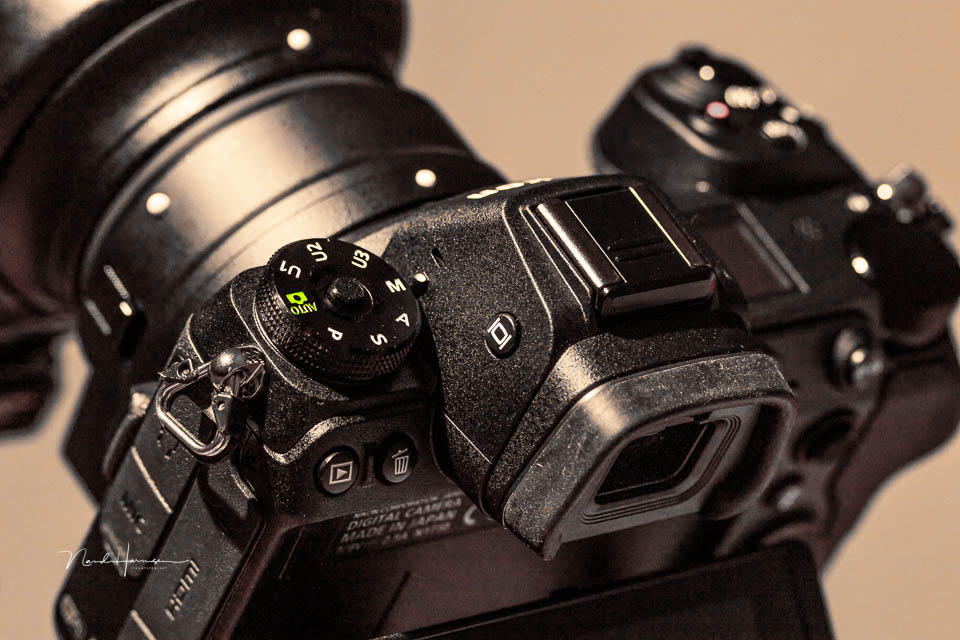
Setting the camera to M mode and then choosing auto ISO is definitely not setting the exposure manually. The camera will choose the ISO value that produces a good exposure at your chosen aperture and shutter speed.
In short, setting the exposure manually means that you really choose all three settings yourself. So, the aperture, shutter speed and ISO value. To do this, set the camera to M mode and also choose an ISO value manually.
When is manually chosen exposure the best choice?
Usually, setting the exposure manually is a lot of hassle that distracts you from what it is really about: taking a good, interesting photo. There are, however, situations where setting the exposure manually is the best way.
Those situations can be summed up in one sentence. You choose to set the exposure manually when the lighting conditions remain constant. Here are a few examples of when this is the case.
- 1. You are photographing indoors and the light is constant
- 2. You are photographing indoors with flash
- 3. You are photographing outdoors in the evening
- 4. You are photographing stars or star trails
- 5. You are making a timelapse
- 6. You are making a complex panorama
- 7. You are using neutral density filters
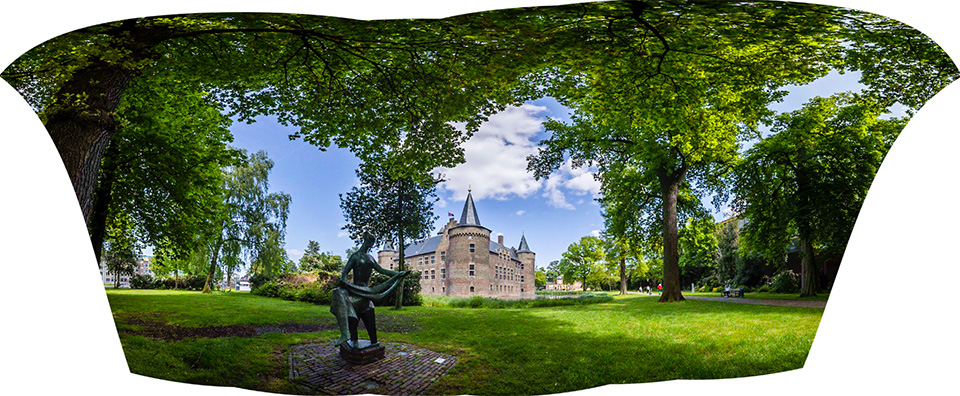
In the first four cases, the light is constant. In the next two cases, you do not want the exposure to change between the different shots, even if the amount of available light changes. In the last case, you often cannot rely on the exposure meter, and you may sometimes need to use Bulb.
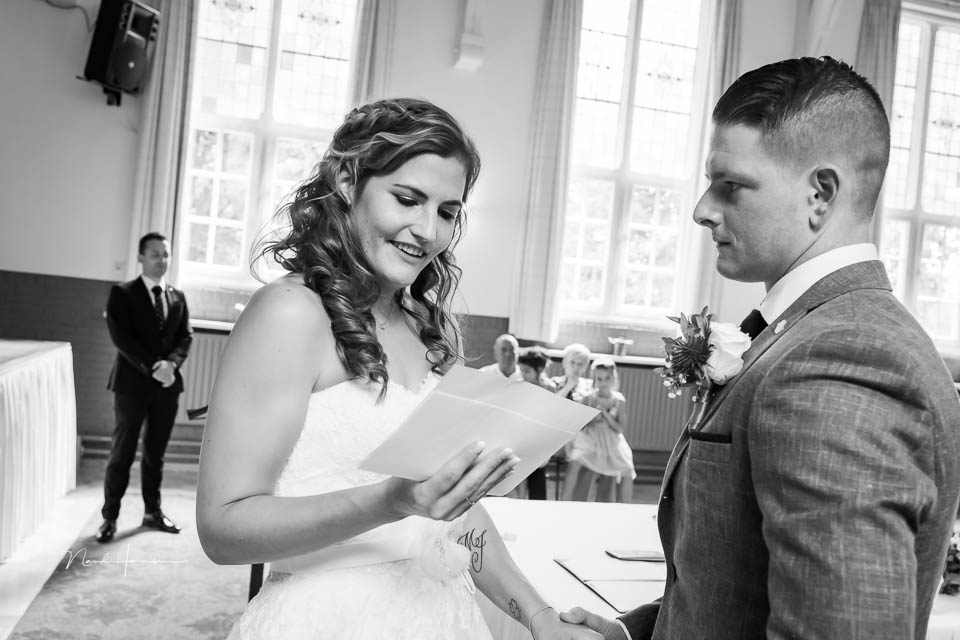
Indoors with and without flash
Think of a window through which daylight enters. Or a lamp in the room. If you let the camera set part of the exposure settings, it will immediately react to that light source in the frame. The result is an underexposed shot.
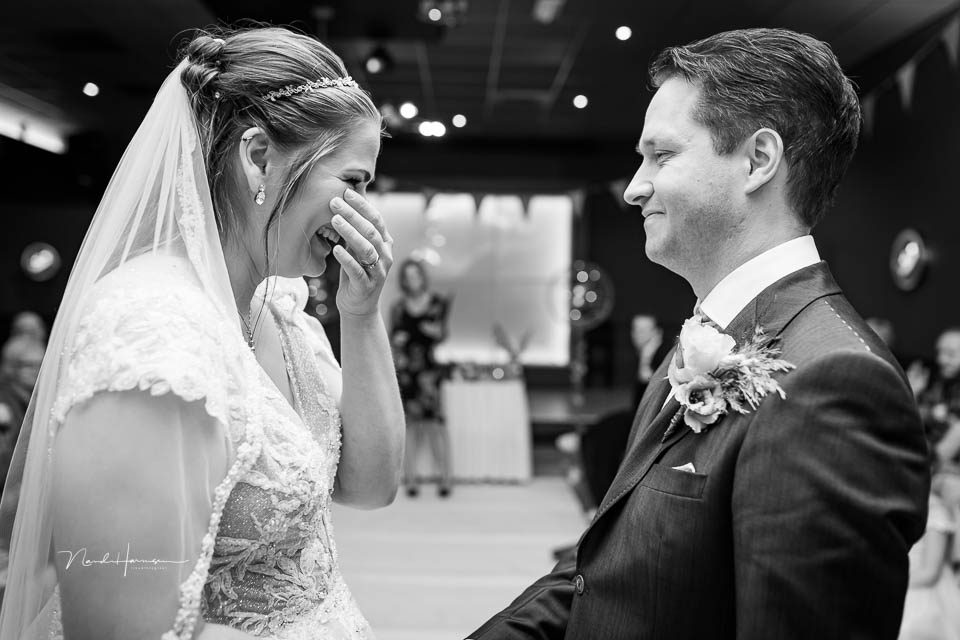
With flash, it is basically the same. The exposure setting is for the ambient light, and the flash is for exposing your subject. You do not want the camera to set a different exposure for your surroundings every time.
Outdoors with a constant amount of light
The same applies to night photography: the light changes little or not at all. Setting the exposure manually prevents you from constantly having to correct the exposure when a light source appears in the frame.
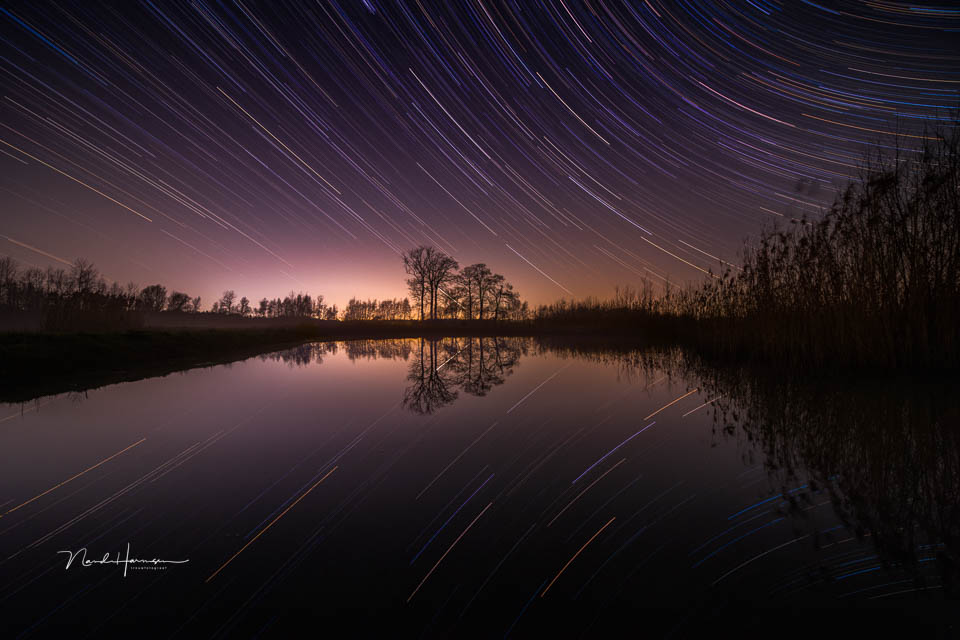
If you practise astrophotography or work with neutral density filters, however, you are working in situations where the light meter is no longer reliable. You also have to calculate your exposure time yourself.
For star trails and timelapse photos, you also do not want the exposure to change within the series of photos. If it does, your star trail or timelapse will fail. Setting the exposure manually is the only proper way.
When should you set the exposure manually?
So, is there a constant amount of light, regardless of which direction you photograph in?
Can the exposure meter react to the background because it is locally lighter or darker?
Are you taking a series of photos where every photo needs to have the same exposure?
In those cases, a manual exposure setting is the best choice.
When should you let the camera set the exposure?
Does the amount of light change regularly and unexpectedly? Then setting the exposure manually is not a good choice. You would have to keep adjusting your exposure, leaving you focused only on the settings. In that case, it is much better to leave part of the exposure settings to your camera.
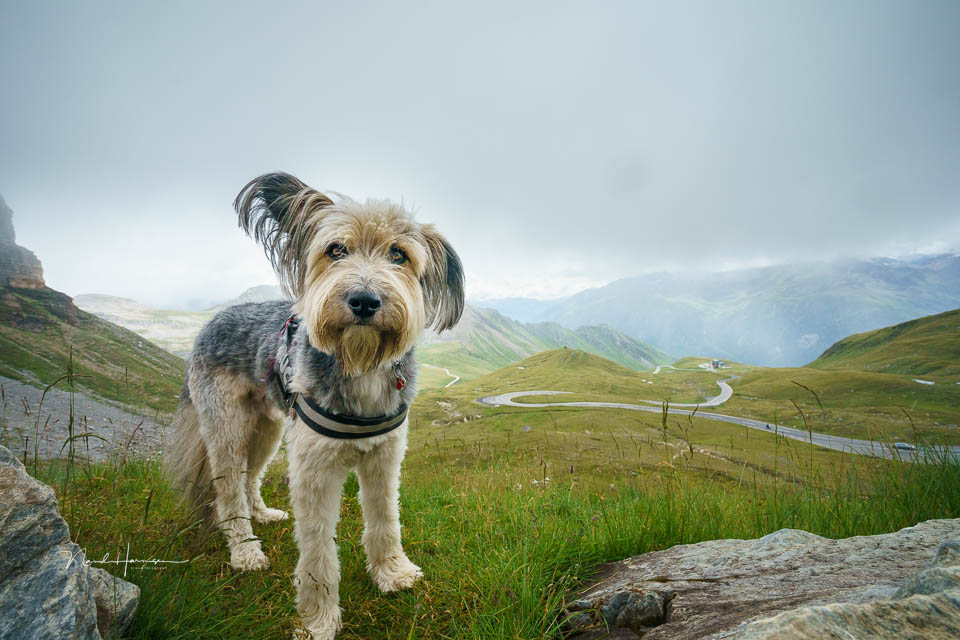
Setting the exposure manually does not make you a better photographer, but making the right choice from the options your camera offers does. Think of it this way. It is about taking a good photo. It is not about how you set up a camera.
What do you think? Are you a photographer who has to use a manually set exposure because you believe that this is the only best way? Or do you use a manually set exposure because it is the best choice for your photography? Let us know in a comment below this post.
About the author
Nando Harmsen has been photographing for more than 40 years. He specialises in wedding photography and landscape photography. Nando also gives talks, workshops, masterclasses and photo trips, and regularly reviews new and interesting equipment.
You might also like
-
 Shooting in Manual mode and zoom lenses
by Nando Harmsen
-
 Use M mode to learn, but not necessarily while taking photos
by Nando Harmsen
-
 Situations where manual mode is (actually) perfect
by Nando Harmsen
-
 Flash photography tip: Set your camera manually
by Elja Trum
-
 Aeroplane mode on a camera
by Nando Harmsen
-
 Leica announces M EV1 with electronic viewfinder
by Elja Trum
27 comments
-
 Mac wrote on Tuesday 11 July 2023 at 07:56 | reply
Nice explanation, and hope people will get something out of it.
Translated from Dutch.
I do still have 1 situation where I expose manually myself. Because this gives the best results.
1 Indoors during dance (battle) photography. The light changes continuously, and the colored LED lights don't want to help either.
(and the dancers' clothing doesn't either, one black, the other white, very nice) So here I always take a few test photos before it starts, and based on that I set everything manually (including the WB, because the colored light really makes it go completely haywire). If there is a small break, I do check a few photos, and make small adjustments if necessary.
because the constantly, (and quickly) changing light can really ruin it. And you can then get (heavily) over- and underexposed photos. Because if the lamp is shining right at your camera, at the moment you want to take the photo, and the moment you have pressed your shutter button far enough that the exposure is fixed, and then that lamp just goes out, you have a heavily underexposed photo.
Even when exposing manually you will get under- and overexposed photos, but from experience I have learned that there are still quite a lot fewer of them. -

 Nando
wrote on Tuesday 11 July 2023 at 09:29
| reply
Nando
wrote on Tuesday 11 July 2023 at 09:29
| reply
Thank you for your addition.
Translated from Dutch.
You describe exactly with your white balance the reason why I always use a fixed white balance setting. I never use AWB.
As for the exposure in your situation, I photographed concerts for several decades and always used aperture priority. With exposure compensation, I could respond perfectly and extremely quickly to changing lighting conditions and angles of incidence. I learned to look at the light and could estimate reasonably well what the photo would look like, so I could already make my correction in advance. It worked fantastically for me. -
 PixelDude Raoul
wrote on Tuesday 11 July 2023 at 11:27
| reply
PixelDude Raoul
wrote on Tuesday 11 July 2023 at 11:27
| reply
Nando, I think that several of the arguments above may already be partially outdated for some modern cameras. There are settings that can make the M choice unnecessary. And the recent editing programs are also powerful enough to correct quite a lot, even when set to 'automatic'.
Translated from Dutch.
A completely correct story for the somewhat older cameras and editing programs but already verging on vintage for the more recent cameras and editing programs from some brands.
In any case, more than a good explanation to (re)recognize the situations and, if necessary, act accordingly. -
-
PixelDude Raoul
wrote on Tuesday 11 July 2023 at 12:12
| reply
Nando, an exposure that isn't completely correct can often be corrected well in editing programs. In other words, it's not always necessary to switch to M.
Translated from Dutch.
Taking a photo is indeed much more important than fiddling around with the technical aids. -
Nando
wrote on Tuesday 11 July 2023 at 12:18
| reply
That is indeed possible to a certain extent. But choosing a good exposure (regardless of whether you set the camera manually or not), or achieving consistent results while taking photos will always be preferable. That will always guarantee better photos than relying on the correction capabilities of software.
Translated from Dutch. -
 Louis wrote on Tuesday 11 July 2023 at 11:30 | reply
Educational and interesting article. I am a convinced member of the M legion. For a number of reasons. Among other things, you force yourself to assess the lighting situation with every photo (look better) and anticipate it. Ultimately, in my opinion, this still produces the best results. Switching back and forth between "M" and "Auto" is not a relaxing thought for me. I then miss the funny little dog. So be it.
Translated from Dutch. -
Nando
wrote on Tuesday 11 July 2023 at 12:08
| reply
I don't believe you achieve better results. Exposing manually means relying on the camera's exposure meter and manually setting the values that result in the measured exposure.
Translated from Dutch.
You can deviate from that measured exposure in all cases, even if you don't set your exposure manually.
So you always have to assess the lighting situation and respond to it, regardless of whether you let the camera handle part of the exposure settings, or do that manually.
If you find that more pleasant, that's of course fine. I would hate to miss that funny little dog. After all, what matters to me is the successful photo, not sticking to a particular way of setting the camera. -
 Kees Jurgens wrote on Tuesday 11 July 2023 at 11:43
| reply
Kees Jurgens wrote on Tuesday 11 July 2023 at 11:43
| reply
What about photographing in the snow?
Translated from Dutch.
Overexposing by 1 to 1.5 stops largely prevents blue snow and underexposed photos. -
-
 Sjaak Buis wrote on Tuesday 11 July 2023 at 13:14 | reply
I set my camera myself to M mode and if I have changing light, shade, sun etc then I set the ISO value automatically to a certain range e.g. 100 to 800 ISO.
Translated from Dutch. -
 stefanF wrote on Tuesday 11 July 2023 at 13:27 | reply
It also depends on what you are photographing: fast action requires a fast shutter speed and then you actually want to lock that. The bandwidth over which the aperture can vary is also limited (depth of field or not sharp) so then there is little variation left: then it is better to lock it (I always expose slightly under because dark (underexposure) is limited but highlights ( overexposure) are 'infinite'...).
Translated from Dutch.
But sometimes when everything is going very fast and changes a lot (inside outside backlight etc etc) I sometimes put it in intelligent AUTO and let the camera do everything itself (but with the exposure compensation set to -0.7ev)
PS I do most of my work in VIDEO and then the shutter speed is more or less fixed and related to the framerate - even less choice: but there is (forgotten in the example) ND on/off (I have such a super Sony RX10mark 2 that I do a lot with... 1 button ND on and off for outside / inside / backlight yes no etc.... I never do that on auto) -
-
 Bernard wrote on Tuesday 11 July 2023 at 13:30 | reply
The ever-recurring subject, which club is better Ajax or Feijenoord? I still don't understand the discussion and I understand absolutely nothing of all the fuss about whether or not to use the "M" mode. Just for the record, I've only been photographing for about 60 years. In general photography (holidays, architecture, street photography, sports, receptions, etc.) you will have to make a number of choices beforehand in order to be able to photograph "quickly and successfully". The very first choice is the lens you need. Then you set the white balance (not to automatic). Next you choose whether you prefer your aperture (for depth of field) or shutter speed (in the case of fast-moving subjects). To arrive at a reasonable aperture/shutter speed combination you choose the ISO value. In my opinion, that's all there is to it and the "M" mode hasn't even come into the picture.
Translated from Dutch. -
 Lauran wrote on Tuesday 11 July 2023 at 13:40 | reply
I do everything manually. That's how I once learned it and that's how I'll keep doing it.
Translated from Dutch. -
stefanF wrote on Tuesday 11 July 2023 at 14:28 | reply
Hi Bernard,
Translated from Dutch.
you describe the basics but a lot has changed in 60 years!
Digital photography, for example. And bridge cameras (which are just as good at filming as they are at taking photos and can alternate between the two, in JPG or RAW. Panoramas - 360-degree photography - quickly underwater and above water with the same camera - LED lights - what the customer wants has also changed...
So there is a bit more than the M mode (but it does remain the basis)
br Stefan -
-
 guest wrote on Tuesday 11 July 2023 at 15:41 | reply
A great article Nando that I broadly agree with. I use M mode in the studio and also use an external light meter and of course a fixed ISO value.
Translated from Dutch.
I also use M mode when working with ND filters and for panoramic photography. For the rest, depending on the subject, I use Av or Tv mode. When I encounter constantly changing lighting conditions in these last 2 modes, I turn on auto ISO with a limited upper value of ISO6400 at most. At this maximum value I have hardly any or no bothersome noise.
My camera is always set to AWB, though. I always photograph in RAW. Then the white balance can always still be corrected afterwards. -
 Leo van der Nat wrote on Tuesday 11 July 2023 at 16:16 | reply
Hi Nando, lots of different reactions. But I understand your argument. I usually use aperture priority. With a certain appropriate ISO. And seeing what the shutter speed does. Adjust the ISO if necessary. For bird photography I use shutter priority again and the ISO on automatic, so that the shutter speed isn't changed. That works fine for me.
Translated from Dutch. -
 Donald Willemsen wrote on Tuesday 11 July 2023 at 16:22 | reply
'gast' should be 'Donald Willemsen'
Translated from Dutch. -
stefanF wrote on Tuesday 11 July 2023 at 16:23 | reply
True: but the AUTO mode has also become much more intelligent. Just look at what a modern iPhone can do and that's actually always automatic...
Translated from Dutch.
I once wanted to photograph a full moonrise (so lots of changing light as it rises) well what a hassle (long shutter speeds and such...) until I thought: I'll try my Iphone - well it takes 100 images in a row, combines them and you have a super photo...
So an incredible amount has changed. You'd almost want more Iphone intelligence to be incorporated into the auto modes of dedicated cameras and that is happening more and more.
So the story of Auto or M really is relevant and evolving a lot. -
PixelDude Raoul
wrote on Tuesday 11 July 2023 at 16:46
| reply
@Stefan.
Translated from Dutch.
Auto is indeed interesting and yet I never use it. Why? As a hobbyist nature photographer with a preference for flora, my cameras are normally set to aperture priority. This is so I can quickly choose the desired depth of field. But regularly I set the priority to shutter speed when 'critters' are involved. I limit my ISO to ISO 800. And the exposure? Very easy to adjust because I have programmed a setting that shows underexposure as blue and overexposure as orange. When I see both, I go for an HDR shot. Focusing on autofocus and occasionally manually by sliding the special ring on my lenses backwards. The sharp parts in the photo then show up red, handy. Very, but really very sporadically, the photo doesn't turn out as desired. -
guest wrote on Tuesday 11 July 2023 at 21:35 | reply
Hello Nando,
Translated from Dutch.
clear explanation. You had also written something about aperture priority before. I tried using a priority mode a few times, but I don't really feel comfortable with it. So back to 'M' after all. I do (almost) always check the settings beforehand when I go out and set them to a value that will probably be right for the conditions. I make sure I have a bit of leeway with the exposure. I can adjust that quickly. This way, most photos turn out well. An occasional miss: so be it. -
 Stefanie
wrote on Tuesday 25 July 2023 at 13:08
| reply
Stefanie
wrote on Tuesday 25 July 2023 at 13:08
| reply
The M mode is not the holy grail, but it is something every photographer should be able to handle simply because you need to know which setting produces which result. But you don't have to make things unnecessarily difficult for yourself by always doing everything in M mode. I'm old school, so if I have the time I like to set everything myself, but if I don't have the time then I just go for one of the preset options. What I do miss in this story is the creative use of M mode, sometimes you want to work against all the rules ...
Translated from Dutch. -
-
 WvdVorst wrote on Tuesday 5 September 2023 at 18:56
| reply
WvdVorst wrote on Tuesday 5 September 2023 at 18:56
| reply
Hi Nando,
Translated from Dutch.
I was under the impression that all professionals shoot in M. I can't imagine that you shoot in A+. You set WB manually. What do you do with ISO? Auto? And then Av or Tv depending on the subject?
Regards, Wilfred -
Nando
wrote on Thursday 7 September 2023 at 10:00
| reply
No, not at all. Photographing in M mode has nothing to do with professionalism. Professionals photograph with the settings that make the work as easy as possible. It is about the end result, not the way the settings are adjusted.
Translated from Dutch.
I use A mode when depth of field is important, S or Tv mode when shutter speed is the most important thing (fast action, for example), and I often use auto ISO when shooting handheld in A or S/Tv mode. However, this is a guideline, I do sometimes deviate from it if the situation requires it.

Have your say
Please note: Articles older than a week can only be commented on by signed-in visitors.Would you still like to comment? sign in or create a free account.
Become a better photographer every week
A practical photography tip in your inbox every week.
39,077 photography enthusiasts already receive the tips! More about the weekly mail. Or keep up to date via  Facebook.

Elja Trum
Photofacts; everything to do with photography!
Would you like to take better photos and keep up with what is happening in photography? Photofacts publishes articles that teach you something about photography — from a product announcement to a practical shooting tip or a look at a website. Photofacts covers photography every day and is a hobby project of Elja Trum's that got out of hand. The articles are written by a team of volunteer authors. If you would enjoy writing one or more articles for Photofacts, do get in touch.More about PhotofactsPhotofacts is made possible in part by
