

Get computer feedback on your photos
Sunday 9 October 2016, 20:10 by Elja Trum | 9,890 views | 18 commentsThis article was translated from Dutch with the help of AI. Read the original.
There are plenty of people online who are happy to comment on your photos. But would you like to know what a computer actually thinks of your photo? Then you will be pleased with Keegan. This digital photo coach is happy to give you feedback on your photos.
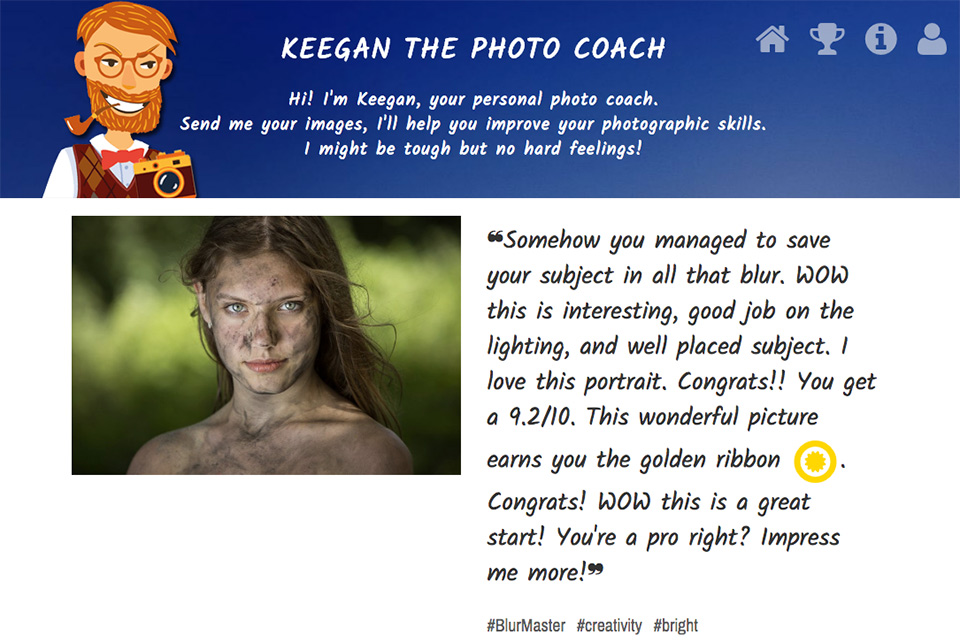
Keegan was created by Regaind, a French start-up working on automatic image analysis. The developers trained the system with the help of professional photographers. This means the algorithm can now identify and describe weaknesses and strengths in a photo.
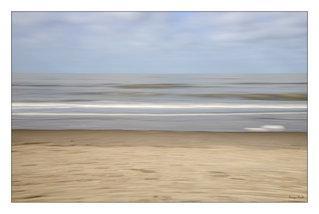
Personally, I can also see useful applications, besides education, such as automatically selecting the best photos after a day's shooting. Keegan still needs to improve, of course, but I was already impressed by the results, and naturally pleased with the positive feedback on my photo.
How does Keegan rate your photos?
Try it out!
About the author
Elja Trum is the founder of Photofacts and online photography course website Photofacts Academy. He has been writing about photography since 2006. Elja is also the author of (Dutch) books on composition, black-and-white photography, flash photography and portrait photography.
You might also like
-
 Adobe and the cost of AI generative fill
by Nando Harmsen
-
 The Hidden Costs of Using AI
by Nando Harmsen
-
 Review: Topaz DeNoise AI
by Michelle Peeters
-
 Easily remove a tattoo with AI in Lightroom Classic
by Elja Trum
-
 AI is taking over the world and photo editing
by Dick Holtman

18 comments
-

-

 martinphili wrote on Monday 10 October 2016 at 21:34
| reply
What nonsense, sorry. So your photos are supposed to get better if you conform to a computer program?
Translated from Dutch.
I personally find those comments from photographers awful anyway. -
 R K wrote on Tuesday 11 October 2016 at 11:45 | reply
Nonsense. For fun, I had some photos by the legendary Henri Cartier-Bresson evaluated, one of the best photographers of the last century. Result: "The blur is ok but I can't see your subject? Keep trying. You still have work to do on your blur and composition. It's only a 4.2/10."
Translated from Dutch. -
 Elja Trum
wrote on Tuesday 11 October 2016 at 12:02
| reply
@RK; you should for fun throw a few photos like that into an average photography forum without mentioning the photographer. Good chance you'll also get negative feedback.
Translated from Dutch.
I think for now it's still a funny algorithm that regularly gets it wrong. In the near future, you'll use it to automatically select your best photos from thousands of photos. -
 M wrote on Tuesday 11 October 2016 at 13:20 | reply
@Ronald Kuik... and what do you think yourself?
Translated from Dutch.
-
 Mabel Amber
wrote on Tuesday 11 October 2016 at 14:05
| reply
I'm laughing my head off, all the photos that were rejected by the quality control team of a certain site get glowing reviews from Keegan, ha! And: "Is this a Georgie O'Keefe?"
Translated from Dutch.
And a few photos that were approved by the quality yo-yos get a big thumbs down from Keegan.
And furthermore Keegan says that I should especially keep going, I'll get there: "You should really be a photographer!" -
Ronald Kuik wrote on Tuesday 11 October 2016 at 16:16 | reply
I will not comment on this. Of course, you can have the necessary reservations about it.
Translated from Dutch. -
martinphili wrote on Tuesday 11 October 2016 at 18:30
| reply
@Elja,
Translated from Dutch.
you write "In the near future, you can use this to automatically select your best photos from thousands of photos."
But that isn't going to work at all, is it? After all, a good photo is not just sharp and according to the golden ratio rule. A good photo evokes emotions. A good photo was taken at the right moment. A good photo makes me think about the little story hidden in it.
And no computer algorithm is going to bring that to the surface. -
Ronald Kuik wrote on Tuesday 11 October 2016 at 18:42 | reply
I hope that some human work will still remain in the near future. To be honest, I appreciate comments from someone who knows what they're talking about more than from a computer. ( oops now I've shared my opinion after all )
Translated from Dutch. -
Mabel Amber wrote on Tuesday 11 October 2016 at 18:42 | reply
Totally agree with martinphili.
Translated from Dutch.
That's how it is. A computer algorithm doesn't take anything like "content" into account.
Whereas we do know that in photography the whole is always more than the sum of its parts. -
Mabel Amber wrote on Tuesday 11 October 2016 at 18:45 | reply
Then I have a pretty strong suspicion that moderators on photo sites will be keen to start using Keegan once it’s past its teething problems...
Translated from Dutch. -

-
 100
wrote on Wednesday 12 October 2016 at 02:12
| reply
They are the first faltering steps on the way to artificial intelligence that in time will be indistinguishable from human intelligence and will eventually surpass human intelligence, but by then we will be many years further along.
Translated from Dutch.
We humans can always put it nicely and abstractly. A photo should evoke emotion, tell a story, have substance, capture the decisive moment…
Sounds nice, but what does that mean concretely?
If you give two groups of professional juries a few hundred photos and have them independently choose the ten best photos, the chance that they will choose the same ten photos is extremely small. Personal interpretation, personal taste, personal experiences, personal background, etc. determine the choice much more than the intrinsic quality of the photo itself.
Or in other words; human judgments about photos, including those of experts, are subjective.
The best you can hope for is that a judgment is intersubjective (shared subjectivity in which consensus about the quality of a photo arises within a certain group) and even that is already very difficult. Just look at the different opinions when choosing the World Press Photo. -
Elja Trum
wrote on Wednesday 12 October 2016 at 09:19
| reply
@Martinphili; I think that in time a computer will also be able to see deeper meaning in a photo. But by then we may well be ten or twenty years further on.
Translated from Dutch.
Earlier than that, I think an algorithm will already be very capable of choosing the 100 photos from, for example, a wedding shoot that also make a strong emotional impact. Simply because that can be based on (hundreds of) thousands of similar photos that people have indicated they liked.
A kind of superficial way of determining 'content'.
But it will probably remain smart in the coming years to also look through your entire shoot yourself. -
 rik wrote on Wednesday 12 October 2016 at 11:27 | reply
Fun to try. Thanks for the tip!
Translated from Dutch.
It is indeed a technical assessment, and for all art "beauty is in the eye of the beholder"! -
R K wrote on Wednesday 12 October 2016 at 14:20 | reply
@Elja: even as a wedding photographer, you still want to distinguish yourself with your own style, rather than shooting the same safe dime-a-dozen shots that countless other photographers can deliver too?
Translated from Dutch.
My objection to such a computer assessment is that it is based on debatable rules and what the masses like. That produces the "perfect", but soulless and deadly boring photos that also fill pages like Flickr Explore and 500px Popular every day.
As a photographer - pro or amateur - you'd be better off being guided by creativity, experimentation and eccentricity. If necessary - or rather - against the current. -
 guest wrote on Wednesday 12 October 2016 at 19:03 | reply
program is somewhat predictable and has problems with night photography, but I suspect that this will indeed improve greatly over the Years and artificial intelligence will increasingly gain the upper hand.
Translated from Dutch. -
martinphili wrote on Wednesday 12 October 2016 at 19:05
| reply
A kind of superficial way of determining 'content'.
Translated from Dutch.
Yes, I know a few like that too
If you assess photos in such a way, then you don't assess the quality, you assess whether they are close to the average.
But who knows, in twenty years I might have to admit you're right. If we're still taking photos by then
Have your say
Please note: Articles older than a week can only be commented on by signed-in visitors.Would you still like to comment? sign in or create a free account.
Become a better photographer every week
A practical photography tip in your inbox every week.
38,729 photography enthusiasts already receive the tips! More about the weekly mail. Or keep up to date via  Facebook.

Elja Trum
Photofacts; everything to do with photography!
Would you like to take better photos and keep up with what is happening in photography? Photofacts publishes articles that teach you something about photography — from a product announcement to a practical shooting tip or a look at a website. Photofacts covers photography every day and is a hobby project of Elja Trum's that got out of hand. The articles are written by a team of volunteer authors. If you would enjoy writing one or more articles for Photofacts, do get in touch.More about Photofacts Photos

Photofacts is made possible in part by
