

Review: Handboek Natuurfotografie+
Friday 23 December 2016, 23:23 by Nando Harmsen | 6,459 views | 2 commentsThis article was translated from Dutch with the help of AI. Read the original.
'What type of nature photographer are you?' That is the question on the cover of the book, followed by descriptions of five types of photographer: the technician, biologist, artist, philosopher and collector.
Categories you can place yourself in before you actually start reading the book. 'If you want to know exactly, take the test 'What type of nature photographer are you?' at Centrumvoornatuurfotografie.nl'. So we put the book aside to take the test online, before we have actually started reading it.
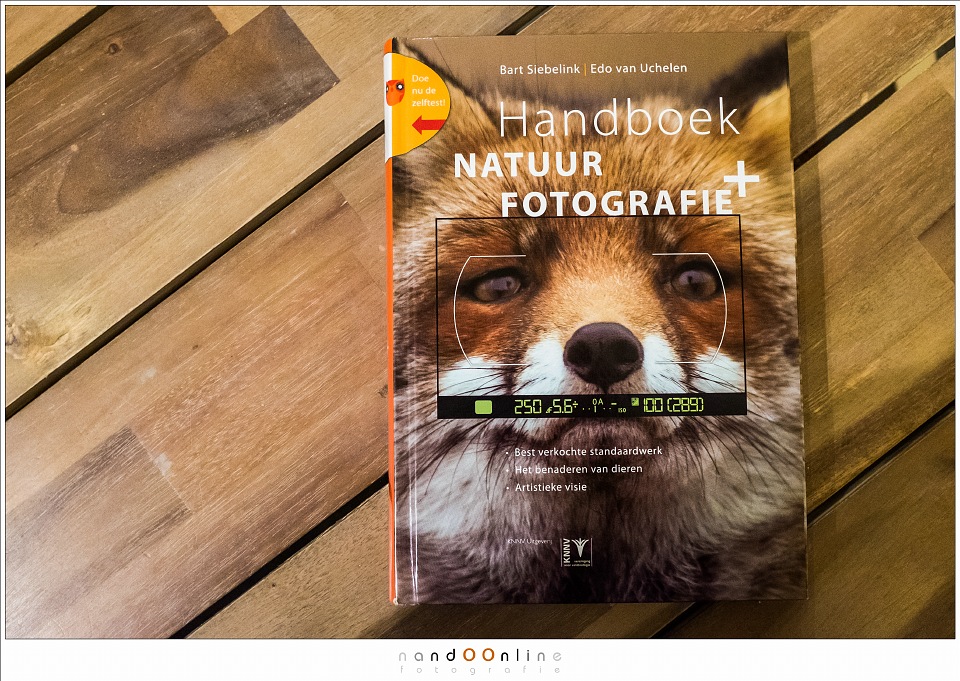
The book Handboek Natuurfotografie+ is an expanded version of an earlier book with the same title, but with fewer pages, hence the plus sign in the title. It is called the 'best-selling standard work', and who am I to doubt that.
The suggestion is that the book will answer the questions of the beginner photographer and that, after reading it, we can successfully get started with photography. But to do that, we have to leave the internet and the website alone and start reading the book.
Contents
The book covers a wide range of subjects. From lists of cameras, settings and accessories to the more intangible “visual principles” and “artistic vision” related to the composition and appearance of a photograph.
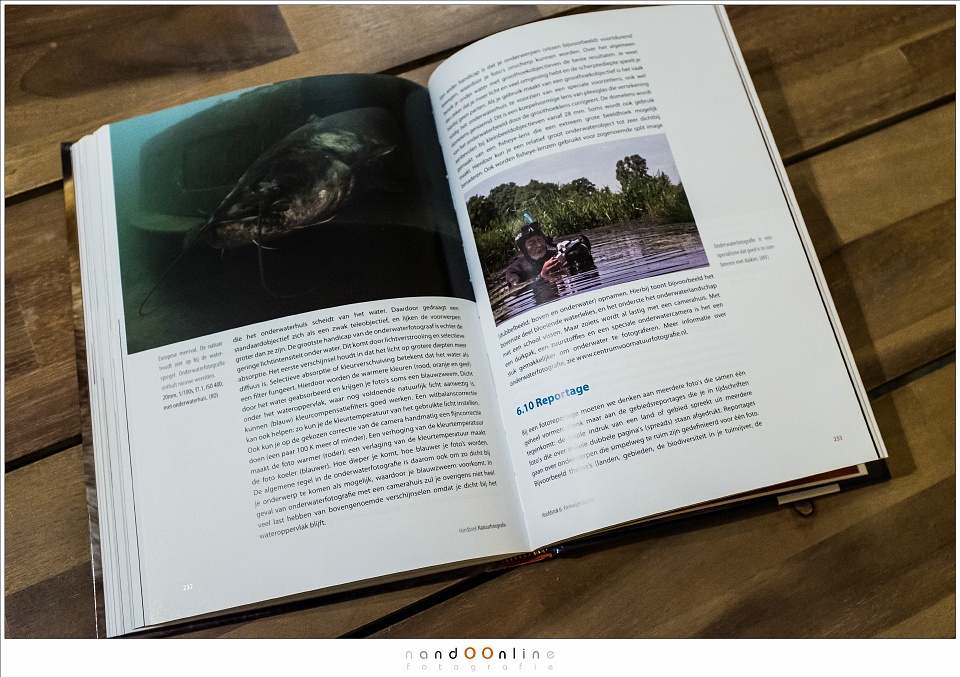
The practical tips are covered in more detail in the chapter “Working outdoors”, where the authors cover as many subjects as possible: from landscapes to aerial photography, from plants to mushrooms, and from macro and close-up photography to underwater photography. But especially wildlife photography, something that was already clear after the first chapters to be where the two authors' hearts lie.
That is not all. Workflow is also covered, along with the incredibly difficult question: “What do you do with your photographs?” Finally, the authors offer some recommendations for photography while travelling.
Complete
All in all, this complete list of subjects makes Handboek Natuurfotografie+ extremely comprehensive. Think of a subject related to or possibly related to nature photography, and you will find it in this book. That immediately makes it clear that none of the subjects can be covered in much depth.
Everything is mentioned, touched on and dealt with briefly, which will whet the inexperienced photographer's appetite, but does not guide them sufficiently. At the same time, the authors motivate readers by introducing assignments, encouraging them to pick up their camera and get started.
Unfortunately, the website is mentioned again at this point, meaning that without the internet and an account on the website, you cannot make optimal use of the information provided.
Flash photography
Although the book only mentions most subjects without going into them in depth, there are a few subjects that the authors do cover in great detail. Flash photography is one of them, with a huge amount of theoretical information being listed.
An experienced flash photographer may be able to make sense of it, but a beginner will be overwhelmed. On the other hand, important subjects such as depth of field are covered too superficially, with terms sometimes not even being explained correctly.
Photographs
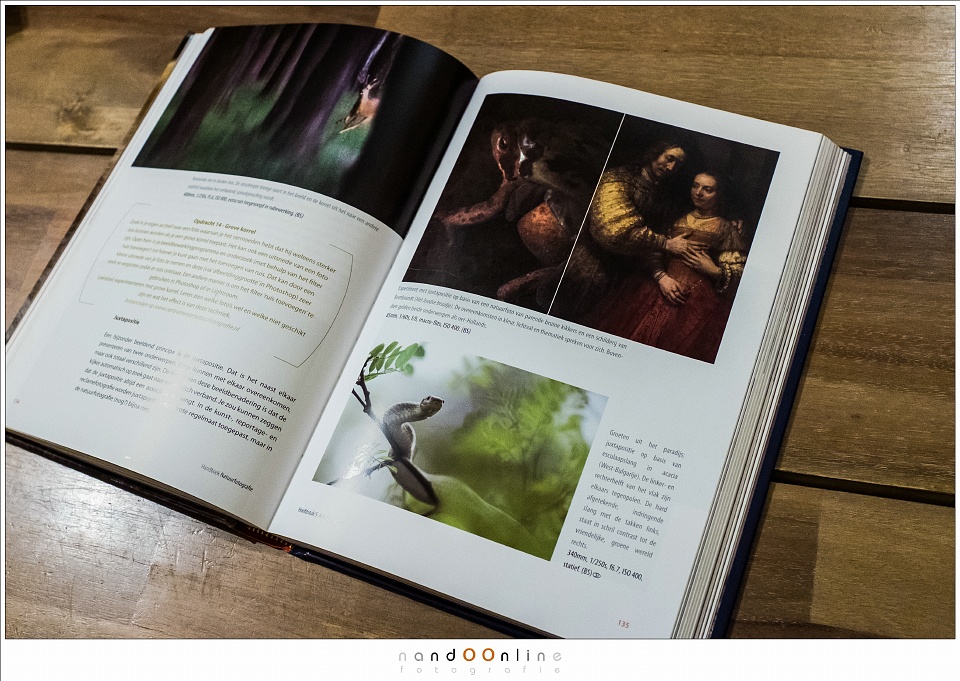
A book about photography is nothing without lots of photographs. There are plenty of those too, some of which are genuinely beautiful. However, a large proportion can only be described as average in quality. Moreover, the authors sometimes go a little too far in their artistic approach to a photograph, including editing that feels to me more like an attempt to give a failed photograph a new lease of life.
It is good to push boundaries, but in my opinion the authors occasionally go too far here. But of course, that is personal. It is good that some less successful photographs are included too, to show how a photograph could have been better.
Looking
The way you look at a photograph is covered extensively. The great masters of painting are repeatedly referenced. Here, the photographers are not reinventing the wheel, but using the age-old techniques of image composition that we also see in those paintings. At times, this leans too much towards the artistic approach I mentioned earlier.
Despite that, these may well be the two most interesting subjects in the book: how a photograph can be composed and how to look at it. It gets you thinking, and ultimately makes you look at photographs in a completely different way. That is a good thing, although this too could have been covered in more depth.
The first edition dates back to 2011. The reissue, which is now also more than three years old, will undoubtedly have been thoroughly revised. Yet the first chapter in particular feels rather dated.
That happens quickly, given the rapid developments in the photography world, but when the word octacopter appears in the section on aerial photography, chapter 6, I wonder whether that term was not already dated in 2013.
Conclusion
Handboek Natuurfotografie+ is a comprehensive book that covers all types of nature photography. However, it remains superficial in almost every area, although in some cases it can certainly encourage readers to look at their photographs differently.
It is a shame that the website is repeatedly referred to, but it is a clever marketing trick for promoting courses and photo trips. The book helpfully mentions that you should always choose an organised photo trip. Whether the book is suitable for a beginner or an advanced photographer is difficult to say.
I think the beginner will be helped on their way, but will ultimately be left with too many unanswered questions. The advanced photographer, on the other hand, will certainly be able to use the visual principles and artistic vision from the book to grow as a photographer, but probably not much more than that.
» Order from Bol.com
Handboek Natuurfotografie + by Bart Siebelink and Edo van Uchelen
ISBN: 9789050114646, KNNV Uitgeverij 2013, 300 pages, Price: 29.95 euros
About the author
Nando Harmsen has been photographing for more than 40 years. He specialises in wedding photography and landscape photography. Nando also gives talks, workshops, masterclasses and photo trips, and regularly reviews new and interesting equipment.
You might also like
-
 Review: Model Photography Handbook, Frank Doorhof
by Michelle Peeters
-
 Review: Handbook of Sports Photography
by Michelle Peeters
-
 Review: Blurb photo books via Lightroom Classic
by Nando Harmsen
-
 Review: Canon EOS R6
by Nando Harmsen
-
 Review: Canon EOS R7
by Nando Harmsen
-
 Review: Sony A7R V mirrorless camera
by Nando Harmsen
2 comments
-

-
 Aad wrote on Tuesday 27 December 2016 at 11:30 | reply
Good review, Nando. I don't have this newer edition, but I do have the previous one, and you describe very precisely and well the unsatisfied feeling I was left with.
Translated from Dutch.
All in all, the book was a bit of a disappointment, and I wouldn't recommend it to someone else. The marketing strategy behind it was already very good back then, but that is of no use to the reader.
Have your say
Please note: Articles older than a week can only be commented on by signed-in visitors.Would you still like to comment? sign in or create a free account.
Become a better photographer every week
A practical photography tip in your inbox every week.
38,783 photography enthusiasts already receive the tips! More about the weekly mail. Or keep up to date via  Facebook.

Elja Trum
Photofacts; everything to do with photography!
Would you like to take better photos and keep up with what is happening in photography? Photofacts publishes articles that teach you something about photography — from a product announcement to a practical shooting tip or a look at a website. Photofacts covers photography every day and is a hobby project of Elja Trum's that got out of hand. The articles are written by a team of volunteer authors. If you would enjoy writing one or more articles for Photofacts, do get in touch.More about Photofacts Photos
Photofacts is made possible in part by
