

The advantage of a crop sensor in landscape photography
Saturday 27 March 2021, 16:08 by Nando Harmsen | 5,598 views | 10 commentsThis article was translated from Dutch with the help of AI. Read the original.
Almost all of us want a full-frame camera, because that is better for our photos. Better still, a medium format camera if possible.
We are so focused on those large sensors that we forget the major advantage of a crop sensor for landscape photography. You may actually be better off with a crop sensor.
If you do not have a full-frame camera, a large part of the photography-loving world may not even take you seriously. You are only serious about photography if you use a full-frame camera, because it is better in every respect. Or at least, that is what they would have you believe.
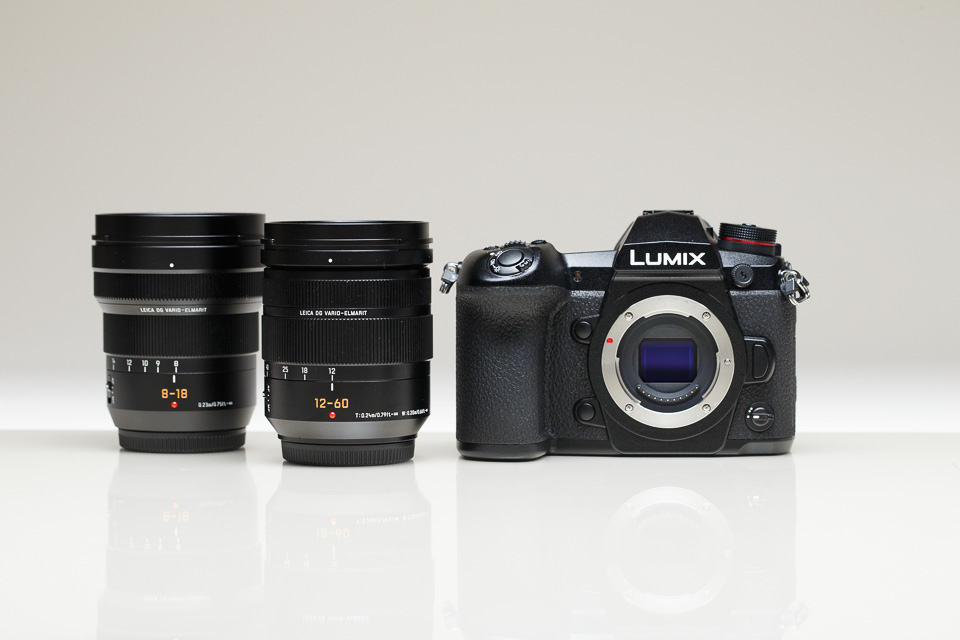
But why, exactly? Is it about the resolution? Is it about the so-called light sensitivity? Or is it something else? In fact, there are situations in which a crop sensor can even be an advantage. Whether that applies to you depends on what kind of landscape photographer you are.
The advantage of a crop sensor
As you know, the crop factor can be useful when you need a long focal length. This is naturally an advantage for wildlife and bird photography.
For this article, though, I want to talk about landscape photography, where in many cases you actually want a wide angle. In that case, the crop factor can be a disadvantage.
Would you like to know more about the usefulness of a crop sensor when you want to use longer focal lengths? Then also read the article What is better, cropping a full-frame image or using a crop sensor?.
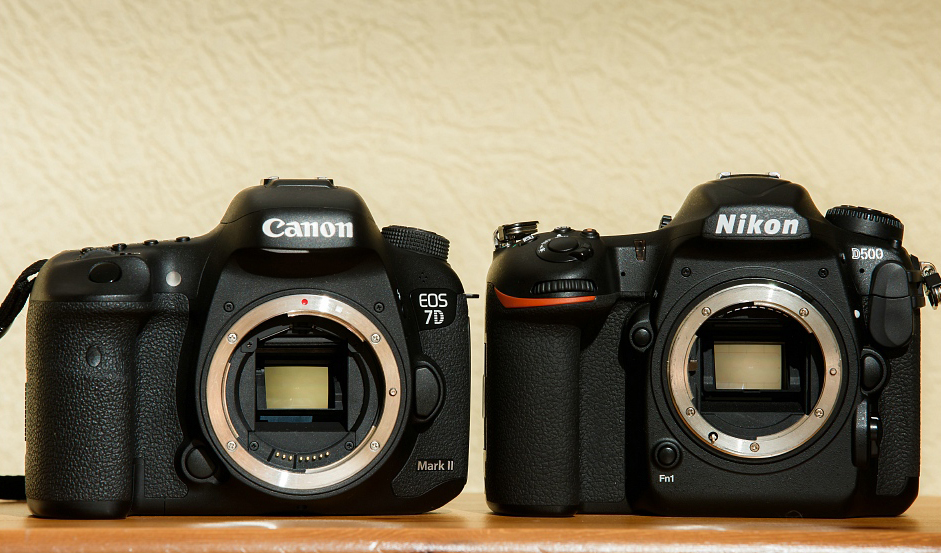
Photographing landscapes with a crop camera
Do you like photographing landscapes with a long telephoto lens? Then the crop factor can naturally be useful. It works in the same way as when photographing animals. The crop factor makes your lens behave like a longer focal length.
Do you prefer using an ultra-wide-angle lens? Then a crop factor is usually a disadvantage. It is more difficult to get the angle of view you would have with a camera with a larger sensor.
That is one reason to choose a camera with a full-frame sensor. Or perhaps even a sensor approaching medium format dimensions.
Fortunately, there are also lenses with an extremely wide angle for crop sensors. Think of a 10mm focal length for an APS-C sensor, with approximately a 1.5x crop, or an 8mm focal length for an MFT sensor, with a 2x crop. The result is almost the same angle of view as 16mm on a full-frame sensor.
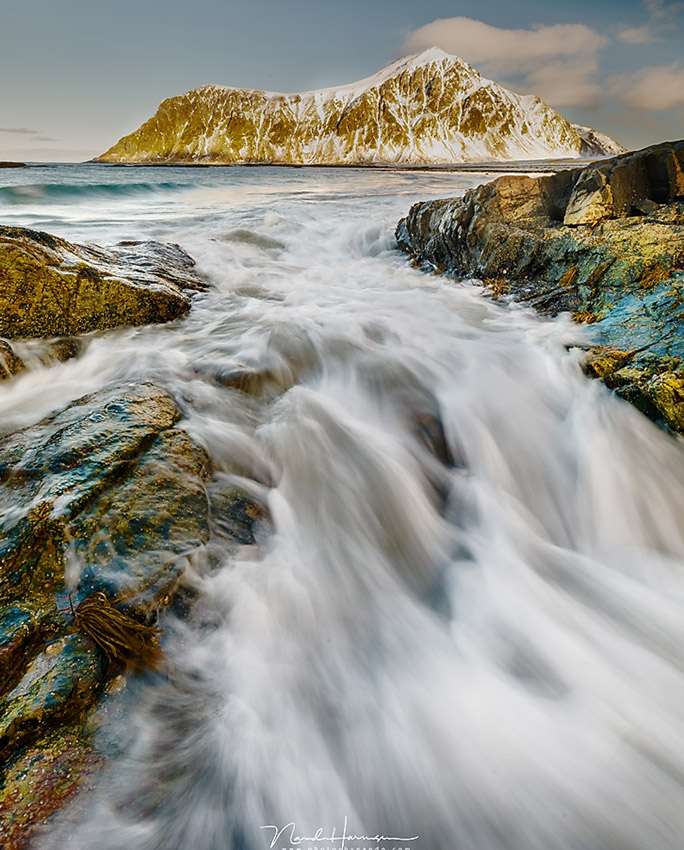
Those very short focal lengths for crop cameras are a major advantage for landscape photographers. This has everything to do with depth of field.
Getting everything sharp in the photo
Many landscape photographers want everything in the photo to be sharp. This can be particularly desirable with wide-angle landscape photos. Hyperfocal distance is often used for this, to maximise the depth of field. If that is still not enough, focus stacking can be a solution.
As photographers, we all know that depth of field is partly determined by your aperture. But sensor size also has an effect. Indirectly, that is, because depth of field itself does not change as a result of sensor size.
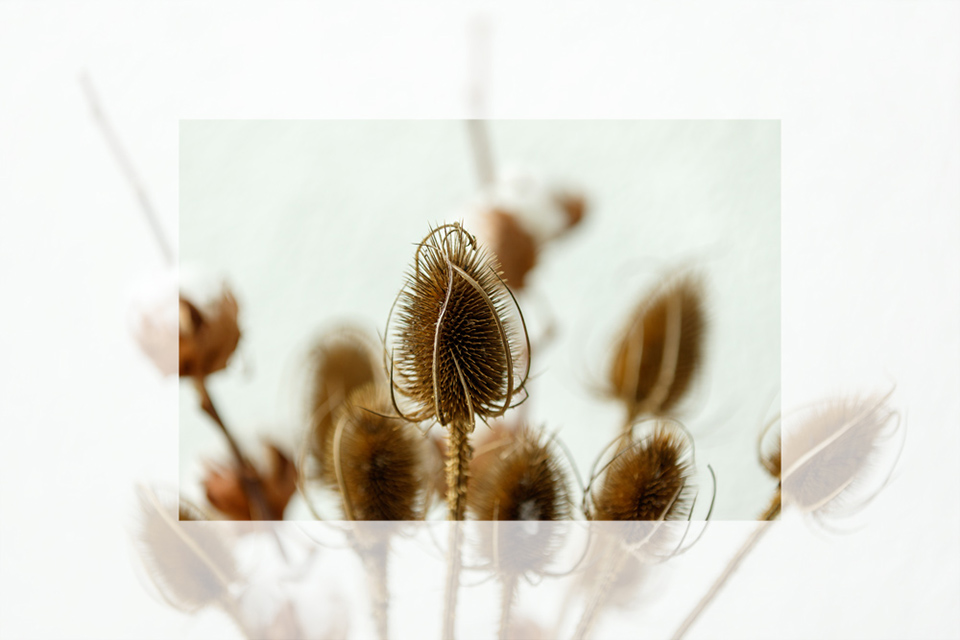
Would you like to know more about depth of field and sensor size? Then read my article A closer look at depth of field and crop sensors again.
Depth of field with a crop sensor therefore does not change compared with a full-frame sensor. At least, not if the focal length and the distance to your subject remain the same. However, you get much less in the frame because the angle of view becomes narrower.
Why you have more depth of field with a crop sensor
To compensate for that narrower angle of view, you need to use a shorter focal length with a crop sensor. As I explained earlier, 10mm on an APS-C sensor produces approximately the same angle of view as 16mm on a full-frame sensor. An 8mm focal length on an MFT sensor also gives the same angle of view as 16mm on a full-frame sensor.
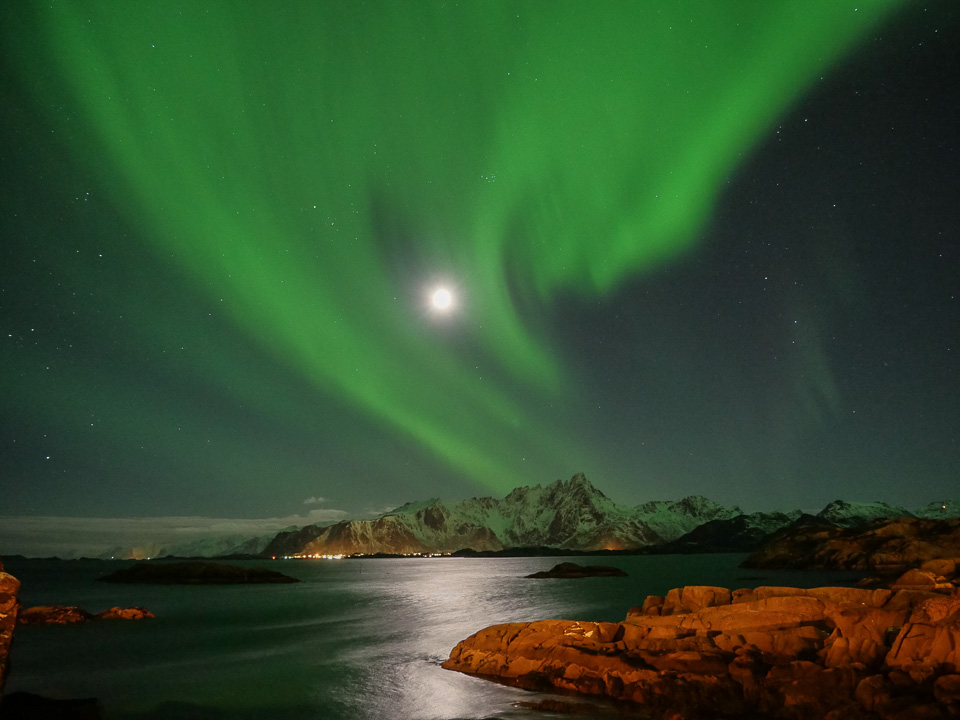
Because depth of field increases with a shorter focal length, it becomes easier to get as much as possible sharp in the frame. Do you like having as much as possible sharp in your landscape photo? Then a crop camera can actually work to your advantage.
A note of caution
I said that focal length affects depth of field. But of course, that is not true. Depth of field is only related to aperture and the distance to the subject. It is physical, and is not affected by focal length or sensor size.
The reason why it nevertheless appears that depth of field increases with a shorter focal length is that your subject becomes smaller, along with the blur that goes with it.
Because the blur appears smaller in the frame, it is less noticeable. In fact, it can become so small that it is no longer visible. So to us, the viewers, it appears perfectly sharp.
About the author
Nando Harmsen has been photographing for more than 40 years. He specialises in wedding photography and landscape photography. Nando also gives talks, workshops, masterclasses and photo trips, and regularly reviews new and interesting equipment.
You might also like
-
 Crop or use a teleconverter?
by Nando Harmsen
-
 A panorama or a panorama crop?
by Nando Harmsen
-
 Photographing or cropping a panorama
by Nando Harmsen
-
The opposite of cropping
by Nando Harmsen
-
 Cropping is good, but don't overdo it with animal photos
by Nando Harmsen
-
 Difference in depth of field when cropping or using a teleconverter
by Nando Harmsen
10 comments
-
 Robbert wrote on Sunday 28 March 2021 at 14:27 | reply
Hi Nando
Translated from Dutch.
You’re talking about MTF, do you mean Micro Four Thirds (MFT) ?
I have an Olympus OM 10 (MFT) on which I can mount the lenses from my Full Frame (FF) camera (Nikon), using an adapter. The other way around is not possible. I can, however, put Nikon’s crop lenses (DX) on my FF. In my viewfinder I can see which part of the image ends up on the crop area. So even on my FF I can benefit from the crop factor, while retaining all the advantages of an FF sensor. So it’s not a matter of either-or, but both-and.
Regards, Robbert -

-

 Donald Willemsen
wrote on Tuesday 30 March 2021 at 11:45
| reply
Donald Willemsen
wrote on Tuesday 30 March 2021 at 11:45
| reply
I could be wrong, but I think about the following when choosing between full-frame or crop. Suppose you have a full-frame with a 20 MP sensor and you have a crop camera with a 20 MP sensor. Then it seems to me that the pixels on the full-frame are larger in size and can therefore receive more light. Could that also play a role?
Translated from Dutch.
I’ll stick with a crop camera so I don’t have to replace all my lenses -
 pkerkhoff wrote on Tuesday 30 March 2021 at 13:49
| reply
pkerkhoff wrote on Tuesday 30 March 2021 at 13:49
| reply
I started (digitally) with a Pentax K5-II, then switched to a K3-II, after that to a Sony A7-III and since last year to an Olympus OM-D E-M1 Mark III. I will never switch away from MFT again if I don't have to. I really find it a breath of fresh air in terms of weight, stabilization and focusing speed. With a few little prime lenses that meet my full needs, I have it all in 1 little bag. And yes, the Sony may have been more light-sensitive, but for me that does not outweigh all the disadvantages.
Translated from Dutch. -
-
Donald Willemsen
wrote on Tuesday 30 March 2021 at 15:31
| reply
@Nando, clear language, but in this context I do wonder what happens to the dynamic range if the number of MP is exactly the same between a crop sensor and a full-frame sensor. The difference in sensor size with the number of pixels per sensor remaining the same must have other consequences besides the angle of view, right, especially the dynamic range, sharpness, etc.? Or am I being so stupid now.
Translated from Dutch. -
-
Nando
wrote on Tuesday 30 March 2021 at 15:41
| reply
@Donald:
Translated from Dutch.
I understand your question, but for this subject that is not relevant at all. It is about angle of view and depth of field, and not about dynamic range and that sort of thing.
I would rather keep it on-topic than bring in all kinds of other matters that are not relevant here. -
Donald Willemsen
wrote on Tuesday 30 March 2021 at 16:09
| reply
@Nando, if the choice of a crop camera for landscape photography is determined solely by depth of field and angle of view, then I think that's really a bit simplistic. But fine, you want to keep it at that. I feel that's incomplete. And now I'll say no more.
Translated from Dutch. -
Nando
wrote on Tuesday 30 March 2021 at 16:39
| reply
@Donald;
Translated from Dutch.
I am absolutely not saying that there are no other differences between the two. I am not claiming that at all. This article is simply not about all those differences.
This is merely an article about the effect on maximum depth of field when using a crop factor, and the advantage that the landscape photographer has as a result.
Have your say
Please note: Articles older than a week can only be commented on by signed-in visitors.Would you still like to comment? sign in or create a free account.
Become a better photographer every week
A practical photography tip in your inbox every week.
39,079 photography enthusiasts already receive the tips! More about the weekly mail. Or keep up to date via  Facebook.

Elja Trum
Photofacts; everything to do with photography!
Would you like to take better photos and keep up with what is happening in photography? Photofacts publishes articles that teach you something about photography — from a product announcement to a practical shooting tip or a look at a website. Photofacts covers photography every day and is a hobby project of Elja Trum's that got out of hand. The articles are written by a team of volunteer authors. If you would enjoy writing one or more articles for Photofacts, do get in touch.More about PhotofactsPhotofacts is made possible in part by
