

The best wide-angle lens for landscapes is 24mm
Saturday 12 November 2022, 22:44 by Nando Harmsen | 4,564 views | 9 commentsThis article was translated from Dutch with the help of AI. Read the original.
There is a persistent assumption that you need as much wide-angle as possible for landscapes. The more, the better.
Although it can be very useful in some cases, in many situations you are better off with a little less wide-angle. I think a 24mm focal length offers the best angle of view.
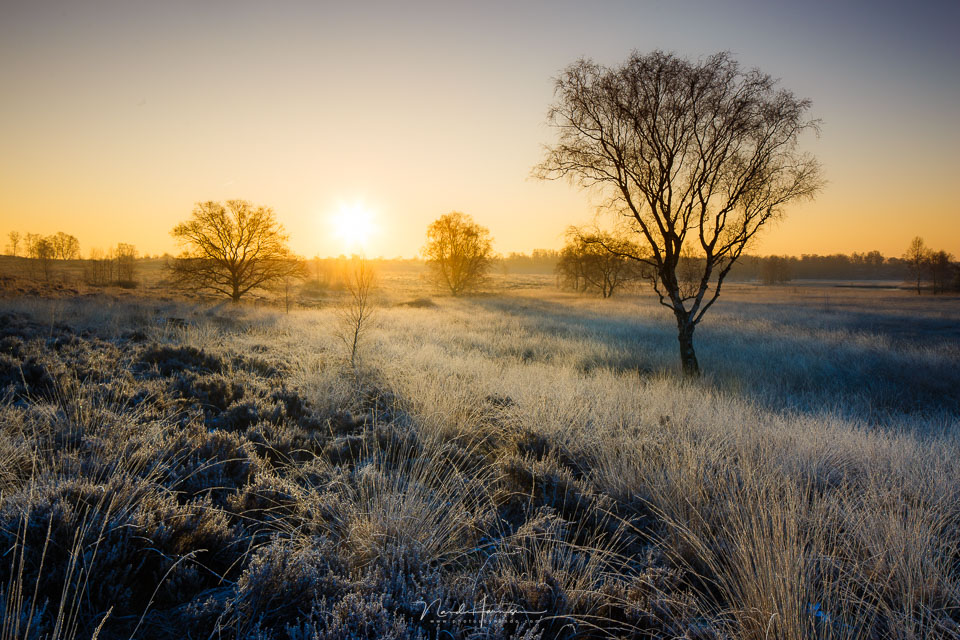
When you are standing in a beautiful landscape, you naturally want to get a lot of it in the frame. For that, you need a very wide angle of view.
It is not for nothing that ultra-wide-angle zoom lenses are so popular. They go down to 16mm, 14mm and sometimes even 12mm focal lengths.
Do you have a crop-sensor camera? Then you need to adjust the focal length to get a comparable angle of view on this camera.
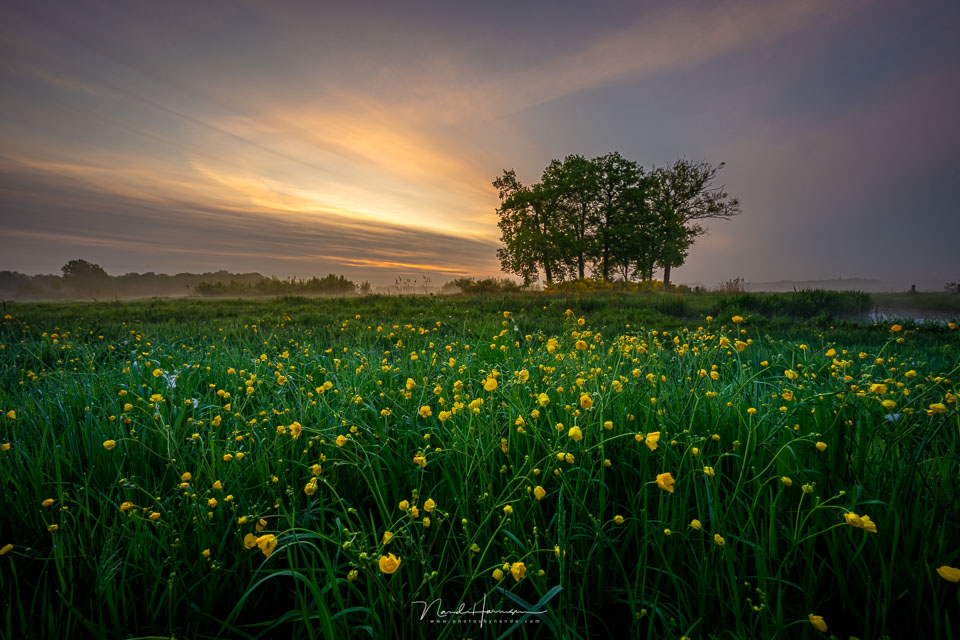
Although it seems attractive, this extreme angle of view brings a number of problems with it. There are more than you might initially expect.
- Everything appears very small in the frame
- You have to get very close to your foreground, and the background still remains very small
- Strong image distortion, stretching at the sides and corners
- Perspective distortion when tilting upwards or downwards
- Often, though not always, a bulbous front lens, making filter use difficult
- Uneven polarisation when using a polarising filter
- It is difficult to keep unwanted elements out of the frame
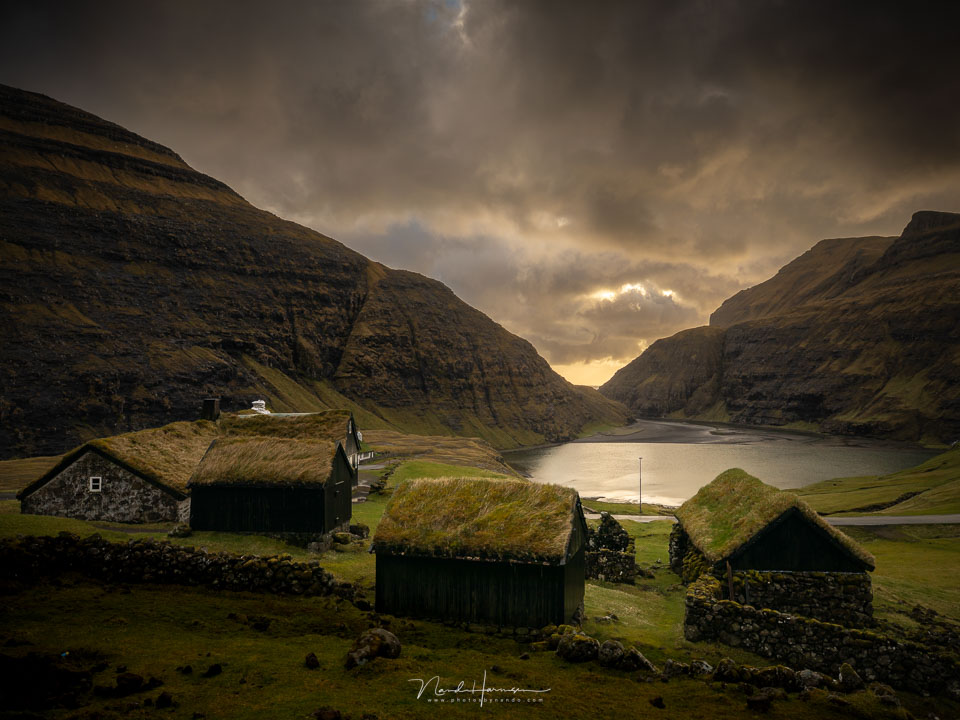
The main problem with an extreme wide angle is often the empty feeling it gives a photo. You know the feeling, what is in the photo does not look like what you saw and experienced in real life.
Take a good look at a photo taken with an extreme wide angle, everything appears small and often insignificant in the frame.
Then you move closer, you are probably thinking. And indeed, by getting very close to a foreground, that foreground appears large in the frame. But the background, which is very important in a landscape photo, will still be small and insignificant.
This is the biggest problem with ultra-wide-angle lenses, although I personally also find the perspective distortion when pointing upwards or downwards very distracting. Just like the stretching of elements at the edge of the photo.
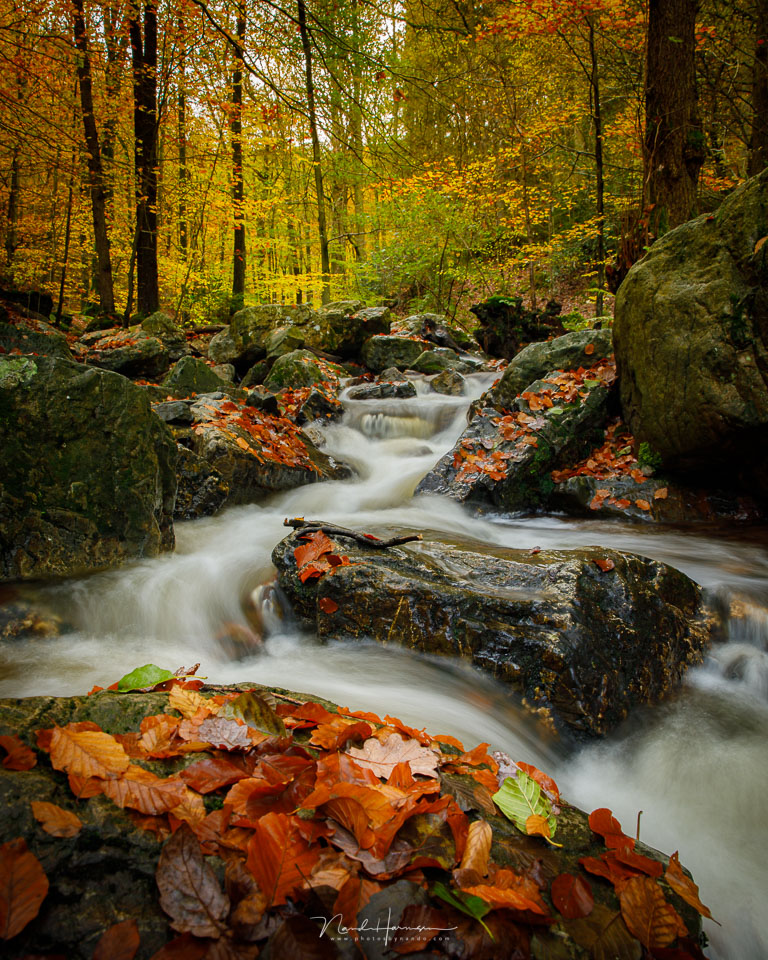
In fact, the angle of view of the lens should be as wide as possible without the problems I have outlined above becoming too distracting. The focal length that goes with this is 24mm.
With a 24mm focal length, many potential problems are reduced or even solved. It prevents background elements from becoming too small when photographing objects in the foreground.
Perspective distortion remains within limits, and stretching at the edges of the image is prevented.
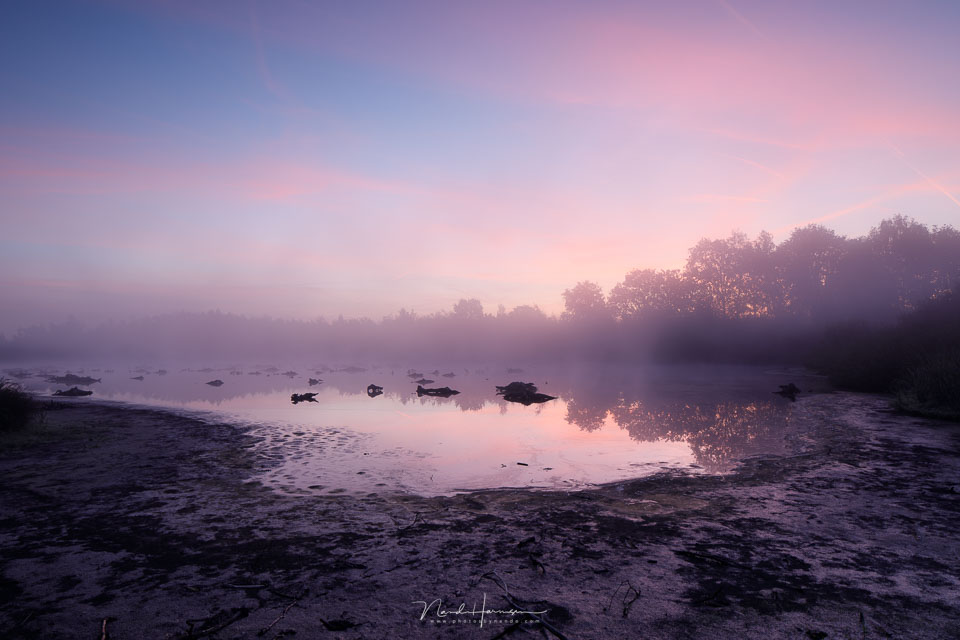
Creating a composition is much easier, and you have fewer problems keeping any distracting elements out of the frame. Using filters is also no problem, and the uneven polarising effect when using a polarising filter is almost completely absent.
Do not be mistaken, 24mm already gives you a very wide angle, which can sometimes even be too wide for a good landscape composition. Although it is sometimes desirable to go even wider, I believe that in 90% of cases, let us say plus or minus 8%, a 24mm wide-angle lens is more than enough.
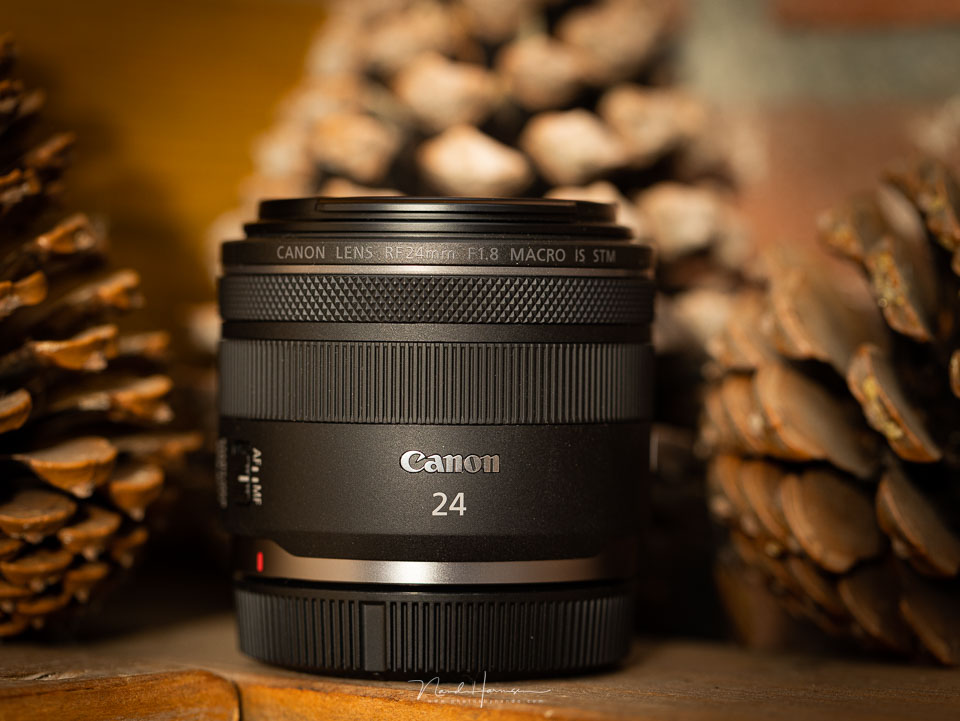
What do you think is the best wide-angle lens for landscapes? Do you want to go as wide as possible, and does it produce the images you want? Or is something missing from your landscape photo, making it less interesting?
Let us know in a comment below this post and tell us what your ideal focal length for wide-angle photography is.
About the author
Nando Harmsen has been photographing for more than 40 years. He specialises in wedding photography and landscape photography. Nando also gives talks, workshops, masterclasses and photo trips, and regularly reviews new and interesting equipment.
You might also like
-
 Review: Canon RF 24mm f/1.8 macro IS STM
by Nando Harmsen
-
 Nikon announces the Nikkor Z DX 24mm f/1.7
by Elja Trum
-
 Let your focal length ranges overlap
by Nando Harmsen
-
 Effect of focal length in portraits
by Nando Harmsen
-
 Composition tip: Choose the right focal length
by Elja Trum
9 comments
-
 ronald maas wrote on Tuesday 15 November 2022 at 10:46 | reply
Completely agree with the list of problems of a strong wide-angle lens. And this is a good reminder when you have to decide what kind of wide-angle lens to buy in the camera store.
Translated from Dutch. -
 wim van de Meerendonk wrote on Tuesday 15 November 2022 at 11:57 | reply
I often only use an ultra wide-angle when the sky above gives me reason to, then it adds value.
Translated from Dutch. -

 Donald Willemsen
wrote on Tuesday 15 November 2022 at 13:37
| reply
Donald Willemsen
wrote on Tuesday 15 November 2022 at 13:37
| reply
I completely agree with you, Nando. The biggest problem I find is that with ultra-wide-angle lenses, many elements of the image are rendered much too small. I work with a crop-sensor camera (the R7 for a few weeks now) and often use a 50mm prime lens for landscapes. I photograph with the camera in portrait orientation and take multiple photos to create a panorama. This prevents image elements from being rendered too small and also keeps perspective distortion within limits. Distortions can still be corrected afterwards.
Translated from Dutch.
I realise that this partly misses the topic, but it does offer a solution when you don't have an angle of view that a 24mm lens provides. So making panoramas is also an option. -
 Nando
wrote on Tuesday 15 November 2022 at 14:22
| reply
Nando
wrote on Tuesday 15 November 2022 at 14:22
| reply
@Donald Willemsen:
Translated from Dutch.
A persistent misconception: a panorama does not prevent image elements from becoming smaller - the image elements are reduced in size in that case too. With a panorama, you use a longer focal length to photograph the same angle of view as with a wide-angle lens. It only provides more resolution. -
Donald Willemsen
wrote on Tuesday 15 November 2022 at 14:53
| reply
@Nando, I don't understand your answer. If I use a lens with a longer focal length than 24mm, for example 50mm, then I have a smaller angle of view than with a 24mm. The image elements are displayed larger than with a (ultra) wide-angle lens. By taking several photos next to each other and merging them into one panoramic photo, you can obtain a photo whose angle of view is practically equivalent to a photo taken with a 24mm. Of course, it does depend on the number of photos you use to merge them. With the camera in 'portrait mode' you naturally need more photos to get the same image than when you keep the camera in 'landscape mode'. The reduced display therefore closely depends on the number of photos you use to create a panoramic photo. The fewer, the better.
Translated from Dutch. -
Nando
wrote on Tuesday 15 November 2022 at 16:11
| reply
@Donald Willemsen:
Translated from Dutch.
If I remember correctly, we've discussed this here before in response to an article about super-resolution.
I suggest an experiment so you can see and experience it for yourself.
Take a photo of a subject using the widest angle you have available. For example, 16mm.
Then take the same photo using a longer focal length and combine it into a panorama so that the angle of view is the same.
Print both photos, the wide-angle photo and the panorama, at 20 x 30 (or have them printed at a photo lab) and place them next to each other.
You will see that all the image elements will simply appear to be the same size in your image plane. -
Donald Willemsen
wrote on Tuesday 15 November 2022 at 16:38
| reply
@Nando, I’m going to do that.
Translated from Dutch. -
 Nico wrote on Tuesday 15 November 2022 at 20:03 | reply
Is the lens NIKON Wide-angle lens AF-P DX NIKKOR 10-20mm F4.5-5.6G VR (JAA832DA) an interesting addition to my various lenses and NIKON D60 and D5300 cameras ?
Translated from Dutch.
Or is there a better price/quality recommendation regarding a NIKON wide-angle lens ?
I currently own these lenses ...
Nikon AF-S Nikkor 18-55mm 1:3.5-5.6 G II DX VR
Nikon AF-S Nikkor 18-55mm 1:3.5-5.6 G II DX ED
Nikon AF-S Nikkor 35mm 1:1.8 G DX
Nikon AF-S Nikkor 55-200mm 1:4-5.6 DX ED
Nikon AF-S Nikkor 70-300mm 1:4.5-5.6 G VR ED
Tamron 16-300mm f/3.5-6.3 DI II VC PZD Macro "Nikon" -
Nando
wrote on Wednesday 16 November 2022 at 09:44
| reply
@Nico:
Translated from Dutch.
That depends. Do you notice that you often don't have a wide enough angle with the 18mm? Yes, then a 10-20mm can be useful.
Is 18mm wide enough for you, and is there (almost) never a moment when you would want more, then a 10-22mm has no added value for you.
Have your say
Please note: Articles older than a week can only be commented on by signed-in visitors.Would you still like to comment? sign in or create a free account.
Become a better photographer every week
A practical photography tip in your inbox every week.
39,023 photography enthusiasts already receive the tips! More about the weekly mail. Or keep up to date via  Facebook.

Elja Trum
Photofacts; everything to do with photography!
Would you like to take better photos and keep up with what is happening in photography? Photofacts publishes articles that teach you something about photography — from a product announcement to a practical shooting tip or a look at a website. Photofacts covers photography every day and is a hobby project of Elja Trum's that got out of hand. The articles are written by a team of volunteer authors. If you would enjoy writing one or more articles for Photofacts, do get in touch.More about PhotofactsPhotofacts is made possible in part by
