

7 reasons not to use a graduated ND filter, and one reason why I do
Monday 29 March 2021, 20:02 by Nando Harmsen | 9,763 views | 10 commentsThis article was translated from Dutch with the help of AI. Read the original.
Using filters in landscape photography is incredibly popular. One of these filters is the graduated ND filter. It reduces the dynamic range of your landscape, making it easier for the camera to capture.
There are also disadvantages. I give seven reasons not to use one, and one reason why I do use them.
A large difference between light and dark is one of the difficult situations in landscape photography. You can try to compensate for this with your camera's dynamic range. You can sometimes run into its limits.
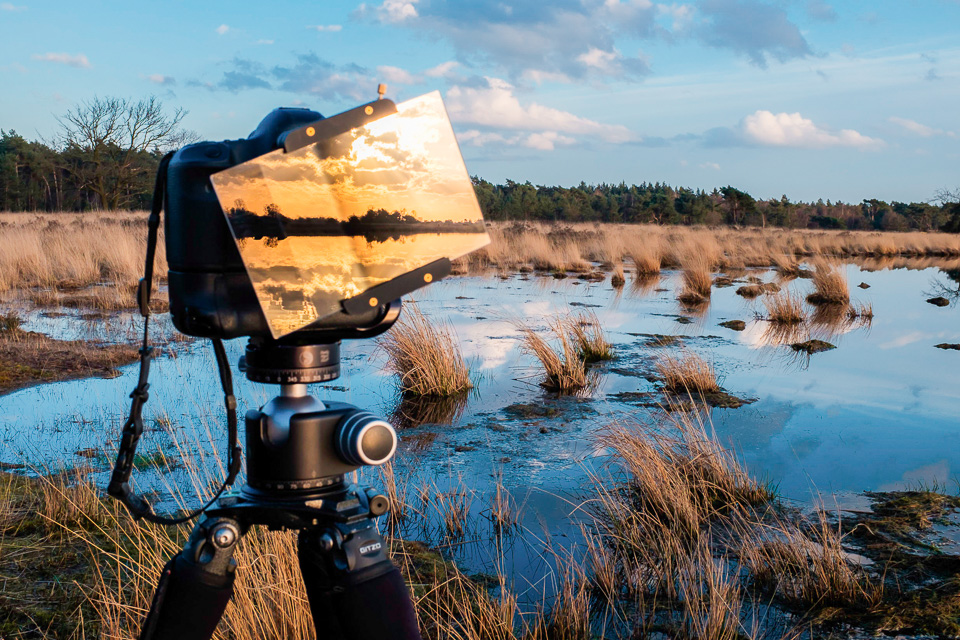
For landscape photography in particular, there are solutions. One solution is to take a series of bracketed exposures. This captures the entire range between light and dark in a series of photos, which can then be combined into an HDR image.
The other solution is graduated ND filters. These hold back light in part of the photo, reducing the difference between light and dark. This means you do not have to take a series of bracketed exposures, or rely on your camera's dynamic range.
But graduated ND filters have disadvantages. This means they are not always easy to use, or even recommended. I have seven reasons not to use graduated ND filters.
1. You have to carry extra equipment
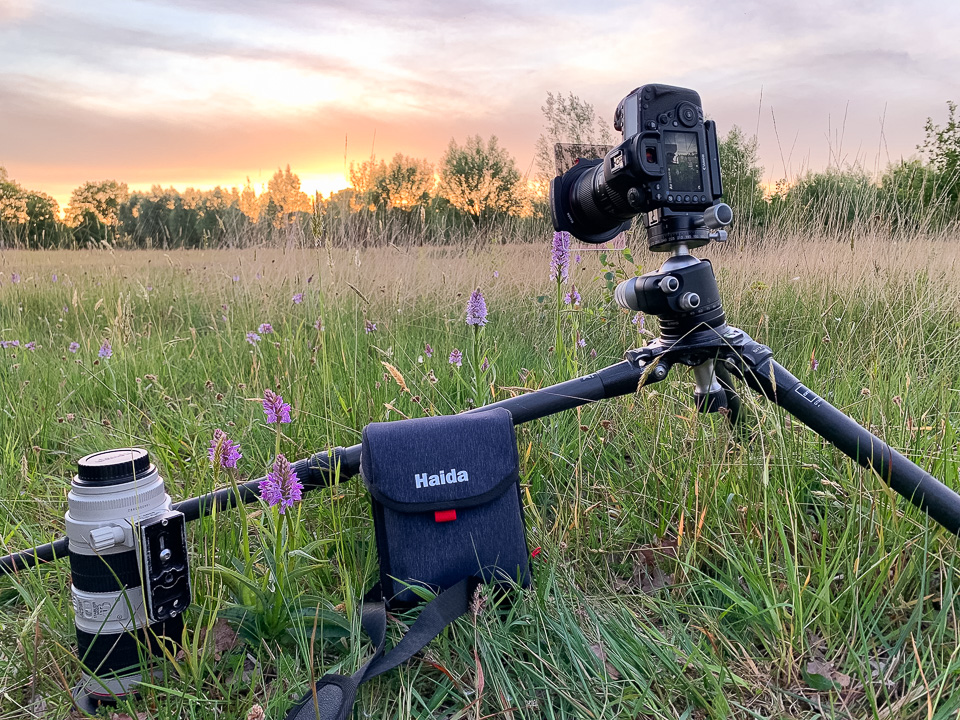
Although I personally do not find this much of a problem, the extra cases and holders can certainly be awkward in some situations. Most graduated ND filters are large, often 100x150mm, and because they are made of glass or plastic, they are relatively fragile.
You would rather not put the filters loose in your camera bag, nor in the original box or filter pouch. A separate filter bag where they can stay together is much more practical and easier to use. All together, they take up quite a lot of space.
2. The risk of colour casts and reduced sharpness
Most lenses are almost perfect in quality. They produce razor-sharp images, with beautiful colour contrast and no colour cast at all. We pay a lot for these lenses because we do not settle for less.
By placing separate pieces of glass or plastic in front of your lens, there is a risk of getting a colour cast. This of course depends on the brand and type of filter you use, something to watch out for when buying one. Extremely dark graduated ND filters in particular can be very sensitive to this.
The material a filter is made of can also affect the sharpness of the photo. Resin plastic is a good example of this. Especially with the ever-increasing resolutions of modern cameras, a reduction in sharpness will quickly become noticeable.
3. Filters are very expensive to buy
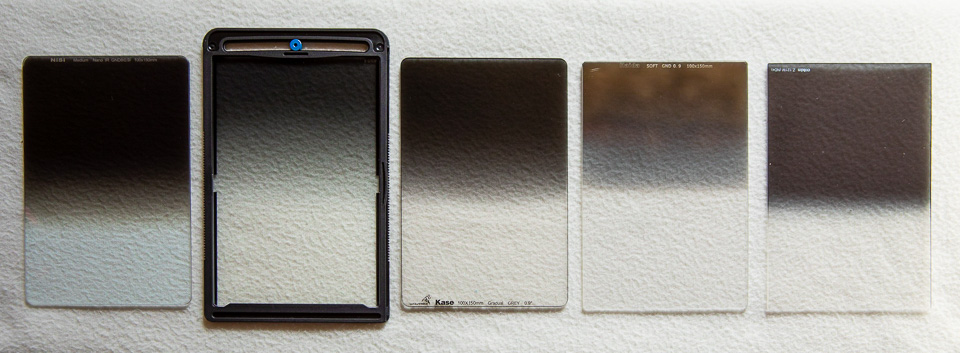
This point actually follows from the previous one. You do not want to compromise the quality of your lens by putting a poor-quality filter in front of it. Think of it this way: a 2,000-euro lens with a poor filter can produce an image from a lens that costs only 200 euros.
In other words, choose good quality if you are going to use graduated ND filters. And that costs a lot of money. Prices of 150 euros per filter are not unusual.
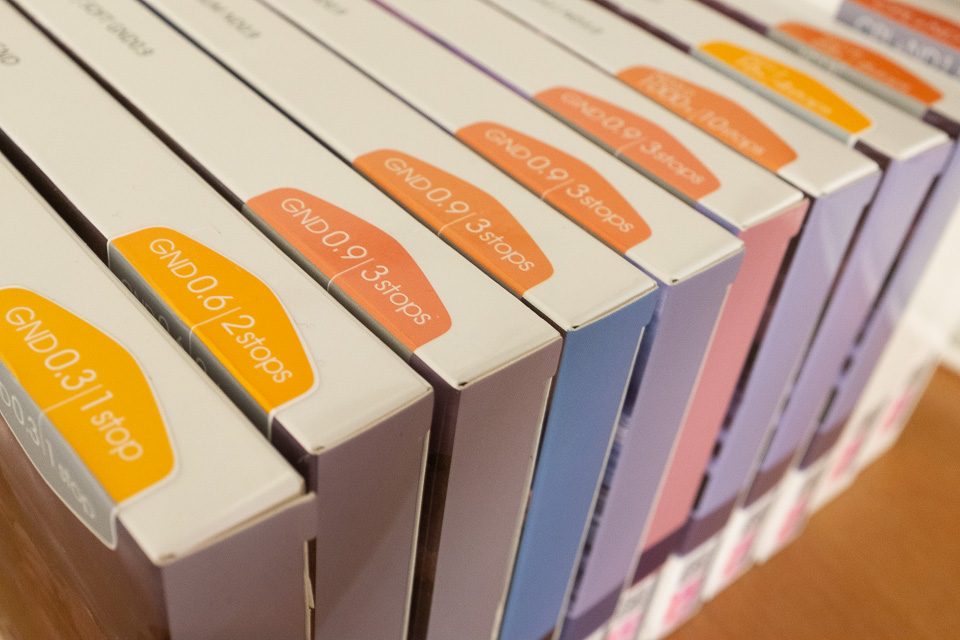
Never choose an extremely cheap set of filters, not even just to try them out. I can guarantee that the results will be so poor that you will never want to use them again. A 100-euro set is then money thrown away.
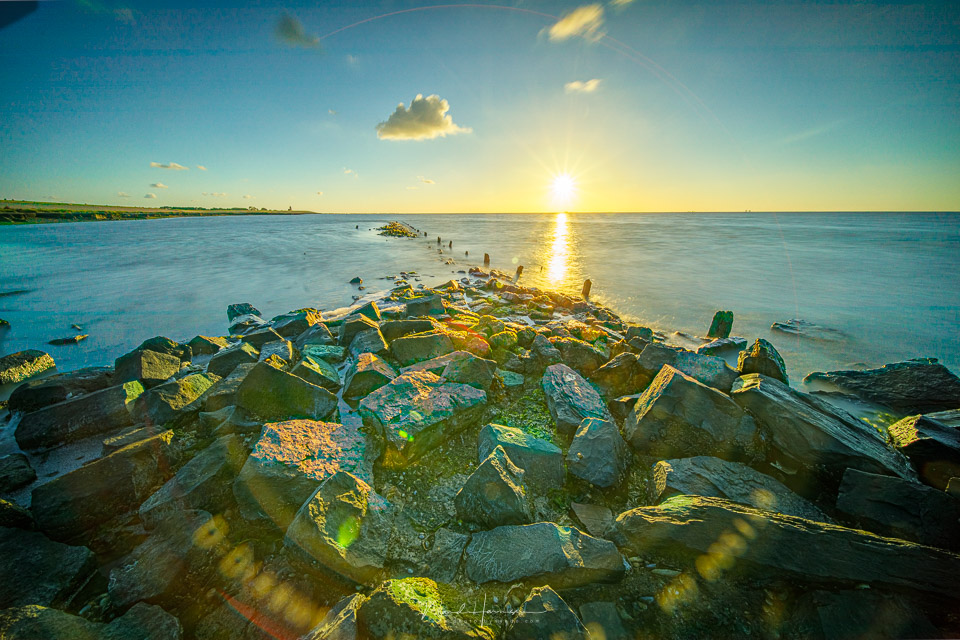
4. Increased risk of flares and reflections
By placing extra glass in front of your lens, you increase the risk of flares and reflections. This is because the filters never sit exactly against your lens. Light can pass fairly easily between the filters, creating reflections between the pieces of glass, as well as flares.
In extreme cases, you may even see the text on the front of your lens reflected in the glass. This depends on the angle of the light, but is certainly something to take into account.
5. An uneven horizon causes problems
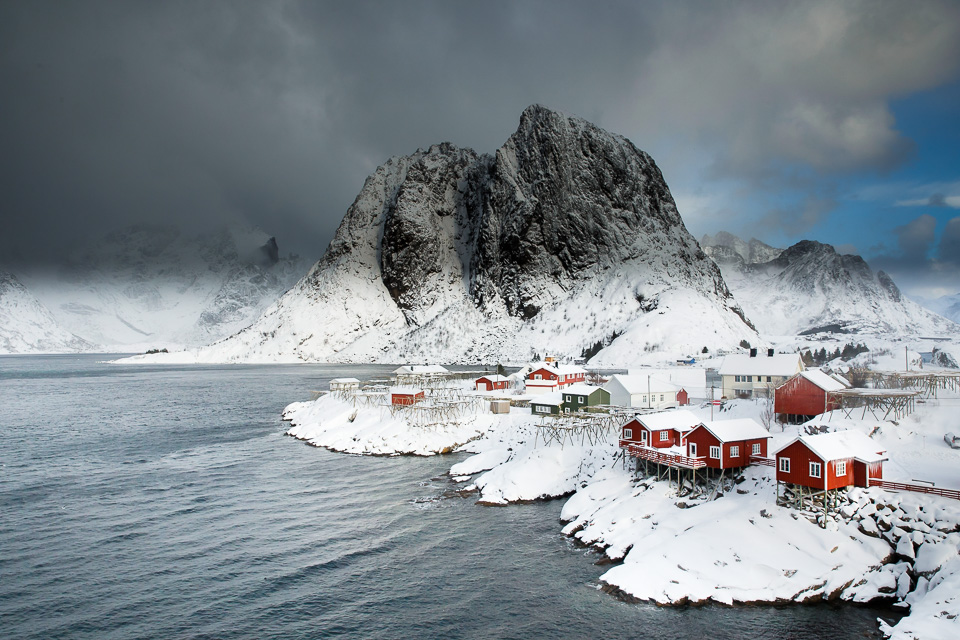
The transition of a graduated ND filter is always horizontal. Unfortunately, or fortunately, reality is not always quite so horizontal. Mountains, trees, hills and buildings can all extend above the horizon. These will also become darker through a graduated ND filter.
It is possible to rotate your graduated ND filter, but in many cases it will never follow the shape of your horizon.
6. Imbalance in brightness with reflections in the foreground
If you have reflections in your foreground that mirror the sky, that reflection is always a shade darker. You must always try to preserve that balance.
If you make the sky darker with a graduated ND filter, there is a risk that the reflections will become lighter than the sky itself. That is anything but a realistic situation.
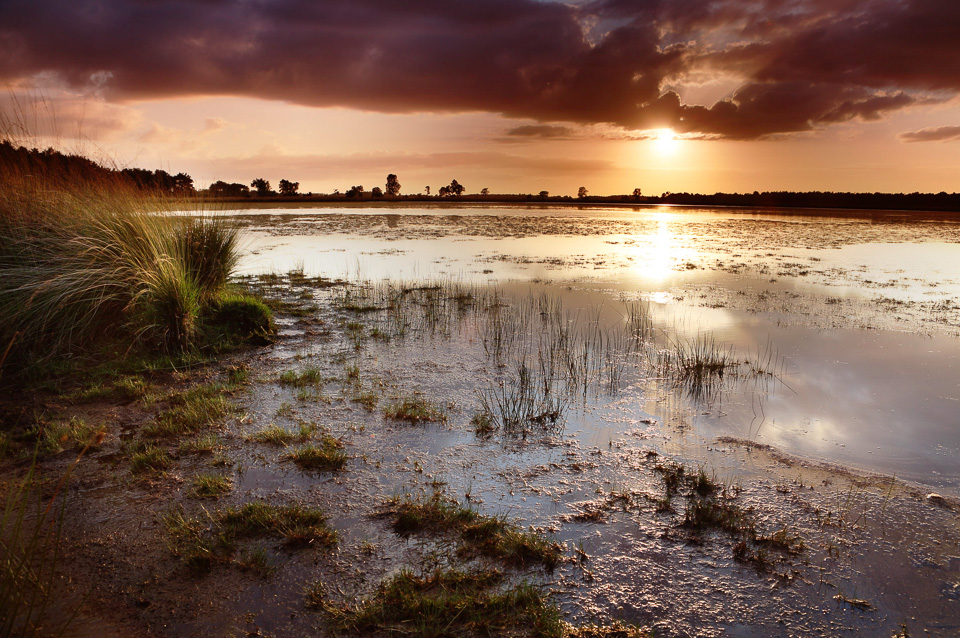
You could use several filters and make a lake or river in the foreground darker as well, but then you introduce even more glass and the risk of flares naturally becomes greater.
7. A graduated ND filter is easy to imitate in post-processing
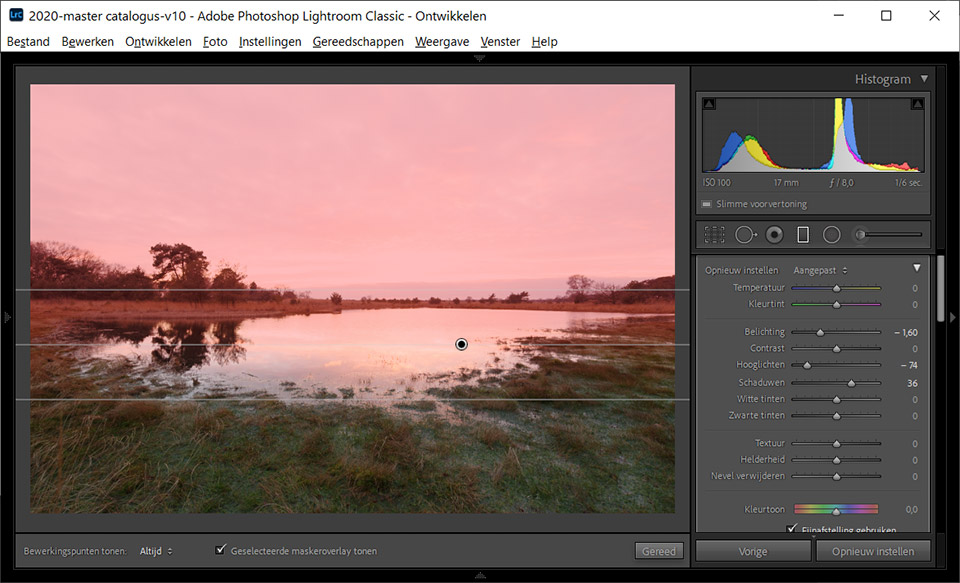
A graduated ND filter is very simple. One part is dark and there is a gradual transition to transparent. Such a transition can easily be recreated in photo-editing programmes.
In addition, a programme that uses layers and masks allows you not to make the transition exactly straight. You can make the transition follow the horizon. In other words, it offers much more flexibility.
Why I still use graduated ND filters
All these disadvantages give you the impression that graduated ND filters have nothing but disadvantages. And in a way, that is true. The use of graduated ND filters is therefore very limited, depending on where you are and what sort of landscape you are photographing.
Yet I often use graduated ND filters for my landscape photography, despite all these disadvantages. The reason is very simple: it gives me a lot of satisfaction. I am genuinely engaged in landscape photography on location instead of editing photos on the computer.
I want the photos to be as good as possible on location. I am happy to take the time for that, and using graduated ND filters gives me the opportunity to calmly look at the landscape and notice things. I am more conscious of the exposure and of what I am photographing.
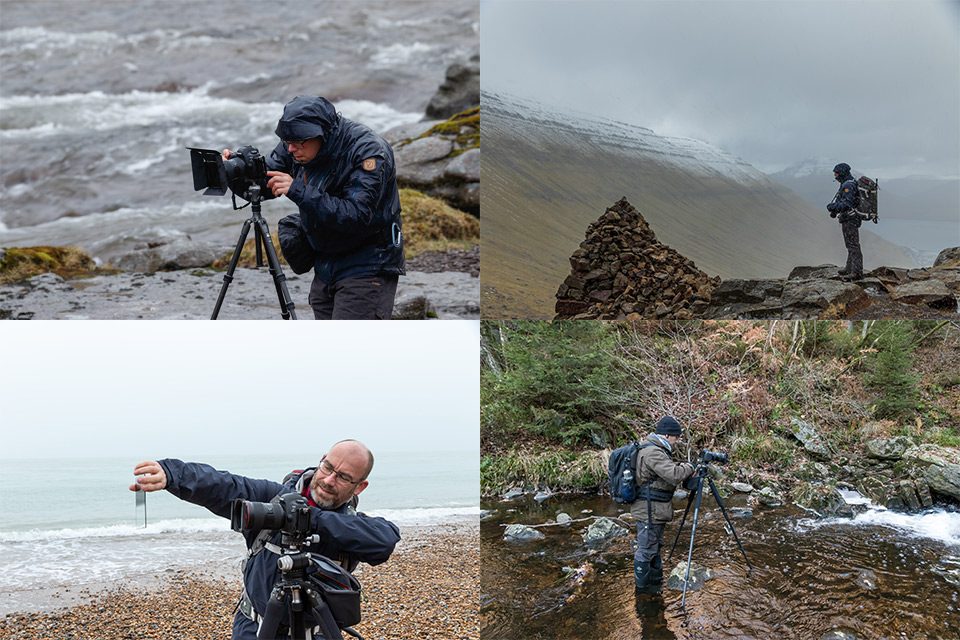
That does not mean I will always use graduated ND filters. Sometimes it is simply not practical, or completely impossible. In other cases, they help me achieve a good end result, possibly even together with bracketed exposures.
So I do not use graduated ND filters so much out of necessity, but because they add to the pleasure of taking photos. Being engaged with the craft I love so much. And that is enough for me.
What do you think of graduated ND filters? Do you think they add value to your photography, or are they just a hassle? Leave your opinion in a comment below this post.
About the author
Nando Harmsen has been photographing for more than 40 years. He specialises in wedding photography and landscape photography. Nando also gives talks, workshops, masterclasses and photo trips, and regularly reviews new and interesting equipment.
You might also like
-
 Which ND filters should you choose as a beginner?
by Nando Harmsen
-
 Review: Haida variable ND filter with built-in polarisation
by Nando Harmsen
-
 Haida magnetic filters, a perfect alternative to a filter system
by Nando Harmsen
-
 Variable ND filter, or not?
by Nando Harmsen
10 comments
-

 Donald Willemsen
wrote on Tuesday 30 March 2021 at 10:51
| reply
Donald Willemsen
wrote on Tuesday 30 March 2021 at 10:51
| reply
Nando, thank you for the clarifying article. I am looking at things with both feet on the ground again now. There are enough reasons not to use graduated filters. If you do want to use them, you would be better off using good filters right away. I used them regularly in the past. They were made of plastic (Cokin). Looking back, rubbish. What I did find convenient about them is that you could buy those graduated filters in different colours. With those graduated filters, you could give the photo a certain atmosphere by choosing a particular colour. As you say yourself, you can imitate that perfectly on the PC.
Translated from Dutch.
A disadvantage I also find is that you must not forget to take those filters with you when you go out. I do have a graduated filter and filter holder, but they are not of good quality and the good ones are very expensive.
I have seen which system you use and that is a very convenient system. The disadvantage is that it is very expensive and very difficult to get.
So if I had good equipment, I would also use it with more pleasure and not forget to take it with me when I go out.
In any case, your article has broadened my view again. -
 kok.f@ziggo.nl wrote on Tuesday 30 March 2021 at 11:22
| reply
kok.f@ziggo.nl wrote on Tuesday 30 March 2021 at 11:22
| reply
Very recognizable. In addition, you also need different filters for different situations. That then becomes an investment of many hundreds of euros. Cheap sets are indeed worthless, they really detract from your lens. I do use a full - variable - ND filter, but for gradation I still just use LR.
Translated from Dutch. -
 Peter Heins wrote on Tuesday 30 March 2021 at 13:35 | reply
Recognizable, especially the part about reflections and when you photograph straight into the sun. I often make a good exposure of the sky and a good exposure of the foreground. You sometimes have to be quick then because the situation changes quickly and in that case those filters are useful. Also with a foreground moving in strong wind, a filter is necessary. But indeed, filters are expensive. I do think an ND1000 filter adds value, but one that you screw onto the lens. The colors become more beautiful, softer. Nice article, before I bought my filters I was also thinking that way, do I really need them. But in the end I bought a few after all and indeed, when you use the filters you are much more consciously working on your photo.
Translated from Dutch. -

-
 Bram van Maas wrote on Tuesday 30 March 2021 at 15:57 | reply
I am a big fan of graduated filters, I call them my balancing glasses and that is essentially what they do, they make exposure a lot easier especially at sunset and sunrise
Translated from Dutch. -
 Wolves fotografie
wrote on Tuesday 30 March 2021 at 17:31
| reply
Wolves fotografie
wrote on Tuesday 30 March 2021 at 17:31
| reply
@Nando nice article, but I do miss what brand you use yourself. I think that if you wrote a bit more about that, especially beginning (landscape) photographers could benefit from it even more.
Translated from Dutch.
I would personally like to use them, but since I do little landscape photography (I'm a studio photographer), the price holds me back. Years ago I did look into it a bit more, and at the time I found Benro's filters very good. Lee is of course traditionally "THE" brand, but it does create a very strong blue cast. However, if I ever become more involved in landscape photography in the future, I will certainly get a good filter system. I think, just as you yourself already indicate, that taking a good photo is much more fun than only making a photo good in post-processing. -
 Annette wrote on Tuesday 30 March 2021 at 21:57
| reply
Annette wrote on Tuesday 30 March 2021 at 21:57
| reply
Thanks for your story Nando. I did buy a filter set, the so-called Bas Meelker set. I spent a very long time fiddling with the graduated filters, somehow I can't really see how far I need to put the filter in front of it. So my preference goes to the editing in Lightroom or Photoshop, here you can make the gradient exactly as long or short as you want. I do like the ND filters for being able to get a longer shutter speed. So it wasn't entirely for nothing that I adjusted the set 😉 and bought a Big Stopper as well. Really great to use in some situations.
Translated from Dutch. -
-
Nando
wrote on Wednesday 31 March 2021 at 12:42
| reply
@Wolves fotografie:
Translated from Dutch.
I use the Haida brand, the Haida M10 filter system to be precise, with the Haida Red Diamond filters. In my opinion, it is one of the better filters on the market.
Writing about that (once again) is a good idea. I will give that some thought. -

Have your say
Please note: Articles older than a week can only be commented on by signed-in visitors.Would you still like to comment? sign in or create a free account.
Become a better photographer every week
A practical photography tip in your inbox every week.
39,103 photography enthusiasts already receive the tips! More about the weekly mail. Or keep up to date via  Facebook.

Elja Trum
Photofacts; everything to do with photography!
Would you like to take better photos and keep up with what is happening in photography? Photofacts publishes articles that teach you something about photography — from a product announcement to a practical shooting tip or a look at a website. Photofacts covers photography every day and is a hobby project of Elja Trum's that got out of hand. The articles are written by a team of volunteer authors. If you would enjoy writing one or more articles for Photofacts, do get in touch.More about PhotofactsPhotofacts is made possible in part by
