

Disappointment over multiple exposures in new Canon cameras
Sunday 6 July 2025, 13:13 by Nando Harmsen | 4,444 views | 12 commentsThis article was translated from Dutch with the help of AI. Read the original.
I make grateful use of the multiple exposure option in my Canon camera. The result is a raw file. But Canon, in all its wisdom, has decided this is no longer possible. Will my current camera be the last new camera I buy?
I really enjoy taking multiple exposures. I started doing this with the Canon EOS 5D mark IV. When I switched to the Canon EOS R5, I only started doing it more. Unfortunately, this seems to be the last camera that offers this.
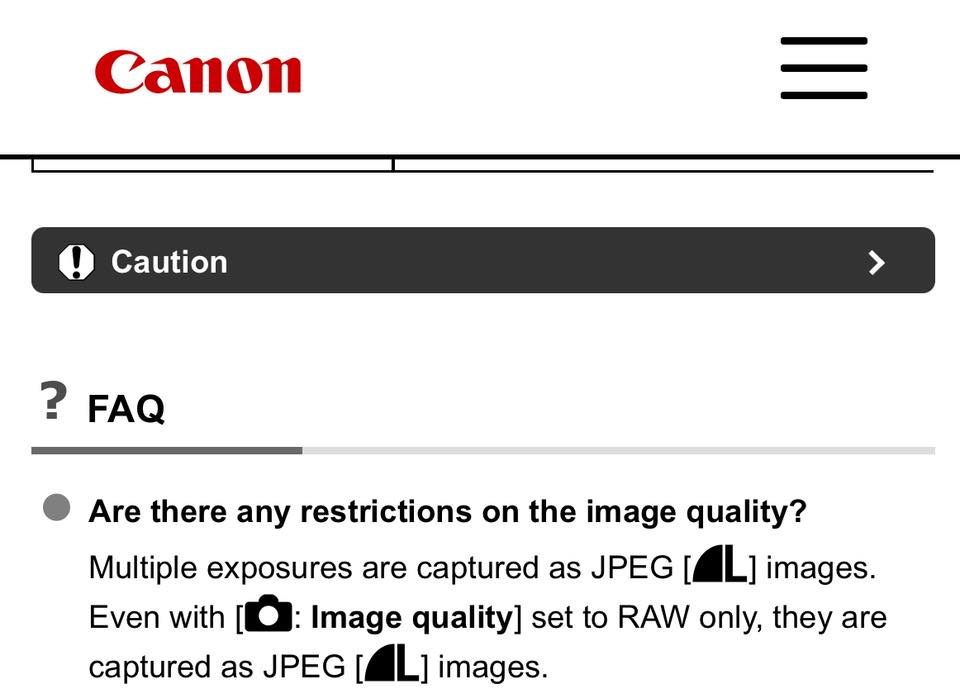
I photograph in raw image format. With multiple exposures, the result is also saved as a raw file. If I want, I can also choose an existing raw file from the card for the first image. This offers a wealth of creative possibilities.
Unfortunately, I noticed that the Canon EOS R6 mark II does not save the result of multiple exposures in raw file format. It is a jpeg. As a photographer, you lose all ability to edit this as a normal raw file.
To make matters worse, I cannot choose an existing raw file as the first image either. It has to be a jpeg. If you always photograph in raw, you lose that option altogether. You are required to save both raw and jpeg files if you want to use this option.
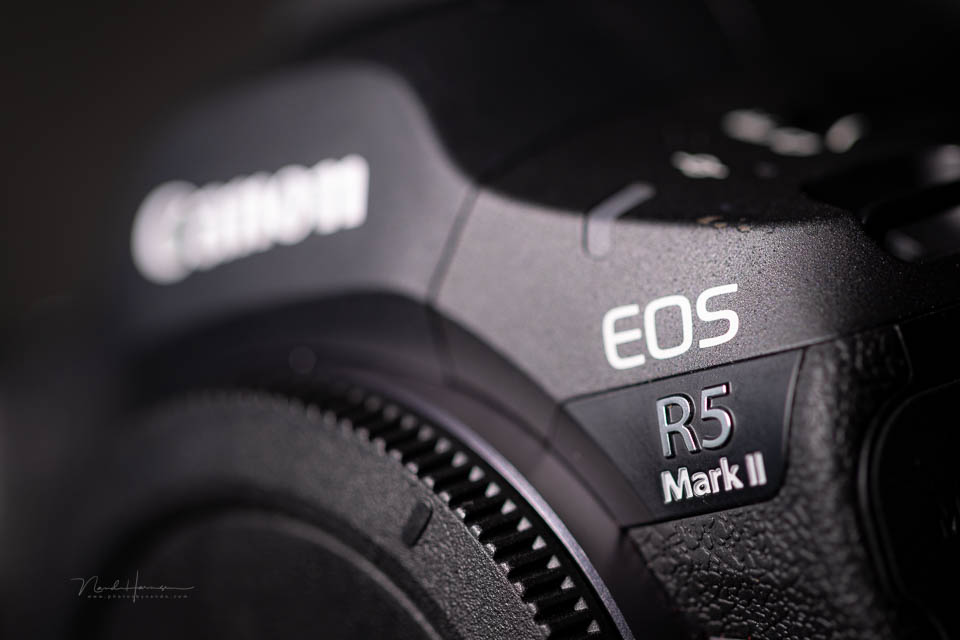
This gave me a very bad feeling. And indeed, the Canon EOS R5 mark II also turns out to no longer save multiple exposures as a raw file. This is a major disappointment, and a reason not to switch to this new camera.
Multiple exposures are an important part of my photography. Canon, in all its wisdom, has decided to remove the functionality from new cameras. And it is not just Canon, Nikon is suffering from this problem too.
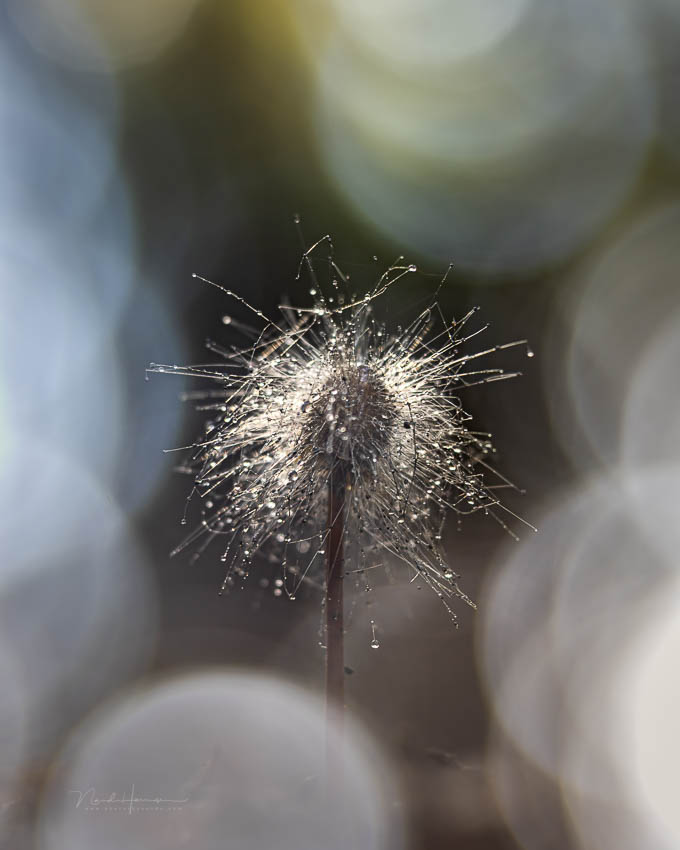
Canon has made several strange decisions over the past year that are not very motivating. The aperture ring on new lenses that only works with the latest cameras is a well-known example.
Canon's decision to remove raw from multiple exposures is the next disappointment. Unless Canon reverses this decision, the EOS R5 will be the very last new camera I buy. When it needs replacing, I will simply buy a second-hand model.
About the author
Nando Harmsen has been photographing for more than 40 years. He specialises in wedding photography and landscape photography. Nando also gives talks, workshops, masterclasses and photo trips, and regularly reviews new and interesting equipment.
You might also like
-
 Review: Nikon Z5 II
by Nando Harmsen
-
 Review: Nikon ZR
by Nando Harmsen
-
 Nikon Z8 announced
by Elja Trum
-
 The logical step in the Nikon Z System
by Heike Jasper
-
 Nikon Z5 II announced
by Elja Trum
-
 The Magic of Photography with Multiple Exposures
by Laura van der Burgt
12 comments
-
 Hennie Terheijden wrote on Sunday 6 July 2025 at 13:50 | reply
Seems like a bit of an emotional reaction to me. As if the choice of a camera is mainly determined by 1 specific feature. But cheer up, to spare the camera you only use it when you want to use this option; it'll have a long life yet. For the rest of your photos you must surely have another camera ??
Translated from Dutch. -

 Nando
wrote on Tuesday 8 July 2025 at 09:15
| reply
Nando
wrote on Tuesday 8 July 2025 at 09:15
| reply
Imagine: how would you react if you could no longer shoot raw with newer cameras when you switch to continuous shooting? That’s not what you want, is it?
Translated from Dutch.
Removing a specific function that is used a lot certainly does provoke an emotional reaction.
The suggestion to keep an extra camera around for a specific function is not realistic. And certainly not workable. -
 Donald Willemsen wrote on Tuesday 8 July 2025 at 14:23 | reply
Nando, I agree with you. I do wonder if the raw images of the individual images are also kept? Just like with, for example, the focus stack of the R7
Translated from Dutch. -
-
Donald Willemsen wrote on Tuesday 8 July 2025 at 14:48 | reply
Nando,I share your opinion, but if it can't be done the way it should, then it has to be done the way it can.
Translated from Dutch. -
 Raphaël De Vos wrote on Tuesday 8 July 2025 at 21:36 | reply
As far as I understand: if you photograph in both Raw and JPG at the same time, the possibility remains to use both each recorded Raw copy and JPG copy as such. In that case I would indeed switch to always taking Raw and JPG together, which is what I always do now anyway. That does require somewhat more file size, but nowadays you also have cards from 128GB to 256GB and even more. So you shouldn't focus on that.
Translated from Dutch. -
Nando
wrote on Wednesday 9 July 2025 at 09:27
| reply
You can indeed shoot raw+jpeg if you think you're going to use an image for double exposures.
Translated from Dutch.
The problem is that this was never necessary, because you could select raw for that image.
But the bigger problem is that the result of double exposures is now in jpeg instead of raw from now on.
This is not an upgrade but a downgrade. -
Donald Willemsen wrote on Tuesday 8 July 2025 at 23:00 | reply
Raphaël, I don't think you understood it correctly. This is about in-camera multiple exposures. The camera automatically merges them into a result in jpg. Even if you photographed in raw. The same thing happens with the in-camera focus stack on Canon's R7. The camera performs the stack itself and selects a number of raw files for it. Once the camera is finished, you have a final result that is a jpg file. If you want to edit the raw files yourself, you have to import them into, for example, Lightroom.
Translated from Dutch. -
Donald Willemsen wrote on Wednesday 9 July 2025 at 11:18 | reply
Nando, let that be clear: I think your criticism of Canon (and Nikon) is completely justified. If you shoot a multiple exposure in Raw, then the end result should ALSO be a Raw image. The way it is currently arranged, that amounts to putting the cart before the horse.
Translated from Dutch.
I think it could help if as many photographers as possible start voicing criticism directly to Canon and of course Nikon as well. For the developers, it should be a piece of cake to adjust the software (because that is ultimately what it is).
The annoying thing about the current method (jpg end product) is that it may also be linked to one of the camera profiles that can be set. If, for example, it is set to landscape and your multiple exposure was a portrait, then the colors will be wrong and you have to start correcting that as well. Whereas a raw image does not take the camera profiles into account. -
 Wilfried wrote on Wednesday 9 July 2025 at 12:14 | reply
Which brands still have that option?
Translated from Dutch. -
Nando
wrote on Wednesday 9 July 2025 at 12:32
| reply
Nikon has the option, with the result in jpeg
Translated from Dutch.
Canon has the option, but no longer with the result in raw and only jpeg
Sony does not have the option at all
Olympus can only do it with an existing photo as the first image.
Fujifilm does not have the option as far as I know (correct me if I'm wrong)
I don't know about Panasonic.
I don't know about Pentax -
 Ilse wrote on Wednesday 9 July 2025 at 19:10 | reply
I think the Sony RX10 4 also has in-camera multiple exposure.
Translated from Dutch.
Have your say
Please note: Articles older than a week can only be commented on by signed-in visitors.Would you still like to comment? sign in or create a free account.
Become a better photographer every week
A practical photography tip in your inbox every week.
39,027 photography enthusiasts already receive the tips! More about the weekly mail. Or keep up to date via  Facebook.

Elja Trum
Photofacts; everything to do with photography!
Would you like to take better photos and keep up with what is happening in photography? Photofacts publishes articles that teach you something about photography — from a product announcement to a practical shooting tip or a look at a website. Photofacts covers photography every day and is a hobby project of Elja Trum's that got out of hand. The articles are written by a team of volunteer authors. If you would enjoy writing one or more articles for Photofacts, do get in touch.More about PhotofactsPhotofacts is made possible in part by
