

Setting exposure manually does not make you a professional photographer
Monday 30 August 2021, 20:02 by Nando Harmsen | 8,229 views | 22 commentsThis article was translated from Dutch with the help of AI. Read the original.
When you do not photograph in M mode, you have no control over the exposure. You are only working professionally with your camera in M mode. Photographing in M mode means you take the best photos. These are just some of the claims you often hear. But how true are these statements?
In my article 5 things photographers should stop doing, I already wrote about M mode. This generated quite a few responses.
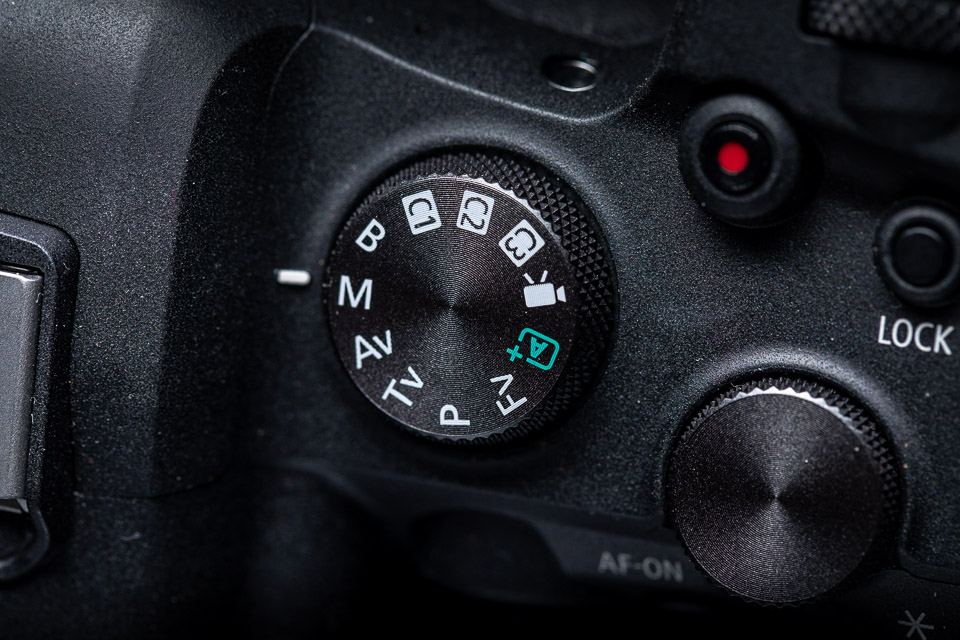
I thought it would be interesting to take a closer look at manual exposure, to show that it is not necessarily better or faster than one of the automatic modes. To do that, let's go back to the beginning, the basics. The knowledge you simply need to have as a photographer.
By the way, I should mention that automatic exposure means A or S mode, and not P mode. The latter is fully automatic, where you leave everything to the camera. Just to clarify.
The tools for a good exposure
The tools you have for a well-exposed photo are, of course, aperture, shutter speed and ISO. Choosing the right combination of these three gives you a well-exposed photo. But how do you know which ones to choose? There is only one way to do this: measure the amount of light.
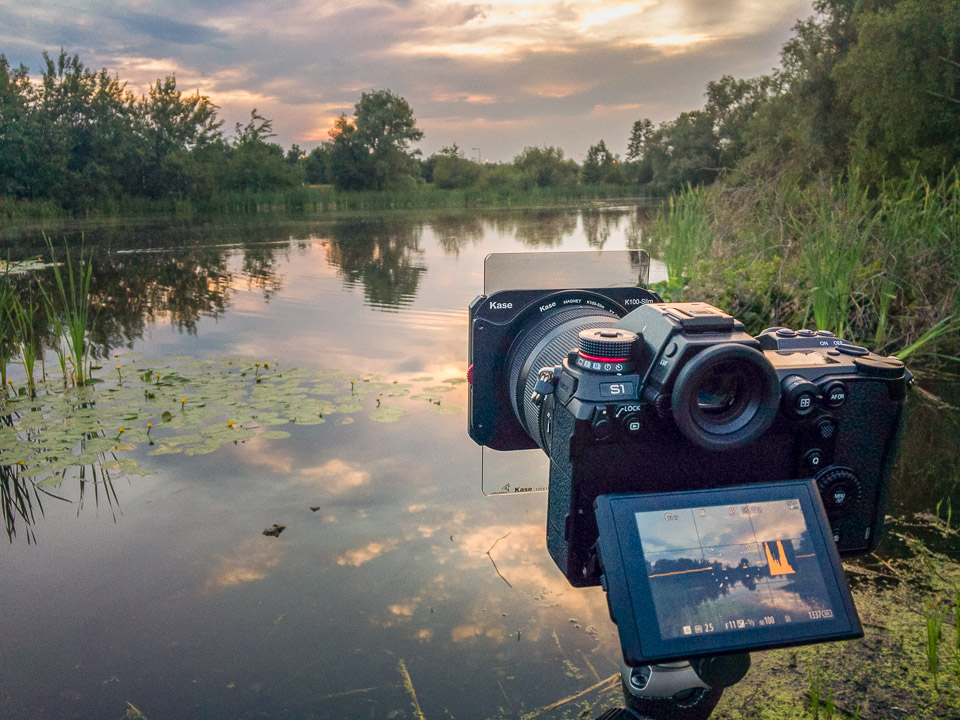
Measuring the light tells you which direction you need to set things in. But because we have three different settings, we can make a huge number of combinations for that measured amount of light. So this needs to be made simpler.
That is why, as photographers, we essentially choose two of the three settings. Which two depends on your photography, your subject and your preferences. Let me give you two examples.
Situation 1
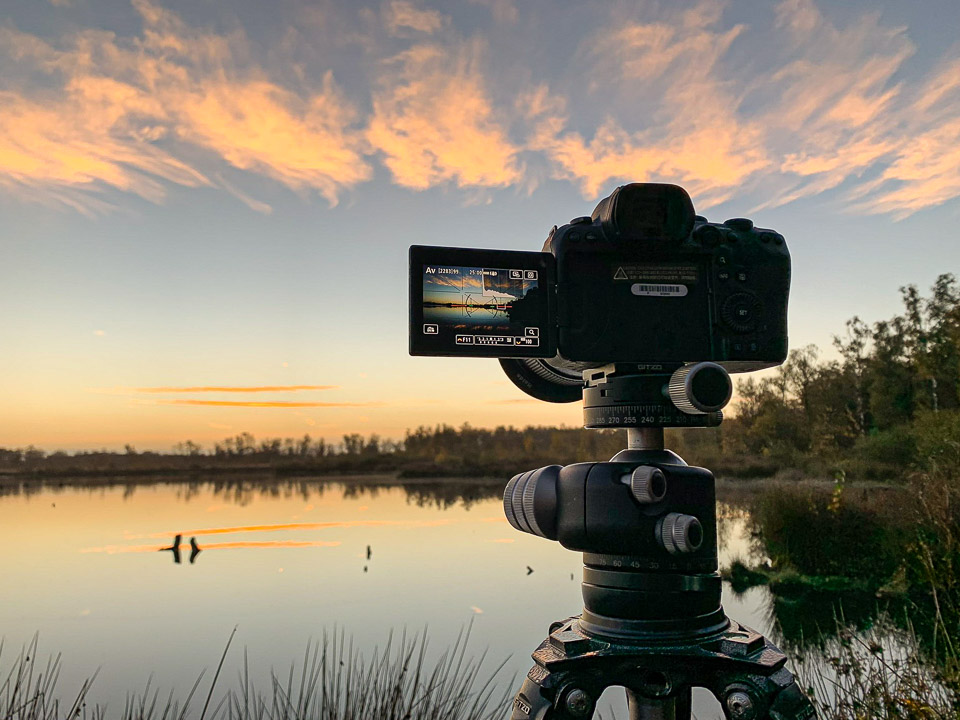
Someone who wants a specific depth of field in the photo will choose the desired aperture for this. In many cases, ISO will be set as low as possible.
Situation 2
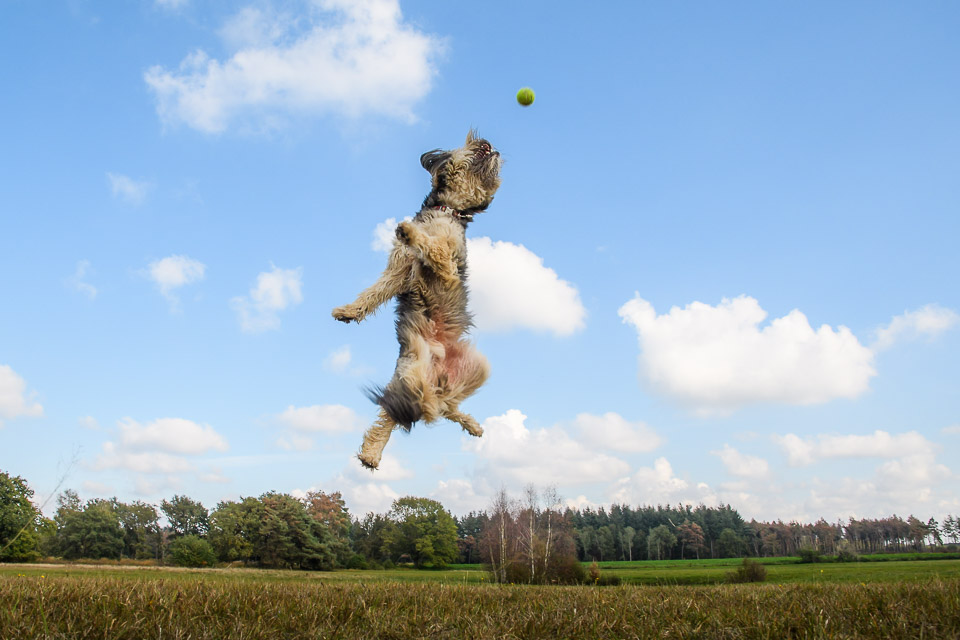
Someone who wants to show a particular amount of movement in the photo, or none at all, will choose the desired shutter speed. Here too, ISO will in many cases be set as low as possible.
That means there is only one setting left to achieve the correct exposure. In situation 1, shutter speed is used to achieve the correct exposure with the chosen aperture and ISO value.
In situation 2, aperture is used to achieve the correct exposure with the chosen shutter speed and ISO value.
Measuring the light
So far, I assume everything is clear. Now I come to measuring the amount of light. You do this with a light meter. This can be a separate meter, but in 99 out of 100 cases it will be the camera's built-in light meter.
That light meter measures the amount of light needed when two of the three settings have already been chosen. In other words, in the situation mentioned earlier, the meter tells you which shutter speed to use in situation 1, and which aperture to use in situation 2.
How do you set that final setting?
If you use your camera's manual mode, you have to set that final setting, indicated by your light meter, manually. You then have the right combination of aperture, shutter speed and ISO for a well-exposed photo.
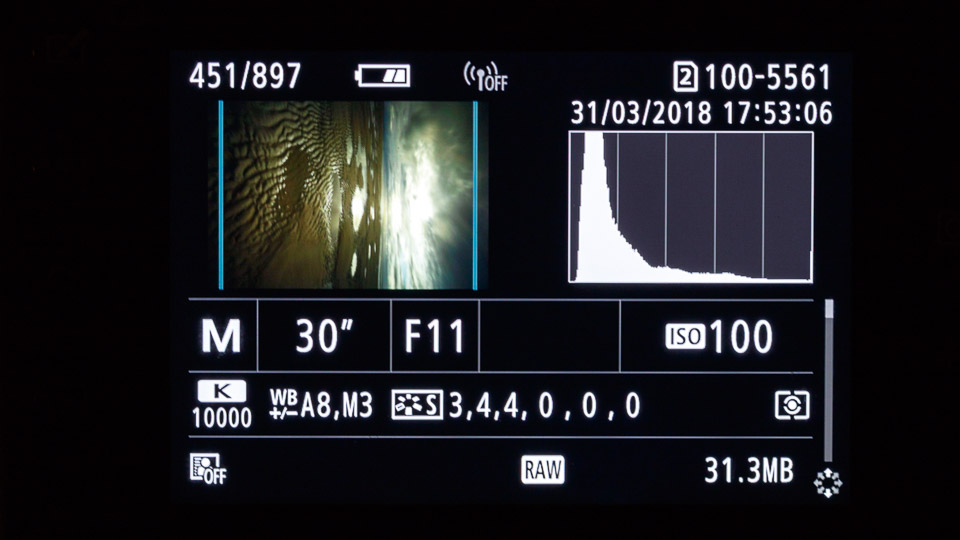
If you use aperture priority (situation 1) or shutter priority (situation 2), you let the camera set that final setting for you. You then also have the right combination of aperture, shutter speed and ISO.
So where is the difference? In both cases, exactly the same settings will be used for a well-exposed photo. In M mode as well as A or S mode. The only difference is that in the latter case, in A and S mode, the camera does this for you.
What if the photo is still not correctly exposed?
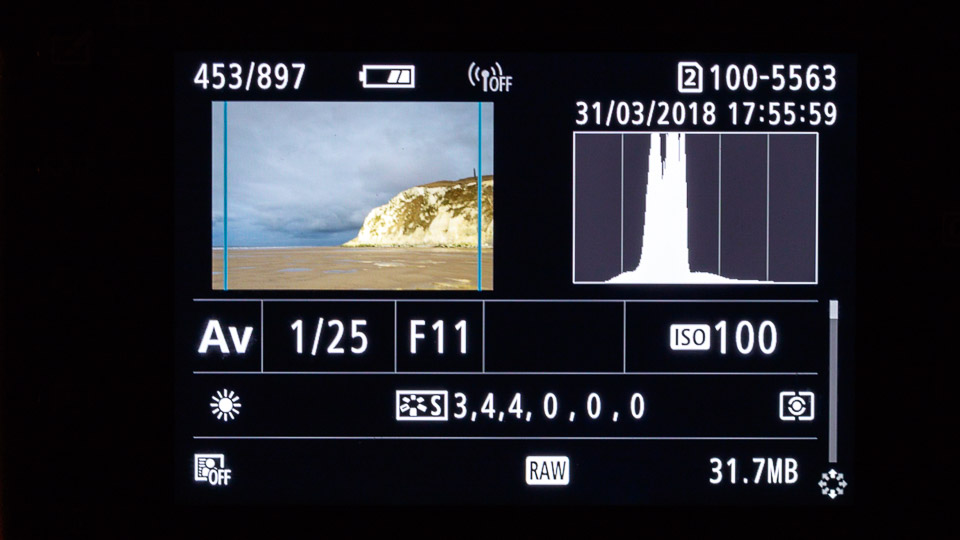
It may be that the measured exposure is not what you want. That is not unusual, because the meter can only measure averages based on 18% light reflection, also known as 18% grey.
I will not explain this here, but what it comes down to is that in some situations you need to deviate from the measured value. In that case, you need to apply exposure compensation. And you can do this very simply, regardless of whether you are photographing in M, A or S mode.
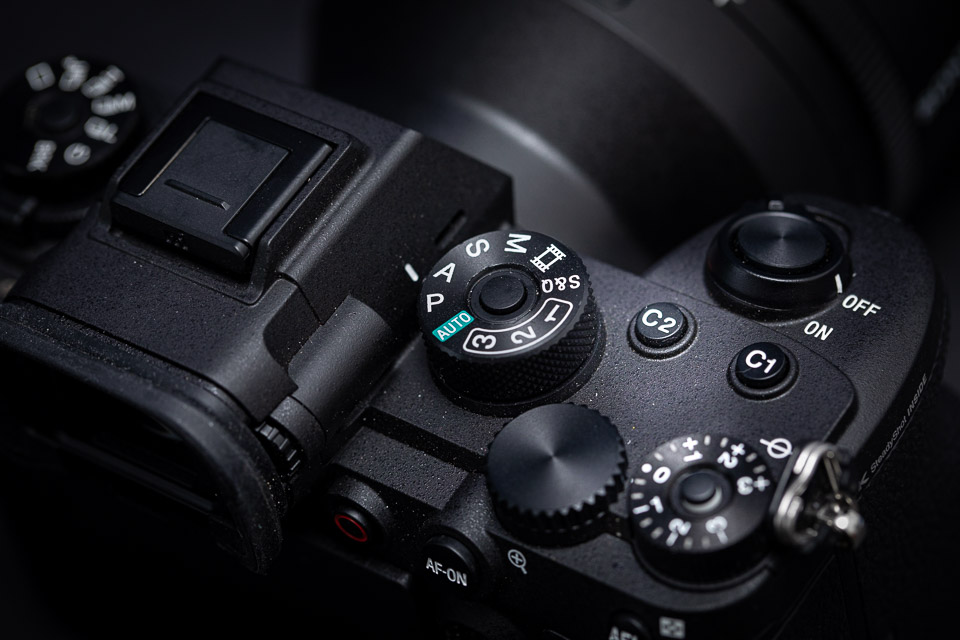
In M mode, you adjust the shutter speed or aperture until the desired number of stops more or less is reached. In A and S mode, you can do this by using the exposure compensation button.
When should you use which mode?
In short, in M, S or A mode, you can set the exposure exactly as you want and have complete control over the end result. Which method you use is simply a matter of preference, not of one being better or worse.
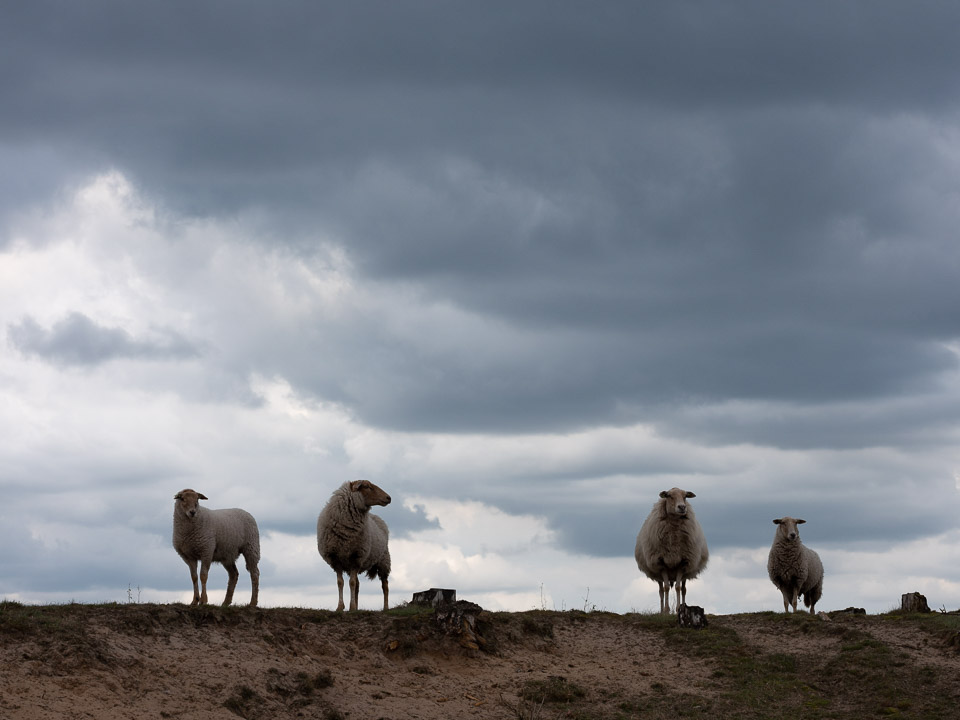
There are situations where one method may be preferable to the other, making it easier to achieve the right result. A good example is flash photography, where M mode makes it easier to achieve a consistent result.
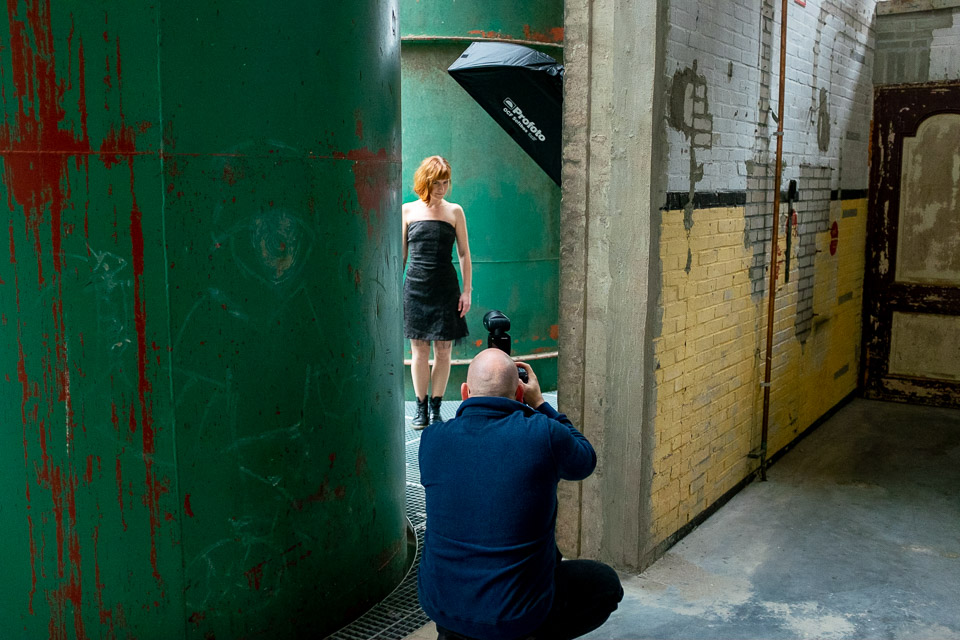
On the other hand, A or S mode is much faster and more flexible in situations where the lighting changes. If you want to use a set amount of exposure compensation, you can do that with an EV compensation button.
Regardless of the shutter speed or aperture value chosen by the camera, the compensation will be the same. In M mode, you then have to keep correcting continuously.
Use what you prefer
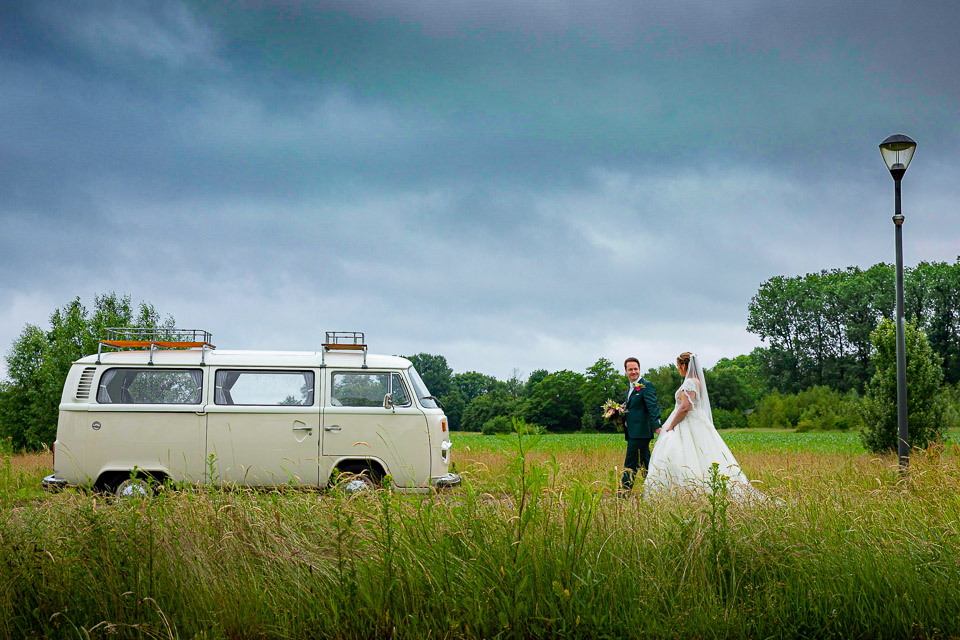
What matters is having a well-exposed photo. How that exposure is achieved is not really important. Whether that is in M, S or A mode, or for that matter in fully automatic P mode, it makes no difference. Use whatever works best for you.
But do not claim that your method is the only correct one. That is not true. It is simply a preference. Do not think that only M gives you control over your exposure either, because that is not true. It does not make you a professional photographer in any way. You are only a professional when you make full use of your camera's possibilities to your advantage.
Which do you prefer, P, S, A or M mode? Do you switch between them, or do you use just one setting out of conviction? Let us know in a comment below this article. Remember that it is an opinion, your opinion. Respect the other person's opinion too.
About the author
Nando Harmsen has been photographing for more than 40 years. He specialises in wedding photography and landscape photography. Nando also gives talks, workshops, masterclasses and photo trips, and regularly reviews new and interesting equipment.
You might also like
-
 Shooting in Manual mode and zoom lenses
by Nando Harmsen
-
 Situations where manual mode is (actually) perfect
by Nando Harmsen
-
The only real reason to set the exposure manually
by Nando Harmsen
-
 How to set the exposure manually
by Nando Harmsen
-
 Flash photography tip: Set your camera manually
by Elja Trum
-
 Flash photography tip: Set your flash manually
by Elja Trum
22 comments
-
 Dick Eduard wrote on Tuesday 31 August 2021 at 11:13 | reply
Dear Nando, I rarely use M mode, only in difficult lighting conditions. In workshops, however, M mode is elevated to a "Must", wrongly in my opinion. It is certainly true that you learn a lot when you force yourself to photograph only in M mode for a while, just as you, for example, go out only with a fixed prime.
Translated from Dutch.
Regards
Dick -
 Lex wrote on Tuesday 31 August 2021 at 11:22 | reply
1. professional means that it is your profession (occupation). So that you earn your living from it. That is separate from the technique. In theory, this could therefore also be done with an old Polaroid camera without any setting options.
Translated from Dutch.
2. You can also photograph automatically in M mode, namely in auto-ISO mode.
Although the information in this article can have a lot of added value for many beginning photographers, I find the message of the story misplaced. It sounds just a bit too populist to me (awful word btw but I can't think of a better alternative right now). -

 Donald Willemsen
wrote on Tuesday 31 August 2021 at 11:56
| reply
A clear story and well explained. Still, I’m missing something. If, for example, you photograph with aperture priority and you want/need to apply exposure compensation (for example with snow), then that compensation affects the shutter speed and not the aperture. So you may be faced with a dilemma if the shutter speed then becomes too slow to photograph handheld. What is the sensible thing to do then. Likewise, with shutter priority the aperture will be affected by exposure compensation and that will in turn affect the DoF.
Translated from Dutch. -
 Hans Brugma wrote on Tuesday 31 August 2021 at 12:00 | reply
Always use the P mode. Gives a correct exposure. With Nikon cameras and others too, you can directly change the chosen setting in P by turning something somewhere. Nikon has 2 wheels. So.. faster shutter speed gives a larger aperture, less depth of field, slow shutter speed a smaller aperture, more depth of field. So you can go in any direction.
Translated from Dutch. -
 Ynze Braaksma wrote on Tuesday 31 August 2021 at 13:23 | reply
You are absolutely right, nothing to add. I wish everyone who enjoys slow photography in M mode lots of fun with it. That whole nonsense story about photographing (exclusively) in M mode is intended to attract students. Auto = "dumb", M = "professional". The latter is supposed to inspire confidence to take the course.
Translated from Dutch. -
 Nando
wrote on Tuesday 31 August 2021 at 13:27
| reply
@Lex: The word professional is always used in the wrong context. You probably understand that what is meant is that you photograph as an amateur the way a pro would. As if a pro photographer only uses M.
Translated from Dutch.
You have to read it that way.
That automatically photographing in M mode by using auto ISO is quite a funny fact. The photographer wants to use M mode to have "full control over the exposure", but then uses an auto ISO? Where did that full control go? Moreover, how is this different from an A or S mode? -
-
-
 Rob wrote on Tuesday 31 August 2021 at 14:45 | reply
In my experience, it is important what you are photographing! What your goal or assignment is and what the circumstances mainly are! I take quite a lot of commissioned photo coverage of various events. Obviously, it is important what kind of event it is! If I photograph in the M, Av or Tv mode during an outdoor event such as, for example, a cycling tour like Ode aan Jan Janssen, Ride for the Rose or another outdoor sports event then more than half of the photos are unusable! In 99 out of 100 cases my camera is in P mode, the reason is simple I don't want to miss any important shots, sometimes there are situations where a photo has to be taken quickly, if you then still have to reset the camera you are simply too late! If it works out during the event then I can easily temporarily set the Av and or Tv manually in P mode (Iso always auto) for a specific result. By the way, a high-quality camera and a top lens on it almost always produce a perfect end result, about 85% of all photos are sharp and good to use! With a bit of post-processing afterwards, the result can be called high-quality.
Translated from Dutch. -
Lex wrote on Tuesday 31 August 2021 at 14:49 | reply
@Nando,
Translated from Dutch.
Even if I read it that way, I still find it provocative. I don't know anyone in my surroundings at all who considers M mode professional and the rest just amateurish.
As a beginner you start in auto mode (and even then it can produce the most beautiful pictures because the photographer needs to have an eye for photography), but if you want to have more influence over your result, you'll have to start studying the exposure triangle. But no one will say that M mode is always better than S or A mode.
That depends on the situation and preference. I myself, by the way, prefer to let the camera calculate the exposure (it can do that much faster than I can) but still shoot in M mode....
That brings me to the second part of your comment:
The advantage of that is that I have control over the shutter speed AND aperture at all times. I really can't photograph if my camera were to determine which aperture is best for the situation. And because I mainly photograph wildlife and light is almost always a limiting factor, I want as fast a shutter speed as possible (great distance, lots of mm and moving subject) and usually as large an aperture as possible. I accept that the ISO then automatically goes up when there isn't enough light. But if a bird sits down for a moment, the shutter speed immediately goes up (longer exposure) and my ISO drops at the same time. If the bird takes off, one turn of my wheel and the shutter speed plus ISO is immediately back in order.
If 3 birds sit together, I turn the wheel for the aperture to get more DOF and hey presto, the ISO has jumped back to the most favorable setting for a correct exposure.
I only use M mode with fixed ISO in predictable situations such as studio photography, macro photography where you can take your time and with, for example, evening photography, but there too you need to be able to take your time. If the situation could change while photographing, I prefer to use M mode with auto ISO...
I only deviate from this in a few cases. With enough light during an outdoor shoot (nearby, few mm) or indoors with flash. Then I am still willing to use A mode.
Maybe it is then "professional" when the photographer finds the right mode for his/her photography.... -
 Robert wrote on Tuesday 31 August 2021 at 15:50 | reply
P mode, quickly being able to intervene in aperture, shutter speed and use your +/_ setting. Everything within reach. When the moment arrives quickly.
Translated from Dutch.
Photo-shooting regards Robert -
Donald Willemsen
wrote on Tuesday 31 August 2021 at 16:16
| reply
@Nando, thank you very much for your response. You are right when you say that you have the option to increase the ISO value. Of course, that is only possible to a limited extent. You can think of lighting conditions where you already have a lot of (color) noise at ISO 1600, and if there is one thing I dislike, it is noise in any form. At least when it is unintended noise. If, for example, it is a b/w photo where you deliberately want to simulate 'coarse grain', then I don't think noise is a disaster. But whatever you want to be sharp should also be sharp.
Translated from Dutch.
We may disagree about noise, and that's okay. As long as you don't call me a 'pixel peeper', because I'm not that bad either 😃.
It remains that I appreciate your article and that you have given a clear and comprehensible explanation. Many people will certainly benefit from it. -
 Dick wrote on Tuesday 31 August 2021 at 16:26 | reply
The more there is to choose from to make things easier, the better. On the new Canons, for example, you choose the Fv mode. You then decide yourself what you want to automate and simply keep your focus settings. You can then set the least important factor to auto and manually set the 2 remaining ones. My favorite.
Translated from Dutch. -
 Eric Dankbaar wrote on Tuesday 31 August 2021 at 17:11 | reply
Depending on the situation I choose semi-automatic, and then shutter speed or aperture priority and correct with the +/- dial or buttons where necessary, especially with backlighting. If that doesn't work, I switch to manual. But as Nando says: Use whatever you find most comfortable for a well-exposed photo!
Translated from Dutch. -
 Footootje wrote on Tuesday 31 August 2021 at 17:43 | reply
I completely agree with Hans Brugma and usually use the P mode, where I quickly achieve the desired result by shifting. handy, when my partner is already walking on and I want to capture a subject as I want to express it. (point of sharpness, depth, movement etc. By the way, I also experiment in M mode, especially with macro shots. As long as you're having fun.
Translated from Dutch. -
 Lauran wrote on Tuesday 31 August 2021 at 19:29 | reply
Give all so-called "experts" an analog camera and they will remain silent forever.
Translated from Dutch. -
 Paul Lefevere wrote on Tuesday 31 August 2021 at 22:58 | reply
I always put the camera away in P mode. If I unexpectedly need the camera quickly, I can immediately take a shot. And even then you can still adjust the aperture or shutter speed. In that respect, P mode differs from the "AUTO" setting, where you can no longer go against the camera's choice.
Translated from Dutch.
Certain people, however, continue to believe only in themselves, against better judgment, but hardly dare to tell how many bloopers this has already produced. Should we then also ban autofocus on their advice?
And then preferably photograph in RAW as well, only to manually improve the "perfect" photo once again...
As you say, in A or S mode the camera will only fill in the missing factor in our place. Under normal circumstances, we will very rarely be able to outperform the settings according to the algorithms of the CPU in the camera. In certain situations (e.g. very little light), you indeed cannot avoid manual settings (focusing and exposure).
For me, the better photographer is the one who knows when to switch to manual control. -
 Adelheid Smitt wrote on Wednesday 1 September 2021 at 10:59 | reply
Thanks for this story, Nando. I can also get so annoyed by people who keep claiming that you're not a serious photographer if you don't shoot in M mode. I usually use Av mode for my landscape photos. Only when I take a panoramic photo do I use M to make sure the values stay the same.
Translated from Dutch. -
 eerbeekh wrote on Wednesday 1 September 2021 at 17:07
| reply
Nice article, puts things into perspective a bit. Great that it also elicits so many reactions. Also helps in determining your own conscious choice.
Translated from Dutch. -
 Doreen wrote on Saturday 4 September 2021 at 12:38 | reply
When I find depth of field important I choose the A mode.
Translated from Dutch.
If movement or freezing is important then the S mode.
At the Fotovakschool, the M mode was recommended and the P mode was called Problem mode, so it was strongly discouraged.
Just do whatever gives you the desired results and keep an eye on the histogram. -
 Lex wrote on Saturday 4 September 2021 at 13:25 | reply
@Doreen,
Translated from Dutch.
But if you do not know beforehand what situation is going to arise, you can choose Manual with auto-ISO.
Then you have the possibility to control both the shutter speed and the aperture while the exposure remains correct (calculated by means of the exposure meter).
For example, if you photograph wildlife, you can quickly switch from a single fast-moving subject (flying bird) to multiple subjects (nesting birds on a branch).
Of course you then don't keep an eye on your ISO, but you will always have to continue taking the exposure triangle into account.
The most important thing is that you know what you are doing and get what you want. The mode of your camera is not important then. -
Have your say
Please note: Articles older than a week can only be commented on by signed-in visitors.Would you still like to comment? sign in or create a free account.
Become a better photographer every week
A practical photography tip in your inbox every week.
39,027 photography enthusiasts already receive the tips! More about the weekly mail. Or keep up to date via  Facebook.

Elja Trum
Photofacts; everything to do with photography!
Would you like to take better photos and keep up with what is happening in photography? Photofacts publishes articles that teach you something about photography — from a product announcement to a practical shooting tip or a look at a website. Photofacts covers photography every day and is a hobby project of Elja Trum's that got out of hand. The articles are written by a team of volunteer authors. If you would enjoy writing one or more articles for Photofacts, do get in touch.More about PhotofactsPhotofacts is made possible in part by
