

Why spend a lot of money and lug it all around?
Saturday 11 January 2020, 13:13 by Leen Koper | 10,295 views | 45 commentsThis article was translated from Dutch with the help of AI. Read the original.
For many years, over 40 in total, I was a professional photographer. Lugging equipment around was an inseparable part of the job. Even on holiday, when I wanted to enjoy taking photos, I took a heavy kit with me. Surely I couldn't afford to be short of anything?
I usually used a Mamiya 645 body and around 10 fairly heavy lenses, so I could offer my clients sufficient quality.
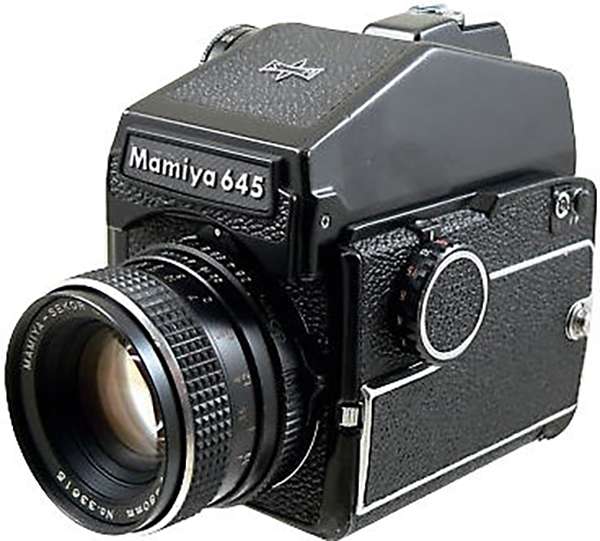
Moreover, as a member of the BIPP (British Institute of Professional Photography), I regularly took part in competitions in the wedding and portrait photography categories, and when it came to quality, using 35mm was really making do. It simply wasn't “not done”.
And regularly coming home with certificates was also a generous reward for all that lugging around.
Digital is light!
In 2002, however, I became one of the first professional photographers to start working digitally. What a huge difference in weight. Nothing could be easier than those two Fuji SLR cameras with just a couple of zoom lenses. That was all I needed.
With their 6 megapixels, I even took product photos that covered the entire side of a lorry. Competitions, which I entered fairly often, were suddenly no problem in terms of print sharpness. A whole new world had opened up! The Mamiya and the Zenza Bronica had to go.
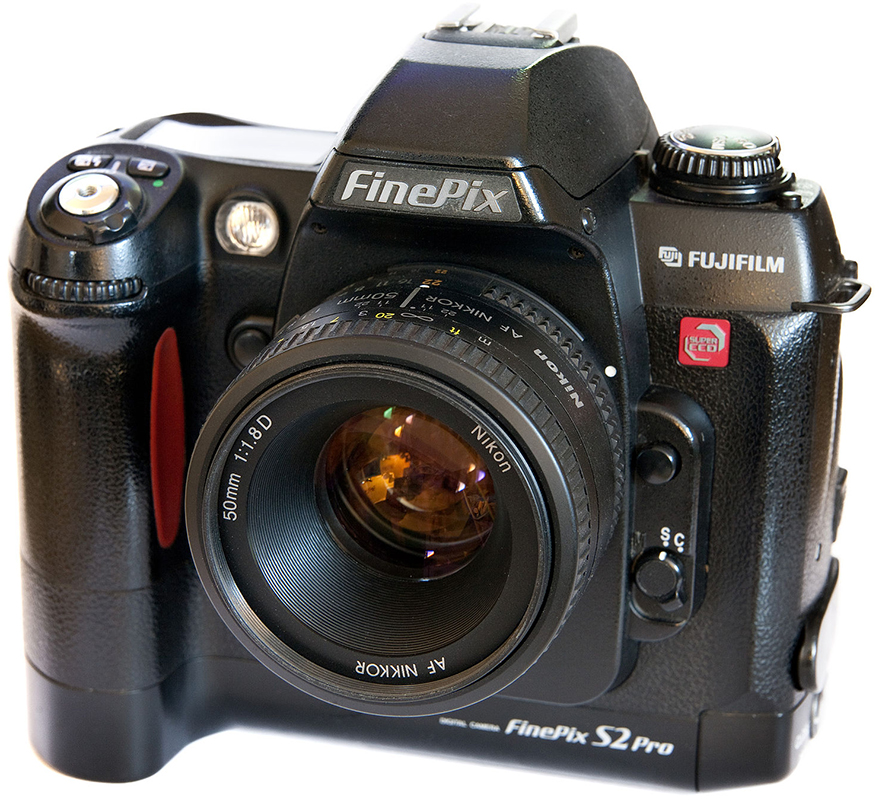
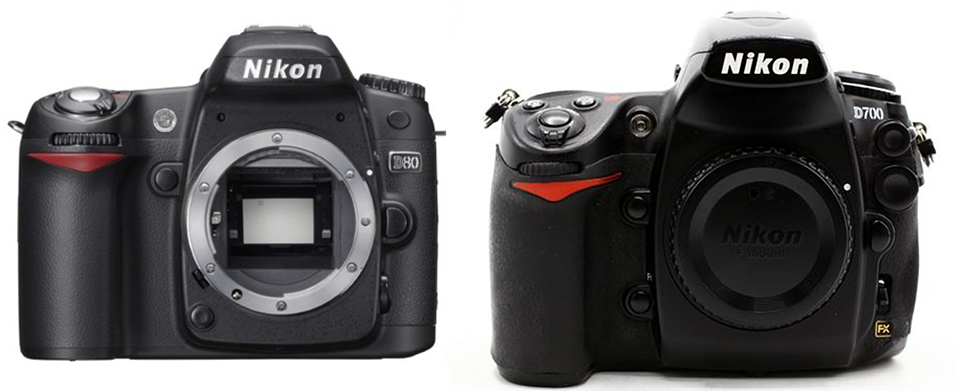
After that Fuji S2 came a Fuji S3, two S5s and later a Nikon D80, D90, D7000, D700 and so on. Meanwhile, the number of lenses increased again and, although it had become much lighter, I was still carrying around a considerable weight.
Because once the desire takes hold, you keep buying another lens. And then another, and another...
A small camera
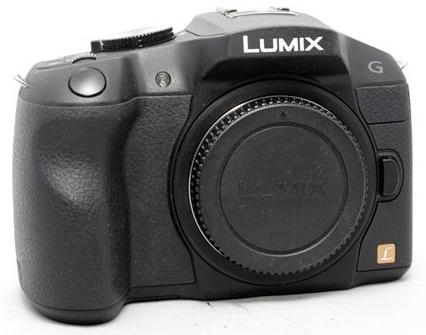
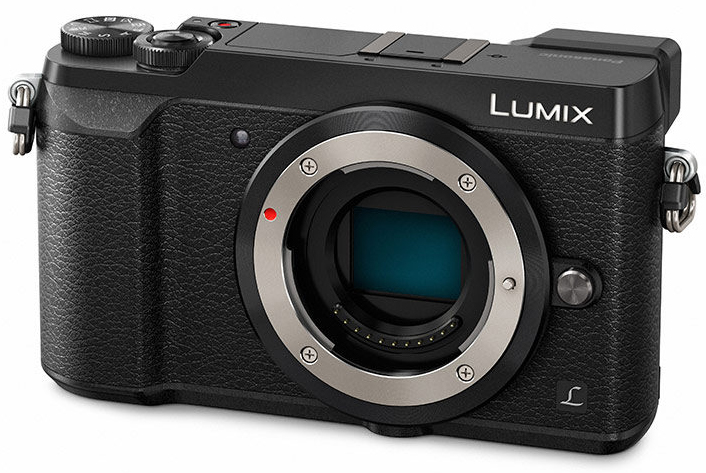
In the long run, this load also became too heavy for my liking. During a visit to a colleague with a camera shop, he showed me a Panasonic G6 at a very reasonable price, with a 14-42mm and a 45-150mm lens.
Somewhat suspiciously, wondering whether such a small camera could do what I wanted, I decided to buy it anyway. Suddenly, a whole new world opened up for me. The G6 has since been replaced several times by other Panasonics, and now I am completely happy with my two GX80s and, of course, too many lenses again.
However, I usually only use a 14-140mm zoom lens and an Olympus 9-18mm lens. I take the 100-300mm with me only a limited number of times. This means I can go out with my wide-angle zoom in my right-hand coat pocket and, if necessary, the 100-300mm in my left-hand pocket.
Light and cheap!
Converted to full frame, this gives me a range from 18mm to 600mm. And that is without a bag, since the camera is always hanging over my shoulder, for a total of less than 2,000 euros, including the 100-300mm.
Now, price is not the most important thing for me. Weight is what matters most. If I leave the 100-300 behind, I am carrying just 840 grams. Including the relatively heavy 100-300, at 520 grams, I have to lug 1,360 grams around.
The 9-18mm and the 14-140mm together, roughly 15-210mm on APS-C and 18-280mm on full frame, weigh 420 grams. Compare that with Canon, for example, where the 28-200mm alone weighs around 500 grams, despite having a considerably smaller range, six times smaller.
That does not tell you everything, of course. Lenses are difficult to compare based on size and/or weight alone. The same applies to cameras. Although my 16-megapixel camera is good enough for me.
And what about prints?
If a 6-megapixel camera was enough at the time to produce 60 by 90 centimetre prints in excellent quality for that era, then my 16 megapixels are more than enough now.
Especially if, like most people, you hardly print your photos anymore and only post them on the internet. And if I do want to print, 16 megapixels is certainly enough.
And besides, remember that if you print larger, the viewing distance also becomes greater. Just think of that lorry with 6 megapixels.
Of course, you can also discuss the 'extras' offered by a more expensive camera. Well, I really don't need them. I barely understand the menu system and regularly find myself baffled when I have accidentally pressed one button or another.
For 'ordinary' photography of landscapes, animals, portraits, weddings and so on, that really is not necessary either. And that is the kind of work most amateur photographers do. And what if my camera cannot take that one shot because it lacks the necessary features?
Just skip difficult shots
Well, then I simply don't take it. When you take cost and weight into account, it is a shot that requires a lot of lugging and paying. It certainly doesn't make me any less happy.
Besides, I have never had to deal with that. Everything has been possible without any problems so far. I can only not take photos underwater, but I have no interest in that either.
Are those three lenses all I own? No, of course not. I also have a Tamron 300mm mirror lens, the Sigma 19mm and 60mm, and the unique 90mm Dreamagon soft-focus lens. The 'I must have that too' virus has not passed me by completely either, just like with the various filters, extension tubes and the 11 (!) bags I still own.
The only problem left is a tripod. I still have four of them. I have already given away the two heaviest ones. For now, the rest will have to stay in my car. But they are still very awkward to take with me. If only there were a light, practical solution for that!
About the author
Leen Koper woont en had tot voor kort een fotostudio in Zierikzee. Na ruim 40 jaar als fotograaf gewerkt te hebben, houdt hij zich nu voornamelijk bezig met landschapsfotografie. Als beroepsfotograaf heeft hij in de loop der jaren vele internationale prijzen gewonnen en gaf les en ook regelmatig seminars in Engeland, België, Frankrijk, Duitsland en Oostenrijk.
You might also like
-
 Don't Buy Photography Equipment, Rent It
by Nando Harmsen
-
The Most Expensive Lenses in the World
by Nando Harmsen
-
 Why You Don't Make Money From Your Photography
by Elja Trum
-
 Be sensible, buy a good tripod
by Nando Harmsen
-
 Which camera should you choose if money is no object
by Nando Harmsen
-
 An Ode to Holiday Snapshots
by Michiel Heijmans
45 comments
-

 martinphili wrote on Saturday 11 January 2020 at 17:32
| reply
I completely understand you.
Translated from Dutch.
And yet... I bought a DSLR again. Budget was one reason, being able to keep using my beautiful lens was a second. And the doctor had advised me to start working on my fitness. So that was number three
-
 guest wrote on Saturday 11 January 2020 at 17:54 | reply
I completely understand. But as the years go by, those DSLRs do get very heavy. It seems like they get heavier every year, even though it's the same equipment.....
Translated from Dutch. -
guest wrote on Sunday 12 January 2020 at 13:34 | reply
I've also been using a mirrorless for a while now. what a hassle with those screens. you spend more time clicking than taking photos. give me a real camera Nikon D7000
Translated from Dutch. -
 Leen Koper wrote on Sunday 12 January 2020 at 14:10
| reply
I also had the D7000, and for a little while I also had some trouble getting used to the screen instead of a "real" viewfinder, but I got used to it quickly. Especially the convenience of taking photos nice and low above the ground without first having to dig a little hollow for your chin was wonderful. If you have to "click" more than before, I don't know how you take photos; it all comes down to the same thing anyway, aperture, shutter speed and ISO value? Apart from the weight, in my opinion there is no difference..
Translated from Dutch. -
 Sjaak de Jonge wrote on Tuesday 14 January 2020 at 11:37 | reply
Hi Leen, nice to run into you here again in 1988 you did our wedding report and people still ask where you had those beautiful photos taken.
Translated from Dutch. -
 Truus Nijland wrote on Tuesday 14 January 2020 at 12:33 | reply
Absolutely right, Leen! I switched from the Canon 7D DSLR to the Fuji. I should have done that years earlier, it’s super light, is many times sharper and the Fuji lenses are great! And let’s not forget the tripod that you always need for urbex photography. I now use a travel tripod!
Translated from Dutch. -
 Freddy Van Erp wrote on Tuesday 14 January 2020 at 12:34 | reply
And what about Olympus, which has now put another fine system camera on the market! Super light and moreover a camera that certainly deserves a place among the big ones. But as I often notice, you only get the top brands discussed in reviews in most photography magazines
Translated from Dutch. -
 rogier wrote on Tuesday 14 January 2020 at 13:18 | reply
A hundred % right and true. lugging around a Canon 5DII, and multiple lenses Kilos of equipment... And with a 1GXmarkIII in her jacket pocket, my wife takes insanely good photos. There are of course limitations, but also many advantages. And you see them more and more, lugging around and showing off with mastodon cameras...
Translated from Dutch. -
 PixelDude Raoul
wrote on Tuesday 14 January 2020 at 13:18
| reply
Five years ago I resolutely chose a 4/3 crop 2 from Olympus, the E-M1 ... and because everything was so light I bought two of them. Now I put my most frequently used zoom lenses (12-40, equivalent to 24-80 and 40-150, equivalent to 80-300, both 2.8 throughout the zoom range, on the 2 cameras and I don't have to change lenses in nature. In an ultra-light chest pocket I also take some other attributes such as extra batteries, cleaning materials, some other lenses (wide-angle, extra light-sensitive prime, ...) or flash depending on what I intend to photograph. All in all still less than 5kg, including the chest pocket. I only take a tripod with me for really long shutter speeds or night photography. After all, photographing handheld down to 1/20 so as not to have to go above ISO 1000 with a 12-40 (24-80 equivalent) does not cause any blur problems (long live the stabilisers). And, ... I haven't regretted it for a moment. Glass is, after all, (far too) heavy.
Translated from Dutch. -
guest wrote on Tuesday 14 January 2020 at 13:48 | reply
what do you think of a carbon tripod, it's a bit lighter, right?
Translated from Dutch. -
Leen Koper wrote on Tuesday 14 January 2020 at 14:02
| reply
@ Sjaak de Jonge: I'm glad that you still enjoy your album; that's what we make it for, isn't it?
Translated from Dutch.
@ Truus Nijland: Fuji has always also been superior in its colors. I myself switched to m4/3 because the lenses differed so much in weight. With Fuji you still need somewhat heavier ones, although it doesn't differ terribly much.
@ Freddy van Erp: Just like with Panasonic, there we can complain even more about the lack of interest from the magazines; they are mainly interested in what the masses use. Logical, but indeed very little attention is paid to the m4/3 system. And that, while due to the compatibility of the mount of the two own brands, all kinds of very high-quality lenses are available. More than from any other brand. Too bad that so little from Sigma or Tamron etc. is still available.
@ Rogier: Don't forget that a large camera and lenses are also a status symbol. The larger the camera, the more esteem you can gain. A bit of 'who has the biggest'.
@ Pixeldude Raoul: I even find the 2.8 lenses too heavy. I do sometimes miss the blur of large apertures, but yes, then I stand a bit farther away and choose double the focal length. -
Leen Koper wrote on Tuesday 14 January 2020 at 14:04
| reply
I already have a carbon tripod, but it is just as cumbersome....
Translated from Dutch. -
 Ad wrote on Tuesday 14 January 2020 at 14:06 | reply
Totally agree, regards Ad
Translated from Dutch. -
PixelDude Raoul
wrote on Tuesday 14 January 2020 at 14:17
| reply
@rogier
Translated from Dutch.
'And you see more and more of them, lugging around and showing off mastodontic cameras...' ... and still not making anything of it. It’s not the camera that does it in the first place, but 'the little man' (or little woman, so as not to discriminate).
-
 Stef
wrote on Tuesday 14 January 2020 at 14:54
| reply
I can completely understand Leen Kooper. I have also been photographing since the analogue era with some interruptions. Last year I switched to MFT Olympus and I haven't regretted it at all. Nice and light, convenient and I can fit the camera and five lenses in my 24x16x15cm camera bag. I usually only take two or three with me. My Canon full-frame and crop cameras have now been sitting in the cupboard for a year and a half. I also fell for it in the past, buying cameras with a large sensor. You don't take better photos, what it ultimately becomes is determined by yourself and not the device. Not everyone sees it this way, if you have no problems with large and heavy equipment just keep using it. The extra possibilities on the MFT and other small cameras such as handheld focus stacking, fivefold image stabilisation, live composite etc. are included. I am very happy that I have been able to leave the pack mule era behind me.....
Translated from Dutch. -
 R. van Os wrote on Tuesday 14 January 2020 at 14:58 | reply
Splendid photos, Mr Koper. I completely agree with your choice. I am also currently looking into getting a micro 4/3 camera. Still hesitating between a GX80 and a G80.
Translated from Dutch.
Would a chest tripod not be a solution for you? In my analogue days I used such a "one-legged one" when I didn't want to take a tripod along. -
Leen Koper wrote on Tuesday 14 January 2020 at 15:19
| reply
R van Os, I chose the GX80 because it had (and was a little cheaper) a tilting display. With my G6 I was always a bit 'annoyed' at having to look 'next to the camera'. A 'Hasselblad' feeling. (I also had one for a while
Translated from Dutch.
, now that's heavy!) -
 Louis wrote on Tuesday 14 January 2020 at 15:44 | reply
You will always have pros and cons, and I think: photograph with whatever feels good in your hand and that you feel comfortable with. My daughter manages to convey an impression or composition better in a photo with a small Canon pocket camera than I do with my Nikon D7200. Just to say ... it is the photographer who makes the photo and the device that records it. But let Panasonic be precisely that brand (with which, according to both my daughter and myself) we never found the colours to be reasonably true to life. Green had a blue tinge and a skin tone was a little too red. We have both got rid of our "Pana" and sometimes (depending on the occasion) we do switch devices
Translated from Dutch. -
 Matt wrote on Tuesday 14 January 2020 at 15:45 | reply
Another alternative is an all-in-one camera.
Translated from Dutch.
I am considering purchasing a Sony RX10 MK IV. Approximately 1 kg in weight, 20 megapixels, 1" sensor, super good AF and a superior 24-600mm (35mm equivalent) F2.8 - 4 Zeiss lens. -
Leen Koper wrote on Tuesday 14 January 2020 at 16:12
| reply
@ Louis: I have absolutely no complaints about the colors of my Panasonics. Besides, I always start from a RAW file, so I can always adjust my tones if necessary. And while I -as a former professional photographer- am extremely critical when it comes to colors. At most, I reduce the saturation a little, which is fairly high, but well, that is precisely what most people appreciate.
Translated from Dutch. -
Leen Koper wrote on Tuesday 14 January 2020 at 16:15
| reply
@ Matt: A very good alternative. But it is indeed somewhat heavier.
Translated from Dutch. -
 Wil wrote on Tuesday 14 January 2020 at 16:31 | reply
Forced by physical circumstances to buy/have to buy a lighter mirroless camera a few years ago; Canon M5 with 11-22 and 18-150. More than sufficient for all my city / urbex / architecture trips trips (no one has ever noticed the difference with FF photos). Super light and everything practically fits in my trouser pocket
Translated from Dutch.
For (bird) safari/macro I still use an FF with macro or supertelephoto lens. In these cases hardly have to lug anything.
The best of both worlds in my case ... and my joints benefit from it -
Louis wrote on Tuesday 14 January 2020 at 16:41 | reply
@ Leen: I have no doubts about your choice and your landscape photos appeal to me enormously, they are real gems but just as with judging a photo, there are also people with different tastes when it comes to colours. An additional fact, we -my daughter and I- know nothing about post-processing photos, only straightening a photo and cropping it a little, we can just about manage that
Translated from Dutch. -
 Peter Heins wrote on Tuesday 14 January 2020 at 17:30 | reply
Weight is exactly the reason I switched to mirrorless too. Sold my Canon 760D 's and now have 2 Canon M5 's with some eos-m lenses. And as you say, I often only take the 11-22mm with me for landscapes and on vacation I take most of my photos with the eos-m 15-45mm . A combination that weighs barely 500 grams. A breath of fresh air. And qualitatively insanely sharp and detailed photos.
Translated from Dutch. -
 Wyb Mylius wrote on Tuesday 14 January 2020 at 17:42 | reply
Now I keep hearing stories about those terribly heavy DSLRs. But for some people, that weight also has a significant advantage. I have been suffering from a tremor for several years now. In other words: shaking hands. And especially when I am a bit tense, e.g. because I see something of which I think I could shoot a wonderful picture. A phone camera is then completely out of the question. But how happy I am with my Nikon D 7200 and attached to it my old-style, heavy 18-300 lens, not to mention the anti-shake button on the lens.
Translated from Dutch.
I know perfectly well that I sacrifice quality compared to prime lenses, but at least I can continue to practise my hobby.
And that is another side of the damn weight.
Hobby regards, Myl. -
Leen Koper wrote on Tuesday 14 January 2020 at 20:04
| reply
@ Louis: If you don't know anything about RAW processing, then I can only recommend one thing: just give it a try sometime. The downside: after a few times, you're completely hooked. A whole world of possibilities opens up. You're hugely limiting yourself by photographing exclusively in Jpeg. And it sounds complicated, but is really, really simple. And you quickly keep getting better at it. Really!
Translated from Dutch. -
 Ron Westra wrote on Tuesday 14 January 2020 at 20:13 | reply
I had a small Canon, the G7II, I took nice photos with it and indeed it is very light and easy to take with you.
Translated from Dutch.
But my mother created me with big hands oh oh oh what a fiddly thing such a small camera....so bought an SLR again, the Canon77D (not too heavy and too big)
it was still nice to be able to reach the right buttons again with my fingers and not be afraid that the camera would fall out of my hands
solution I take the lens with me that I want to photograph with, e.g. small insects then the macro lens, large animals and landscape my 70-300 and nothing more....saves a ton of weight
Greetings Ron westra -
Leen Koper wrote on Tuesday 14 January 2020 at 22:02
| reply
@ Wyb Mylius. In the past, when I was still young, I swore by the weight of the camera, it couldn't be heavy enough to absorb vibrations. In that respect I can understand you well. But with today's image stabilization (with some brands even dual image stabilization), that is outdated. But in your specific case, things may be different.
Translated from Dutch. -
 Kees Kouwenberg wrote on Tuesday 14 January 2020 at 22:05 | reply
Precisely for that reason I now have a Sony RX100, Alongside my Canon 5D MkIII and Fuji X-pro1. The convenience of taking it with me and often not needing the capabilities that a more extensive camera has. Pro shots: Canon, Out and about to photograph: Fuji, Always with me: Sony.
Translated from Dutch. -
PixelDude Raoul
wrote on Wednesday 15 January 2020 at 09:34
| reply
Admittedly. When you buy a mirrorless system you suddenly have many question marks about the numerous choices you can make with countless settings. I was overwhelmed by it and chose automatic for a while to first learn to understand all those settings. I did photograph in RAW from day one, in my opinion a must. When I gained more understanding of the possibilities I set everything to M(anual) until I understood that that was completely pointless. Since I am mainly interested in nature and landscapes I quickly switched to A(pertute), so aperture control, because for me depth of field is primary. When I want to photograph birds in flight or a pack of running dogs I quickly switch to S( shutter speed). I found several good videos on u-tube about my Olympus E-M1, admittedly in English - perhaps a handicap for some of us - until one day I stumbled upon a series that really opened my eyes ... what simplicity in use you can have once you have set the settings most suitable for you. I now have the colours blue for the underexposed parts and red for the overexposed parts both in my viewer and on my screen. Two control dials to operate, one to choose the aperture, one to choose the correct exposure (no red or blue visible). When I continue to see both of them I can press the HDR button at lightning speed to also put an end to that problem. I don't even need to look at a histogram anymore. Another enormous advantage ... I immediately see through my viewer or on the screen ‘what’ the photo result will be. And in the meantime I have evolved so far in this technology that I also understand and can apply 80% of all other possible settings (sometimes after thinking about it for a moment).
Translated from Dutch.
The fairy tale has become reality. Canon and Nikon asked the question for years on end: Mirror mirror ... and one day they got the answer ‘But the mirrorless is a thousand times more beautiful than you.’
PS: did you know that by now ‘Sony’ has become the biggest camera manufacturer in the world and no longer Canon or Nikon?
Other brands are often underestimated, including Olympus. Olympus has the most advanced stabilisers, is robust and weatherproof (no need for rain sleeves or other inconvenience, just on your chest in the rain). And did you know that Olympus is the world leader in medical cameras? Our familiar cameras are a secondary market for them. Who still believes that they too are not at the top? -
Leen Koper wrote on Wednesday 15 January 2020 at 10:18
| reply
@ PixelDude Raoul: Indeed, Olympus and Panasonic are often underestimated. If they don't have the technology in-house themselves, they seek cooperation with companies that do. The m43 sector is in no way inferior to the traditional powerhouses.
Translated from Dutch.
And your method for landscape photography is, in my opinion, completely correct; I always use A mode too. Shooting in M is normally useless, unless you want to show that you're a "real" photographer, as many Americans seem to do. After all, you don't have the exposure compensation button (a nice Scrabble word!) for nothing. -
 Hans van Sterkenburg wrote on Wednesday 15 January 2020 at 16:01 | reply
Remarkable; good news for a super-heavy camera and an enthusiastic story about a super-lightweight.
Translated from Dutch.
A 5DM5 [to replace the M3] or switch to a f.f. mirrorless camera? -
Leen Koper wrote on Wednesday 15 January 2020 at 20:20
| reply
@ Hans van Sterkenburg: Fortunately, multiple opinions are possible; I have presented mine here. Both from the perspective of (especially) weight and cost, I find M4/3, both Panasonic and Olympus, very attractive myself. But I had already said that.
Translated from Dutch. -
Hans van Sterkenburg wrote on Wednesday 15 January 2020 at 21:43 | reply
The 4-sided one is particularly beautiful. What is missing is the manual.
Translated from Dutch.
Mr. Koper?
Regards.
Hans. -
Leen Koper wrote on Wednesday 15 January 2020 at 22:31
| reply
@Hans van Sterkenburg: what do you mean by the square?
Translated from Dutch. -
 Paul Laarman wrote on Thursday 16 January 2020 at 12:58 | reply
Very happy with your article. For the same reasons I chose the Olympus OMD E-M10 II, comparable to the Panasonic. But I had been an Olympus fan ever since my first OM 1 from 1974. I even have an adapter to use, among other things, my old 50 mm 1.4 lens, but in practice I use almost exclusively a 12-40, 40-150 and 75-300 lens. And all of that is already heavy enough. By the way, I am not a pro but an enthusiastic amateur.
Translated from Dutch. -
Leen Koper wrote on Thursday 16 January 2020 at 13:11
| reply
@Paul Laarman: Glad that you're happy with it. I know it all too well. At first I regretted a little that I had chosen Panasonic on a whim; Olympus was a name in the photography world, after all. But later I was completely at peace with my choice, despite Panasonic being a newcomer.
Translated from Dutch. -
Hans van Sterkenburg wrote on Thursday 16 January 2020 at 20:52 | reply
By square I mean the landscape photo with water and cows. A rectangular photo enlarged to a square and then made a ‘painting’ of it.
Translated from Dutch.
Regards,
Hans -
Leen Koper wrote on Thursday 16 January 2020 at 22:44
| reply
@ Hans van Sterkenburg: that is described in the relevant
Translated from Dutch.
article; otherwise I don't know what you mean by "manual". -
 Martin wrote on Friday 17 January 2020 at 09:38 | reply
Comparing a full frame with a compact 4/3 remains comparing apples and oranges. And full frame DSLR vs mirrorless? I've been using an EOS R alongside a 5DmkIV for a while now. The R is somewhat lighter and more compact, but the difference isn't big enough to hang the DSLR up. For movement and sports, an optical viewfinder and a larger battery capacity remain a major advantage. Also, 2 card slots take up space in a 5D. For portraits with a wide aperture, the R's eye AF is an advantage again. Compact can be an advantage, but it isn't the only thing that counts.
Translated from Dutch. -
 Gerrit wrote on Friday 17 January 2020 at 09:47 | reply
Familiar stories. I’m still 'betting' on two horses at the same time. On holiday or photo trips, the suitcase goes with the Nikon D750 and a few kilos of zoom/prime quality lenses for the really beautiful shots, and a small bag also goes along with the Nikon J5 with 2 zoom lenses and a little prime for when we go into the city or just go for a walk. In good weather I sometimes don’t even see the difference. Only in lower light does the D750 stand out. And always shoot in RAW, of course.
Translated from Dutch. -
Leen Koper wrote on Friday 17 January 2020 at 18:00
| reply
@ Martin: of course a full frame has advantages, especially if you are going to print very large. But yeah, who still prints large? For sports, an optical viewfinder is indeed easier, but yeah, I don't photograph sports. Changing a battery takes virtually no time, it's just convenient if you don't have to.
Translated from Dutch.
That story about portraits at wide open aperture is a persistent rumor that is persistently kept alive by all kinds of magazines. At 1.8 on full frame, the risk of the second eye being out of focus is far too great. That myth was mainly introduced to the world by Americans and is just as persistent as Trump himself, but no professional photographer uses it, only amateurs do. Professional photographers from the US don't either, by the way, as I noticed during my seminars. All at least F4. -
Hans van Sterkenburg wrote on Friday 17 January 2020 at 18:02 | reply
I don't gamble. And it doesn't save you that much weight either compared to an mlff. Of course, the development of technology is of interest to me. But even more than that, my development as a photographer.
Translated from Dutch.
Thank you all for your contribution to this topic.
Have fun behind and with your hobby. -
PixelDude Raoul
wrote on Friday 17 January 2020 at 18:28
| reply
I have never printed larger than 60x40 cm but up to that photo size you don't see any, but really any difference between an FF or a recent m4/3. Such m4/3 has more than enough pixels. When you want to print a billboard, yes then you will see a difference when you hang your nose on it ... but then you don't see the photo
Translated from Dutch..
And as Leen says, only hobbyists use a 1.2 or 1.8 because that is supposedly 'better' for portrait photography. Use a larger aperture and have the model position themselves a bit further from the back wall, ... better.
And for very fast-moving sporting activities there are other aids. I then put a viewfinder on my Olympus E-M1. I often also use that viewfinder on my 70-150 lens together with a 1.2 converter which then only stops my aperture down from 2.8 to 4. This way I have a zoom up to an equivalent of 420mm ... and how small that is ... and how light that is. Batteries? No problem: there is an extra grip with an extra battery underneath, and still small and minimal in weight. Switching from one battery to the other happens automatically. Another 2 extra batteries in my pocket and I'm ready for about 1000 or more photos of around 15MB. I indeed only have one slot, that's true, but the new Olympus flagship has 2.
Comparing an FF with an m4/3 is comparing lemons with limes, but certainly not apples with pears. And I find limes tastier. -
PixelDude Raoul
wrote on Friday 17 January 2020 at 19:19
| reply
I obviously meant a 'larger' aperture number, not a larger opening for portrait photography.
Translated from Dutch.
Have your say
Please note: Articles older than a week can only be commented on by signed-in visitors.Would you still like to comment? sign in or create a free account.
Become a better photographer every week
A practical photography tip in your inbox every week.
39,024 photography enthusiasts already receive the tips! More about the weekly mail. Or keep up to date via  Facebook.

Elja Trum
Photofacts; everything to do with photography!
Would you like to take better photos and keep up with what is happening in photography? Photofacts publishes articles that teach you something about photography — from a product announcement to a practical shooting tip or a look at a website. Photofacts covers photography every day and is a hobby project of Elja Trum's that got out of hand. The articles are written by a team of volunteer authors. If you would enjoy writing one or more articles for Photofacts, do get in touch.More about PhotofactsPhotofacts is made possible in part by
