

Photography tips for the solar eclipse on 10 June
Tuesday 8 June 2021, 12:36 by Nando Harmsen | 3,857 views | 0 commentsThis article was translated from Dutch with the help of AI. Read the original.
On Thursday 10 June, a partial solar eclipse will be visible from the Netherlands and Belgium. This means the Moon will move in front of the Sun, making it look as though a bite has been taken out of it. In this article, I give you a few very important tips if you want to photograph it.
During this partial eclipse, an average of 29 per cent of the Sun's diameter will be covered by the Moon. This is equal to 17 per cent of its surface.
The Moon is passing north of the Sun. As a result, the eclipse will be larger the further north you are.
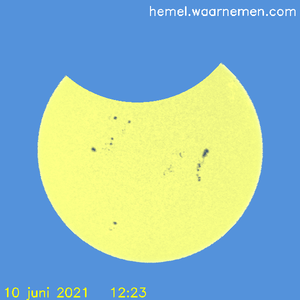
In Russia, Greenland and Canada, this solar eclipse will be visible as an annular eclipse because the Moon is too far away from the Earth to have the same apparent diameter as the Sun.
In Liège, 12.9 per cent of the solar disc will be covered. In Den Helder, it will be 19.3 per cent. In total, the eclipse will last an average of 2 hours and 7 minutes, between 11:19 and 13:31, with the maximum at 12:23 (on average).
Don't underestimate the danger to your eyes
This eclipse is not enough to make it darker, but it will be noticeable and certainly visible to the naked eye. Do bear in mind that you must NEVER look at the Sun without proper protection. So make sure you have special eclipse glasses.
You absolutely MUST NOT use the following methods, to prevent serious and permanent damage to your eyes. You may become partially or completely blind.
- DO NOT look at the Sun without protection
- DO NOT look through two pairs of sunglasses, soot-covered glass, welding goggles or a CD
- DO NOT look through binoculars or a telescope, or through a telephoto lens
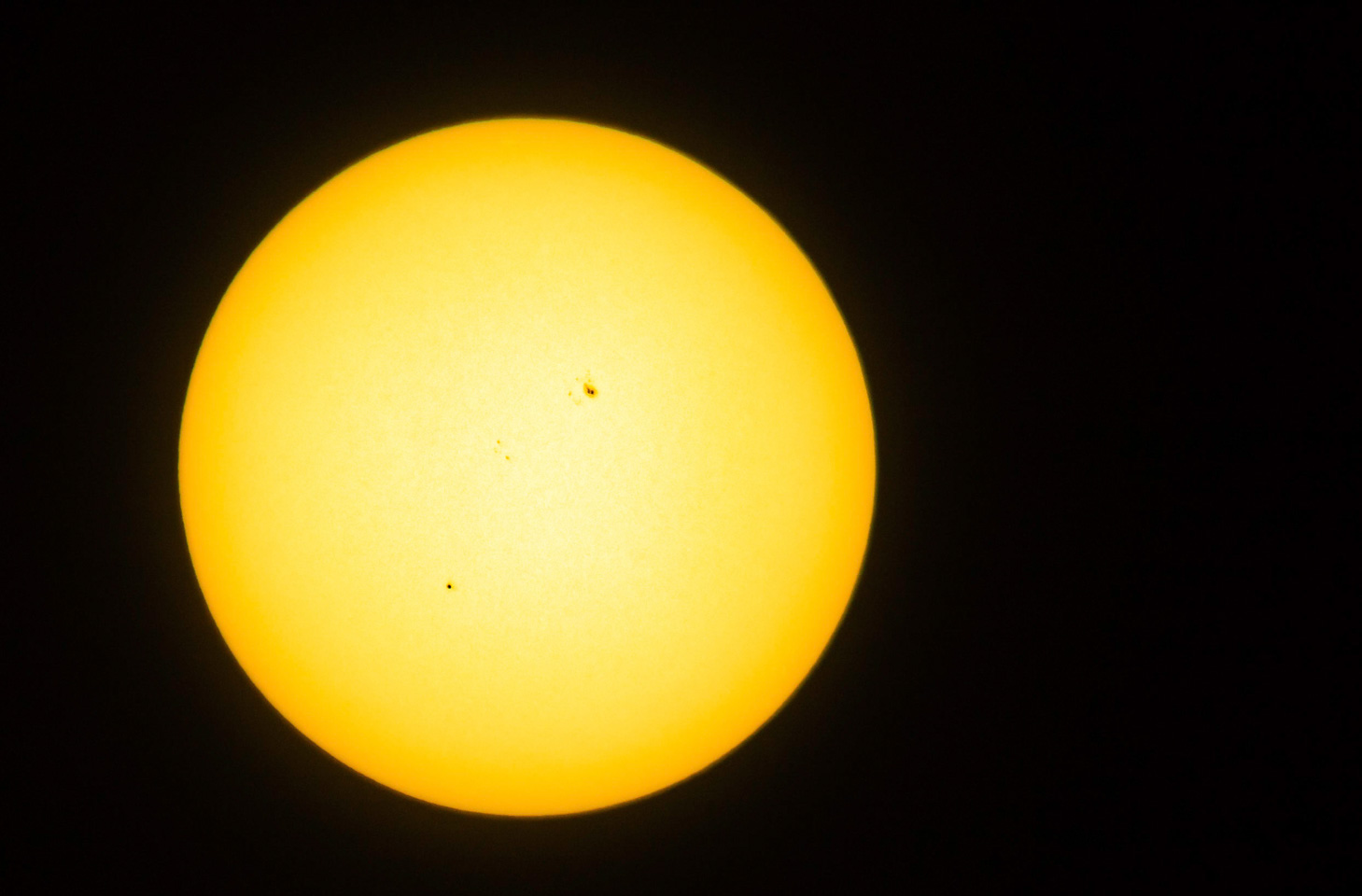
The right way to view or photograph the Sun
You can buy a pair of eclipse glasses for a few euros. They are specially designed for safely looking at the Sun. Always check that the film on the glasses is not damaged.
You can project the Sun onto a sheet of paper using binoculars. Cover one lens for this. You must place the binoculars on a tripod and DO NOT LOOK THROUGH THEM. Not even by accident.
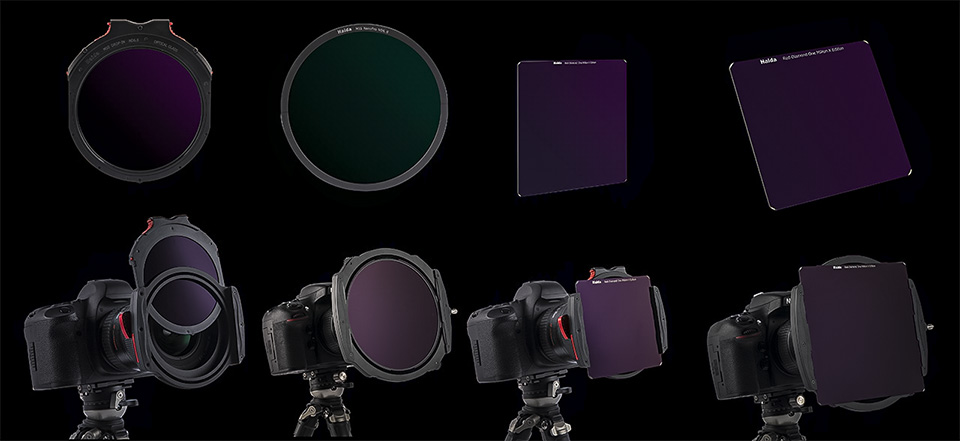
Special filters are available for your lens. They block enough light to let you look through them safely via your camera, even with a telephoto lens. Some time ago, I tested the Haida One Million X Edition, which is a good example of a suitable filter.
Make sure your ND filter is at least 16 stops if you want to use it for photographing the Sun. For example, by combining a 10-stop and a 6-stop filter. However, don't keep your camera pointed at the Sun continuously, just as a precaution.
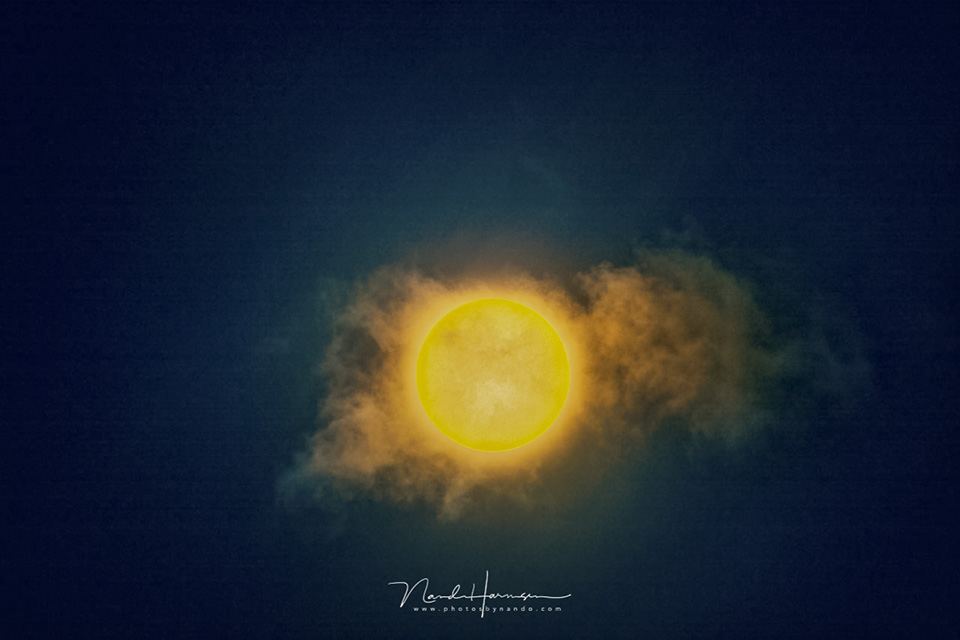
This filter has very limited use for landscapes. Extremely long shutter speeds are needed, with the associated increase in noise. But for landscapes with a long shutter speed, combined with a very shallow depth of field, it can be used very effectively.
The best result is achieved when using a long focal length. A 400mm lens is certainly recommended, provided you put a suitable ND filter on it, of course. If you don't have a 400mm lens, a 200mm lens will also work. Again, with a suitable filter in front of it.
Viewing or photographing the Sun is always at your own responsibility and risk. If you don't dare, don't do it. Prevention is better than cure.
About the author
Nando Harmsen has been photographing for more than 40 years. He specialises in wedding photography and landscape photography. Nando also gives talks, workshops, masterclasses and photo trips, and regularly reviews new and interesting equipment.
You might also like
-
 The Partial Solar Eclipse as a Time-lapse
by Elja Trum
-
 Are you going to photograph the solar eclipse on 25 October 2022?
by Nando Harmsen
-
The 2026 solar eclipse
by Nando Harmsen
-
 Are you ready for the solar eclipse?
by Nando Harmsen
-
 A timelapse video of the solar eclipse
by Nando Harmsen
-
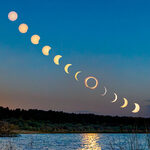 Making a Solar Eclipse Collage in Photoshop
by Nando Harmsen
0 comments
Be the first to share what you think!
Have your say
Please note: Articles older than a week can only be commented on by signed-in visitors.Would you still like to comment? sign in or create a free account.
Become a better photographer every week
A practical photography tip in your inbox every week.
39,079 photography enthusiasts already receive the tips! More about the weekly mail. Or keep up to date via  Facebook.

Elja Trum
Photofacts; everything to do with photography!
Would you like to take better photos and keep up with what is happening in photography? Photofacts publishes articles that teach you something about photography — from a product announcement to a practical shooting tip or a look at a website. Photofacts covers photography every day and is a hobby project of Elja Trum's that got out of hand. The articles are written by a team of volunteer authors. If you would enjoy writing one or more articles for Photofacts, do get in touch.More about PhotofactsPhotofacts is made possible in part by
