

Review: Haida Premium Brass and Bluestone UV filters
Friday 16 August 2024, 15:15 by Nando Harmsen | 3,151 views | 2 commentsThis article was translated from Dutch with the help of AI. Read the original.
If you want extra protection for your lens, you can use a UV filter. Filter manufacturer Haida has launched two new UV filters: the Premium Brass version and the Bluestone version. I received both filters for review.
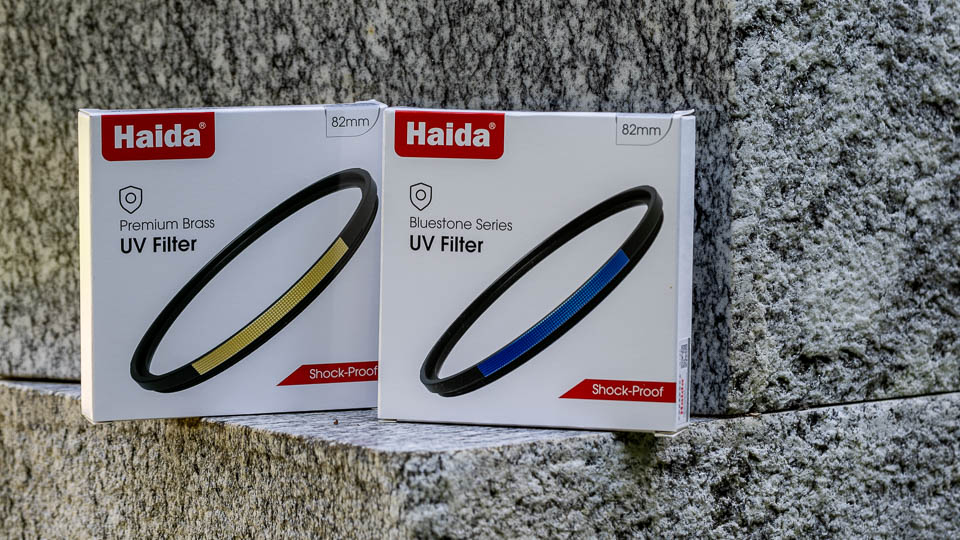
Two different filters?
Both filters are made from Schott B270 glass and have a thickness of 3.1mm. This means they can be used well on ultra-wide-angle lenses without the risk of vignetting.
At regular intervals, there is a profile in the frame for grip. This profile is blue on the Bluestone and gold-coloured on the Premium Brass. The frame material is aluminium for the former and black-coated brass for the Premium Brass.
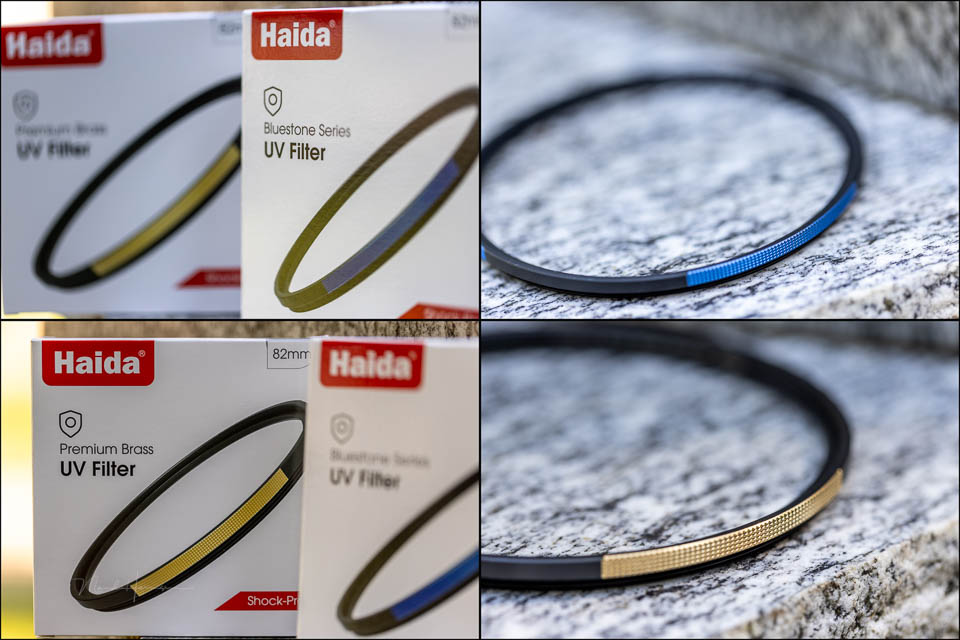
The Bluestone has 24 layers of coating, twelve on each side of the glass. The Premium Brass has 36 layers of coating in total, eighteen on each side. The light transmission of the filters is 99.4% and 99.8% respectively
Protection
The primary purpose of a UV filter is protection. It provides an extra barrier against possible damage and dirt on the lens. Haida also places a strong emphasis on this.
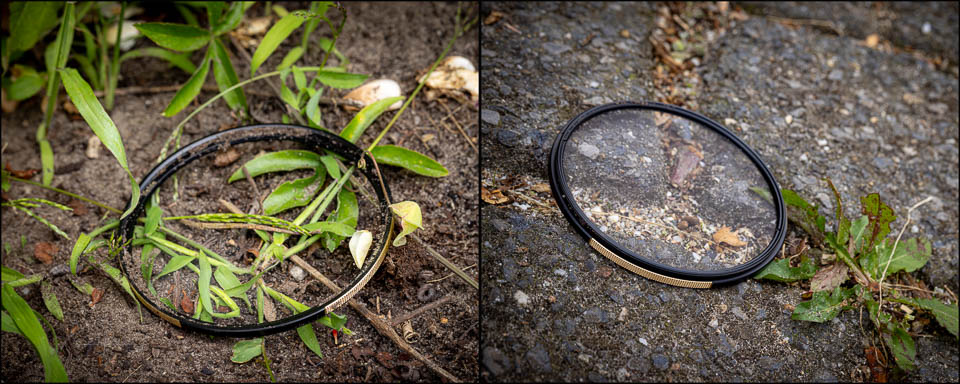
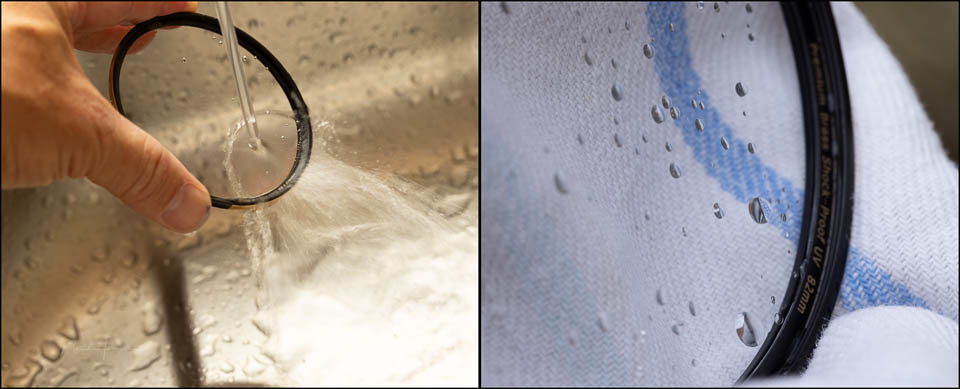
The filters' coating protects against rain, dust, dirt, fingerprints, scratches and oily liquids. They are easy to clean, thanks to the coating on both sides of the glass.
The Schott B270 glass combined with the coating is shockproof, making the filters resistant to drops or objects hitting the glass. Haida guarantees that a 14mm steel ball falling onto the glass from a height of 1.5 metres will not break the filter.
I have not tested this, so I will take their word for it. Do bear in mind that hard, sharp objects can certainly cause scratches, or even break the filter. Although it can take a lot, it is not unbreakable.
Vignetting and image quality
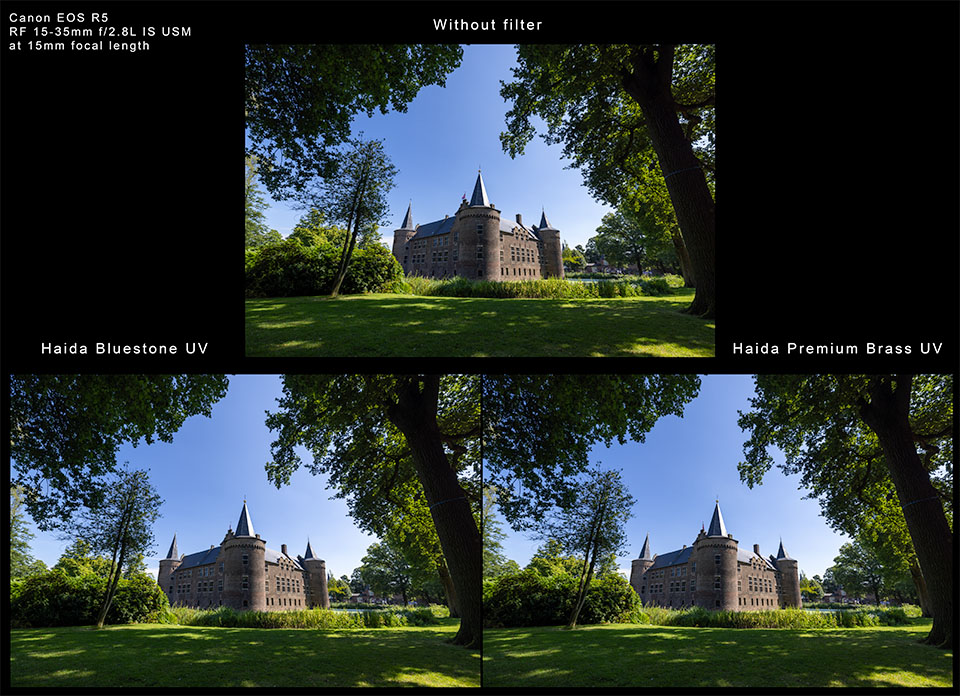
Thanks to the 3.1mm-thin frame, you do not have to worry about vignetting. I tested the filters at a focal length of 15mm, on a full-frame camera.
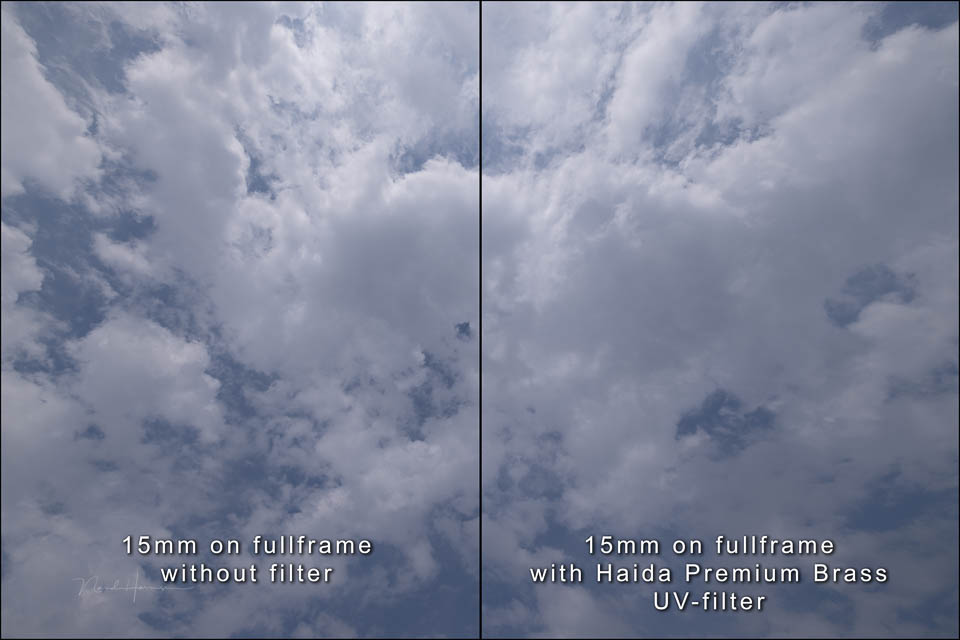
The filters do not reduce image quality. Colours are not affected and the high light transmission has no effect on the exposure. There is therefore no problem with leaving these filters on the lens permanently.
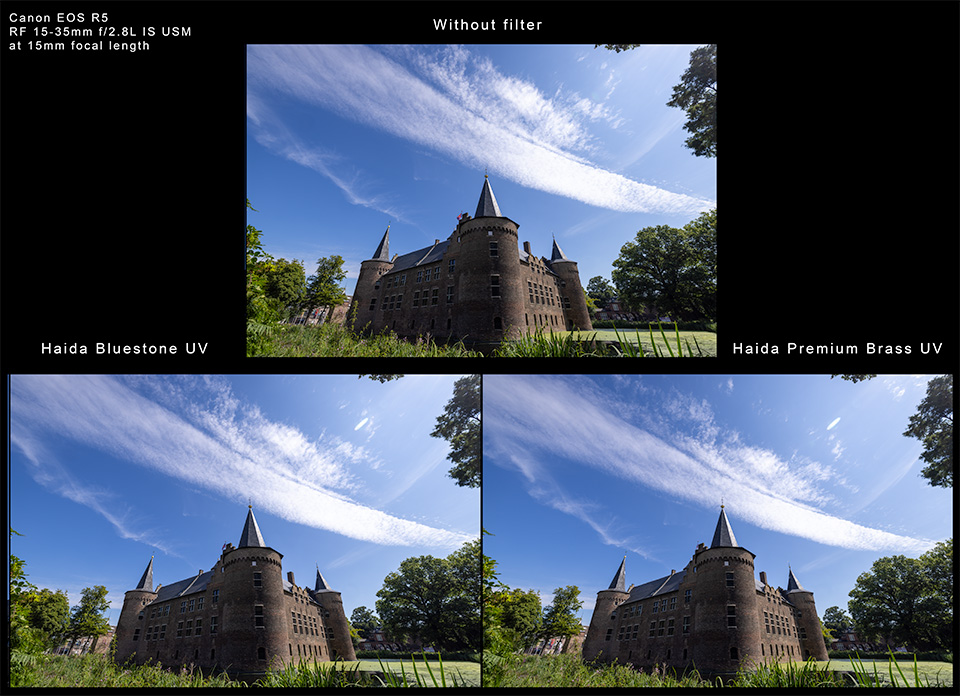
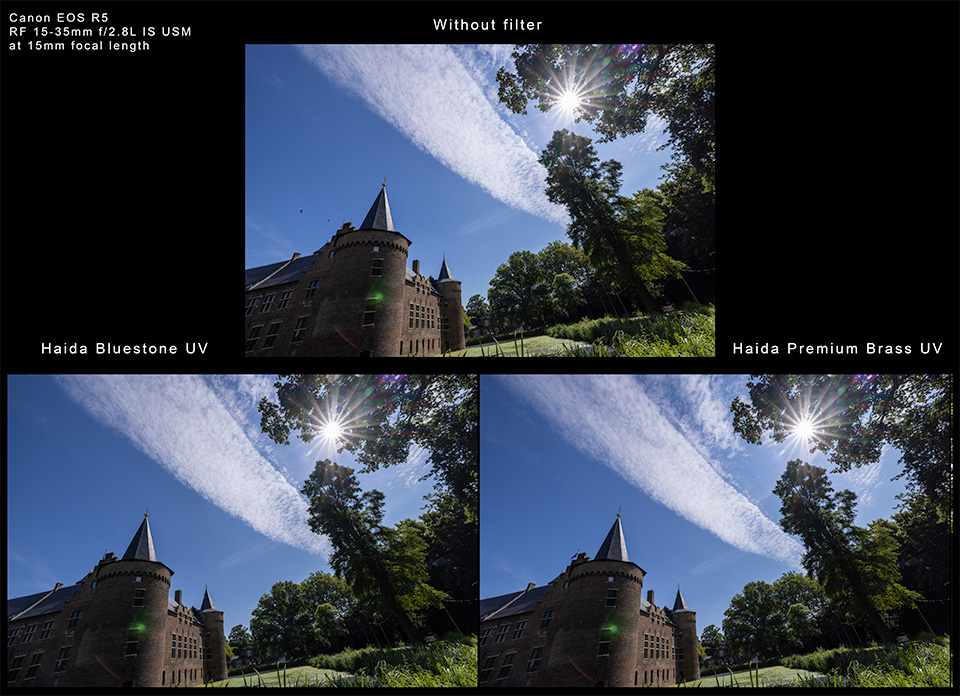
The filters are not very sensitive to additional flare. There is a chance that some extra flares will appear, but this is minimal.
UV filter, or not?
A UV filter reduces the amount of UV light. This makes a bluish colour cast less likely. This was mainly a problem with analogue film.
However, UV light is already blocked by the atmosphere, and only plays a role at high altitudes. UV light increases by up to 12% per 1,000 metres of altitude. A UV filter can still have an effect in the mountains.
I only tested these filters at sea level and cannot say anything about their effect in the mountains. Haida claims that the filters provide better contrast and reduce any blue cast.
Conclusion
I never use UV filters on my lenses, although I do recognise the value of the protection. Recently, at the beach, I wished my lens had had such a filter. It does provide a little more protection for your valuable lens.
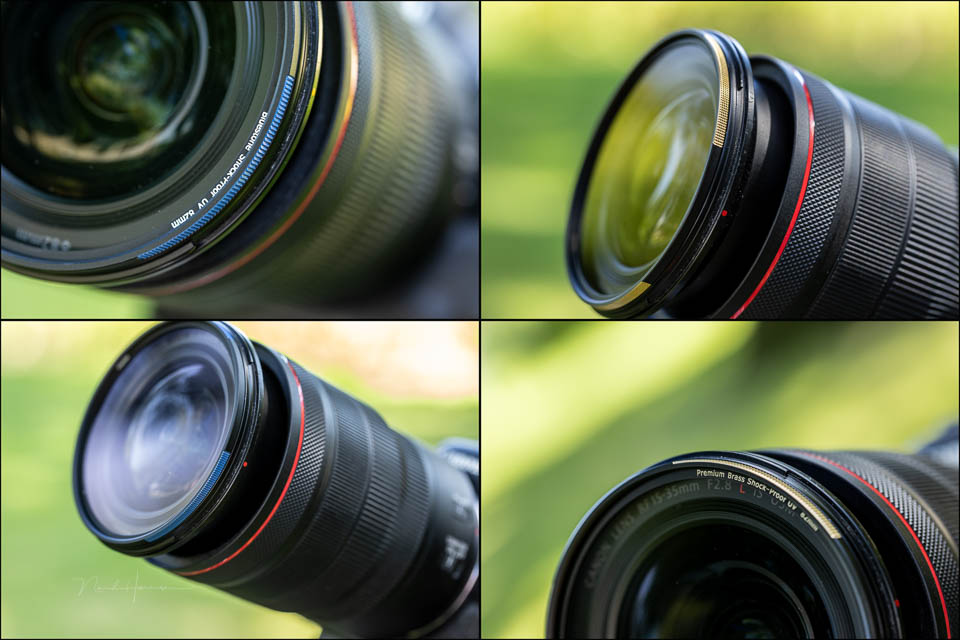
The Bluestone is slightly cheaper than the Premium Brass. The differences are minimal, apart from the number of coatings. Do bear in mind that the Premium Brass version is less likely to get stuck than an aluminium filter. It does not seize up.
You do not need to buy such a filter for the UV light. This filter is primarily for protection. If you are looking for a high-quality filter for this purpose, I can certainly recommend these filters.
Although both do the job, I would still recommend the Premium Brass. That way, you can be sure you will always be able to remove the filter without any problems, without it becoming stuck too tightly.
The filters are available in sizes from 52mm to 95mm. The Premium Brass costs just under 60 euros for a 77mm filter. The Bluestone costs just under 40 euros for a 77mm filter.
Thanks to Haida for providing these filters.
About the author
Nando Harmsen has been photographing for more than 40 years. He specialises in wedding photography and landscape photography. Nando also gives talks, workshops, masterclasses and photo trips, and regularly reviews new and interesting equipment.
You might also like
-
 Review: the Haida M10 filter system and Red Diamond filters
by Nando Harmsen
-
 Review: Haida MagSafe Magnetic Filter Holder for Smartphones
by Nando Harmsen
-
 Review of the handy Haida Magic Stick-It Wrapper Cloth
by Nando Harmsen
-
 Review: Haida M10 Insert Variable ND filter
by Nando Harmsen
-
 Review: Haida variable ND filter with built-in polarisation
by Nando Harmsen
2 comments
-
 guest wrote on Tuesday 20 August 2024 at 10:48 | reply
The photos with English text seem to me to be photos supplied by the manufacturer, so I don't quite understand what has actually been 'tested' here.
Translated from Dutch.
I have seen and used all kinds of brands of filters over the course of 55 years of photography, by the way: I have never seen any difference in my slides made with, among others, UV filters from B&W, Hoya, Nikon, Minolta, Hasselblad, etc. (Camera manufacturers often have their filters manufactured by third parties, often Hoya)
What do these Haida filters add to what is already available? Impact-resistant filters have existed for years......
It doesn't seem entirely correct to me that there would be no UV at sea level: I get badly burned when I am not protected at sea, and that is due to part of the UV spectrum. -

 Nando
wrote on Tuesday 20 August 2024 at 11:40
| reply
Nando
wrote on Tuesday 20 August 2024 at 11:40
| reply
All photos in this article were taken by me personally, and not provided by the manufacturer. I tested it all myself. Really tested it.
Translated from Dutch.
Why English? Because this was originally written for an English-language photography blog and I didn't adapt the photos.
I'm not saying that there is no UV present at sea level, but that a lot of it is blocked. But perhaps I should have mentioned which part of the UV spectrum it concerns.
Have your say
Please note: Articles older than a week can only be commented on by signed-in visitors.Would you still like to comment? sign in or create a free account.
Become a better photographer every week
A practical photography tip in your inbox every week.
39,024 photography enthusiasts already receive the tips! More about the weekly mail. Or keep up to date via  Facebook.

Elja Trum
Photofacts; everything to do with photography!
Would you like to take better photos and keep up with what is happening in photography? Photofacts publishes articles that teach you something about photography — from a product announcement to a practical shooting tip or a look at a website. Photofacts covers photography every day and is a hobby project of Elja Trum's that got out of hand. The articles are written by a team of volunteer authors. If you would enjoy writing one or more articles for Photofacts, do get in touch.More about PhotofactsPhotofacts is made possible in part by
