

6 Tips for Photographing in the Dark
Monday 14 September 2026, 23:23 by Nando Harmsen | 2,228 views | 6 commentsThis article was translated from Dutch with the help of AI. Read the original.
Night photography is an appealing form of photography. There are a number of things to consider to make your night photo work. These six tips should help you take that successful photo.
Night photography does not necessarily mean taking photos at night. Evening photography would be a better name. It is a beautiful and rewarding form of photography during the darker months of the year.
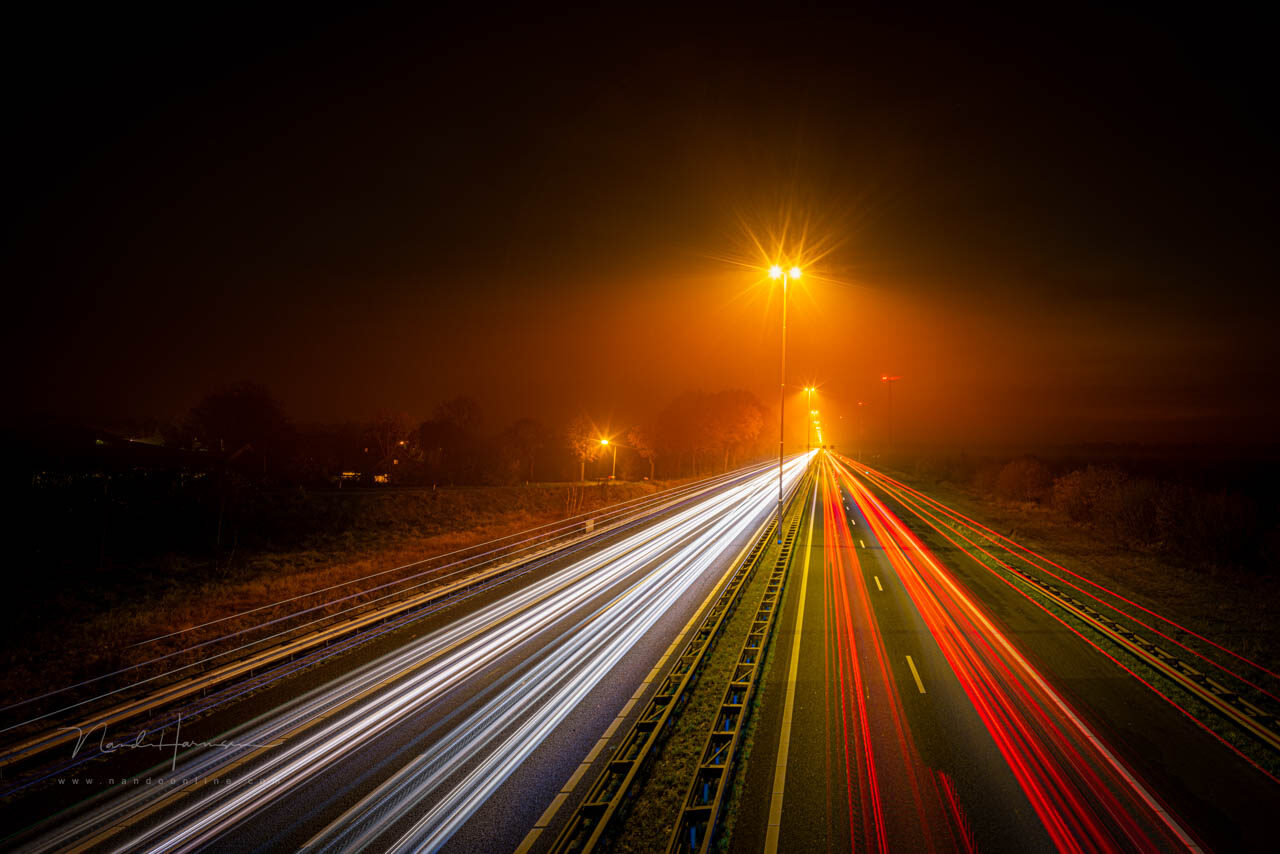
Misty motorway - f/11, 30s, 100 ISO @ 17mm
Evening photography means taking a slightly different approach to photography. Longer shutter speeds are needed and contrasts can be strong. I have a few tips that may help.
Tip 1 - Respect dark and light
Light sources are bright, shadows are dark. Show this contrast in the photo. Avoid bringing everything into the midtones. This is certainly a risk with exposure bracketing and HDR techniques.
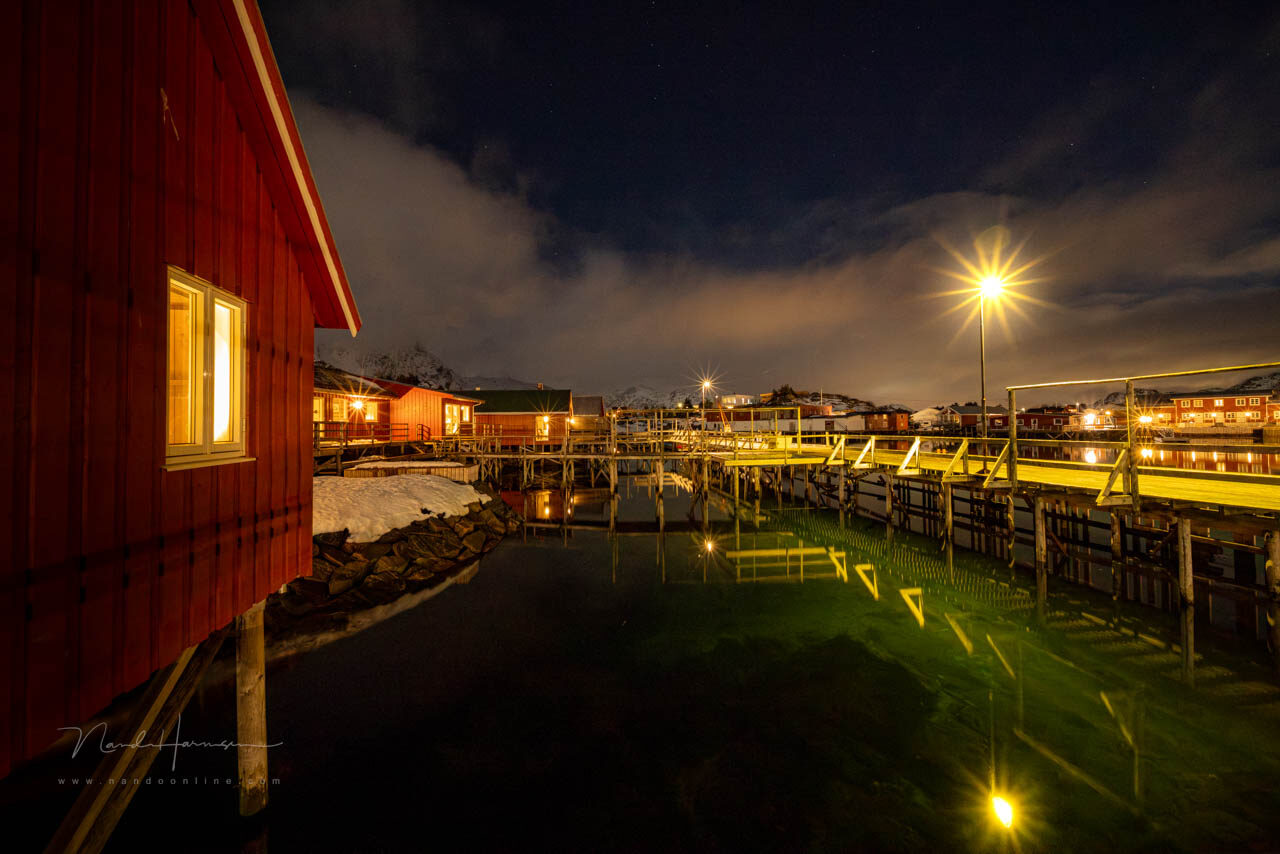
Lofoten at night - 4s, 3200 ISO @ 12mm
Respect the bright lights of street lamps and other lights. They are simply bright. Show that. The dark parts are simply dark. Do not 'lift' them to show all the details.
Tip 2 - Let a street scene come aliveAre you going to photograph in a town or village? Try to show the street life as well. An empty street scene may be what you want. If there is movement, it adds more dynamism.
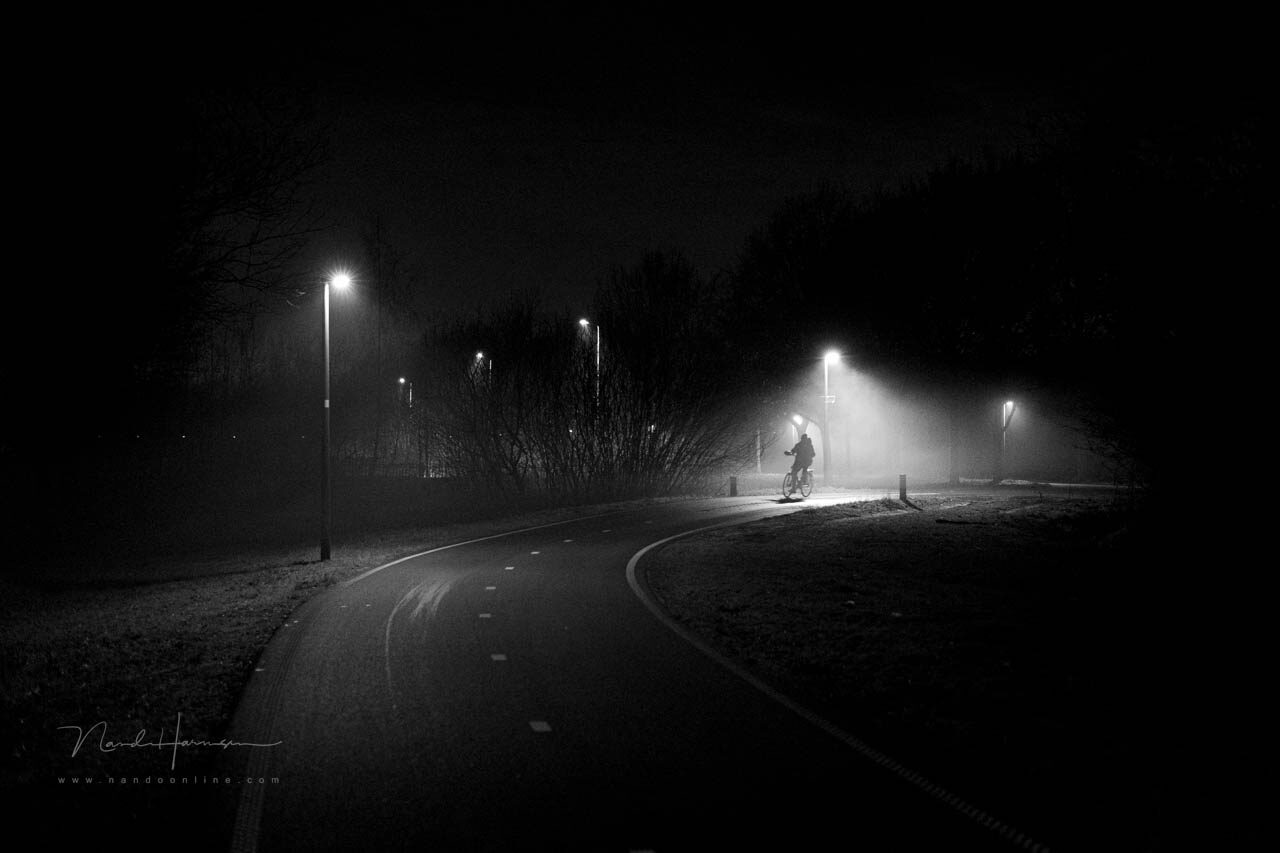
Lone cyclist - f/2, 1/40s, 12800 ISO @ 45mm
Experiment with shutter speeds. Also try a shorter shutter speed so that people, or cyclists, can be seen. Show movement, or freeze movement. Experiment with the options available to you.
Tip 3 - Composition is still important
Do not think that the lights of evening photography are enough for a good photo. Composition is still important. Make sure you think about what you are putting in the frame and how.
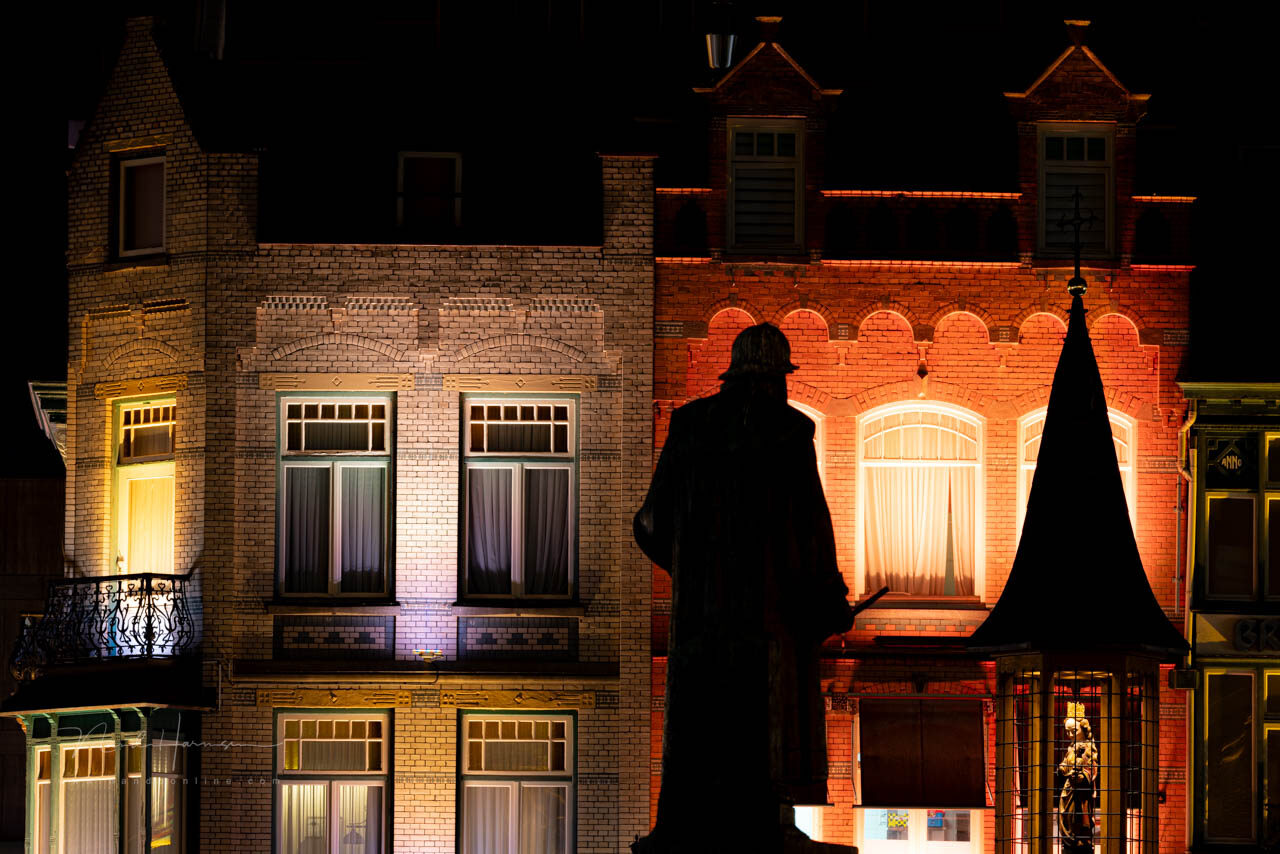
Den Bosch - f/11, 8s, 100 ISO @ 254mm
Choose a clear subject. Think about what should be in the frame and how. Play with the foreground, focal length and perspective. All of this creates an appealing photo. Lights alone are not enough.
Tip 4 - Try going without a tripod
When it is dark, you need to use a longer exposure. A tripod is then needed. Unless you increase the ISO or use a wider aperture. In that case, you can also take photos without a tripod.
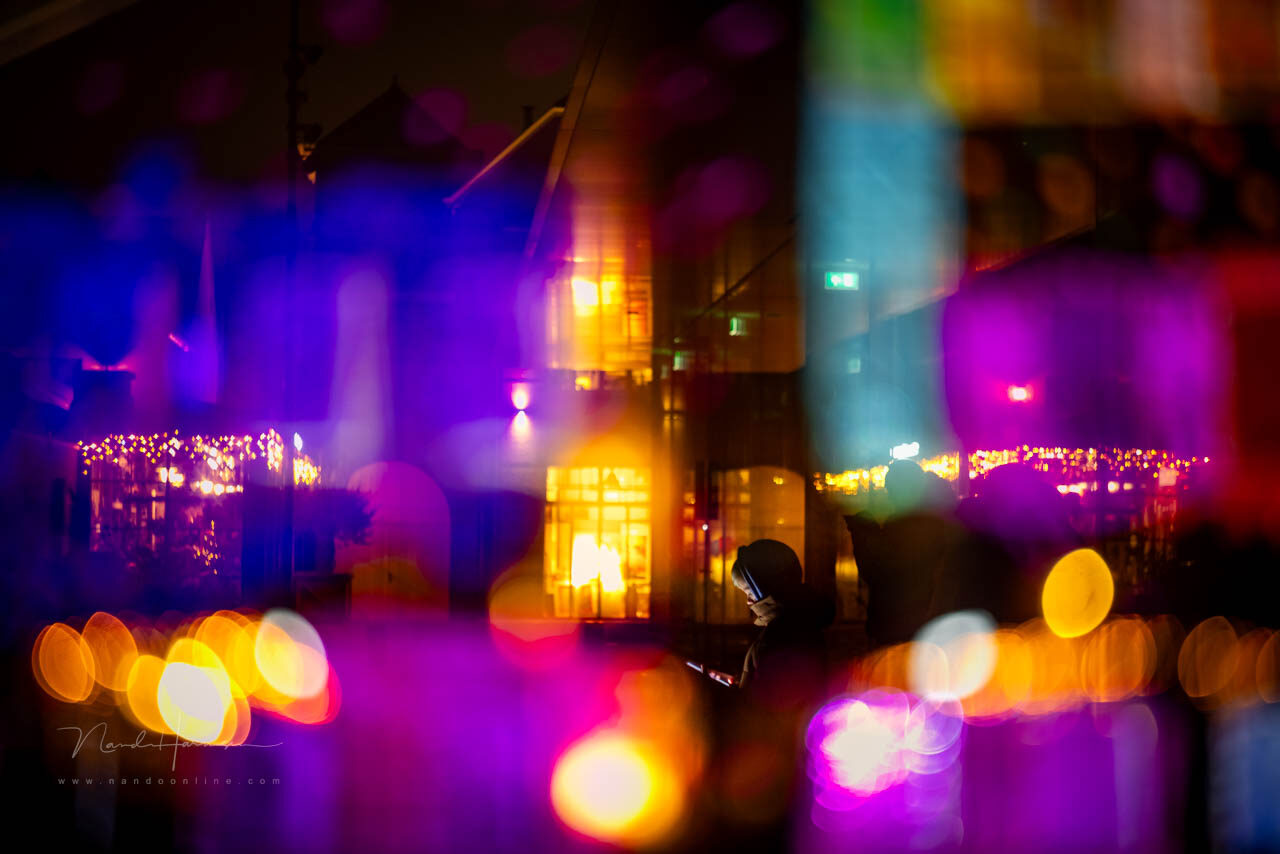
Glow 2024 - 1/40s, 3200 ISO @ 58mm (Helios 44-2)
Give it a try. Go out without a tripod and use a high ISO and a wider aperture. Make use of the possibilities offered by image stabilisation.
Tip 5 - Try black and white
The strong contrasts between light and dark are perfect for black-and-white photography. You can create very graphic images with them. Look for light and pay attention to the absence of light.
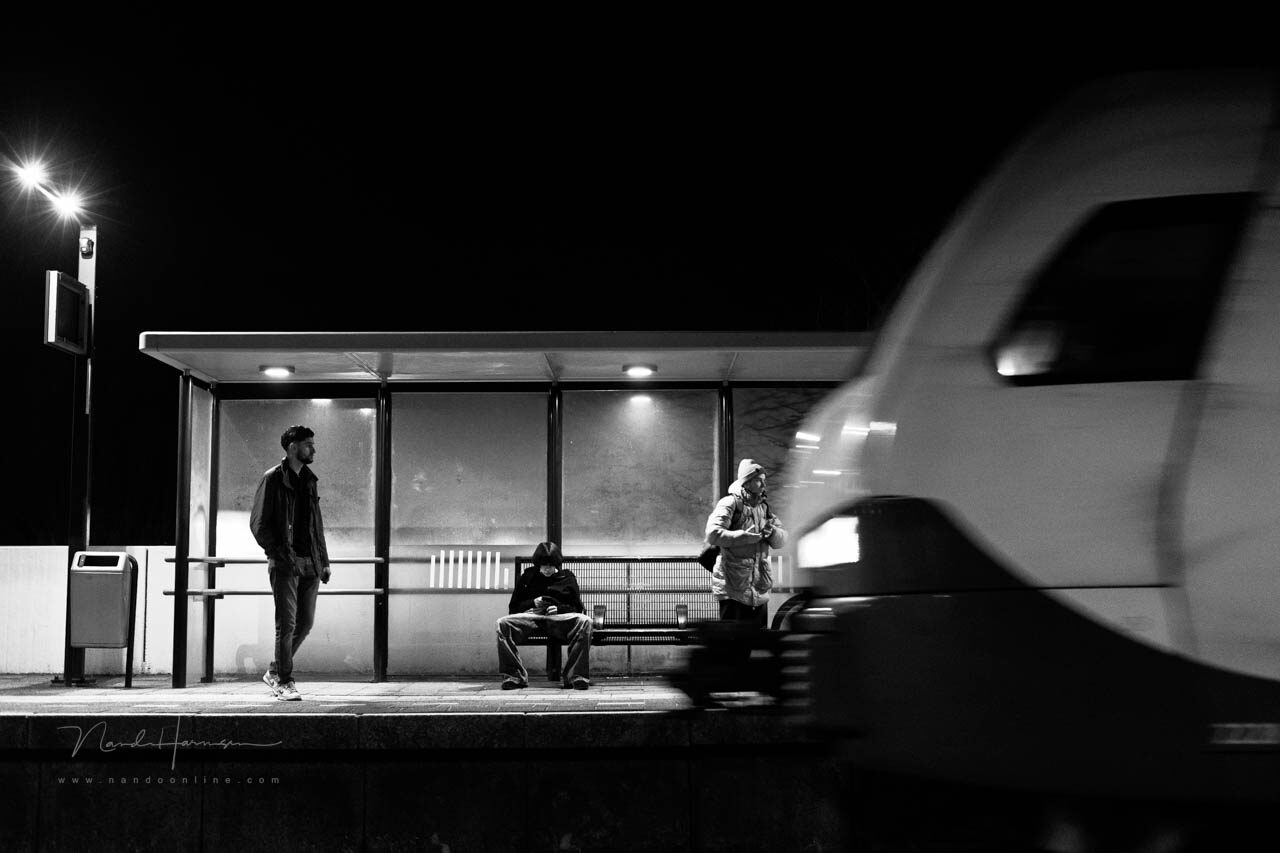
On the platform - f/2.8, 1/50s, 6400 ISO @ 45mm
Black and white gives you more options for evening photography than colour photography. You no longer have to deal with an ugly colour cast or light with an unwanted colour. Give it a try.
Tip 6 - Draw with light
Thanks to the longer shutter speeds that can be used, you also have the opportunity to draw with light. Do not do this yourself, but let it occur naturally.
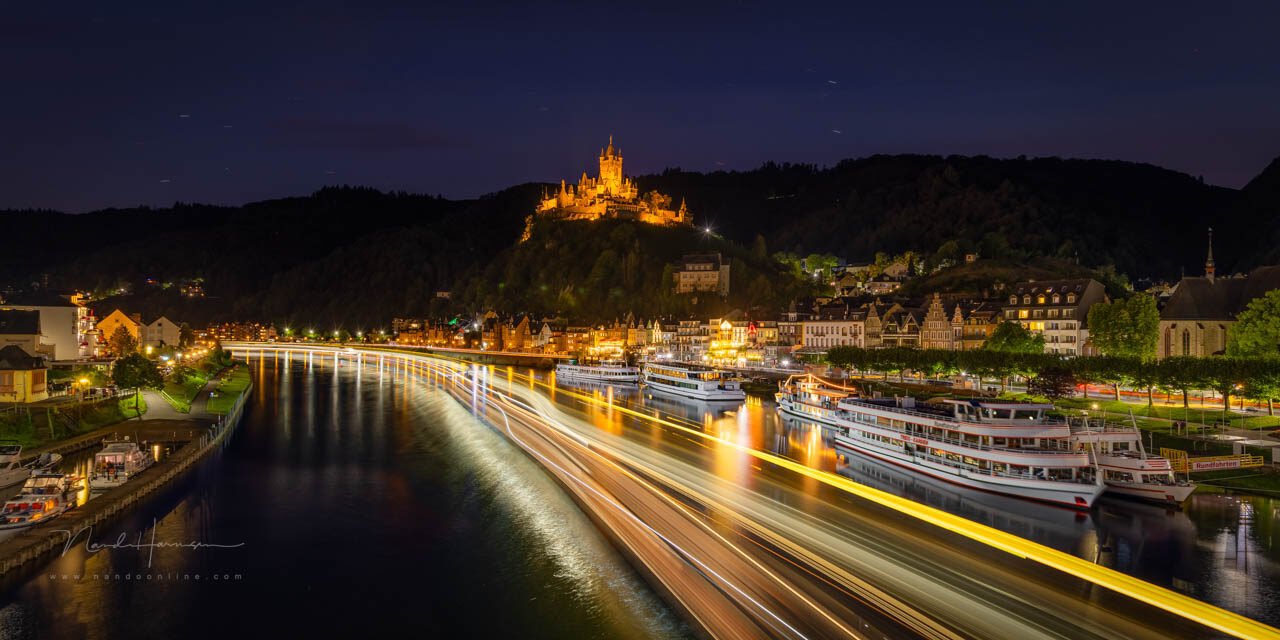
Cruise boats on the Moselle near Cochem - f/8, 5s, 100 ISO @ 24mm
Look at roads and cycle paths. Notice how the lights of cars or cyclists create lines in the image. Include this in the composition. It can produce very strong images.
One more tip?
Go out. Do not think about it too much. Grab your camera, a small shoulder bag, perhaps just one lens, and go outside. Take your time and look around carefully. Try things out.
Maybe you have a good tip too. Not about turning off image stabilisation, or about M mode or A mode. Not about a cable release or a tripod either. But something that can help you create a beautiful image.
About the author
Nando Harmsen has been photographing for more than 40 years. He specialises in wedding photography and landscape photography. Nando also gives talks, workshops, masterclasses and photo trips, and regularly reviews new and interesting equipment.
You might also like
-
 Night photography tip: the eye is drawn to the brightest point
by Nando Harmsen
-
 10 tips for light painting
by Liesbeth van Asselt
-
 Light painting: a creative form of photography
by Nando Harmsen
-
 Night photography tip: keep bright lights bright
by Nando Harmsen
-
 Night photography tip: try black and white too
by Nando Harmsen
-
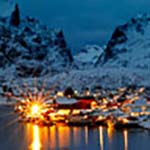 Night photography tip: choose the blue hour
by Nando Harmsen
6 comments
-

 Mac wrote on Tuesday 15 September 2026 at 08:17
| reply
Mac wrote on Tuesday 15 September 2026 at 08:17
| reply
Small tip, especially if you're photographing in the city.
Translated from Dutch.
Take a monopod with you, it still scares off opportunistic thieves if you hold it up. -

-
 Ernst van Erkelens wrote on Tuesday 15 September 2026 at 11:17 | reply
Go experiment too. If you're exposing for 30 seconds anyway, you can e.g. zoom in a little every 5 seconds. You often get quite nice photos. See the last 2 photos on my website.
Translated from Dutch. -
-
 Adri Hogewoning wrote on Sunday 20 September 2026 at 16:54 | reply
With evening instead of night photography, the sky can still have some color and thereby provide recognizability instead of a completely black sky.
Translated from Dutch.
But as with everything: tastes or goals differ and it therefore often remains personal. -
Nando
wrote on Tuesday 22 September 2026 at 09:33
| reply
That is the blue hour, just before it gets dark. It indeed often creates a nice contrast between the yellow/orange artificial light and the last blue-colored light of the day.
Translated from Dutch.
Unfortunately, it only lasts about fifteen minutes...
Have your say
Please note: Articles older than a week can only be commented on by signed-in visitors.Would you still like to comment? sign in or create a free account.
Become a better photographer every week
A practical photography tip in your inbox every week.
39,077 photography enthusiasts already receive the tips! More about the weekly mail. Or keep up to date via  Facebook.

Elja Trum
Photofacts; everything to do with photography!
Would you like to take better photos and keep up with what is happening in photography? Photofacts publishes articles that teach you something about photography — from a product announcement to a practical shooting tip or a look at a website. Photofacts covers photography every day and is a hobby project of Elja Trum's that got out of hand. The articles are written by a team of volunteer authors. If you would enjoy writing one or more articles for Photofacts, do get in touch.More about PhotofactsPhotofacts is made possible in part by
