

An APS-C lens or a full-frame lens instead?
Monday 16 June 2025, 15:51 by Nando Harmsen | 7,772 views | 19 commentsThis article was translated from Dutch with the help of AI. Read the original.
You have a camera with a crop sensor. Is it sensible to buy lenses that are suitable for full-frame anyway? Or can you get by perfectly well with lenses made for your camera's sensor size?
When you use a crop camera, you can use lenses designed for full-frame. At least, that is possible with APS-C cameras in particular. But is it sensible to use full-frame lenses?
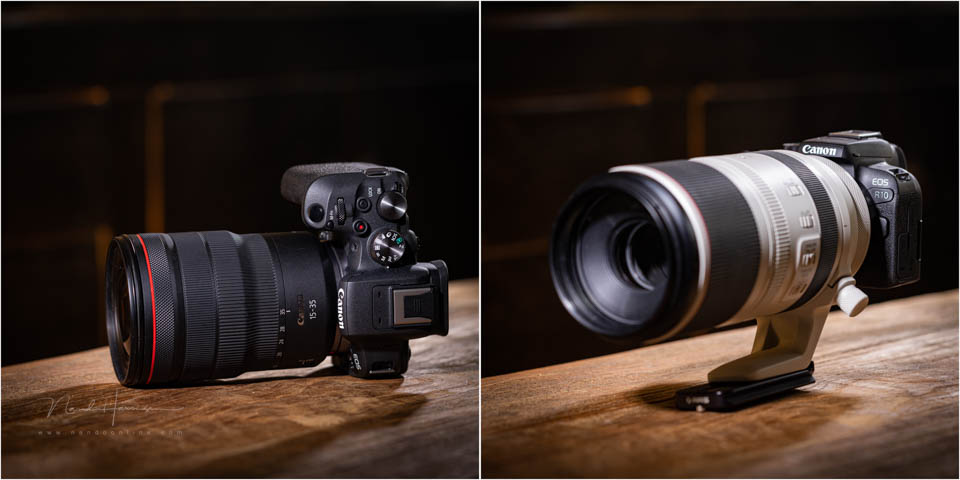
There are both disadvantages and advantages. As with everything in life, it is not that black and white. The choice is very personal, and one you have to make for yourself. If you are facing this choice, consider the following points.
1. Size and weight
Because full-frame lenses have to cover a larger sensor, they need to produce a large image circle. That is why most full-frame lenses are large and heavy.
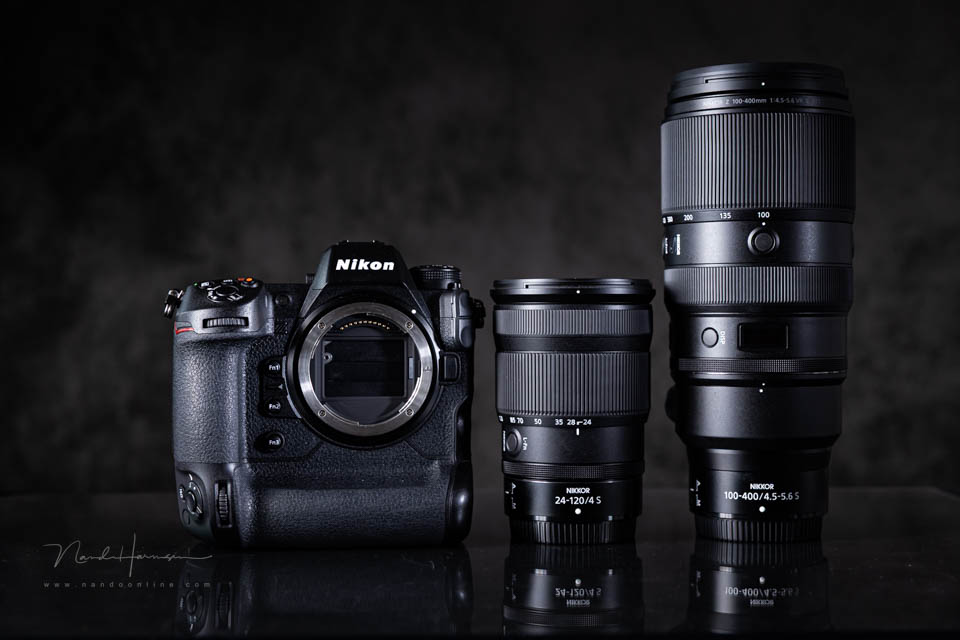
Did you choose an APS-C camera because it is smaller and lighter than the full-frame versions? Then using full-frame lenses completely cancels out that advantage. You get the biggest gains in weight and size from your choice of lens.
2. Quality
Because full-frame lenses have a large image circle, the APS-C sensor only uses the centre of that circle. That is where image quality is often at its best.
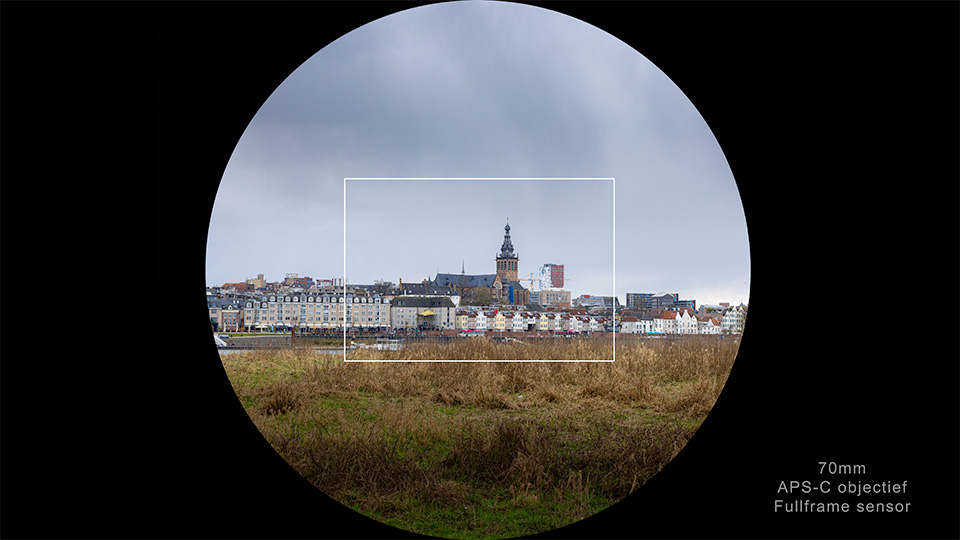
However, the quality of modern lenses is so good that the edges of the photo provide more than sufficient quality. And where they fall slightly short, lens correction in the camera will provide... Well, correction.
3. Price
Because the image circle of APS-C-optimised lenses is smaller, the lens design can often be simpler. This has a direct effect on the price of the lens.
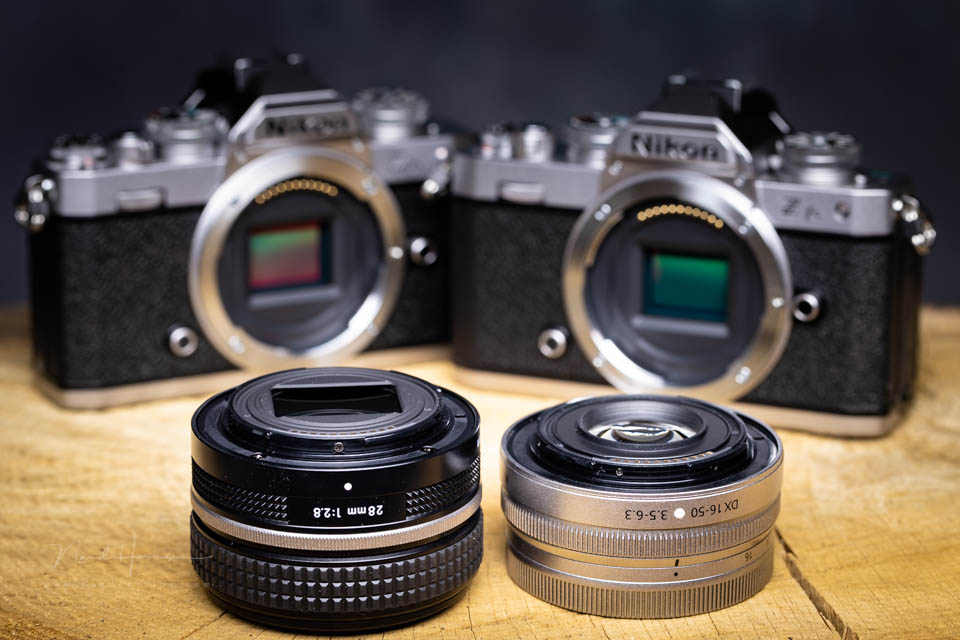
This means that you have to pay less for APS-C lenses, while you generally still get good image quality.
4. Prepared for the future
Are you buying full-frame lenses because you want to be ready for the future? Then ask yourself why you did not choose full-frame in the first place.
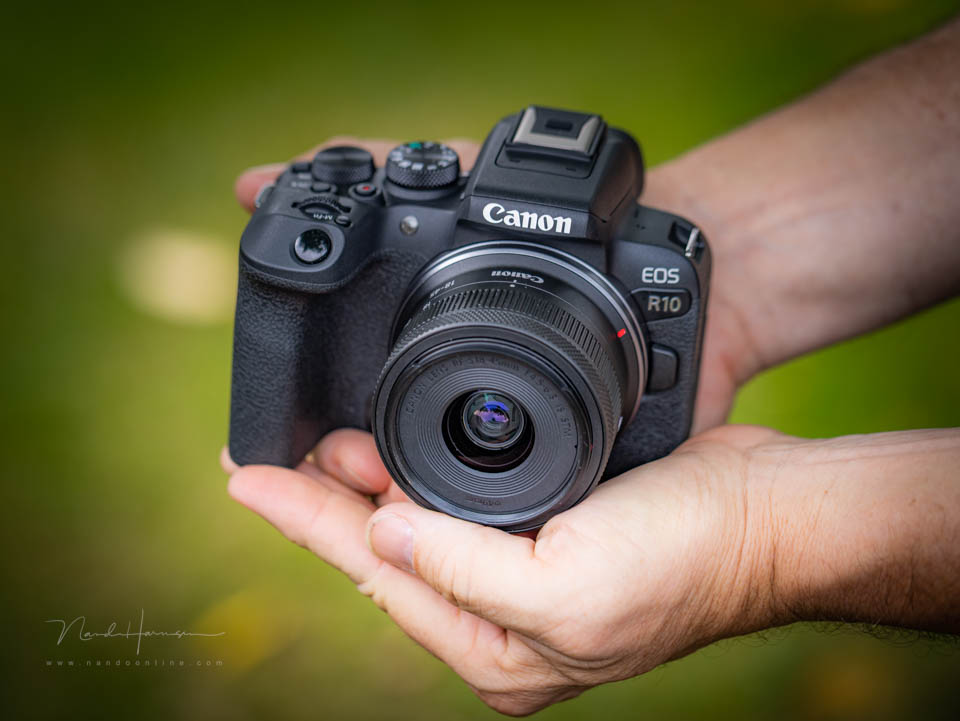
There is a reason you chose APS-C. Either the price or the size of the camera. Contrary to what many people claim, full-frame is not the holy grail of photography. Switching will not make you a better photographer or automatically produce better images.
Compact full-frame lenses
There are also very compact full-frame lenses these days. They are light, small and a perfect alternative between the large full-frame lenses and compact APS-C lenses.
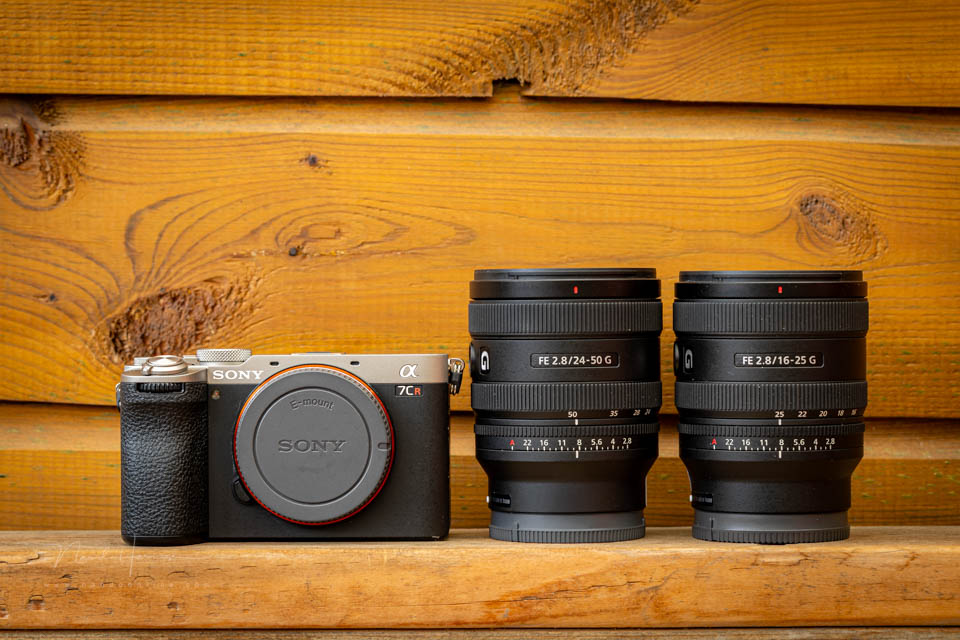
These are usually lenses that rely heavily on image correction. That does not have to be a problem, but you should be aware of it. In addition, the zoom range is often more limited than that of the larger full-frame models.
Think about now, not about what may never happen
You are taking photos now, and you choose the lenses you want to use now. If you have APS-C, choose APS-C lenses. That only brings advantages.
Maybe you disagree. That is fine. I would like to know your reasons for choosing full-frame lenses on an APS-C camera. Let us know in a comment below this article.
About the author
Nando Harmsen has been photographing for more than 40 years. He specialises in wedding photography and landscape photography. Nando also gives talks, workshops, masterclasses and photo trips, and regularly reviews new and interesting equipment.
You might also like
-
 Review: Sony A6700 APS-C mirrorless camera
by Nando Harmsen
-
 The advantage of a crop sensor in landscape photography
by Nando Harmsen
-
 Macro with a crop sensor means more magnification
by Nando Harmsen
-
 Canon introduces mirrorless crop cameras: the EOS R7 and EOS R10
by Nando Harmsen
-
 Will Canon launch APS-C format R cameras?
by Elja Trum
-
 Review: Canon EOS R5 C for video
by Nando Harmsen
19 comments
-
 Donald Willemsen wrote on Monday 16 June 2025 at 20:19 | reply
I’m sticking with an APS-C sensor. Nando, I agree with your advice to then also buy lenses specifically made for this type of sensor. You give several arguments for this that make sense. But if we look at the RF-S lenses, for example, the selection is meager and the light-gathering capability is also nothing to write home about.
Translated from Dutch.
Hopefully the selection will grow, as will the selection of fast lenses. -
 Frank Schabracq wrote on Monday 16 June 2025 at 20:52 | reply
With Canon, the choice of EF-S and RF-S lenses is very limited, so you'll still have to choose an EF or an RF lens.
Translated from Dutch. -
Donald Willemsen wrote on Monday 16 June 2025 at 21:51 | reply
I agree with you Frank. So it costs you more. The advantage is that you do have the choice of fast lenses.
Translated from Dutch. -
 Mac wrote on Tuesday 17 June 2025 at 08:24 | reply
I also have an APS-C camera myself, and most of my lenses are also for the APS-C camera. But I also still have enough FF lenses, which I use very regularly.
Translated from Dutch.
For me, it therefore doesn't matter which lenses I have, as long as I can take photos with them. -

-
 Fred Louwen wrote on Tuesday 17 June 2025 at 11:07 | reply
Hi Nando, I have fulltime frame vintage lenses. Minolta, toxine. Some manual, some automatic. They work fine. Indeed, you use the middle of the lens, the sharpest part.
Translated from Dutch. -
-
 Edw wrote on Tuesday 17 June 2025 at 11:30 | reply
But now the other way around, would you use APS-C lenses on a full-frame camera and why or why not?
Translated from Dutch. -
-
 Gramberg A wrote on Tuesday 17 June 2025 at 12:13 | reply
As a Pentax owner, I use an APS-C camera. In addition, I own the necessary FF lenses from the analogue era. They work perfectly on the current cameras. Okay, manual operation, but that's not a problem. The solution is cheaper than buying new lenses.
Translated from Dutch. -
 Paul van Aken wrote on Tuesday 17 June 2025 at 15:45 | reply
Interesting question. But not entirely relevant. If you want a wide angle on a Dx camera, you actually can't use an Fx lens, it tops out at 11 mm, and is suddenly bulky, large and heavy. On the other hand, telephoto lenses make no difference at all, an f4 600mm is exactly the same size for Dx as vor Dx, you can of course choose a 2.8 400, but your back won't be any happier with that either.
Translated from Dutch.
So the story is about a small group of lenses around the standard focal length, 16-80 for Dx, 24-80 for Fx, and then you immediately see where the problem is, that Fx has a much smaller range. Wide-angle zooms are the same.
So technically speaking, it is a non-issue, a Dx lens on Dx, until you get into the telephoto sector, for Dx there is no choice. -
-
Fred Louwen wrote on Tuesday 17 June 2025 at 16:00 | reply
I forgot to mention that I have a Sony a6600, so an APS-C. With K&F adapters.
Translated from Dutch. -
 Ron wrote on Tuesday 17 June 2025 at 22:28 | reply
Then I set my full-frame sensor to crop. The other way around doesn't work.
Translated from Dutch. -
guest wrote on Wednesday 18 June 2025 at 23:32 | reply
Are you intentionally leaving M43 out of consideration?
Translated from Dutch.
Super light and very good quality. -
 Nando
wrote on Thursday 19 June 2025 at 00:53
| reply
Nando
wrote on Thursday 19 June 2025 at 00:53
| reply
That of course also applies to M42, if there are lenses for it made for larger (or smaller) sensors.
Translated from Dutch.
I don't know that.
But aside from that, if I use APS-C, full-frame, and M42 (and, if they exist, the variants for different sensor sizes) interchangeably, no one will understand it anymore. -
 René Arnold wrote on Thursday 19 June 2025 at 07:49 | reply
Unfortunately, the range of lenses specifically for a crop sensor on the Nikon Z system is limited.
Translated from Dutch. -
 Bjorn Vink wrote on Thursday 19 June 2025 at 21:33 | reply
That is almost always the case but not always E.g. Tokina 12-24 from 18 mm works fine on full-frame and the 11-16 can be used at 16 mm, also Sigma 10-20 f3.5 and the Nikkor 12-24 from 18mm. Up to about 24 megapixels reasonably good to good sharpness and ok vignetting in the corners. These are lenses for DSLR. And there are more like that. Note many Sigma Art lenses have deliberately been given a larger image circle, also the Tamron 15-30mm and work fine on large-format Fuji GFX. You have to look at each lens individually. If you trade in your APS-C, quickly test in the shop whether your lens works. That's how I kept my 12-24 Tokina, used it from D200 on my Nikon D800 and still on full-frame film instead of Nikkor 20mm f2.8 .
Translated from Dutch. -
 Jan vdm wrote on Friday 20 June 2025 at 09:59 | reply
I also use older FF lenses for my Pentax K3 iii, works fine
Translated from Dutch.
Have your say
Please note: Articles older than a week can only be commented on by signed-in visitors.Would you still like to comment? sign in or create a free account.
Become a better photographer every week
A practical photography tip in your inbox every week.
38,982 photography enthusiasts already receive the tips! More about the weekly mail. Or keep up to date via  Facebook.

Elja Trum
Photofacts; everything to do with photography!
Would you like to take better photos and keep up with what is happening in photography? Photofacts publishes articles that teach you something about photography — from a product announcement to a practical shooting tip or a look at a website. Photofacts covers photography every day and is a hobby project of Elja Trum's that got out of hand. The articles are written by a team of volunteer authors. If you would enjoy writing one or more articles for Photofacts, do get in touch.More about PhotofactsPhotofacts is made possible in part by
