

Be aware of the drawbacks of the electronic shutter
Monday 28 July 2025, 16:08 by Nando Harmsen | 5,387 views | 13 commentsThis article was translated from Dutch with the help of AI. Read the original.
The electronic shutter on mirrorless cameras is widely used. But be careful, as it can cause unwanted effects. In the worst case, your photos may become completely unusable.
A mirrorless camera can use an old and familiar mechanical shutter, or an electronic one. In the latter case, there are basically no moving parts, allowing the camera to work completely silently.
This sounds ideal, but there are some drawbacks to using the electronic shutter. It is important to know about them, so you can prevent them or anticipate when they occur.
The electronic shutter reads the sensor line by line. This is not the shutter speed, but the readout speed. You must not confuse the two. For example, the Sony A7R V has a readout speed of 31 milliseconds, approximately 1/30 of a second. That is how long it takes to read out the sensor.
Those 31 ms apply regardless of the shutter speed used. It makes no difference whether your shutter speed is 1 second or 1/1000 of a second. It still takes 31 ms to read out the sensor completely. Some cameras are slower, while others are faster.
Rolling shutter effect
Are you an action photographer, or do you photograph fast-moving subjects? Then there is a chance of the rolling shutter effect. This is distortion of the subject in the direction of movement. You will also notice that vertical lines are shown at an angle.

The cause is the movement of the subject during the time needed to read out the sensor. The faster the sensor readout, the less rolling shutter effect occurs. If your camera suffers badly from it, use the mechanical shutter.
Are you looking for a camera that is suitable for photographing action with an electronic shutter? Look for a camera designed for this purpose. For example, the Canon EOS R5 mark II has an extremely fast readout speed of 6.5 milliseconds. Or the Sony A1 mark II, which is even faster at 3.8 milliseconds.

Banding effect
The banding effect is related to the rolling shutter effect. Here too, the sensor readout speed determines whether it occurs. When it happens, it is while photographing under artificial light, particularly fluorescent and LED lighting.

This type of light flickers at the frequency of the alternating current: 50 Hz. This means it switches on and off 50 times per second. If the sensor readout is not fast enough, this flickering becomes visible in the photo as dark bands.
Using slower shutter speeds can make the effect less noticeable. You should then use around 1/40 sec or preferably slower. But watch out for motion blur at those shutter speeds.
This effect can also occur with a mechanical shutter, but only when the shutter speed is close to the frequency of the light. Around 1/50 of a second. In that case, switch on your camera's anti-flicker mode to prevent it.
Prevention is better than cure
It is always sensible to check in advance whether you are affected by the effects mentioned above. You only need to check the rolling shutter effect once, and then you will know whether the camera you use suffers from it.

Does your camera suffer from rolling shutter? Then choose the mechanical shutter. Unfortunately, this also means that you have a lower frame rate available, and no pre-capture options.
Banding effects are a little more complicated, as they depend heavily on the circumstances. If you photograph indoors under artificial light, take a few test shots. If you see banding, switch straight to the mechanical shutter.
If in doubt, switch to the mechanical shutter as well. Do not take any risks. Do not worry about the sound of the shutter. In 99% of cases, only the person standing within a metre of the camera can hear it. It is also less disturbing than photographers think.
Help, I do not have a mechanical shutter
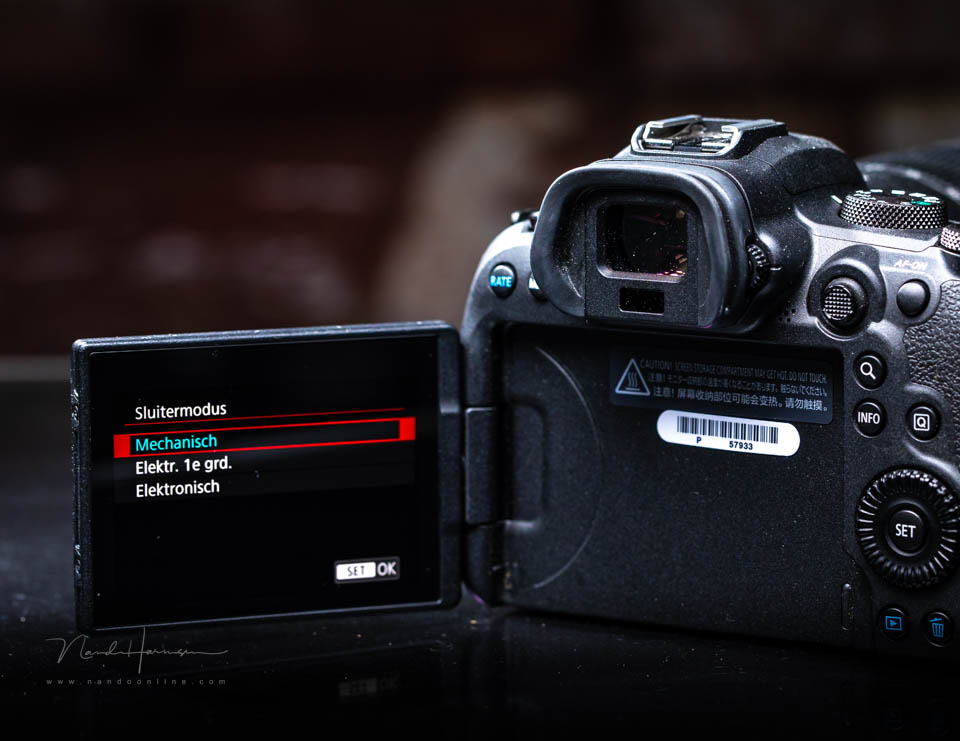
Some cameras do not have a mechanical shutter at all, or only have one partly. The latter have an electronic first-curtain shutter. This means that the camera starts the exposure with an electronic shutter and ends it with the mechanical one.
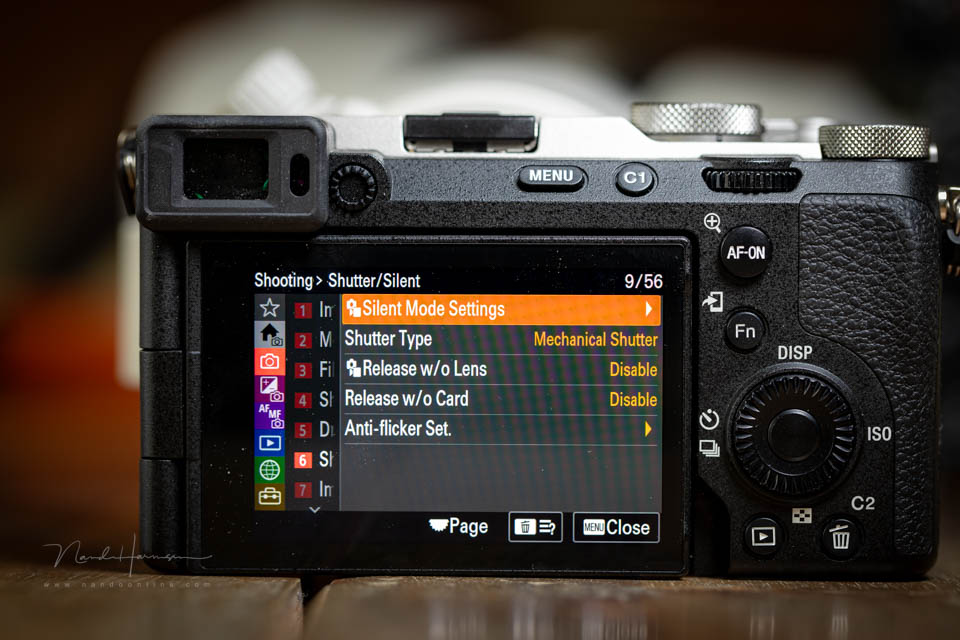
The electronic first-curtain shutter is faster than the fully electronic shutter. Choose this mode when you suffer from rolling shutter or banding effects. If you continue to experience problems, consider upgrading to a camera that is better suited to your photography.
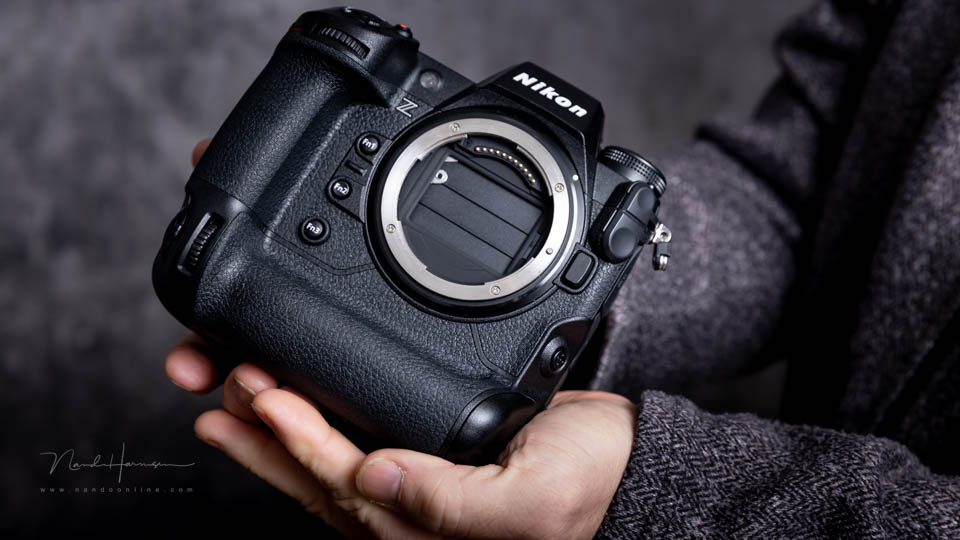
Finally, there are cameras that do not have a mechanical shutter at all. These include the Nikon Z8 and Z9, and the Sony A9 mark III. If you have one of these cameras, you can be sure that the sensor is read out quickly enough to prevent these unwanted effects.
About the author
Nando Harmsen has been photographing for more than 40 years. He specialises in wedding photography and landscape photography. Nando also gives talks, workshops, masterclasses and photo trips, and regularly reviews new and interesting equipment.
You might also like
-
 Electronic First Curtain Shutter and Bokeh
by Nando Harmsen
-
 Wildlife photography and switching to mirrorless
by Evert Doorn
-
 The different types of camera shutters explained
by Nando Harmsen
-
 Up early to photograph banded darters
by Erik Nevels
-
 Review: Canon EOS R8 full-frame mirrorless camera
by Nando Harmsen
-
 Do you have a mirrorless camera? Watch out for lasers
by Nando Harmsen
13 comments
-
 Roelie van der Meer wrote on Tuesday 29 July 2025 at 10:30 | reply
Thanks Nando.
Translated from Dutch.
I have a Fuji X-H2 and usually set it to MS+ES.
Is it smarter to set it to one of the two.
Now I think, this way I'm always good. -

 Nando
wrote on Tuesday 29 July 2025 at 10:48
| reply
Nando
wrote on Tuesday 29 July 2025 at 10:48
| reply
A good question. I think the camera will use the mechanical shutter, until the exposure requires a shutter speed faster than the maximum mechanical shutter speed, and then switch to the electronic one.
Translated from Dutch.
But I'm not sure about that. It could be that this is explained in the manual. You could check that sometime. -
 Kees Verwaard wrote on Tuesday 29 July 2025 at 10:41 | reply
Very interesting for when I buy a mirrorless camera soon! One more question. Can you also choose a second-curtain flash setting with a mirrorless camera, or flash at the end of the shutter speed .
Translated from Dutch. -
Nando
wrote on Tuesday 29 July 2025 at 10:51
| reply
Second curtain and flash at the end of the shutter speed is the same thing, of course.
Translated from Dutch.
Flashes and electronic shutters are always a bit of a thing. Usually, the flash sync speed is fairly slow with an electronic shutter.
But there are some that also have faster flash sync speeds, usually the more expensive models.
Some cameras can only use the mechanical shutter with flash, if I remember correctly.
I don't know whether second curtain with an electronic shutter is possible. Something to look into sometime.
Thank you for asking the question. I hadn't thought of that when writing this article. -
 Metin
wrote on Tuesday 29 July 2025 at 11:12
| reply
Metin
wrote on Tuesday 29 July 2025 at 11:12
| reply
Thanks Nando, interesting article, clearly explained with clear examples. I always enjoy reading your pieces.
Translated from Dutch.
I still take photos with a DSLR from 2009.
It still works perfectly, but one day the time will come to make the switch after all.
I'm saving this article in my notes for when the time comes. -
 Gina Heynze wrote on Tuesday 29 July 2025 at 12:47 | reply
If you like photographing speed, you're better off with the Global Shutter in the A9III. That really is a breath of fresh air.
Translated from Dutch. -
Nando
wrote on Tuesday 29 July 2025 at 13:01
| reply
That's right, and I also mention that in the article. But then you do need to have 7000 euros (!) to spend.
Translated from Dutch.
For the vast majority of cases, you can also get by just fine with a camera without a global shutter. Even at high speed, provided the readout speed is fast enough. -
 Truus wrote on Tuesday 29 July 2025 at 20:27 | reply
Hello Nando, a very interesting article. Yesterday I spent a day in a bird hide for kingfishers. I tried everything in my eyes. I went for the diving and flying birds. Tried all kinds of shutter speeds. I was sitting right in front of the spot where the dive and flight would come/be. Focused on that, but everything was sharp except the kingfisher. Still with the electronic shutter on the Fujifilm xt 4. On a tripod but with a gimbal head. The stabilizer off, is this also useful with a gimbal head? Thank you for the article.
Translated from Dutch. -
Nando
wrote on Wednesday 30 July 2025 at 11:03
| reply
Sorry to hear that it didn't work out so well. However, that has nothing to do with the electronic shutter. I think the speed and accuracy of the autofocus and the shutter speed you chose certainly play a role in the results you achieved.
Translated from Dutch.
I haven't yet figured out for myself whether image stabilization should be turned on or off on a gimbal head. I'm leaning towards off, but I don't dare say that with certainty. -
 Mac wrote on Wednesday 30 July 2025 at 08:08 | reply
you say that the Z9 no longer has a mechanical shutter. But in the photo you can clearly see a suiter, right? Or is that only there for dust?
Translated from Dutch. -
Nando
wrote on Wednesday 30 July 2025 at 09:42
| reply
That is to protect the sensor when you turn off the camera. You seal the sensor off from the outside world... then you could still call it a shutter, couldn't you.
Translated from Dutch.
hahaha
It's just not used when taking photos. Only electronically. -
 Guido Bellens wrote on Thursday 31 July 2025 at 17:37
| reply
Guido Bellens wrote on Thursday 31 July 2025 at 17:37
| reply
Hello Nando,
Translated from Dutch.
Thanks for this info. I mainly use my R6 with the electronic shutter. But I am advised to switch to mechanical for flash photography, why actually? -
Have your say
Please note: Articles older than a week can only be commented on by signed-in visitors.Would you still like to comment? sign in or create a free account.
Become a better photographer every week
A practical photography tip in your inbox every week.
39,079 photography enthusiasts already receive the tips! More about the weekly mail. Or keep up to date via  Facebook.

Elja Trum
Photofacts; everything to do with photography!
Would you like to take better photos and keep up with what is happening in photography? Photofacts publishes articles that teach you something about photography — from a product announcement to a practical shooting tip or a look at a website. Photofacts covers photography every day and is a hobby project of Elja Trum's that got out of hand. The articles are written by a team of volunteer authors. If you would enjoy writing one or more articles for Photofacts, do get in touch.More about PhotofactsPhotofacts is made possible in part by
